

There are many different customs during Fasting and Easter. Most of
us know about such customs through our religion or through education
and upbringing. I picked out two customs, which are widely known
around the world and still in use today.
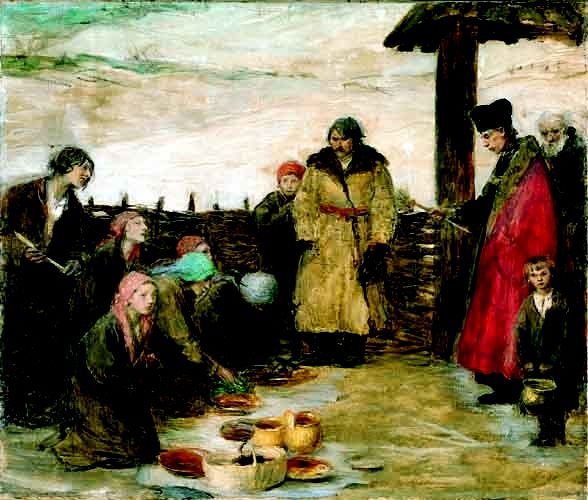
Easter Food Blessing.
The tradition of food blessing at Easter, which has early medieval roots in Christian society, possibly originated from a pagan ritual. The tradition is said to date from the 7th century in its basic form, the more modern form containing bread and eggs (symbols of resurrection and Christ) are said to date from the 12th century.
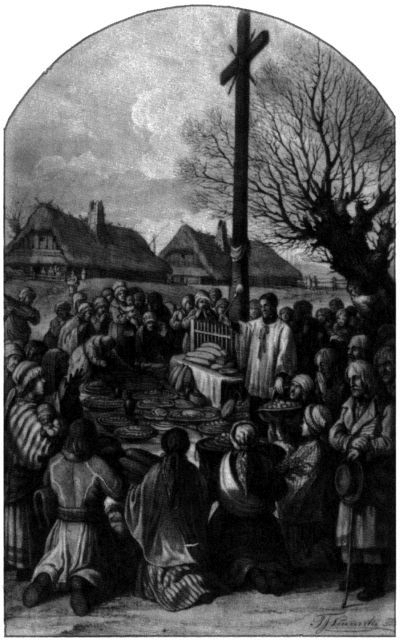
Baskets containing a sampling of Easter foods are brought to church to be blessed on Holy
Saturday. The basket is traditionally lined with a white linen or lace napkin and decorated
with sprigs of boxwood (bukszpan), the typical Easter evergreen.
The Blessing of the Food is, however, a festive occasion.
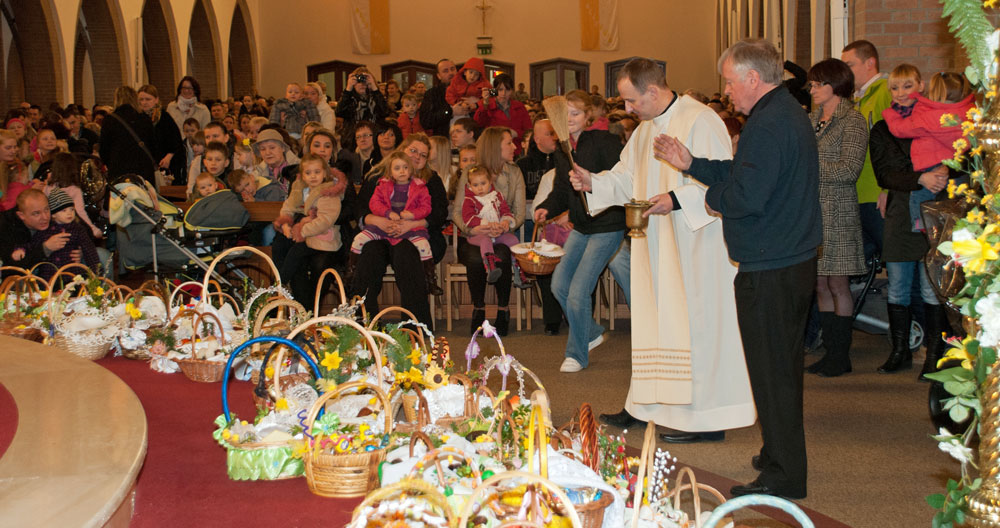
The three-part blessing prayers specifically address the various contents of the baskets,
with special prayers for the meats, eggs, cakes and breads.
The foods in the baskets have a symbolic meaning:
eggs – symbolize life and Christ’s resurrection
bread – symbolic of Jesus
lamb – represents Christ
salt – represents purification
horseradish – symbolic of the bitter sacrifice of Christ
ham – symbolic of great joy and abundance.
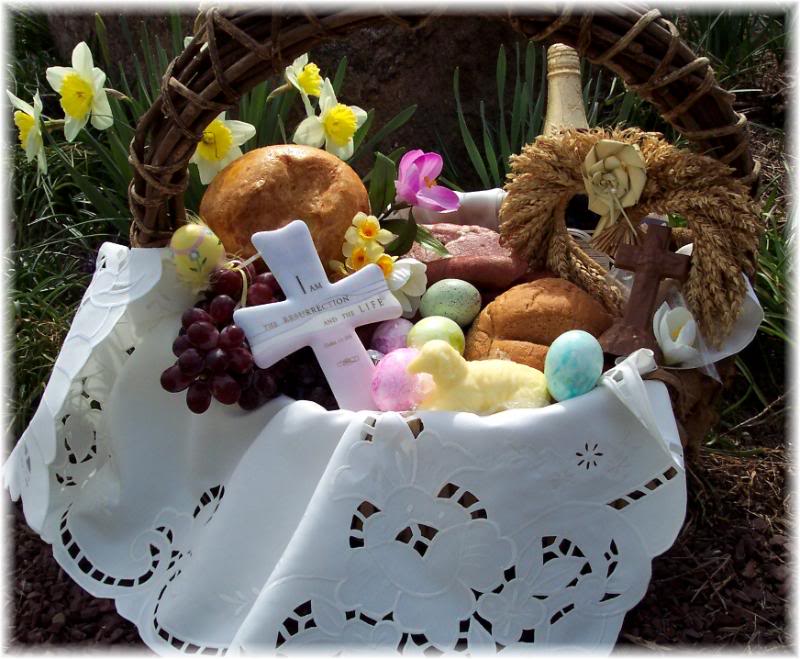
The food blessed in the church remains untouched according to local traditions until either Saturday afternoon or Sunday morning.
Add to basket come Easter dishes that symbolize something in particular:
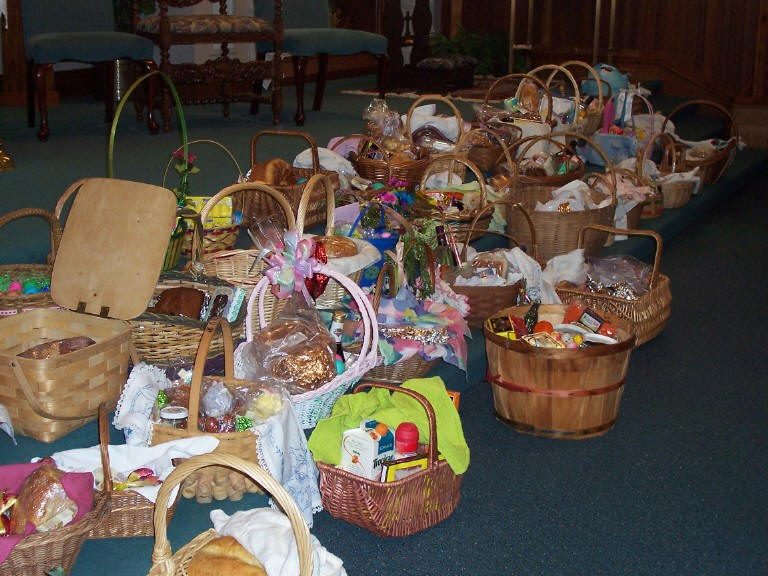
Christ as the bread, the bread of life.
Easter eggs start, new life, resurrection.
Lamb-shaped chocolate, butter and dough,
Lamb of God, because Jesus Christ took his execution humble as a lamb.
Salt purification of hearts covenant between man and God.
Sausages prosperity and wealth.
Water Holy Spirit, rebirth, life.
Horseradish bitterness of the sufferings of Christ.
Easter Egg Hunt.
The egg was a symbol of the rebirth of the earth in pre-Christian celebrations of spring.
However, the Easter egg itself was defined by early Christians as an Easter symbol of
resurrection of Jesus: The egg symbol was likened to the tomb from which Christ arose.
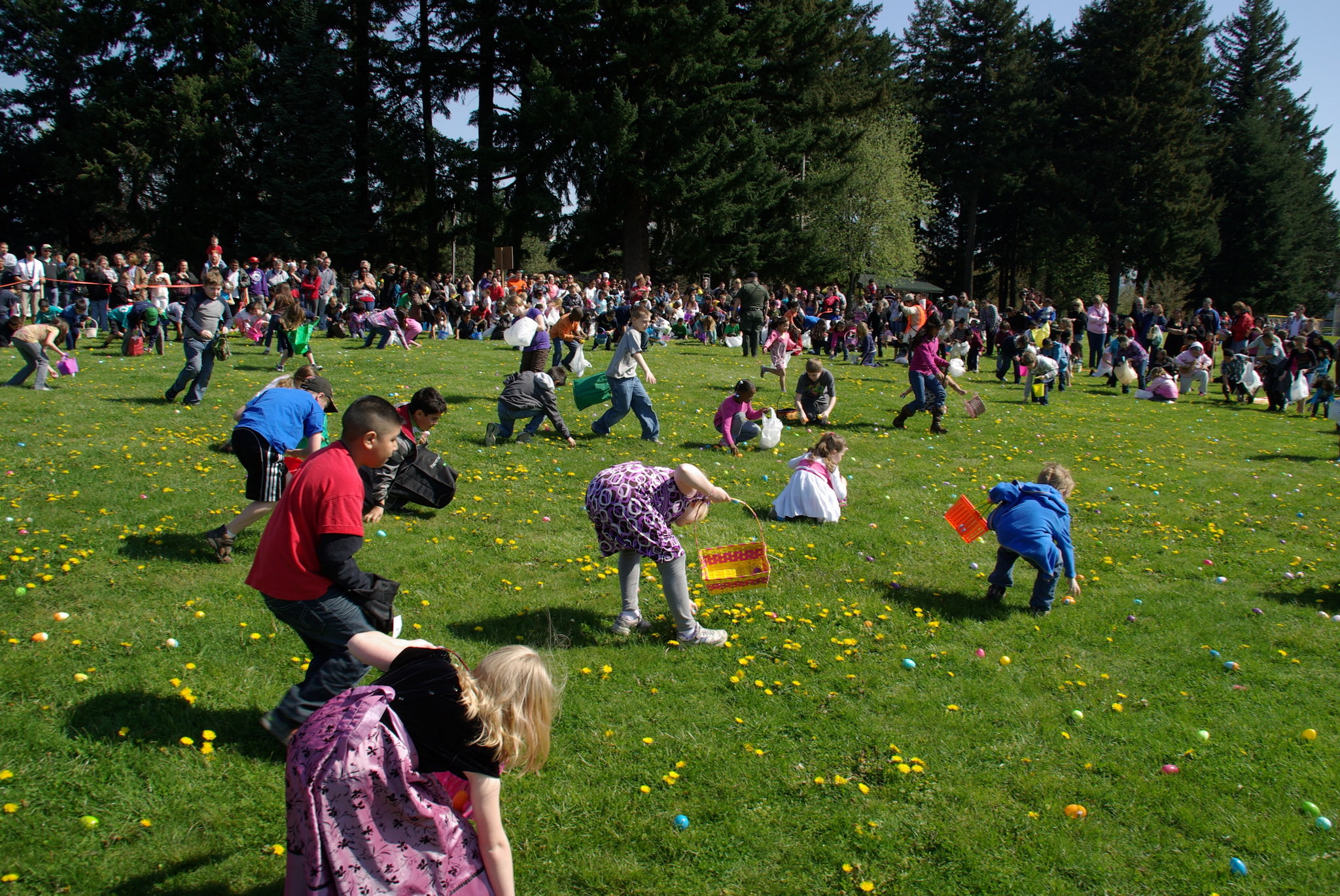
Lizette Larson-Miller, a professor with the Graduate Theological Union of Berkeley,
traces the specific custom of the Easter egg hunt to the Protestant Christian Reformer
Martin Luther, stating „We know that Martin Luther had Easter egg hunts where the men
hid the eggs for the women and children went and it probably has this connection back
to this idea of eggs being the tomb“.
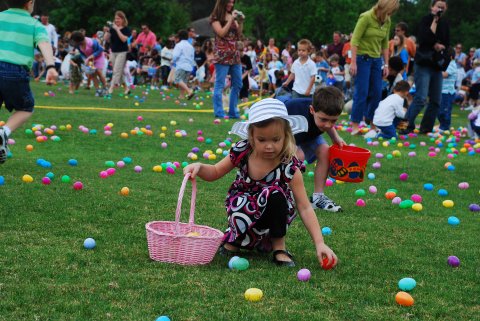
The eggs are very decorative and colorful and each color has a special meaning.
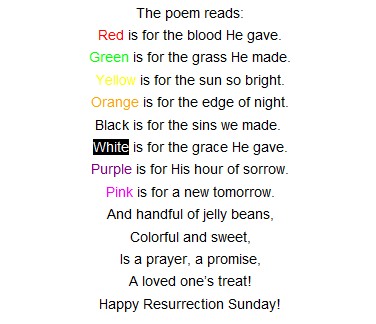

Here you can see the so named Jelly Bean Prayer, all colors with a different meaning.

