
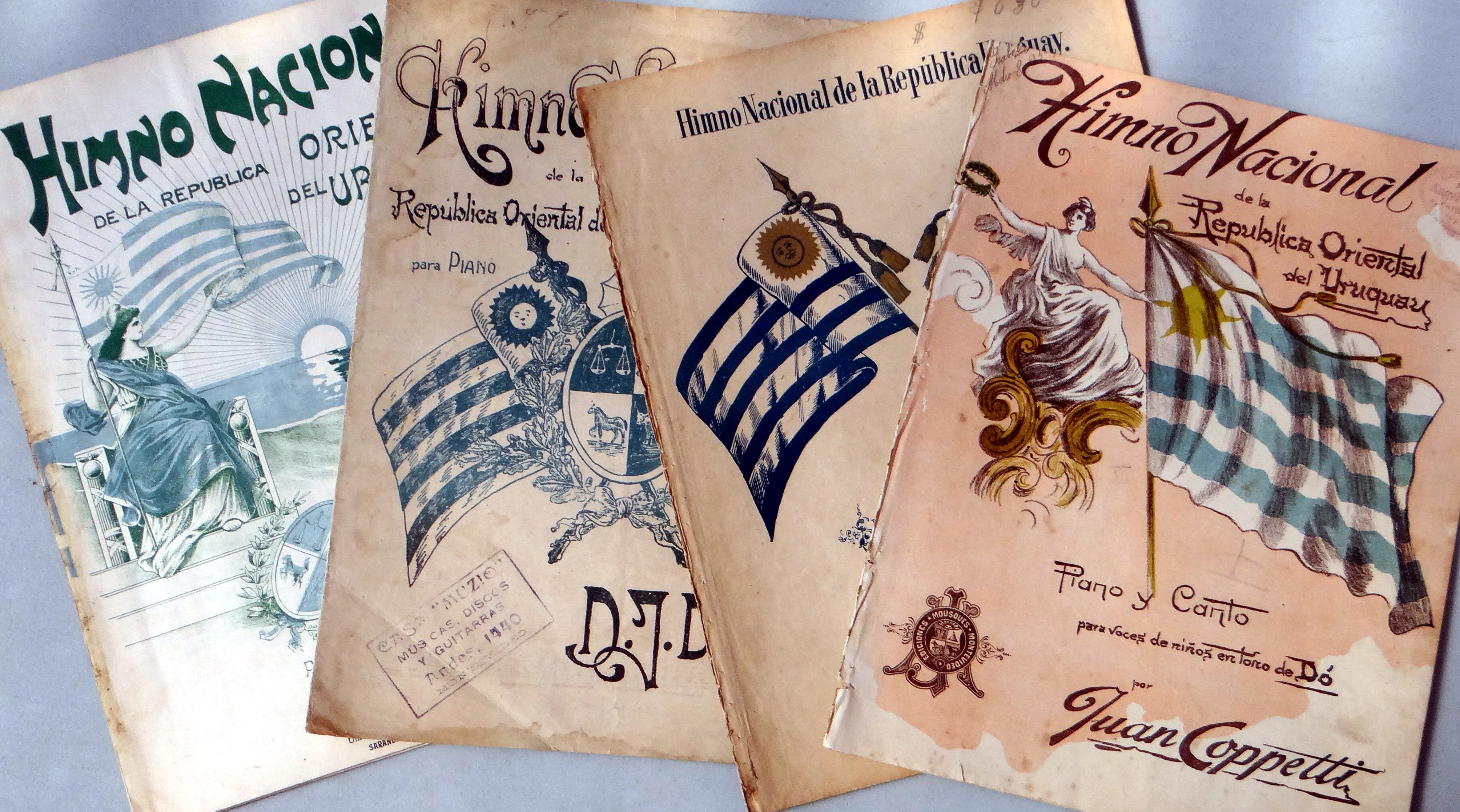
Uruguay’s National Anthem – the best, and longest, in the world.
This post is not about collecting sheet music, just about the National Anthem of
Uruguay. Details and information about this fantastic hobby „collecting music sheets“
I’ll post in later parts, also many more music sheets from Uruguay.
As well as being an important national symbol, the National Anthem of Uruguay is
a good piece of music. This was confirmed in 2008 when Alex Marshall, a journalist
writing for the UK Guardian, listened to the national anthems of all 205 countries
that would be competing in the Beijing Olympics. He then selected the 10 national
anthems with the best musical compositions and ranked them. Number one on his
list was the National Anthem of Uruguay.
Of course, ranking a music is very much of personal taste. I read at least 8 national
anthem rankings and every one had a different result. Let’s leave it like this and
let’s enjoy the Uruguayan Anthem, music, vocals and pictures of the country.
Click on down here or „copy and paste“ the you-tube address into your browser.
https://www.youtube.com/watch?v=GI6QKEdYgNc
After Uruguay’s independence in 1828 without a national anthem, the poet Francisco
Esteban Acuna de Figueroa (1791 – 1862) offered to write one for the government,
and it was accepted as a draft anthem in 1830 , then officially approved by the
government three years later, at the 8th of July 1833.
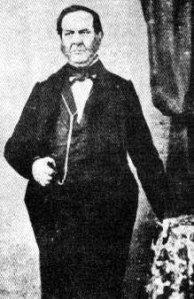
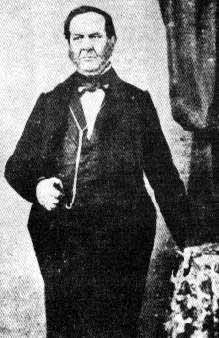
Francisco Esteban Acuna de Figueroa (September 3, 1791 – October 6, 1862)
was an Uruguayan poet and writer.
The anthem’s lyrics included bitter attacks against Uruguay’s former oppressors,
Spain, Portugal, and Brazil. However, it soon became apparent that a national
anthem that disparaged specific countries by name was not helpful to Uruguay’s
international relations. Acuna de Figueroa revised his work in 1845 taking out
the pointed references to Spain, Portugal, and Brazil, and adding the more generic
“Tyrants beware/tremble!“.
Spanish Lyrics:
Orientales, la Patria o la tumba!
Libertad o con gloria morir.(x2)
Es el voto que el alma pronuncia
y que heroicos sabremos cumplir.(x2)
Libertad, libertad, orientales
este grito a la patria salvo
y a sus bravos en fieras batallas
de entusiasmo sublime inflamo
Este don sacrosanto la gloria
merecimos, tiranos: temblad !
Libertad en la lid clamaremos
y muriendo también libertad !
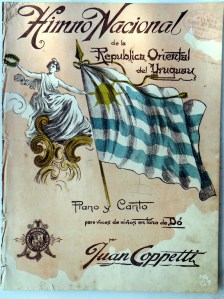
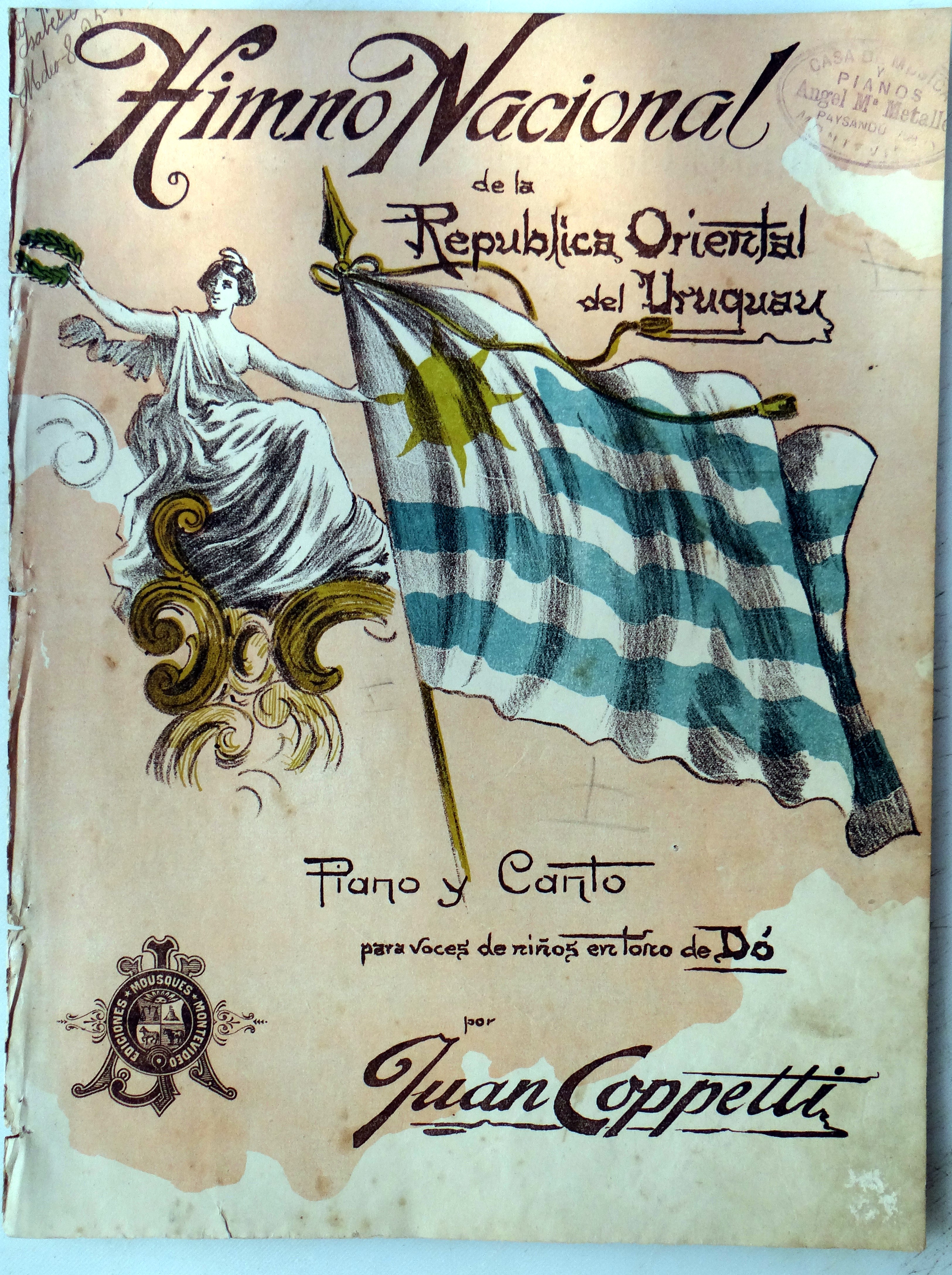
This sheet music is from 1890 and very nice designed. Dedicated to Juan Copetti/Capetti or
Juan Copelli/Capelli. It was impossible for me to find out who this person was. May be in a later
post I can add more information. This is very very unusual, because the Anthem, very clearly, was
composed by Debali. See story down here. This is an extreme rare music sheet, Authors collection.
English Translation:
Uruguayans, the Fatherland or Death!
Orientals, our nation or the grave,
Liberty or with glory we die.
Its the vows that our souls pronounce
and which heroic we will fulfill.
Liberty, Liberty, Orientals.
This is the outcry which our nation saved
and its braves in fierce battles
of sublime enthusiasm inflamed
This Holy gift of Glory we deserved
Tyrants: Tremble !
Liberty in combat we will Cry Out !
and even dying, Freedom we shall also Shout !
Acuna de Figueroa’s work had 11 versus and a chorus. In 1938 a government decree
determined that just two versus of the Anthem would be sung. Today, one verse and
the chorus are sung.
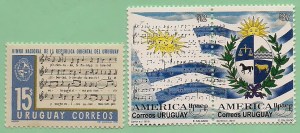
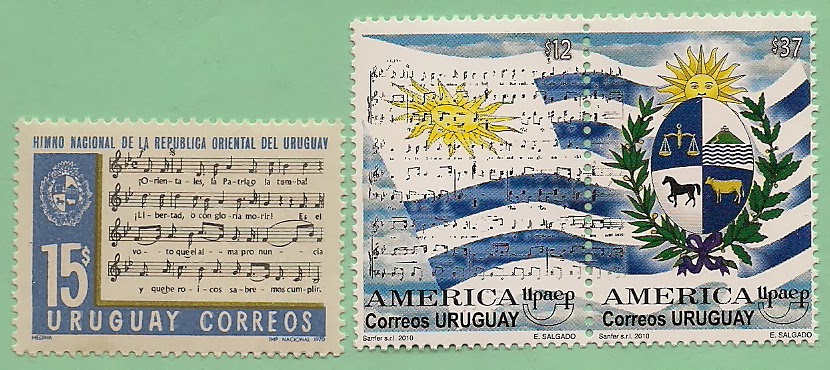
Uruguayan stamps referring to the Himno National de la Republica Oriental del Uruguay.
National Anthem of the Republic East of the Uruguay.
The music, typical for a Latin American epic Anthem is operatic in nature,
reminiscent of works by Italian composers Donizetti, Verdi, Bellini or Rossini.
According to some authors, the melody of the verses is identical, almost
plagiarized, to the opera Lucrezia Borgia by Gaetano Donizetti.
However, the music was composed by Francisco Jose Debali (1791 – 1859),
a Hungarian who had moved to Uruguay in 1838 after having served as a military
band master in the Piemont area of Italy. His name writes sometimes with „2 ll“,
like Deballi and sometimes with „1 l“, like Debali. Since his original Hungarian
name is „Ferenc Jozsef Debaly“, „one l“, I use only „one l“ in my post too.
For a short while he stayed at Sao Paulo, Brazil, but he fled that place because of
a yellow fever epidemic. Debali then arrived in Uruguay in 1838. In this country
he was the director of the orchestra at the Sala de Comedias in Montevideo
from 1841 to 1848.
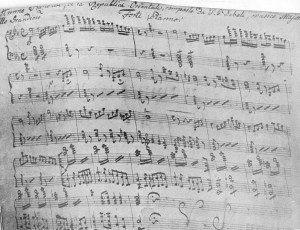
Handwritten manuscript of the Debali composition „Hymno National“. Notice the
handwritten words on top of the composition „Republica Orientale composito da Debali“.
Presumably collection of „Escuela National de Artes y Oficios“, Montevideo.
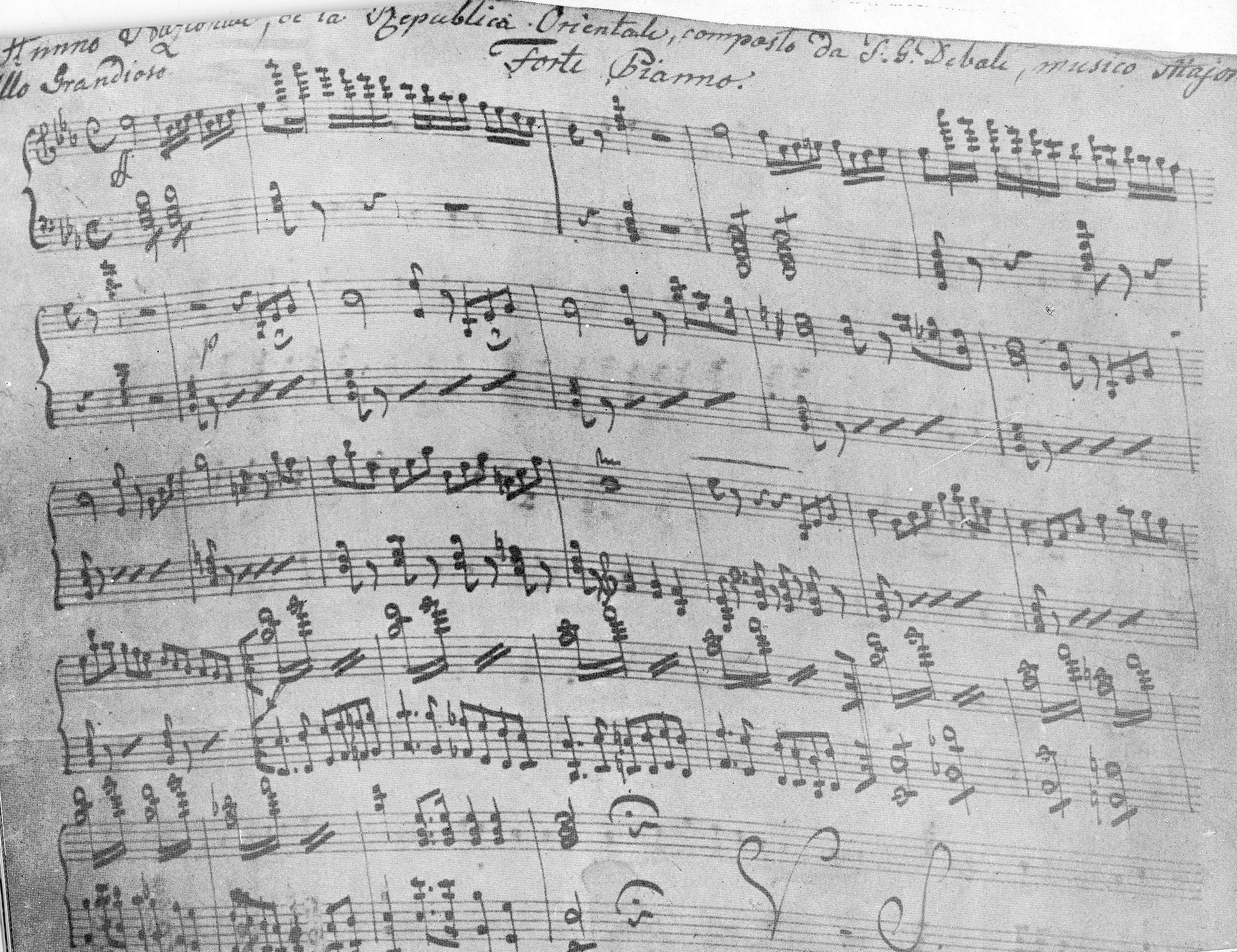
Acuna de Figueroa’s words were first set to a piece of music by a
composer named de Barros, but in 1848 it was set to Debali’s work. The extended
grandeur of the music makes it run very long, even though only one verse is
performed today; at 105 bars and almost five minutes in length.
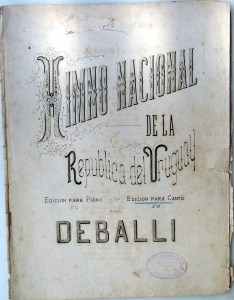
Old music sheet of „Himno Nacional“, printed about 1860, Authors collection.
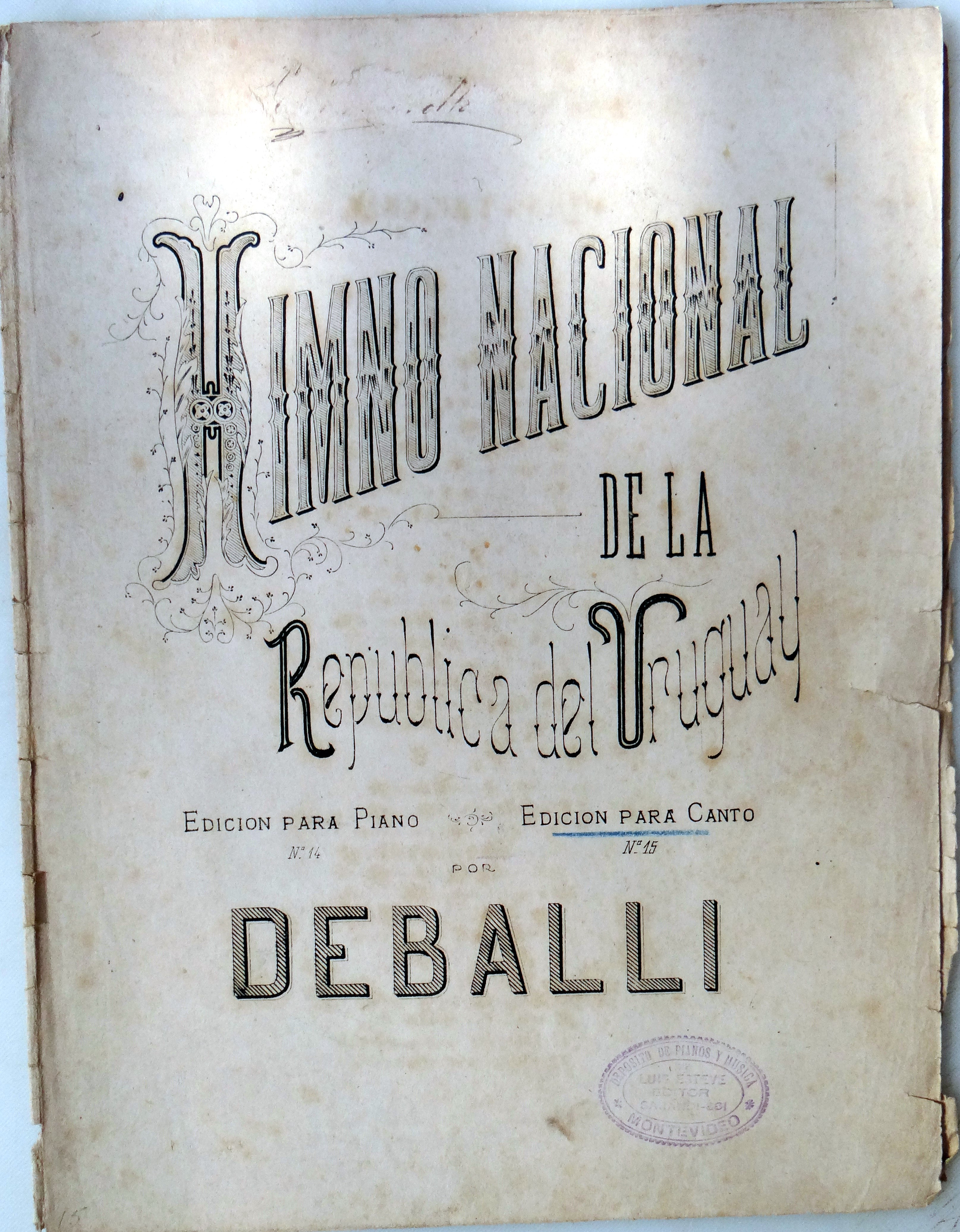
The music with the introduction, just one verse, and the chorus takes over
four-and-a-half minutes to play, making it the longest national anthem in the world.
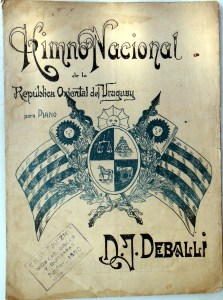
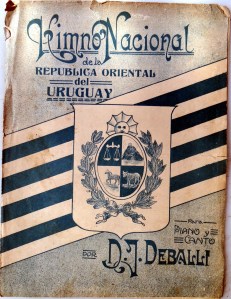
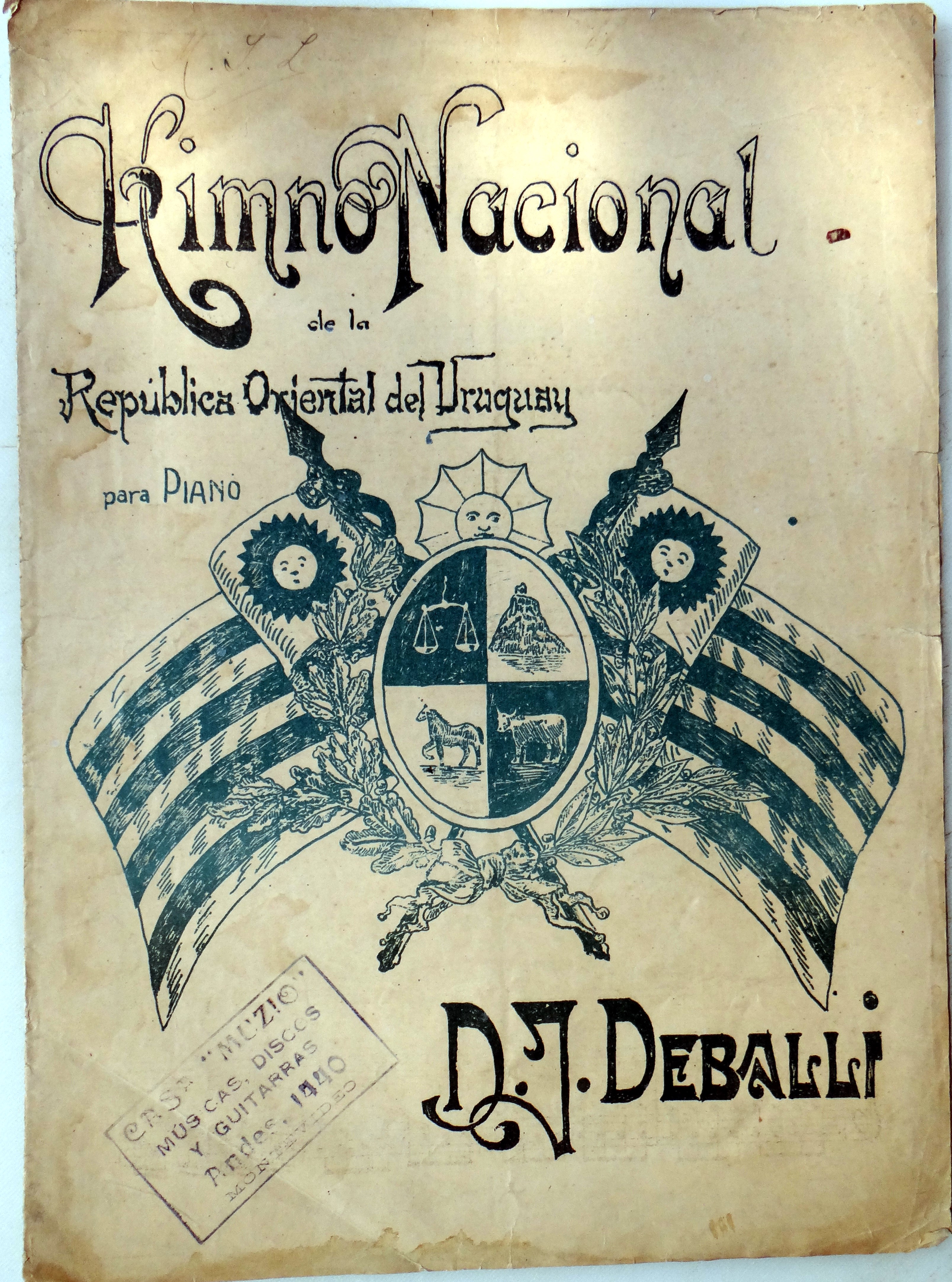
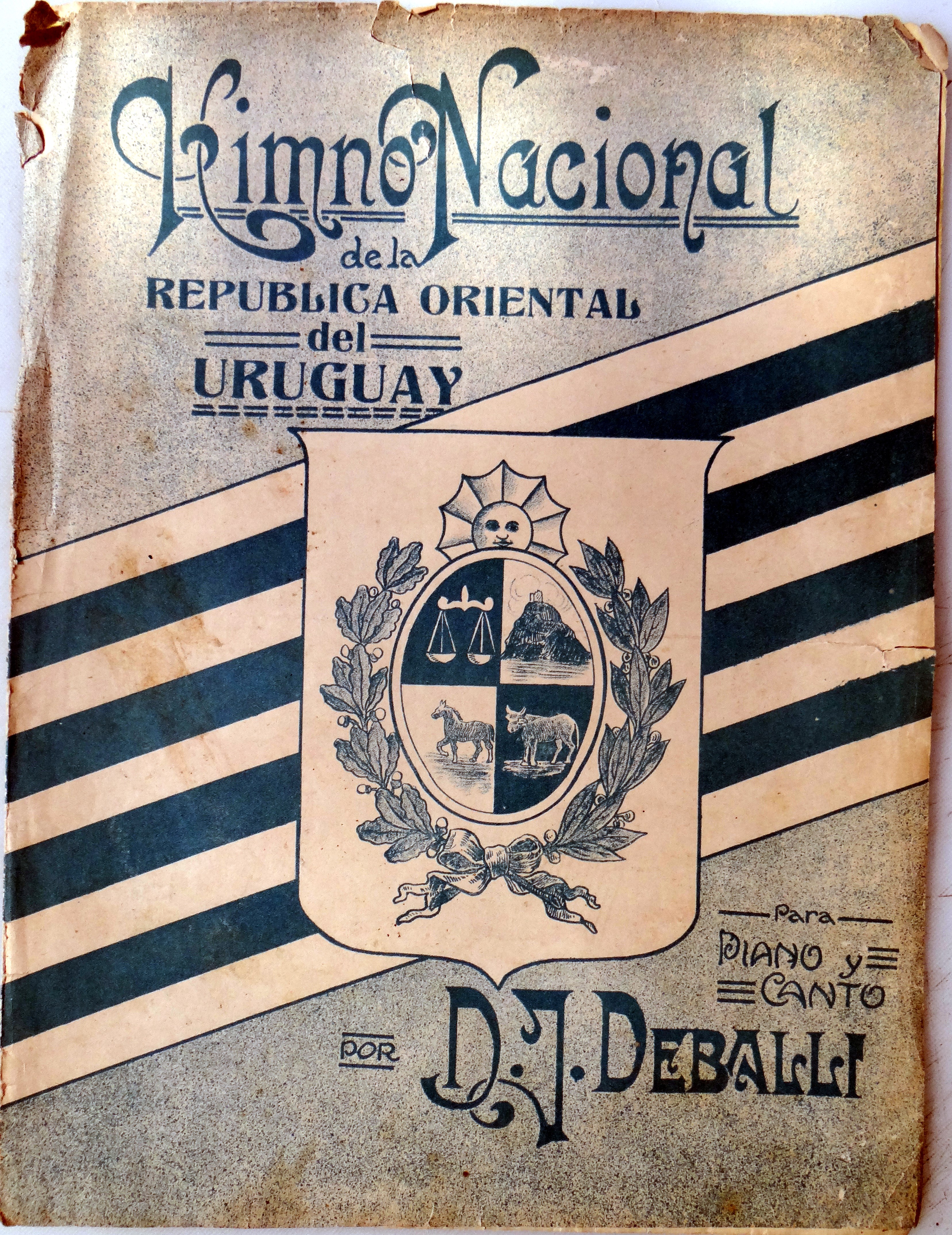
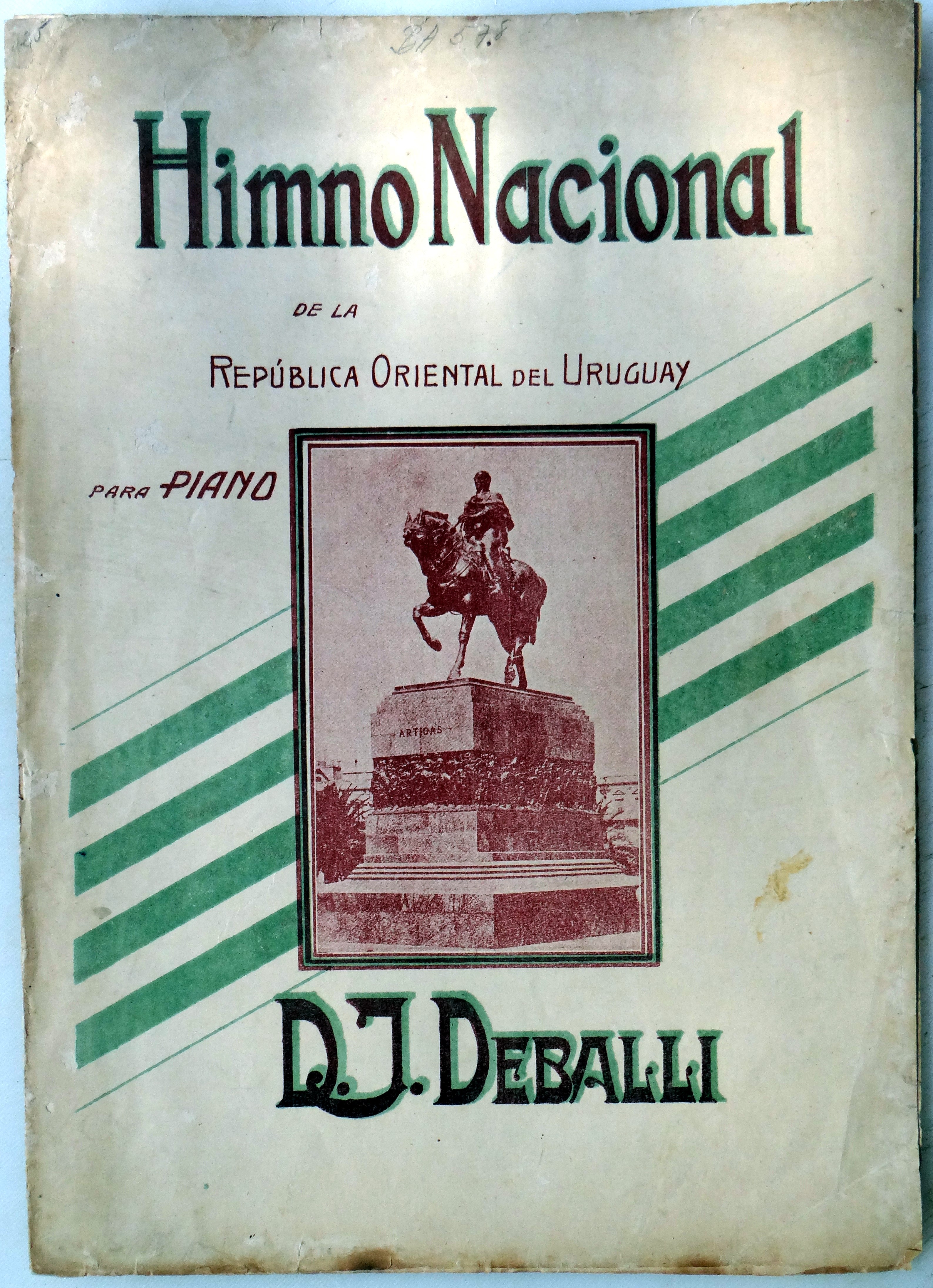
Every few years out came new prints with different covers, to stimulate the market.
These two are from around 1900. After over 100 years some are in very bad condition.
Authors collection.
The music was composed by Francisco José Debali with the collaboration of
Fernando Quijano. He was the assistant of composer Francisco Jose Debali.
Fernando Quijano (1805 – 1871) was an Uruguayan songwriter. And that was the main
reason to credit Quijano over Debali (a Hungarian) with the National Anthem.
Quijano’s death in 1871 came 12 years after the death of his more eminent fellow
composer Debali, with whom he collaborated, but, given the facts that he lived
longer than Debali in the young Oriental Republic of Uruguay and that Debali
spoke little Spanish, these factors served to enhance his reputation. Anyhow,
today every one knows and accepts that Debali is the composer of Uruguay’s
National Anthem.
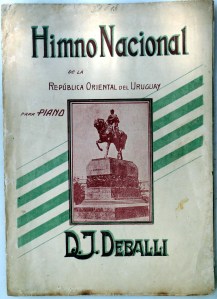
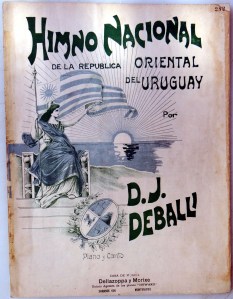
Two fine examples of later prints, around 1920’s. The left one came on the market just after
the completion of the „Artigas Monument“ on Plaza Independencia, Montevideo 1916.
Authors collection.
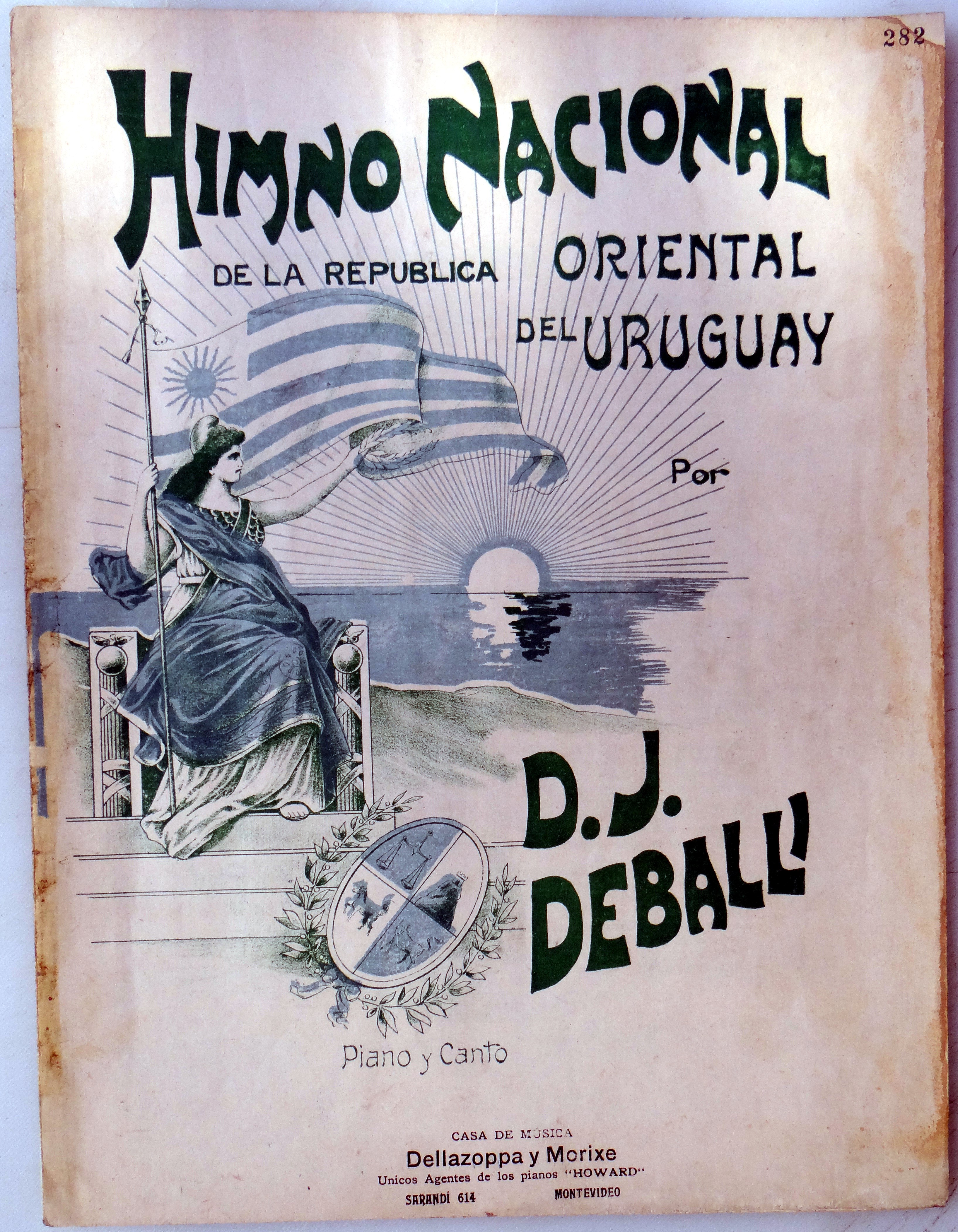
Ninety years later (May 20, 1938) a new decree incorporated modifications by
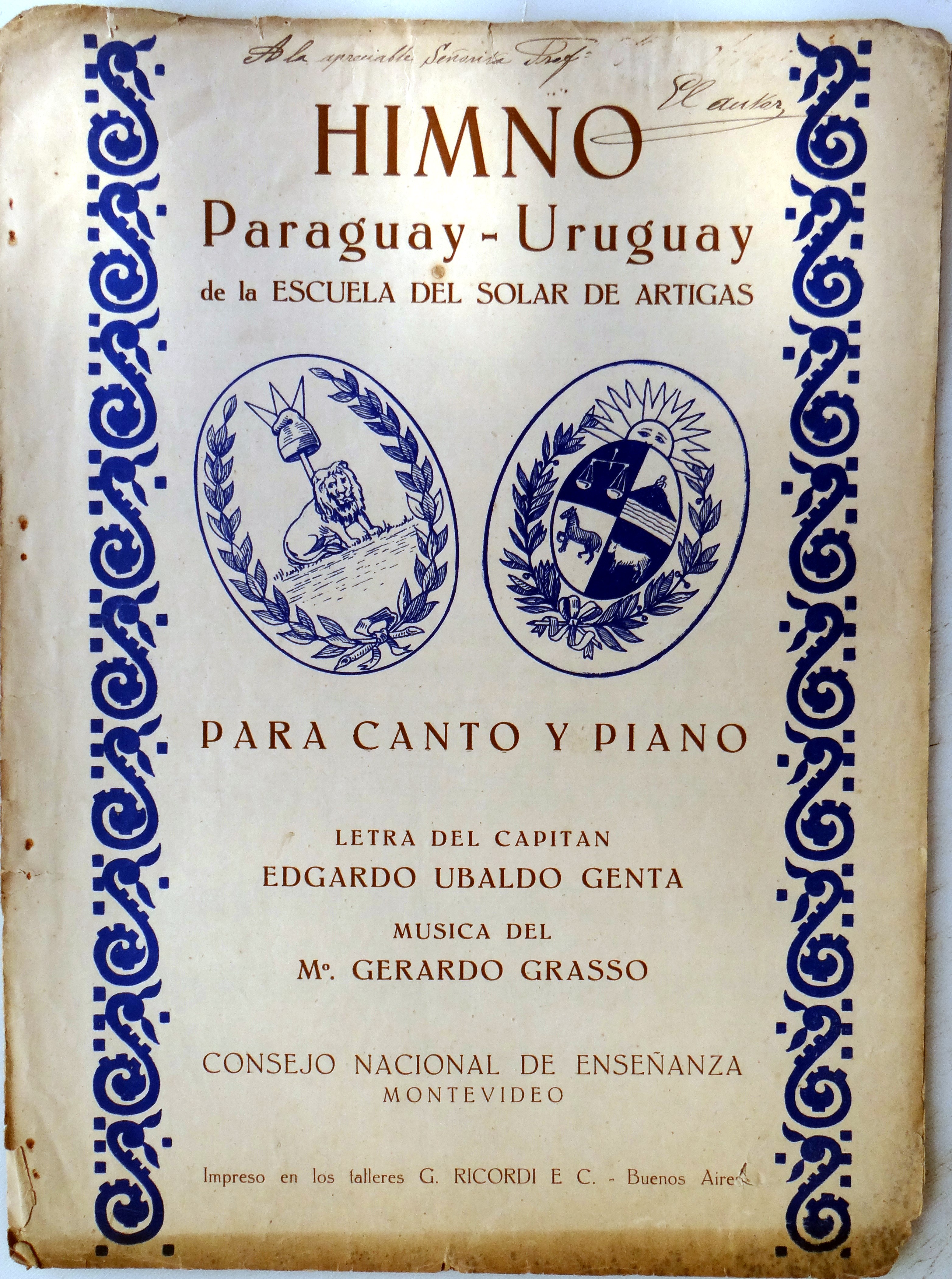
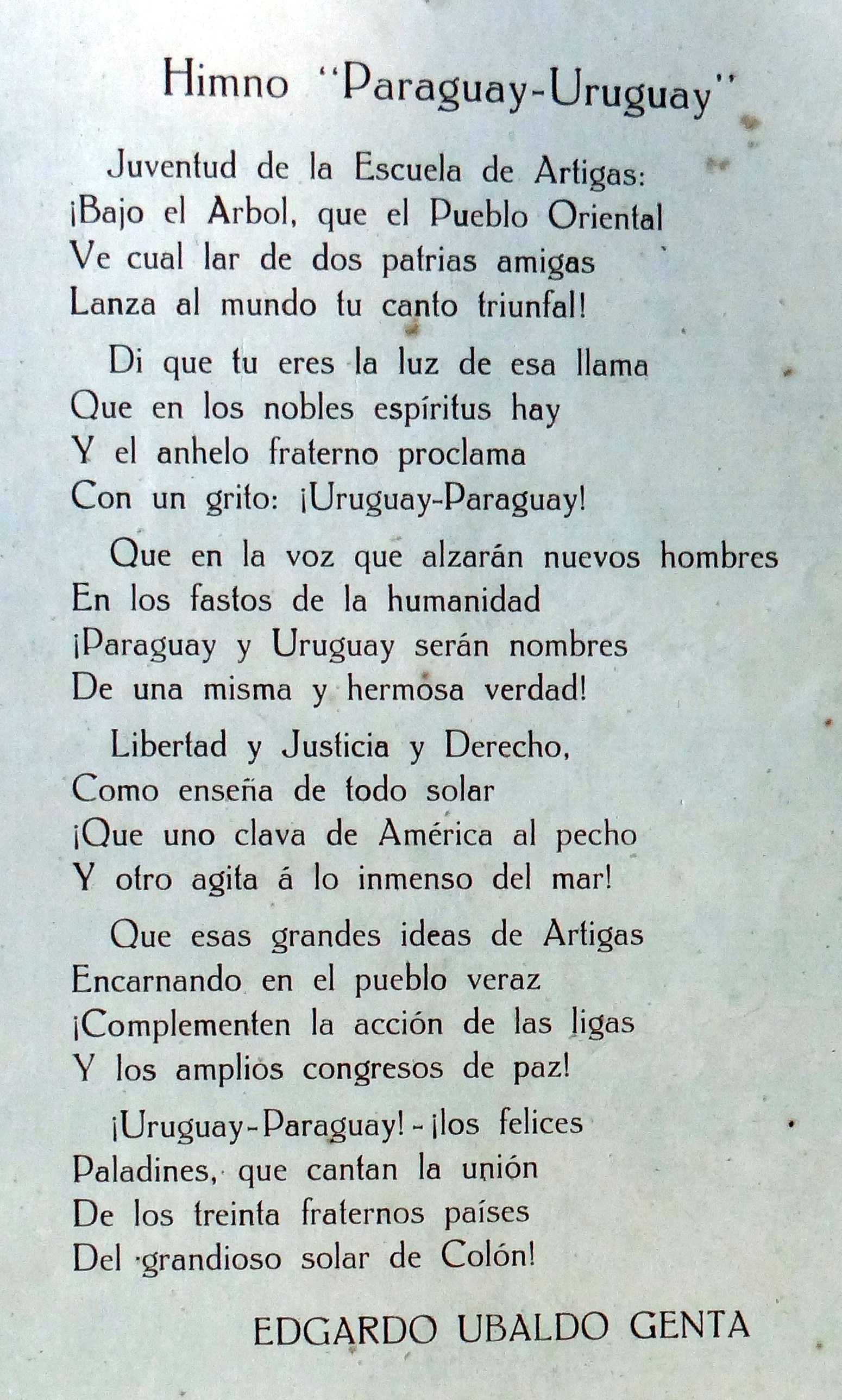
Gerardo Grasso and Benone Calcavecchia. Grasso also composed the „Himno Paraguay-
Uruguay“, which I show here and also the text of E.U. Genta. But the idea to have
an Anthem for two countries could have never been realized.
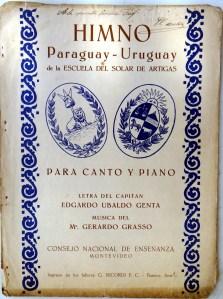
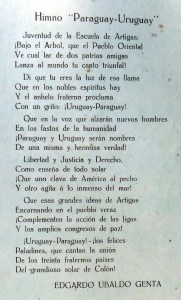
The Grasso „Anthem of Paraguay and Uruguay“ with text of Genta, Authors collection.
The National Anthem of Uruguay is played on national holidays, at national events,
and at most official ceremonies. It is a deeply rooted national symbol of freedom
and self governance for the people of the Republica Oriental del Uruguay.


I rather like the idea of a national anthem that includes bitter attacks against Uruguay’s former oppressors, Spain, Portugal, and Brazil. (Perhaps there’s a reason I’m not in the Diplomatic Corps.)
LikeLike
You are right, diplomacy is for „special“ people only.
LikeLike