
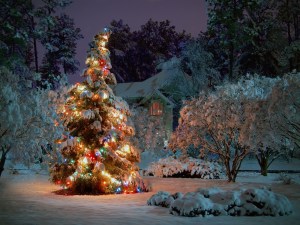

Today is Christmas evening. Some countries celebrate today, others tomorrow on Christmas day.
It doesn’t matter if you live in the northern or southern hemisphere, with snow or on the beach.
If you want a Christmas tree and celebration, just do it and enjoy the holidays.
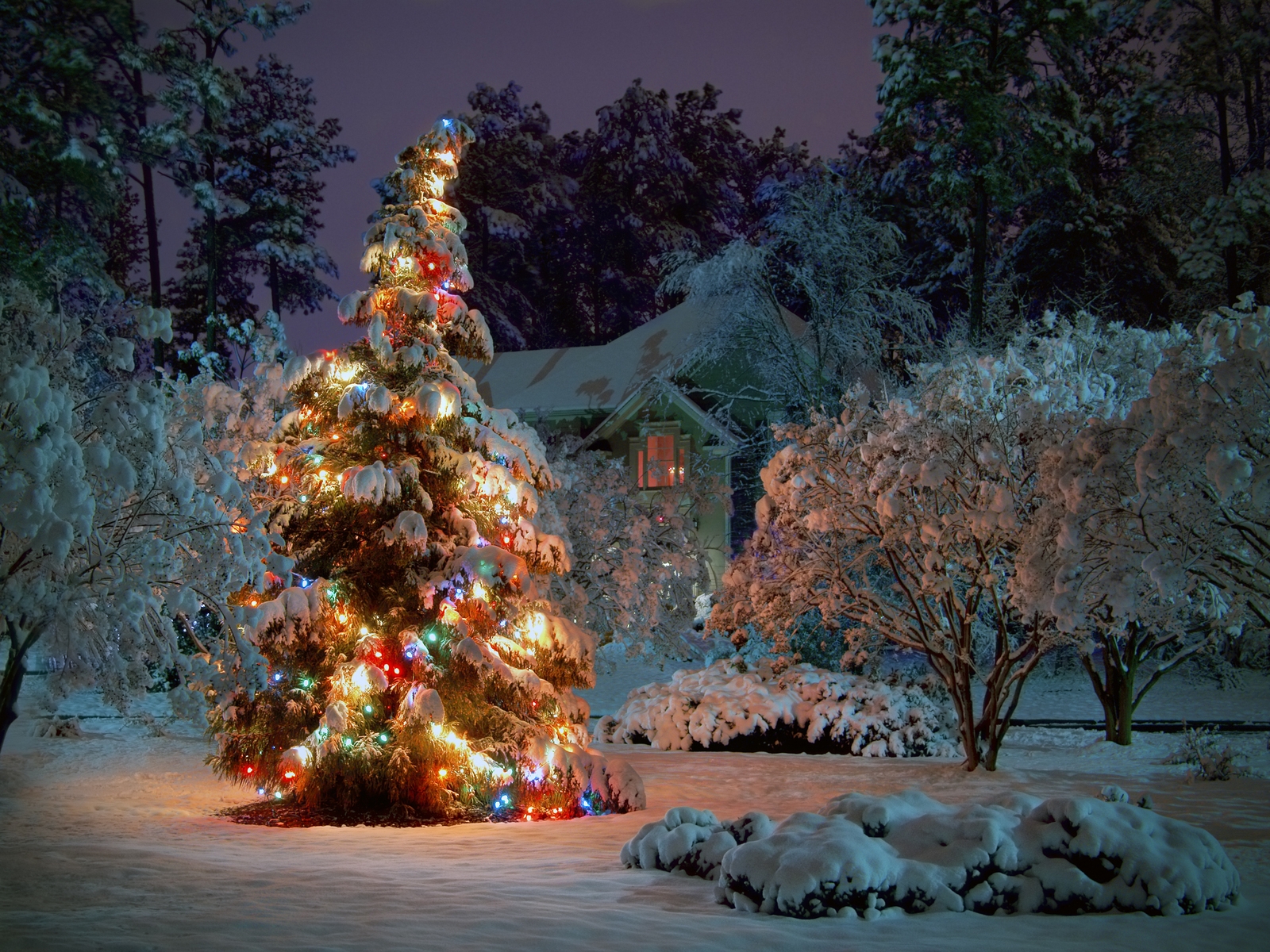

How It All Got Started
Long before the advent of Christianity, plants and trees that remained green all year had a special meaning for people in the winter. Just as people today decorate their homes during the festive season with pine, spruce, and fir trees, ancient peoples hung evergreen boughs over their doors and windows. In many countries it was believed that evergreens would keep away witches, ghosts, evil spirits, and illness.
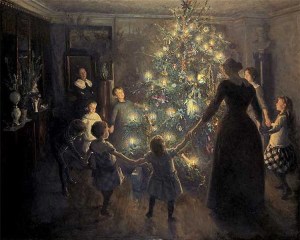
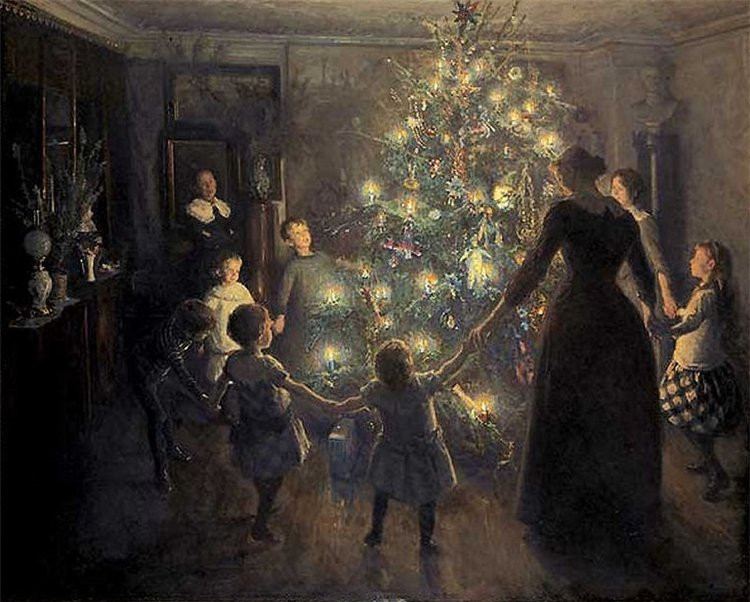
The historic dancing around the Christmas tree. Painting from late 1800’s.
In the Northern hemisphere, the shortest day and longest night of the year falls on December 21 or December 22 and is called the winter solstice. Many ancient people believed that the sun was a god and that winter came every year because the sun god had become sick and weak. They celebrated the solstice because it meant that at last the sun god would begin to get well. Evergreen boughs reminded them of all the green plants that would grow again when the sun god was strong and summer would return.
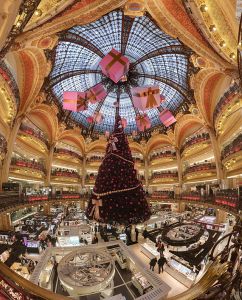
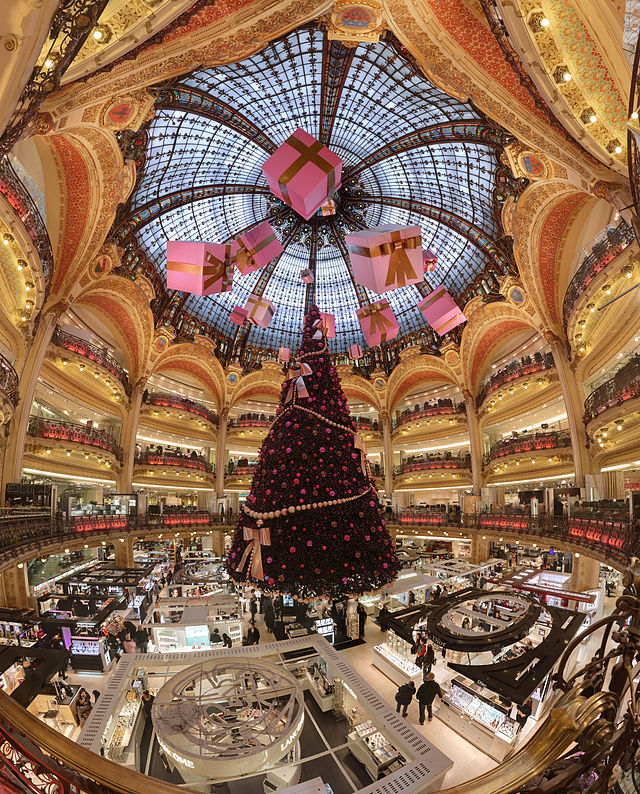
An Christmas tree stands at the center of the department store Galleries Lafayette in Paris, France.
The ancient Egyptians worshiped a god called Ra, who had the head of a hawk and wore the sun as a blazing disk in his crown. At the solstice, when Ra began to recover from the illness, the Egyptians filled their homes with green palm rushes which symbolized for them the triumph of life over death.
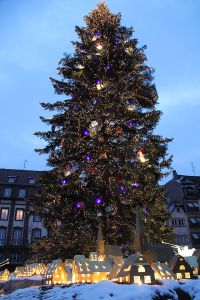
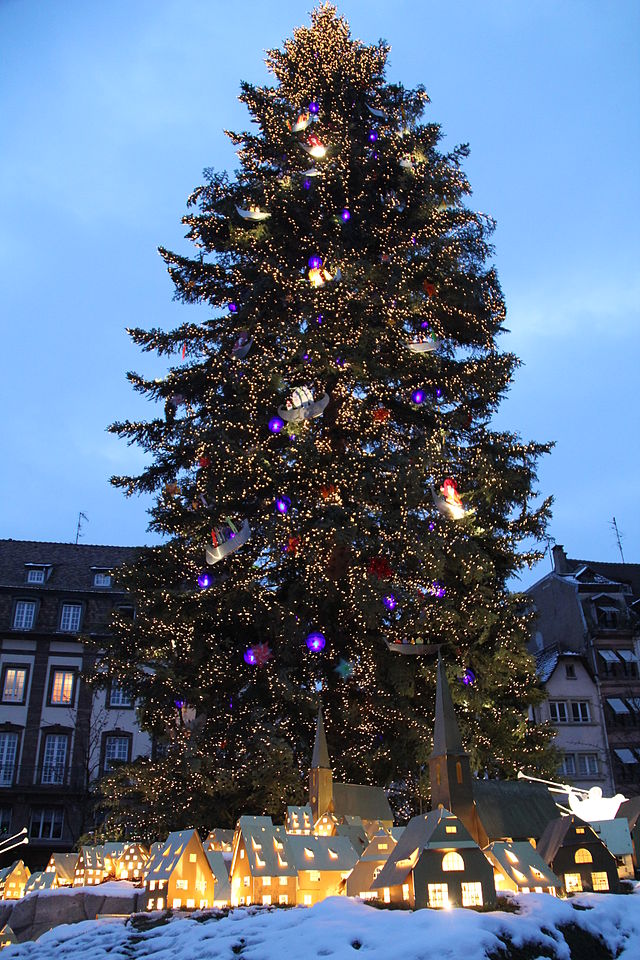
Thousands of lights on this Christmas tree in Strasbourg, France.
Early Romans marked the solstice with a feast called the Saturnalia in honor of Saturn, the god of agriculture. The Romans knew that the solstice meant that soon farms and orchards would be green and fruitful. To mark the occasion, they decorated their homes and temples with evergreen boughs. In Northern Europe the mysterious Druids, the priests of the ancient Celts, also decorated their temples with evergreen boughs as a symbol of everlasting life. The fierce Vikings in Scandinavia thought that evergreens were the special plant of the sun god, Balder.

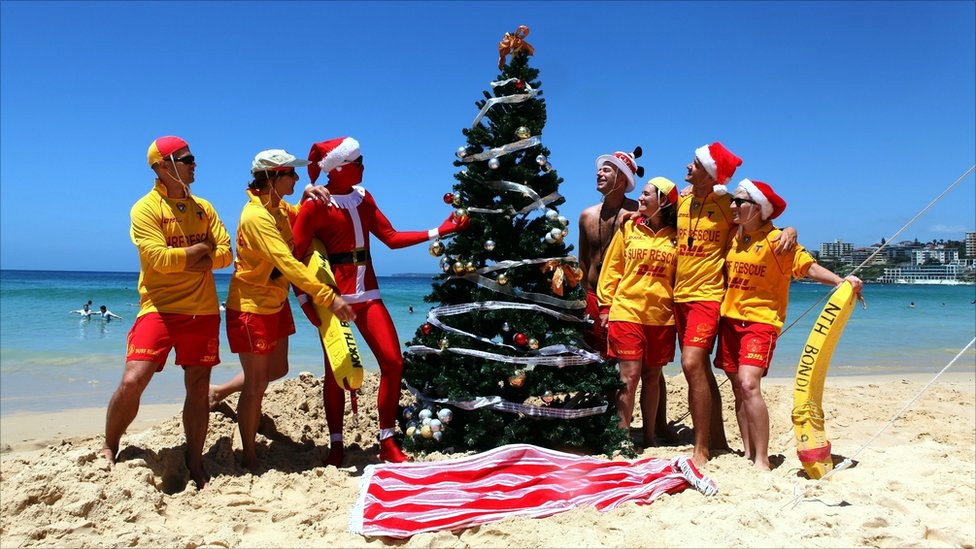
Christmas tree at Bondi Beach, Sydney Australia. Different countries – different Christmas celebrations.
Germany is credited with starting the Christmas tree tradition as we now know it in the 15th century when devout Christians brought decorated trees into their homes. Some built Christmas pyramids of wood and decorated them with evergreens and candles if wood was scarce. It is a widely held belief that Martin Luther, the 16th-century Protestant reformer, first added lighted candles to a tree. Walking toward his home one winter evening, composing a sermon, he was awed by the brilliance of stars twinkling amidst evergreens. To recapture the scene for his family, he erected a tree in the main room and wired its branches with lighted candles.
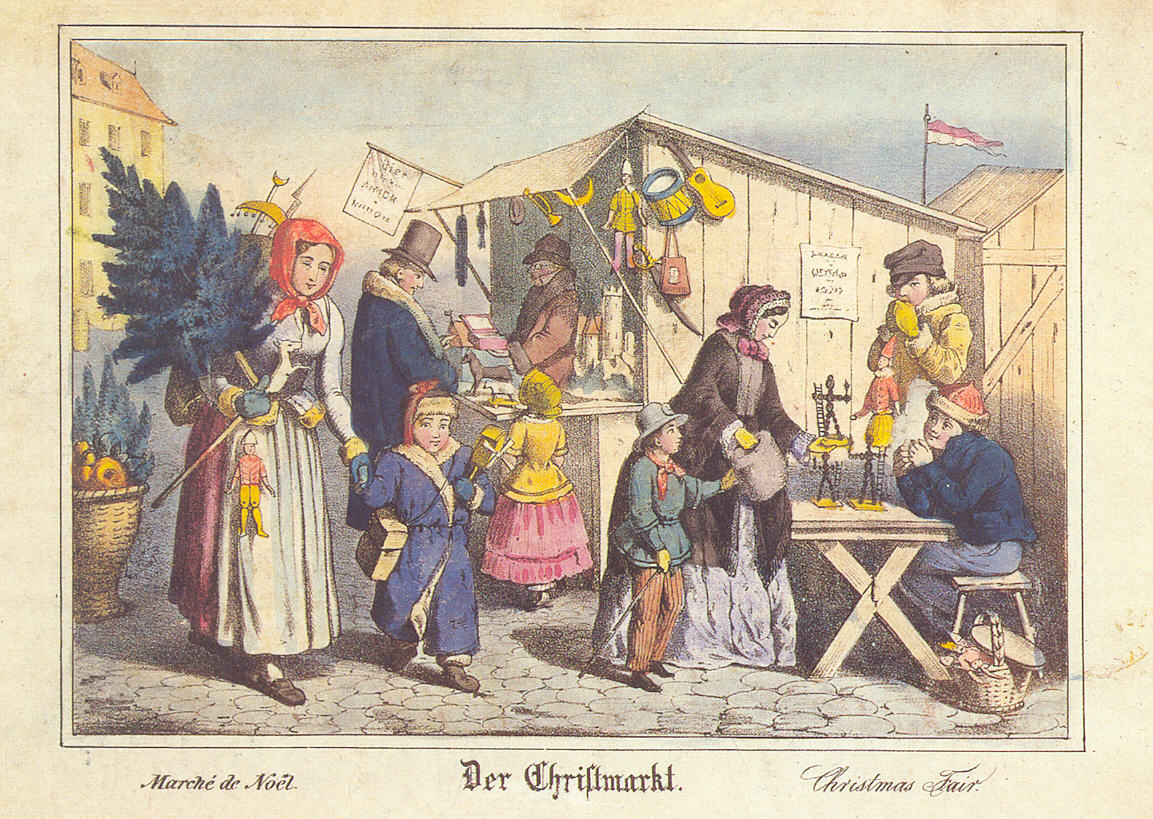
German Cristmas market around 1800, with Christmas tree sale. Hand colored engraving.
Most 19th-century Americans found Christmas trees an oddity. The first record of one being on display was in the 1830s by the German settlers of Pennsylvania, although trees had been a tradition in many German homes much earlier. The Pennsylvania German settlements had community trees as early as 1747. But, as late as the 1840s Christmas trees were seen as pagan symbols and not accepted by most Americans.
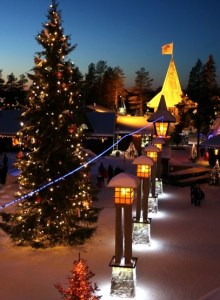
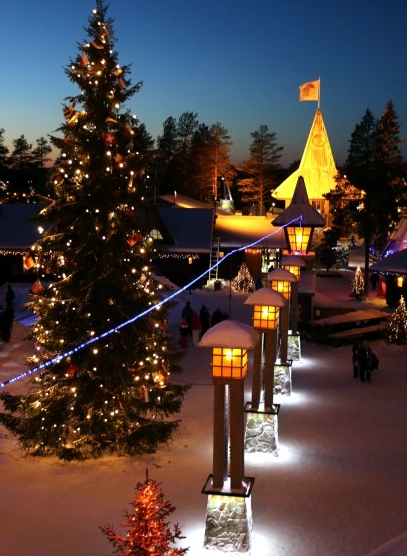
The Arctic Circle line in Santa Claus Village in Rovaniemi. Santa Claus Village
is situated right on the Arctic Circle (66° 32′ 35”) in Rovaniemi in Finnish
Lappland. It’s a popular destination to cross the Arctic Circle line, and to meet
Lappland’s most famous inhabitant – Santa.
It is not surprising that, like many other festive Christmas customs, the tree was adopted so late in America. To the New England Puritans, Christmas was sacred. The pilgrims’s second governor, William Bradford, wrote that he tried hard to stamp out “pagan mockery” of the observance, penalizing any frivolity. The influential Oliver Cromwell preached against “the heathen traditions” of Christmas carols, decorated trees, and any joyful expression that desecrated “that sacred event.” In 1659, the General Court of Massachusetts enacted a law making any observance of December 25 (other than a church service) a penal offense; people were fined for hanging decorations. That stern solemnity continued until the 19th century, when the influx of German and Irish immigrants undermined the Puritan legacy. The Christmas tree had arrived.

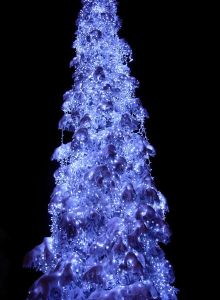
Handcarved Christmas tree from pine, Finnland. And an Ice tree in Santa Park Rovaniemi, Finnland.


If you are really interested in the history of the „Christmas Tree“, details,
photographs and much more, then I suggest to read the wonderful article in Wikipedia.
Click on:
http://en.wikipedia.org/wiki/Christmas_tree
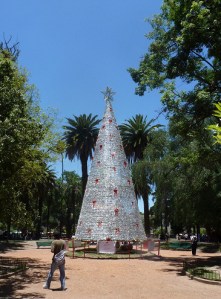
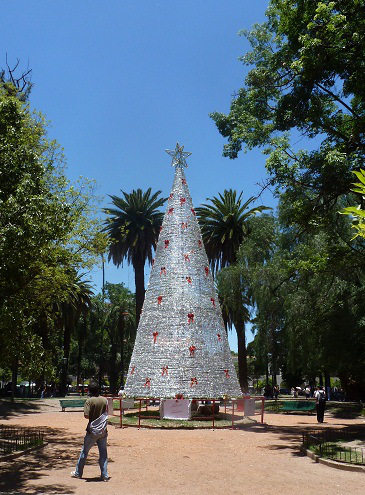
Silver shiny Cristmas tree made from Aluminum plates in a park of Buenos Aires, Argentina.
Christmas Trees Around the World
Canada
German settlers migrated to Canada from the United States in the 1700s. They brought with them many of the things associated with Christmas we cherish today—Advent calendars, gingerbread houses, cookies—and Christmas trees. When Queen Victoria’s German husband, Prince Albert, put up a Christmas tree at Windsor Castle in 1848, the Christmas tree became a tradition throughout England, the United States, and Canada.
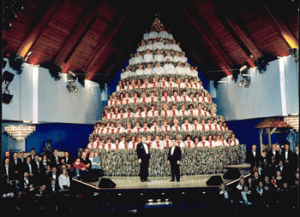
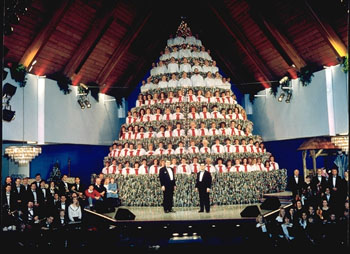
The Central Pentecostal Tabernacle church in Edmonton, Alberta has produced
„The Singing Christmas Tree“ for nearly 30 years. At 35 feet high, the tree
contains a choir of 125 and is illuminated with 4785 lights.
Mexico
In most Mexican homes the principal holiday adornment is el Nacimiento (Nativity scene). However, a decorated Christmas tree may be incorporated in the Nacimiento or set up elsewhere in the home. As purchase of a natural pine represents a luxury commodity to most Mexican families, the typical arbolito (little tree) is often an artificial one, a bare branch cut from a copal tree (Bursera microphylla) or some type of shrub collected from the countryside.
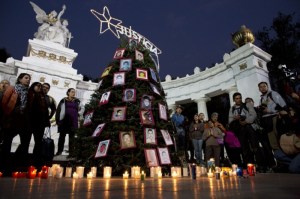
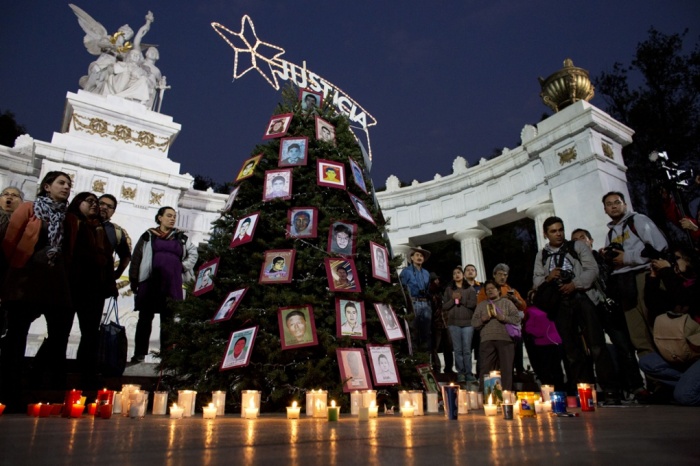
In Mexico City people decorate a Christmas tree decorated with pictures of the
43 students who have now been missing for more than two months and are now
presumed dead after being attacked by police in southern Mexico.
Britain
In 1846, the popular royals, Queen Victoria and her German Prince, Albert, were sketched in the Illustrated London News standing with their children around a Christmas tree. Unlike the previous royal family, Victoria was very popular with her subjects, and what was done at court immediately became fashionable—not only in Britain, but with fashion-conscious East Coast American Society.
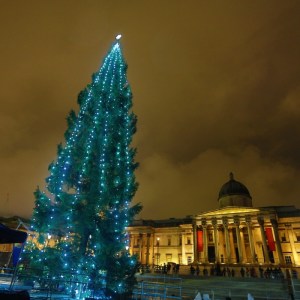
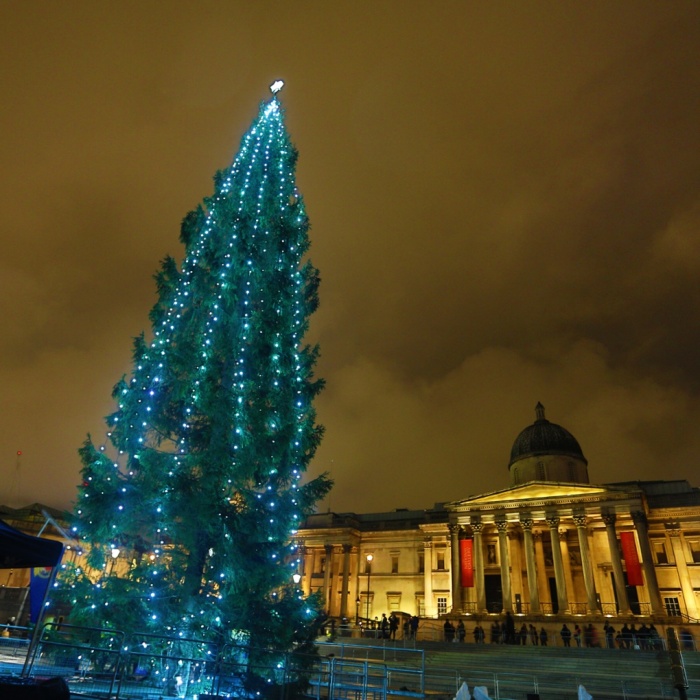
The traditional Christmas tree, a gift from the people of Norway, stands in Trafalgar Square, London.
Panama
The Christmas tree has joined the “Nacimiento” (Nativity scene) as a popular ornament because of the European population in Panama. Gifts are left under the tree on Christmas morning for the children. Parents and adults do not exchange gifts until New Year’s Day.
Rich company’s, banks, law firms and high rise buildings show a massive Christmas
lighting throughout the season. A big Christmas parade is hold in the City of Panama.
This Christmas parade is like a Latin American early Carnival Parade.
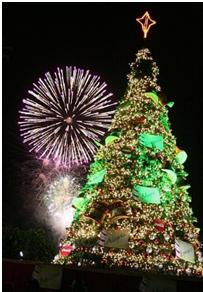
Christmas tree and fireworks in Panama, a Latin American style. Colorful, noisy and full of life.
Brazil
Although Christmas falls during the summer in Brazil, sometimes pine trees are decorated with little pieces of cotton that represent falling snow.
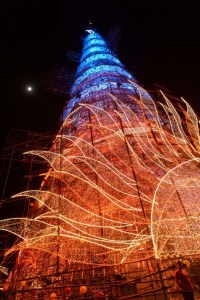
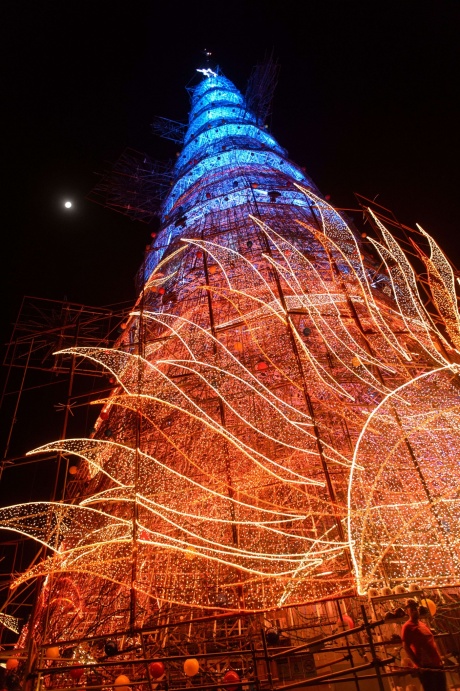
A 85-meter-high Christmas tree in Rio de Janeiro, Brazil is the world’s highest floating
Christmas tree as registered by the Guinness World Records.
Ireland
Christmas trees are bought anytime in December and decorated with colored lights, tinsel, and baubles. Some people favor the angel on top of the tree, others the star. The house is decorated with garlands, candles, holly, and ivy. Wreaths and mistletoe are hung on the door.
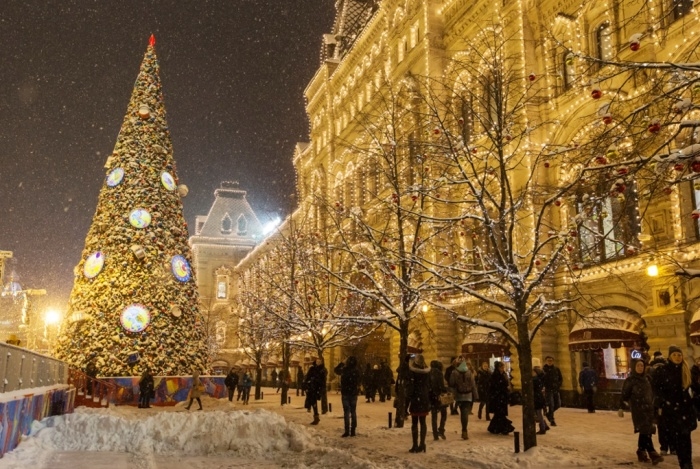
A snowy scene outside Moscow’s GUM department store in Red Square, Russia.
Sweden
Most people buy Christmas trees well before Christmas Eve, but it’s not common to take the tree inside and decorate it until just a few days before. Evergreen trees are decorated with stars, sunbursts, and snowflakes made from straw. Other decorations include colorful wooden animals and straw centerpieces.
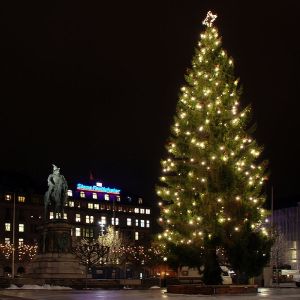
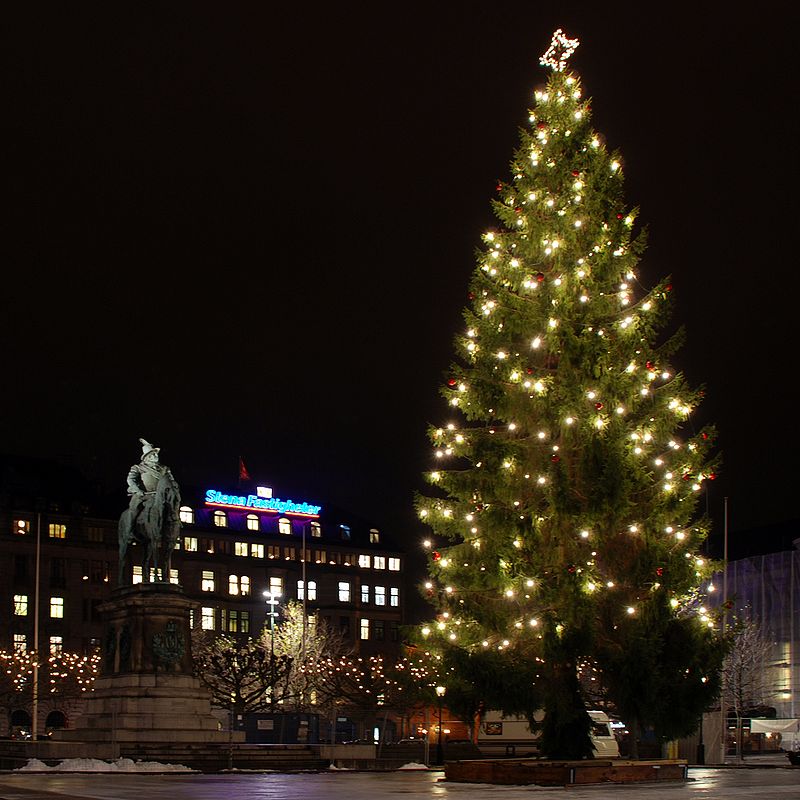
The Christmas tree in Malmoe, Sweden.
Norway
Norwegians often take a trip to the woods to select a Christmas tree, a trip that their grandfathers probably did not make. The Christmas tree was not introduced into Norway from Germany until the latter half of the 19th century; to the country districts it came even later. When Christmas Eve arrives, there is the decorating of the tree, usually done by the parents behind the closed doors of the living room, while the children wait with excitement outside. A Norwegian ritual known as “circling the Christmas tree” follows, where everyone joins hands to form a ring around the tree and then walk around it singing carols. Afterwards, gifts are distributed.
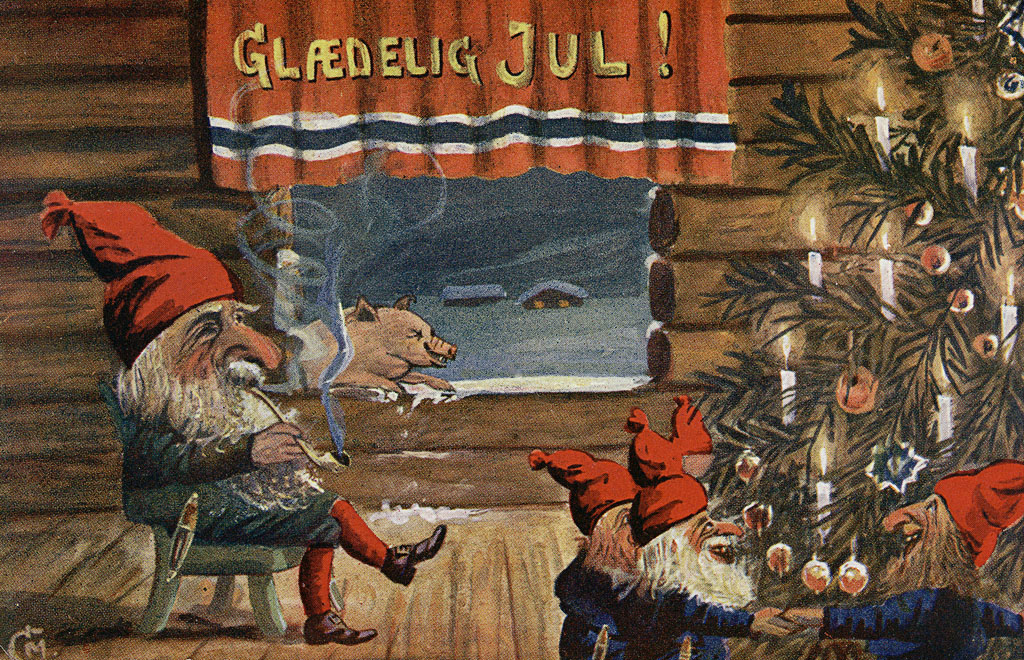
Norwegian Christmas greetings. Troll’s dancing around the tree and a „lucky pig“ in the window.
Ukraine
Celebrated on December 25th by Catholics and on January 7th by Orthodox Christians, Christmas is the most popular holiday in the Ukraine. During the Christmas season, which also includes New Year’s Day, people decorate fir trees and have parties.
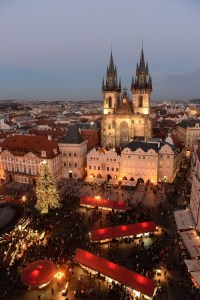
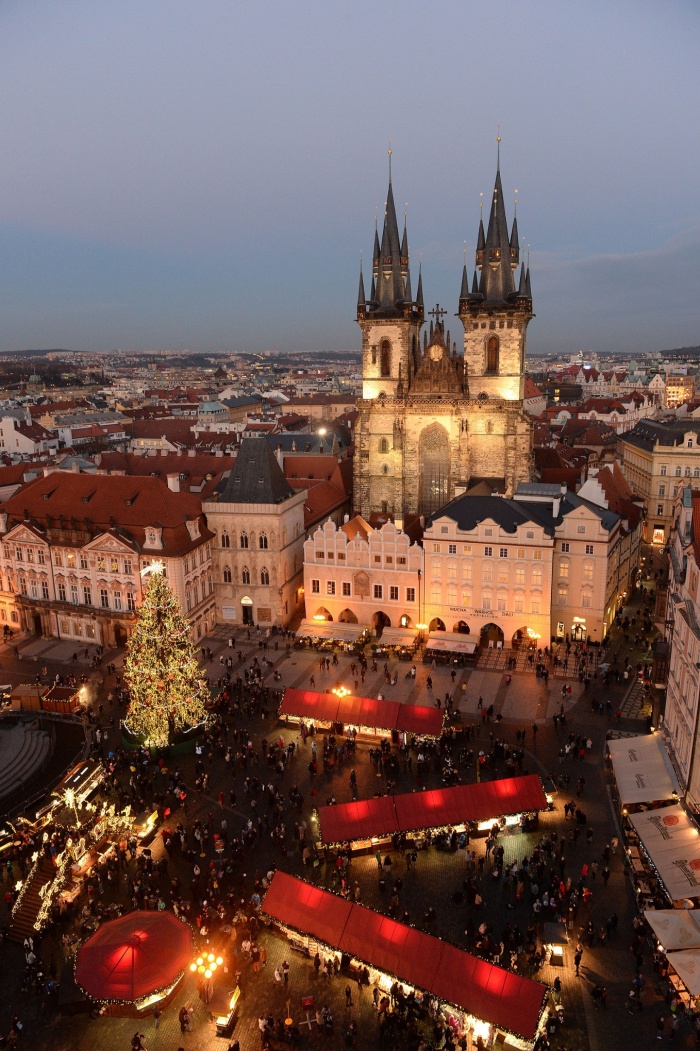
An illuminated Christmas tree sits in the center of the Christmas market in Prague’s
Old Town Square, Czech Republic.
Spain
A popular Christmas custom is Catalonia, a lucky strike game. Famous in these days is in Spain the multimillion Dollar raffle, where the winning numbers are sang out by children.
A tree trunk is filled with goodies and children hit at the trunk trying to knock out the hazel nuts, almonds, toffee, and other treats.
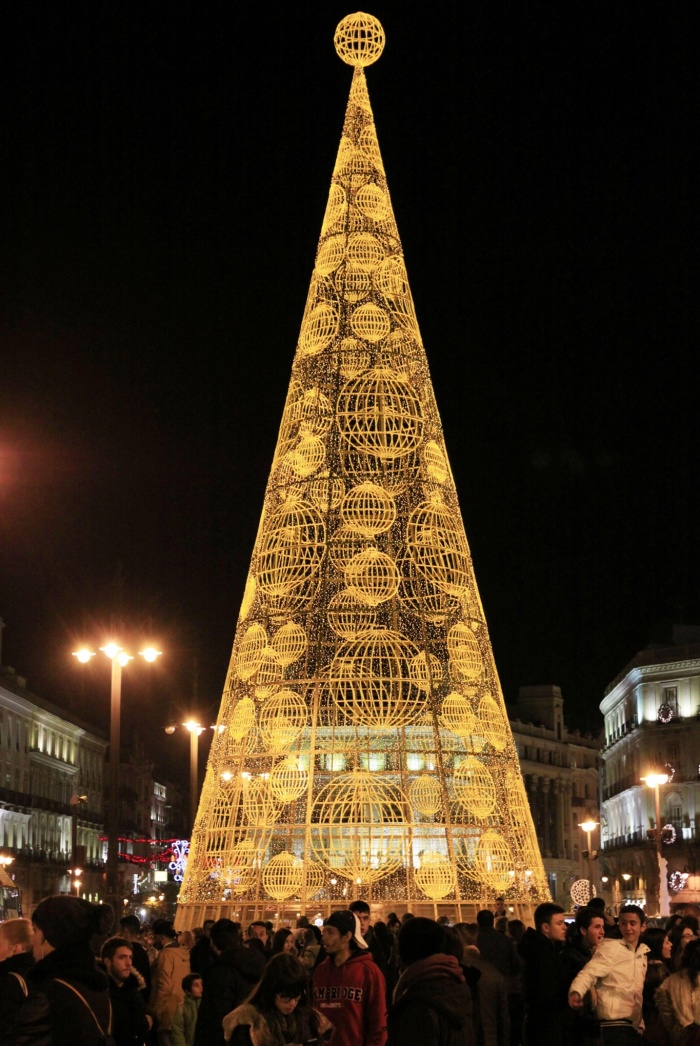
A tall and golden Christmas tree in the central square of Plaza Puerta del Sol, Madrid, Spain.
Italy
In Italy, the presepio (manger or crib) represents in miniature the Holy Family in the stable and is the center of Christmas for families. Guests kneel before it and musicians sing before it. The presepio figures are usually hand-carved and very detailed in features and dress. The scene is often set out in the shape of a triangle. It provides the base of a pyramid-like structure called the ceppo. This is a wooden frame arranged to make a pyramid several feet high. Several tiers of thin shelves are supported by this frame. It is entirely decorated with colored paper, gilt pine cones, and miniature colored pennants. Small candles are fastened to the tapering sides. A star or small doll is hung at the apex of the triangular sides. The shelves above the manger scene have small gifts of fruit, candy, and presents. The ceppo is in the old Tree of Light tradition which became the Christmas tree in other countries. Some houses even have a ceppo for each child in the family.
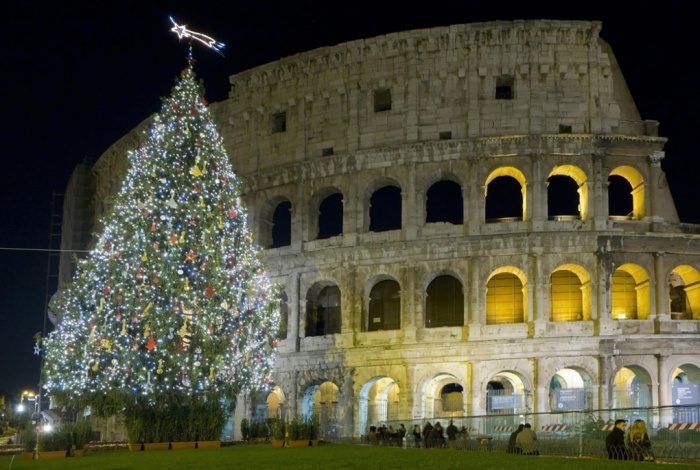
The traditional Christmas tree outside the Coliseum in Rome, Italy.
Germany
Many Christmas traditions, practiced around the world today, started in Germany.
It has been long thought that Martin Luther began the tradition of bringing a fir tree into the home. According to one legend, late one evening Martin Luther was walking home through the woods and noticed how beautifully the stars shone through the trees. He wanted to share the beauty with his wife so he cut down a fir tree and took it home. Once inside he placed small lighted candles on the branches and said that it would be a symbol of the beautiful Christmas sky. Hence, the Christmas tree.
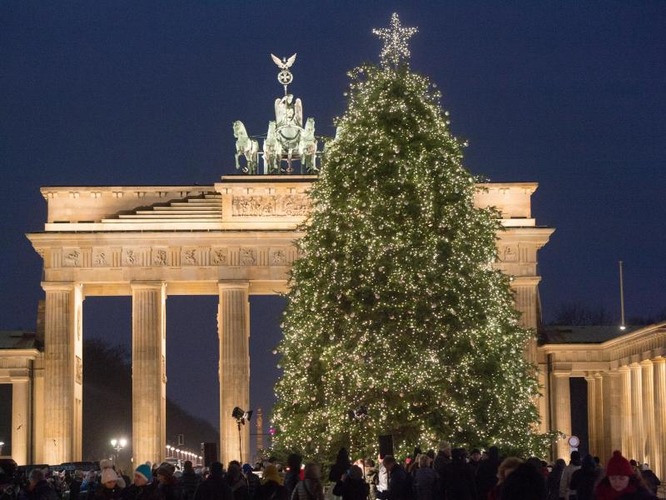
Massive Christmas tree, with over 30000 lights, in front the Brandenburg Gate in Berlin, Germany.
Another legend says that in the early 16th century, people in Germany combined two customs that had been practiced in different countries around the globe. The Paradise tree (a fir tree decorated with apples) represented the Tree of Knowledge in the Garden of Eden. The Christmas Light, a small, pyramid-like frame, usually decorated with glass balls, tinsel, and a candle on top, was a symbol of the birth of Christ as the Light of the World. Changing the tree’s apples to tinsel balls and cookies; and combining this new tree with the Light placed on top, the Germans created the tree that many of us know now.
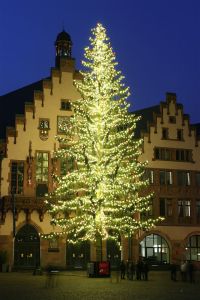
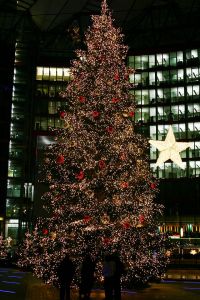
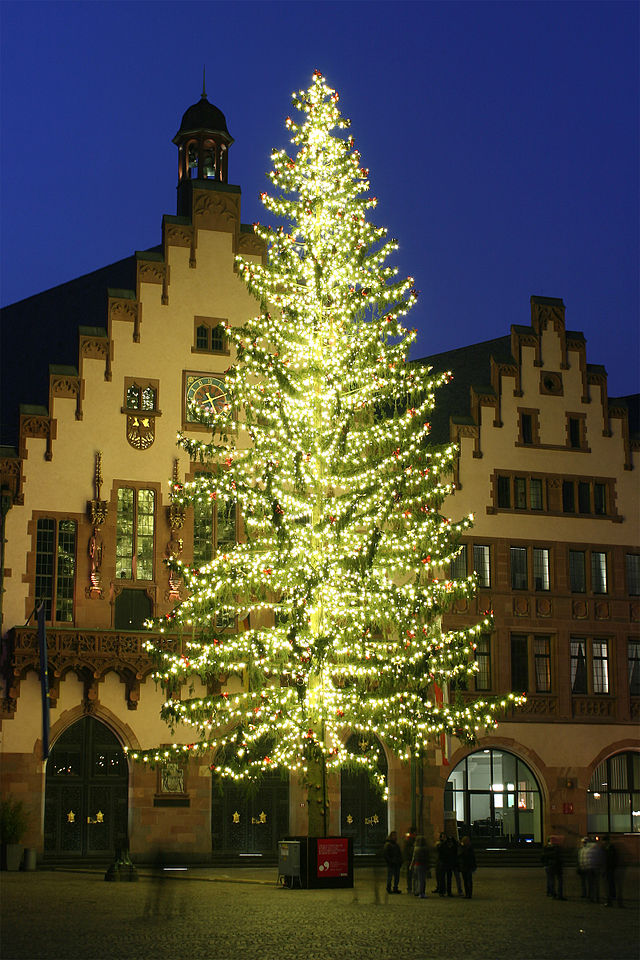
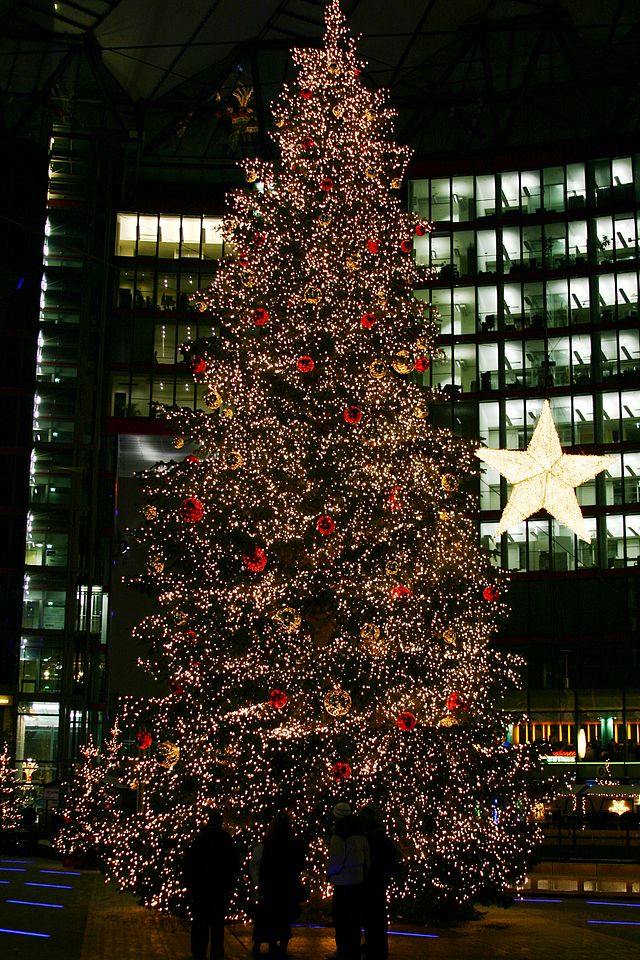
The Christmas tree at the Roemerberg in Frankfurt/Main, and market square Potsdam, Germany.
Today, the Tannenbaum (Christmas tree) is traditionally decorated in secret with lights, tinsel, and ornaments by the parents, in secret, and is lit and revealed on Christmas Eve with cookies, nuts, and gifts under its branches. Often they have a Cristmas plate full of
goodies, like chocolates, different nuts, cookies, fruits and much more – for every person of the family a separate one.
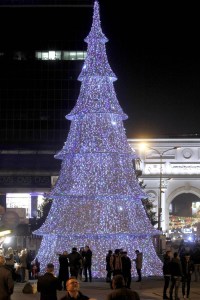
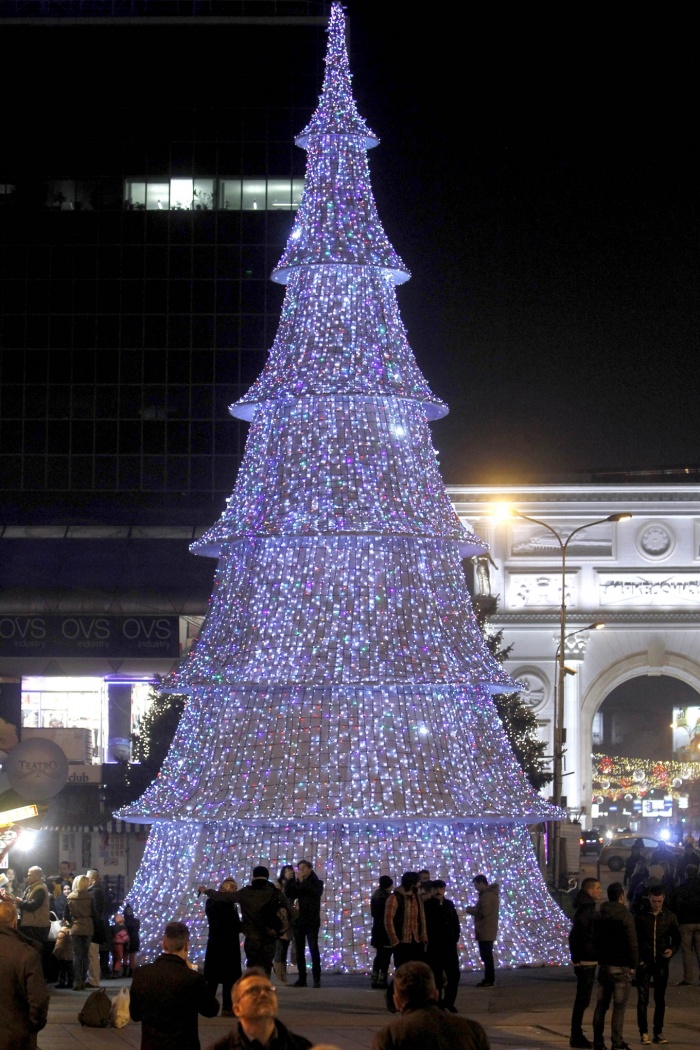
The illuminated Christmas tree in Macedonia’s capital Skopje.
South Africa
Christmas is a summer holiday in South Africa. Although Christmas trees are not common, windows are often draped with sparkling cotton wool and tinsel.
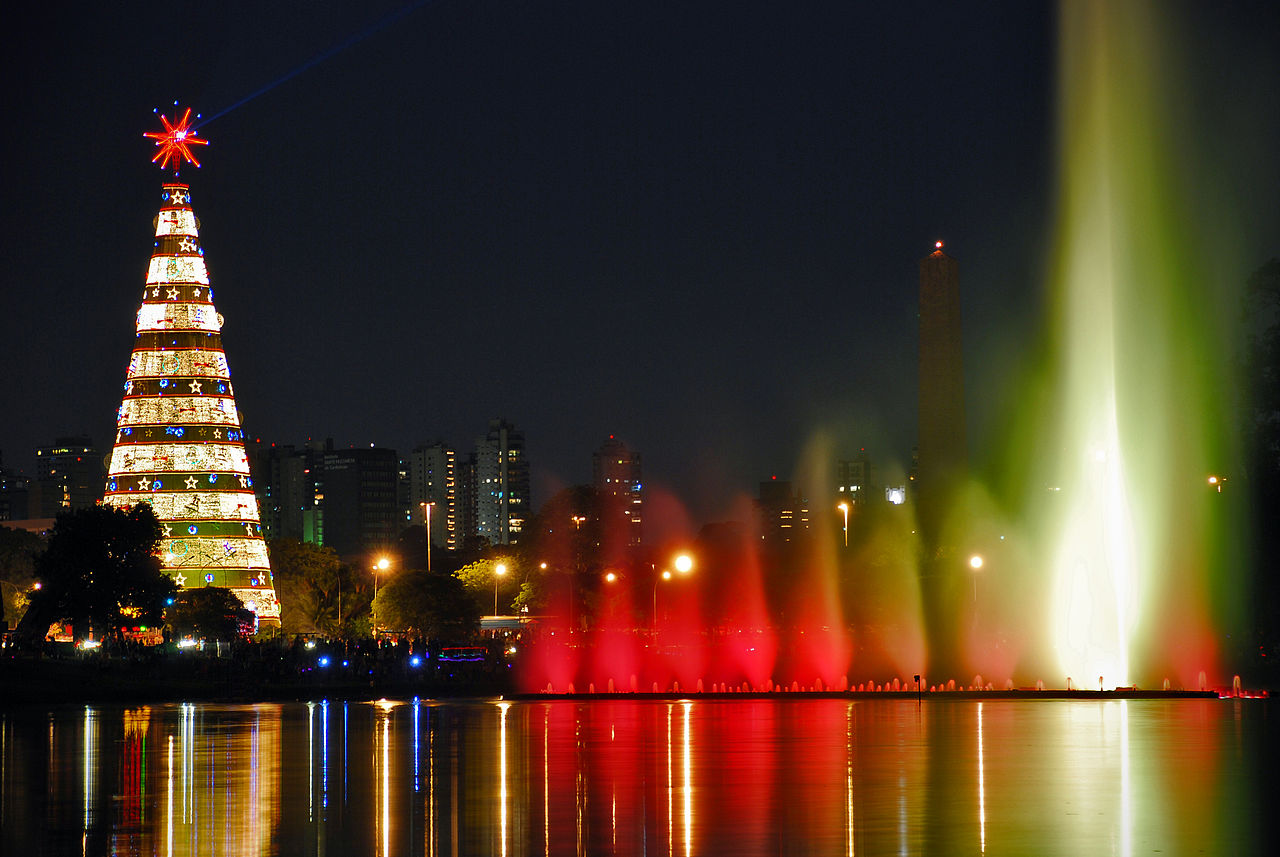
Christmas tree in Parque do Ibirapuera, Sao Paulo, Brazil.
Australia
Similar to South Africa. The cities are decorated, Christmas songs are played for
weeks everywhere and on Christmas eve all shops are open for the public 24 hours.
Many big container ships full of Christmas trees are brought into the country every
year. And – of course – Santa has no reindeer’s, he has Kangaroos in front of his sledge.
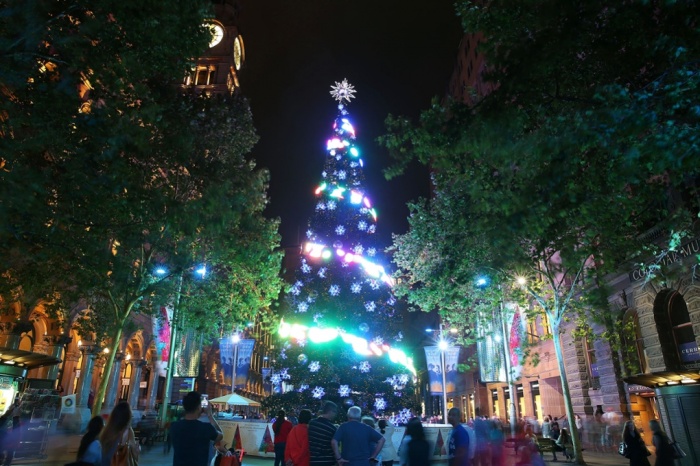
St Martin Place’s Christmas Tree, Sydney, Australia.
Netherlands
A majestic Christmas tree returns to Amsterdam this year to take its traditional place towering above Dam Square in the city centre. The lights on the festive Amsterdam tree are traditionally switched on during an illumination ceremony early in December.
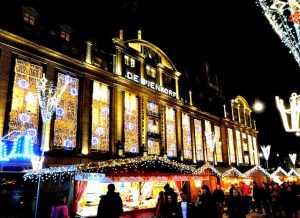
The Christmas tree and Christmas Market infront the shopping center
De Bijenkorf on Amsterdam’s Damrak, Netherlands.
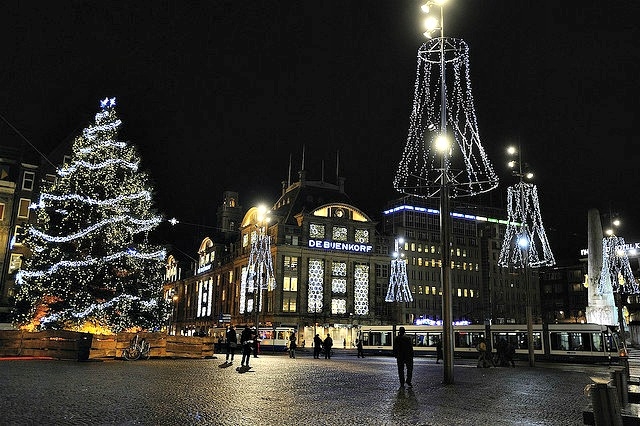
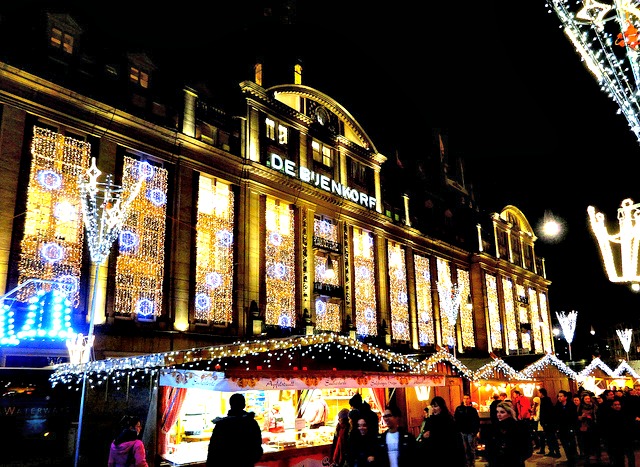
Traditionally grown in the German Ardennes, the tree soars over 20 metres into the Amsterdam sky, decorated by four kilometres of Christmas lights. An imposing feature outside the Amsterdam Royal Palace, the tree is adorned with upwards of a whopping 40,000 energy-saving LED fairy lights.
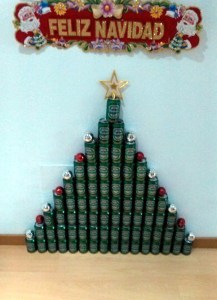
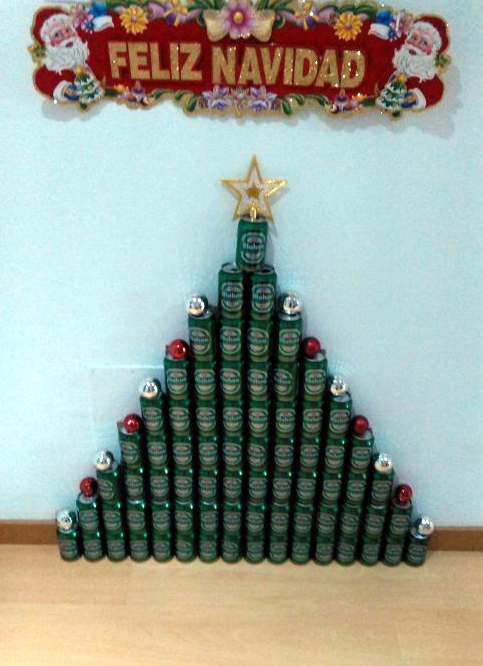
Heineken beer Christmas tree in Uruguay. Latin American fun !
The illuminated Christmas tree and de Bijenkorf building on Dam Square form a centerpiece for the Christmas decorations installed earlier on the lamp posts, making the square an attractive Amsterdam highlight every festive season.
Saudi Arabia
Christian Americans, Europeans, Indians, Filipinos, and others living here have to celebrate Christmas privately in their homes. Christmas lights are generally not tolerated. Most families place their Christmas trees somewhere inconspicuous.
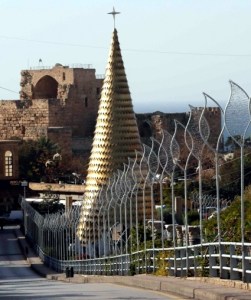
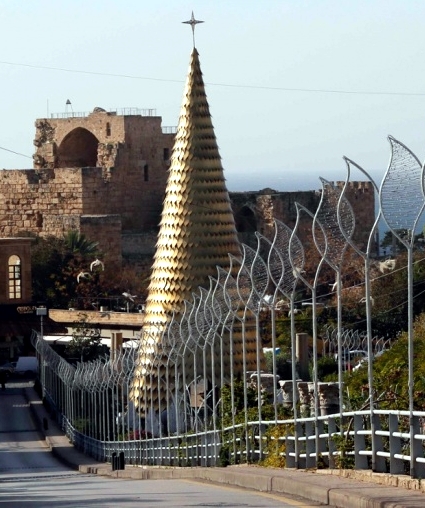
A Christmas tree made from gold-colored iron leaves, stands at the entrance
of the ancient city of Byblos in Beirut, Lebanon.
Philippines
Fresh pine trees are too expensive for many Filipinos, so handmade trees in an array of colors and sizes are often used. Star lanterns, or parol, appear everywhere in December. They are made from bamboo sticks, covered with brightly colored rice paper or cellophane, and usually feature a tassel on each point. There is usually one in every window, each representing the Star of Bethlehem.
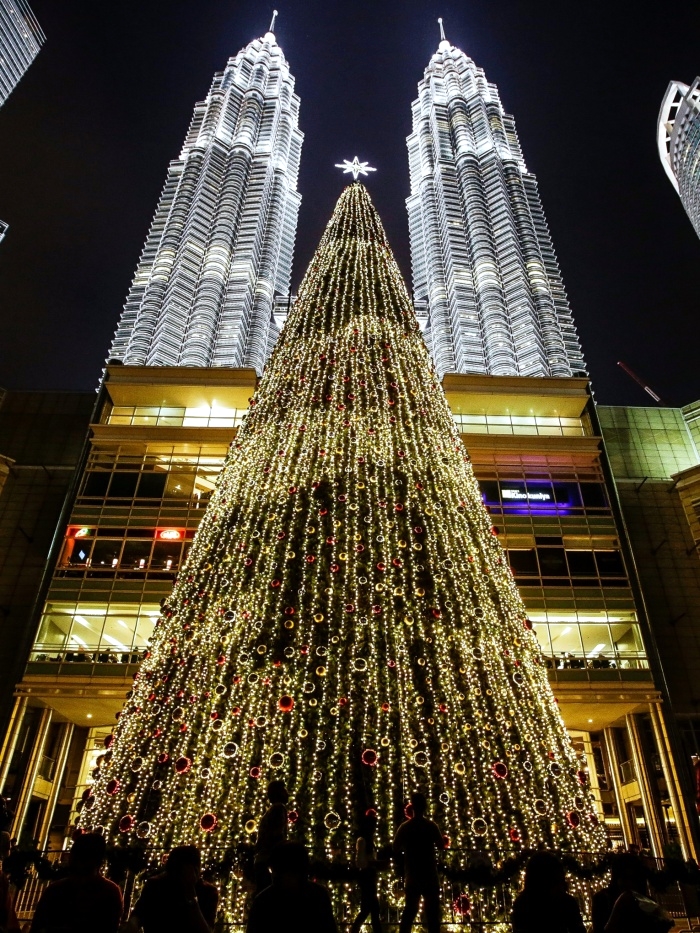
A Christmas tree stands against the Malaysian landmark Petronas Twin Towers in Kuala Lumpur, Malaysia.
China
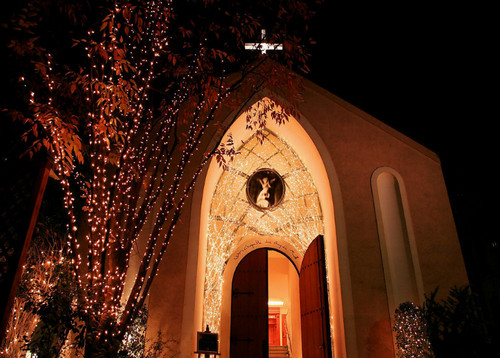
Of the small percentage of Chinese who do celebrate Christmas, most erect artificial trees decorated with spangles and paper chains, flowers, and lanterns. Christmas trees are called “trees of light.”
Christmas tree in front a Catholic Church in China.
Japan
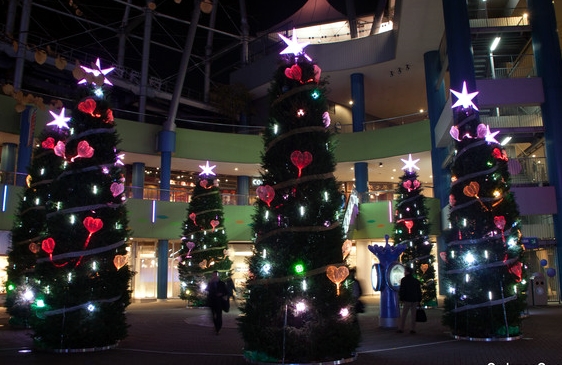
For most of the Japanese who celebrate Christmas, it’s purely a secular holiday devoted to the love of their children. Christmas trees are decorated with small toys, dolls, paper ornaments, gold paper fans and lanterns, and wind chimes. Miniature candles are also put among the tree branches. One of the most popular ornaments is the origami swan. Japanese children have exchanged thousands of folded paper “birds of peace” with young people all over the world as a pledge that war must not happen again.
Christmas trees in a shopping center in Tokyo, Japan.
USA
Most 19th-century Americans found Christmas trees an oddity. The first record of one being on display was in the 1830s by the German settlers of Pennsylvania, although trees had been a tradition in many German homes much earlier. The Pennsylvania German settlements had community trees as early as 1747. But, as late as the 1840s Christmas trees were seen as pagan symbols and not accepted by most Americans.

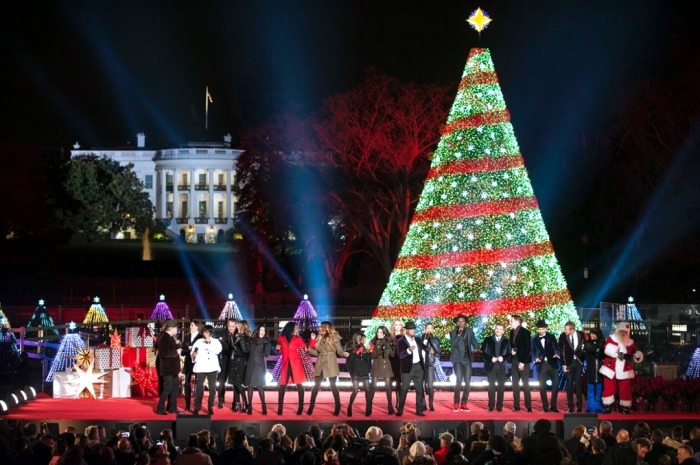
Performers sing during the National Christmas Tree Lighting Ceremony on the Ellipse,
south of the White House in Washington DC,USA.
It is not surprising that, like many other festive Christmas customs, the tree was adopted so late in America. To the New England Puritans, Christmas was sacred. The pilgrims second governor, William Bradford, wrote that he tried hard to stamp out “pagan mockery” of the observance, penalizing any frivolity. The influential Oliver Cromwell preached against “the heathen traditions” of Christmas carols, decorated trees, and any joyful expression that desecrated “that sacred event.” In 1659, the General Court of Massachusetts enacted a law making any observance of December 25 (other than a church service) a penal offense; people were fined for hanging decorations. That stern solemnity continued until the 19th century, when the influx of German and Irish immigrants undermined the Puritan legacy. The Christmas tree had finally arrived.
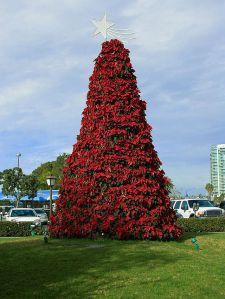
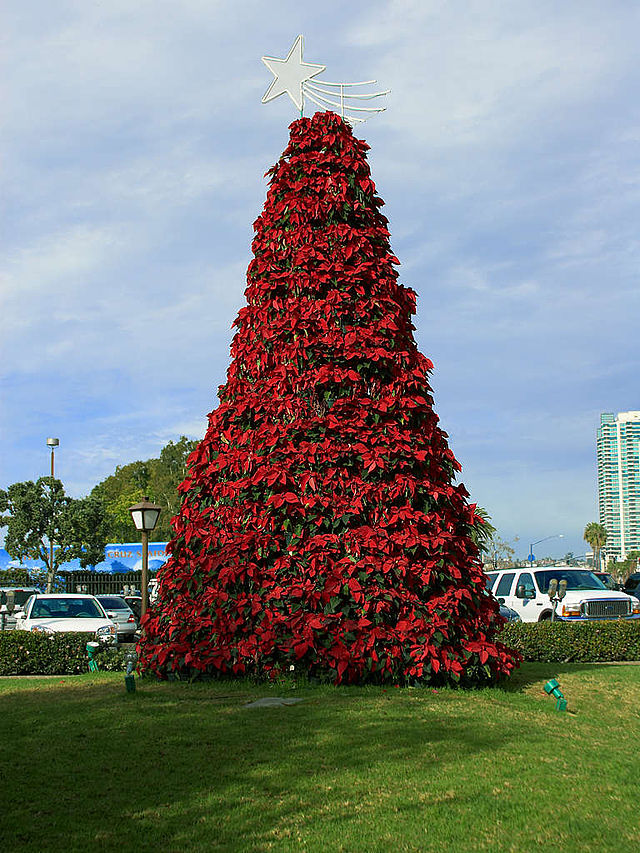
Christmas tree made from Poinsettias in San Diego, USA.
Uruguay
First of all, there is no such a thing as white Christmas in Uruguay, for two reasons. The first one is that in this hemisphere is summer time, the second being that it never snows in Uruguay (a great deal of Uruguayans don’t know snow at all), so even if it were winter, it wouldn’t be white anyway. In hot summers here is more like sweating Christmas.
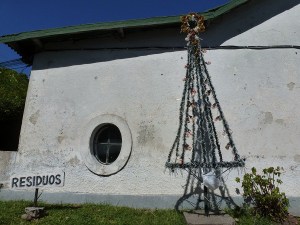
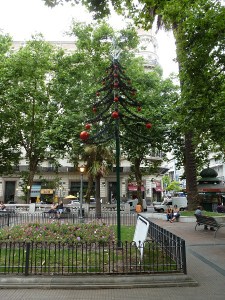
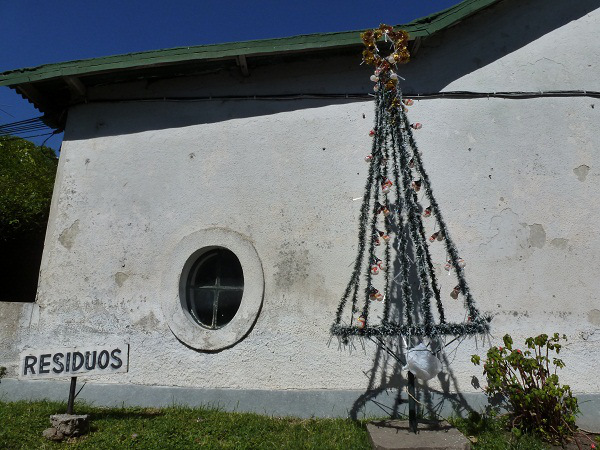
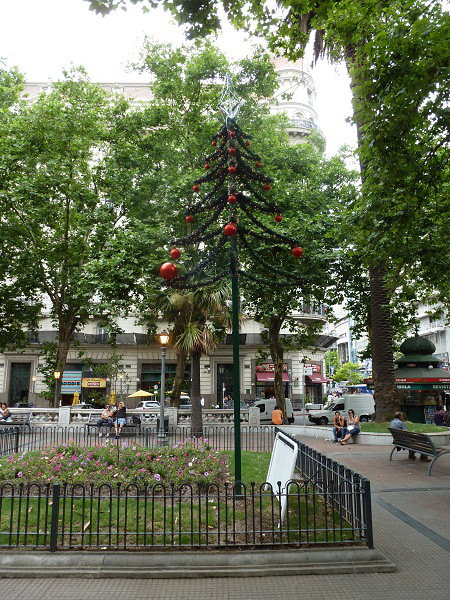
Christmas trees-decoration in a suburb and in Montevideo, Uruguay. Sorry, without a comment.
Santa Claus here is called Papa Noel, and his associates here deliver all the Christmas presents at 12.00 midnight at Chrismas eve. So children expect presents to appear right away under their noses and they are a tough clientele. Yes, yes, HoHoHo! For some weird reason Santa Claus has this weird way of laughing over here too, although here is spelled more like JOJOJO, Uruguayan slang schoschoscho .
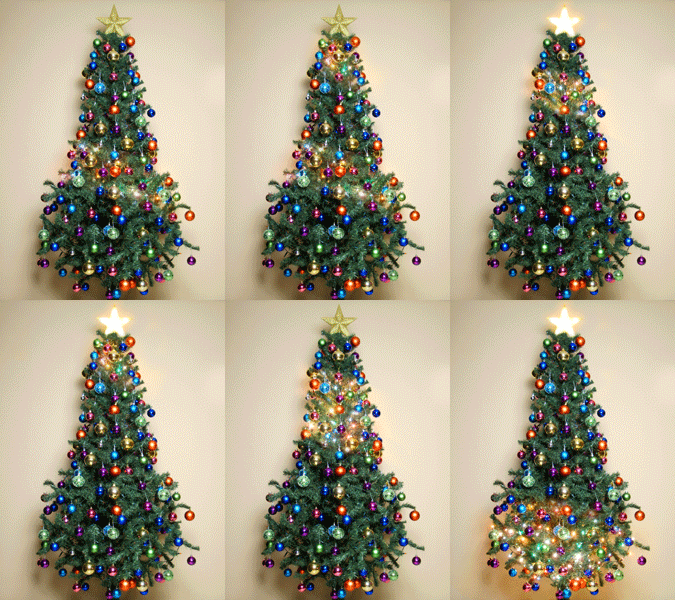
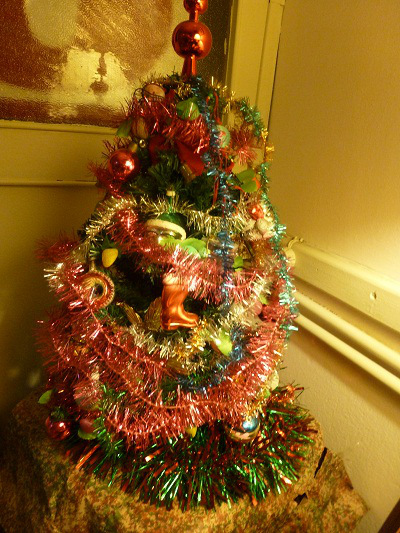
Some families decorate it very nice in Uruguay, but trees are often overload with decoration.
Christmas is celebrated typically in the following manner: families gather on a Christmas’s eve dinner, spend the evening together, until the clock ticks twelve. When Christmas day finally does arrive, everyone hugs each other, parents put up a children’s deceiving show telling them to look at some nonexistent star in the sky where Santa is supposedly coming from (here the north pole Santa’s elves factory thing is not very spread), also this scheme lends to several possible variations. While the children are looking at the sky after some decoy the other parent or some relative puts the presents beneath the Christmas tree, and shouts notifying of the sudden arrival and departure of Santa. Everyone else who is not involved in this children deceiving scheme may probably be playing with fireworks, making a lot of noise, lighting up the city, eventually getting a hand burned. Mostly fireworks on Christmas night are more intense here then New Years eve.
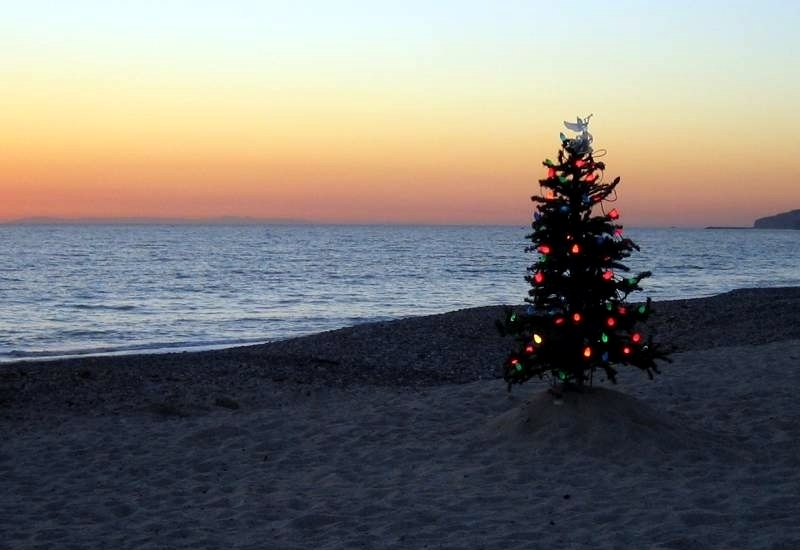
Our Christmas tree at the beach in Uruguay.

