
A quick introduction
from name to river, from silver to settlement and from
freedom to retirement, that’s Uruguay. Much more will be posted in the future,
about the country, the people, the history and how life in Uruguay is today.
It is the second smallest country in South America, but with charm. And very
European. I won’t repeat what everyone can read in all the travel guides.
Just so much that this land has really no “own name“, just a location “East of
the River Uruguay”. And Uruguay is a word out of the Guarani language,
originally written Uraguay : Ura-gua-y = River of the painted birds !
The river is not even “painted” here. It looks very “muddy brown” in color.
This is a sediment phenomenon (some clayey, loamy mud) and no “dirt“. When the
Uruguay meets the Parana, the combined river is called the “Rio de la Plata“,
English = River Plate, the Silver River.
Several theories are known why it became this name.
By example it’s said that the name came from the Silver shipments, digged in
Bolivia and shipped down the Paraguay and Parana to the Rio de la Plata. Most
common is the phantasie of a “Sierra de la Plata”, a mountain full of silver,
somewhere upstream . No one has found this silver mountain yet.
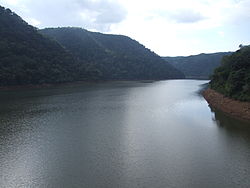 The river Uruguay, Silver shine.
I like the explanation, that the surface of the water on bright and glisten
sunny days looks like pure silver. The first explorers coming with Juan Diaz
de Solis in 1516 might have seen this and baptized the river Rio de la Plata.
The funnel shaped river mouth is about 290 km long and up to 220 km wide.
The largest river mouth in the world. Sadly only up to 20 meters deep.
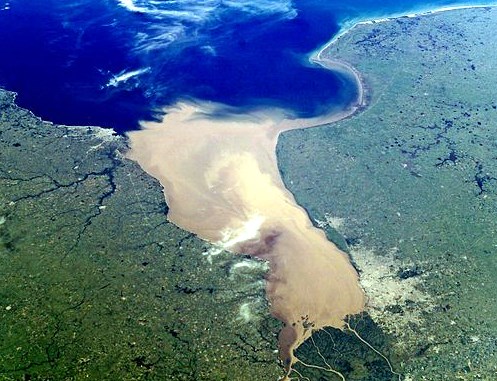 Clayey Rio de la Plata from Space.
The Rio de la Plata area was first explored in 1512/1513 by the Portuguese.
3 years later the Spanish navigator Juan Diaz de Solis was searching for a
passage between the Atlantic and Pacific Oceans. In 1520 the Portuguese
Ferdinand Magellan briefly explored the estuary before he continued its
circumnavigation and discovered the “Magellan Street”.
The first European settlements around the Rio de la Plata were Buenos Aires
in 1536 by the Spanish Pedro Mendoza . Quickly abandoned it was then refounded by,
Also a Spanish, Juan de Garay an 11th of June 1580. The same year Portugal founded
“Colonia do Sacramento” as a counterweight to the Spanish colonization. On 10th
of January 1809 , before the independence of Uruguay, the “town” was elevated to
“Ciudad” = city of “Colonia del Sacramento”. More about Colonia in a coming post.
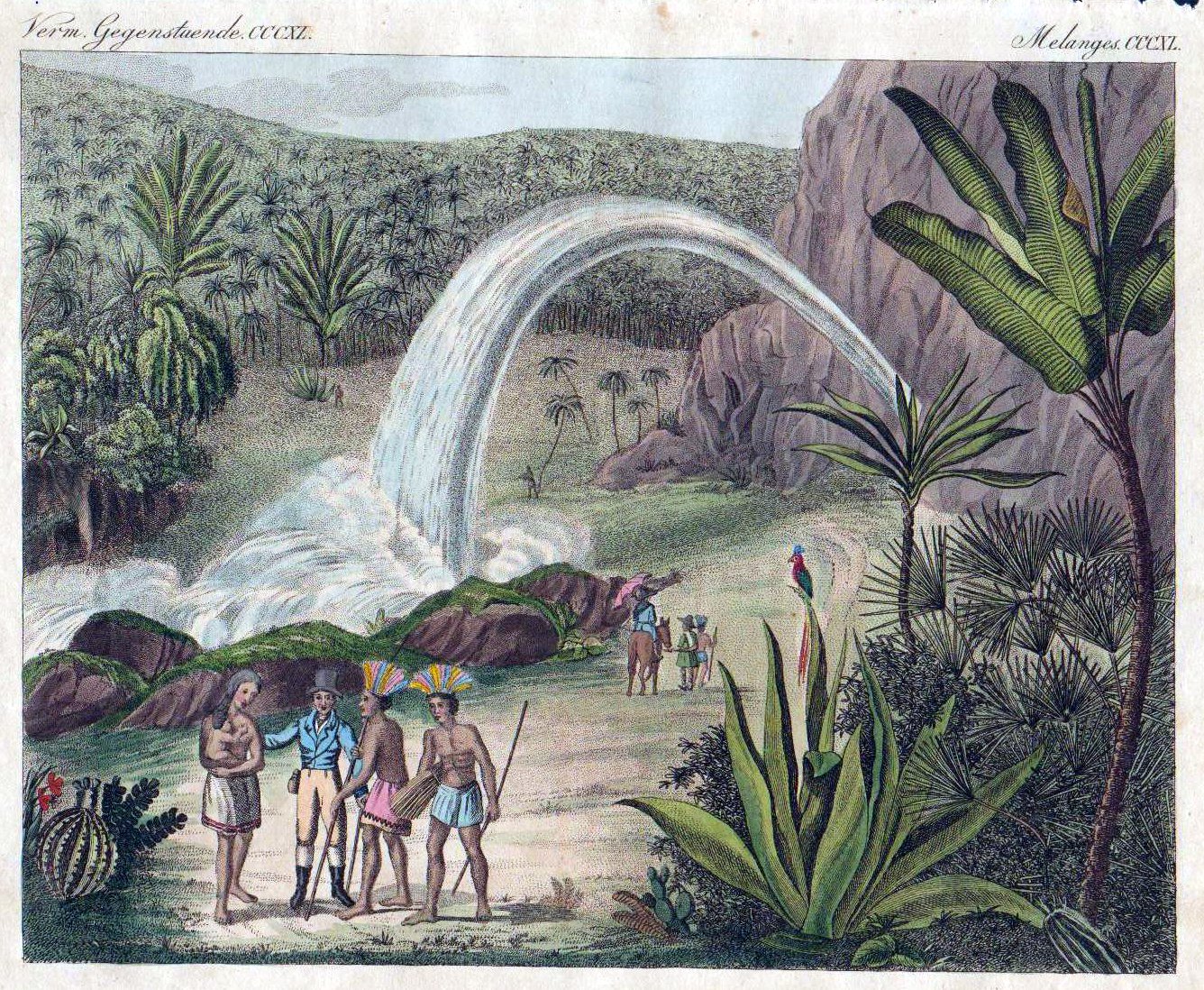
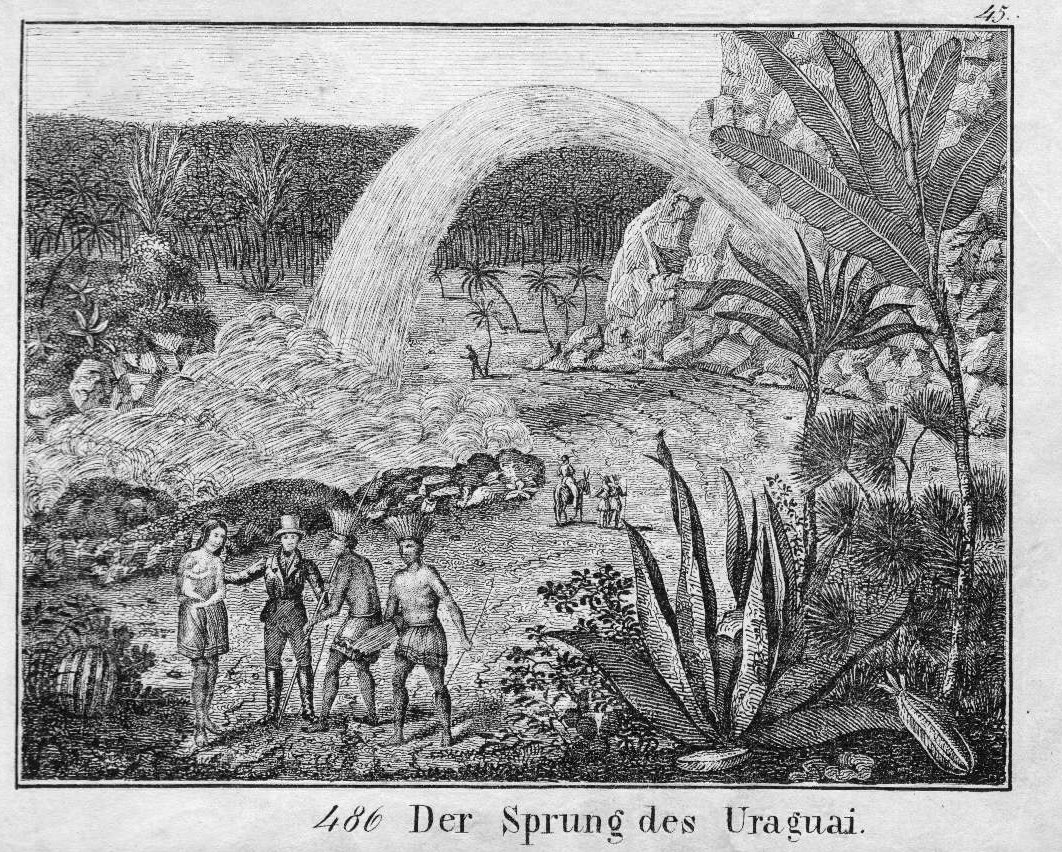
The „jump“ of the Ura-gua-y, or Uraguai. Lovely old wood engravings. The black
and white one from 1832, the handcolored one from 1835. Authors collection.
As you can see above, in early years people thought, that the river Uruguay
arises somewhere in the mountains, a fountain like.
Today we know it better, the river starts in the Serra do Mar in Brazil, where
Canoas and Pelotas rivers join. See the map down here. He measures in total
length 1.838 kilometers and forms the western border of Uruguay.
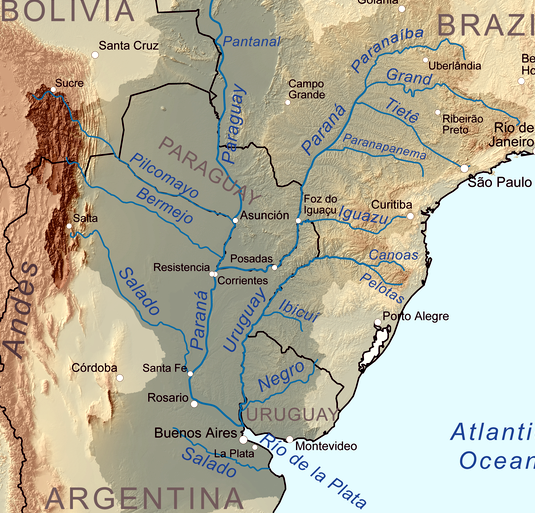 Rivers in and around Uruguay.
Very unusual for the Uruguay river is a submerged canyon, formed in the ice age.
Its depth is up to 100 meters below the river bottom and visible on only two places.
One is the Mocona Falls, or Yucuma Falls . The falls are parallel to the river not
perpendicular. Very unusual and only seen for about 140 days per year. They are
About 12 meters high and between 2000 and 3000 meters wide. The Mocona Falls
are the only “parallel falls” in the world. These falls are between Argentina and Brasil.
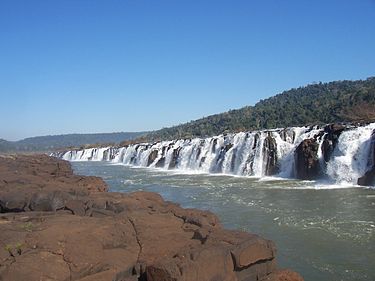 The amazing Uruguay Parallel Fall.
The Uruguay is navigable from around Salto Chico. It is crossed by five international
bridges, two between Brazil and Argentina and three between Argentina and Uruguay.
They are called , from north to south, Salto Grande Bridge, over the Salto Grande Dam.
The General Artigas Bridge, now named International Bridge in Paysandu and
Libertador General San Martin Bridge in Fray Bentos. For hydroelectric reasons
Uruguay has dammed the river with the Salto Grande Dam.
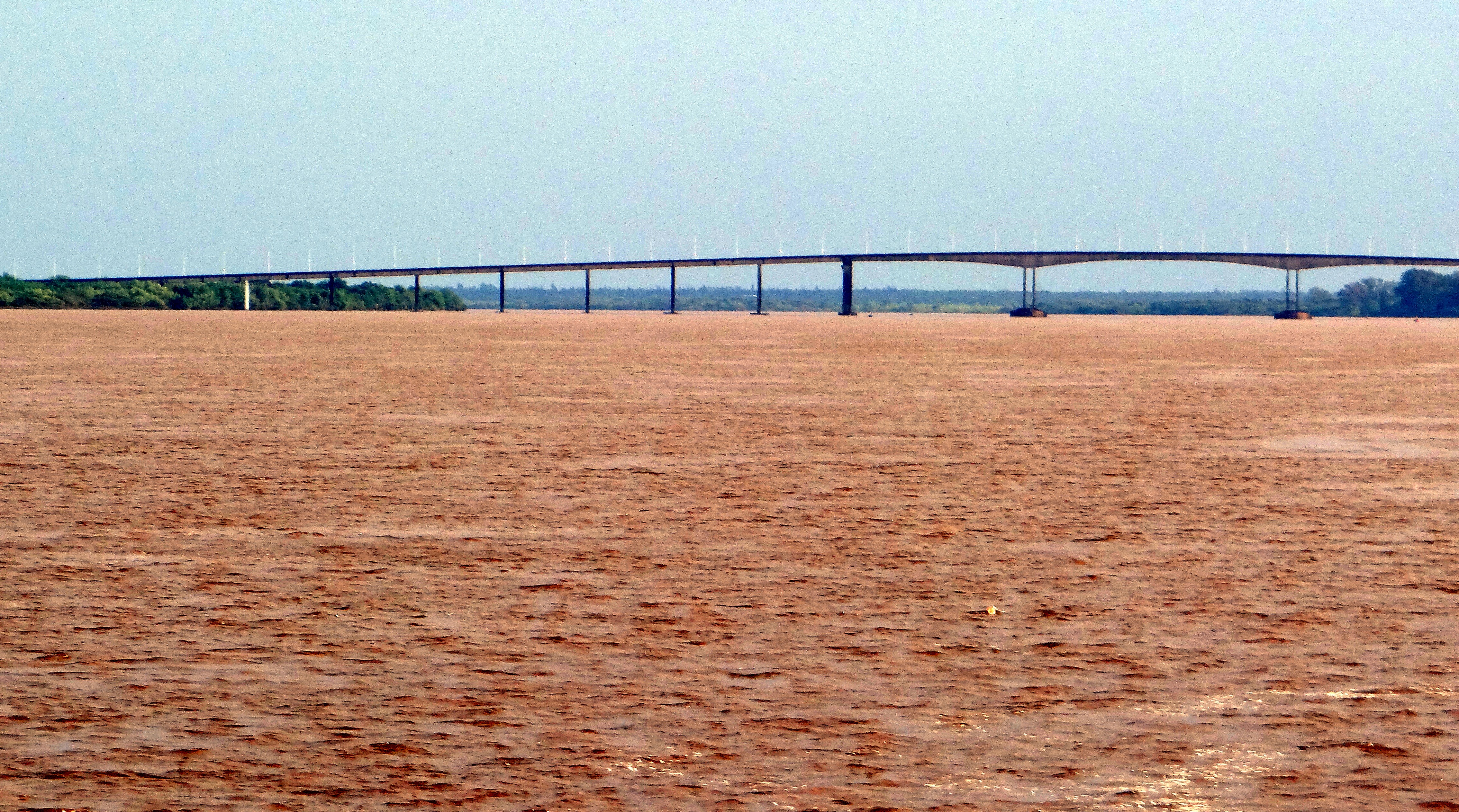 The International Bridge in Paysandu.
What we like and why we live here :
Statistics: Uruguay is a democratic constitutional republic, with a president who
is together “head of state” and “head of government”. Uruguay is, in all of Latin
America, ranked first in DEMOCRACY, PEACE, LACK OF CORRUPTION,
PRESS FREEDOM and QUALITY OF LIVING. Uruguay has a very low crime rate,
comparing to other countries, a highly ranked economic freedom and its,
very friendly, people are open to and tolerant with foreigners .
2013 Uruguay was ranked “country of the year”, No. 1 in the world.
And – it has the best beaches in whole South America and the best climate of the world.
One of the most liberal Nations in the world and often ranked one of the best
retirement country’s. Of course Uruguay is different and Uruguay is proud and not
comparable with big countries like the US/Canada or Europe, also it has it’s downsides.
Don’t complain about the differences, if you want you can take over my philosophie:
„Uruguay – love it, or leave it“ !
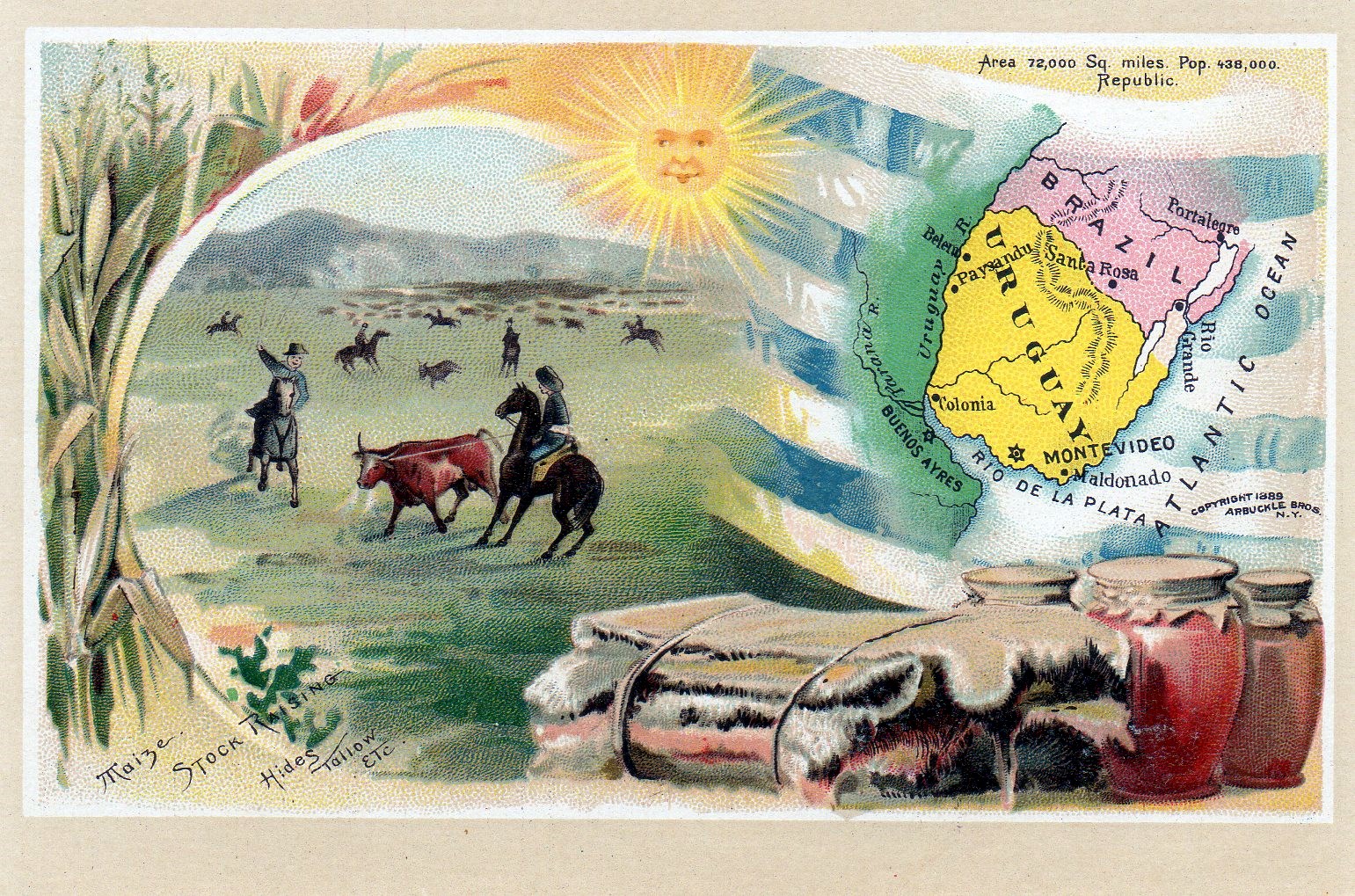 Uruguay described in 1888.
This is a collectors card and informs about Uruguay as follows:
Area 72.000 Sq.miles, Population 438.000, Republic,
Maize, Stock Raising, Hides Tallow etc. Nice old document.


Heel mooi en duidelijk beschreven.
LikeLike
If you are in Colonia on a sunny day at sunset, then the Rio Plata will actually be silver from the rays of the late sun. The rest of the time, as you have noted, it is muddy brown. Great article, Mike, and great blog.
LikeLike
Thanks very much Syd,
you are right about the „silver“.
That’s why the river got his name.
See you soon !
LikeLike