
Patchwork and Quilting are often mentioned together,
but they are two very different techniques.
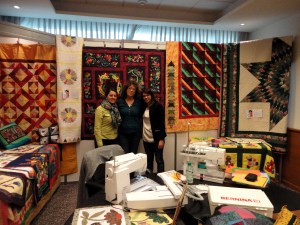
The ladies during a Patchwork and Quilting show.
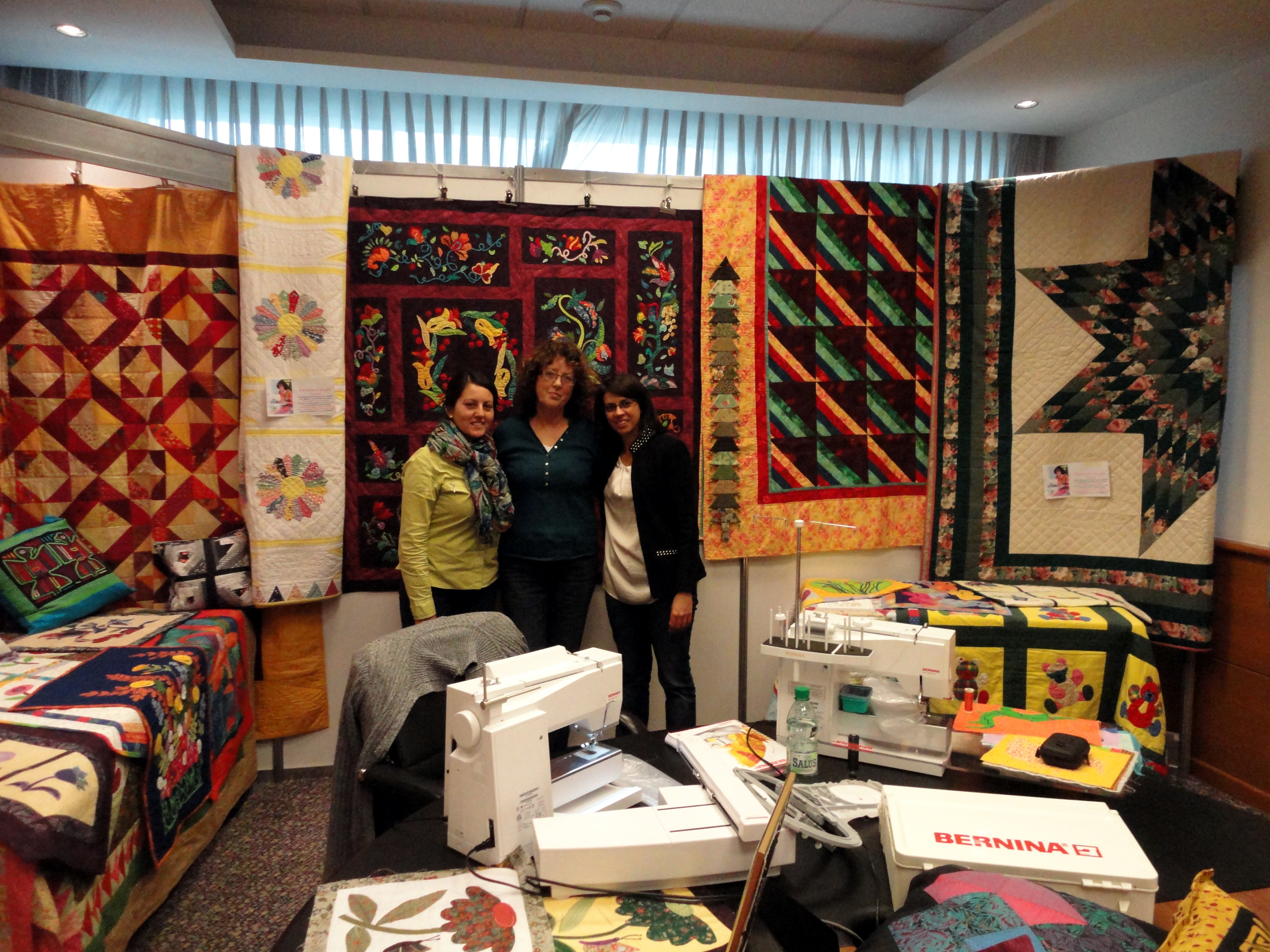
Patchwork also called „pieced work“, is the art of sewing together pieces of fabric
to form a pattern or block. When enough blocks have been made, they can be sewn
together to form a larger design. This larger design improved to real artistic work
trough different fabrics, different shapes and colors. Patchwork is most often used
to make Quilts.But also for bags, wall hangings and all kind of clothing. Very often
is Patchwork combined with embroidery or other kinds of stitchery.
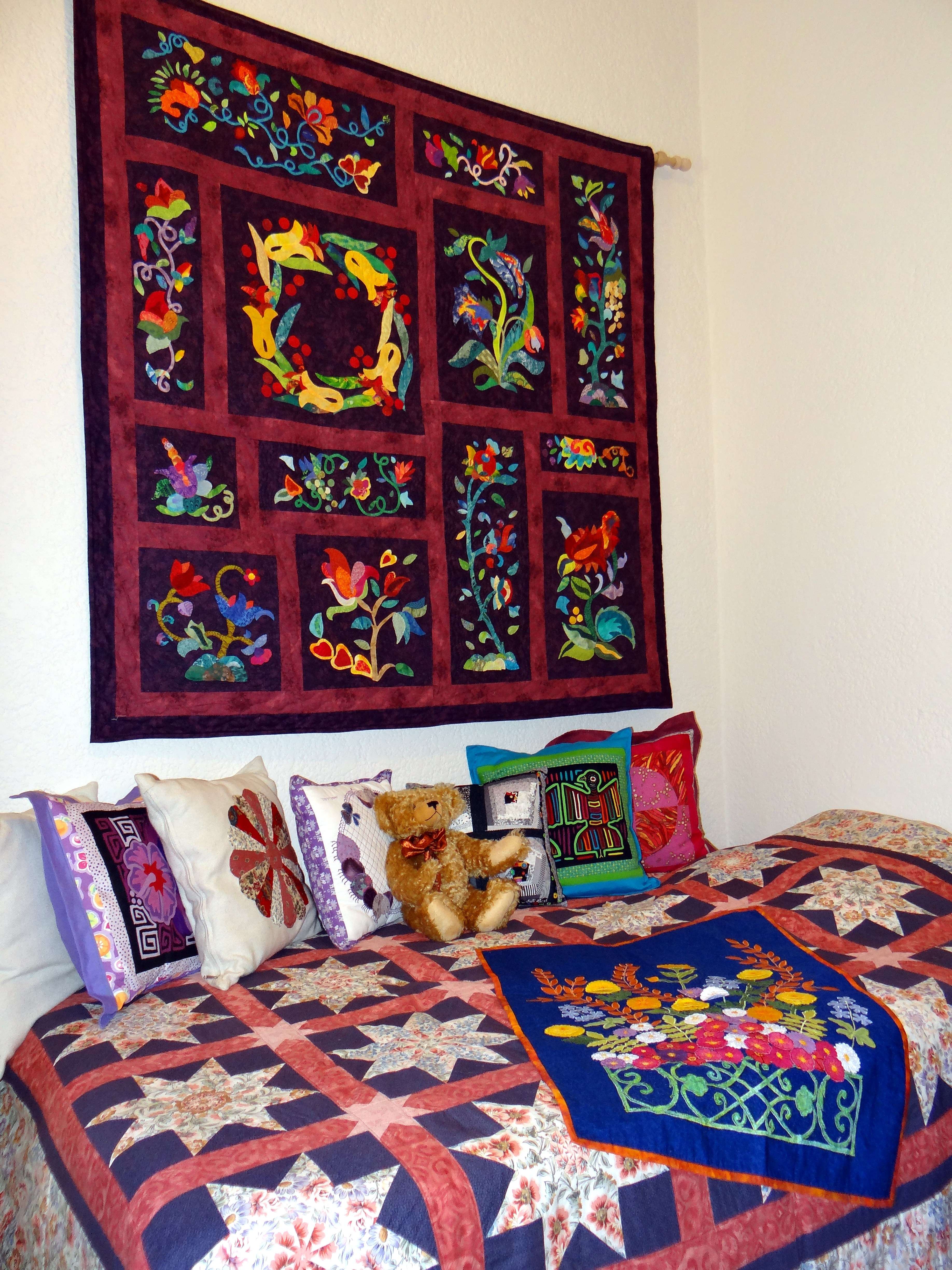
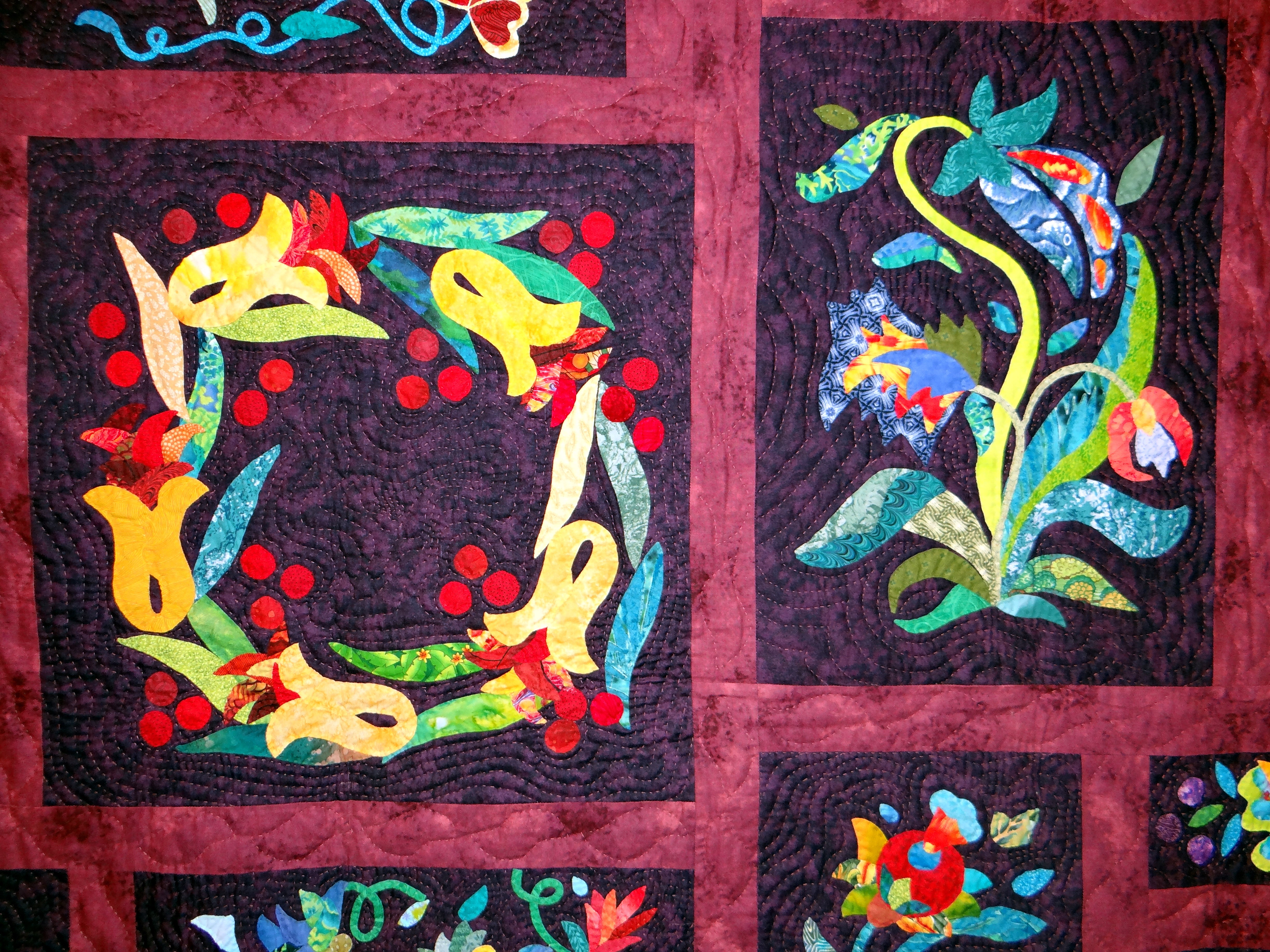
Patchwork and different Quilts. See how beautiful hand quilting looks, 1000’s of stitches.
Quilting is the sewing together of two or more layers of material, to make a thicker padded material.Therefore it’s used three layers of fabrics to make up a quilt . First the top ( mostly patchwork), second the central wadding or batting, and third the backing. To keep the batting from shifting, a patchwork quilt is „quilted“ by hand or by machine.
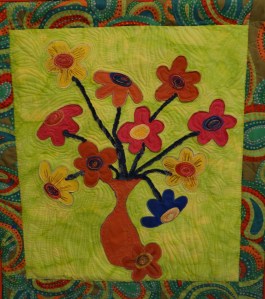
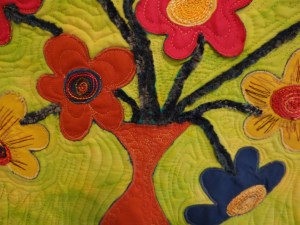
Handmade phantasies patchwork combined with free motion machine quilting.
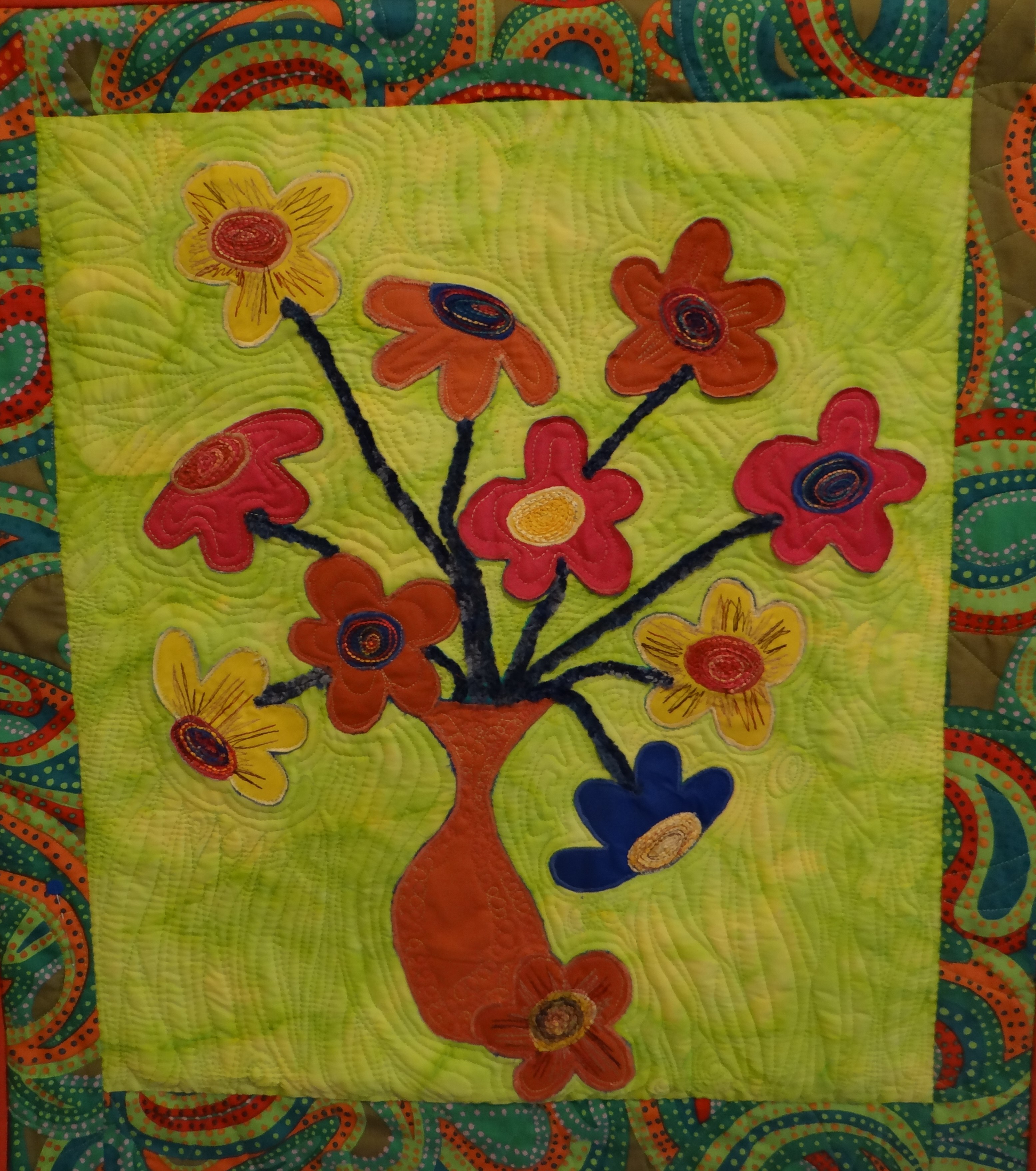
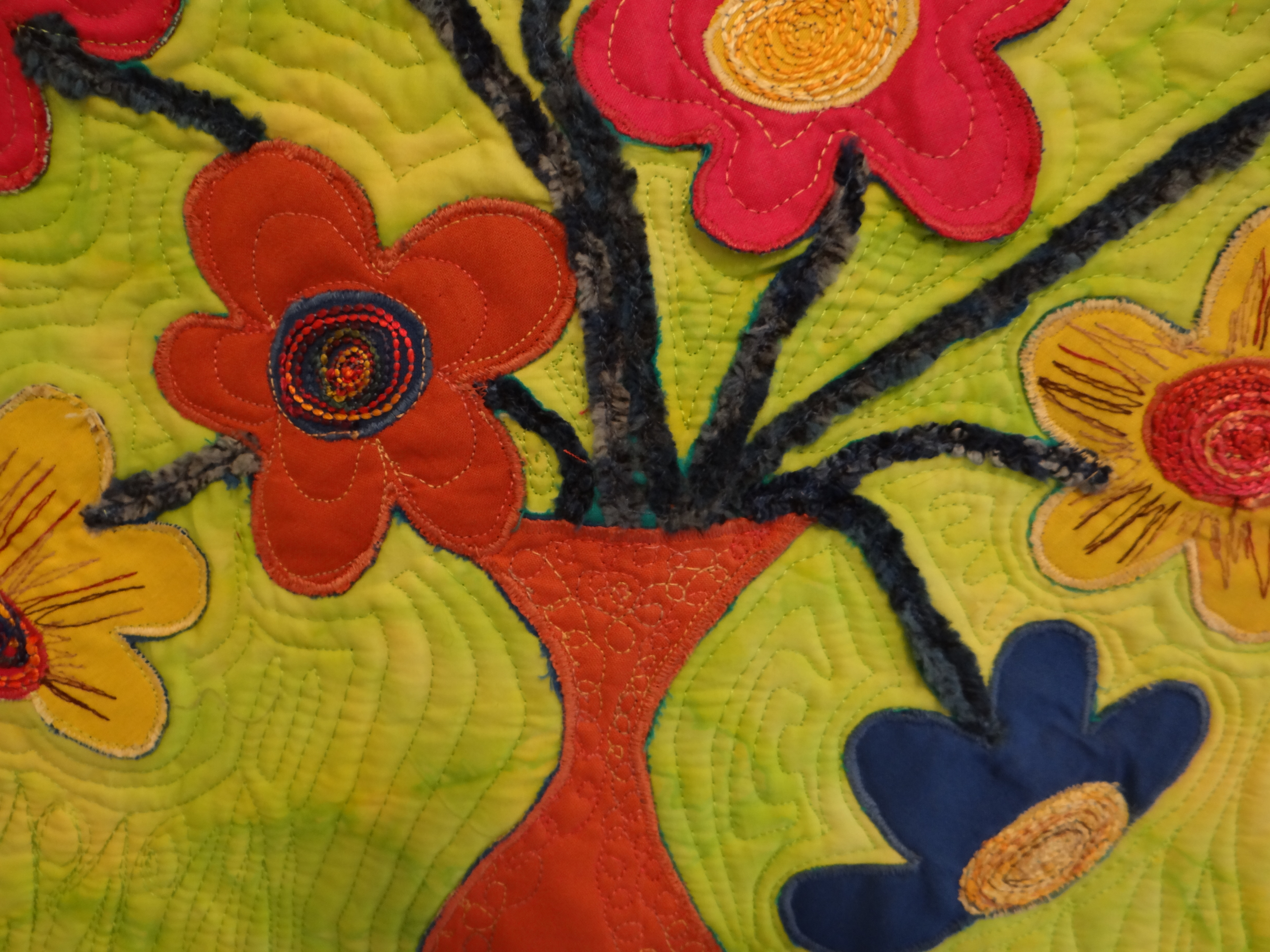
This kind of stitching together the 3 layers (quilting) is again a special art of needle work.This process uses a needle and thread to join the layers together. The thread and the needle should be of special and high quality, the thread is often waxed, that it can glide smooth through the layers of fabric.
This quilting is very time intensive, especially by hand, stitch by stitch, through thick fabrics and a size of about 2×2 meters .Naturally one can use it’s sewing machine to do this kind of work. This is what most Quilting enthusiasts do, you can see the fun.
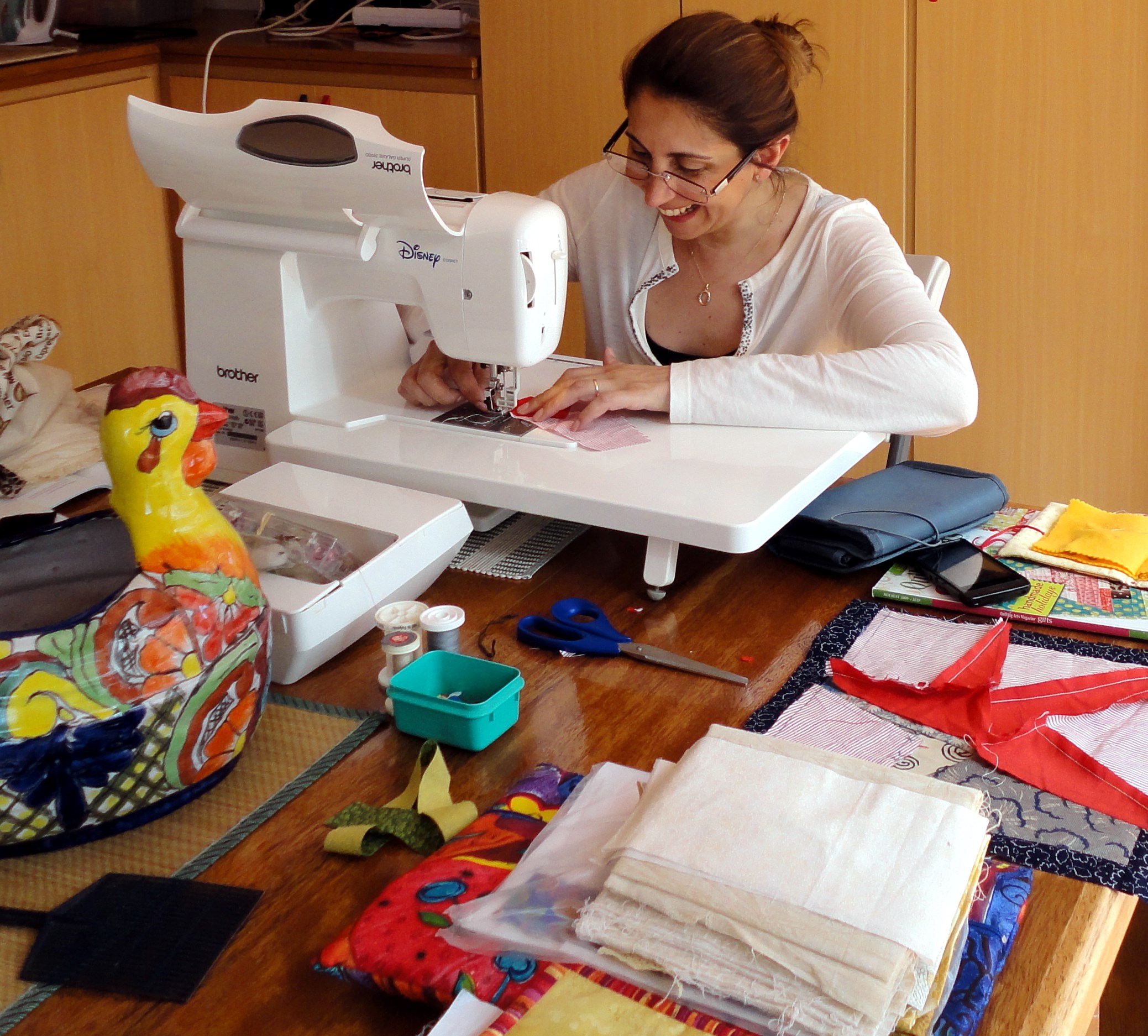
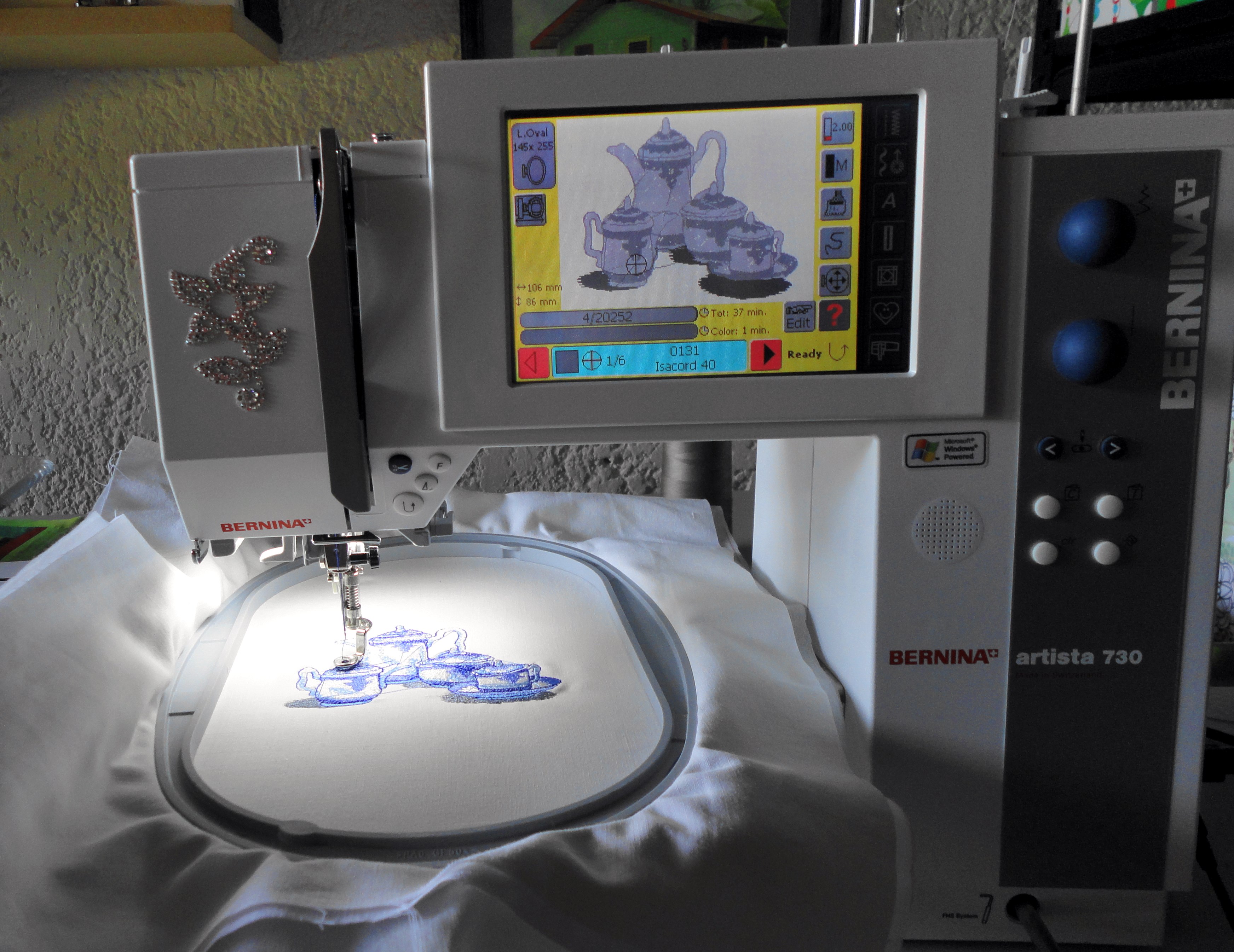
Patchworking or Quilting with a sewing machine.
Quilting often goes along with design, piecing, applique, binding and many more steps. In old times quilting was done in groups of 6, 8 or more ladies around the work. Everyone was quilting a part of the pattern. This kind of hard artistic work is the reason why some „patch workers“, I won’t call them quilters anymore, give their patched fabrics into a professional machine quilting service, a specialized long arm quilting system. These machines can do the job in an hour where some ladies need days or even weeks for the same work. All this is the reason, why handmade, artistic quilts are often expensive.
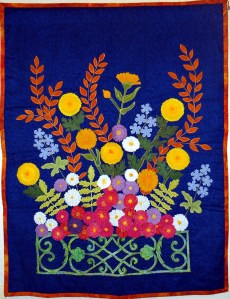
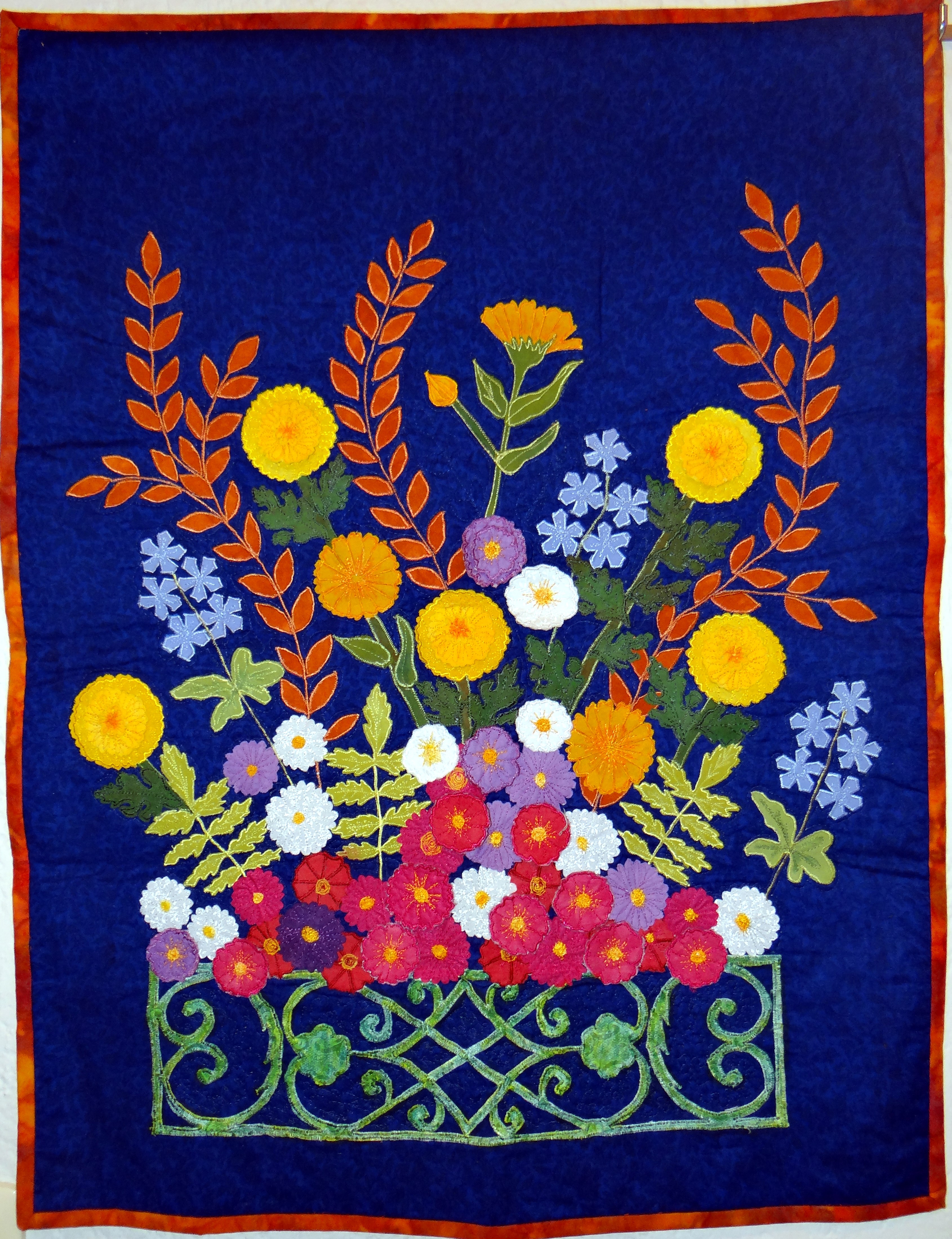
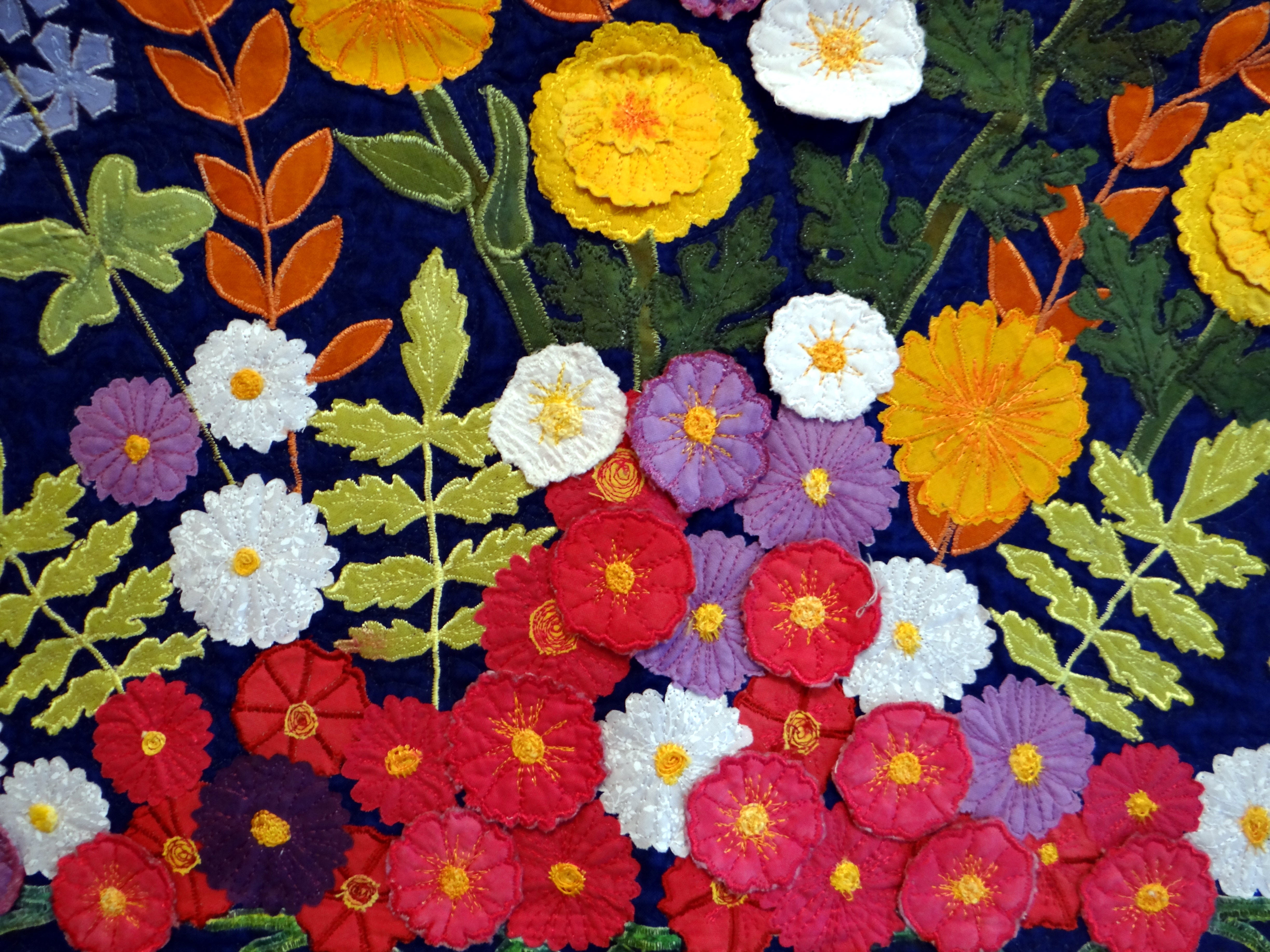
Another example of wonderful creative patch working. 3-D motifs and machine stitching.
What you need and how to do.
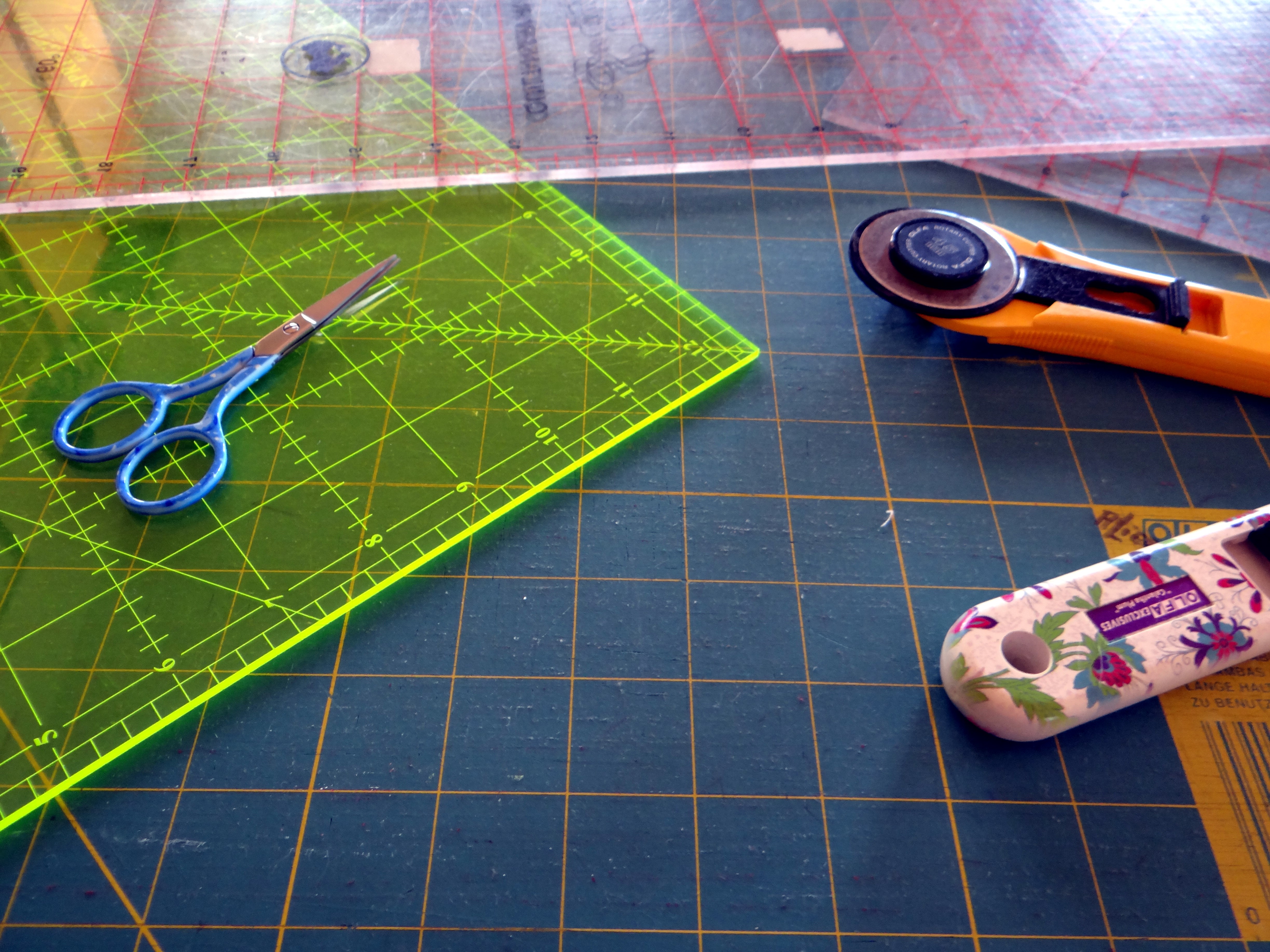
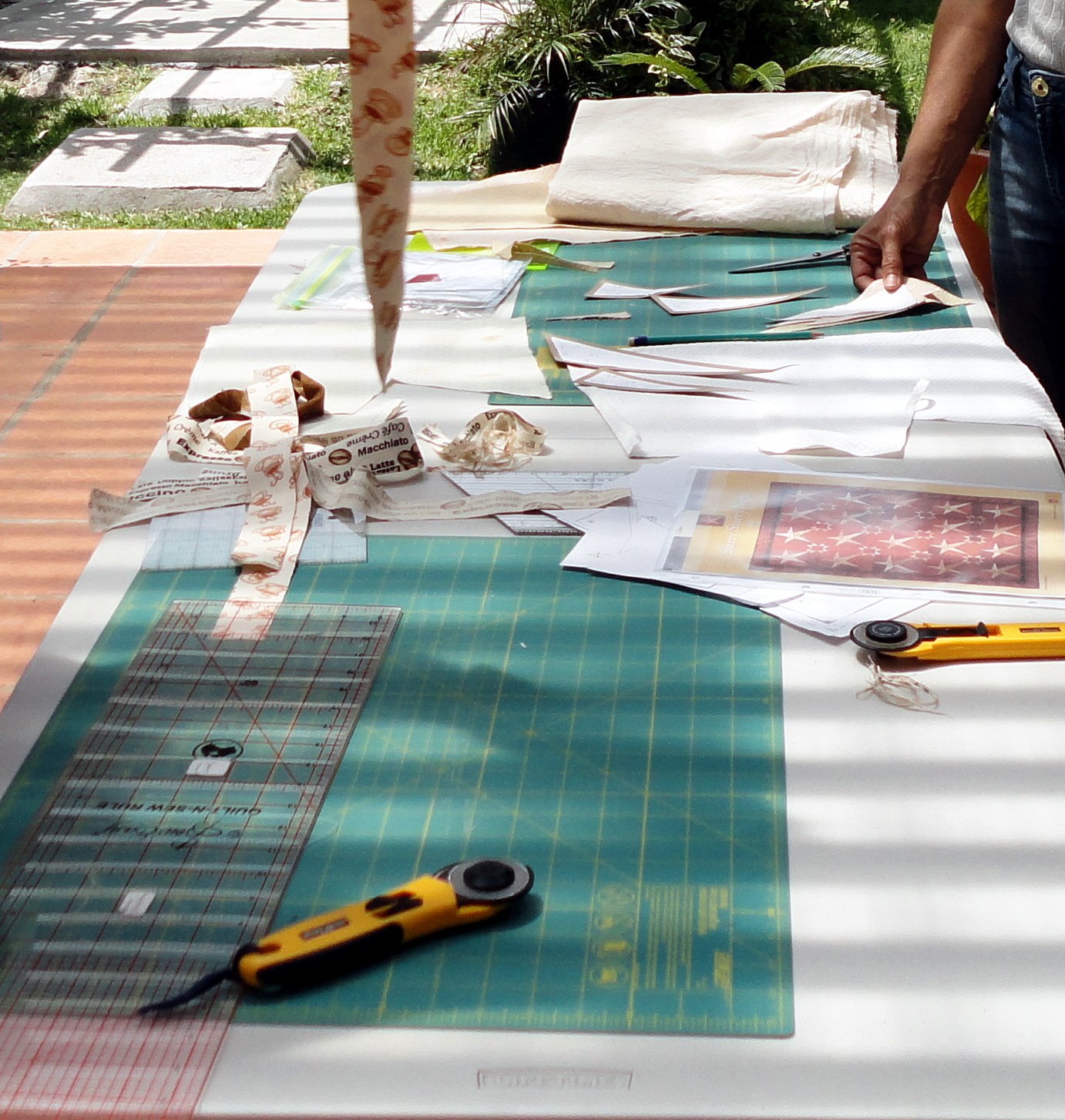
The basic kit is a rotary cutter, a self healing mat (rotary mat), and a clear acrylic quilting ruler measuring 6,5 by 24 inch. These mats and rulers are available in all kinds of shapes and sizes. Modern rulers are made out of a „self shining“ material.
Notice the „self illuminating“ of the yellow ruler.
Fabric.
The beauty of patch working and quilting is that you can use up odds and ends of fabric, recycle your old clothes and create something beautiful and unique ones in the process. As material, cotton is best as it washes and wears well. It should be fabric which won’t shrink after sewing. Many fabric shops sell ‘fat quarters‘, (a selection of fabrics cut into quarter meter squares), which are ideal for patchwork.
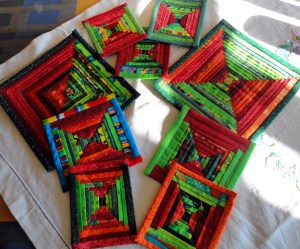
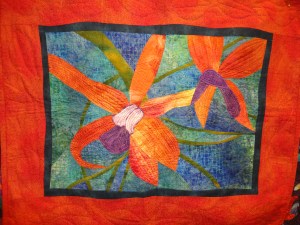
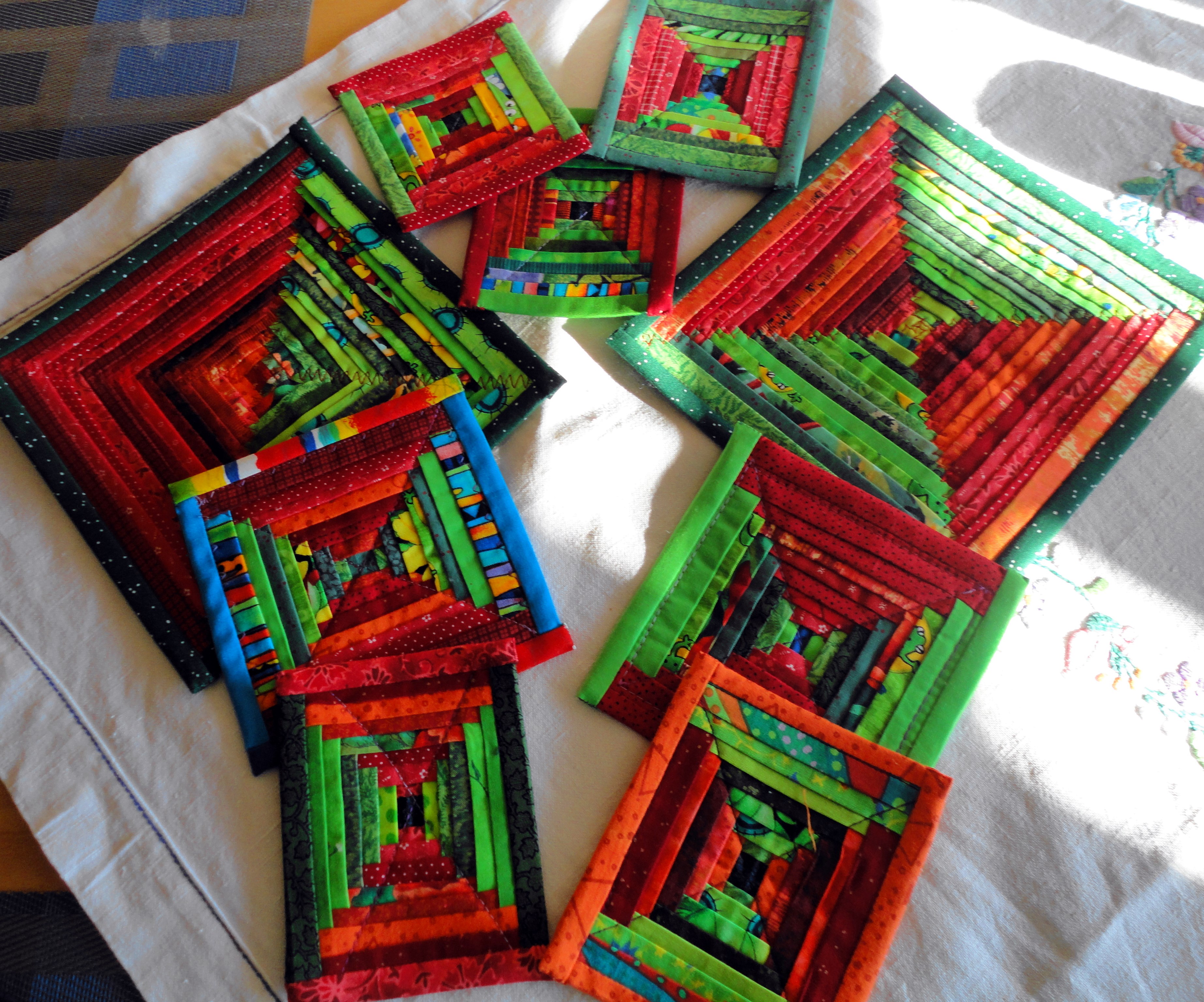
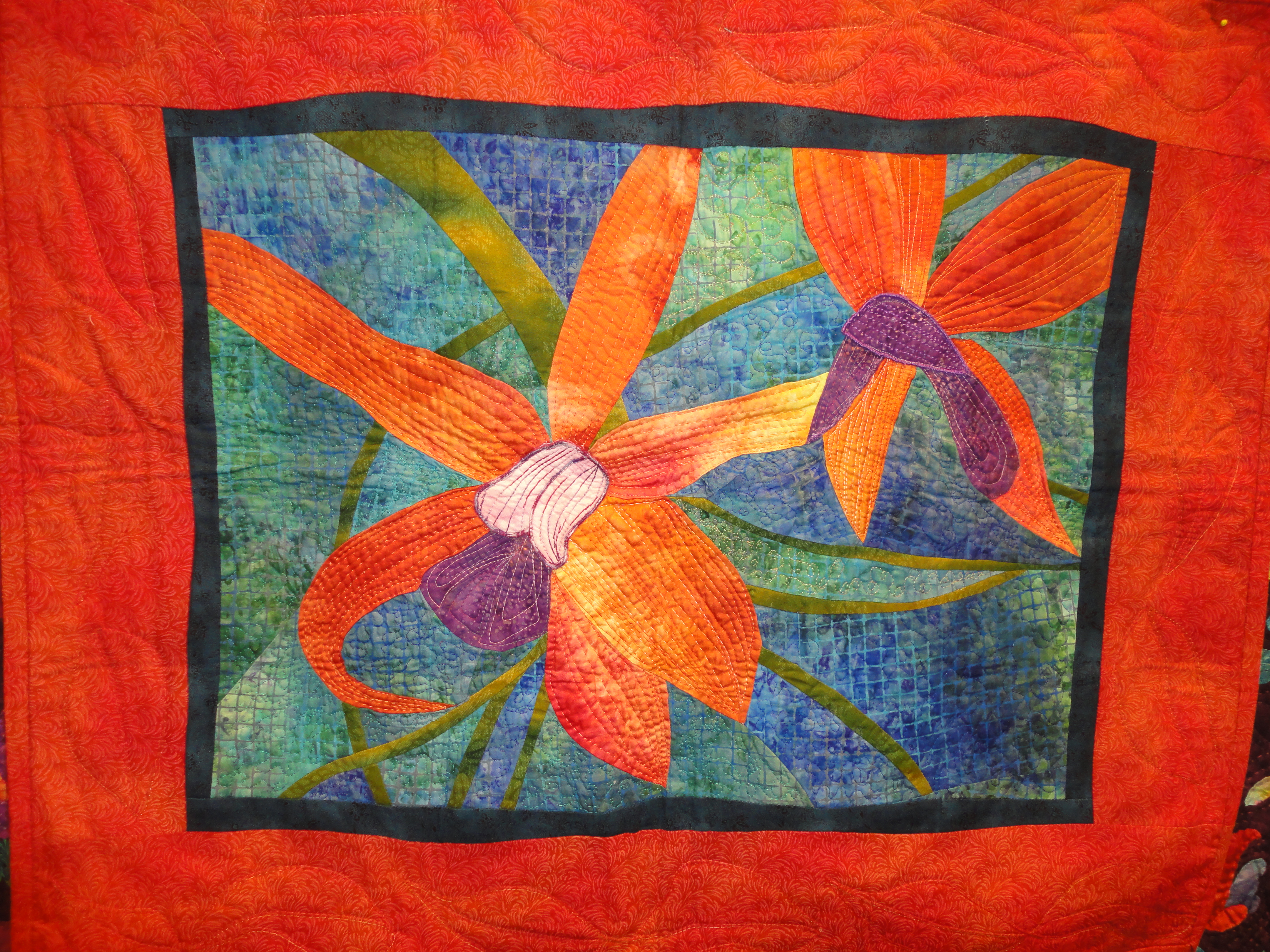
Imagine how many different fabrics, cut’s and colors you need, to design and make such „beauties“.
Using a rotary cutter.
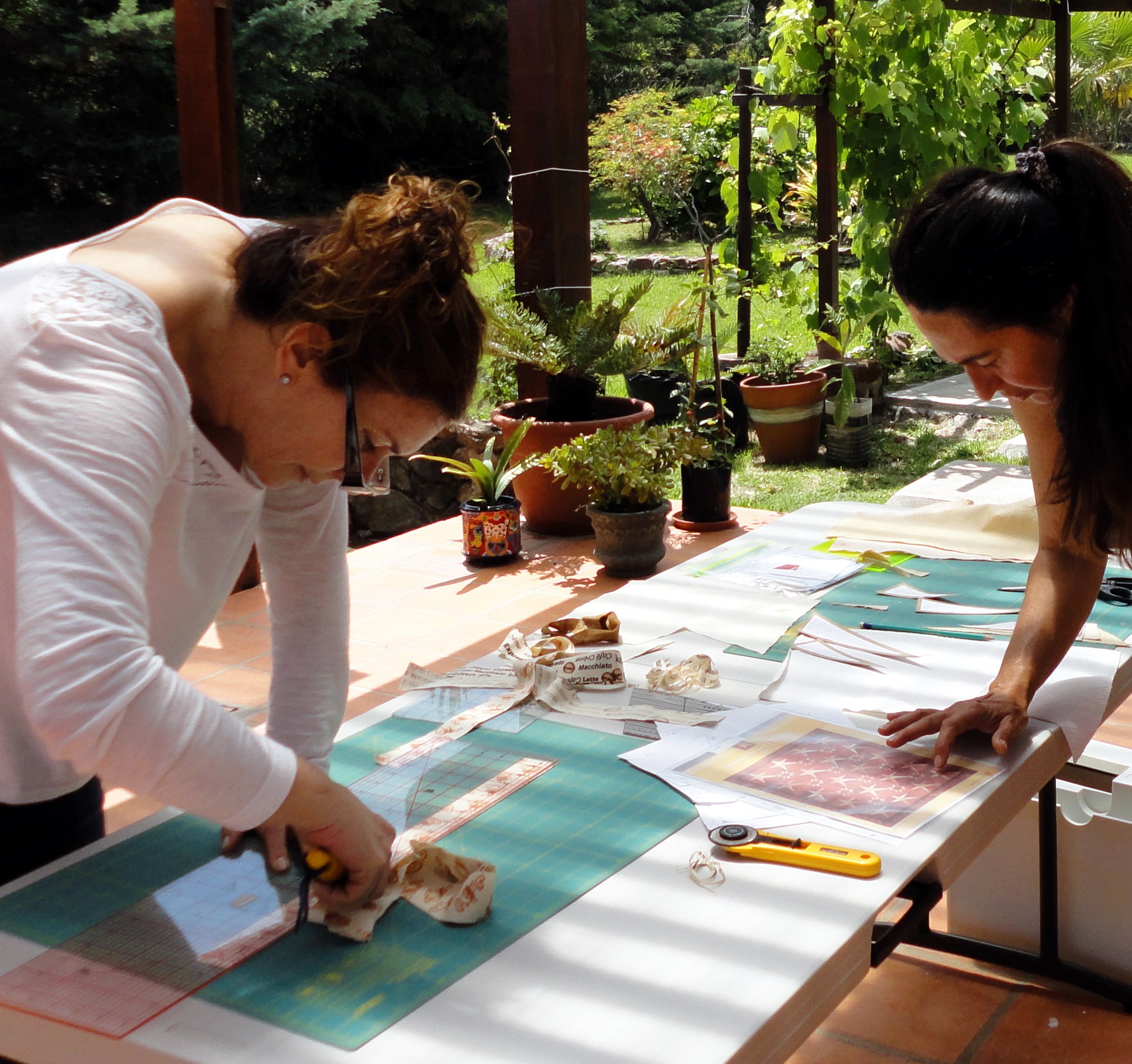
The key to successful patchwork lies in cutting your fabric accurately, and the best way to do this is with a rotary cutter. Fold your fabric, press it, and line up the pressed edge on your mat. Place your quilting ruler over the fabric, line it up on the mat and, holding it down firmly, move the rotary cutter away from you to trim the right hand edge.
Turn the board around without moving the fabric and cut your shape from left to right to avoid wastage. When you get more experienced, you’ll be able to cut through several layers of fabric at a time. Practice on calico to begin with and always press your fabric first.
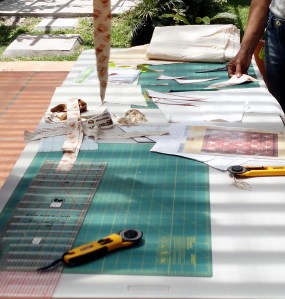
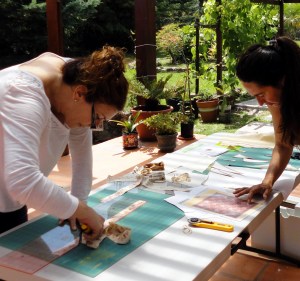
These are safety cutters, but still be careful ! These cutters are razor sharp !
Sewing together.
You can sew patchwork pieces together by hand or machine with a quarter inch seam allowance. Press the seams open. When sewing by machine, always use a new needle for each project , number 80 is a good size. Set the stitch length to 2.5 or 3. Sew with the two pieces of fabric right sides together, with the edges traveling just under the edge of the right hand side of the presser foot. Most good sewing machines now have a special quarter inch patchwork foot. Most patchwork measurements are in inch and users of the metric system have to transform.
Very concentrated sewing to avoid mistakes.
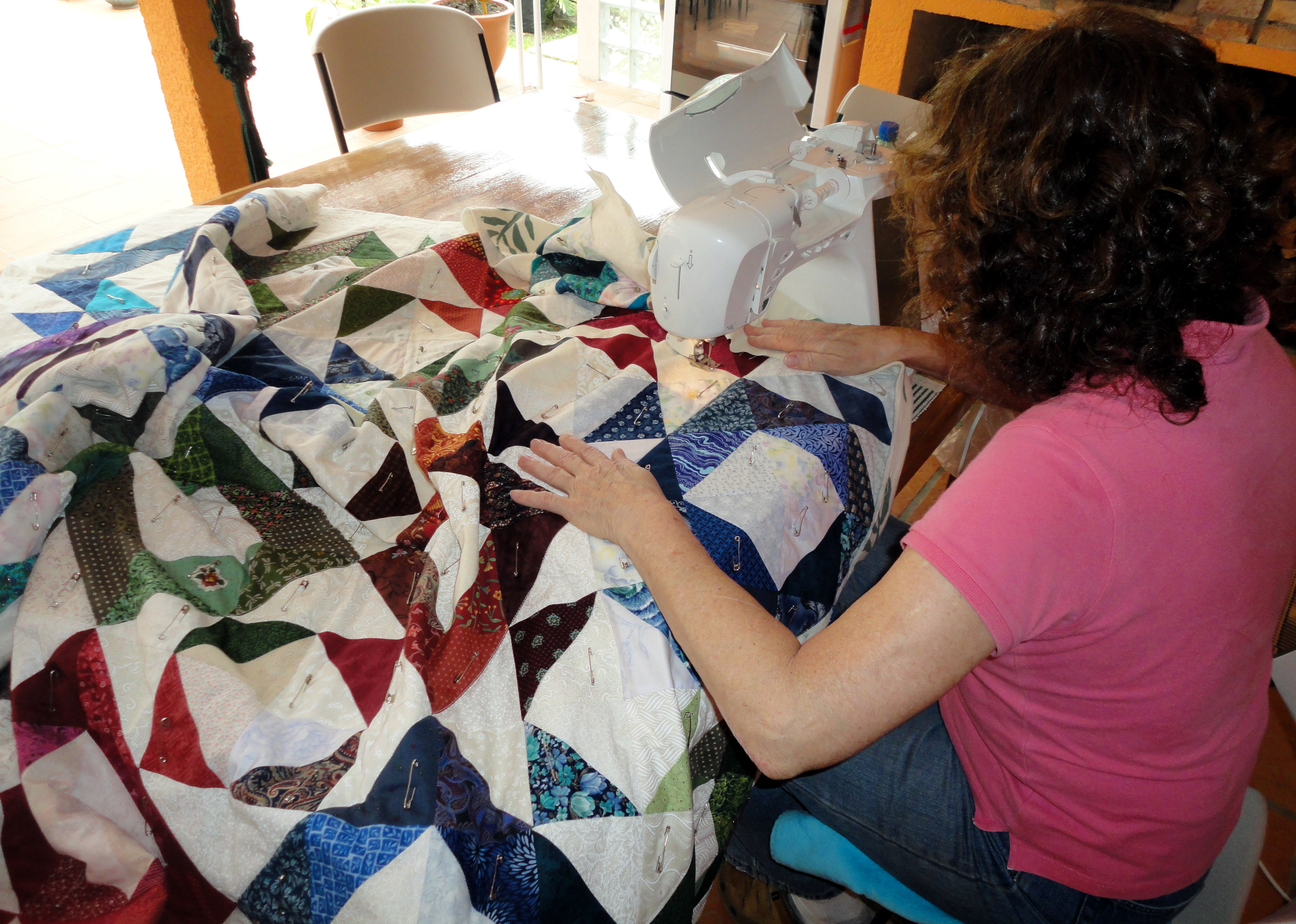
Quilting.
Quilting is usually done by hand. To get started, make a practice sandwich of your three layers. Place a piece of cotton fabric on a flat surface and stick down with masking tape so that the fabric is taut. Load some fine cotton wadding onto the top of the backing, and smooth out so there are no wrinkles or tucks. Put your top fabric, on which you have marked a quilt design, over the wadding.
Tack all three layers into place using rows of stitches, or special quilting safety pins.
Free motion quilting with a sewing machine.
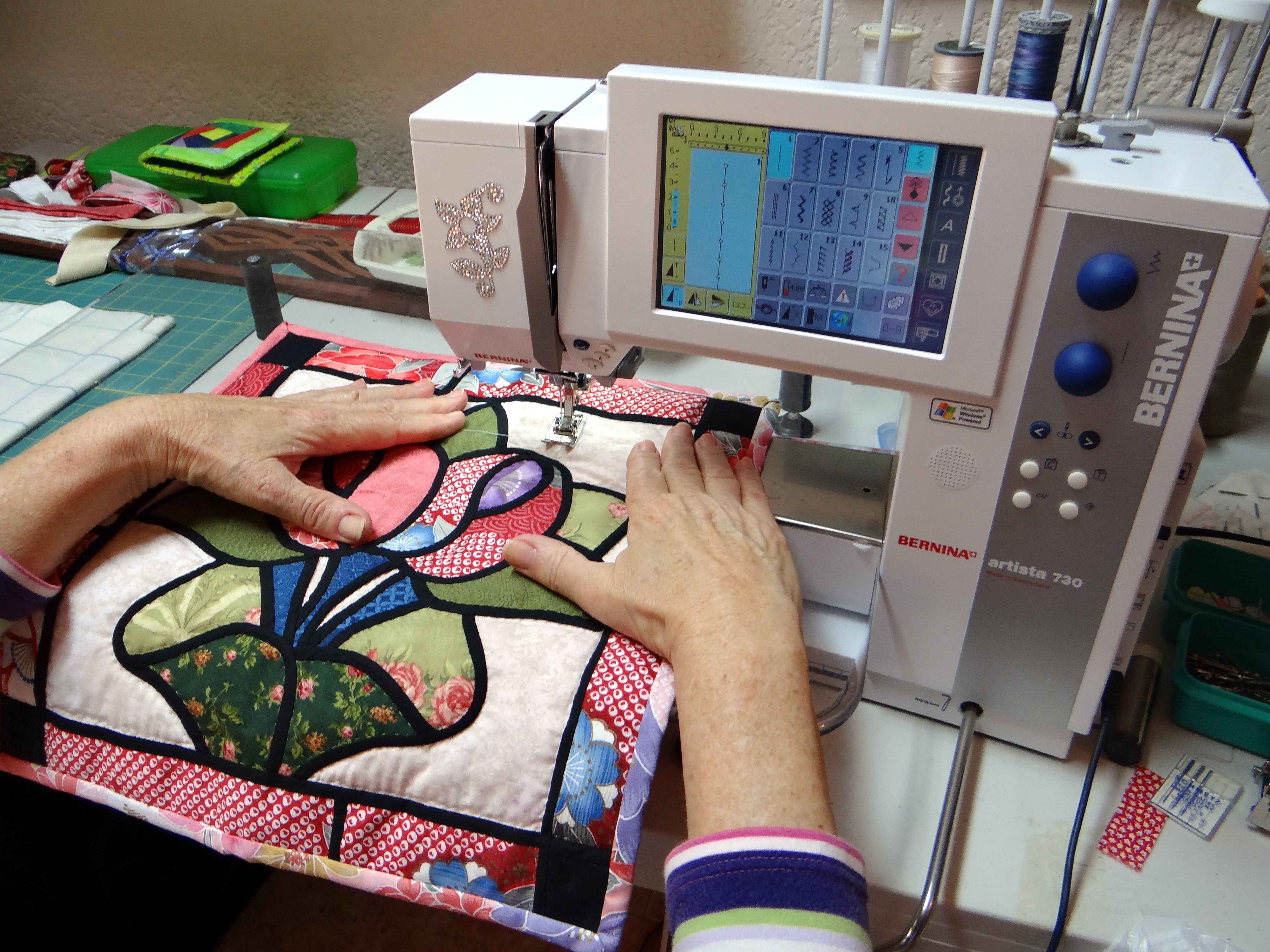
When tacked, remove the masking tape and practice your quilt stitches . It doesn’t matter how large they are, as long as they are regular. You will find your own rhythm, whether it’s stitch by stitch or two or three at a time. It helps to use a thimble on the finger
underneath the work and one on the finger pushing the needle through. Use good quality quilting thread, which is coated with a finish that makes the thread glide through the fabric. Use short lengths of thread ( approx 15 inches )and a quilting needle , which has a round eye and is short and strong. Pull beginning and end knots through the top and bottom layers into the wadding.


Heel goed stukje over de mooie hobby QUILTEN en PATCHEN.
LikeLike