
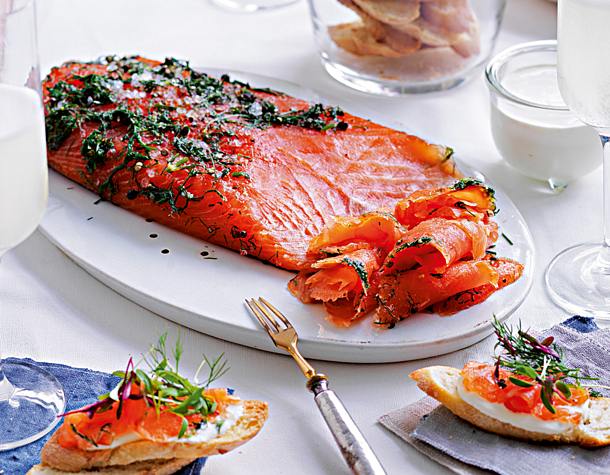
Graved laks.
It is the term used from Swedish gravad lax, Danish gravad laks, Norwegian gravlaks, Finnish graavilohi) or gravlax. It literally means originally „buried salmon“ (salmon out of a grave) or secondarily in today’s cooking language „marinated salmon“. The method of lightly salting freshly caught salmon and burying it in the ground for a few weeks or months for fermentation to preserve it was developed by the Scandinavians centuries ago. Anyway, I am playing a bit with all the different possible names we can use for the same delicious seafood dish.
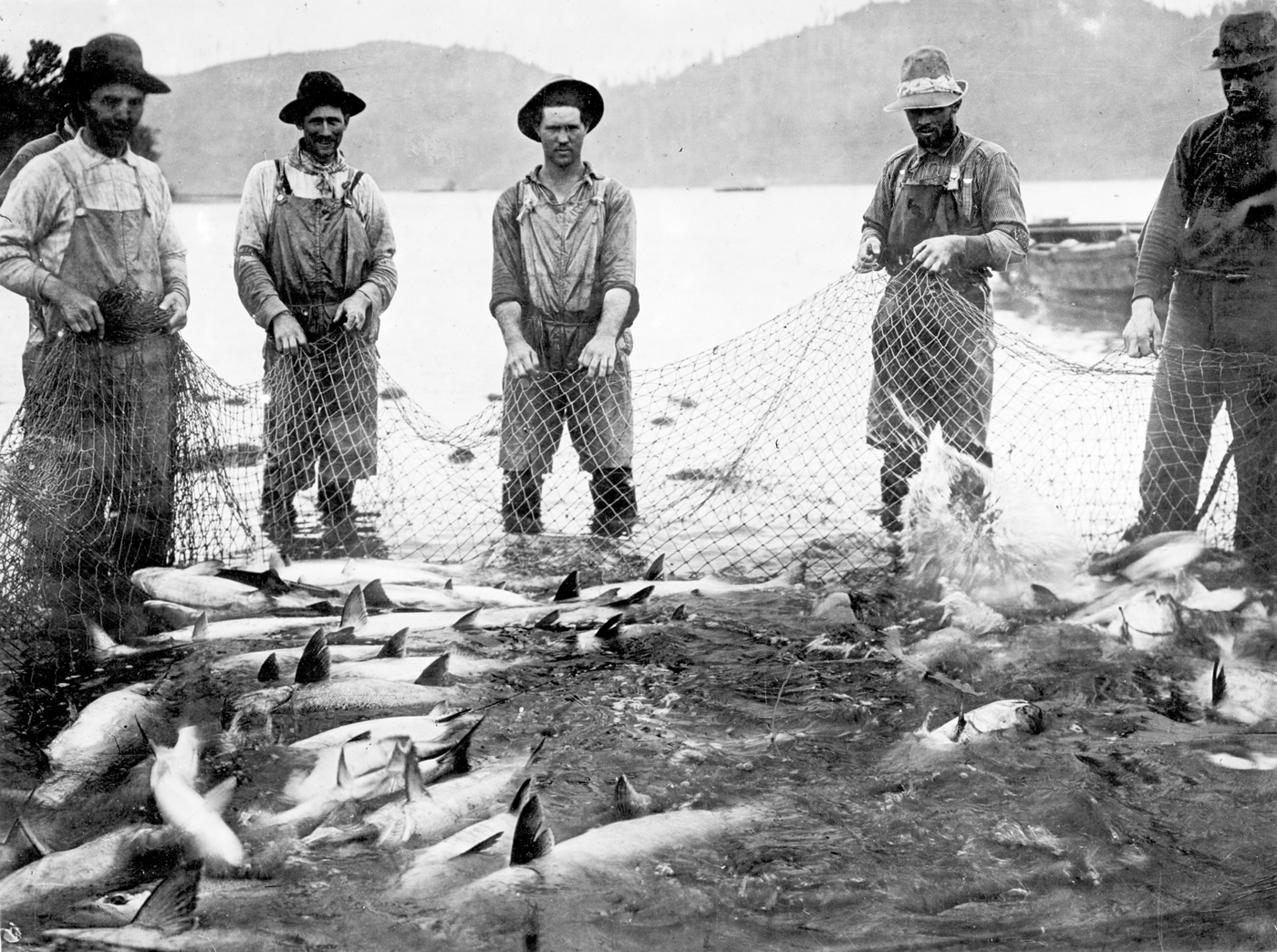
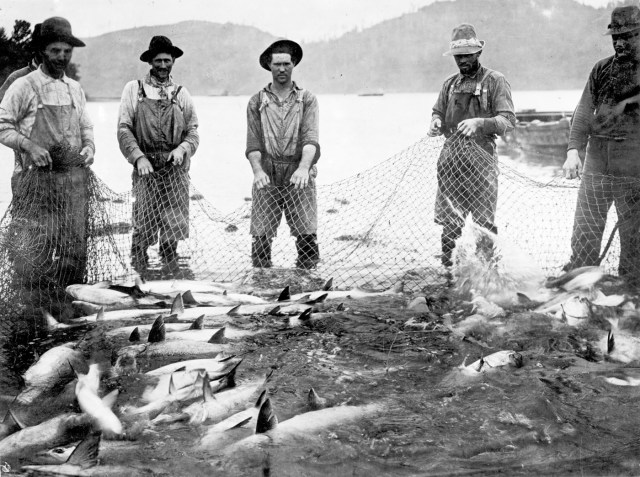 Old style salmon netting at Columbia River. Scandinavians brought salmon pickling over to America.
Gravlax is one of the few world-famous Scandinavian dishes out there, and while many know that it is basically prepared with salmon and herbs, few know its ancient, Arctic history. The origin of gravlax can be traced all the way back to 14th-century North-Sweden. In the Middle-Ages, salt was expensive and most foods had to be preserved using alternative methods.
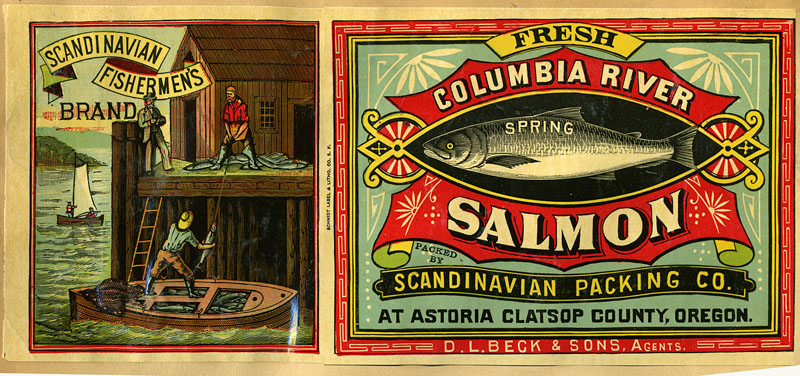
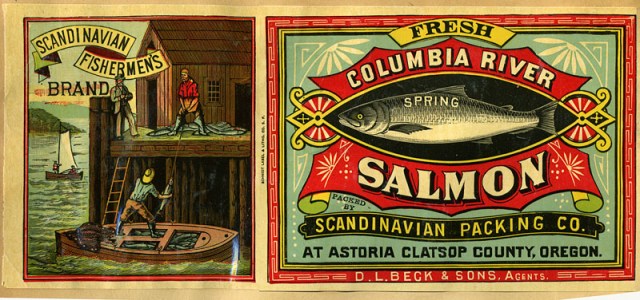 The Scandinavian brand used in Oregon, USA.
In North-Sweden, peasants and fishermen developed a unique technique called gravad lax (“buried salmon” hence the name gravlax): The filleted salmon was placed in a hole in the earth, covered with birch bark and laid in a bath of water, the fish’s own blood, and various spices and herbs. The result was a rather strong-smelling product that would be closer to today’s infamous surströmming (fermented herring) than the gravlax that is eaten nowadays.
 New style salmon netting. No difference.

After gutting, the fish were rubbed with pickling agents (dry salt-sugar mixture with dill and possibly other spices and herbs) and then buried in the beach or earth holes for at least three days (dialectal Swedish gravad) and weighted down with stones. The physical pressure and osmotic pressure of the mordanting process causes water to be drawn out of the salmon flesh. At the same time, the fish ferments a little bit. Through drying and benign fermentation, other micro-organisms that cause rotting no longer find good living conditions, so that longer shelf life is achieved. In the past, the fish was also left in the pit for months in order to preserve it for the winter months. Due to the long fermentation time, a strong smell develops. Similar methods of preparation with different types of fish are common in many polar regions. However, gravad salmon is neither as dry nor as durable as air-dried stockfish.
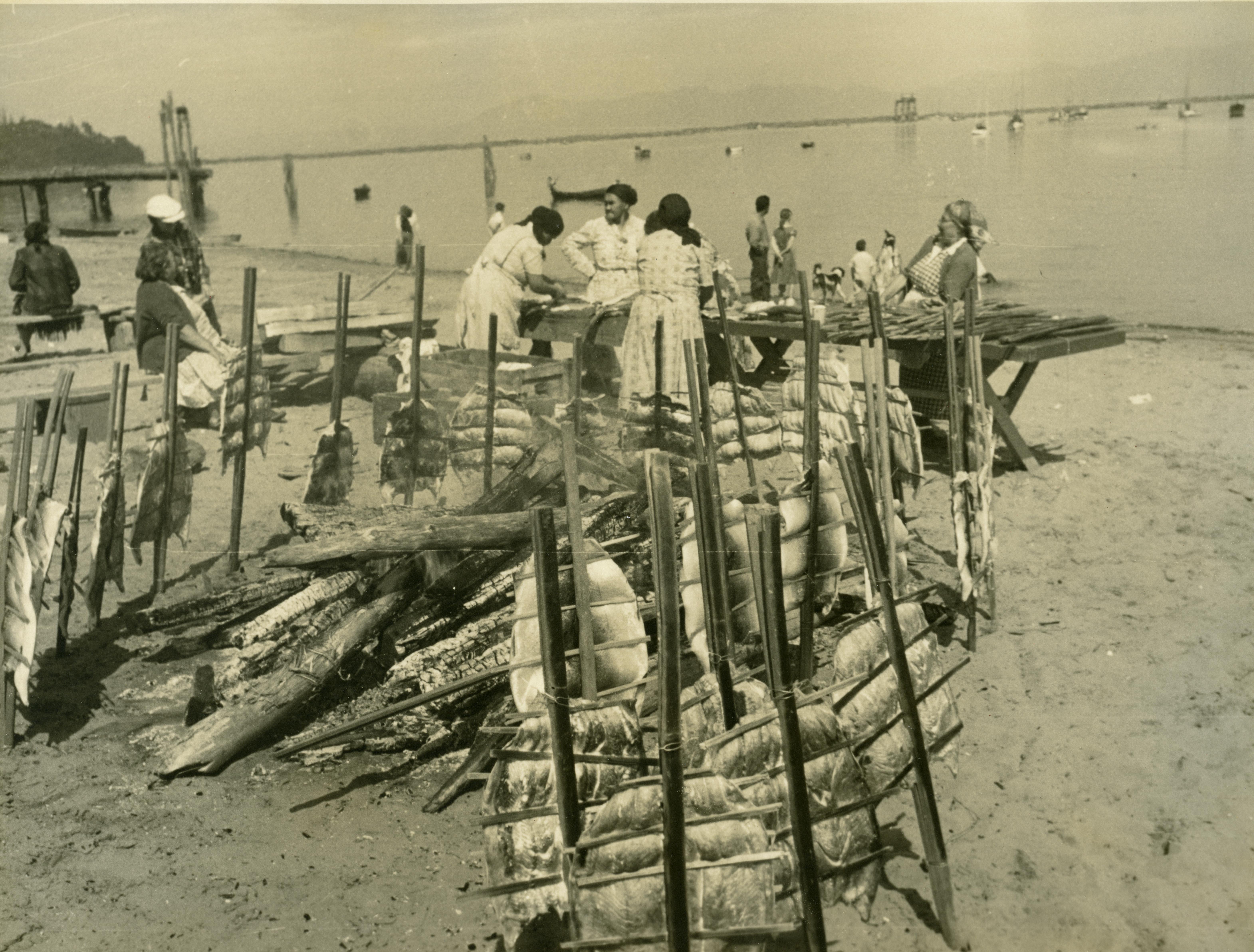
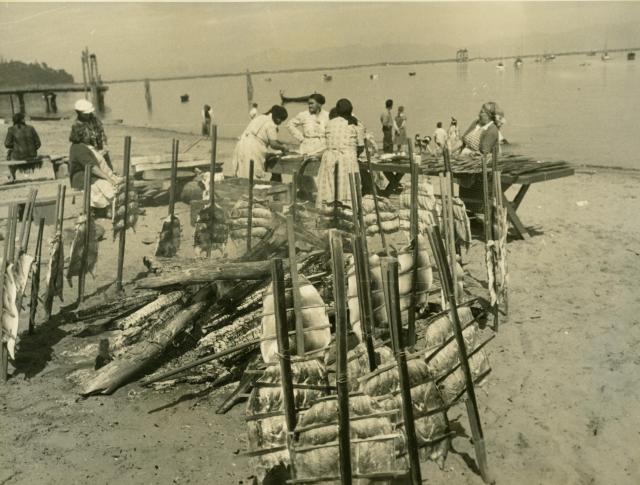 Old style, beachfront or riverfront, salmon smoking.
Over time, gravlax-making techniques evolved, and the introduction of salt and dill, among other things, lead to the development of a much gentler dish. In Arctic Norway, North-Sweden’s nearest neighbor, it soon became customary to make use of a curing blend made of salt, pepper, honey, local spirits, and, of course, dill to soften and ripen the fish in a uniquely delectable way.
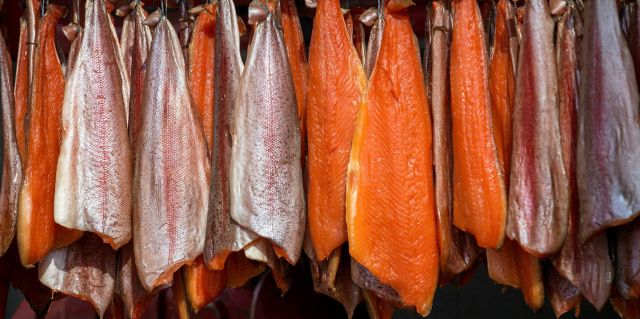
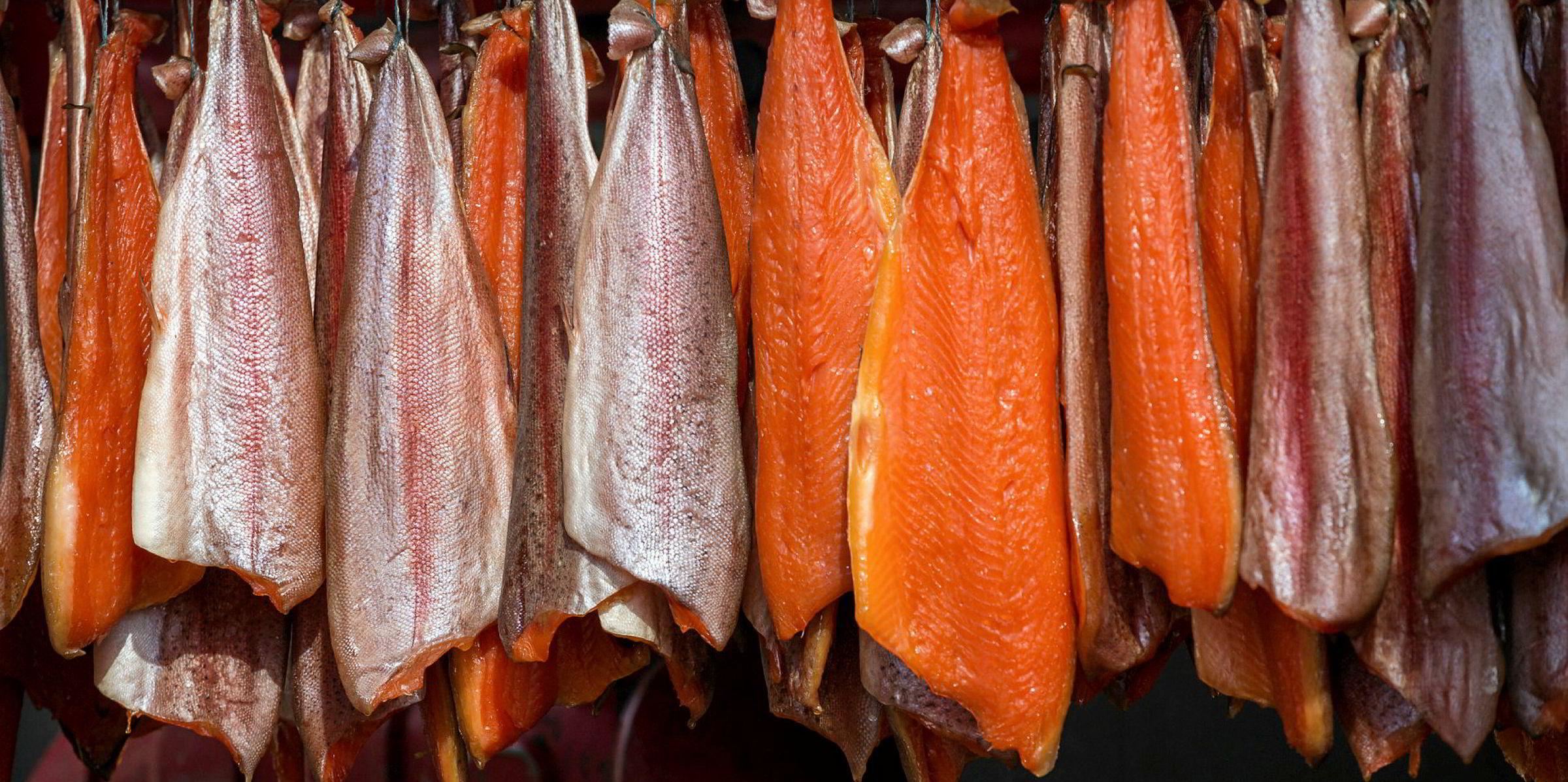
Salmon sides hanged for air drying. Of course that’s possible only in cool northern countries.
Easy marinated recipe.
Today, the fish is no longer buried but matured for a few days in a cool place. For this purpose, two salmon fillets are rubbed with the pickling mixture on the inside, placed on top of each other, and weighted down with a weight. The production of gravlaks is one of the household tasks usually performed by men. Fermentation does not take place because of the cold, and the fish does not become as dry in the modern method as in traditional production. Genuine gravlaks salmon is not smoked, the shelf life is achieved by pickling alone.
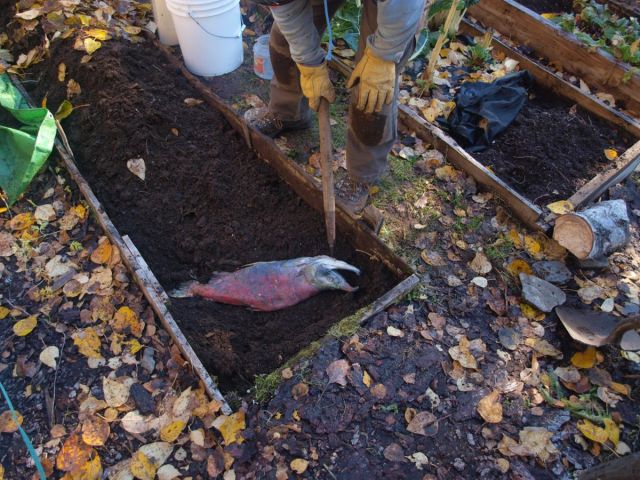 Formerly the salmon was buried for pickling and preserving, as we know, today used as fertilizer only.
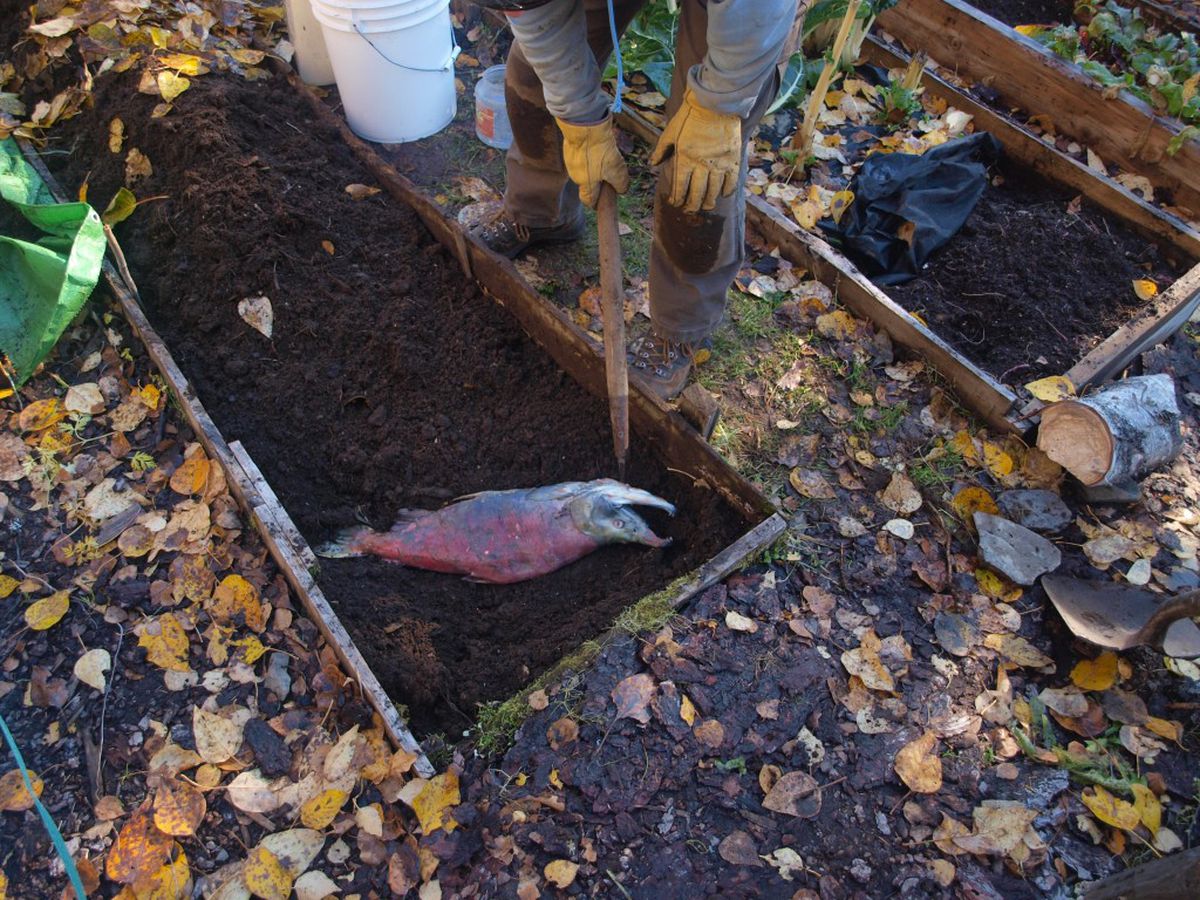
After about 72 hours of curing, the gravlax is generally ready to be served. However, in many North-Norwegian households, no gravlax dish would be served without a proper mustard sauce crafted from traditional mustard powder, oil, flour and extra dill. This somewhat more modern local variation on traditional gravlax was particularly popular among coastal communities such as Karlsoy, where it has been enjoyed by generations of Hegelunds for close to four centuries.
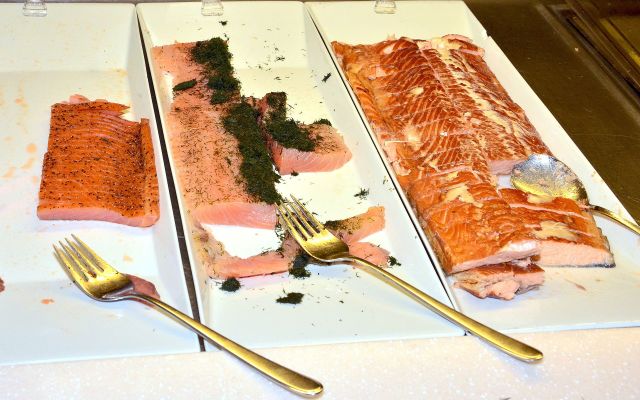
This shows how it’s served in better seafood shops. Salmon dishes from left to right: Cold smoked salmon with pepper, cured salmon (gravlax) with dill, and hot smoked salmon.
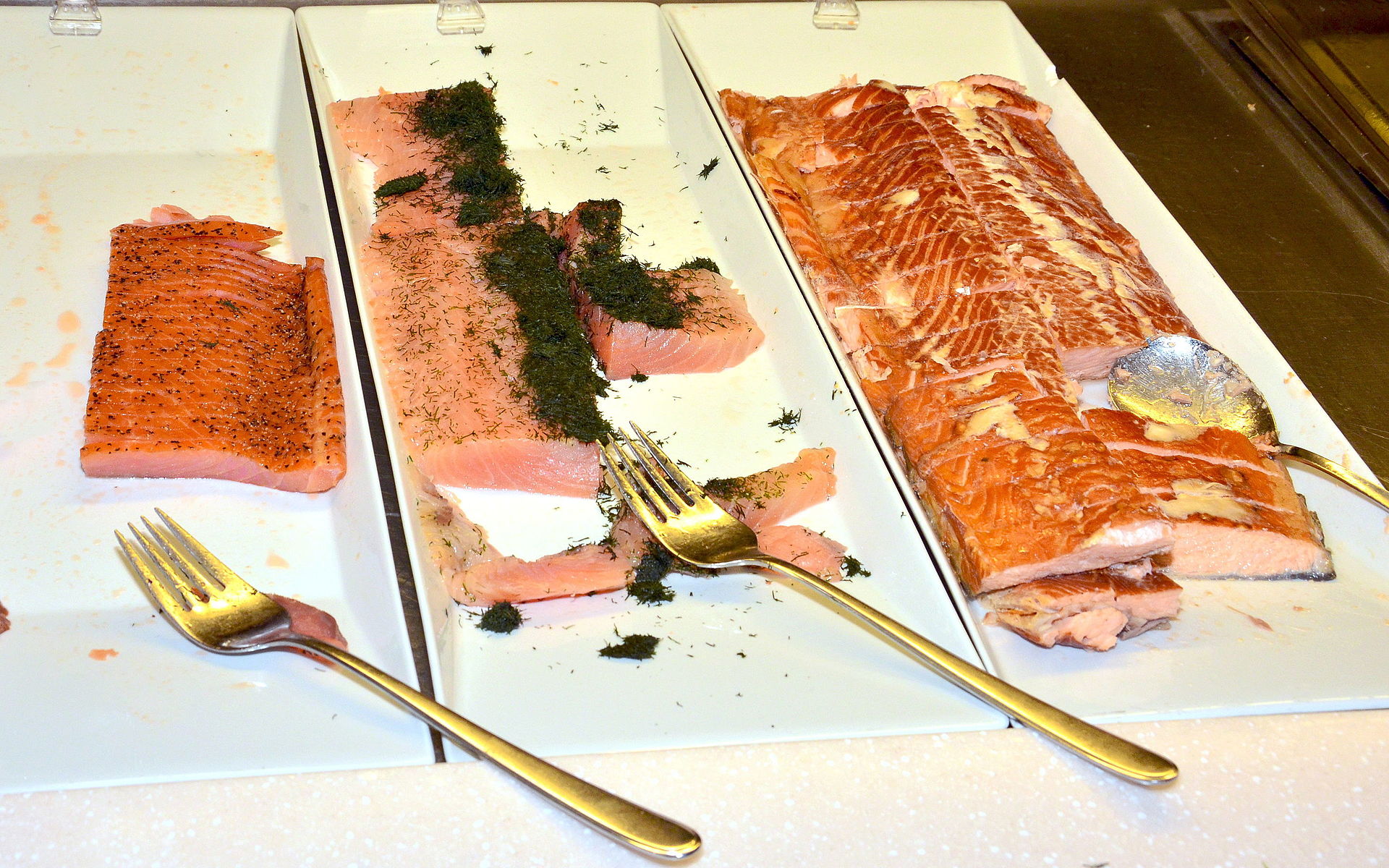
Before use, the resulting brine is poured off and the meat is brushed clean. The fish is then cut into very thin slices and served as an appetizer. Graved salmon today is usually served with a cold mustard sauce made with lots of dill (Danish Raevesovs, Swedish Hovmästarsas, also known in German as Graved Salmon Sauce) or potato salad.
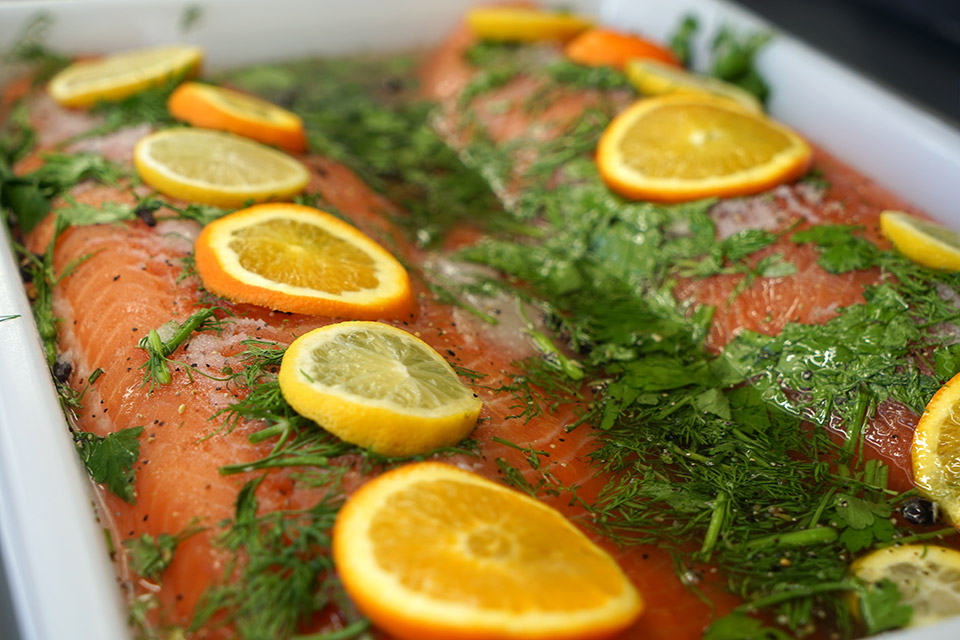
Ingredients.
1 salmon fillet(s), with skin, approx. 1 kg
90 g salt
90 g sugar
1 tablespoon juniper berries
1 tablespoon peppercorns
1 tablespoon coriander, or a handful fresh, chopped coriander
1 lemon, grated or zest
1 teaspoon chilli or Szechuan powder
1 big bunch of dill, finely chopped
How to do.
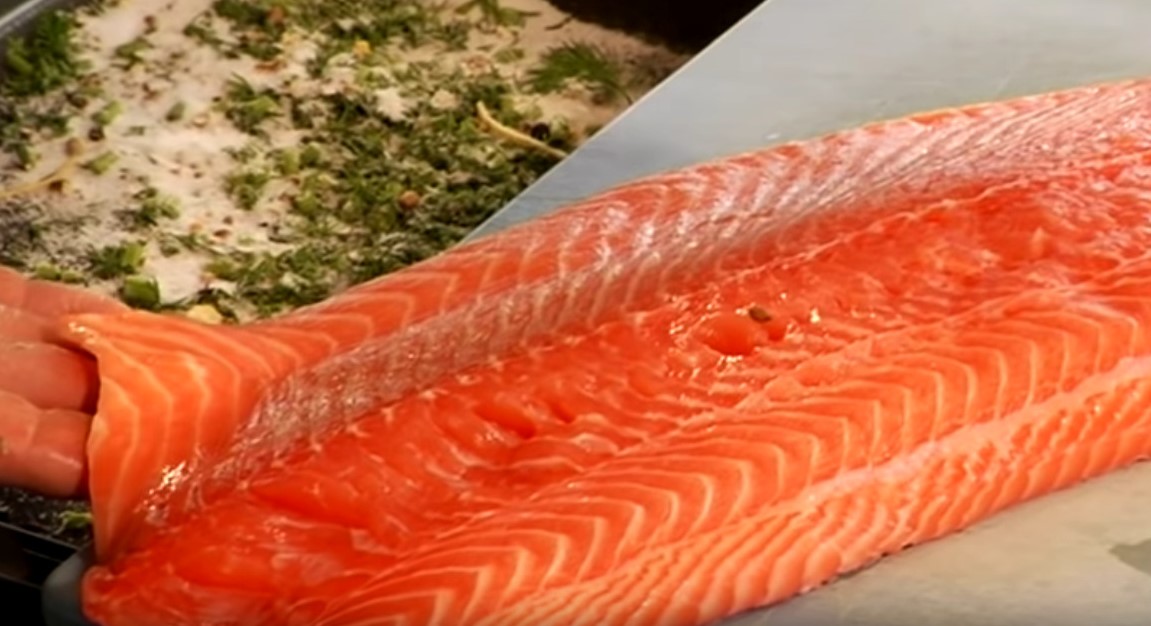
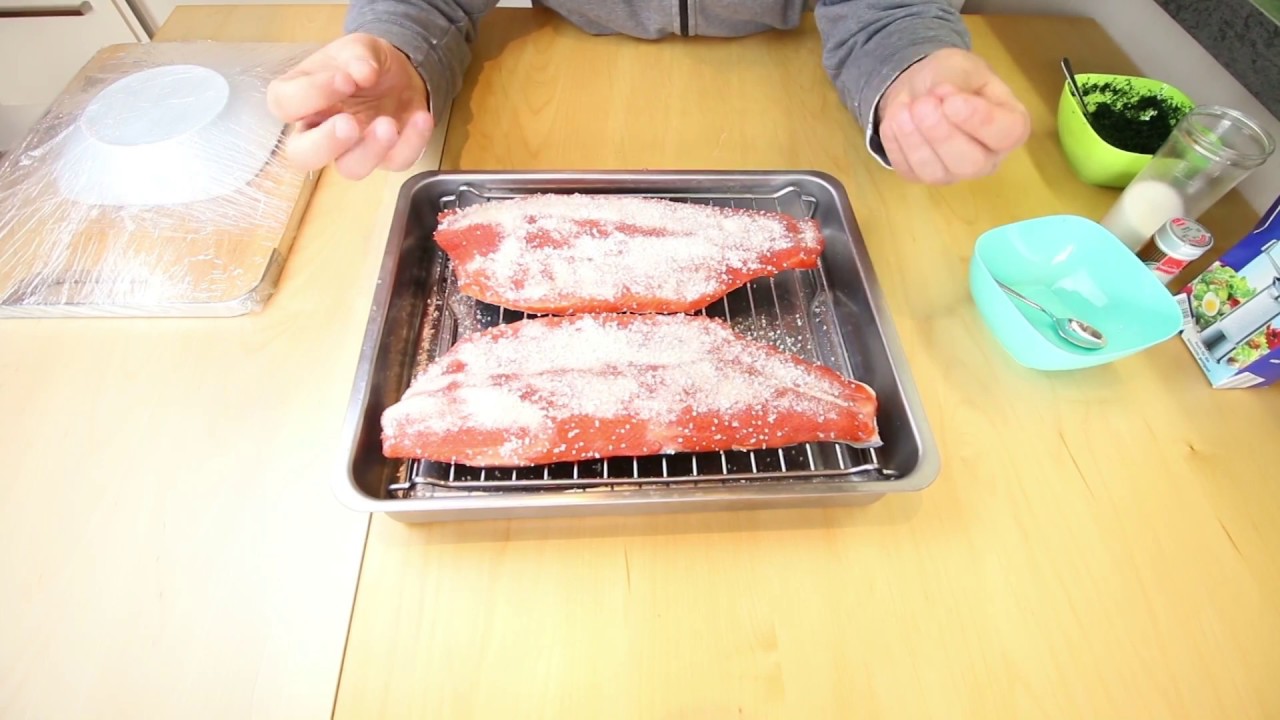
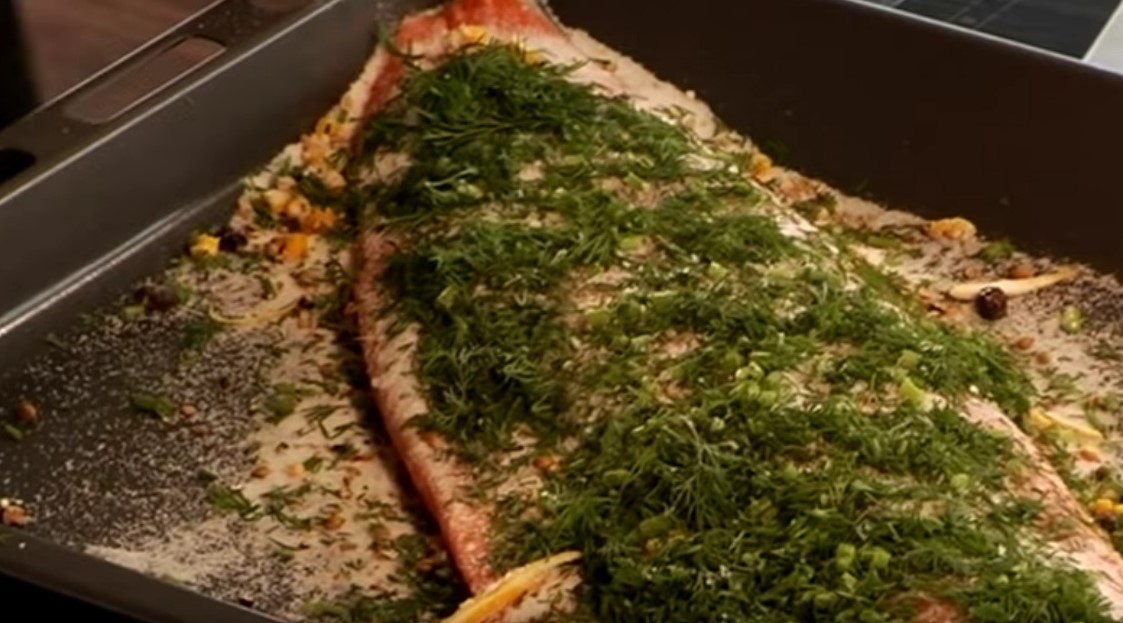
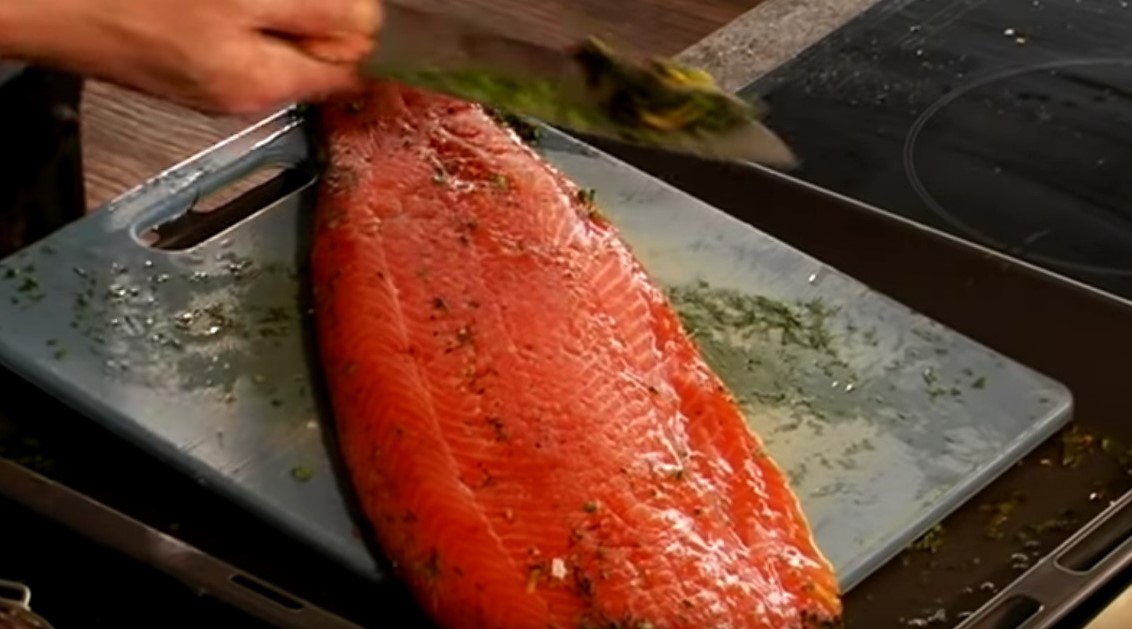
Mortar spices and mix with lemon zest and dill in a bowl. Spread half of the seasoning mixture on a baking tray, place the salmon fillet on top, and pour the remaining seasoning over the salmon. Cover the fish with a board and additionally weigh it down with a pot.
After 24 hours, turn the salmon over, cover again, and weigh it down. After another 24 hours, i.e. 48 hours in total, the salmon is pickled.
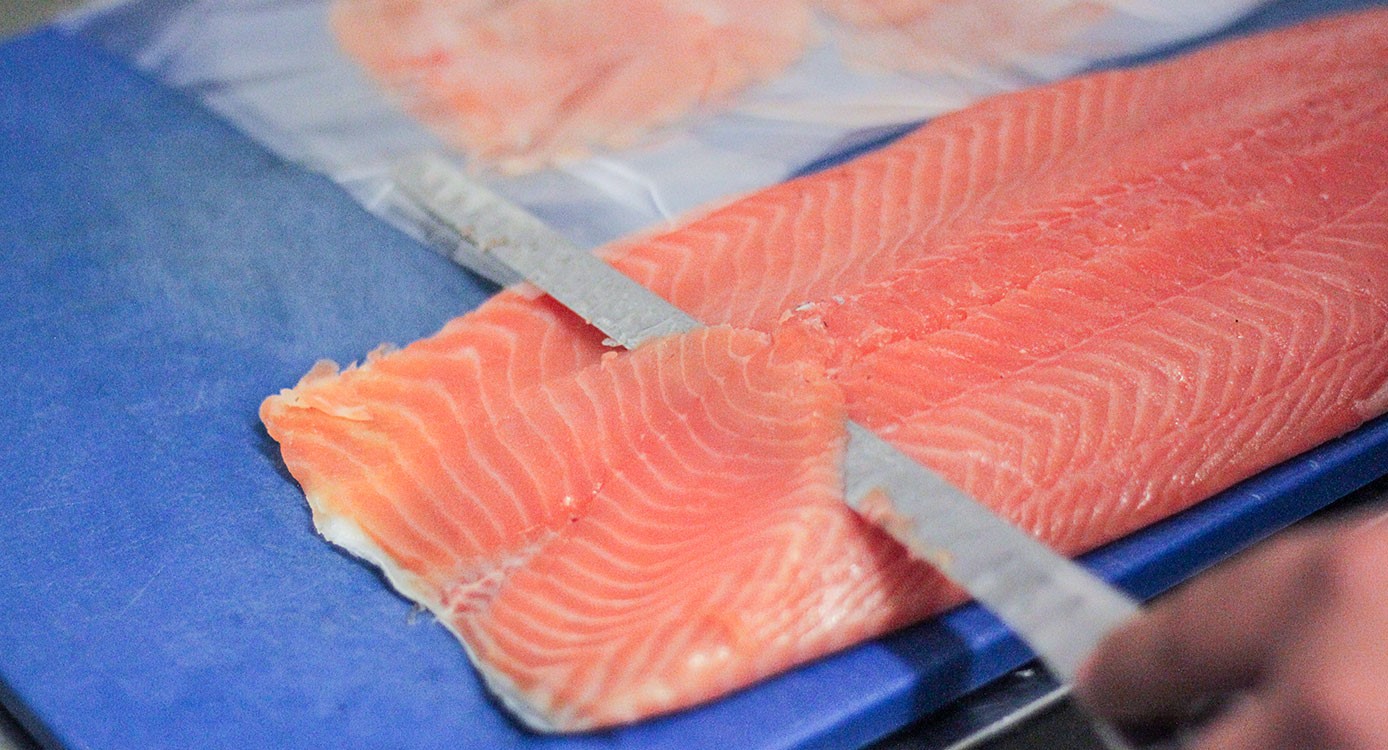
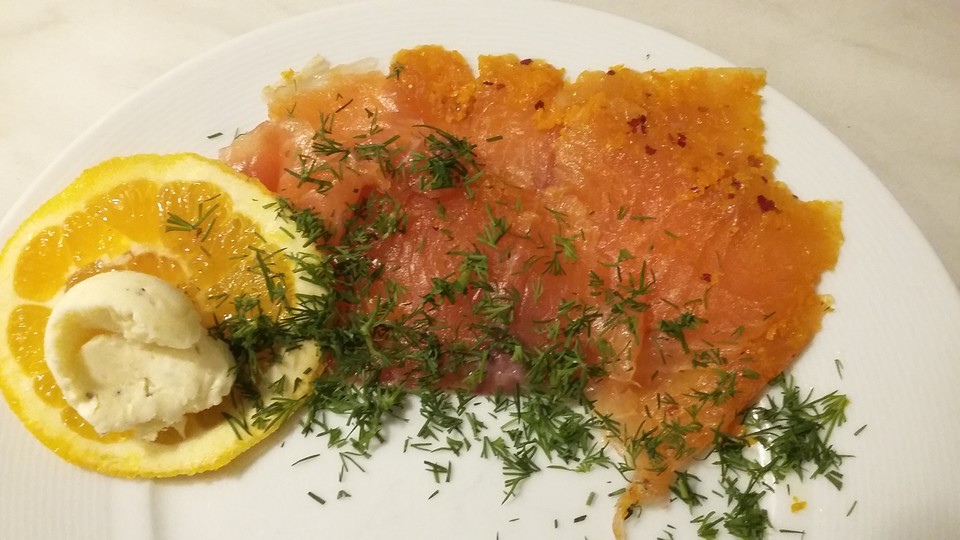
Before you cut the salmon into fine slices, strip the spices and dill a little and pat dry. It is best to cut the salmon open at the table, otherwise, the fine slices will dry out too quickly.
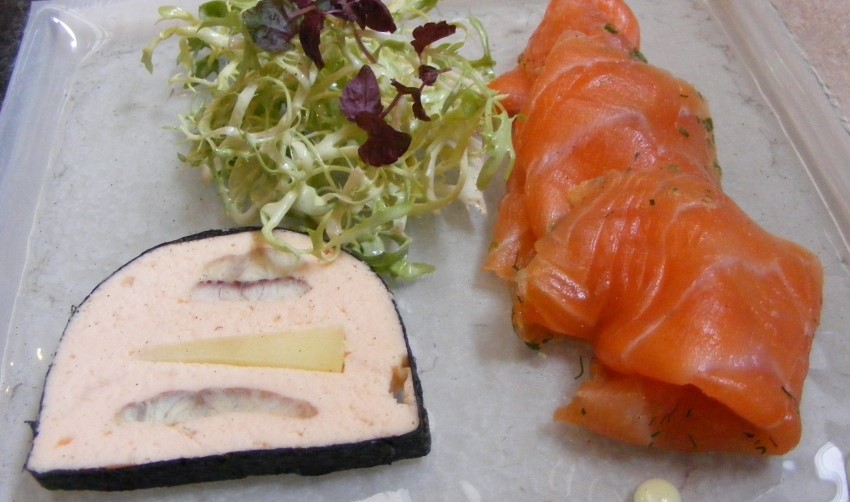
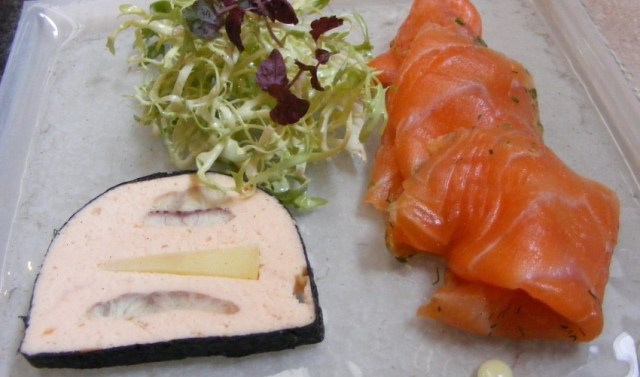 A showstopper for gourmets, graved laks with a slice of eel pate.
Tips.
Essential for pickling salmon is sugar and salt, often used 2parts of salt and one part of sugar. I prefer the 50:50 mixture, it’s not as salty as North Europeans like. Everything else is a dressing option and can vary as you like. The above is one (mostly used) suggestion.
If you do not like this dressing, I have some other ideas. The sugar-salt mixture as a basis remains, spices or herbs can be replaced by the following variations:
– Honey and freshly chopped red chilli, or
– any kind of dressing combined with cognac (dark color) or gin (light color), which I did last time as one can see:
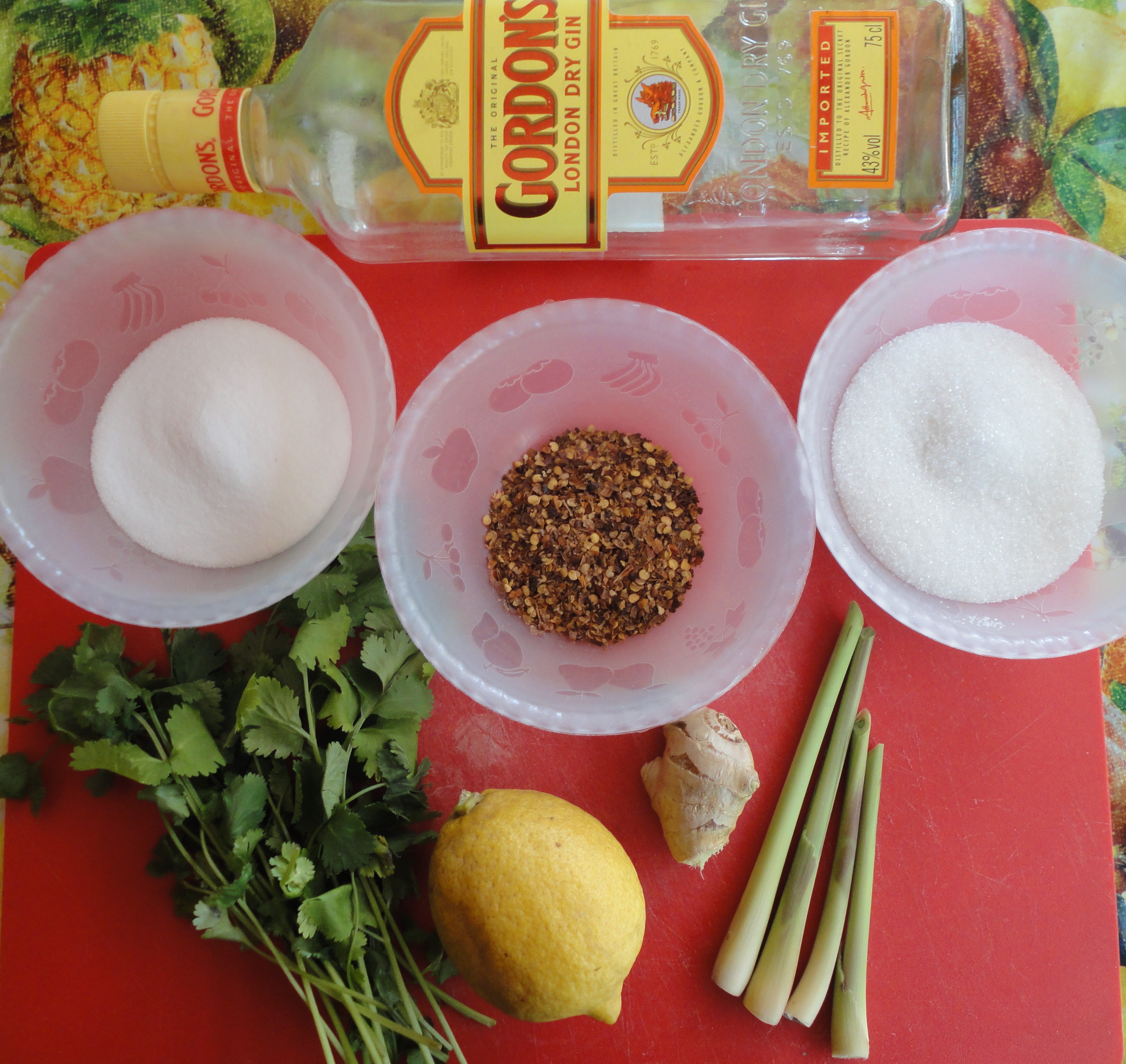
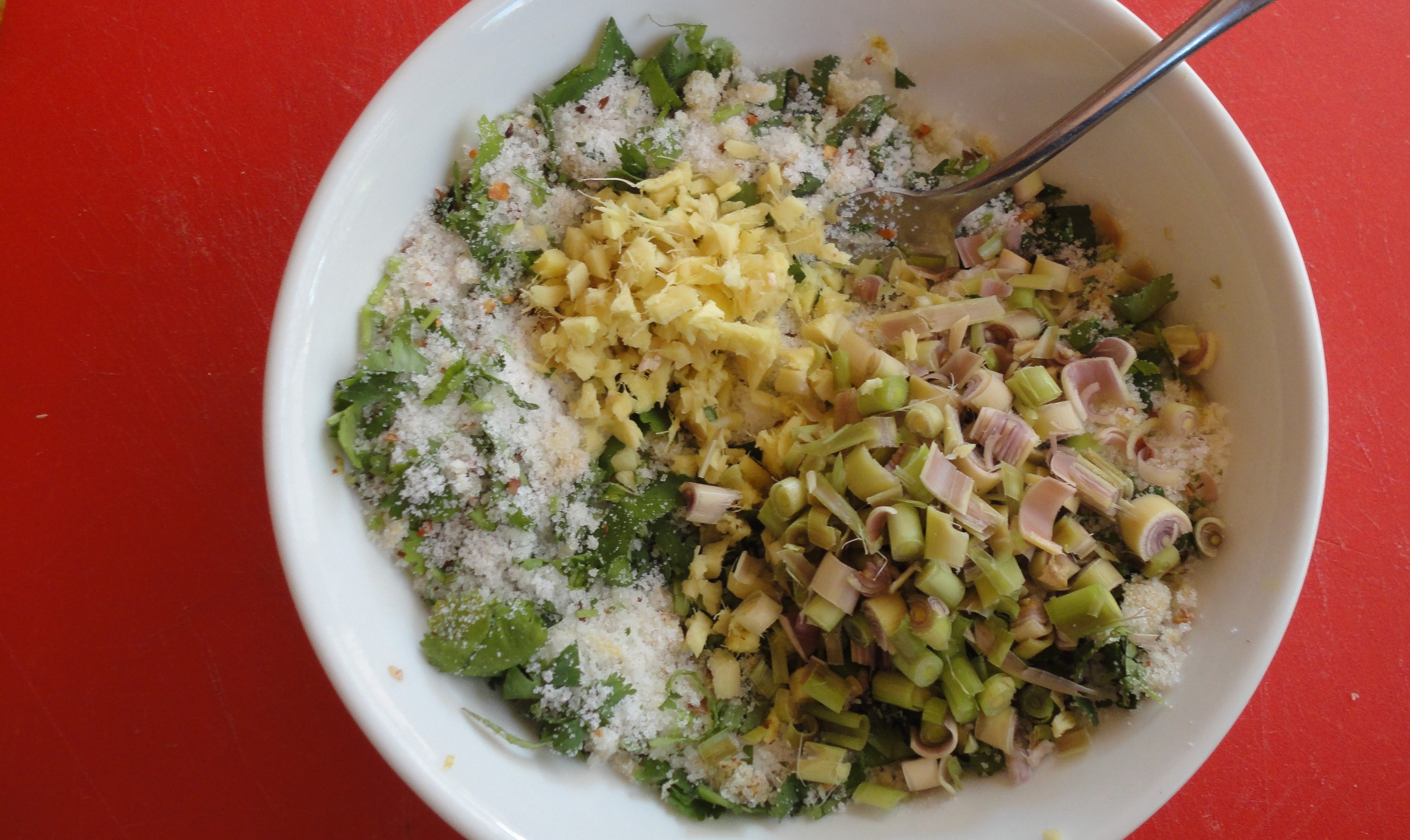
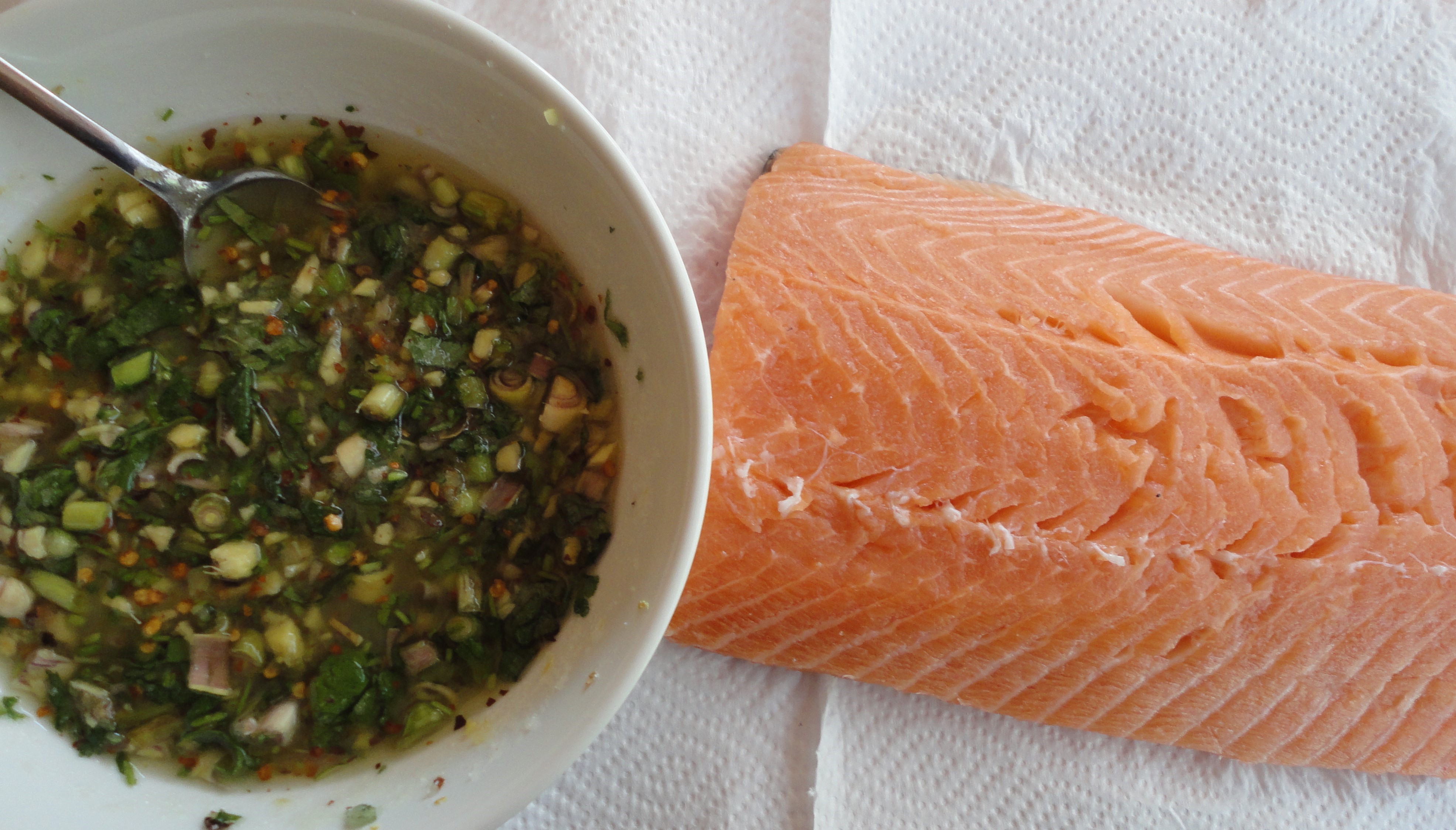
 All ingredients (which are salt, sugar, lemon zest, ginger, lemongrass, coriander, chilli flakes and gin) mixed together, then the paste covers the fish, and finally, it’s weighted to be placed in the refrigerator for at least 48 hours. It is so typical Asian, absolutely delicious.
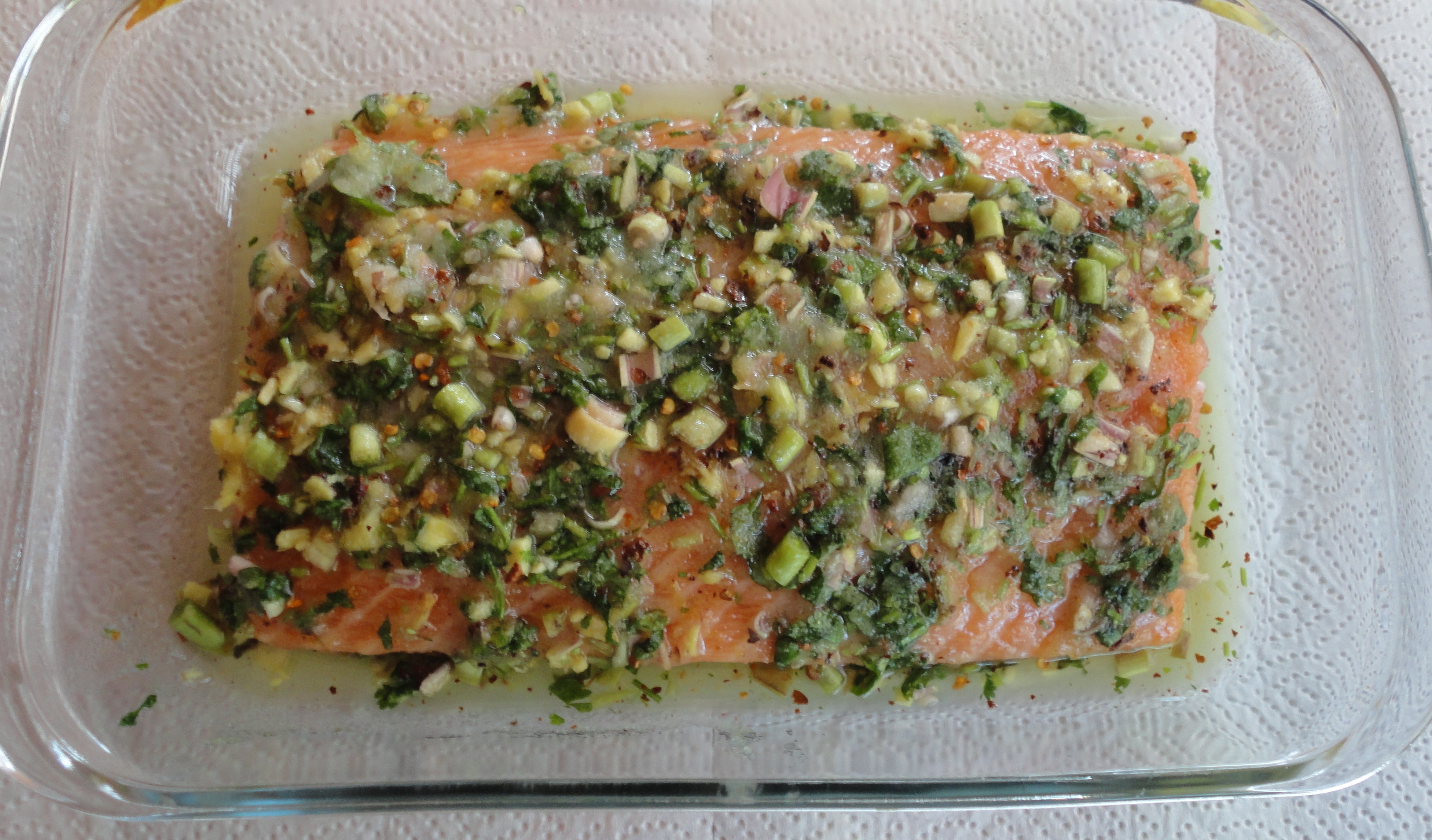
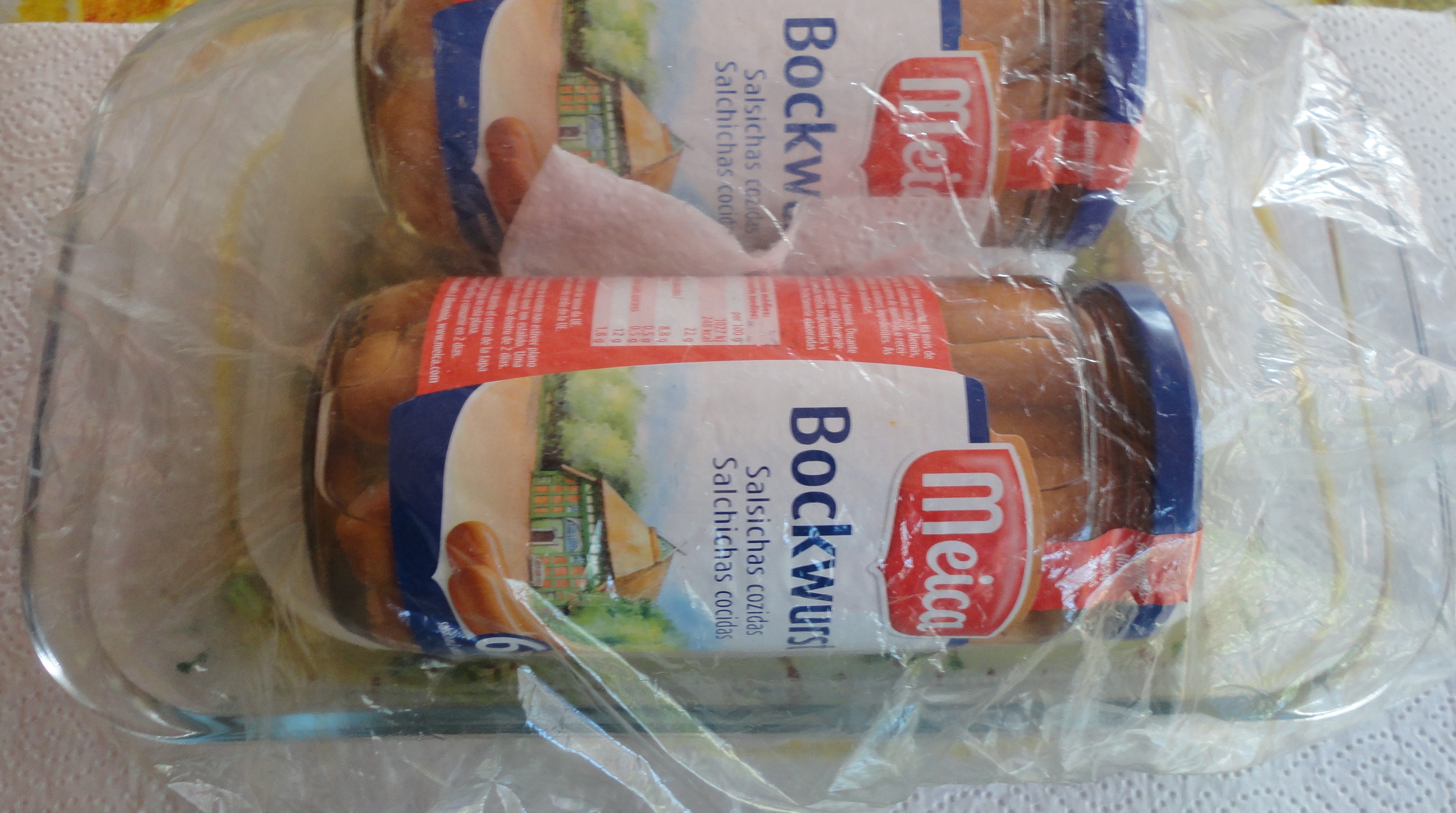
– Basil with orange peel and olive oil, or
– Christmas variation, salmon with gingerbread spice, or
– beetroot, lemon zest, and juniper berries. This variation I like too, because it is a nice showpiece during a party or a dinner buffet. See here:
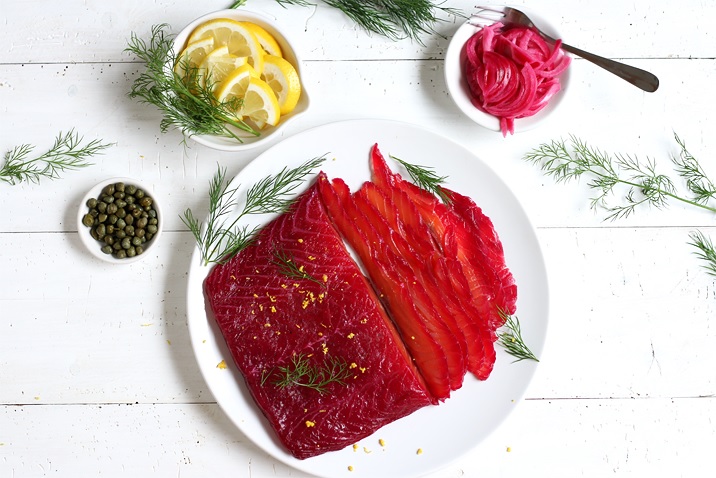
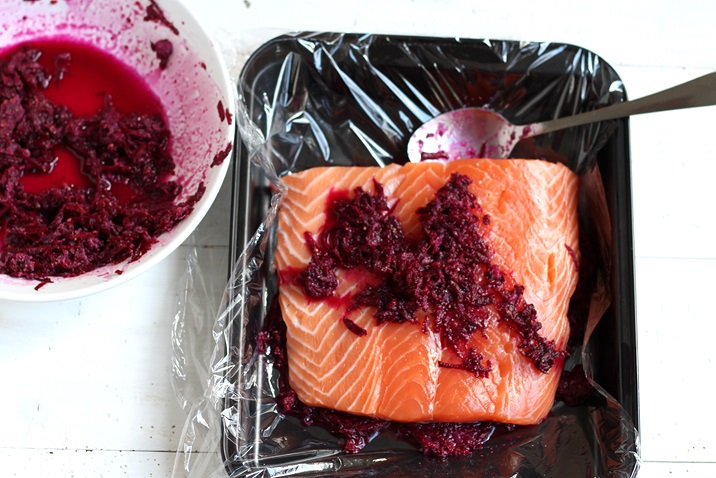
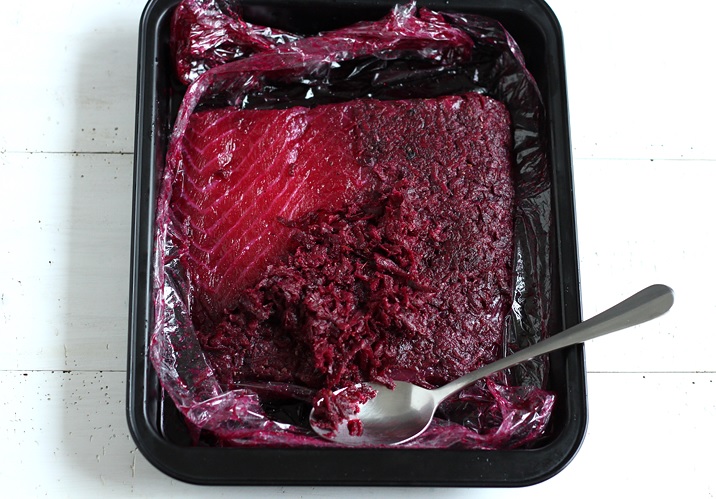
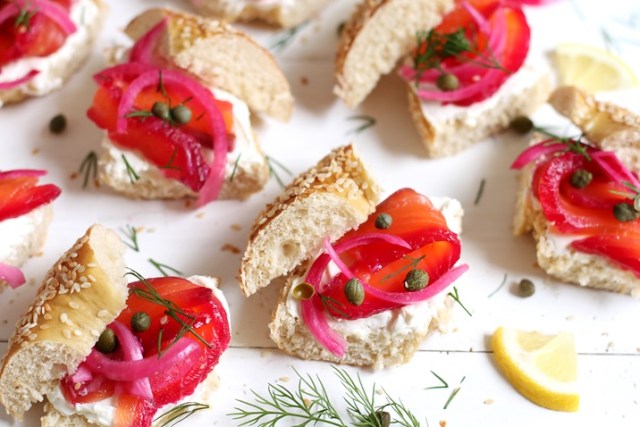 Isn’t that delicious ?
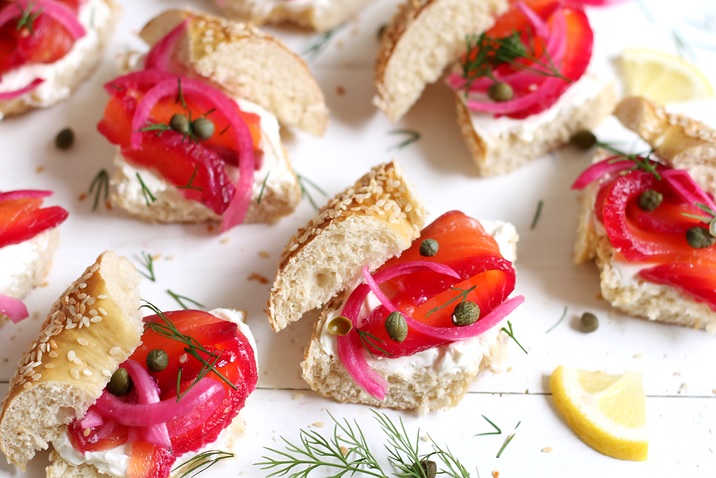
If you have questions, just ask. Graved Laks can be stored refrigerated for several days and is ideal to freeze for many months. Hope, you enjoyed the post and will enjoy the taste !!
And finally – if you have the chance to a fish store like below, you will forget eating meat !!
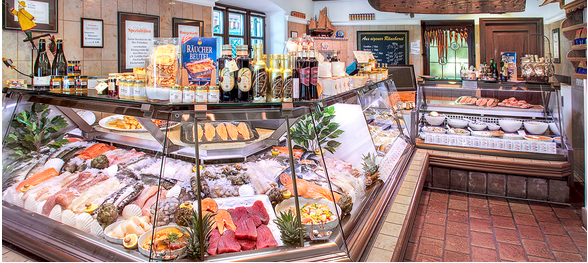
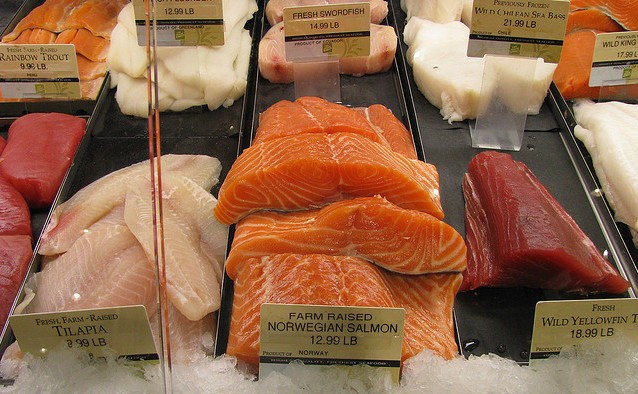
The store, above, is in Starnberg, near Munich in Germany, connected to a fine-dining seafood restaurant. The Norwegian salmon down here is sold in Oregon.


Weer een goed artikel. Leuk te lezen hoe iets, dat we nu zo gewoon vinden in het verleden tot stand kwam. Groetjes Wilma
LikeLike