
When I was younger, I loved to read novels, especially novels which were filmed later. The reason was, that I believed, if I like a movie, the novel is even better, more detailed and lots of side story’s one wouldn’t find in the movie.
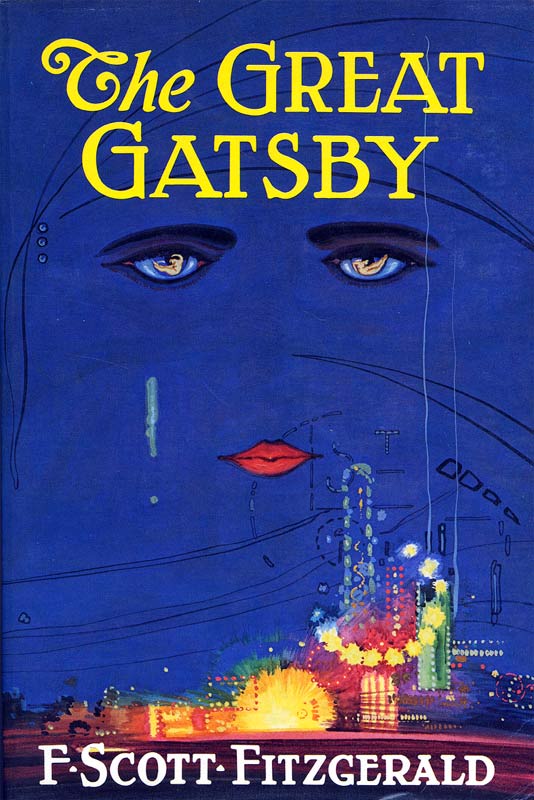
One example is „The Great Gatsby“. The first time I read it without really understanding why. But the Robert Redford/Mia Farrow movie strikes me as spectacularly beautiful but profoundly sad, a Kentucky Derby party when the favorite pulls up lame and is found to have broken its legs.
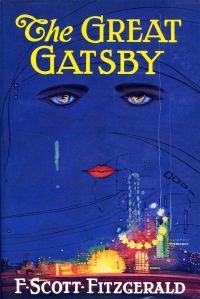
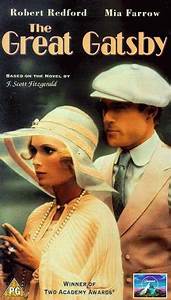 The Great Gatsby, book and movie.
Out of this reading, I, first time, came along Charles Angoffs „H.L. Mencken“ book. There I read that Gatsby is a much more mature work than „This Side of Paradise“, which was a young man’s novel, witty and clever but less wise, written also by Scott Fitzgerald.
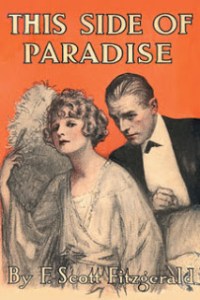 This Side of Paradise. Later Mencken wrote about: This Side of Paradise was the „best American novel that I have seen of late“.
Further reading stated Mencken saying: „As usual, you’re crazy, Angoff“, he said. „If you had said The Great Gatsby was poor stuff I’d agree with you. There Scott is writing about people he doesn’t know anything about. At best it’s only an overlong short story, but This Side of Paradise is really something, my boy, and when your children start shaving you’ll realize how right I am. But by then I’ll be in heaven or in a Trappist monastery, and you won’t have a chance to apologize“.
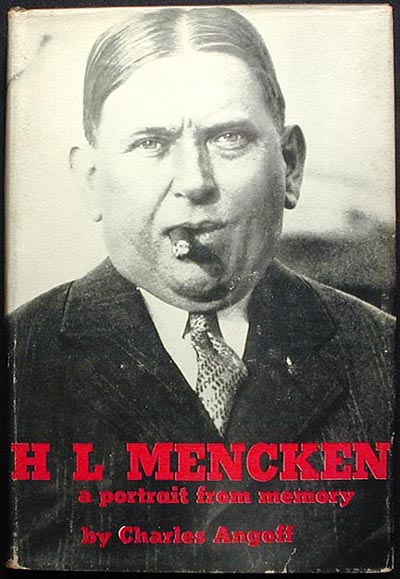
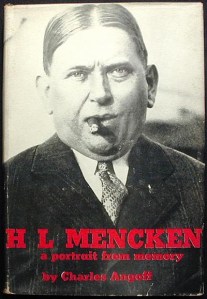 Charles Angoff’s book about Henry Louis Mencken, which I read much later than the novels described above.
Also: „Fitzgerald greeted us warmly. He had been drinking and was hardly able to stand up straight. He tried to embrace Mencken, who was obviously annoyed by this attempt at intimacy. Mencken then introduced me: „Meet Angoff, my private chaplain“. „Fitzgerald and I shook hands, Mencken then said: „Don’t say anything dirty about the Virgin Mary or call the Pope a dope or discuss Cardinal O’Connell’s children. You see, Angoff is an unfrocked priest and is living with an escaped Polish nun, she smells like smoked ham, but deep down both of them are still very devout Catholics“. Scott Fitzgerald did not seem amused very much.
After reading comments like the above, I directly was interested in:
Who is Henry Louis Mencken ?
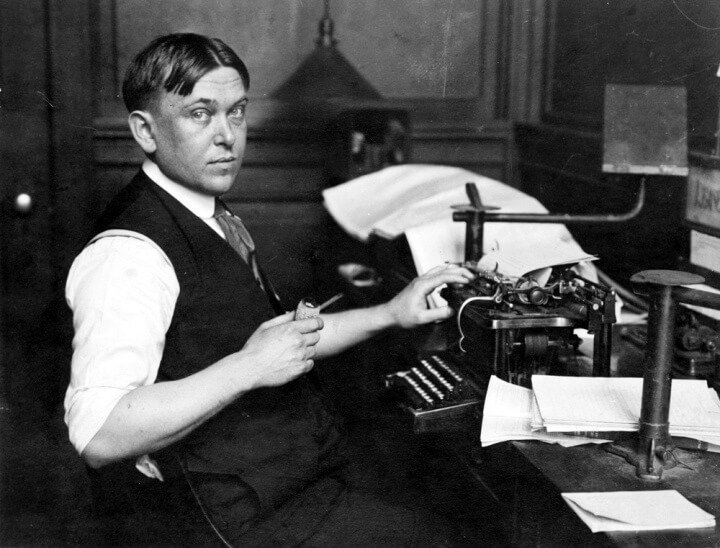
Henry Louis Mencken (September 12, 1880 – January 29, 1956) was born into a German-American family in Baltimore, Maryland. He was the eldest son of August Mencken, a successful businessman who owned a tobacco business, and in whose footsteps the young boy was expected to follow. When he was not roaming the alleys and vacant lots of West Baltimore, he spent most of his time reading. When he was 8 years old he discovered Mark Twain that would have a profound influence on his life. At about the same time, his father bought him a small printing press, which helped form his interest in printing and newspapers.
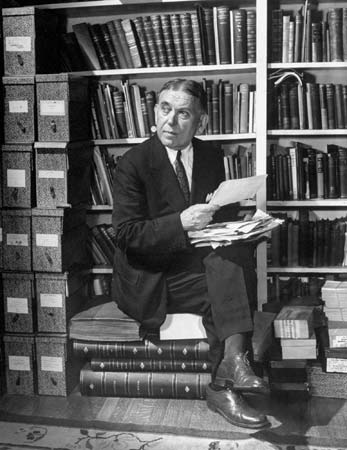
He attended the Baltimore Polytechnic Institute, where was valedictorian of the class of 1896. When he graduated, he wanted to become a newspaper reporter, but his father insisted that he go to college or work at the cigar factory, so Mencken chose the factory. When his father died of a stroke two years later, the 18-year old Mencken haunted the Baltimore Morning Herald city room every day until the editor gave him a job. He was the youngest reporter on the paper. Looking back on those days at the turn of the century, he later wrote: “I believe that a young journalist, turned loose in a large city, had more fun than any other man.”
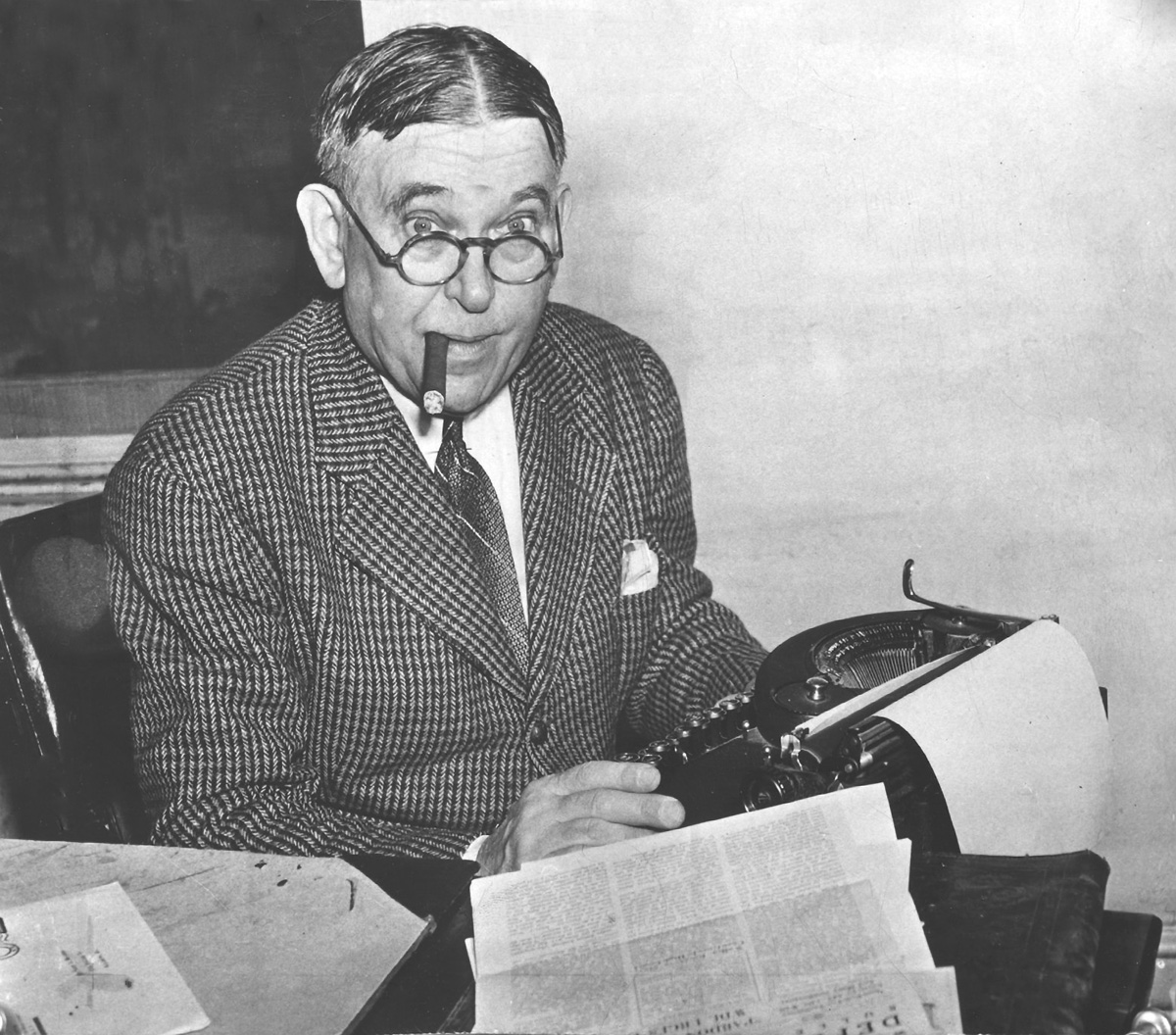
H. L. Mencken was as famous in America as George Bernard Shaw was in England, but it was not only through his work as a journalist. He continues to be recognized throughout the world as an influential critic of literature.
In 1924, Mencken began a new journal, called The American Mercury. Aimed at the “civilized minority,” the magazines blended politics, the arts, and the sciences. It was the first magazine edited by whites to publish the work of African American authors such as James Weldon Johnson and Langston Hughes.
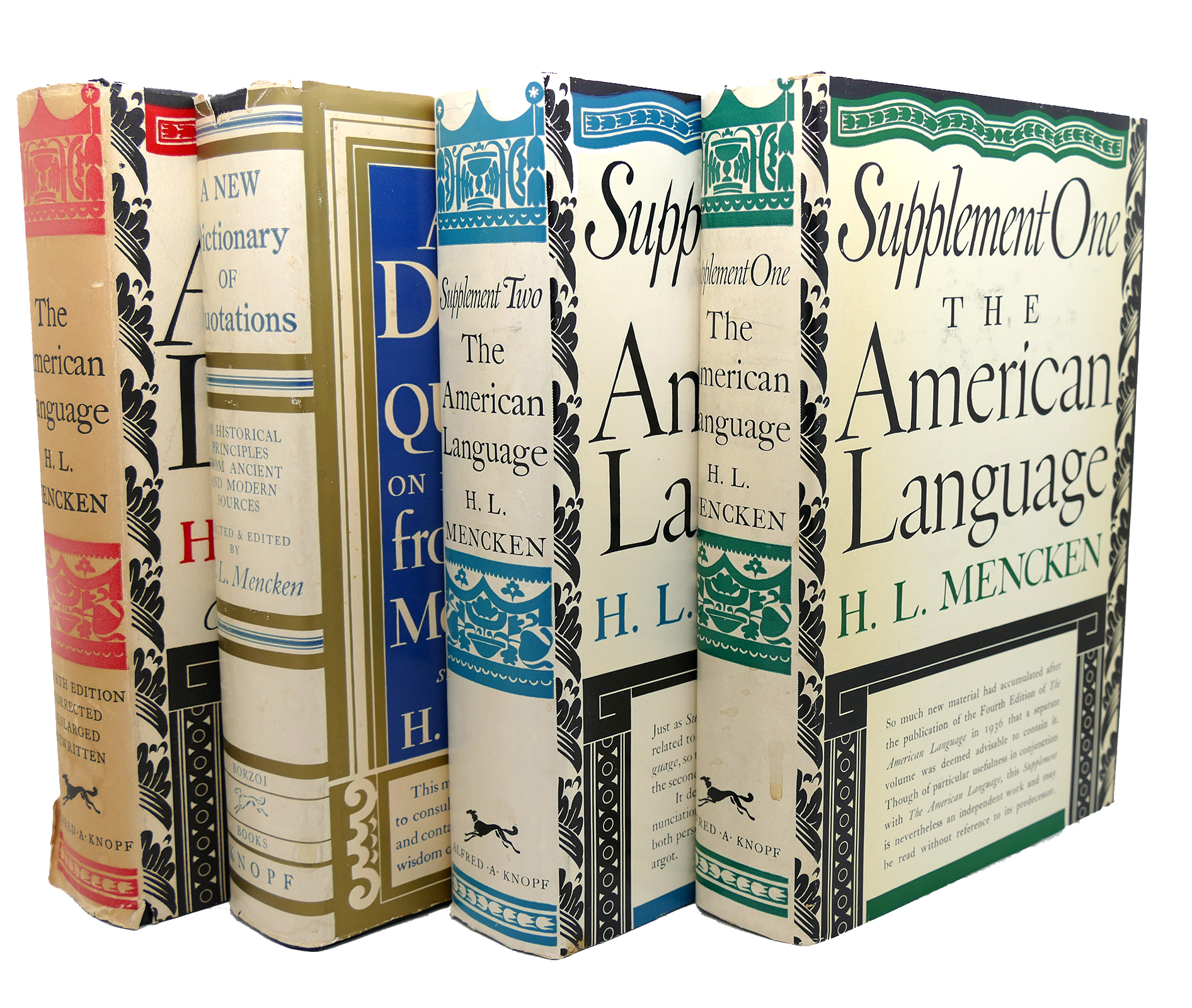 Of his books, Mencken is best known for his monumental study, The American Language, ranked as one of the top 100 influential books in the United States.
Mencken was one of the most famous and colorful literary figures of his time, a friend to senators, movie stars, redcaps, writers, lawyers, doctors, politicians, journalists, convicts, musicians, philologists, rabbis, and priests. So extensive was his medical knowledge, that he was regularly asked to address doctors. Lawyers, debating Mencken at some point, were surprised he had not gone to college, let alone not graduated from Harvard Law School.
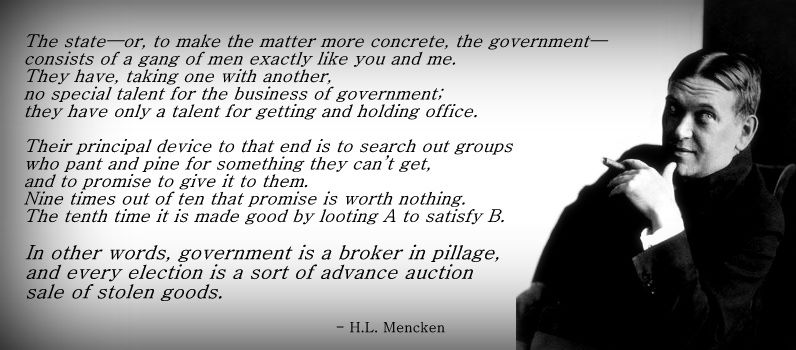
When he was not writing about medicine or law, he could be found having intense discussions on religion with rabbis or priests. Mencken was led to comment that he had an excess of energy. It enabled him to write as many as 60 letters a day (over 100,000 in his lifetime), thirty books, thousands of articles, and edit two magazines, with time left over for activities other men considered full-time jobs – putting up a brick wall in his garden, brewing beer, or playing all night sessions with members of his music group, The Saturday Night Club.
As Germany gradually conquered Europe, Mencken attacked President Roosevelt for refusing to admit Jewish refugees into the United States and called for their wholesale admission: „There is only one way to help the fugitives, and that is to find places for them in a country in which they can really live. Why shouldn’t the United States take in a couple hundred thousand of them or even all of them?“
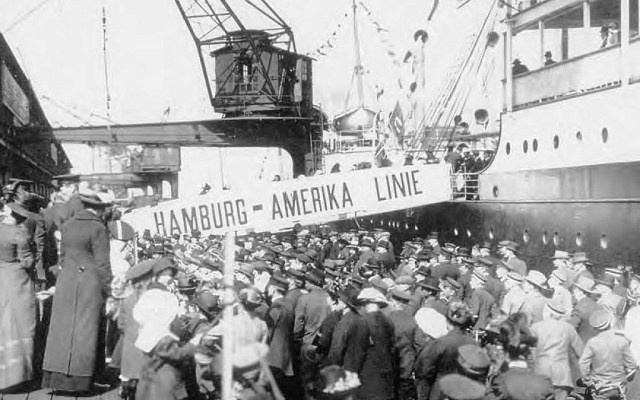 German immigrants boarding a ship in Hamburg to New York, 1913.
The effect of all this energy made him irresistibly attractive to women. „Girls swarmed after him,“ according to Anita Loos, herself inspired by Mencken to write Gentlemen Prefer Blondes. In newspaper polls, women called Mencken one of the most fascinating men in the United States. „America’s Best Known Bachelor“ was, during the 1920s, the patron saint of single men. In 1930, after a seven-year on and off courtship, the confirmed bachelor finally married, at age 50.
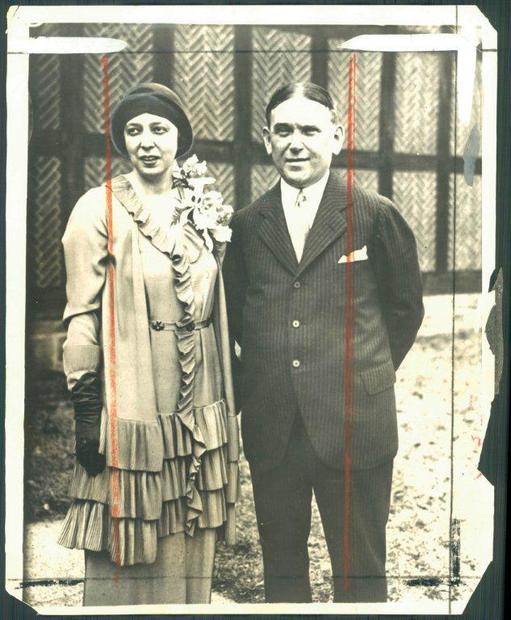 Harry Mencken and Sara Powell Haardt, courted for seven years, a very slow and uneven romance. Once a woman-hater, here with his bride, just after his marriage in an Episcopal Church just before his 50th birthday.
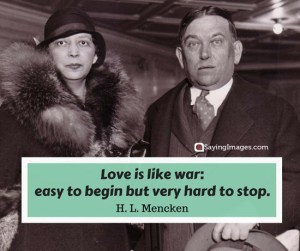
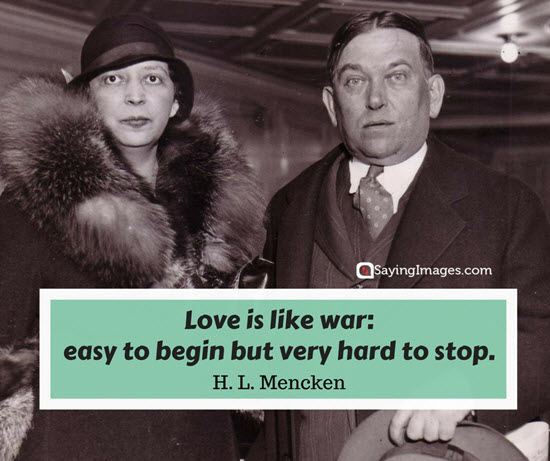
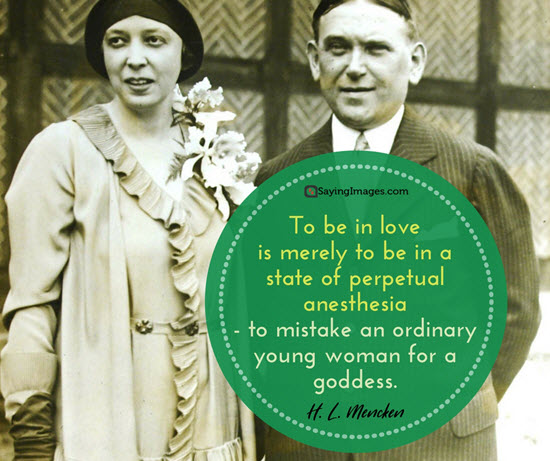
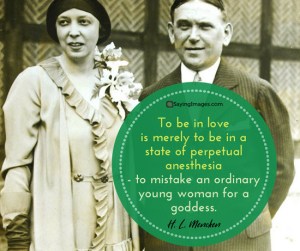 Some of Mencken’s sayings about women. Not an easy guy to be married with.
The question, „What do you think of Mencken?“ so often repeated during the 1920s, goes on to this day. He is regularly quoted in newspapers and magazines, appearing in such diverse publications as The Wall Street Journal, The New York Times, and Vogue magazine. He has even been a character in the cartoon strip, Brenda Starr, and his fight for freedom of speech has been mentioned in various TV shows, most recently on Law and Order. Under the dome of the US Capitol, his name continues to be invoked by members of Congress.
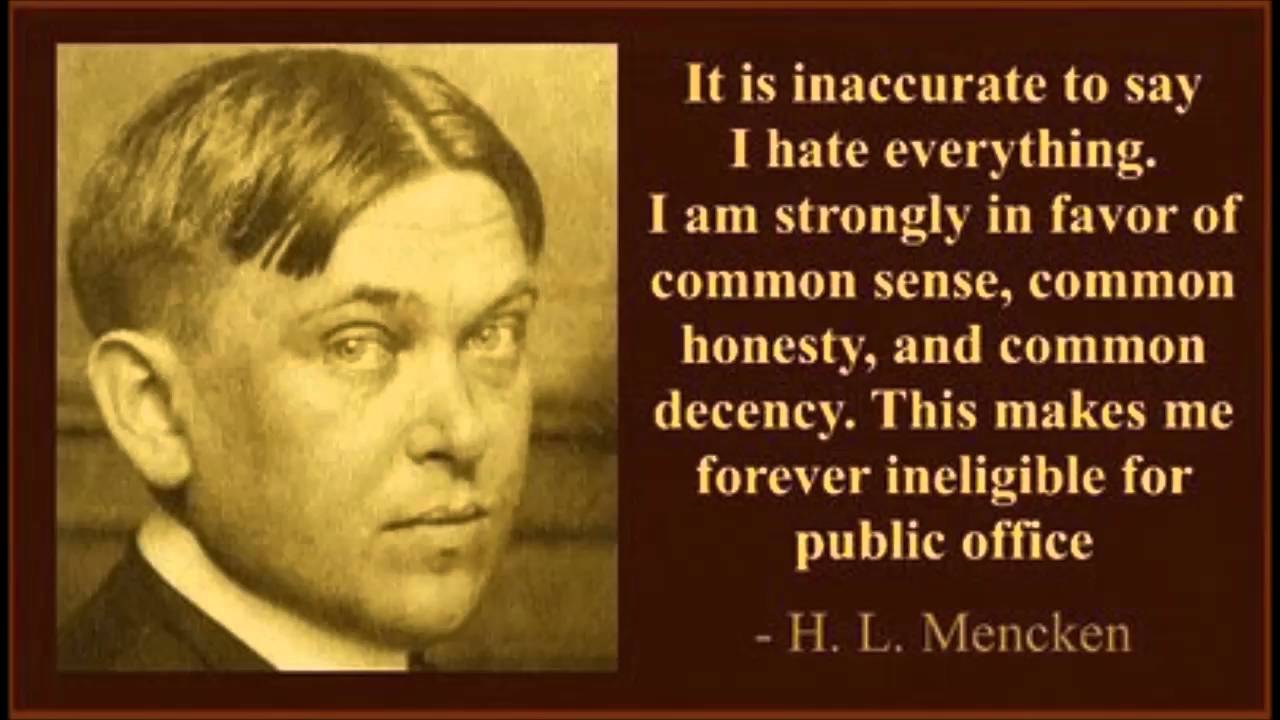
Is Mencken relevant? Teachers of American Studies, English, History, Journalism, and Political Science will find Mencken’s writing useful when discussing race, literature, language, writing, and political and social history. If he himself is damned or praised, the liberating force he provided for American culture is woven into the fabric of our daily existence and should be so celebrated. If the body of literature he left behind manages to „stir up the animals,“ this is exactly the sort of the reaction H. L. Mencken desired.
Revisiting H.L. Mencken in The Age of Trump:
Precisely 100 years ago next Sunday – on July 26 1920 to be specific – cultural critic and journalist, H.L. Mencken, wrote a column that appeared in The Baltimore Evening Sun. Entitled „Bayard and Lionheart“, that piece included this often-quoted sentence:
„On some great and glorious day, the plain folks of this land will reach their heart’s content at last,
and the White House will be adorned by a downright moron“!
An inveterate critic, Mencken took on everything that mattered and anyone who counted. An iconoclast of epic proportions, he delighted in holding a mirror to society. With scorn and malice intended, he especially liked to target politics. It was theatre to Mencken, and that’s how he saw the Presidential race in 1920.
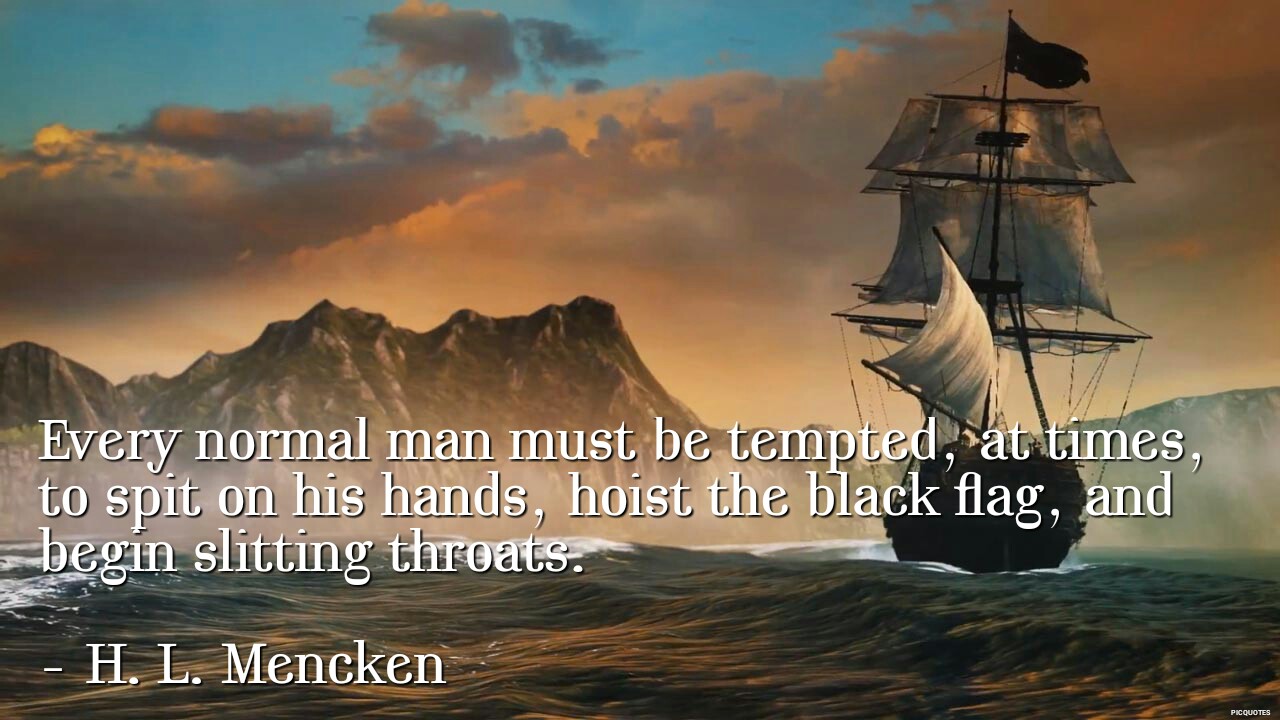
 Modern politics: „Slitting Throats“ !
It was a contest between eventual winner, Warren Harding, and Democratic challenger, the long since-forgotten David Cox. Mencken viewed Harding as a man „with the face of a moving-picture actor … and the intelligence of a respectable agricultural implement dealer“. He saw Cox as a person „with a gift for bamboozling the boobs“.
While Mencken treated politicians unmercifully, some of his most pointed criticism was reserved for the American public and the institution of democracy. Mencken held both in contempt – not so much in theory as in practice. He detested the relative inability of upstanding people to be elected to office.
 Many observers – including myself – associate Mencken’s reference with Donald Trump.

Mencken believed that citizens would eventually screw up democracy. „As democracy is perfected,“ he wrote, „the office (of the Presidency) represents, more and more closely, the inner soul of the people.“
It was Mencken at his hyperbolic best. But make no mistake about it: Mencken wasn’t bombastic. Instead, in a shrill voice and with a dagger-like pen, he offered strident commentary about America’s sociopolitical life.
And he had plenty to write about.
America a century ago was grappling with its destiny – about whether to enter the World War, about what America should be to the world, and – most fundamentally – about who we were as American people.
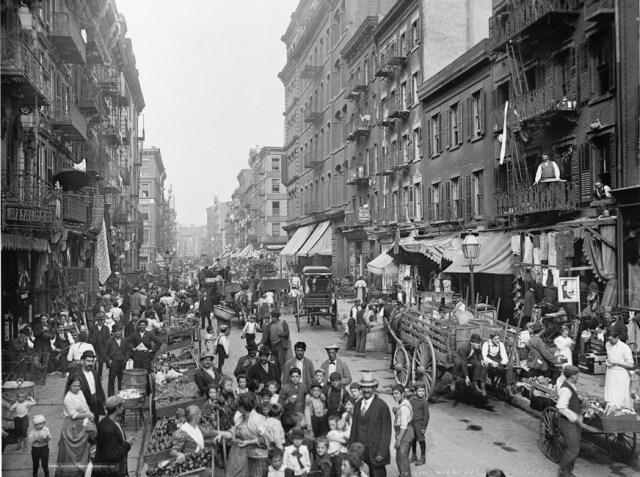 Migrants in New York about 1910.
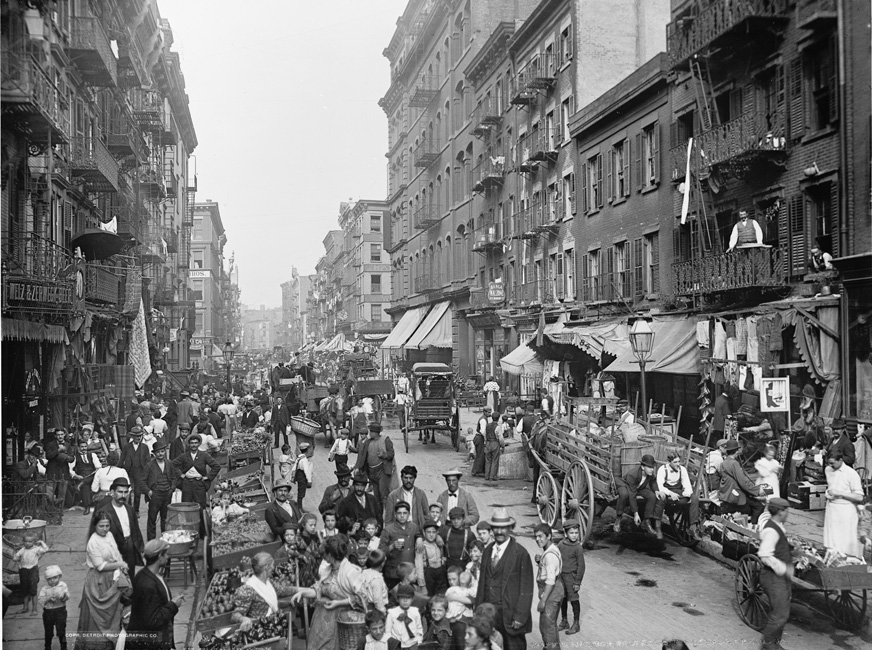
Immigration was a big issue. By 1910 15% of those living in the States had emigrated from other lands. About 40% of those living in New York City – the epicenter of immigration entry – were either foreign-born or first-generation Americans. America struggled with other forms of diversity, too – of African Americans as free people and of women seeking to be full-fledged citizens.
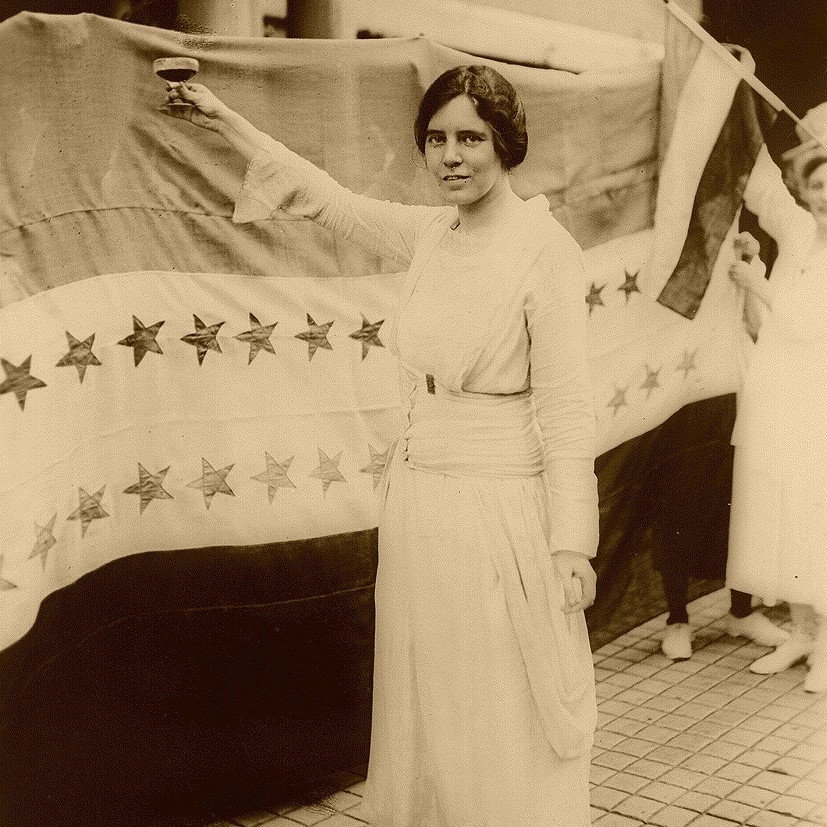
In all of this churn, activists were noteworthy in the fight for America’s identity and direction. There were larger-than-life Progressives, like Eugene Debs, Jane Addams, and Alice Paul. They pleaded for suffrage (and won) and urged America to stay out of World War I (and lost).
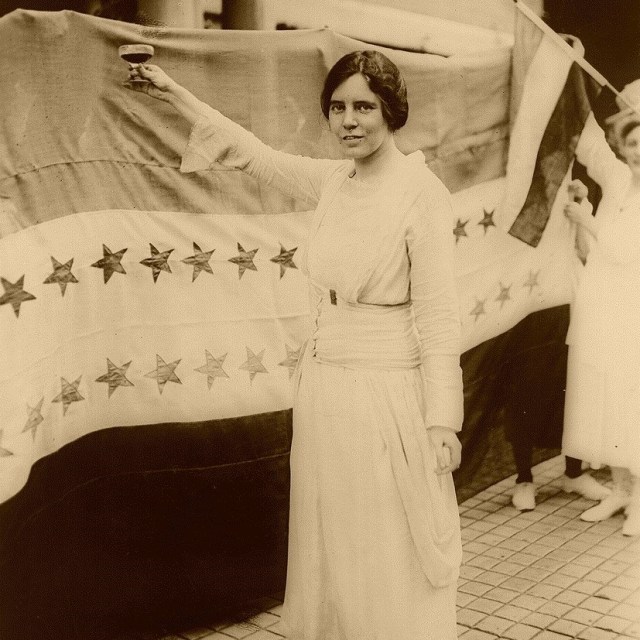 Alice Stokes Paul (January 11, 1885 – July 9, 1977) was an American suffragist, feminist, and women’s rights activist. After 1920, Paul spent a half-century as leader of the National Woman’s Party, which fought for the Equal Rights Amendment, written by Paul and Crystal Eastman, to secure constitutional equality for women
As Germany gradually conquered Europe, Mencken attacked President Roosevelt for refusing to admit Jewish refugees into the United States and called for their wholesale admission: There is only one way to help the fugitives, and that is to find places for them in a country in which they can really live. Why shouldn’t the United States take in a couple hundred thousand of them or even all of them?
The decision to enter WWI cost nearly 120,000 American lives. Another 675,000 Americans died from a flu pandemic in the War’s non-combative aftermath.
The influenza pandemic of 1918-1919 killed more people than the Great War, known today as World War I (WWI), at somewhere between 20 and 40 million people. It has been cited as the most devastating epidemic in recorded world history. More people died of influenza in a single year than in four-years of the Black Death Bubonic Plague from 1347 to 1351. Known as „Spanish Flu“ or „La Grippe“ the influenza of 1918-1919 was a global disaster.

1918 children would skip rope to the following rhyme:
I had a little bird,
Its name was Enza.
I opened the window
and in-flu-enza.
2020 Trump would say, „what’s today’s pandemic loss of 150.000 against 675.000 then“.
Back then it wasn’t a matter of “Making America Great Again.” It was about what it meant for America to be great – should America seek that path? A divided America struggled mightily with that question.
President Woodrow Wilson struggled, too. He eventually became known as – and relished being called – „President of the World.“ It was for the role he played in and after World War I, including championing The League of Nations.
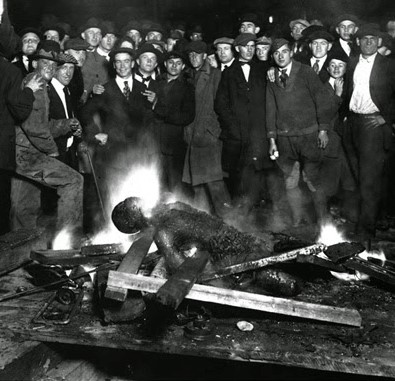
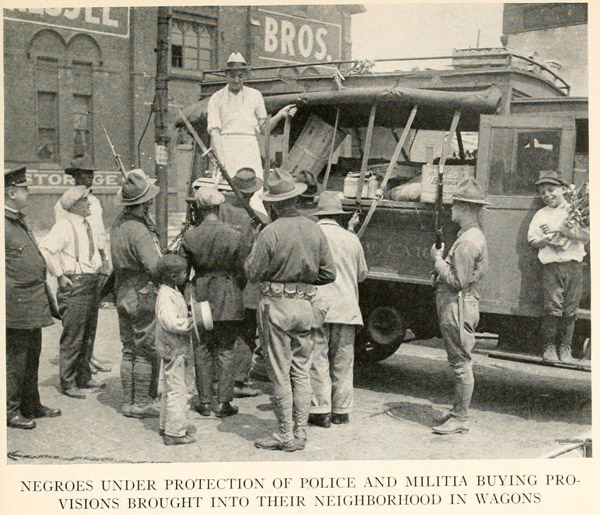
But Wilson largely failed in his role of president for America – for all Americans, especially. A racist, he barred African Americans from serving in major government roles (they weren’t capable). He sat silently during „The Red Summer“ of 1919 when African Americans were terrorized and killed after returning from the War in Europe.
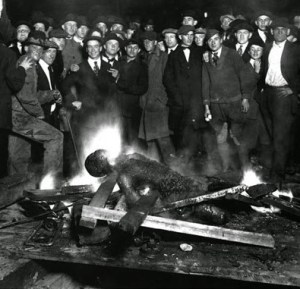
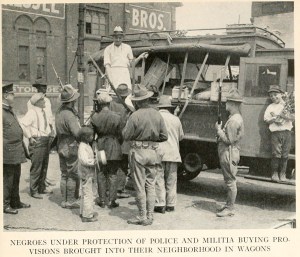 During the Red Summer of 1919. Click on pictures to supersize, which will show you the smiling faces.
1919 – Mencken wrote:
„I admit freely enough that, by careful breeding, supervision of environment and education, extending over many generations, it might be possible to make an appreciable improvement in the stock of the American Negro, for example, but I must maintain that this enterprise would be a ridiculous waste of energy, for there is a high-caste white stock ready at hand, and it is inconceivable that the Negro stock, however carefully it might be nurtured, could ever even remotely approach it. The educated Negro of today is a failure, not because he meets insuperable difficulties in life, but because he is a Negro. He is, in brief, a low-caste man, to the manner born, and he will remain inert and inefficient until fifty generations of him have lived in civilization. And even then, the superior white race will be fifty generations ahead of him.“
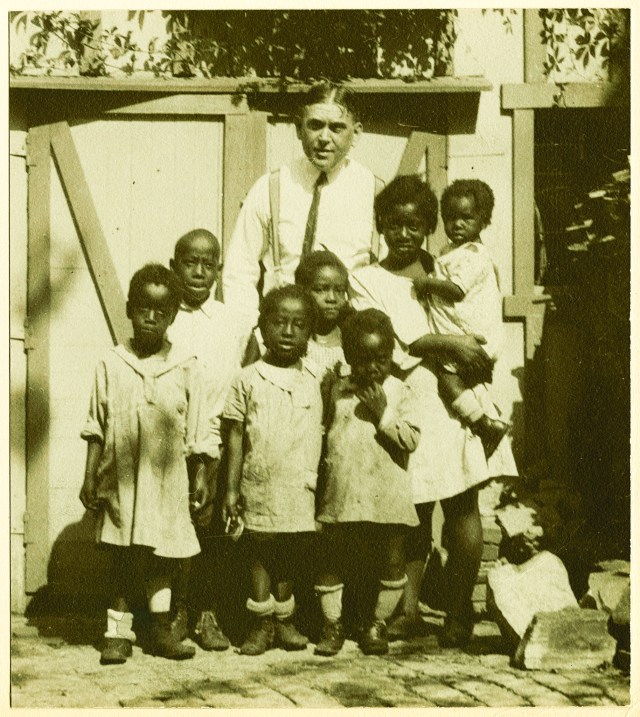 Mencken with children of the Johnson family in Booth Street, 1929.
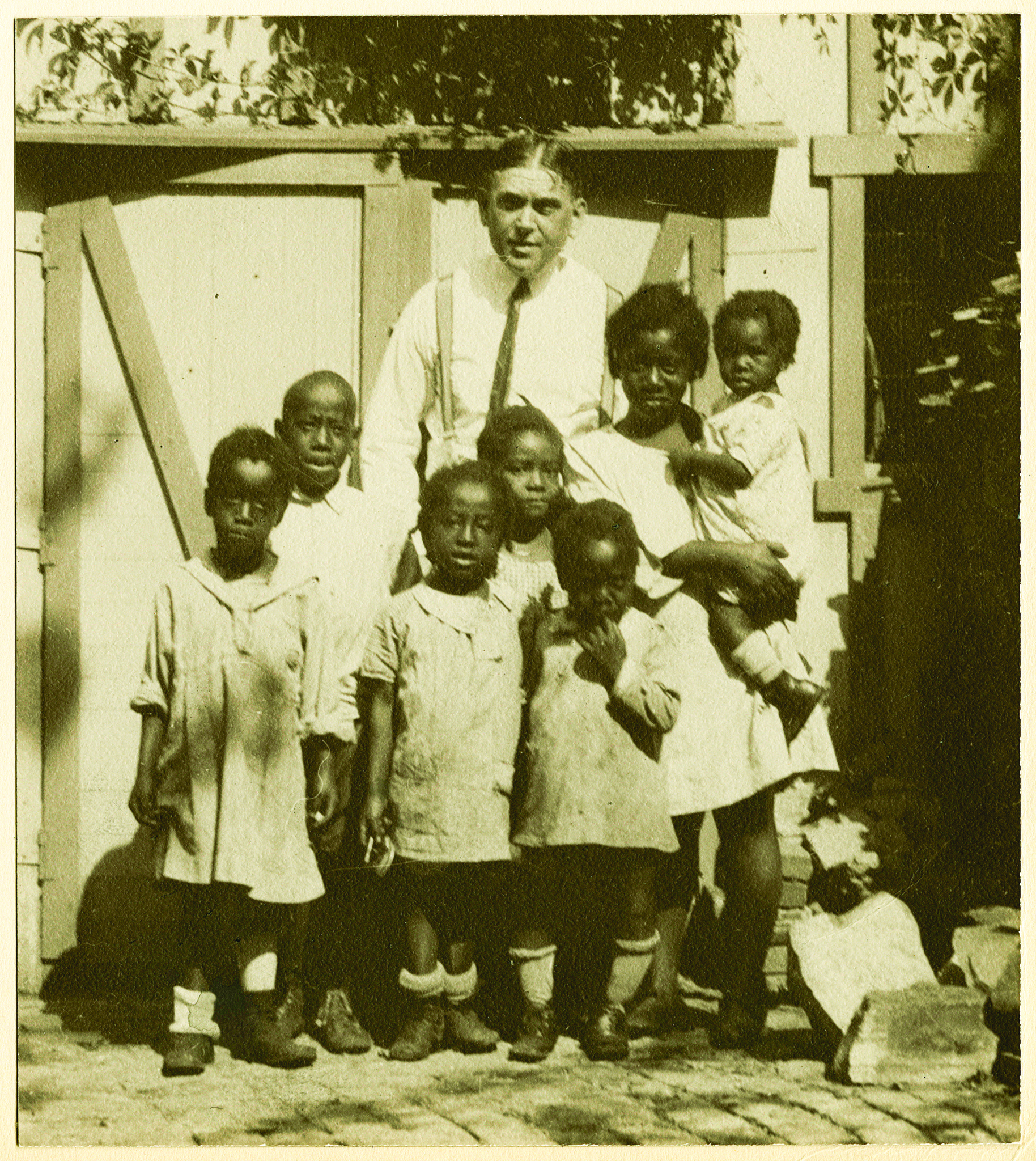
This leads to the question: „H. L. Mencken: Racist or Civil Rights Champion?“
1910 – Mencken wrote:
„The Negro brain is not fitted for the higher forms of mental effort.“ This from the same man who probably did more to help black writers – including the likes of W.E.B. Du Bois, Langston Hughes, and James Weldon Johnson – get into mainstream print than any other white magazine editor of his day. Mencken wrote blistering attacks on the horror of lynchings, the injustice of segregation, the stupidity of the Ku Klux Klan. And yet, even in his wistful memoir „Happy Days“, he drops race bombs: casually implying that it was implausible that a cop could hit „a bad nigger too hard.“
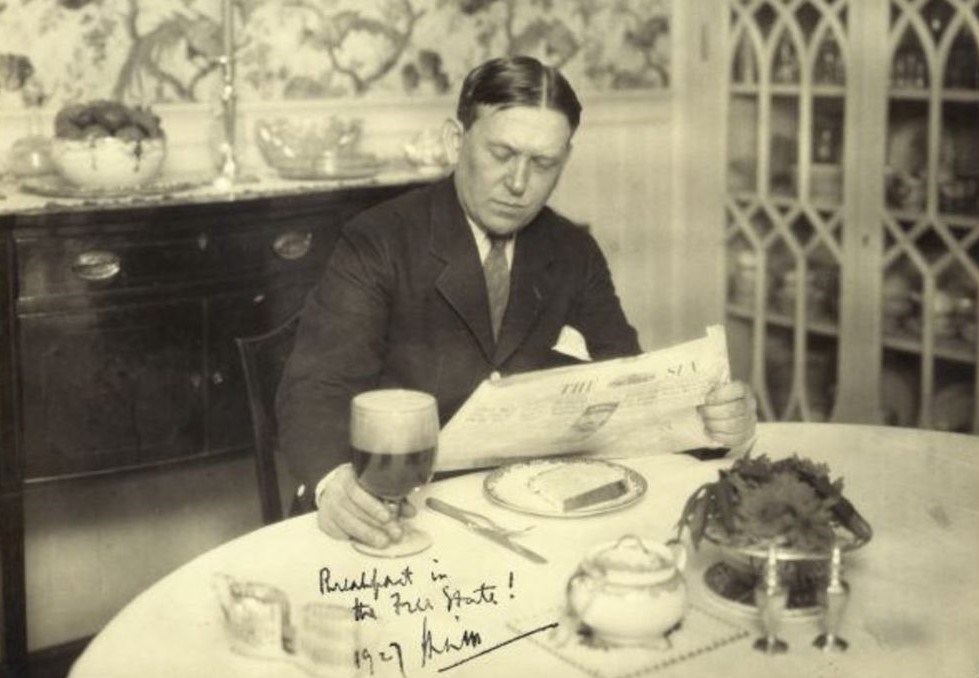
With a style that combined biting sarcasm with the „language of the free lunch counter,“ Henry Louis Mencken shook politics and politicians for nearly half a century. In 2006, fifty years after Mencken’s death, the Johns Hopkins University Press announces The „Buncombe Collection“, newly packaged editions of nine Mencken classics: Happy Days, Heathen Days, Newspaper Days, Prejudices, Treatise on the Gods, On Politics, Thirty-Five Years of Newspaper Work, Minority Report, and A Second Mencken Chrestomathy.
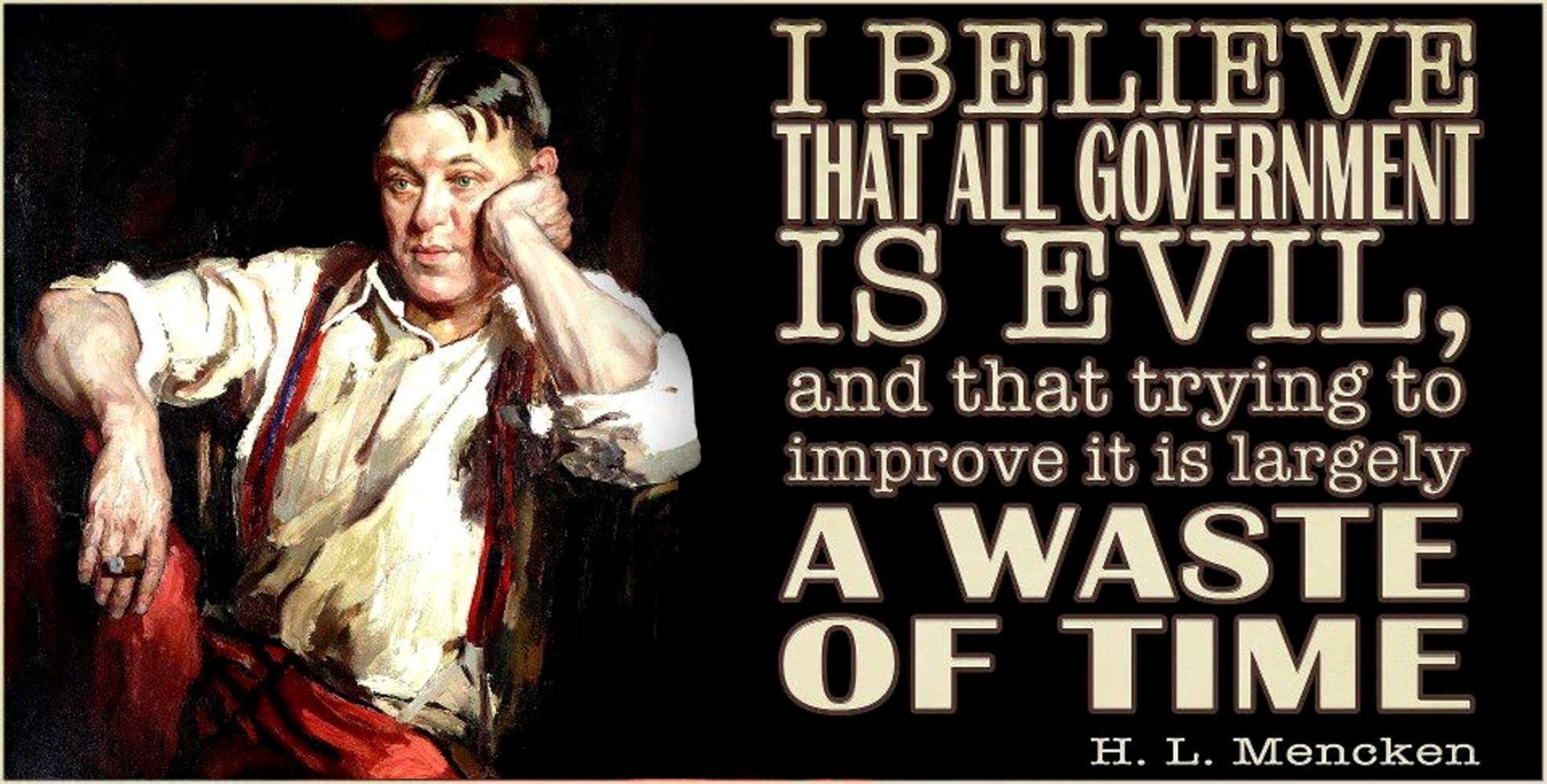
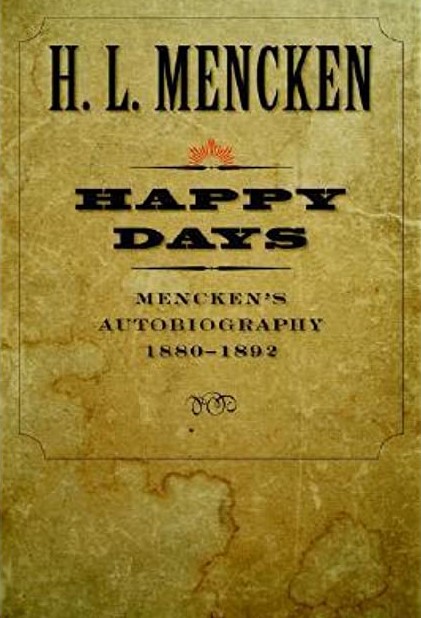 Mencken’s Happy Days.
Given this context, then, it’s not difficult to understand why Mencken wrote what he wrote – inimical, acerbic style notwithstanding. He shined a spotlight on the hypocrisies and the hypocrites of the day, focusing on political leaders and institutions he felt weren’t living up to espoused democratic ideals.
He lashed out at everyday people and portrayed them as incapable, often stupid because he thought (for the most part) they were. „Democracy is a pathetic belief in the collective wisdom of individual ignorance,“ Mencken wrote in 1926.
 Is this Mencken’s conclusion ?

Would he draw the same conclusion today? Probably. He’d look at the proliferation of social media, witness the corporatization of mass media, observe how little people read, see how Americans get their daily news, and listen to what they have to say.
He’d look at The White House, see Trump, and … then, well … rest his case.
Is history repeating itself ?
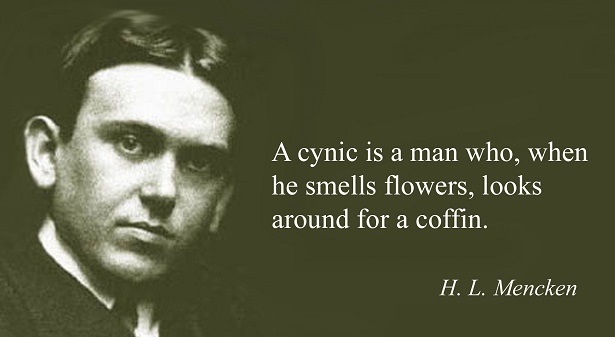
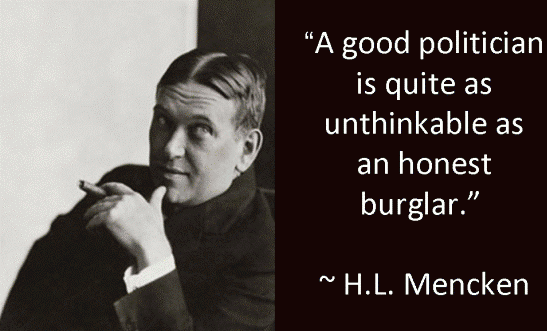
But thinking critically wasn’t enough for Mencken. Cynicism – first and foremost – was his hand signature. He took nothing for granted – certainly nothing that politicians said or claimed. Mencken questioned answers above all else.
That’s no easy task – either in Mencken’s time or in today’s world with Alternative Facts and Narrative Truth. I think he had some great ideas and philosophies which are as valid today as they were 100 years ago.

