
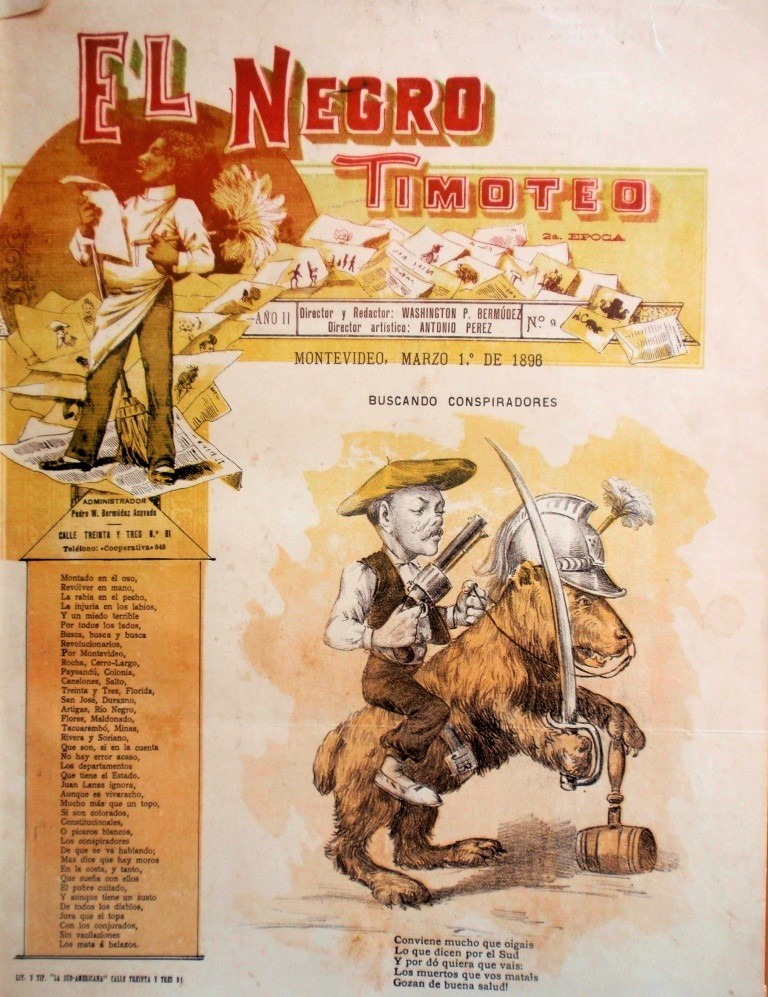
Today I want to introduce you to an Uruguayan periodical which is considered the best exponent of Uruguayan satirical journalism of its time.
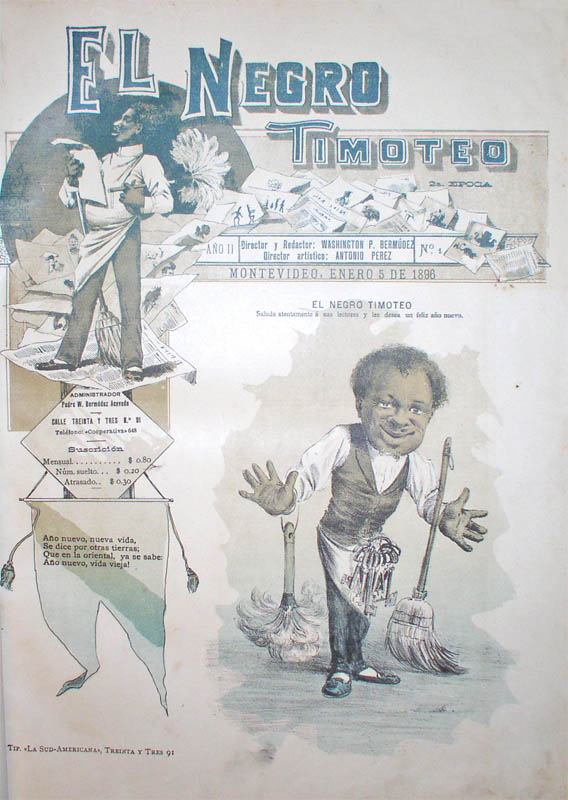
It is „El Negro Timoteo“ and was a Uruguayan publication that was published between 1876 and 1901. I like to show you some satirical pictures out of my collection of the year 1896. These pics don’t need further explanation, they speak for themselves. Most of them supersize if you click onto the picture. Have fun !
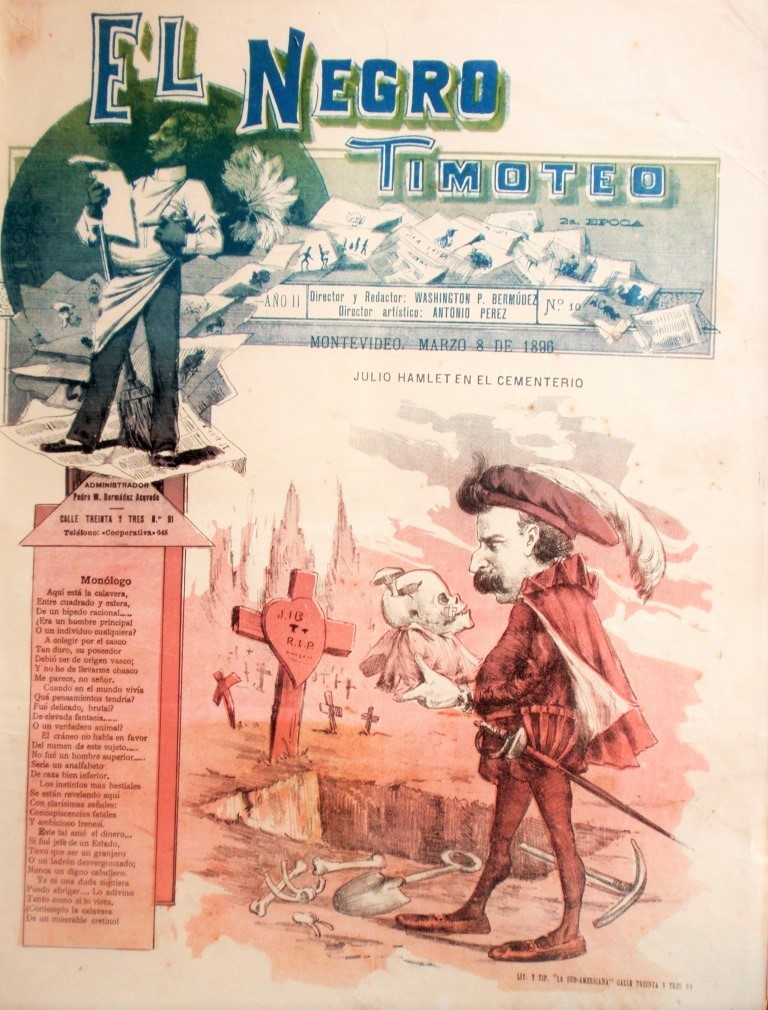
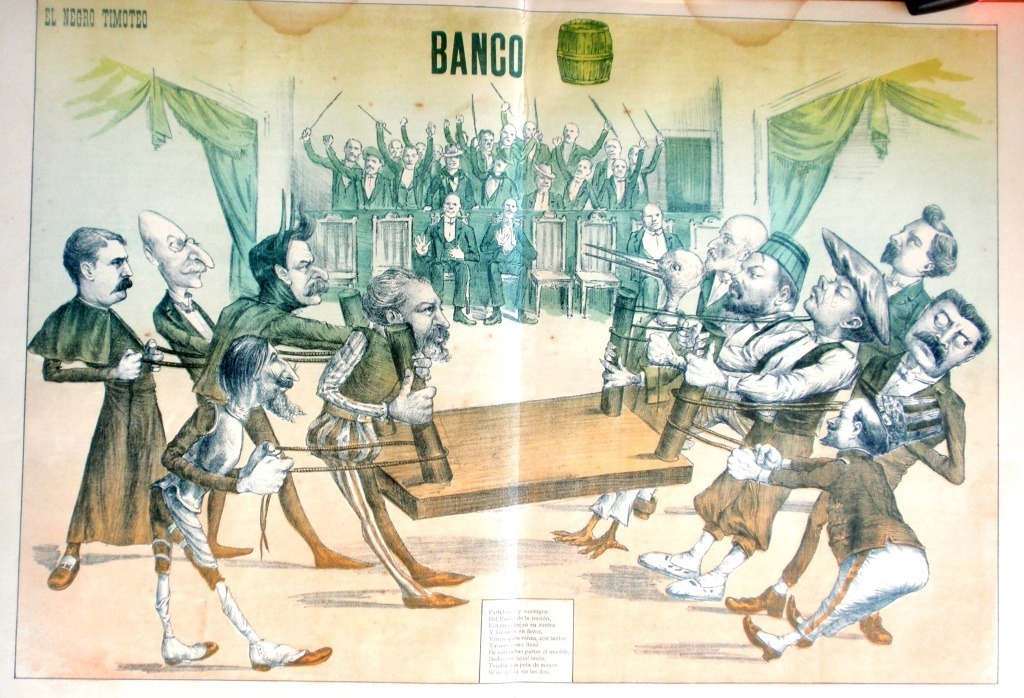
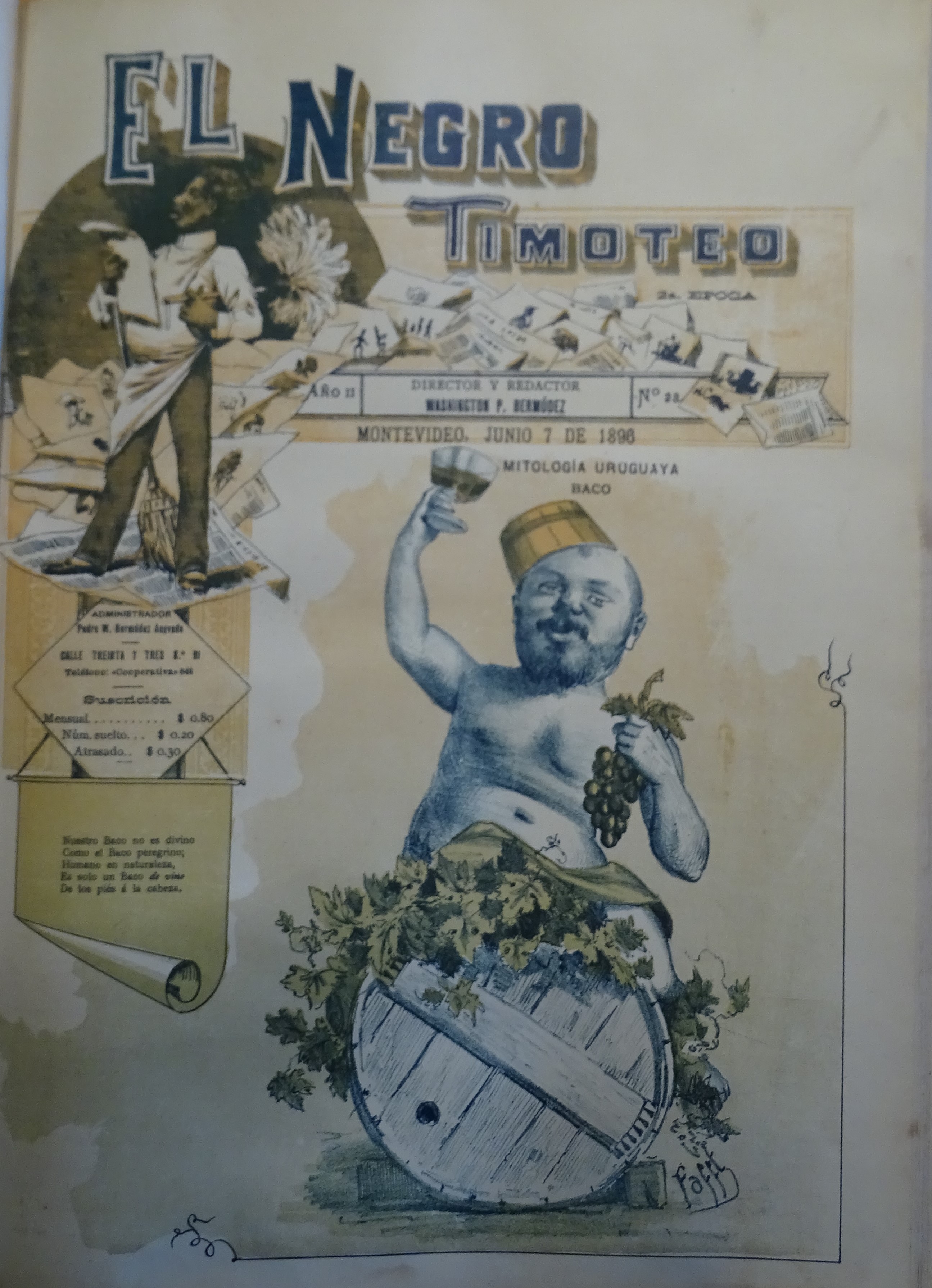
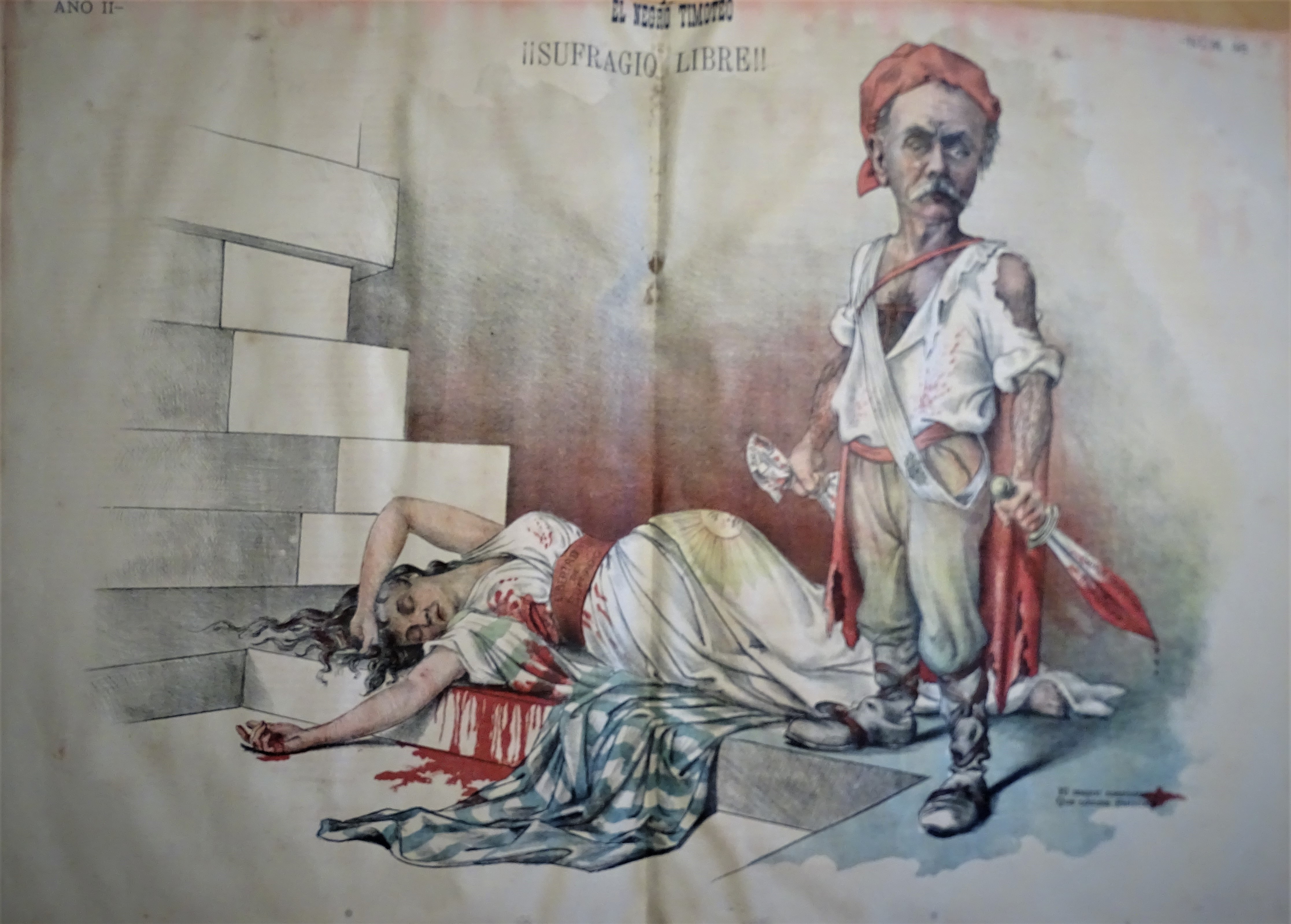
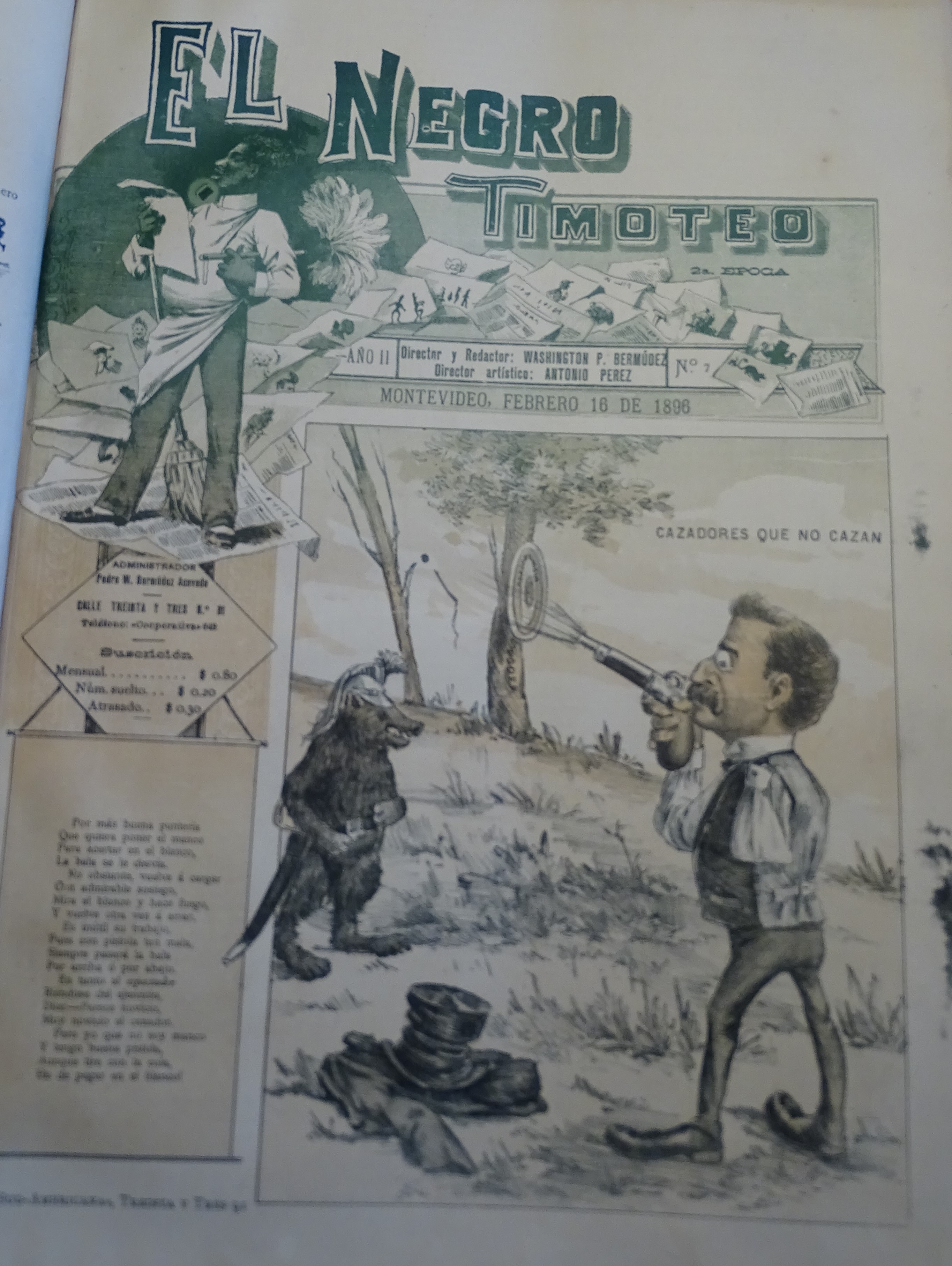
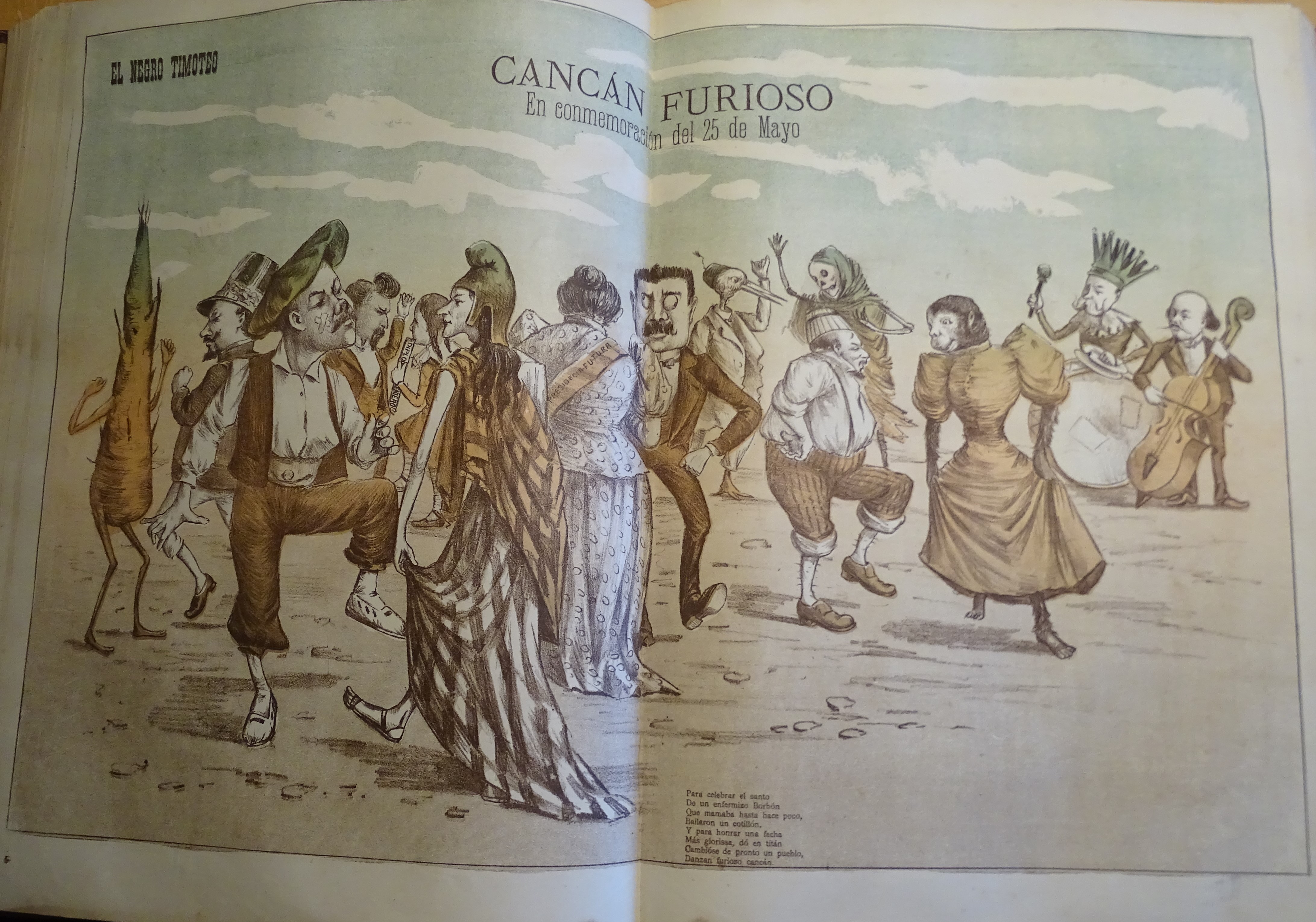
El Negro Timoteo was founded by Washington P. Bermudez, who was also its director and editor, in 1876 and published with certain difficulties until 1901.
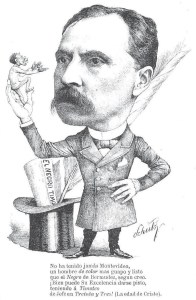 W. P. Bermudez drawn by Schütz.
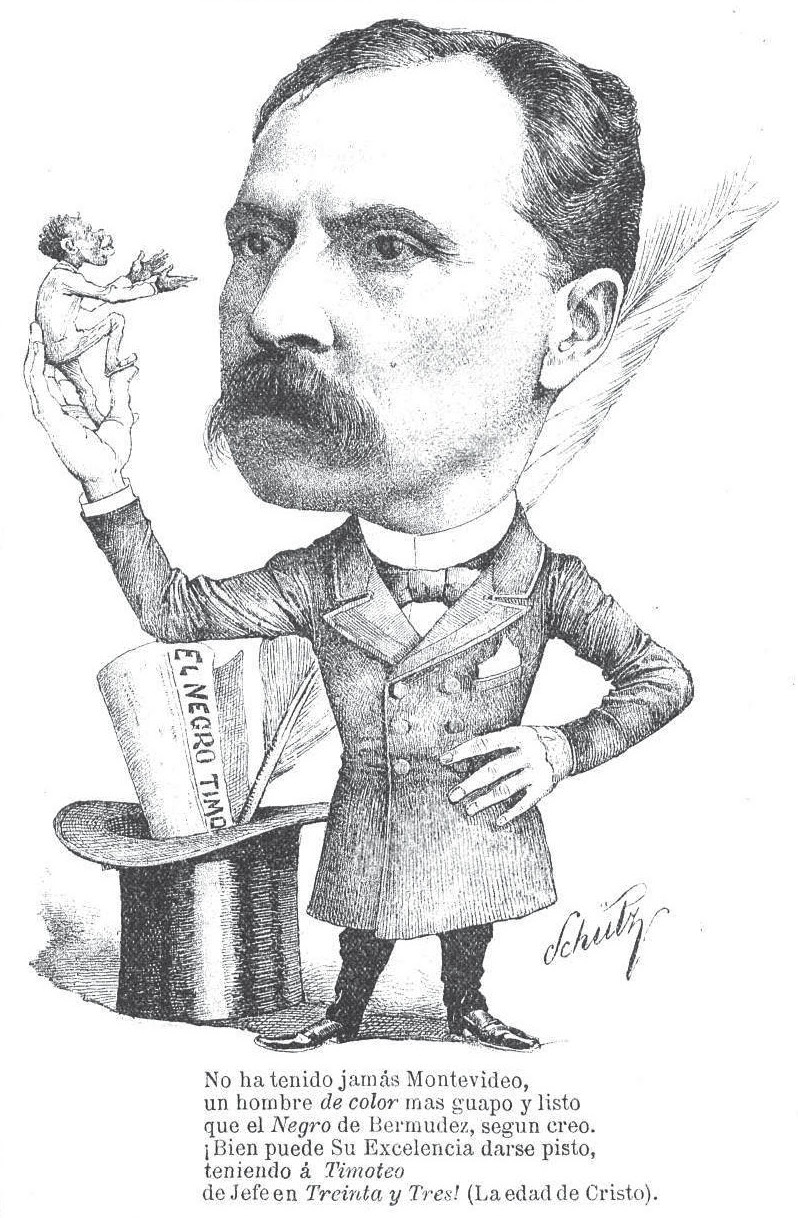
Washington P. Bermudez (Montevideo, May 7, 1847 – November 16, 1913) was a Uruguayan writer and journalist. Bermudez was born in Montevideo and his parents were Pedro Pablo Bermudez and Josefa Estavillo Rojas. He took part in the white revolution of Colonel Timoteo Aparicio and in other contests that took place at the time.
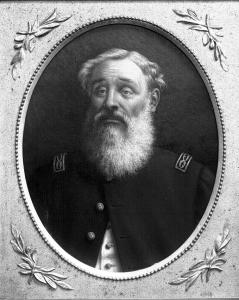 Colonel Timoteo Aparicio, 1814 – 1882. The Revolution of the Spears 1870-1872). „Aparicio never loaded another weapon than his powerful spear, General Muniz entered the fight with no more weapons than a whip, Colonel Pampillon used the facon and the bolas …“. To read in the book „The Revolution of the Spears“ from Abdon Arozteguy.
The Revolution of the Spears was an armed movement led by Timoteo Aparicio – leader of the National Party and former army officer – that developed in Uruguay between 1870 and 1872 and culminated with the first agreement of coparticipation in the power of the traditional parties. Its name is due to the fact that it was the last military conflict in Uruguay in which this weapon was used, the spear of tacuara, as a fundamental weapon to fight battles.
 Revolution of the Spears, Colonia 1871. Notice the spears. Click on pic to size up !
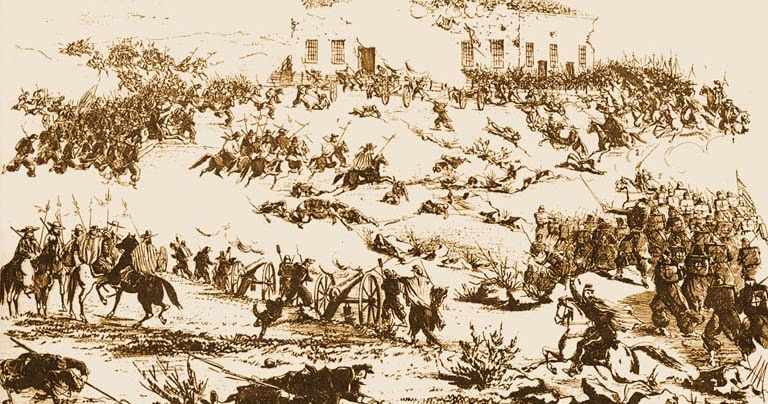
On July 17, 1871, during the course of the Revolution of the Spears, there was one of the bloodiest battles of the civil wars in the Banda Oriental. In this action between the Colorado government forces led by Enrique Castro and the white revolutionaries of Timoteo Aparicio, nearly eight thousand men clashed at the end of a spear and rifle in a fierce battle that culminated in a complete victory for the National Army.
Orestes Acquarone Salaberry (April 27, 1875 – Montevideo, November 9, 1952) was a Uruguayan lithographer, draftsman, painter, caricaturist, watercolourist, sculptor and poet.
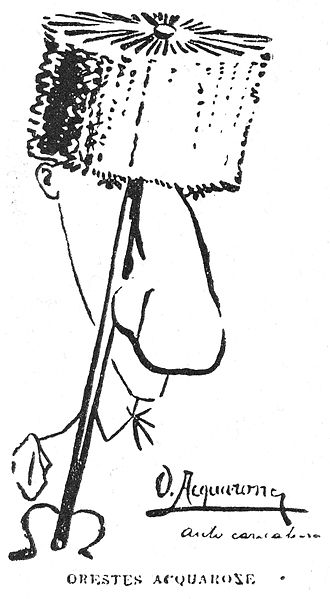
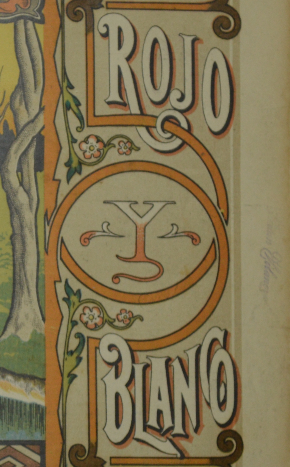
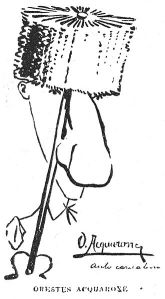 Autocaricatura by Acquerone published 1900 in the magazine „Rojo y Blanco“.
 Red and White, satirical magazin 1900-1903. Anaforas.edu.uy
In 1876 he founded the satirical magazine El Negro Timoteo, expressing in mockery his frank opposition to the Lorenzo Latorre regime. He also published in El Heraldo in 1881 a work under the pseudonym Timoteo. Other pseudonyms he used were Un Aficionado and Yapeyu. Another of his most famous pseudonyms was Vinagrillo, under which he published satirical articles about the events of his time.
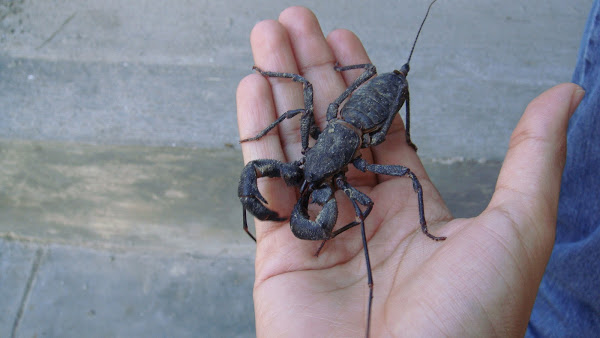
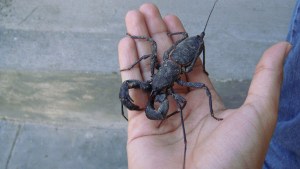 That’s a Vinagrillo in South America.
He founded and directed a magazine called El Pobrecito Hablador. In it he used the pseudonyms Figarin, Figarito and Figaruelo. It was included in several poetry anthologies of Uruguay. For the artistic direction of the magazine passed several authors such as Orestes Acquarone and Antonio Perez. Among his collaborators was also the Spanish cartoonist and caricaturist Juan Sanuy, who is among the founders of this magazine.
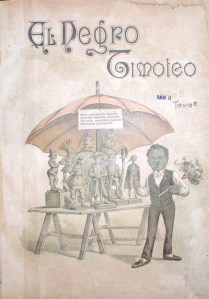 I love these El negro Timoteo pages. Lots and lots of fantastic cartoons drawn by some extraordinary caricaturists.
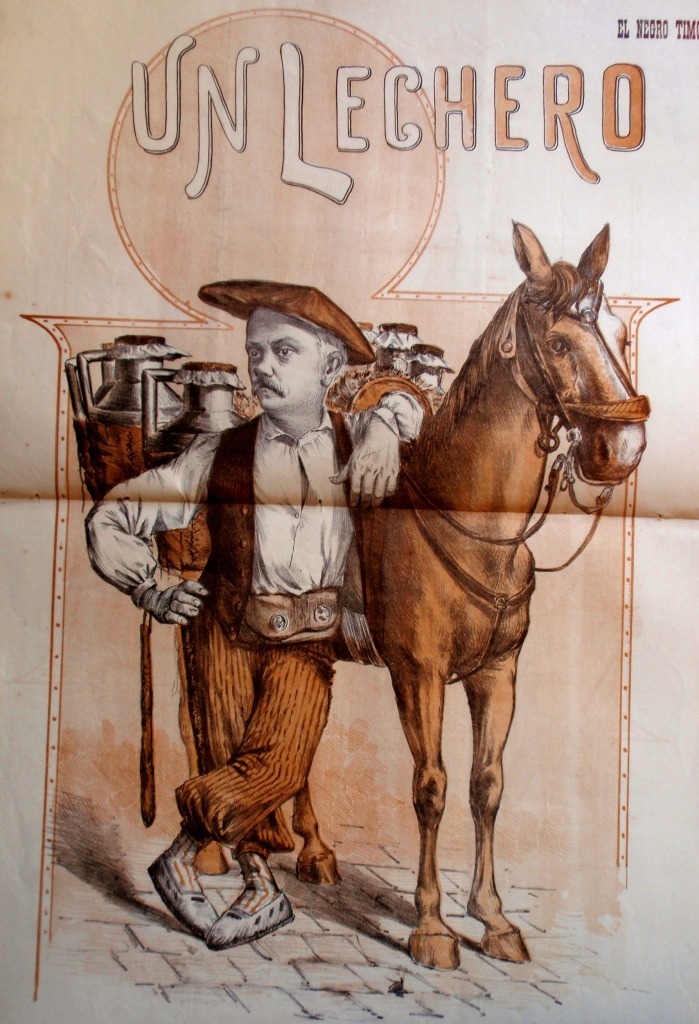
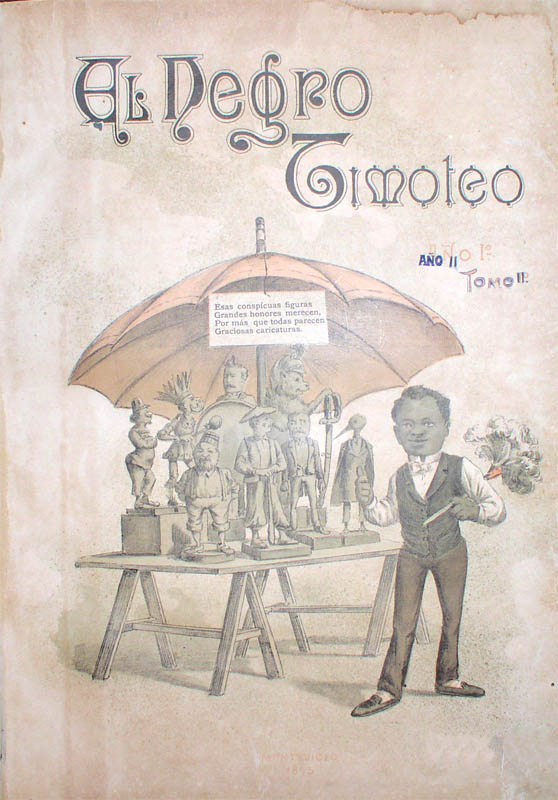
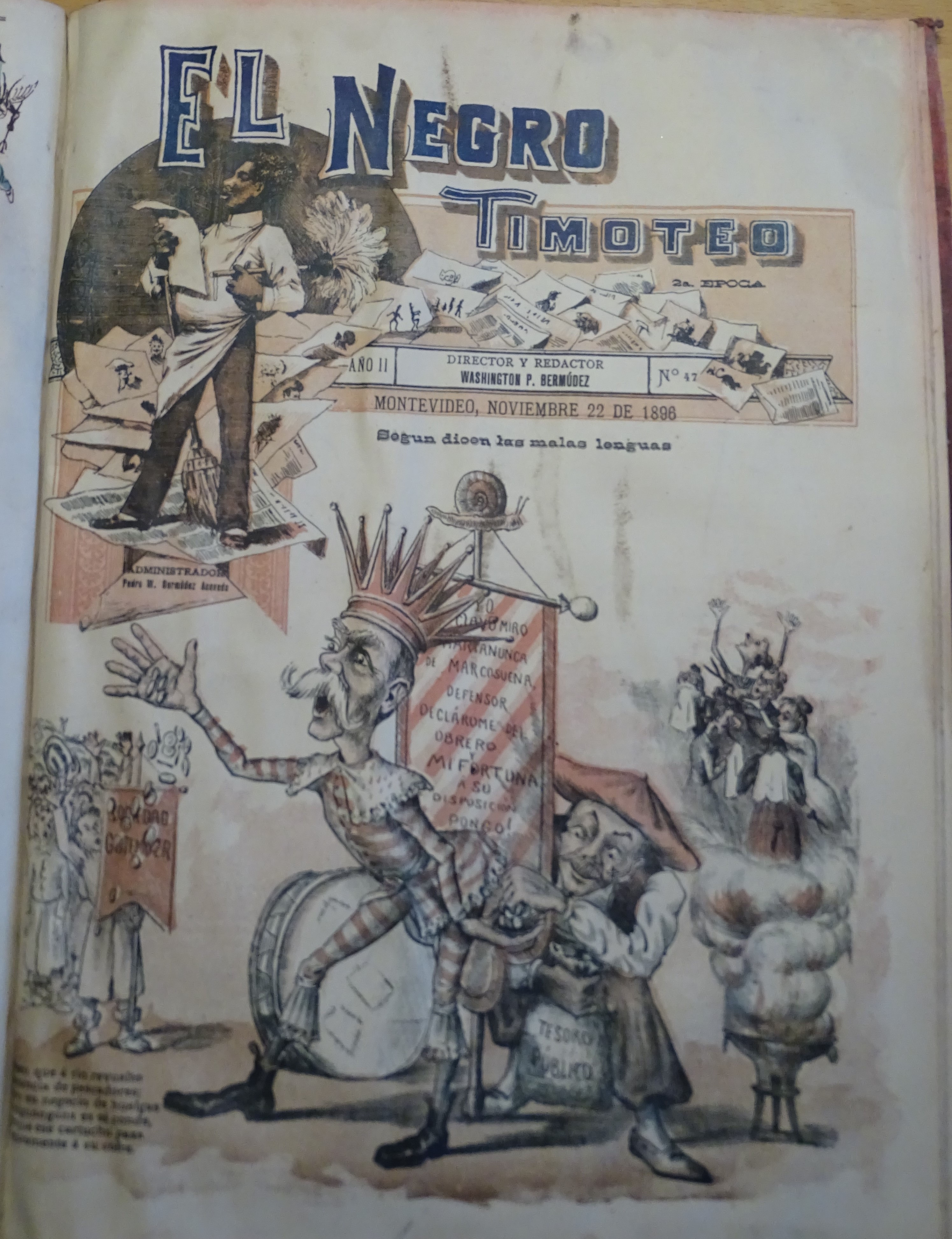
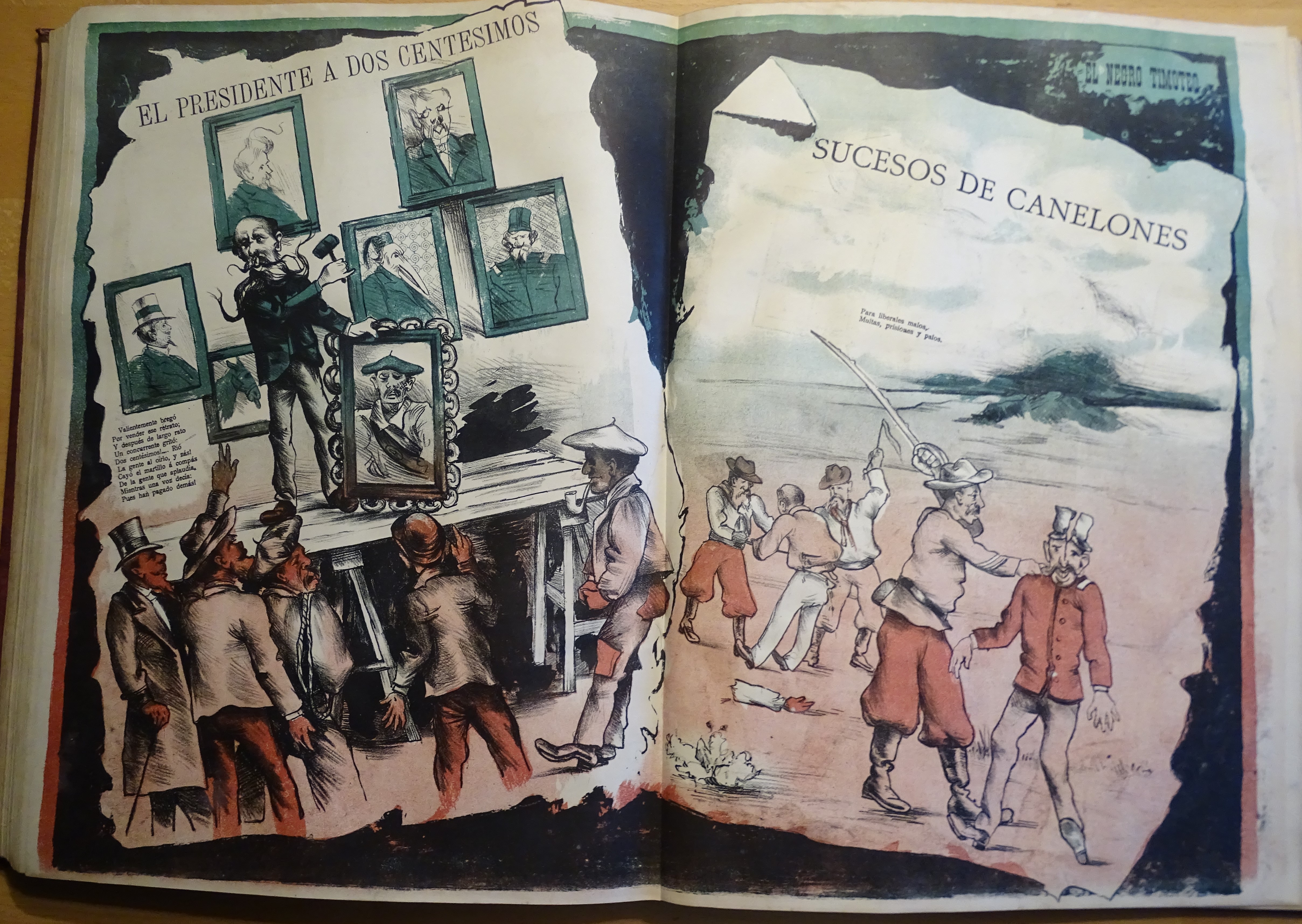
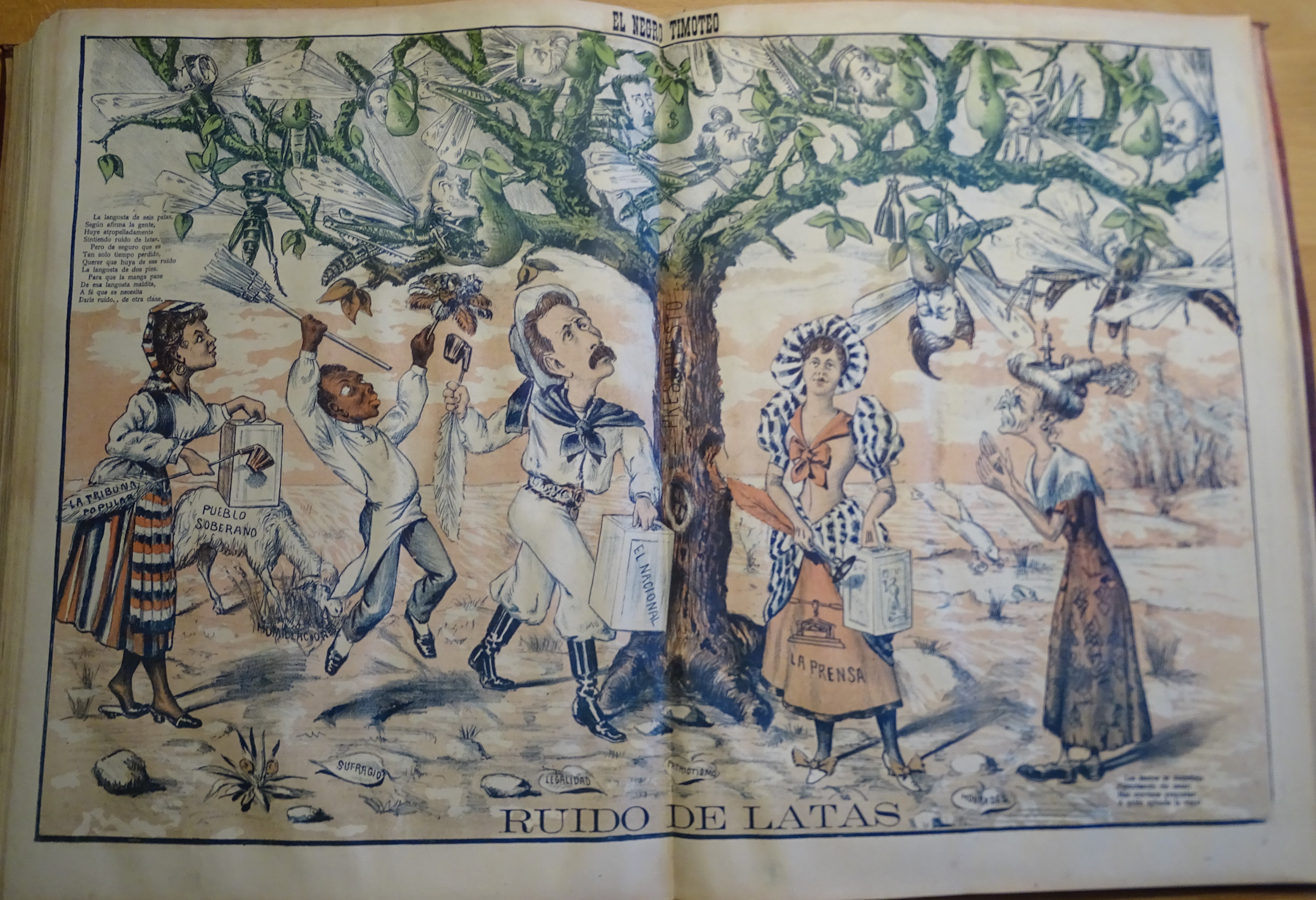
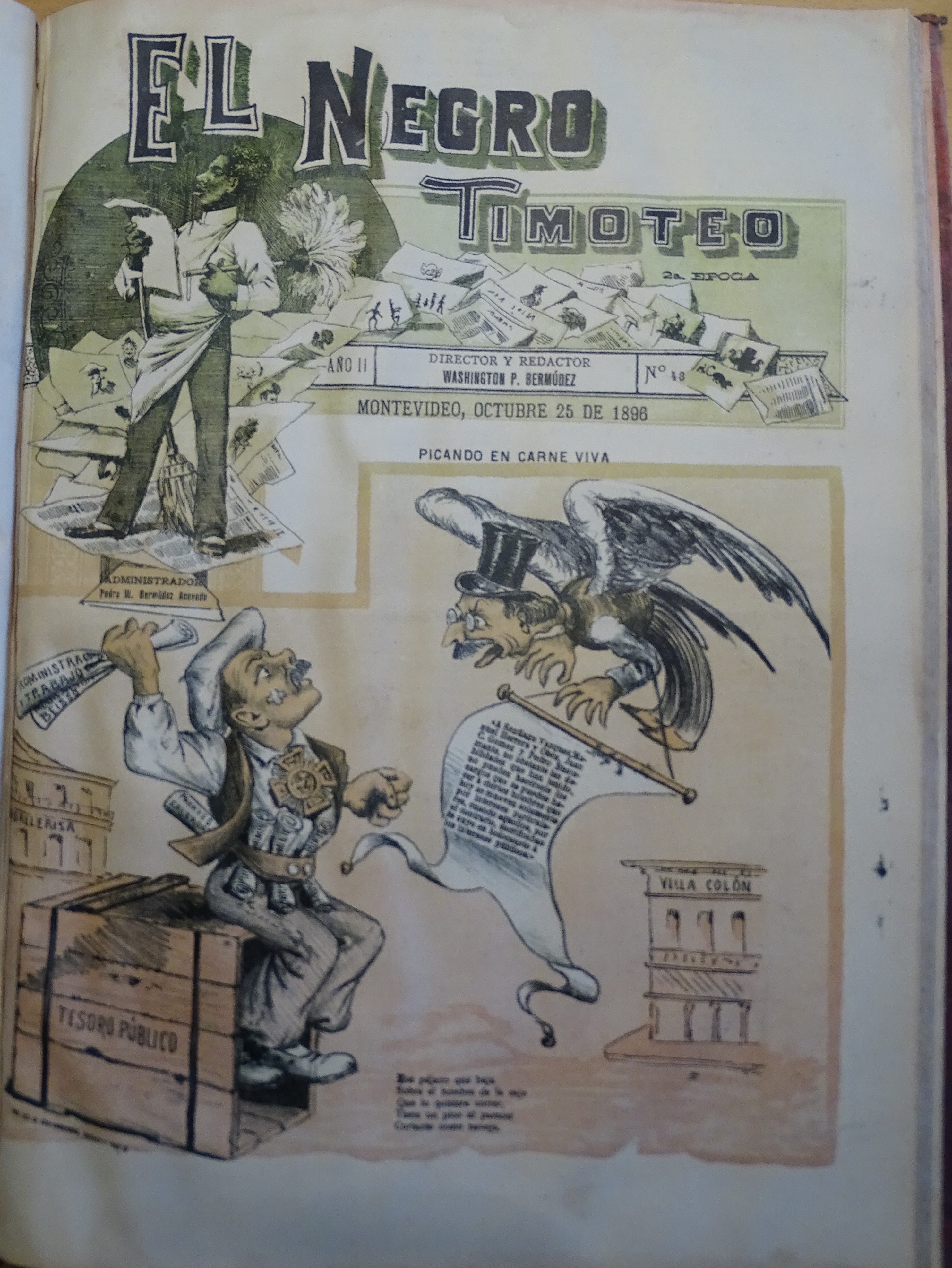
Bermudez came from a family of literary and political tradition in the ranks of the Blanco Party. From the pages of „El Negro Timoteo“ he criticized the government of Lorenzo Latorre, being the only newspaper that made active opposition to his military dictatorship, registered in the period of successive military governments known as „Militarism“.
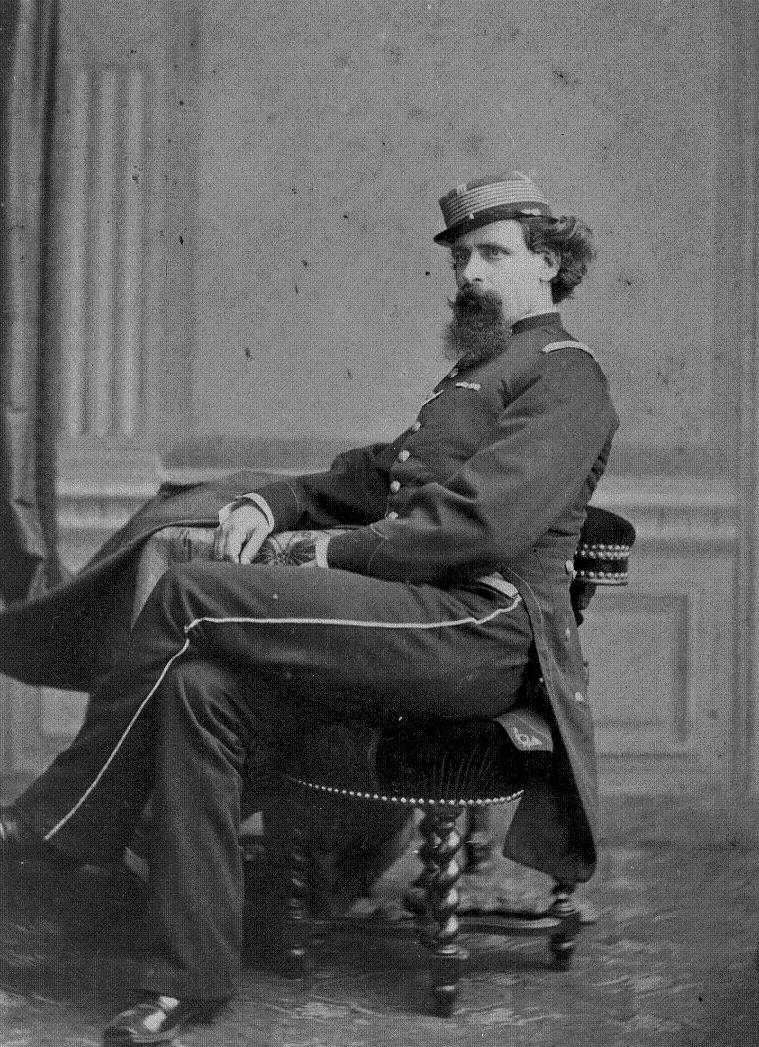 Lorenzo Latorre, 1875. Wikipedia.
In later years he questioned the government of the collectivism of Juan Idiarte Borda and the swings of Juan Lindolfo Cuestas, as well as the nationalist directorate and political referents of the white collaborationist minority. From its first issue, published on 5th of January 1876, until 1901 the newspaper had several eras. At the end of its existence it was published as a newspaper.
 The first issue, 5th of January 1876.
Around the 1870’s to the the 1900’s, there were many satirical magazines in Uruguay. Through the connection of the authors and artists, who worked mostly for several periodicals at the same time, we are able to find a colorful overview of different magazines of the market that are briefly touched below.
Juan Sanuy (Barcelona, 1856 – 1908), pseudonym of Octavio Juan Bellver, was a Spanish draftsman and editor with a great performance in the Rio de la Plata area.
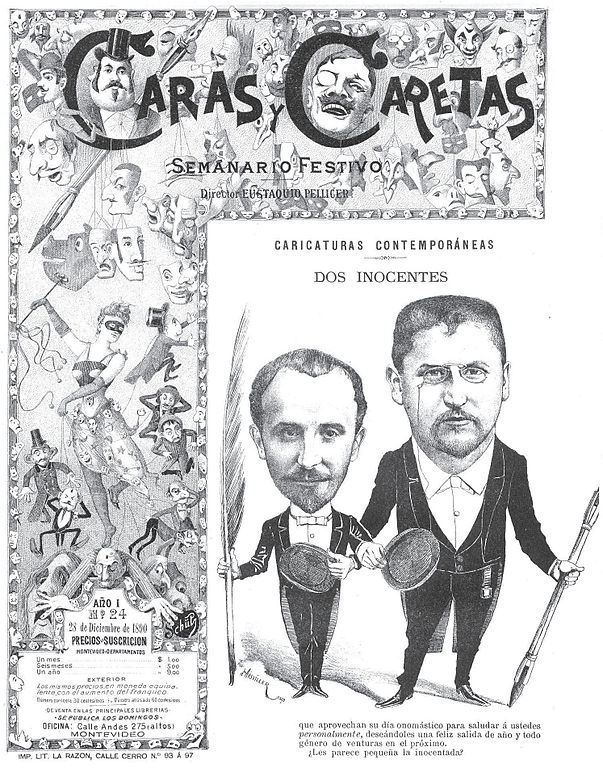
 Beautiful front page of Caras y Caretas magazine, No.24 – year 1 – Montevideo 1890, drawn by Charles Schütz often printed under the pseudonym d’Arsviller.
He was a training doctor but devoted himself to the drawing and illustration of magazines and advertisements. His works are sometimes signed as „Juan Sanuy“ and others as „Juan B. Sanuy.“ He was a contributor to the Uruguayan magazine Caras y Caretas and edited, together with Alfredo Varzi, the satirical magazine Montevideo Comico.
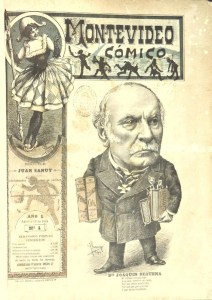
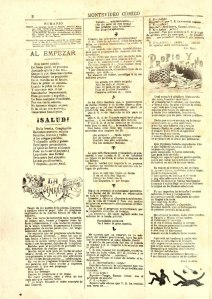
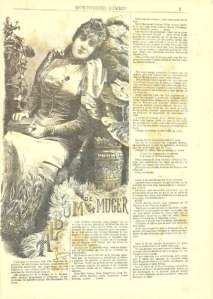
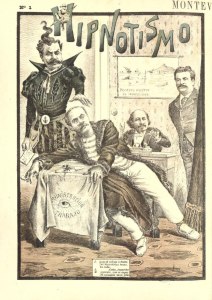
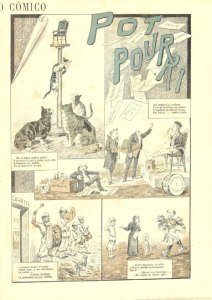
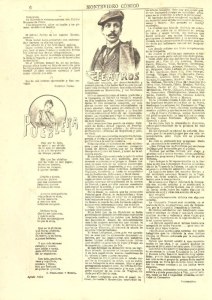
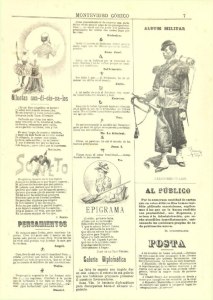
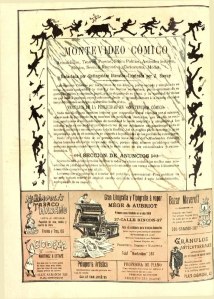 One complete edition of the satirical magazine „Montevideo Comico“. 8 pages from the First year – number 1 – of 1891.
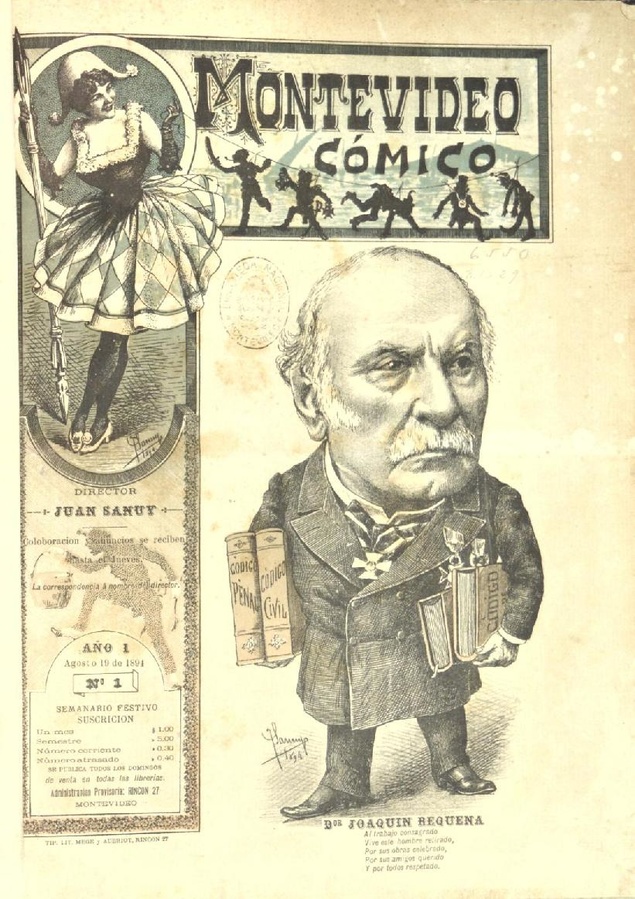
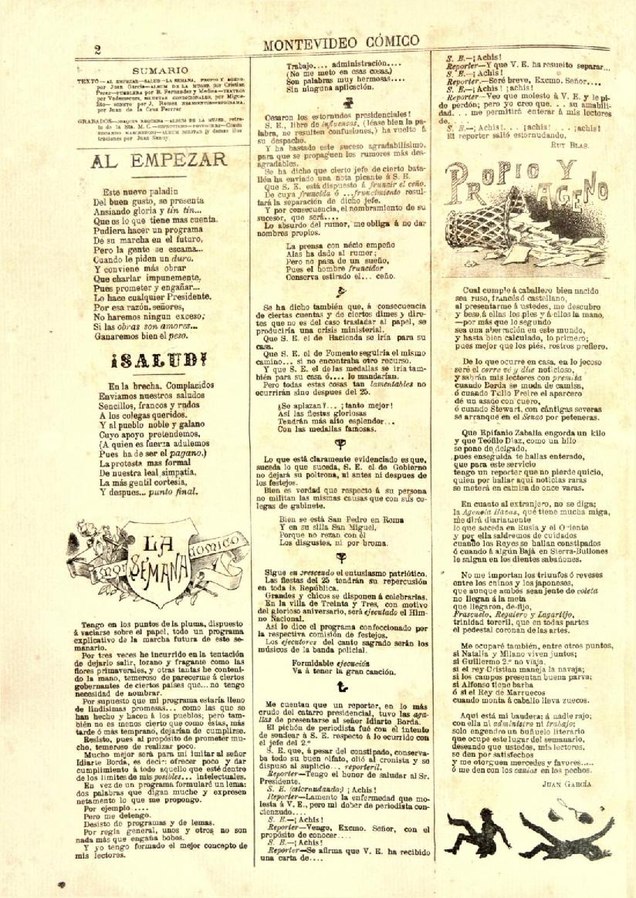
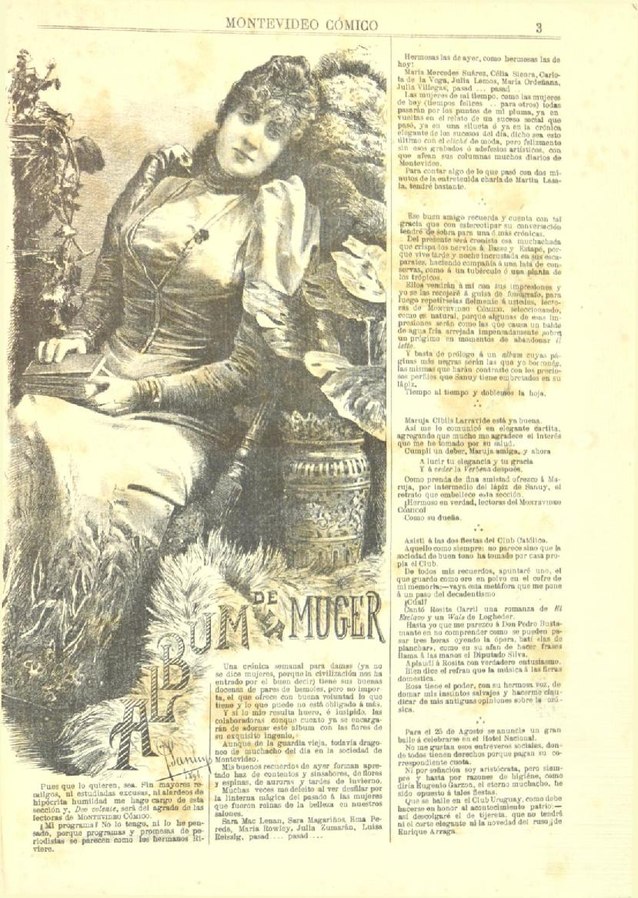
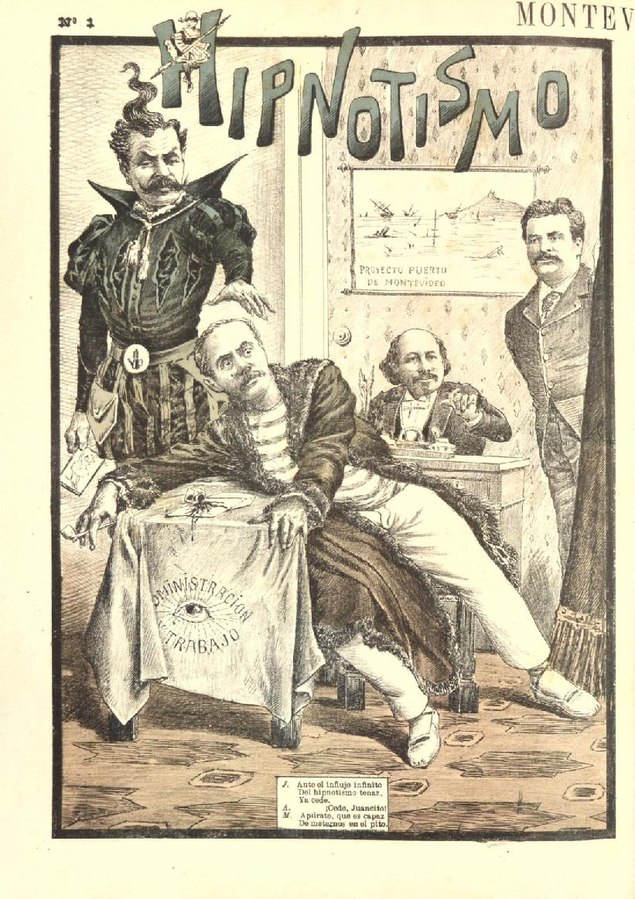
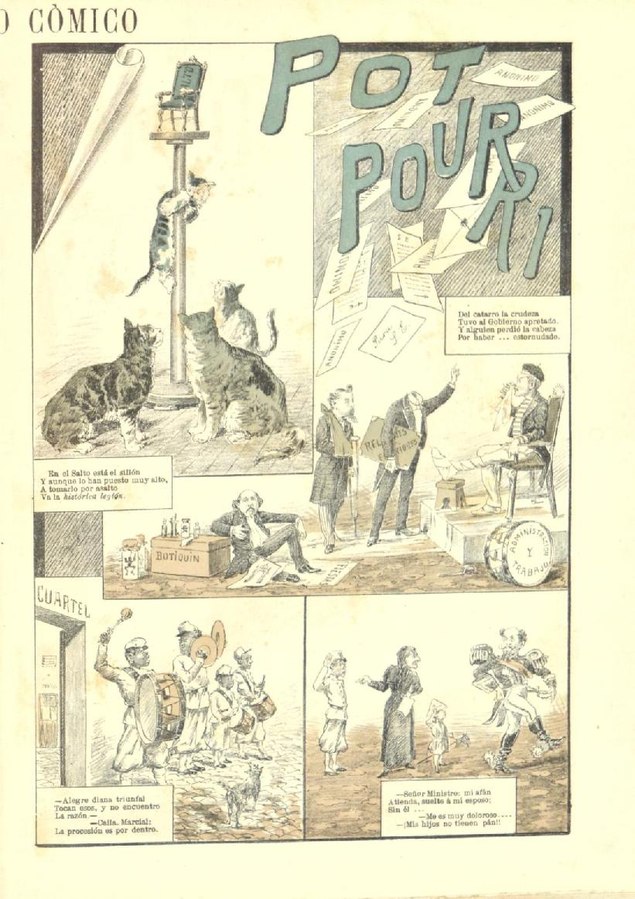
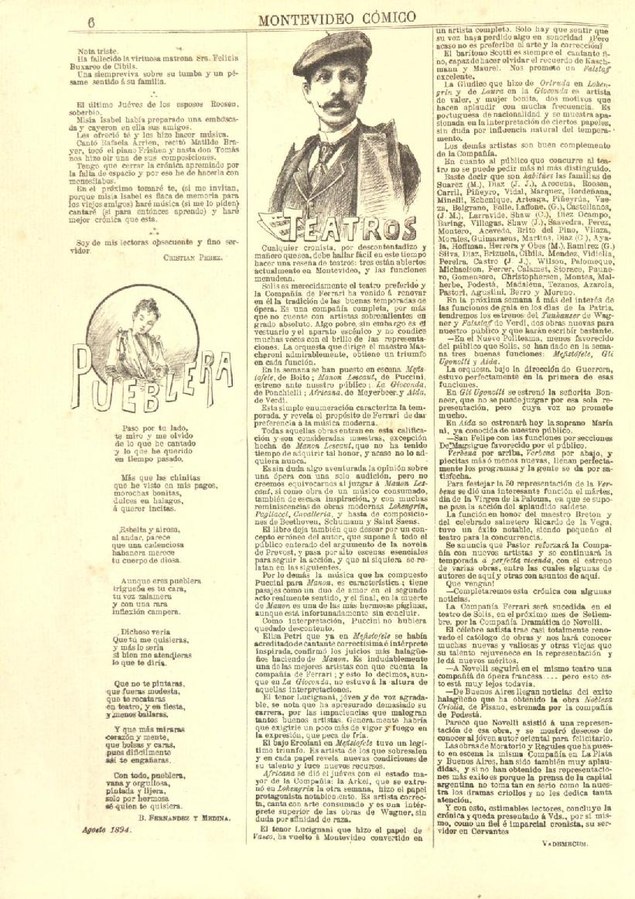
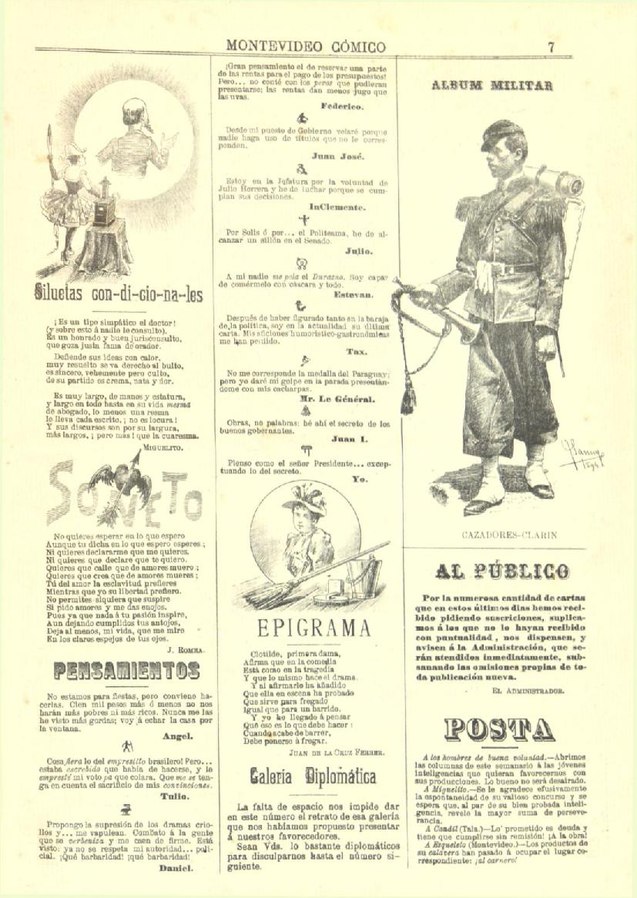
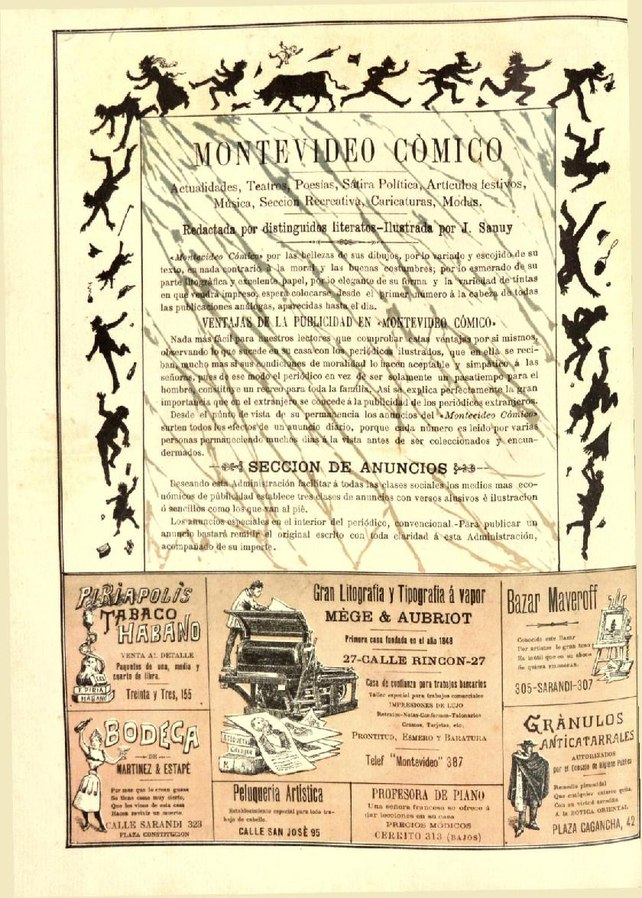
Caras y Caretas is a weekly magazine of Argentina published from 1898 to 1941 in its first period of existence. There was a previous version published in Uruguay between 1890 and 1897. Caras y Caretas was relaunched in 2005 under the direction of historian Felipe Pigna, having been published since then.
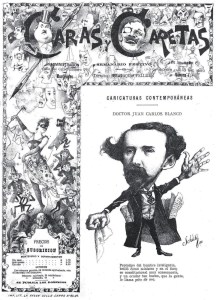 Magazine front page from 1890, drawn by Charles Schütz.
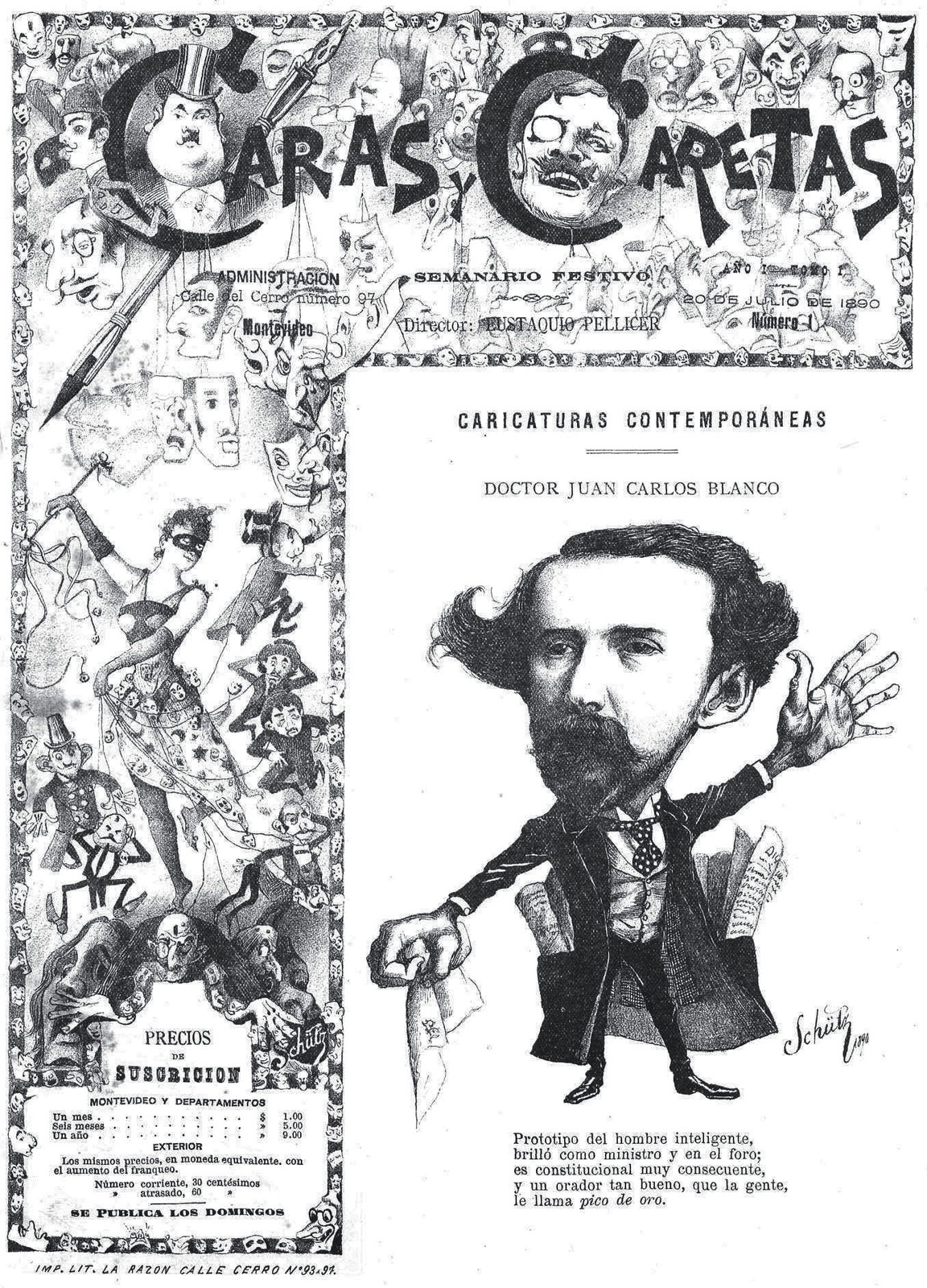
The weekly magazine Caras y Caretas was founded in Montevideo in 1890. Its main features were political satire, humor and topical issues, visually displayed through cartoons and photographs. Eustaquio Pellicer, associated with French artist Charles Schütz, was the director since its first number (dated 20 July 1890) until No.144. At the invitation of Argentine journalist Bartolome Mitre Vedia, Pellicer moved to Buenos Aires, establishing the Argentine edition of the magazine there. The first number was released the 19th of August 1898 and had 24 pages.
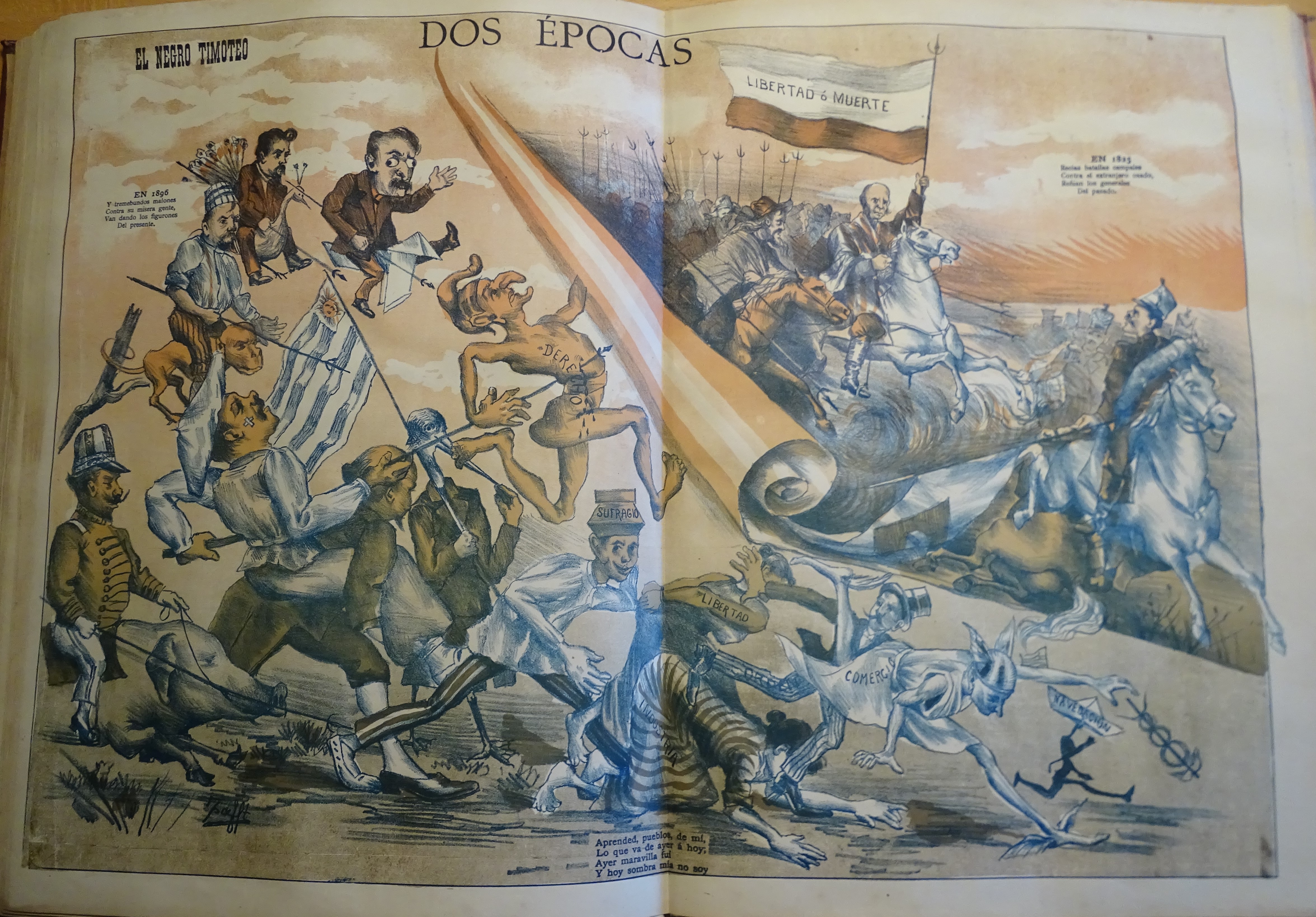
Ja ja, „two seasons“ or „the two sides of a medal“. That’s still Uruguay today !


Gratulation… habe vorhin Dein gesehen PC läuft wieder „El Negro Timoteo“
wie immer ….informativ – aufwendig recherchiert und Interessant.
commented Bernd
LikeLike
Yes, my PC is back on line and posts will come
again. So – stay tuned my friends,
Mike.
LikeLike
Thanks very much to all of you for
your good wishes and concerns, health
is by far the most valuable we can own !!
LikeLike