
Living in foreign country’s is a challenge and of course some instructive time too. During our years in Panama we had to learn a lot. A lot of unaccustomed culture, strange habits and lots of facts we never faced in our home country. I could write a book about all this.
My life in Panama was filled with learning, facing the different lifestyle, but also having a lot of fun. Especially, I was very active in golf, even not so bad with a handicap of 11. My home golfclub was Coronado, but we also played very often neighboring clubs. One day we played Mantarraya Golf Club near Rio Hato.
 Royal de Cameron Resort Rio Hato.
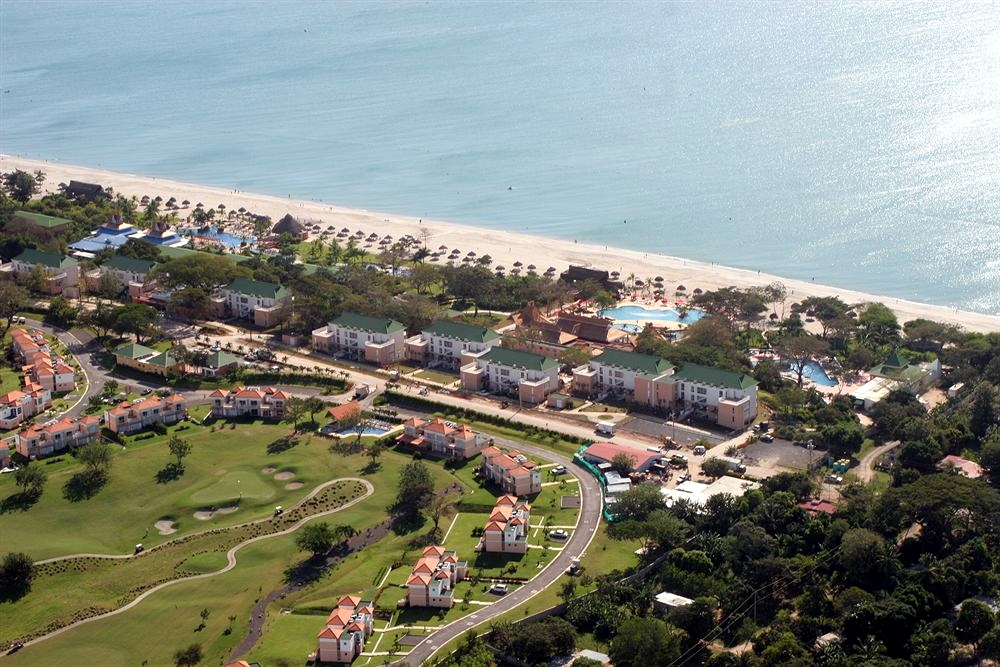
Very interesting place connected to Royal Decameron Resort and an own Airport. The airstrip is crossing the 4 lane Pan-American highway. I heard now the highway uses a tunnel underneath the reinstalled „Scarlett Martinez International Airport“. Funny time when we lived there and they closed the highway for upcoming air traffic.

 The new tunnel of Pan-American highway under the International airport Rio Hato, Panama.


Our golf day, I am referring too was a busy and very hot Saturday. We had just over 38 grade Celsius ( about 100 grade Fahrenheit) that day and had to wait on tee’s some time till flights in front of us cleared the fairway’s. That gave us time to chat, to relax and to sip a lot of cool cervezas.

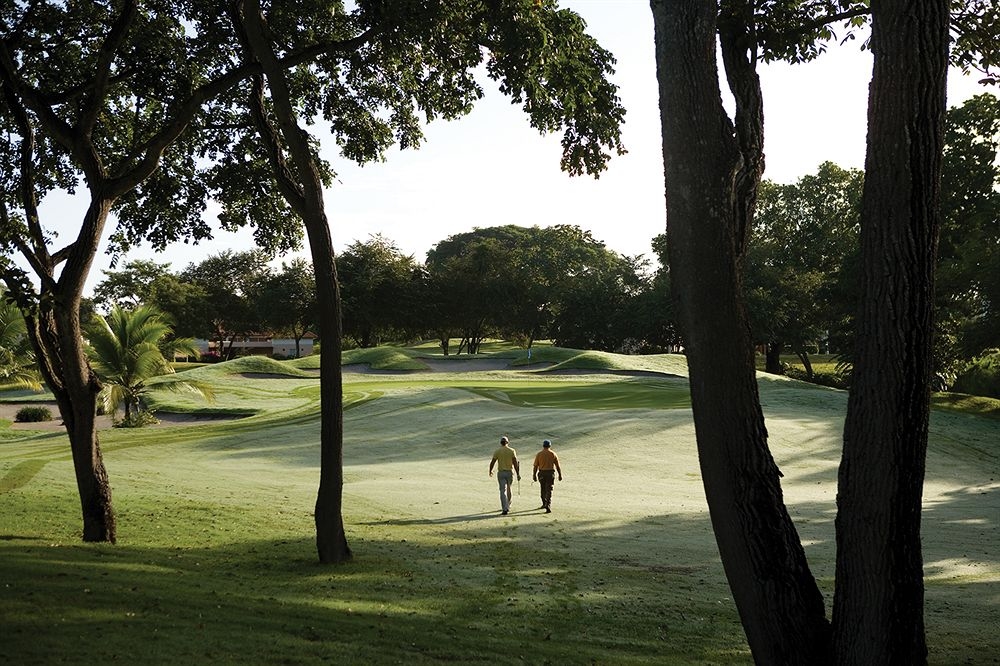
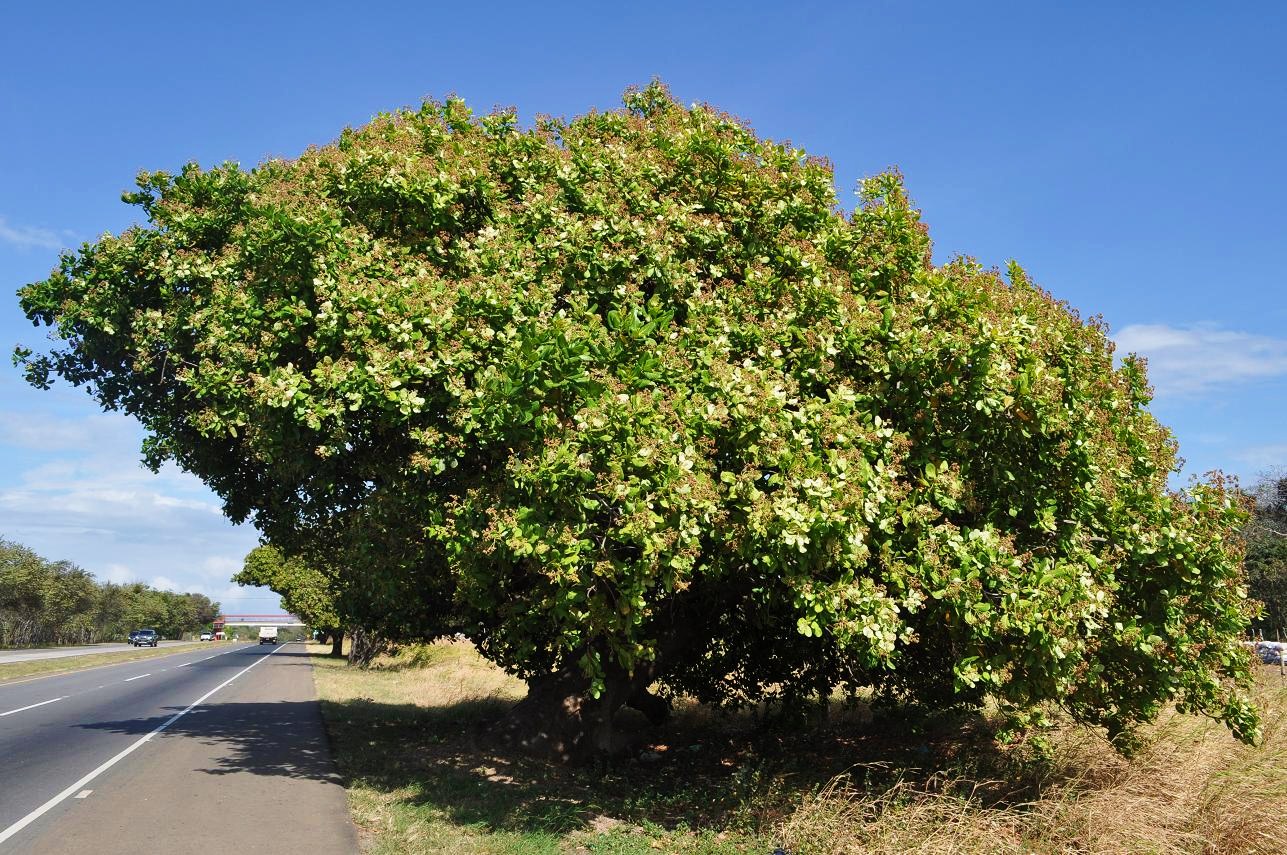
 Mantarraya Golf Club Rio Hato and the big shady „cashew trees“.

During one stop, we always tried to park our carts under shady trees, I faced some trees I had never seen before. Big ones, with lots of strange fruits in green, yellow, red colors on the same tree. They were hanging down like bells on a Christmas tree.
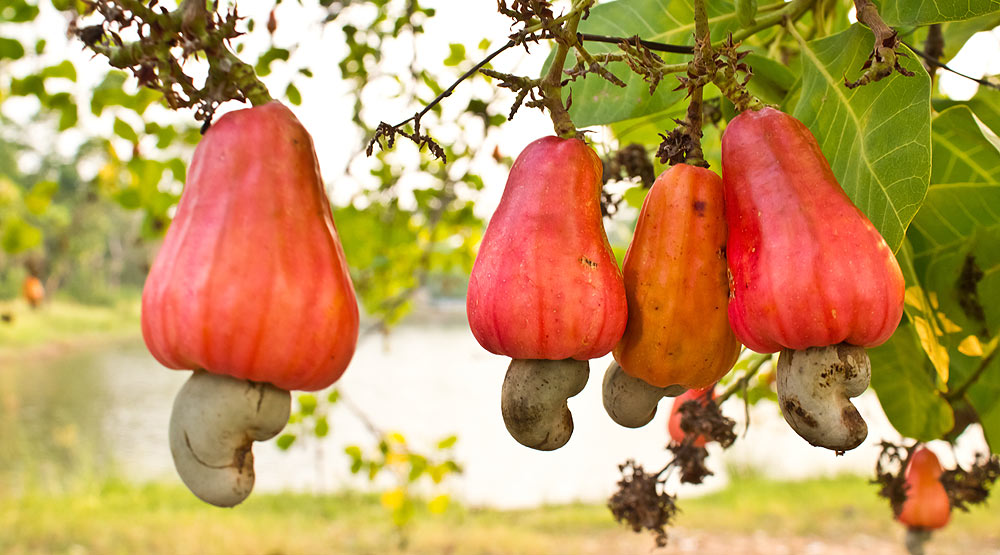
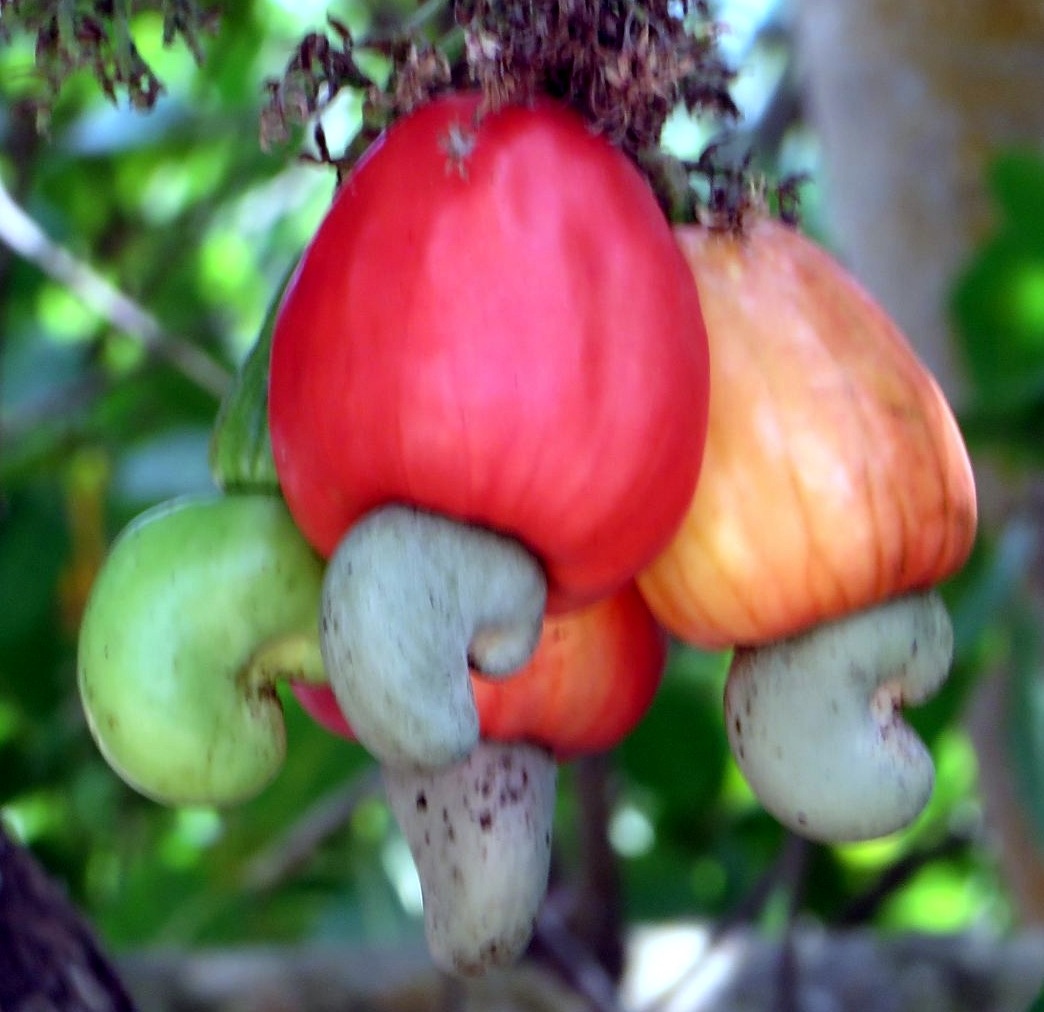
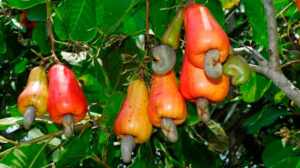 Cashew apples in all colors.
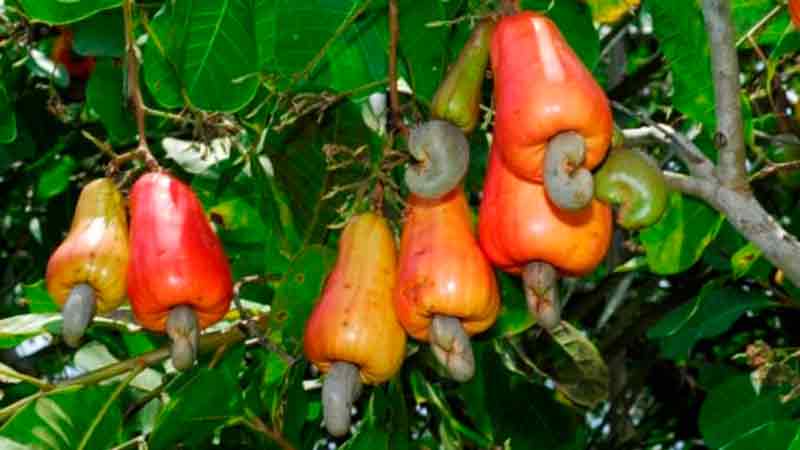
Lucky we were with a Panamanian friend in our flight, laughing about our/my lack of knowledge. These are cashew trees he said. Went to the tree and gabbed some dark red fruits, handing over to us and saying „you can eat them, very nice and quench your thirst“.
Of course he had to show us how to use and enjoy them. Wow, what an experience, what a strange astringent taste. This is the story.
The cashew apple.
The delicately flavored cashew nut is a favorite between meal snack that can be readily found in your local market year round. It also makes wonderful nut butter and a special addition to salads and stir-fry dishes. Cashew nuts are actually the kidney-shaped seeds that adhere to the bottom of the cashew apple, the fruit of the cashew tree, which is native to the coastal areas of northeastern Brazil.
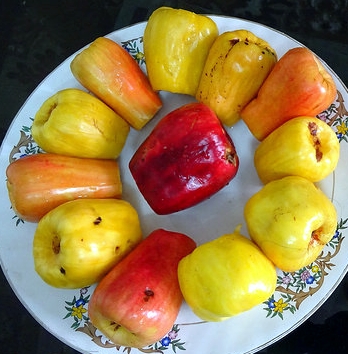
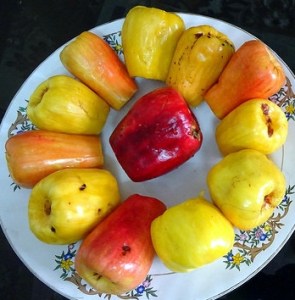 Cashew apples in different degrees of maturity
While cashew apples are not appreciated in most other country’s like the US or Europe, they are regarded as delicacies in Brazil and the Caribbean. You have probably noticed that cashews in the shell are not available in stores. This is because these nuts are always sold pre-shelled since the interior of their shells contains a caustic resin, known as cashew balm, which must be carefully removed before they are fit for consumption.
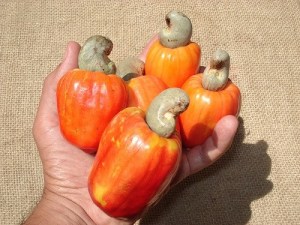 Cashew apple with the attached cashew nut.
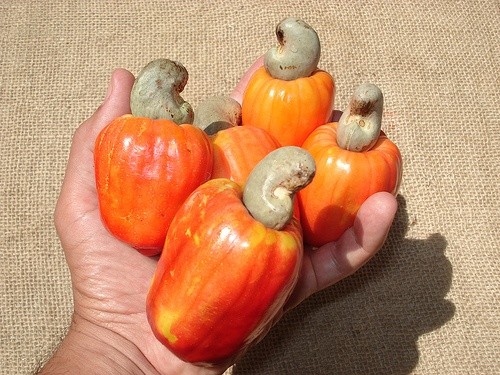
This caustic resin is actually used in industry to make varnishes and insecticides. Cashew nuts grow out of a “strange apple”. I had never seen it before, t’s amazing. You have eaten these nuts hundreds of times but never thought about how they actually “come to our world“. The cashew apple is rich in nutrients and contains five times more vitamin C than an Orange.
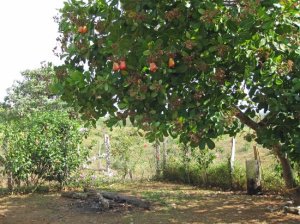 Cashew trees in peoples backyard.
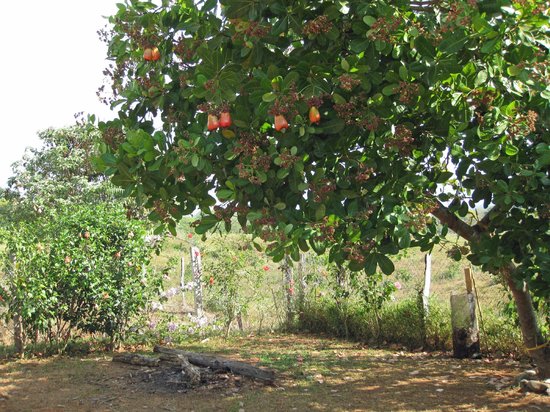
It is eaten fresh, cooked in curries, or fermented into vinegar as well as an alcoholic drink. In parts of South America, natives regard the cashew apple as the delicacy, rather than the nut kernel popular elsewhere. Cashew apple is also used to make preserves, chutneys and jams in some countries such as India and Brazil.
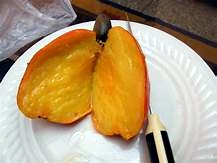 Inside of the cashew apple, light stringy flesh.
Cashew apples are not popular, in part because of highly astringent taste. This has been traced to the waxy layer on the skin that causes tongue and throat irritation after eating the cashew apple. In cultures that consume cashew apple, this astringent property of the cashew apple is typically removed by steaming the fruit for five minutes before washing it in cold water.
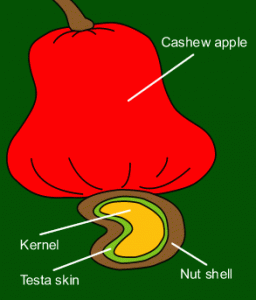 The cashew fruit in drawing.
The true fruit of the cashew tree is a kidney or boxing-glove shaped drupe that grows at the end of the cashew apple. The drupe develops first on the tree, and then the pedicel expands to become the cashew apple. Within the true fruit is a single seed, the cashew nut. Properly roasting cashews destroys the toxin, but it must be done outdoors as the smoke contains urushiol droplets which can cause severe, sometimes life-threatening, reactions by irritating the lungs. Some people are allergic to cashew nuts, but cashews are a less frequent allergen than other treenuts or peanuts.
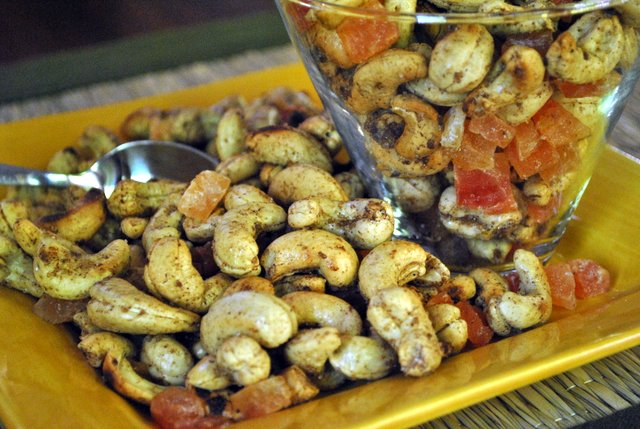
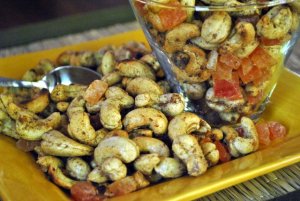 Delicious fresh „honey roasted, pepper, candied cashew nuts“, still warm. Served in Royal Cameron Resort as a happy hour snack.
The cashew history.
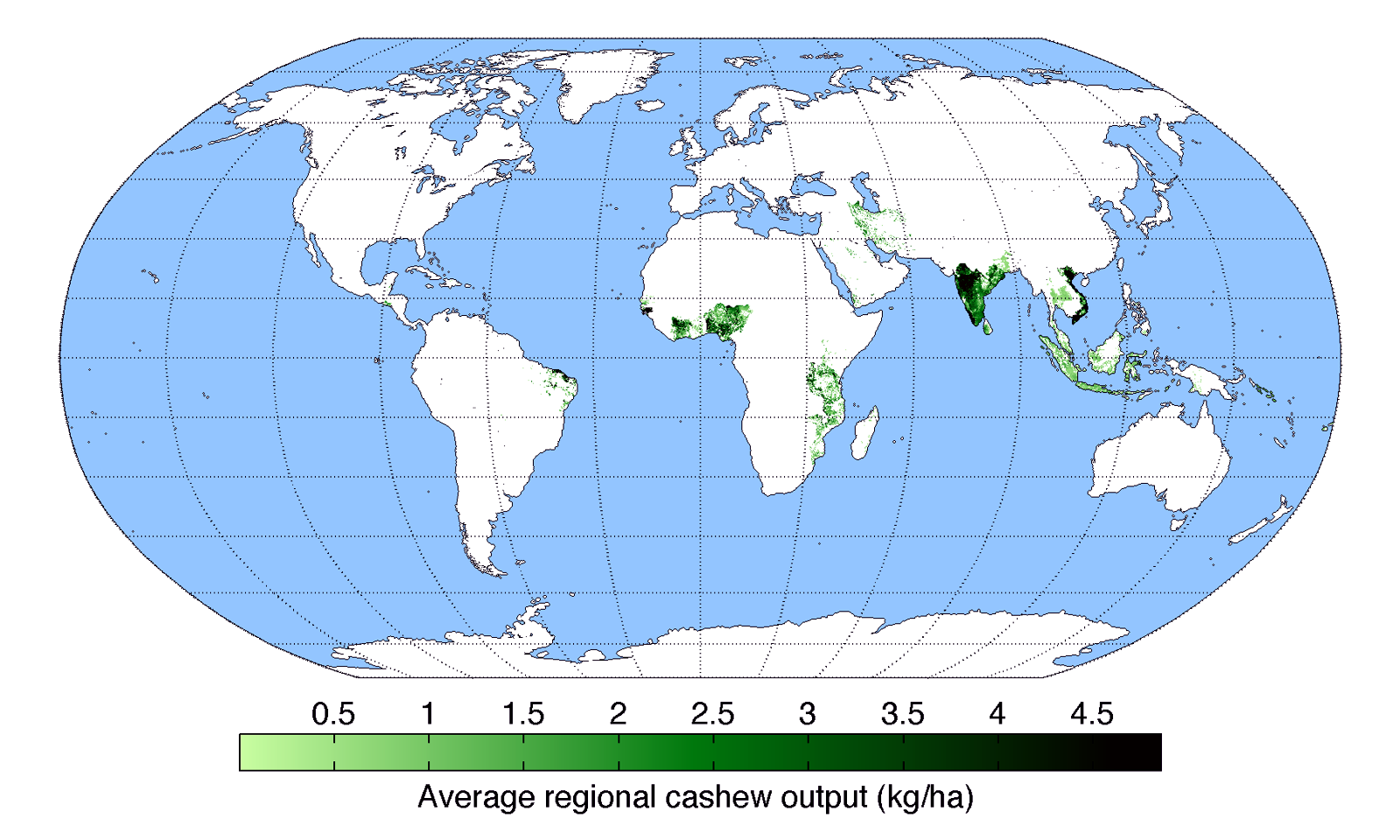
The cashew tree is native to coastal areas of Brazil. In the 16th century, Portuguese explorers took cashew trees from this South American country and introduced them into other tropical regions such as India and some African countries, where they are now also cultivated. The cashew tree has always been a prized resource owing to its precious wood, cashew balm and cashew apple, but the cashew nut itself did not gain popularity until the beginning of the 20th century. Today, the leading commercial producers of cashews are India, Brazil, Mozambique, Tanzania and Nigeria.
 Click on pics to supersize.
How to enjoy cashews ?
Combining cashews with other nuts and dried fruits makes a healthy snack.
Right before taking off the heat, add cashews to sauteed vegetables.
Saute cashews with shrimp, basil, some red chilli flakes and green beans for a delightful Thai inspired dish.
Cashews with a little bit of maple syrup make a great topping for hot cereals.
Add cashew butter to breakfast soy or rice milk shakes to up their protein content (a quarter-cup of cashews provides over 5 grams of protein) and give them a creamy nutty taste.
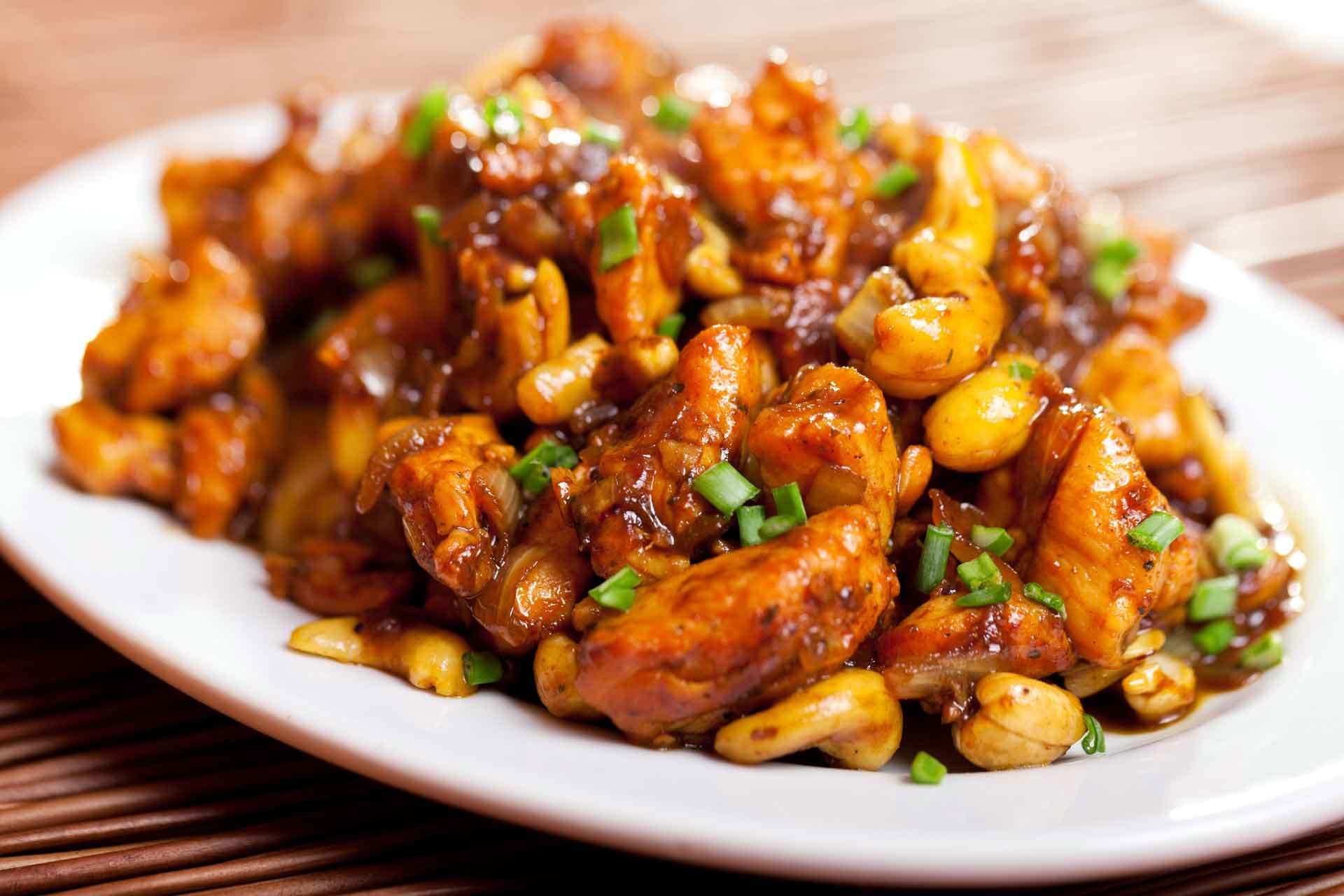
 Fantastic. Thai inspired, sweet-spicy cashew chicken.
In a saucepan over low-medium heat, mix cashew butter with some soy sauce, cayenne pepper, garlic, ginger and water to make a wonderful sauce for fish, vegetables, tofu or rice.
To roast cashews at home, meant here a second roasting, do so gently—in a 160-170 grade F (about 75 grade C) oven for 15-20 minutes—to preserve the healthy oils.
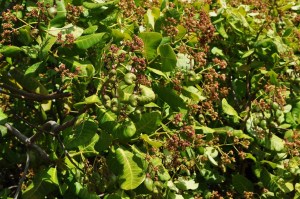 This is how it starts on a cashew tree. First the flowers, out of it the seed/nut and then it grows the apple. One tree has hundreds and hundreds of them.
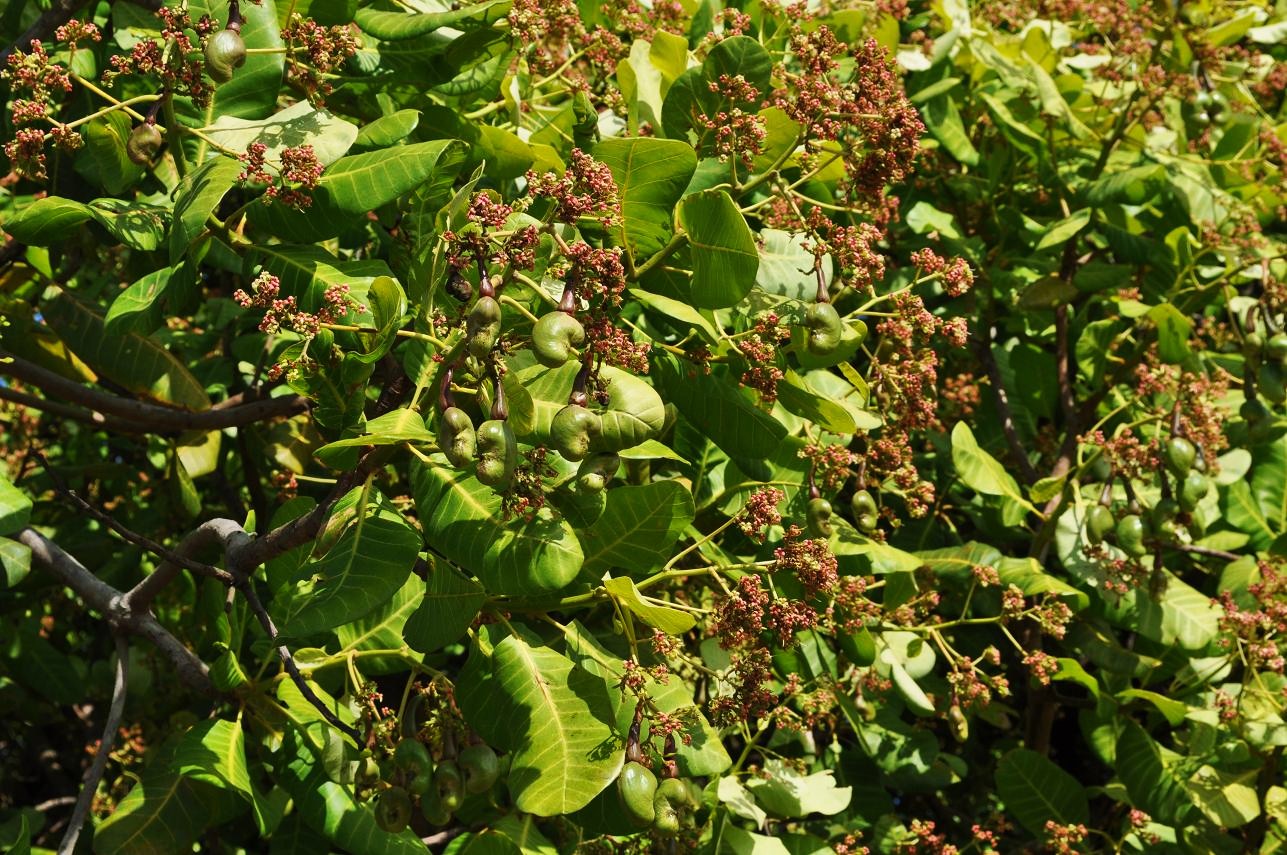
A cashew description.
The seed we know as the kidney-shaped cashew „nut“ is delicate in flavor and firm, but slightly spongy, in texture. The actual fruit is used for juices and is a bit astringent, which means that cottony feeling as if you’ve sucked a lemon afterwards, with teeth and gums feeling dry and pasty. Cashews, known scientifically as Anacardium occidentale, belong to the same family as the mango and pistachio nut. In Latin America its called the Maranon Tree, Maranon fruit, Maranon juice and so on.
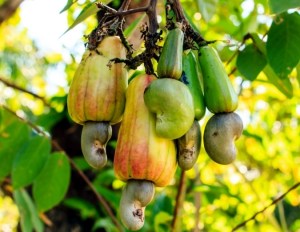 Next stage in growing. The nut is fully established, now the apples can appear.
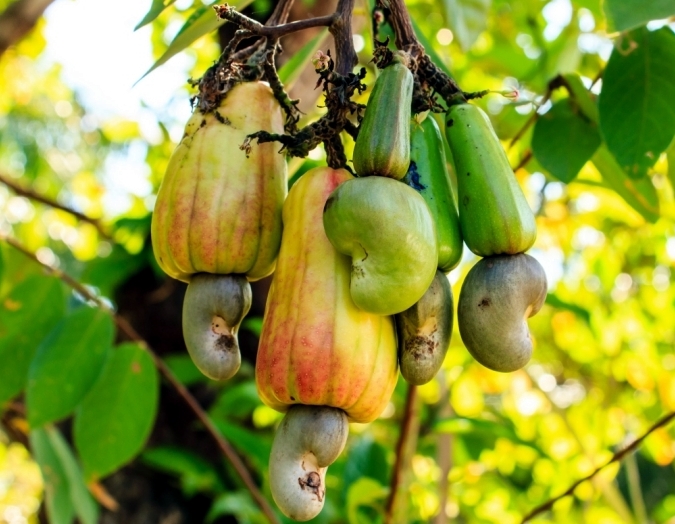
From fruit to nut.
First time I noticed cashew nuts in Panama, during a special time of the year (cashew season from March to June), that along the highways in front many houses little tables with small plastic bags were „for sale“. Stopping and finding out.
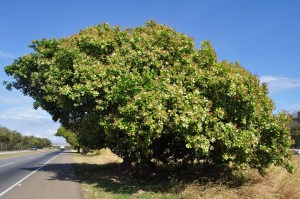 Cashew trees next to Pan-American Hwy. Panama.
One will find freshly roasted cashews being sold by these street vendors for „ONE US$“ per small bag. Cashews are one of my favorite treats. Once odd thing I noticed is that the cashews are sold unsalted. I also noticed that each fruit only has one cashew. This means that tin of cashews in your cupboard took a ton of work!
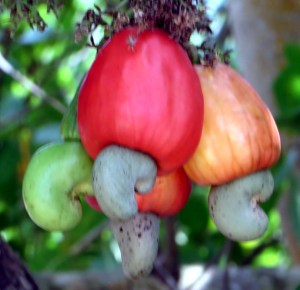 Final stage. Cashew apple fully grown and ripe.
Producing the tasty cashew nut starts with cleaning and separating the nut from the apple. I suggest gloves to do so, its a messy job. Next stage is to put the nuts over fire to roast and if they are hot one will lit the biofuel on the nuts. Can take a while if they are fresh and wet. This procedure I will call „first roasting“.
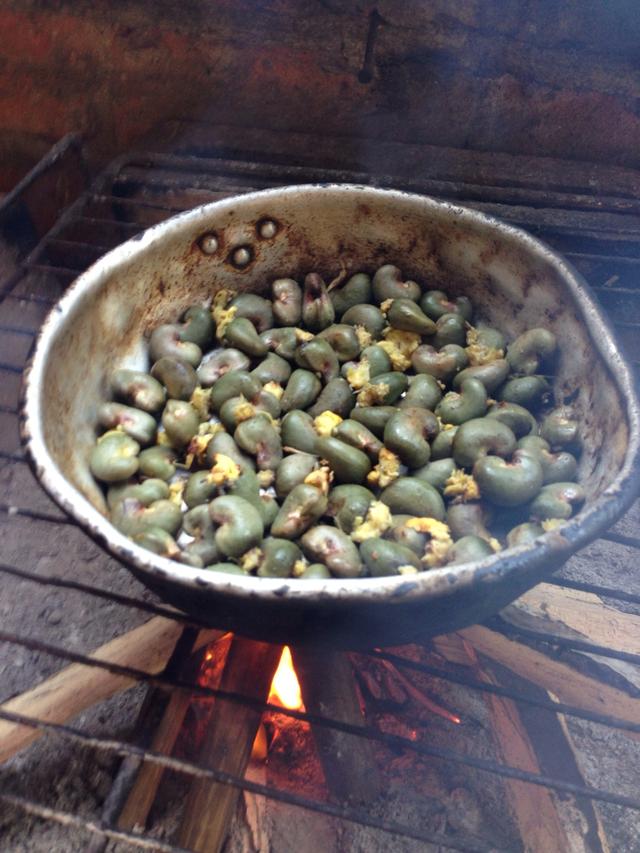
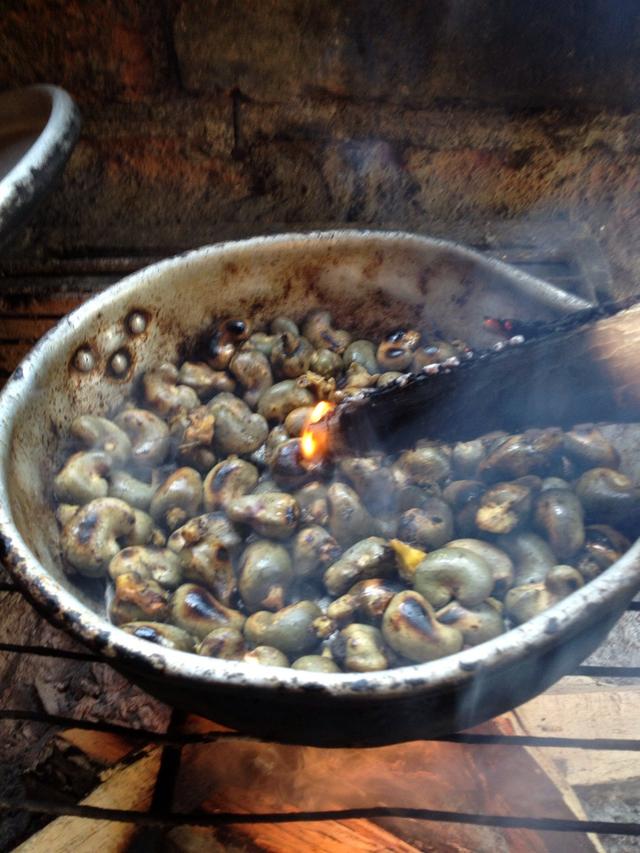
Be very careful, if they start burning it will be a hell of a fire as you can see in the pictures. Because of this massive flame and the toxic fumes you should do it outside only, like the locals do. Roasting of the nuts releases toxic fumes from an acid contained in the skins, which is why you never find cashew nuts in the shell.
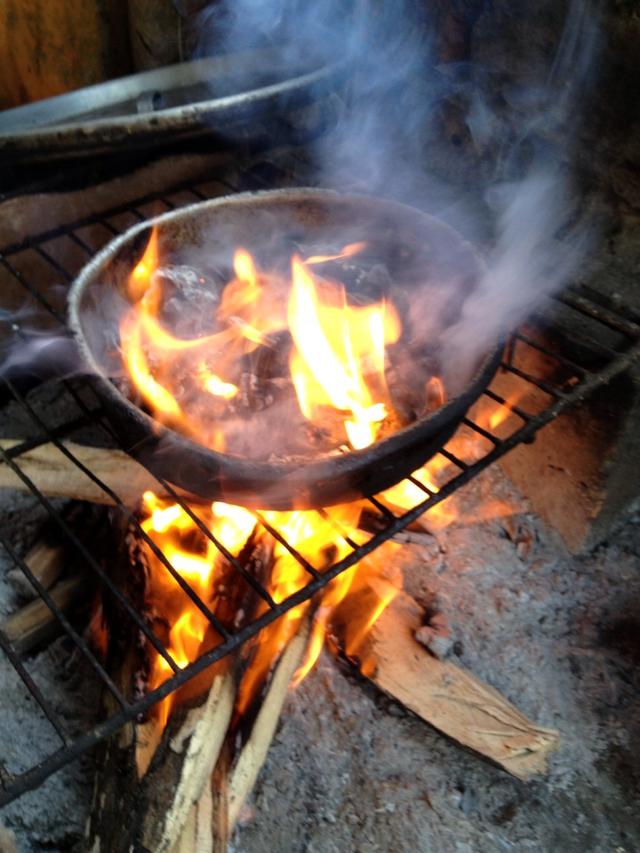
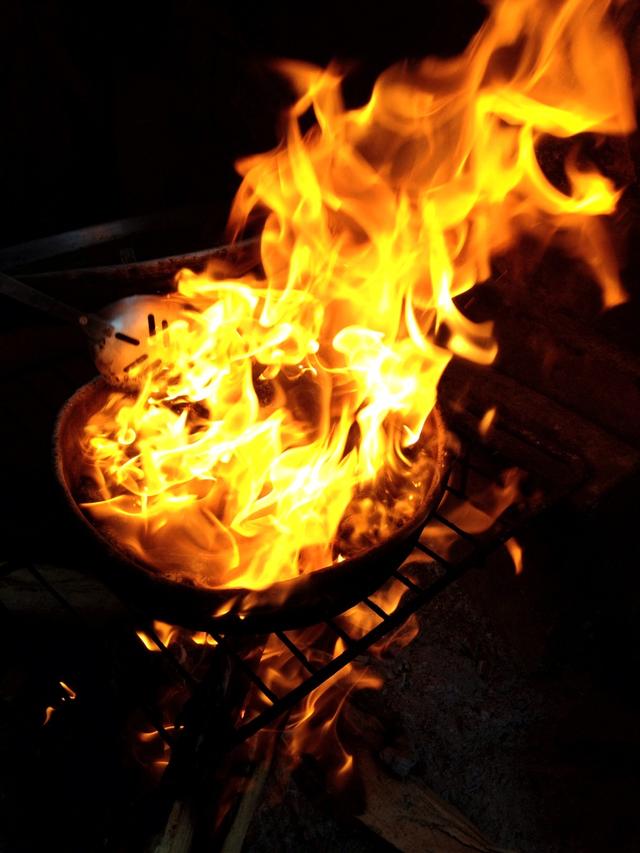
It needs some experience to find out the right roasting time, you want them well done but not burned to ashes. After cooling off its easy to crack the shell and take out the nut. Use gloves again, its a messy messy work. Lot of work at all, but the result is amazing. I never ever had a fresh warm nut tasting that good. Indescribably !
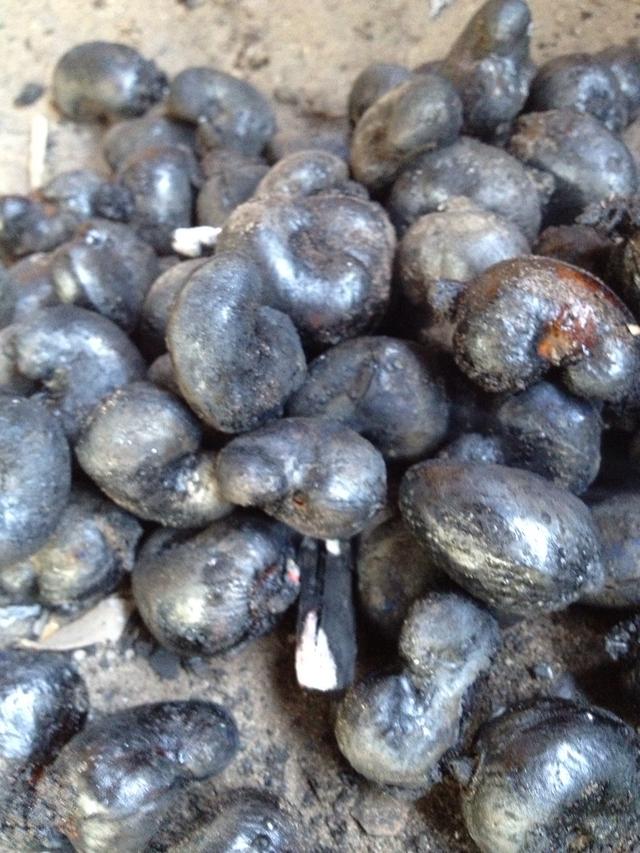
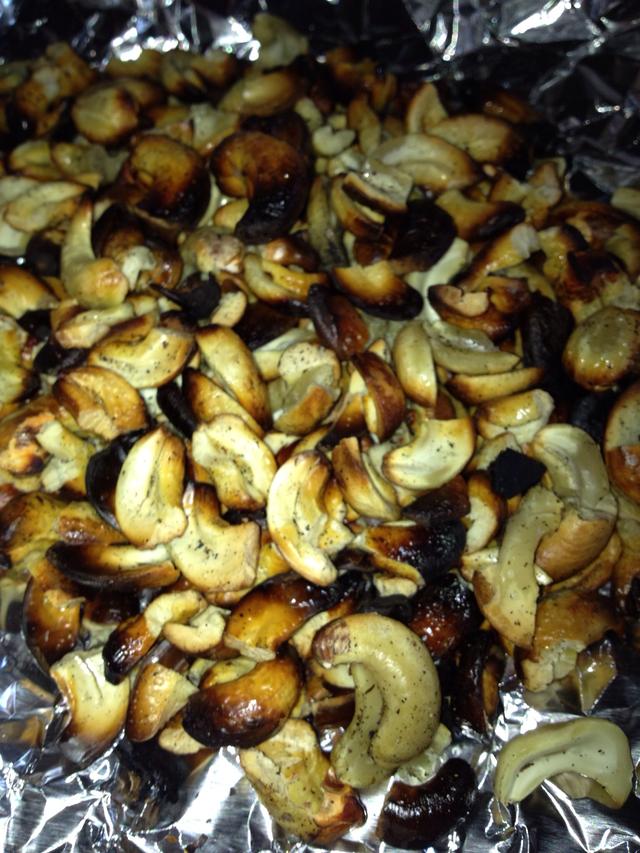
To extinguish the fire locals throw sand over the burning nuts. One can crack them with a mallet or between some rocks, beware they are still hard. This whole process will be done industrial by machines. However it is a long hard working and expensive procedure to get to these delicious nuts. I will never complain about cashew prices anymore.
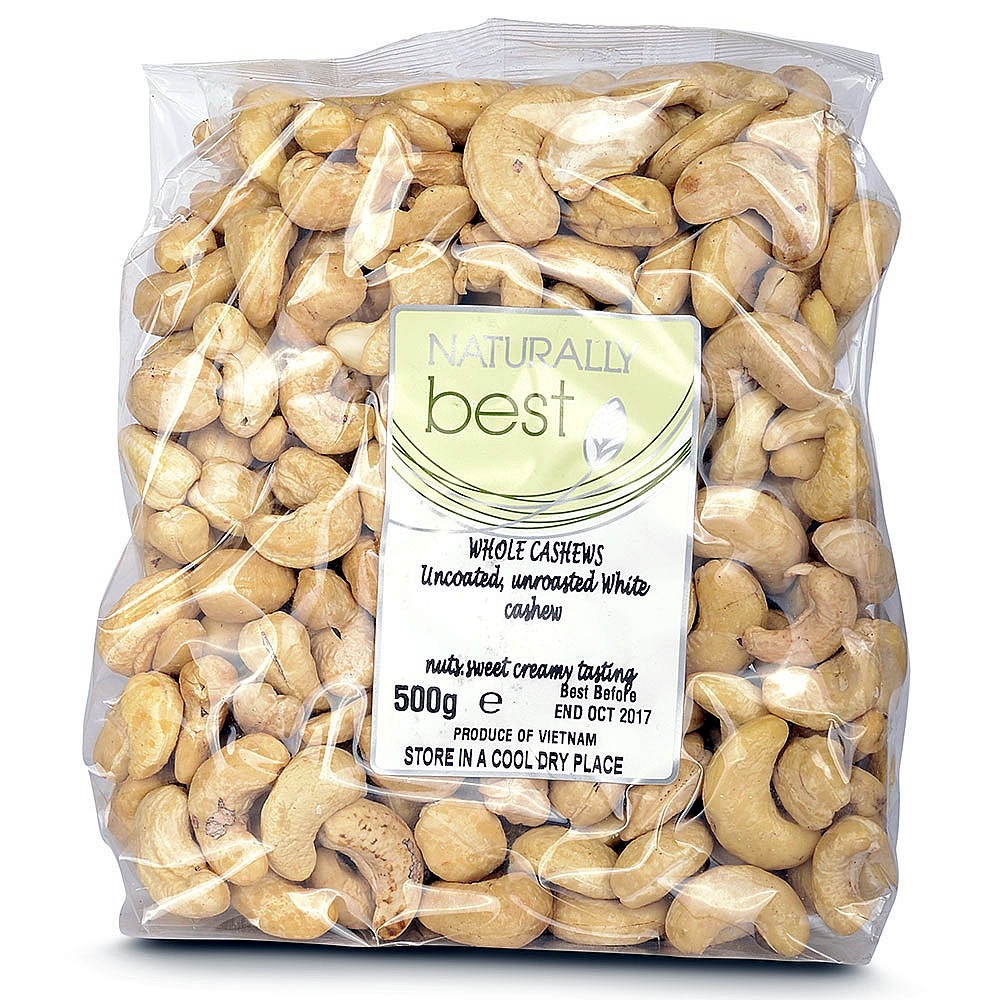
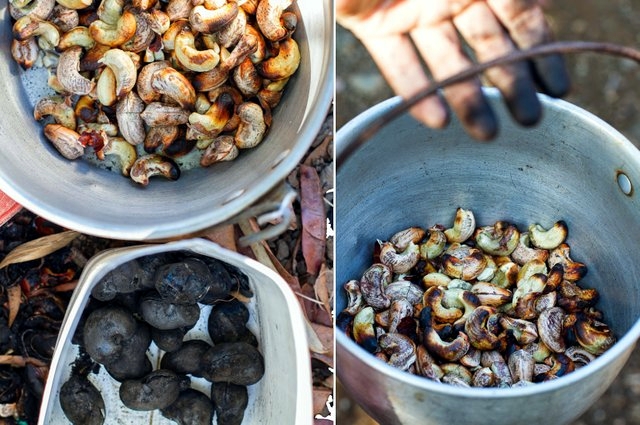
Industrial produce often comes white and shiny. These nuts were brushed and cleaned. Unroasted here means, not roasted a „second“ time. I would rather like to have the natural, slightly burned and fresh tasty ones, but where to get them ?
From fruit to juice.
The making of a delicious juice out of the apples is much easier then roasting the nuts. Just slightly wash and cut them into pieces with skin and everything. Throw the fruits into a blender and add sugar and some good quality water.
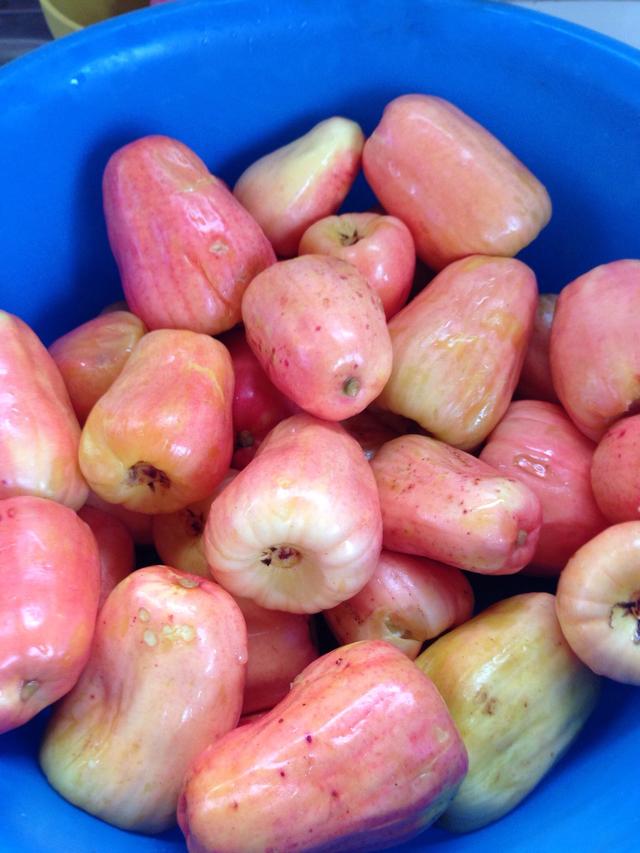
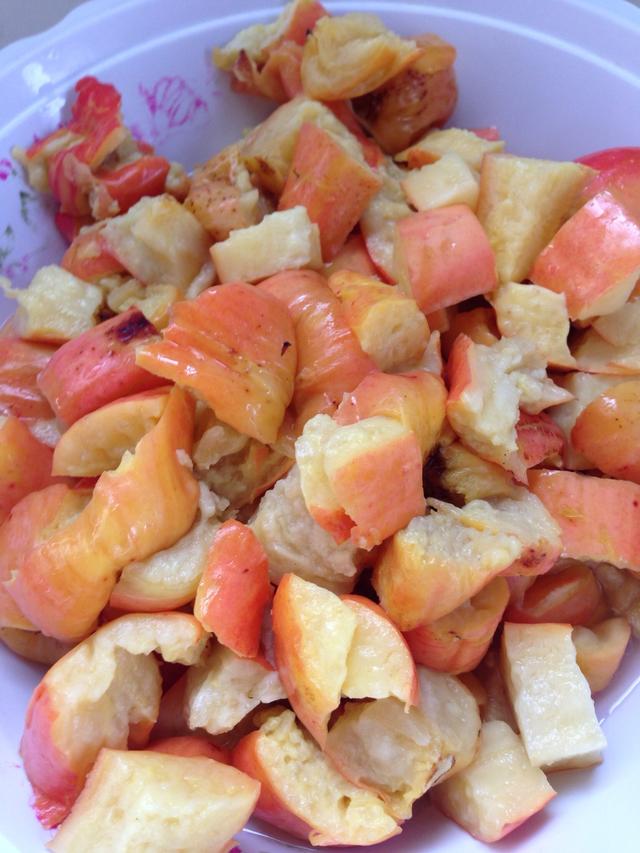
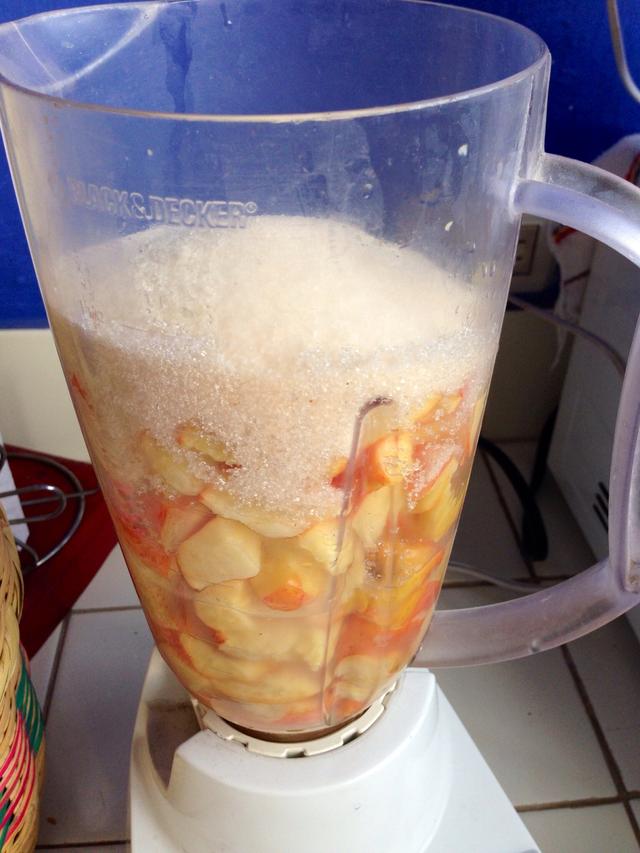
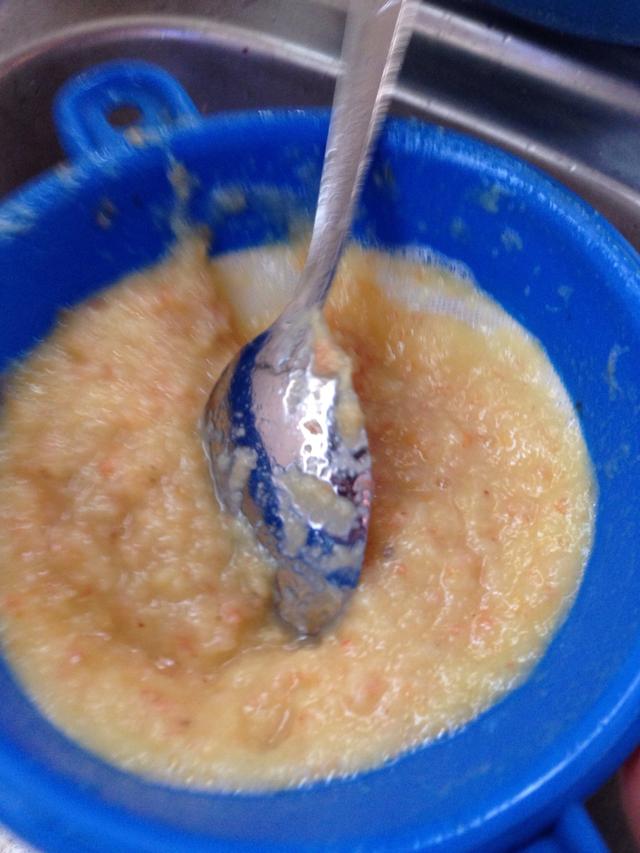
Next step is to push the puree through a fine strainer. Add some blocks of ice and you have a delicious drink. Instead sugar one can use honey, or add some paprika or even chilli powder. The variety of drinks is result of your imagination.
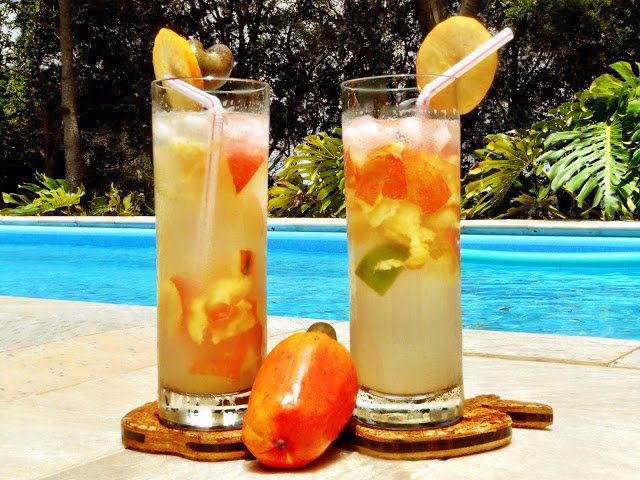
Maranon juice, also called chicha, served in a most exclusive way. At Royal Cameron a glass full – not to complain, very very delicious – of this chicha was priced at US$ 14,– !!
What else ?
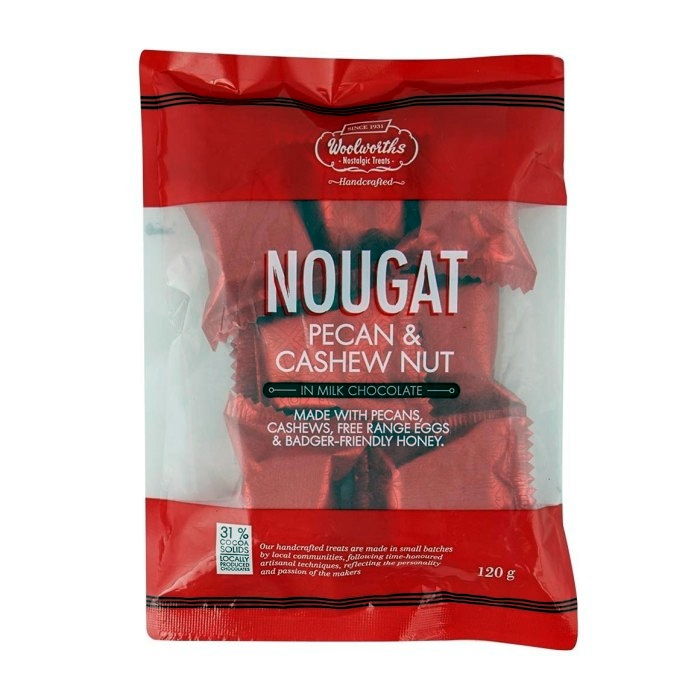
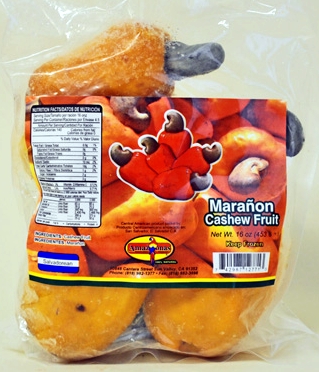
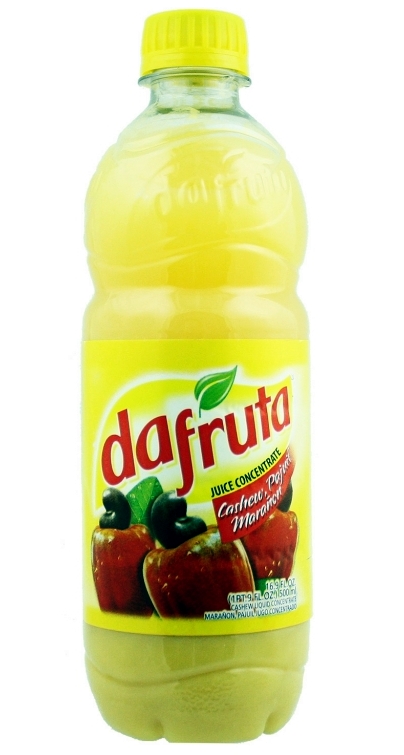
They even make delicious Nougat out of cashews. Notice the recipe on the bag. Bought at „Woolie’s“ in Australia. Or in Brazil you can find the cashew apples frozen in a bag. Four of them for about US$ 4,– !! Pricy snack. Also in Brazil available Maranon juice in bottles.
Finally – travel tips.
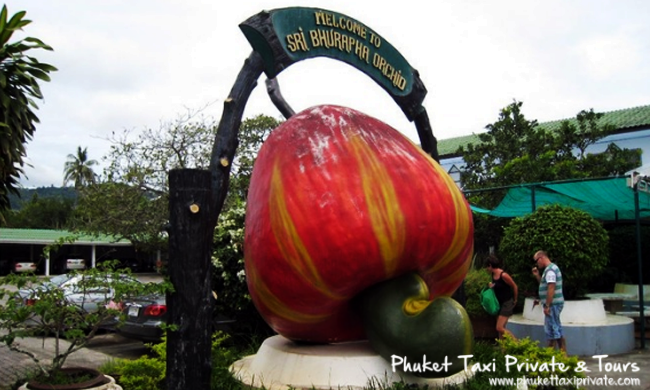
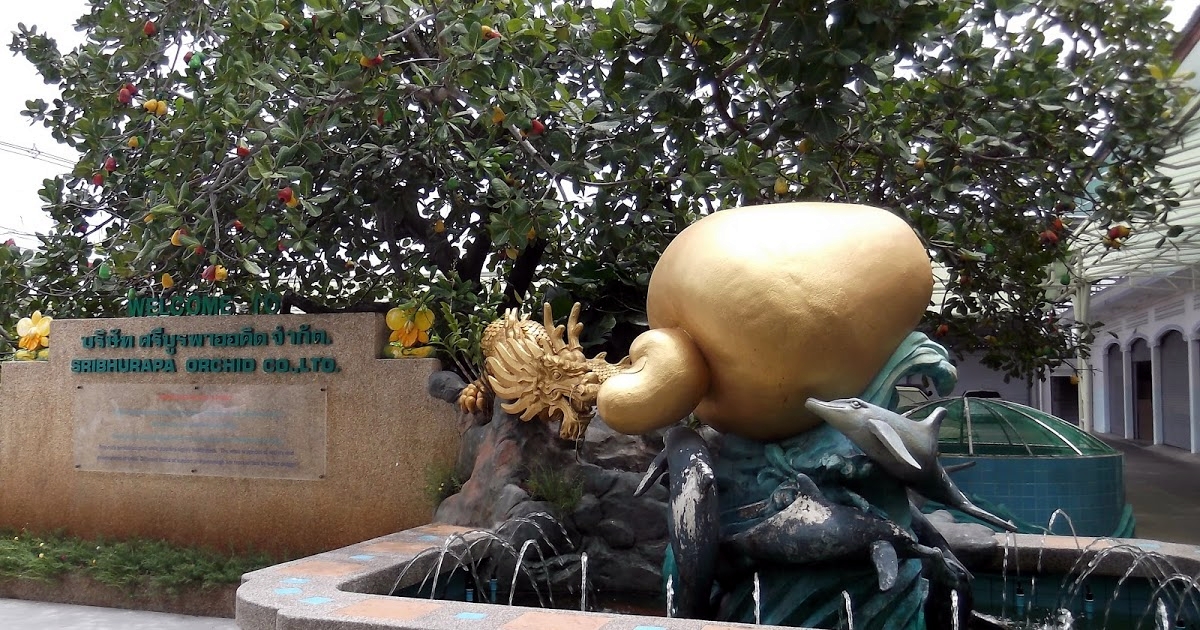
When you travel the world and hit country’s where they harvest cashews, take the chance and have a look how they do it. Above the „Cashewnut Factory Phuket“ on Phuket island in Thailand. Worth to visit, may be by „Phuket Taxi Tours“. Above left the „entry sign“ and above right a fountain inside.
 Canopy Family Lodge in El Valle, Panama. Great outdoor relaxing in tropical surroundings.
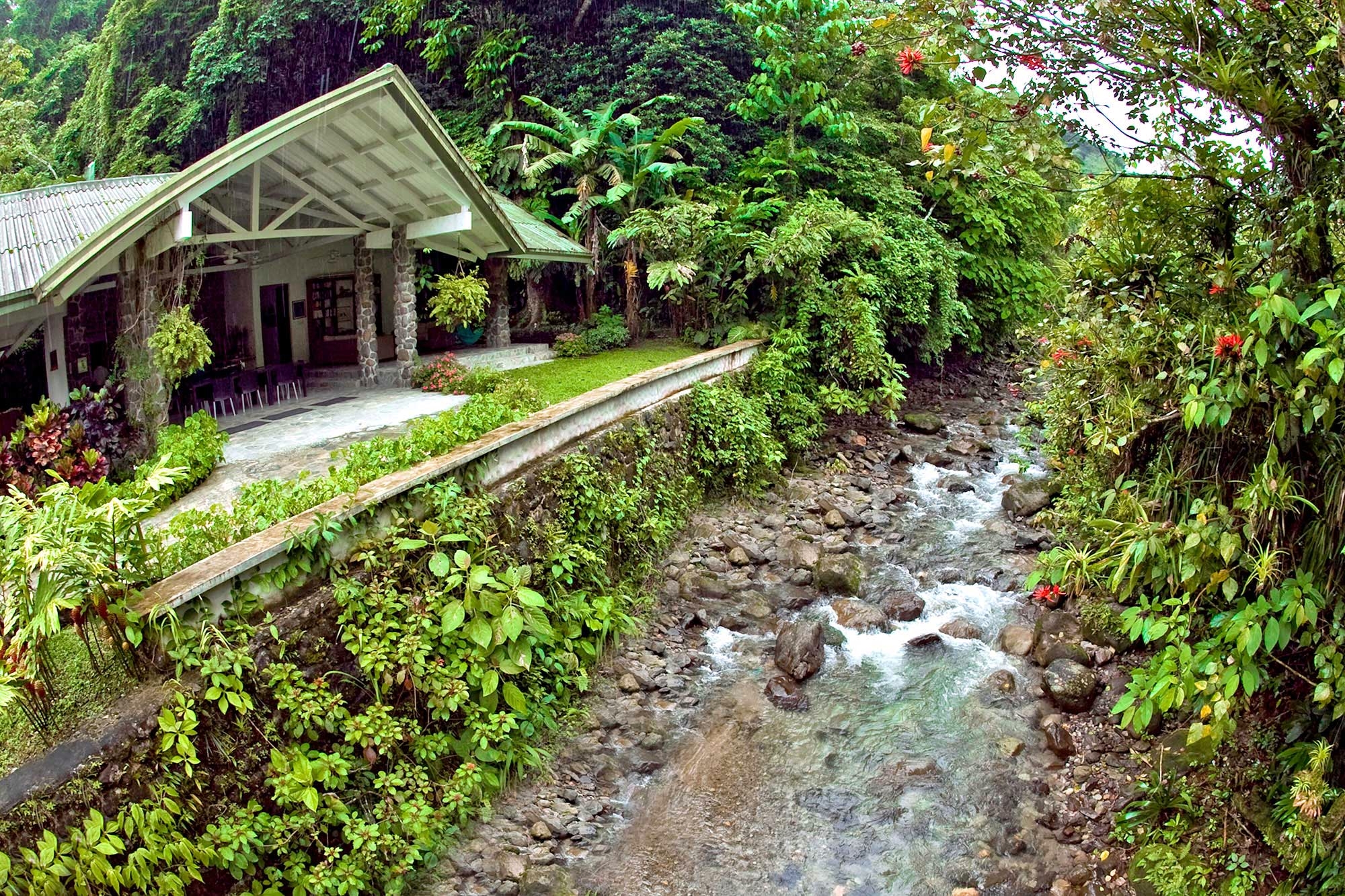

In Panama its a MUST to visit the „Canopy Family Lodge“ resort and hotel. Its location is in El Valle where most tourists of Panama end up anyway. But many don’t see the Canopy tower and don’t realize its in a wild cashew tree.
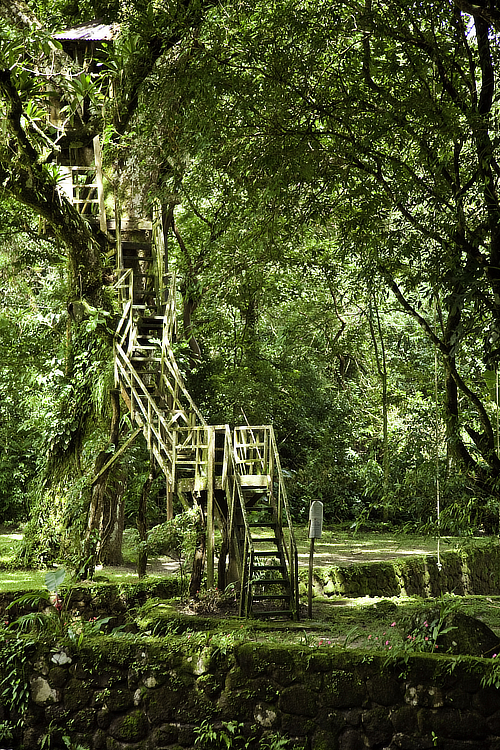
This amazing tree house is located in the Canopy Lodge area. This wild cashew tree is over 60 meters high, the trunk over 3 meters in diameter and the tree over 150 years old. Still produces every year masses of cashew apples and nuts. Enjoy the tree climb !


Hi Mike,
wonderful article. Thank you for reminding me of our great golfing adventures around Panama.
I still know very well when we looked a bit stupid to Siego who showed us how to eat these apples.
Many fuerte abrazos from „froggies“ golf club,
ciao Luigi.
LikeLike
Mike, that’s fantastic. I never realized how much work it is to have some cashew nuts.
Thoughts like „power is coming out of the socket“.
And I had never seen nut, fruit, apple in so many colors on one tree. Just googled it and read Wikipedia. Soooo interesting – thanks my friend for igniting this knowledge to me.
LikeLike