
One picture says more than 1000 words, right ?
I had the chance, a while ago, to look into an Uruguayan drivers license brochure.
It was great fun, as funny as to watch Uruguayans driving !!
By example in this brochure is no clue written about, how to drive in a roundabout.
That’s why I had a lady, this week in Atlantida, in front of me STOPPING
IN THE MIDDLE OF A ROUNDABOUT AND GIVING WAY TO THE
UPCOMING TRAFFIC FROM THE RIGHT. Ha ha ha, it was great fun !!
Three examples out of this brochure I had seen:
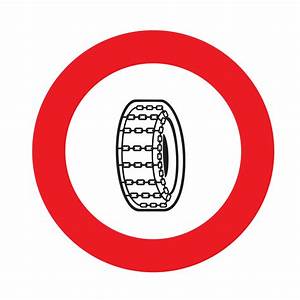
First I was wondering which sign is meaning what and when and where and ….. ?
I found all three in official Uruguayan drivers license brochure.
May be a teaching favor for Uruguayans driving into foreign country’s !?
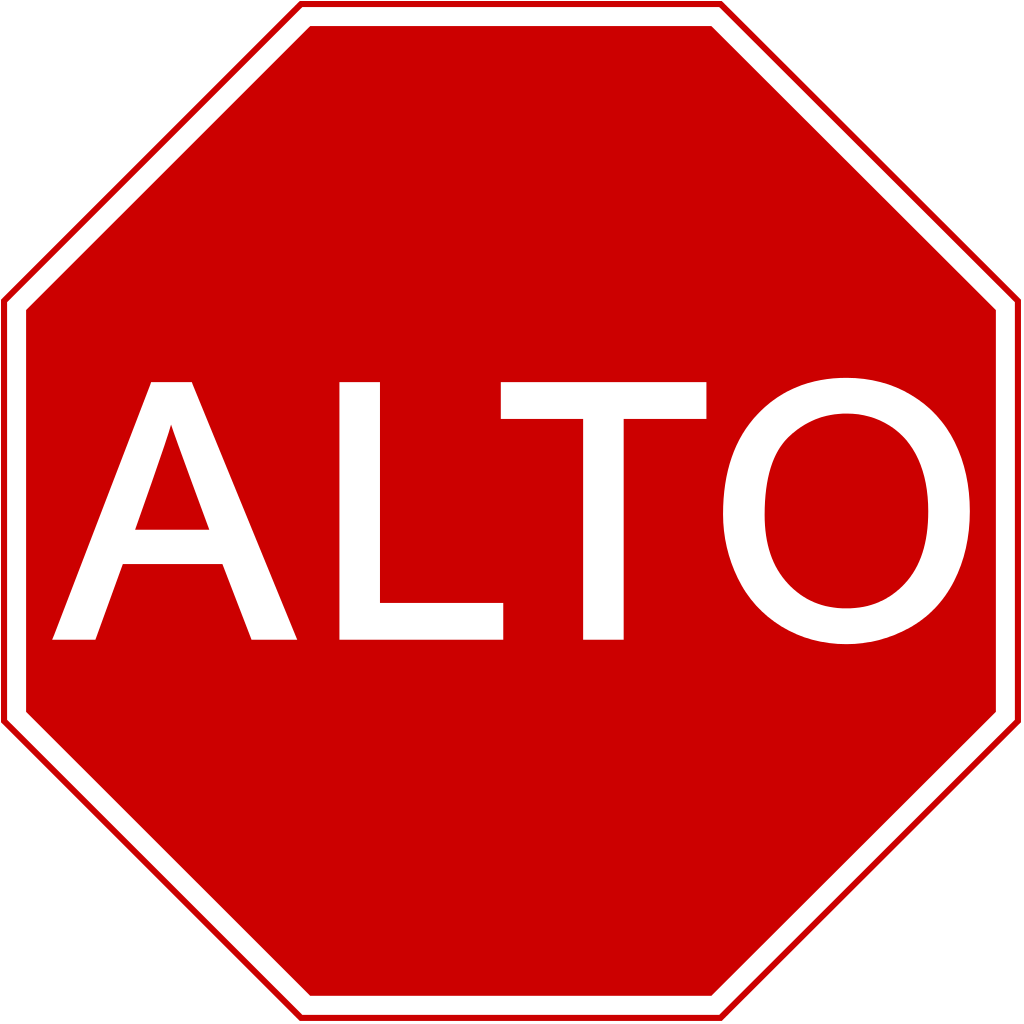


Second, I am wondering about the meaning of those ones ??
I also found all three in official Uruguayan drivers license brochure.
Signs could mean “ NO PARKING “
“ Strong NO PARKING “
“ Very very strong NO PARKING „.
or
Parking is permitted, because „no parking“ is crossed out ?!


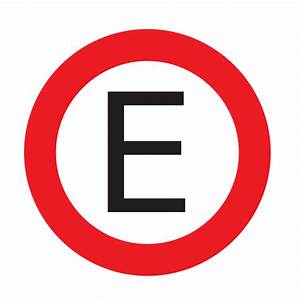
Third, the only one I directly could understand, very clear, is this following one :
Don’t use snow chains ! or
Snow chains in Uruguay forbidden ! or may be
„USE SNOW CHAINS“ ??? not crossed out, so may be (for Uruguayans) aloud !?
Just for insiders, there is never ever snow in Uruguay,
but may be they look into the future – climate change can bring up some !?
Found in official Uruguayan drivers license brochure.
No wonder that most Uruguayan drivers have problems,
which we will never understand !!
I strongly believe, that most of them don’t know how an indicator works and how a driver must switch to get a left or right light flashing.
That’s why most drivers never use their indicators, or they use right light and drive left or the other way round.
If they get nervous in traffic or they are lost somehow, they switch on the ALARM lights. That means all of us other drivers: „I will do something in a minute, watch me – YOU have to be careful now“ !
Some will never change.
These people may think they are still in the 1930’s when in Uruguay left hand driving was usual, like in Australia or India. Or they might think they can drive as they like.
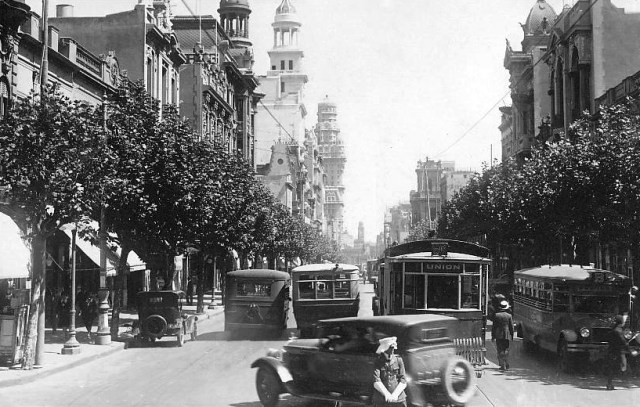 The picture shows Avenida 18.de Julio, Montevideo in the 1930’s. From World Transport History.
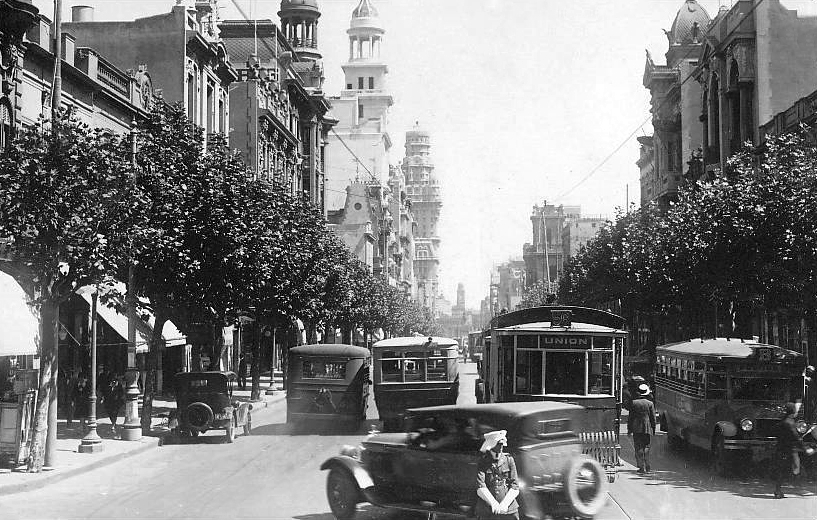
Did you know ? Until 2nd of September 1945, in Uruguay driving was on the left, as in the UK. The „General Traffic Ordinance“ states from 1918 until then, that „all vehicles have transit for the left hand side of the road“.
The change took effect at 4.00 am on a Sunday morning which dawned very sunny. There was established a decree that said, that until September 30 could not run a higher speed that to 30 kilometers per hour. One month whole Uruguay at speed 30 km/h. WOW !
This decree foresaw acclimate drivers and pedestrians to this novelty and thus prevent possible accidents. Contrary to expectations, that Sunday there was no unusual accidents.
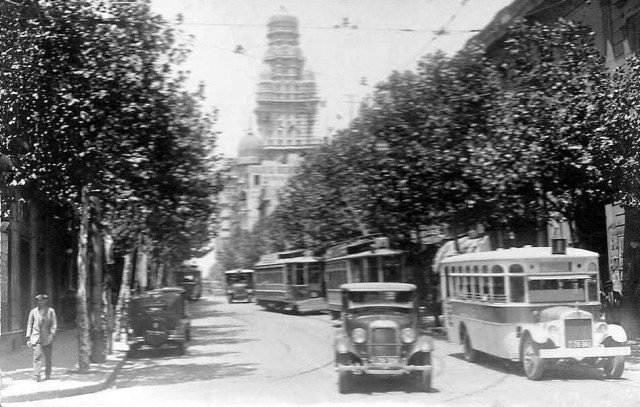 This picture shows Avenida Andes, Montevideo in the 1930’s. From World Transport History.
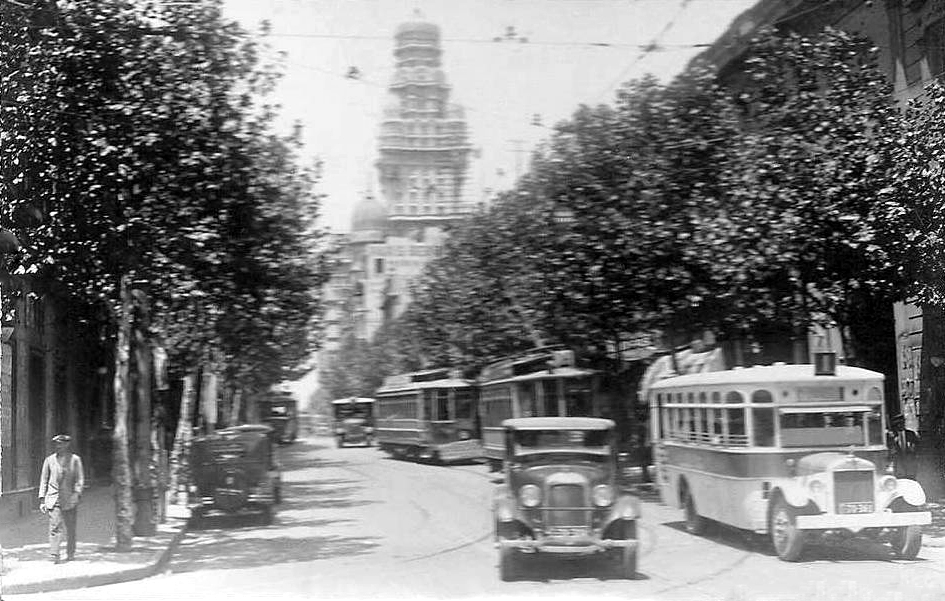
The authority’s were pleased with the success of prevention campaigns in the media and others measures which includes some drills to habituate Montevideo’s people. That day was classified as „No mayor problems“ and the news were published as novelty occupying whole covers in the capital’s newspapers.
Even after change of transit way, the cars still had the steering wheel on the right. It took years to change that. On the other hand, that’s the reason why we still see in Uruguay Oldtimers mostly with right hand steering.
Finally a page of an education brochure.
Road Education Uruguay.
Traffic signs are our guide on the streets and roads. They indicate distances between cities, curves, bridges and everything that the driver needs to know about the road.
Prevention Signs: Their purpose is to warn the user of the road of the existence of a danger and/or unforeseen situations of a permanent or temporary nature, indicating its nature.
Regulatory Signs: Its purpose is to indicate to the user of the road the limitations, prohibitions or restrictions on its use, and whose violation constitutes a lack. In the circular signs the distinctive colors are: rings and oblique lines in red, white background and black symbols
Information Signs: This type of vertical signals do not transmit orders or prevent irregularities or risk in public roads, unless they contain regulatory or preventive signals, therefore they have no legal consequences. They are designed to identify, guide and reference places, services or any other useful information for the traveler.
They are placed on the side of the road (vertical) in a similar way to preventive in rural areas or to the regulations in urban areas or elevated on the road through stoops. The position varies according to the conditions of the road and the type of vehicular traffic.
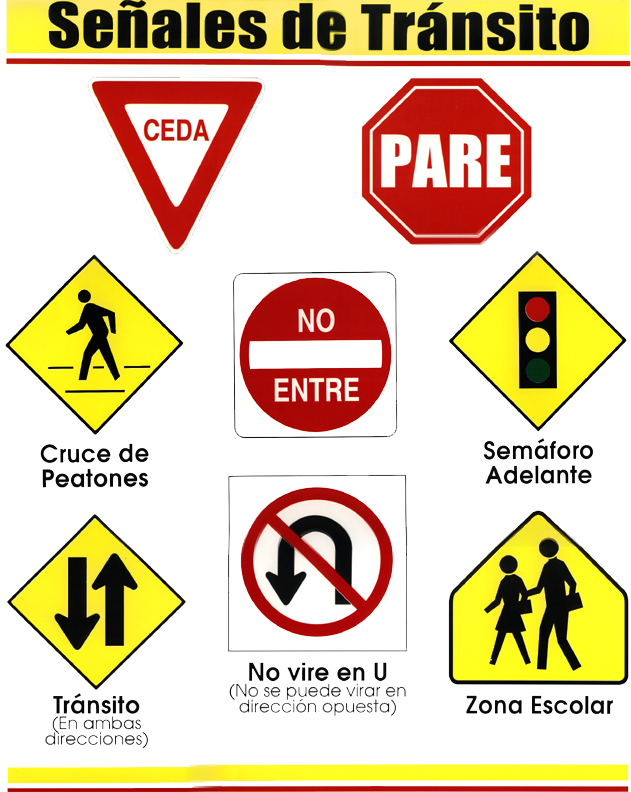 Text and pic from La Education Vial.
The text was just translated into English, nothing changed at all. Next to this text was shown one picture as shown above. Every reader will wonder what is what and …….??
Ja, ja education is a special matter. Hope you enjoyed this little excurse from Uruguay.
????????????????????????????????????????????????????????????????????????
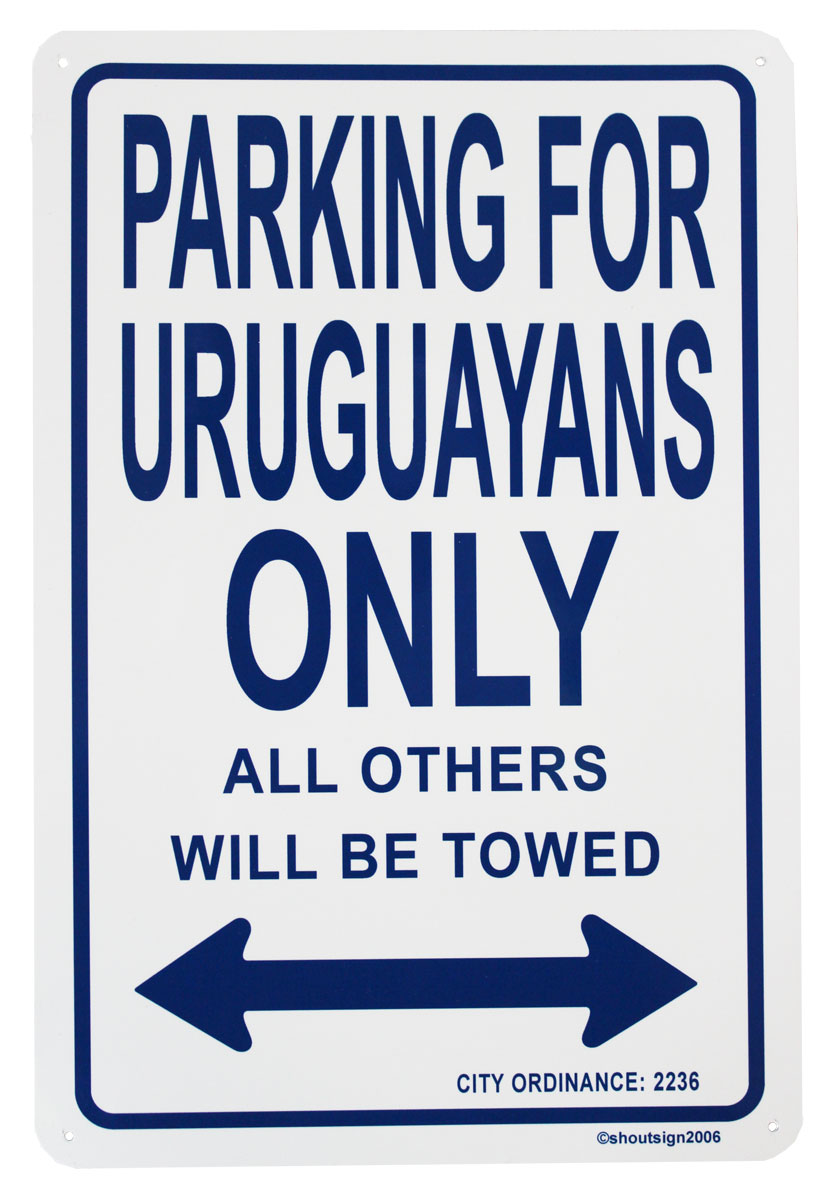
The blue „Parking“ sign at the begin of this post is a joke – may be !!??!!
????????????????????????????????????????????????????????????????????????

