
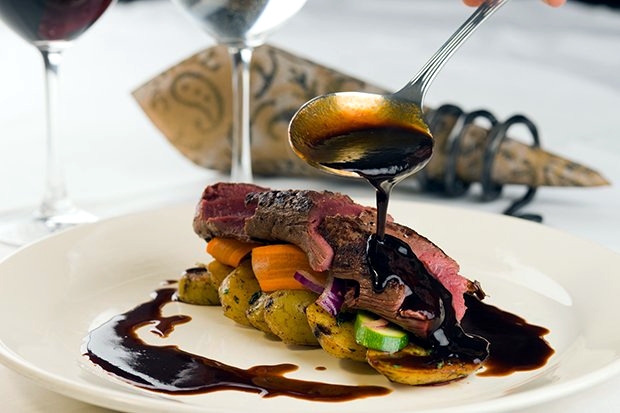
From the time of Napoleon comes this recipe for a great meal. Chateaubriand is not a cut of beef, like many think, but the name for a recipe of a grilled beef tenderloin.
Chateaubriand is a perfect roast for the French Christmas table. That’s what we did a week ago. I love cooking, writing about, love research and history, but not so much photographing my cooking every 2 minutes. Sorry, but food photographing is not my hobby. Therefore I use many pictures of the internet, many are precise as it looks in my kitchen. Of course, if I know the copyright, I am glad to post it here.
History.
The Larousse Gastronomique indicates that the dish Chateaubriand was created by the namesake’s personal chef, Montmireil, for the Vicomte François-Rene de Chateaubriand. At that time (1822) Ambassador of France in England. Montmireil also created in London a pudding called „Diplomate“.
 History of the Chateaubriand. Pic. Bibliotheque Larousse.
Chateaubriand sauce.
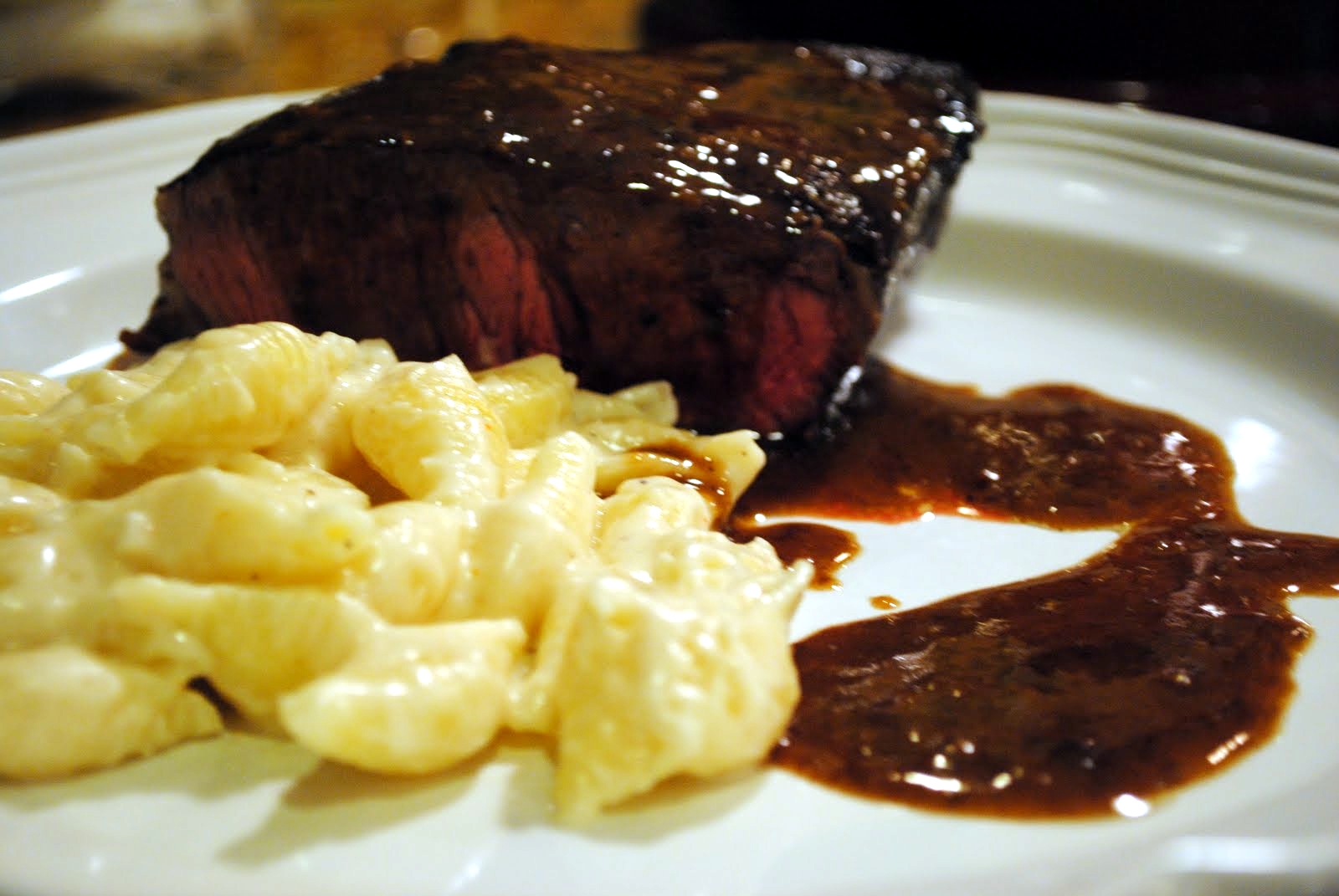
Chateaubriand sauce is a culinary sauce that is typically served with red meat. It is also sometimes referred to as „crapaudine sauce“. It is prepared in a series of reductions, and typically accompanies Chateaubriand steak. Other dishes, such as tournedos villaret and villemer tournedos, also incorporate the sauce in their preparation. See 1st picture above.
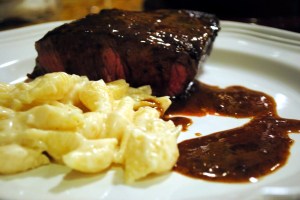 The classic with wine reduction sauce. Or Crapaudine.
François-Rene, Vicomte de Chateaubriand (4 September 1768 – 4 July 1848), was a French writer, politician, diplomat and historian who founded Romanticism in French literature. Descended from an old aristocratic family from Brittany.
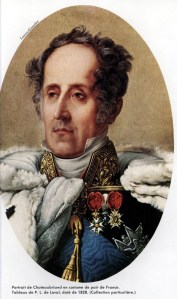 Viscount Chateaubriand.
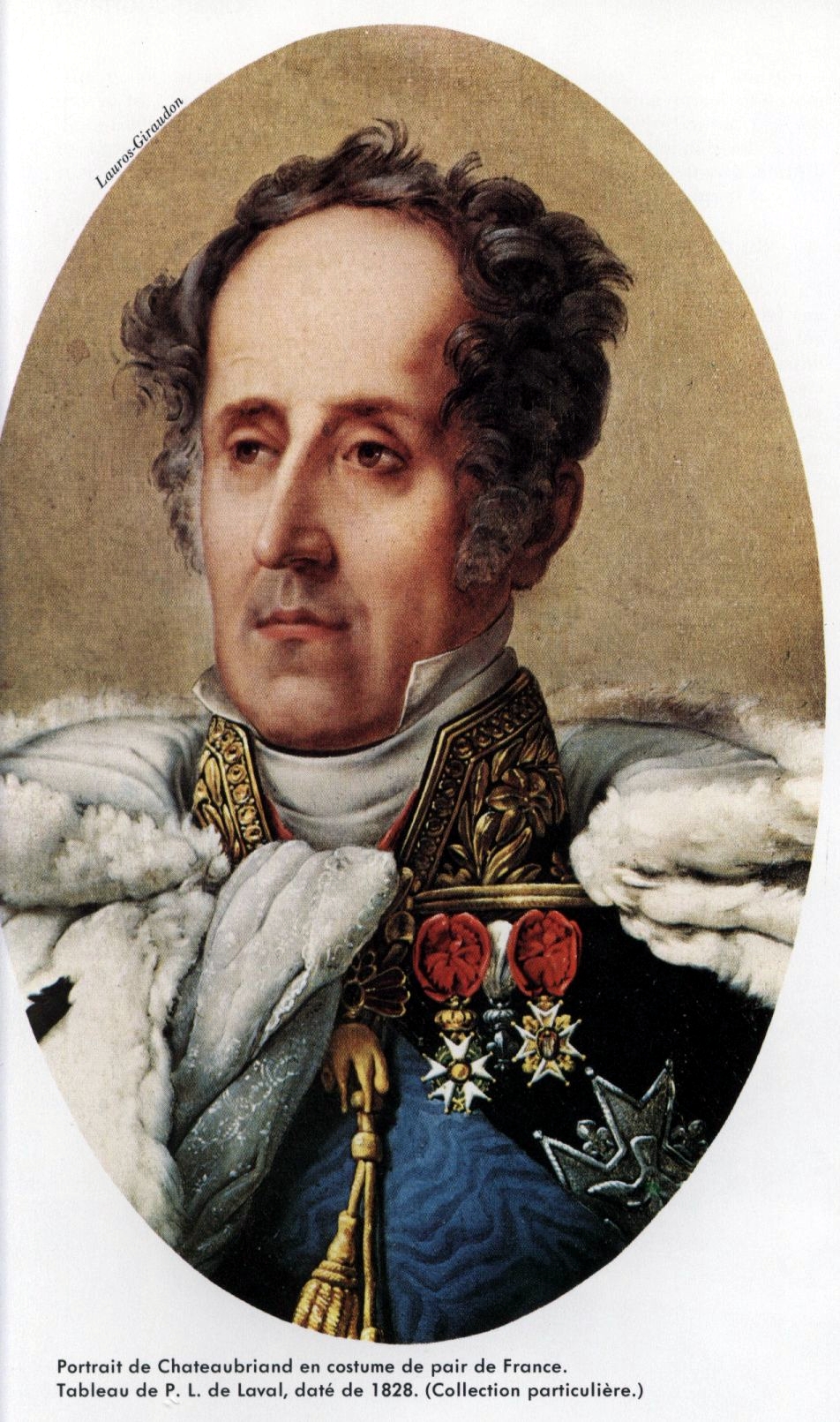
Born in Saint-Malo, the last of ten children, Chateaubriand grew up at his family’s castle (the chateau de Combourg) in Combourg, Brittany. His father, Rene de Chateaubriand (1718 – 1786), was a former sea captain, turned ship owner and slave trader.
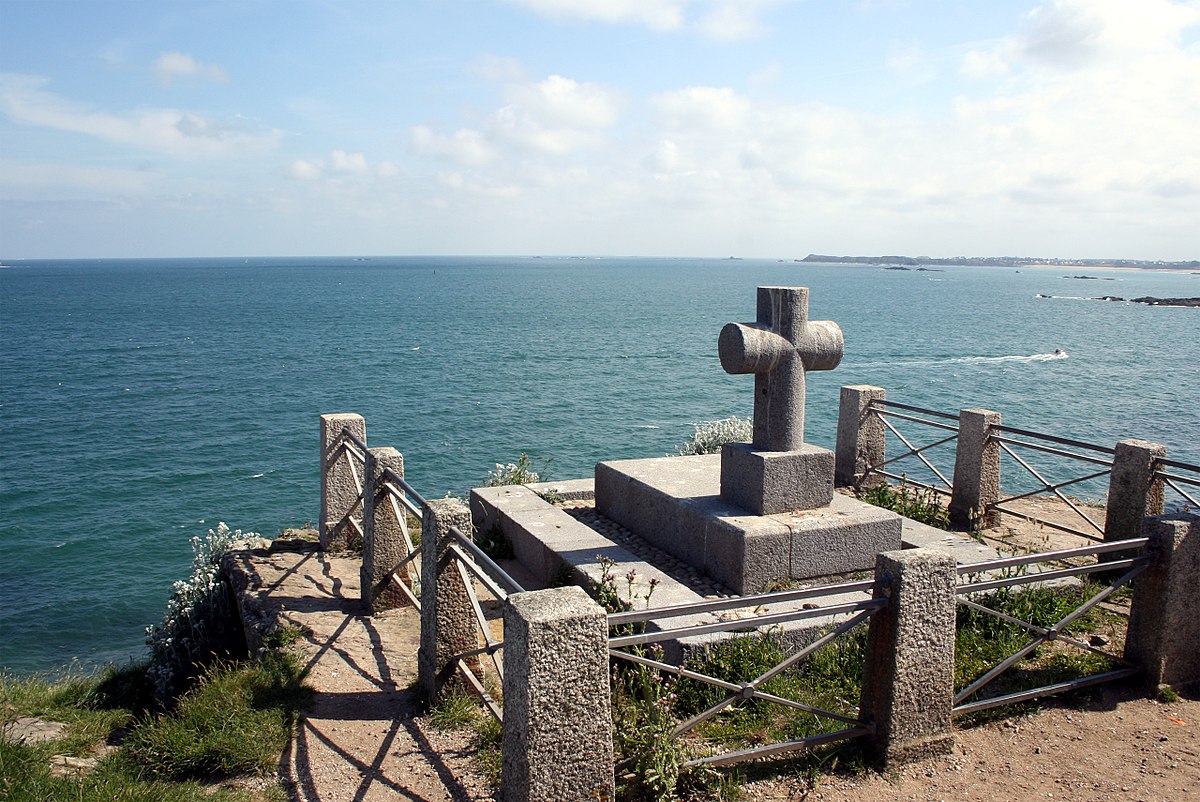
Chateaubriand died in Paris during the Revolution of 1848 and was buried, as he had requested, on the tidal island Grand Be near Saint-Malo, accessible only when the tide is out.
 Tomb of Chateaubriand near Saint-Malo. Wikipedia.
„Chateaubriand“ is a culinary term, which, like „Delmonico steak“, manages to convey meaning while remaining all but undefinable.
In fact, when defined broadly enough, the words Chateaubriand and Delmonico steak could conceivably be used to refer to the same piece of meat. Indeed, some wonder whether either term refers to a specific cut at all, or rather a particular method of preparing it.
Chateaubriand always refers to beef.
Still, even within the lavish tradition of culinary lore, an aura of particular extravagance surrounds Chateaubriand, named for a 19th century French aristocrat named François-Rene de Chateaubriand, whose chef is said to have invented it.
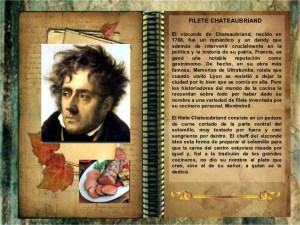 Even well known Spanish. Gastronoma histrica.
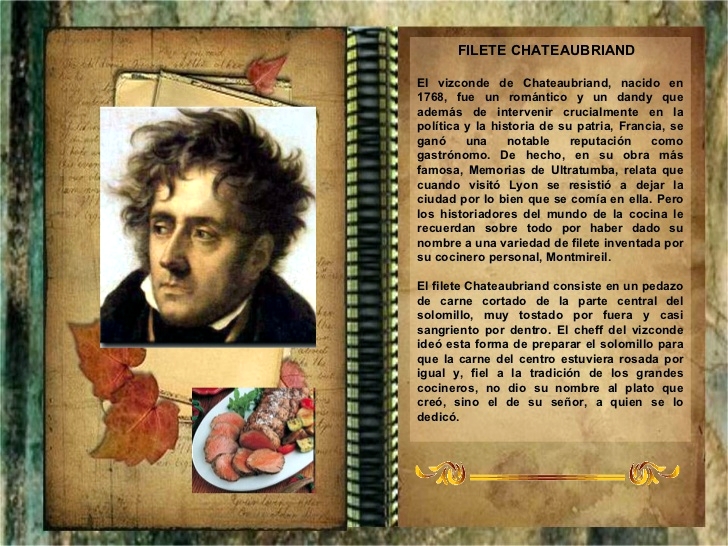
According to legend, Chateaubriand was a large, boneless cut of beef prepared by layering it within two or more lesser steaks, tying it into a bundle, then roasting or grilling it. When the outer steaks were charred, the roast was done, and the burnt outer steaks were then discarded. This technique supposedly ensured that the Chateaubriand was cooked evenly throughout.
It’s a distinctly more extravagant variation on the technique of barding, where a piece of meat is wrapped in fat before roasting it. Today’s wrapping is mostly prosciutto.
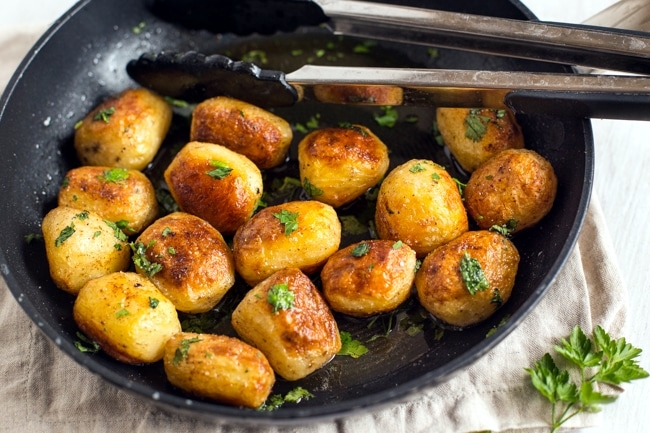
As if this were not decadent enough, Chateaubriand was famously served with chateau potatoes, a dish prepared by trimming individual potatoes down to the size of olives, then sauteing them in butter.
 Buttered chateau potatoes.
Beyond the fact that Chateaubriand today is no longer prepared by literally wrapping it in steak, there is little agreement about whether the word refers to a roast or a steak. Nevertheless, the interpretations fall into two main categories, depending on whether you’re at a butcher shop or a restaurant.
1. Chateaubriand is a Roast.
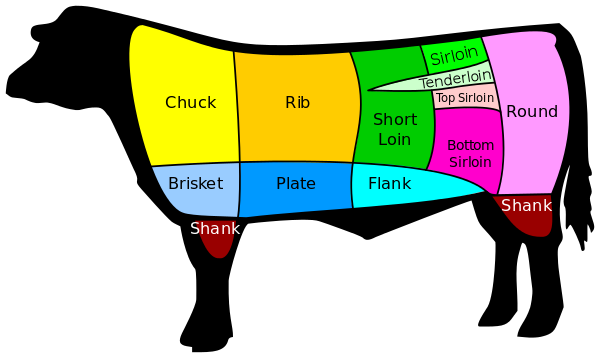
According to this school of thought, Chateaubriand is a roast made from the center section of the beef tenderloin and served with a wine demi-glace sauce.
This Chateaubriand preparation uses an approximately four-inch section of beef tenderloin, which is the most tender cut of beef. Because it’s so thick, the Chateaubriand must be roasted carefully to ensure it is properly cooked.
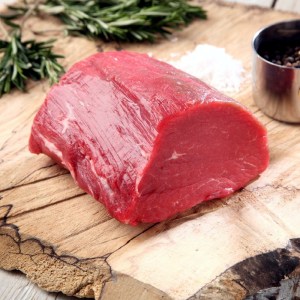
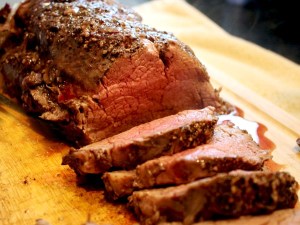 The roast philosophy.
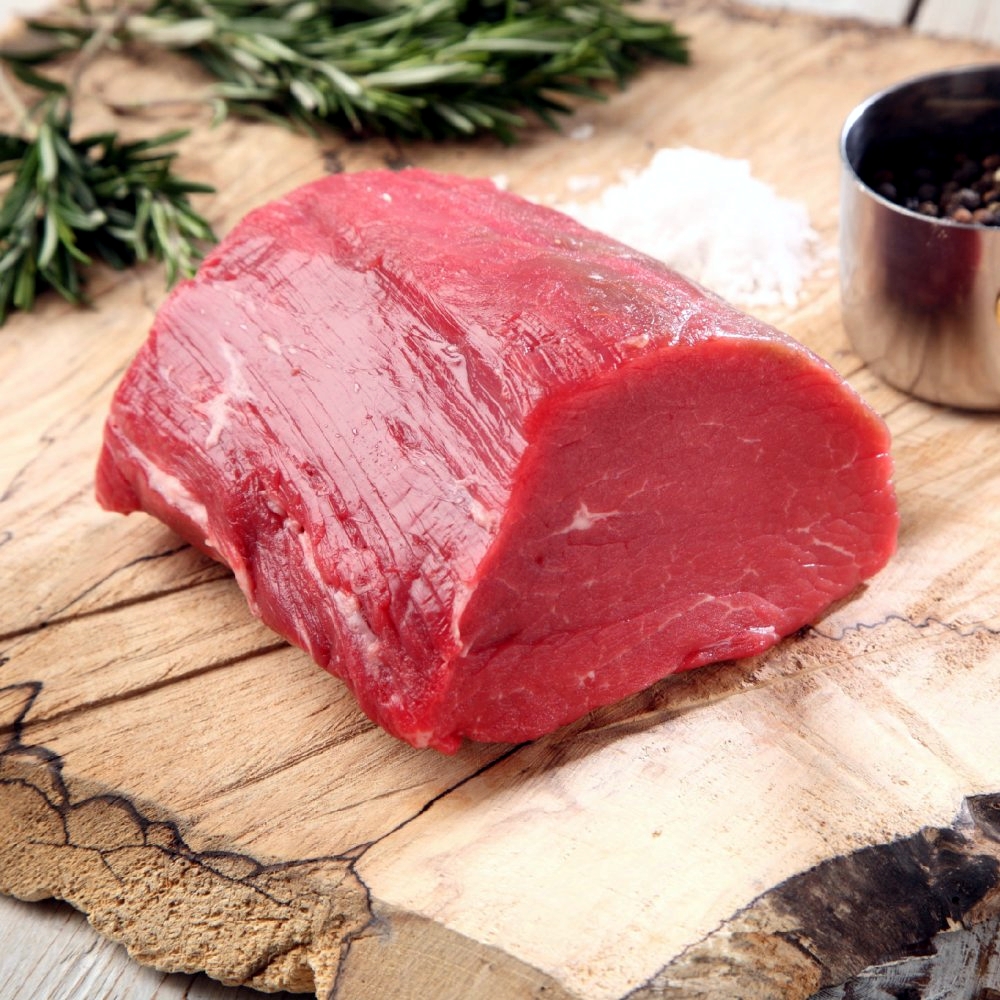
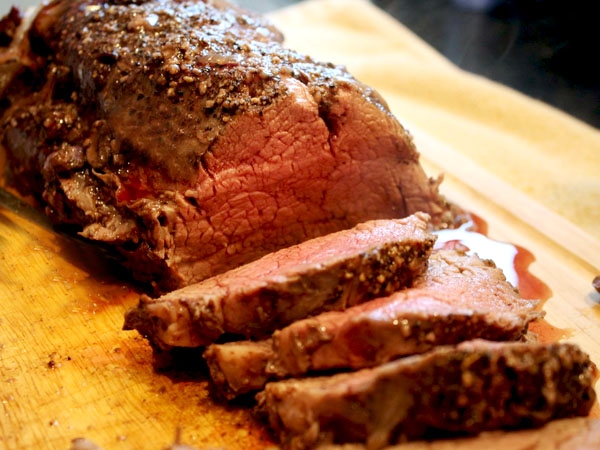
Supporting this definition is the fact that butcher shops will often market a center cut beef tenderloin roast as Chateaubriand.
Beware, however, a roast taken from the butt end of the tenderloin which is described as a Chateaubriand. Evidence of this deception is that almost invariably, this supposed Chateaubriand will be tied together with butcher’s twine, a step which would be wholly unnecessary for a true center-cut tenderloin roast.
2. Chateaubriand is a Steak.
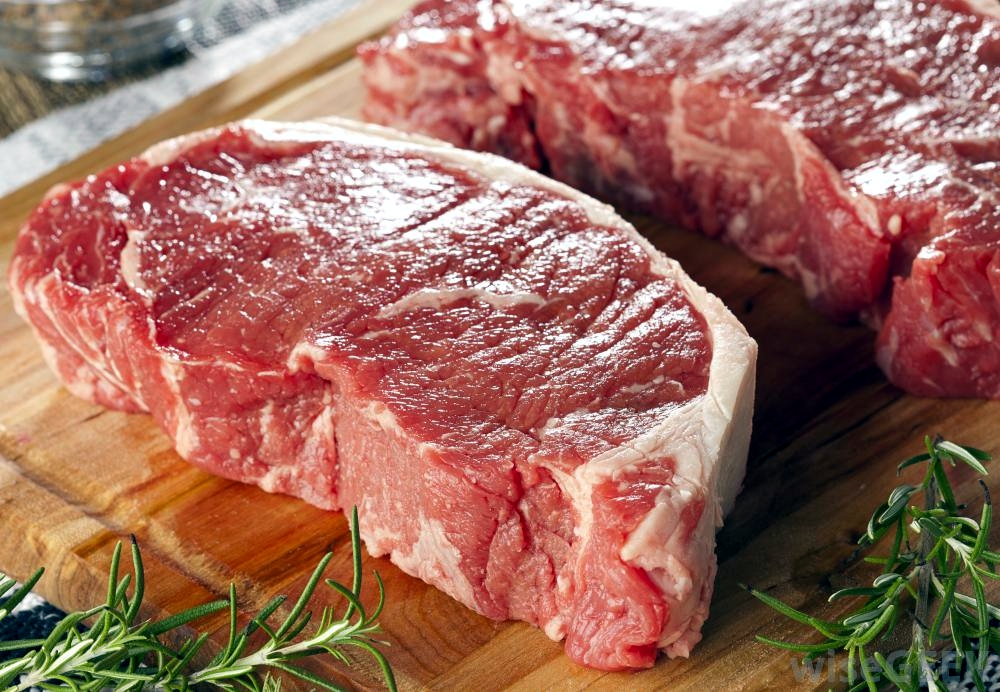
In this worldview, Chateaubriand is a thick steak taken from the beef short loin, either a porterhouse or a T-bone.
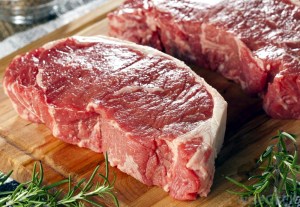
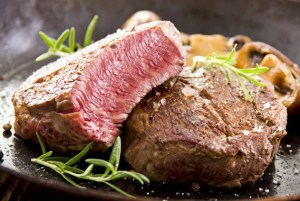 The Steak philosophy.
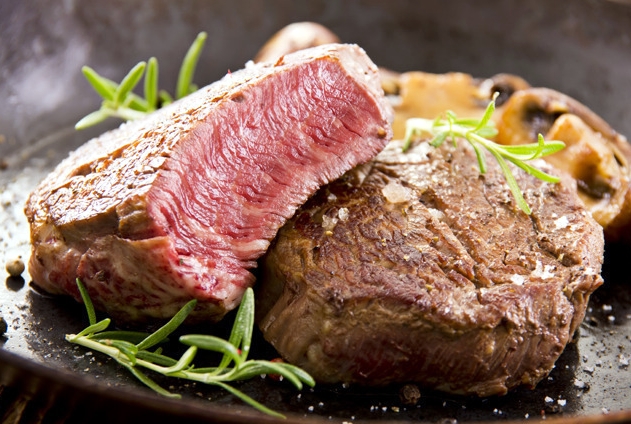
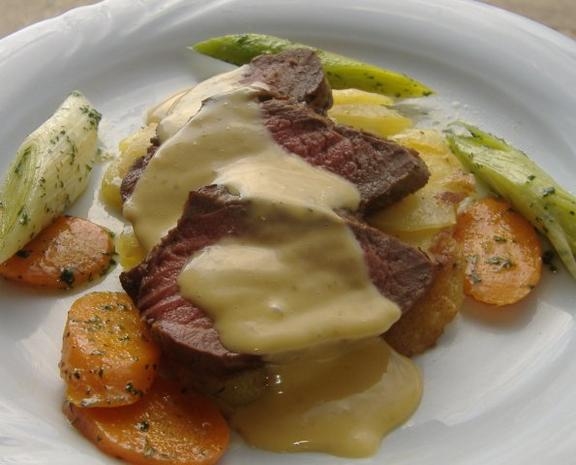
This version of Chateaubriand is generally grilled while basting it generously in butter (classical sources show that it was sometimes sauteed in butter). Traditionally served with something known as chateau sauce (essentially a variant on the Bercy sauce, but with the addition of lemon juice, tarragon and possibly mushrooms), modern Chateaubriand is usually served with Bearnaise sauce.
 The classic with sauce Bearnaise.
Recipes.
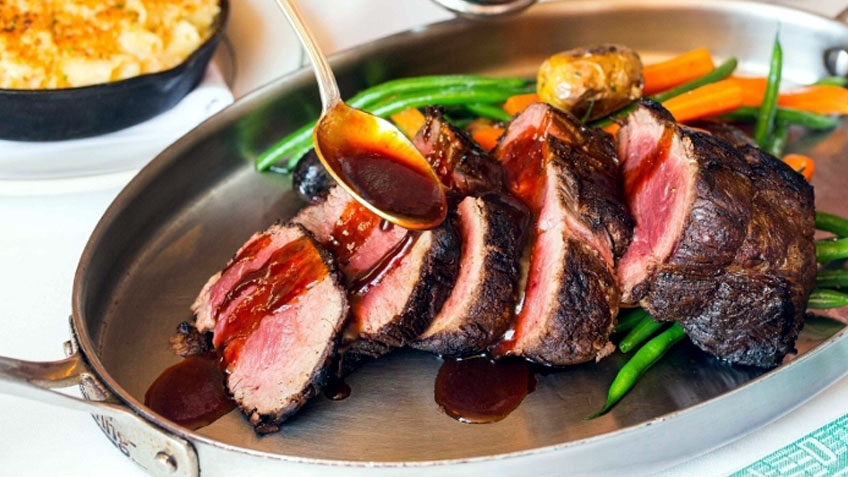
When ordering in a French restaurant, the Chateaubriand is usually for a table of two and comes served with a classic wine sauce.
This recipe is the traditional version of the restaurant favorite and comes seasoned very simply, roasted to perfection, and then sliced on the diagonal.
Be sure to make the quick shallot and wine sauce to accompany the meat and serve with chateau potatoes for authenticity. To ring the changes, you can serve Truffle Fries instead.
 Delicious restaurant serving for two.
Recipe 1 – in the oven.
Ingredients.
800 gram (c. 25 oz) beef tenderloin
2 tablespoons butter
2 tablespoons olive oil
salt and pepper, to season
1 shallot, finely chopped
1/2 cup strong (not sweet) red wine, like Tannat (UY) or Shiraz
1 tablespoon butter, softened
1 tablespoon fresh tarragon (or 2 teaspoons dried)
 A New Years Party highlight at Millennium (2000) in Australia. What a meal, Chateaubriand made from a whole tenderloin, 2.780 gram (about 5 1/2 pound). No seasoning, just a bit for decoration, as you can see. It was a feast for 6 persons, served with 3 different sauces. The Crapaudine, the Bernaise and a variant of the Bercy (no fish stock). Side dishes were asparagus wrapped in prosciutto, butter grilled mushrooms, gnocchi, thyme infused potato cubes and garlic mashed potatoes. This main course was accompanied from a Penfolds Grange Shiraz. Sorry, can’t show you anymore the happy faces !
How to do.
Preheat the oven to 190 C – 375 F.
Melt the butter and olive oil together in a large skillet set over medium-high heat until the mixture turns a bit cloudy and bubbly.
Place the meat in the pan and do not move it at all for at least 3 minutes. Using tongs, carefully turn the tenderloin on its side and brown it for 3 minutes. Repeat the same browning process on all exposed surfaces of the meat.
Place the tenderloin on a rack in a roasting pan in the oven (180 C or 350 F). Roast the beef 15 minutes for medium-rare, 20 minutes for medium, and 23 minutes for medium-well. These times depend on Thickness of the beef. Best would be to use a thermometer and roast the meat until the inner temperature reaches 60 C or 130 F.
Transfer the Chateaubriand to a warmed serving platter, lightly tent it with a single layer of foil, and allow it to rest, untouched, for at least 10 minutes.
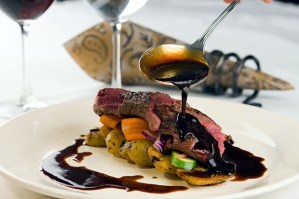 This is how demi-glace wine sauce should look like.
Demi-Glace Wine Sauce.
While the tenderloin is resting, make the wine sauce. Saute the chopped shallots in the leftover pan juices in the skillet until softened and translucent.
Pour the wine into the skillet and bring the sauce to a boil, scraping up all the browned bits on the bottom of the pan.
Continue boiling the sauce until it reduces by half.
Add the demi-glace to the sauce and continue boiling the mixture until it becomes slightly thickened.
Remove the sauce from the heat and stir in the tarragon and softened butter.
Serve the Chateaubriand, sliced on the diagonal, with the wine sauce and chateau potatoes or truffle fries.
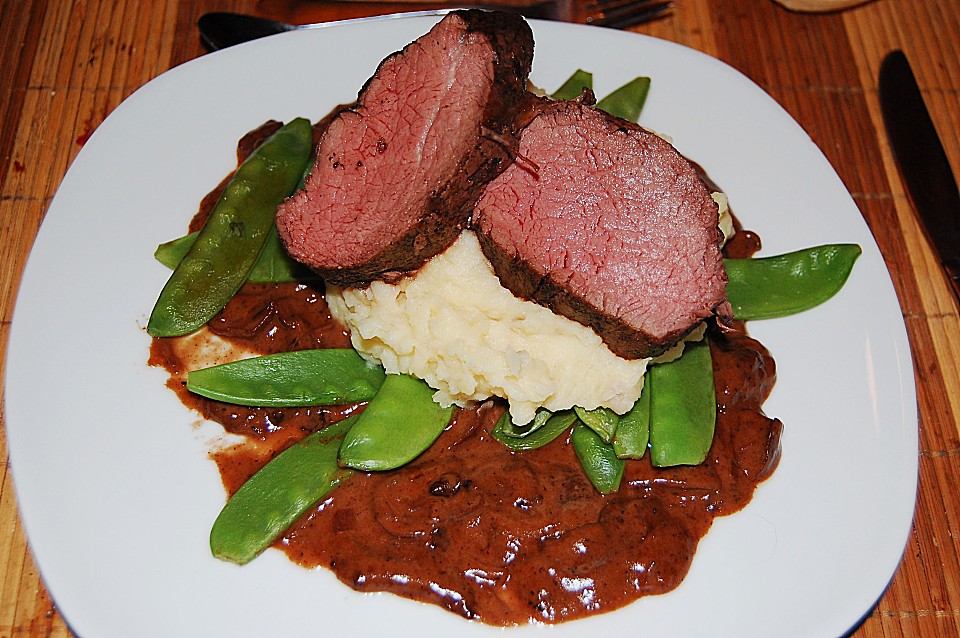
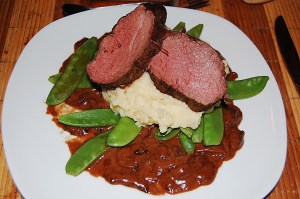 This is how we like a Chateaubriand. On garlic mash potatoes with baby peas and a delicious mushroom/cognac/red wine reduction.
Recipe 2 – on the grill.
Ingredients.
800 g beef tenderloin
1/2 cup plus 2 tablespoons butter
1/2 cup watercress
2 tablespoons minced parsley
1 tablespoon lemon juice
salt and black pepper for seasoning.
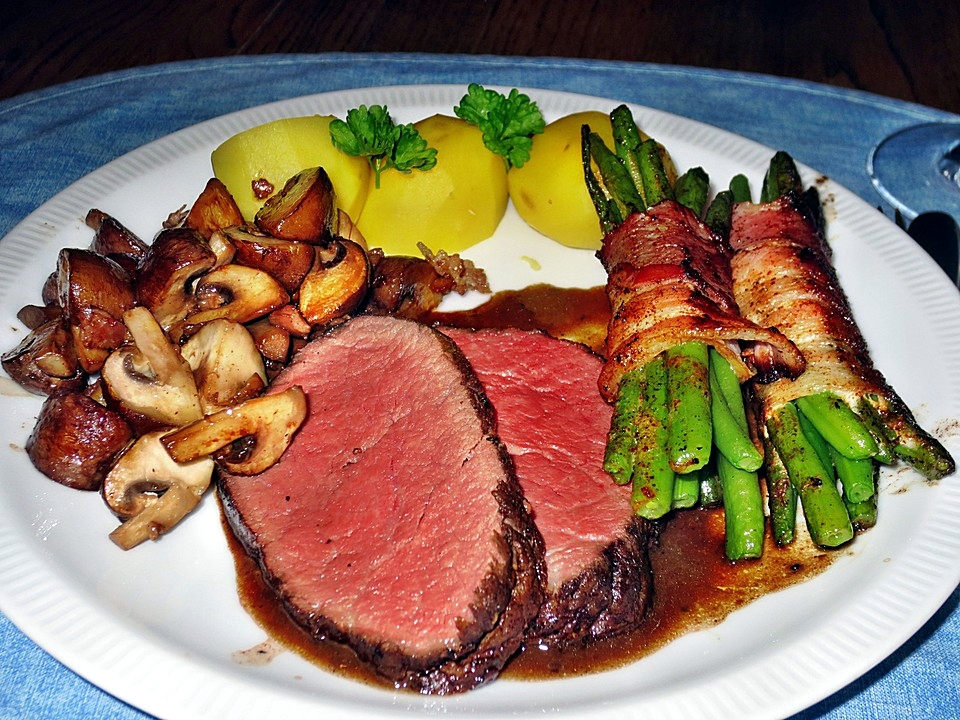
 Chateaubriand of the finest. Just the natural jus. But accomplished with some excellent side dishes. That’s professional cooking. Click on pics !!
How to do.
Trim beef tenderloin of unnecessary fat. The tenderloin should be about 1 inch thick, so if it’s too thick, pound to flatten. For grilling on the BBQ a bit more on the steak side.
Melt 2 tablespoons of butter and coat over the surface of the meat.
Meanwhile, melt remaining 1/2 cup of butter in a saucepan. Add parsley, lemon juice and season with salt and pepper. Pour into a small container and refrigerate.
Place the tenderloin on hot grill and sear on all four sides for about 3 minutes. Reduce heat and continue grilling for 5 to 10 minutes, or until it reaches the desired doneness. Remove from grill and slice into 1/2 inch thick slices. Serve garnished with watercress and butter mixture (its called maitre d’hotel butter).
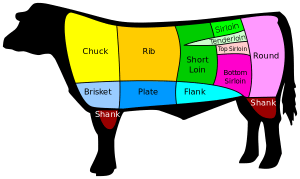 See Tenderloin or Brisket.
Tips.
Note: Sirloin butt roast and pork tenderloin are a great substitute to beef tenderloin.
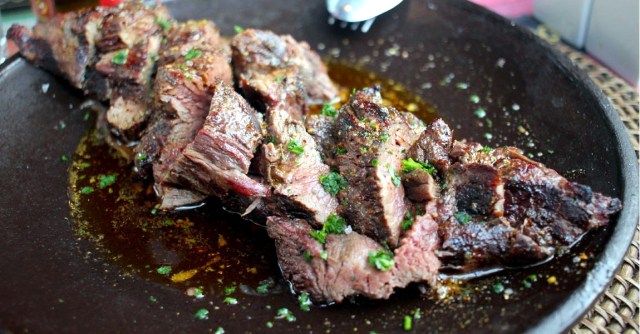
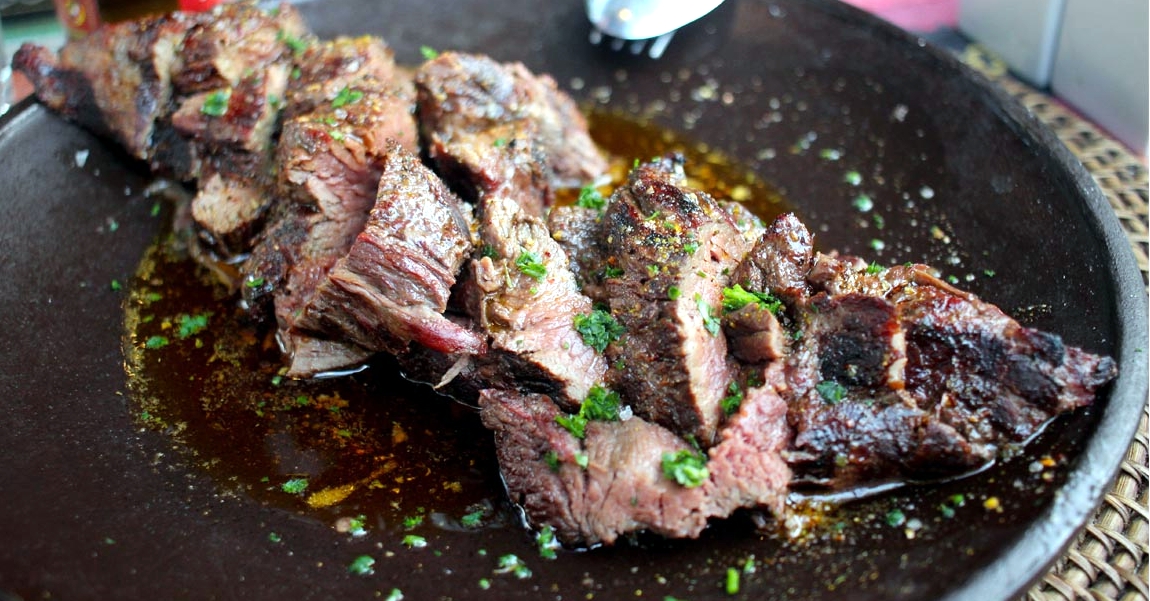
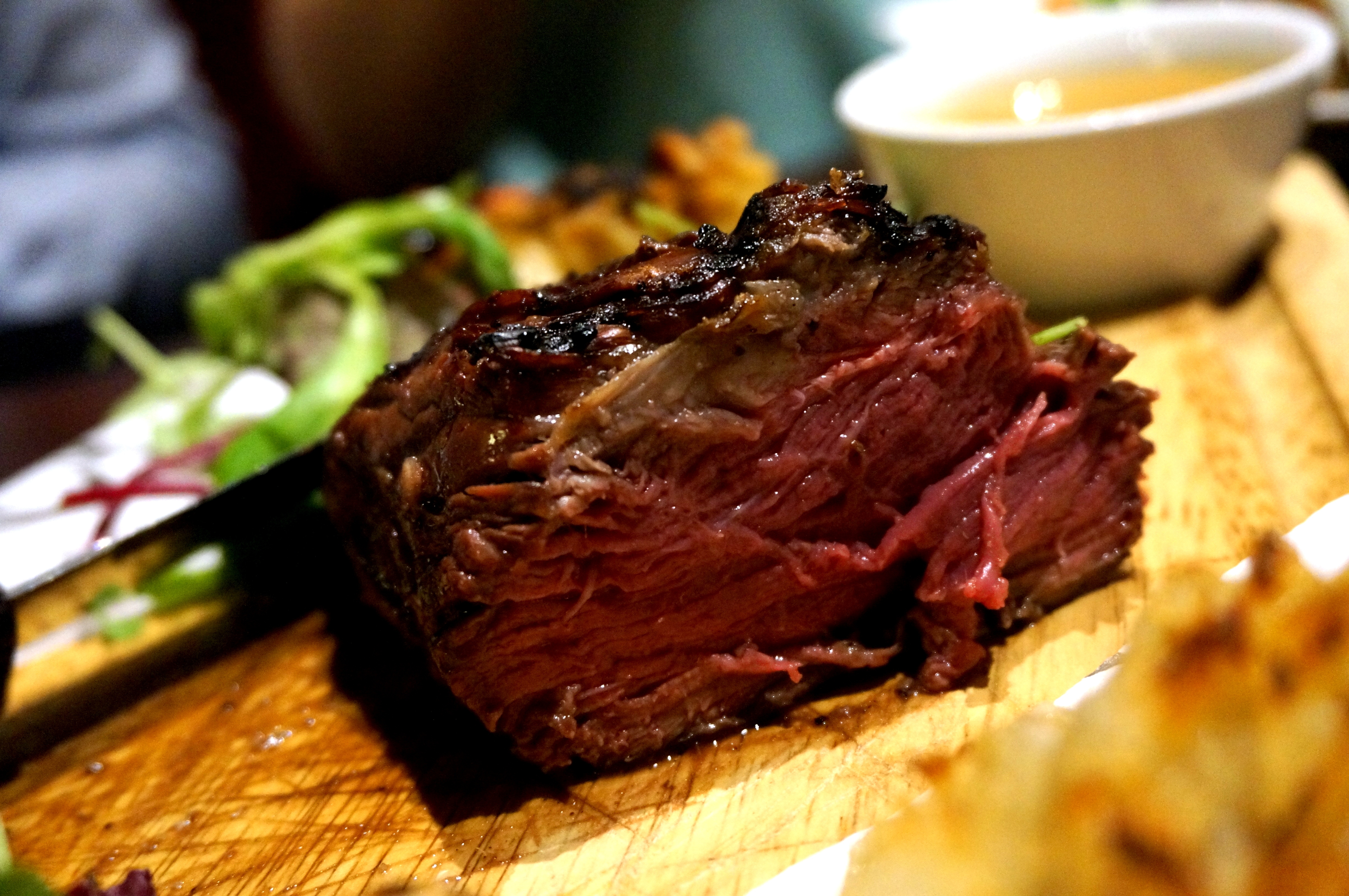
 Chateaubriand, made from the Brisket with very slow cooking and then grilling just before serving. Another delicious variant.
Further Information.
The beef tenderloin is the muscle group that gives us filet Mignon, tenderloin tips, and Chateaubriand. After it is trimmed and carved there can be 2 pounds or more of great kebabs, stroganoff, boeuf bourguignon, stir fry, stew, or grinding for burgers.
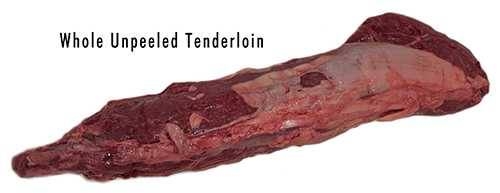
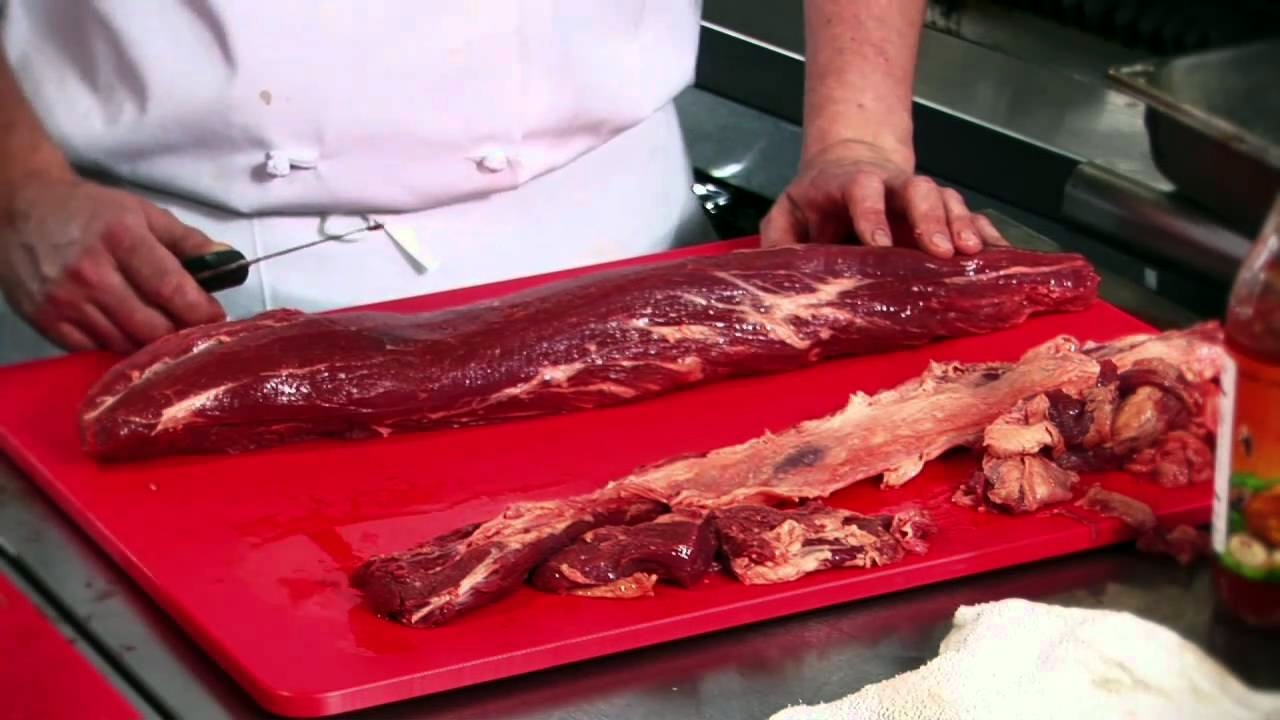
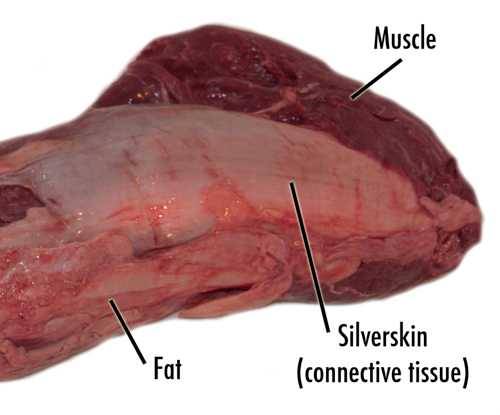
Trim. The fat is really easy to remove. To remove the silver-skin, slip a sharp pointy knife between the silver-skin and the muscle and slide it along with the blade angled upward slightly along the underside of the silver-skin. Don’t try to peel it with your hands or a paper towel like you would with pork ribs. The meat is so tender you will damage it. When you are done, you have what is called a „Tenderloin PSMO“ (Peeled, Side Muscle On), butcher pronounced „pismo“.
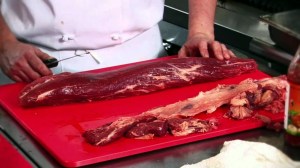 „PISMO“.
Many chefs fold the ends in and then tie them in place so you have a long tube of fairly even thickness for roasting. Its nothing else but money making style. I am not fond of this procedure because the exterior of the meat can be contaminated in the slaughterhouse. That is not a problem if it is browned during cooking, but if it is folded in on itself, it will not get hot enough to be pasteurized. The risk is low, but it is a risk.
So I prefer to lop off the thin tapered tip. When a restaurant does this, you will often see „tenderloin tips“ on the menu. I set the tapered tip and the chain aside and either grind it for burgers or sausage, chop it for spiedies (kebabs), or slice it for stir fry.
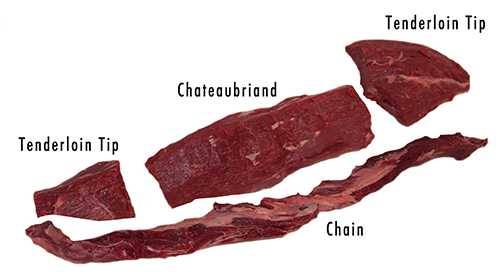
The whole center section is called the Chateaubriand. More often, the Chateaubriand is cut into filet Mignon steaks about 1 1/2 to 2 inch thick, making 6 to 8 ounce steaks. If you leave the nose on you might be able to get 2 or 3 steaks, each 10 ounces. Here’s the breakdown of a typical beef tenderloin:
Raw weight around 7 pounds
Chateaubriand or fillets Mignon 3 pounds
Stir fry from chain and tip 2 pounds
Fat and skin trimmed off 1 1/4 pound
Steak from nose 3/4 pounds.
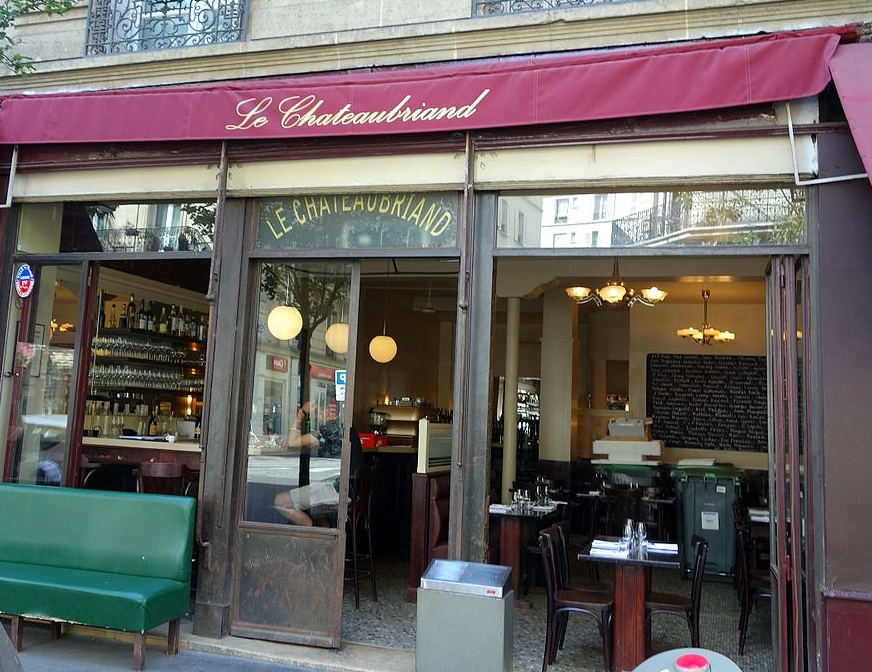
Le Chateaubriand is also a restaurant on Avenue Parmentier in Paris, France. Chosen once number 9 between the 50 best restaurants in the world. In case you are in Paris have a Chateaubriand there, you will never forget it ! Enjoy your Chateaubriand !

