
Many people like to travel, enjoy the country and its people and, of course, the regional foreign cuisine. Therefore it would be good to know what local specialties are or what the dishes mean one can find in the local menu. Especially Spanish food lovers know that Spain has much to offer on culinary side. By example the hundreds of tapas variety’s.
Likewise, such knowledge is certainly important and helpful at home in foreign restaurants. For this purpose and a little personal training, I have put together the most important terms in a small test. Today is Spain’s turn, the last one. France and Italy was posted already. First the question and further down a short explanation with a picture. As an example paella.
 Typical Paella Valenciana, locals like to eat right out of the pan. We do at home the same.
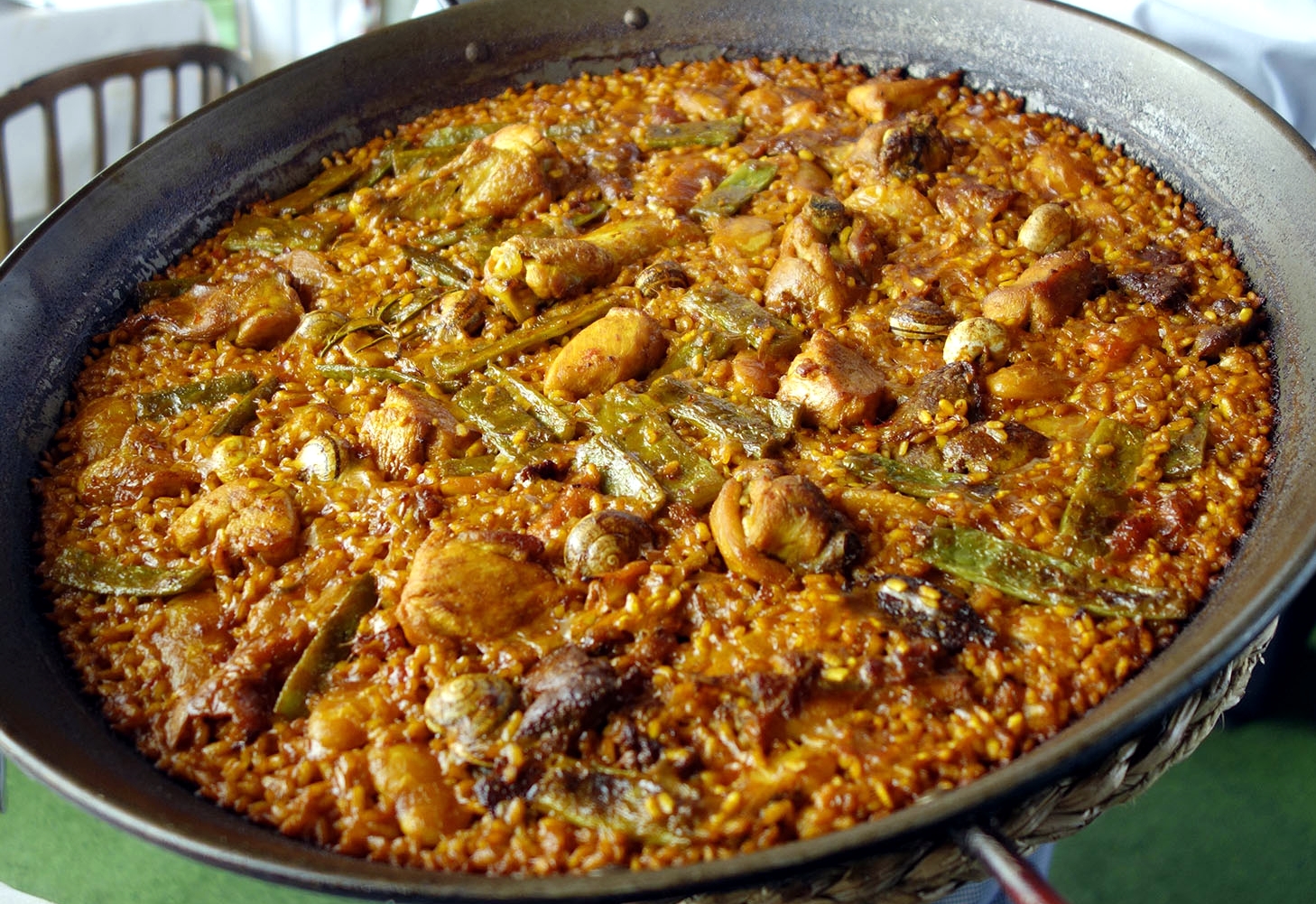
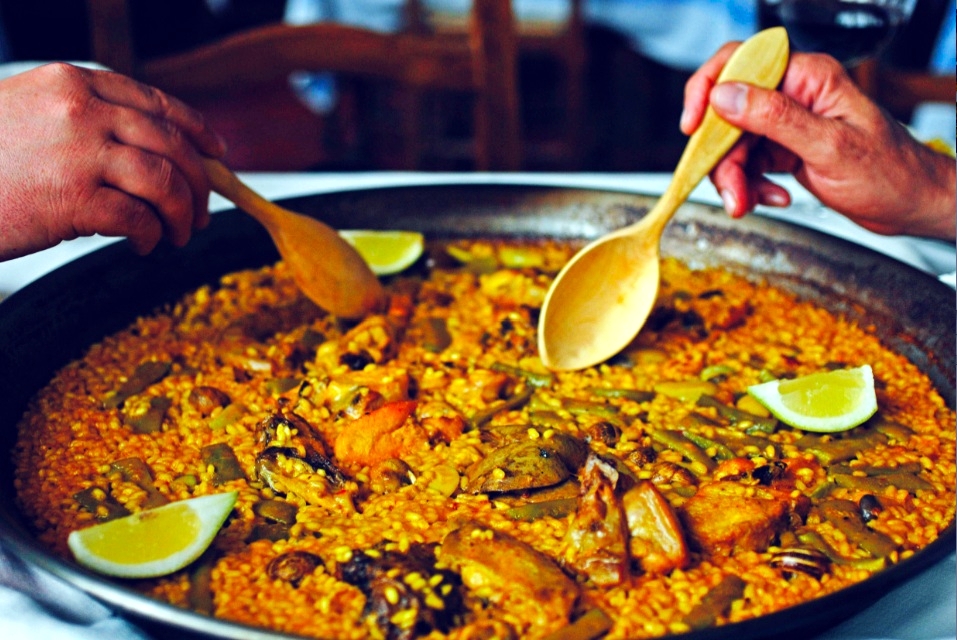
Paella is a Valencian word which derives from the old French word „paelle“ for pan, which in turn comes from the Latin word „patella“ for pan.
Paella is a Valencian rice dish that has ancient roots but its modern form originated in the mid-19th century in the area around Albufera lagoon on the east coast of Spain adjacent to the city of Valencia. Many non-Spaniards view paella as Spain’s national dish.
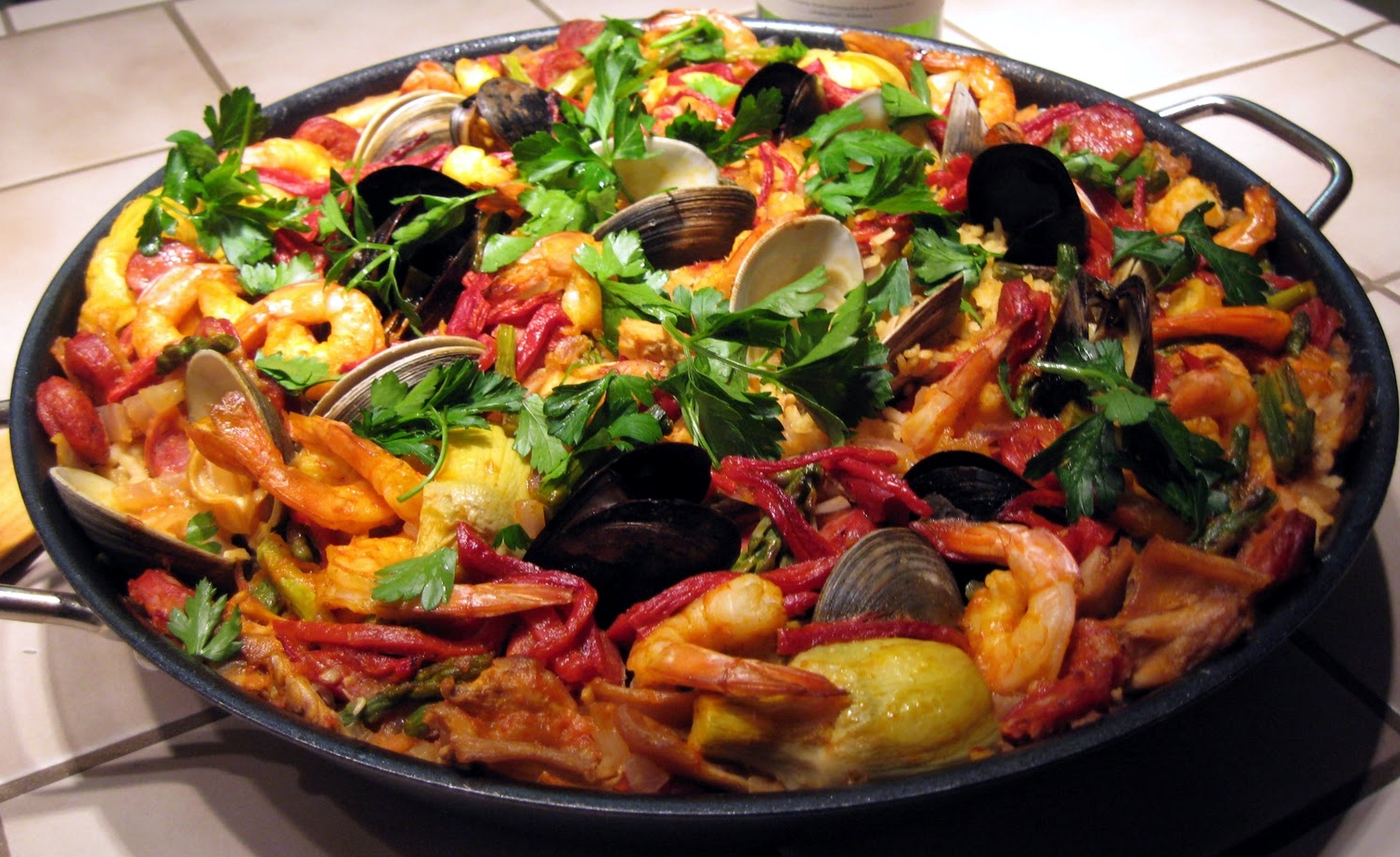
Types of paella include Valencian paella, vegetable paella (paella de verduras), seafood paella (paella de mariscos), and mixed paella (paella mixta), among many others.
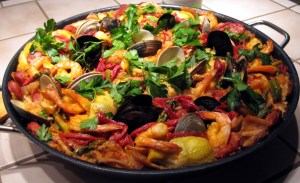 Mouthwatering seafood paella.
Valencian paella is believed to be the original recipe and consists of white rice (which must be round grain), green beans, meat (chicken and rabbit, sometimes duck), sometimes snails, and seasoning such as saffron and rosemary. Another very common but seasonal ingredient is artichokes.
Seafood paella replaces meat with seafood and omits beans and green vegetables. Mixed paella is a free-style combination of meat from land animals, seafood, vegetables, and sometimes beans. Most paella chefs use bomba rice due to it being less likely to overcook, but Valencians tend to use a slightly stickier (and thus more susceptible to overcooking) variety known as Senia. All types of paellas use olive oil.
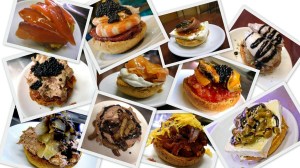 Tapas selection from one of the most renowned tapas bars in Barcelona – Quimet y Quimet. You should visit it if you have the chance. And click on pics to supersize for a better view.
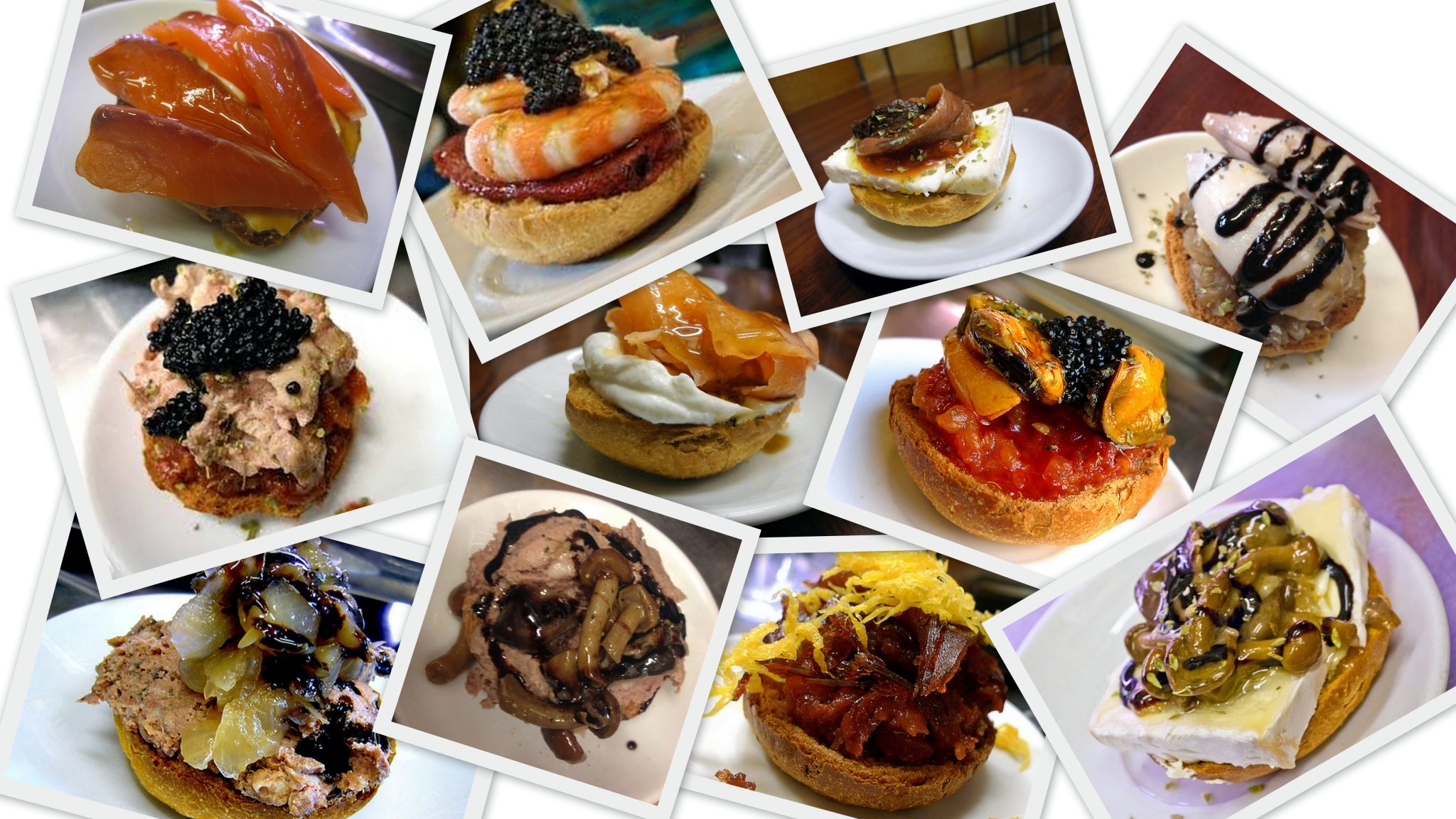
Do you understand the tapas menu ?
In this post I only will concentrate on tapas during the test. Meatballs, deep-fried anchovies, olives: you’ve probably tasted some of the Spanish appetizers. But do you also know all the names of the little delicacies? Take the test!
1. Let’s start with a light question. The Jamon Iberico is :
A dark, spicy meat pie.
A spicy pepper sausage.
An air-dried ham.
A raw bratwurst.
2. You also know what Manchego is.
A Spanish hard cheese made from sheep’s milk.
A Spanish cut cheese made from goat’s milk.
A Spanish soft cheese made from sheep’s or goat’s milk.
A Spanish cream cheese made from cow’s milk.
3. If you order Boquerones Fritos, what do you get?
Deep fried anchovies.
Fried squid rings.
Deep fried cod.
Deep fried mixed small fish.
4. And what awaits you with the term Albondigas?
Marinated olives.
Pickle skewers.
Meatballs in spicy tomato sauce.
Filled dumplings.
5. Spaniards also love potato dishes. Patatas Bravas, for example, can be found on almost every tapas card. What exactly is behind it?
Homemade potato chips.
Wrinkly sweet potato.
Spanish fries.
Fried potato cubes in hot sauce.
6. Potatoes are also common in the Tortilla. In addition, however, other vegetables can be accommodated. To what?
To a flatbread.
To make an omelet.
To a savory tart.
To a casserole.
7. Fish and seafood are common in Spain. If Gambas al Ajillo is offered on the menu, what can you expect?
Prawns in batter.
Garlic prawns.
Grilled shrimp.
Marinated shrimp.
8. Aceitunas Marinadas are also on almost every tapas table. What’s this?
Marinated goat cheese cubes.
Marinated olives.
Marinated tuna pieces.
Marinated artichokes.
9. Pimientos de Padron are not only popular all over Spain, they are now also with us.
Plums wrapped in bacon.
Pickled garlic.
Stuffed eggs.
Small, green and roasted paprika’s.
10. Ensalada or Ensaladilla Rusa means Russian salad, that much is clear. Behind it can only hide one thing, and that is:
A pasta salad.
A sausage salad.
A rice salad.
A potato salad.
11. Often you can also find Almejas a la Marinera on the tapas menu. What is this?
Clams in white wine sauce.
Marinated baby ink fish.
Snail soup.
Cooked mussels.
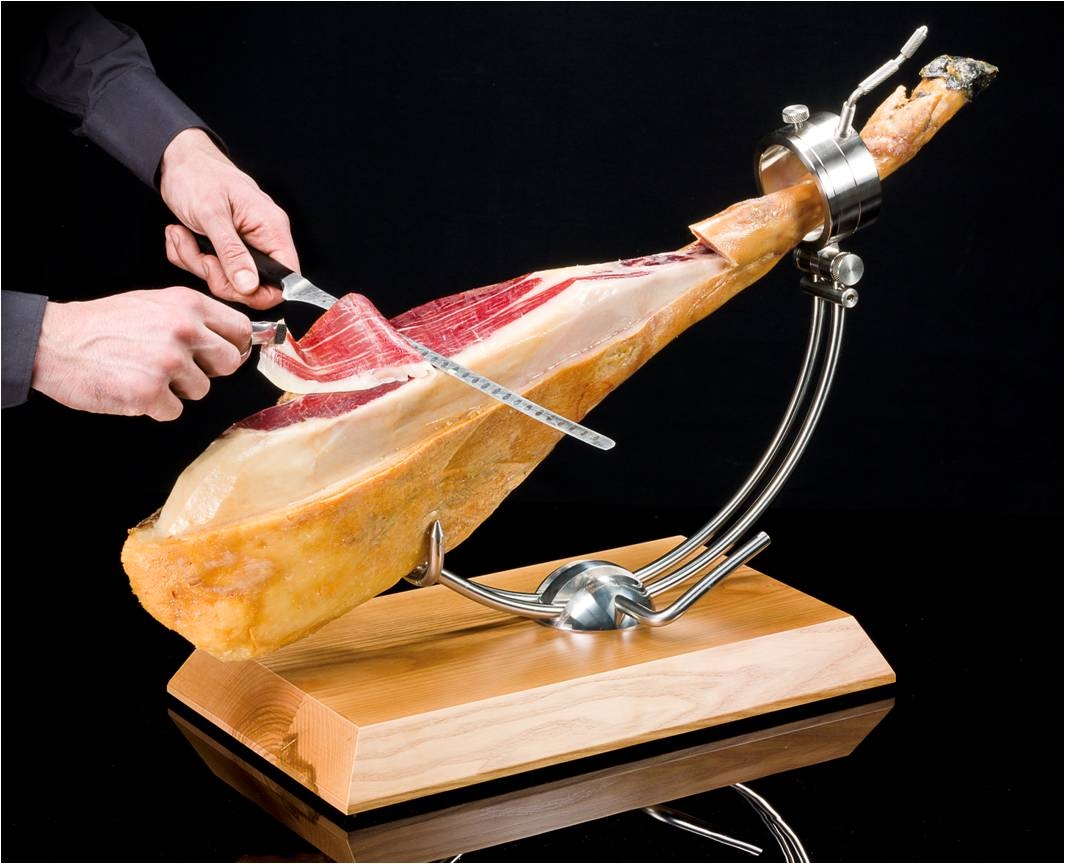
 Jamon Iberico.
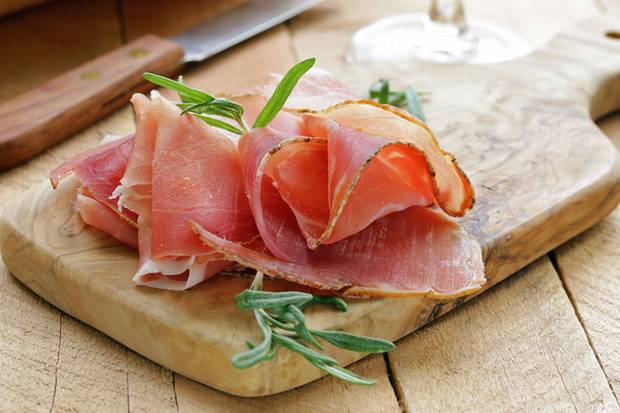
1. Jamon Iberico is an expensive ham made from a special breed of pig, Iberico pig. The ham is often served as tapa. The Iberico pig is usually darker than the domestic pig and is therefore also called black pig. The animals often have black claws, which is why the ham was also called Jamon de pata negra, which means as much as black pork ham. However, this is no longer allowed, because not all Iberico pigs are black or have black claws.
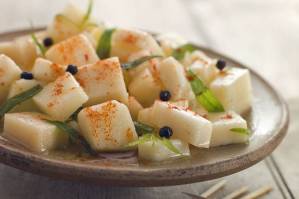 Manchego.
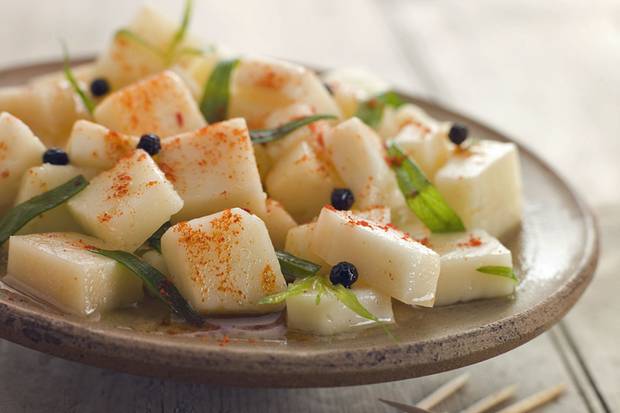
2. Manchego is a Spanish hard cheese made from sheep’s milk. He comes from the region of Castilla-La Mancha and is under the designation of origin D.O. Queso Manchego protected.
 Boquerones Fritos.
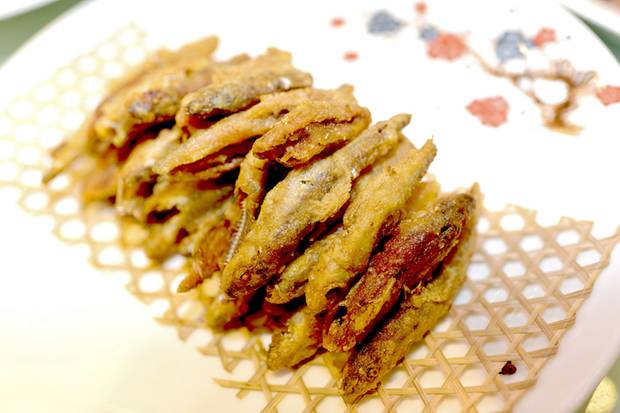
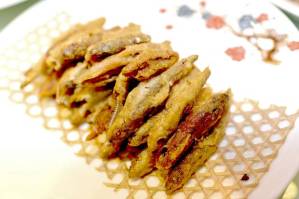
3. With a haps they are in the mouth: Boquerones Fritos are fried anchovies, one of the most popular tapas classics, easy to make and cheap. The small fish are gutted, turned into flour and fried and salted. In Spain, lemon is often enough.
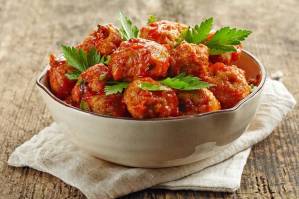 Albondingas.
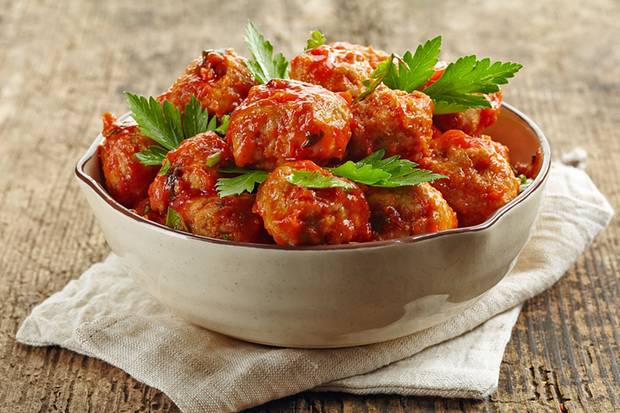
4. Albondigas are small meatballs in a spicy tomato sauce. There is no single recipe for this – everyone makes them a little bit different. What they all have in common is that the sauce is spicy and must be spicy.
 Patatas Bravas.
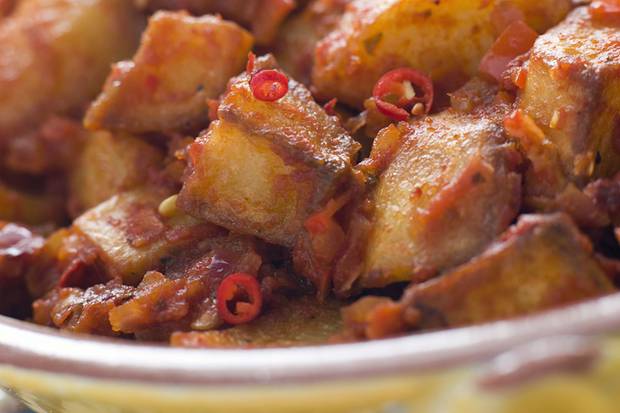
5. Patatas Bravas are spicy fried potato cubes, served with or in a spicy sauce. They taste good with grilled or roasted meat.
 Tortilla.
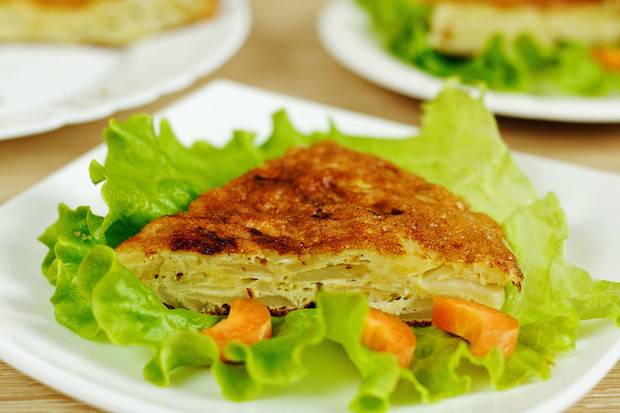
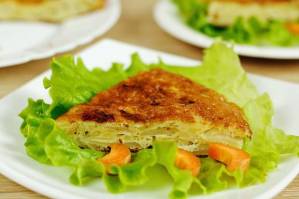
6. In Spain, Tortilla is an omelet that can be prepared with a variety of vegetables. Particularly popular is the Tortilla Espanola, also called tortilla de patatas, a circular omelette with potatoes and onions. It is often offered as tapa. The Mexican tortilla is something completely different: a flat flatbread made from corn or wheat.
 Gambas Ajillo.
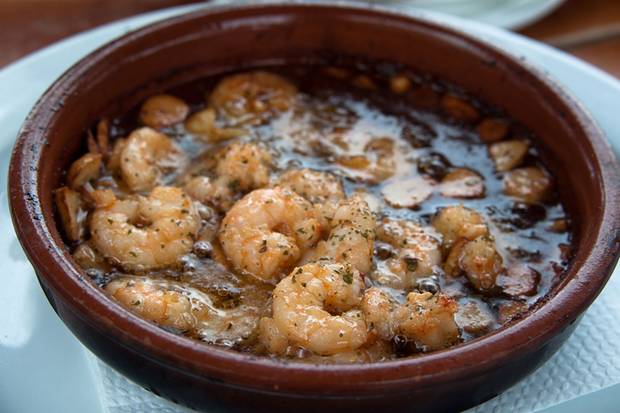
7. „Ajo“ means garlic in Spanish. „Al Ajillo“ means „garlic sauce“, and Gambas are a bit larger shrimps. Garlic shrimps, which are also spicy, because chilli’s are cooked with. This tapa is also one of the most popular classics and is usually prepared and served in a small clay bowl. Sometimes the oil is so hot that it bubbles, so be careful! In Uruguay they like to serve this dish as a main course.
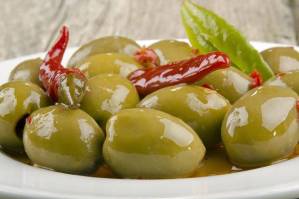 Aceitunas Marinadas.
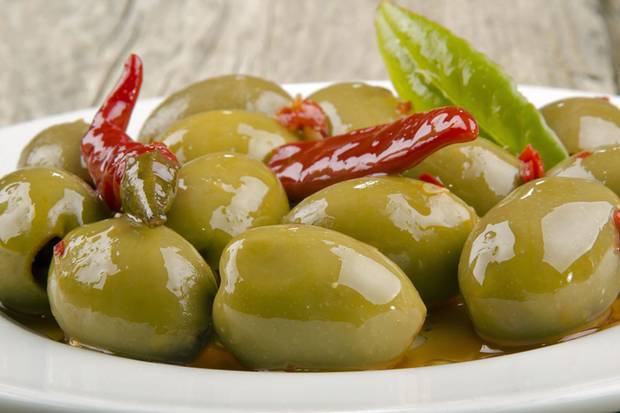
8. Aceitunas are olives, Marinada means marinated. Often the olives are preserved in oil and flavored with herbs and garlic and/or chilli.
 Pimientos de Padron.
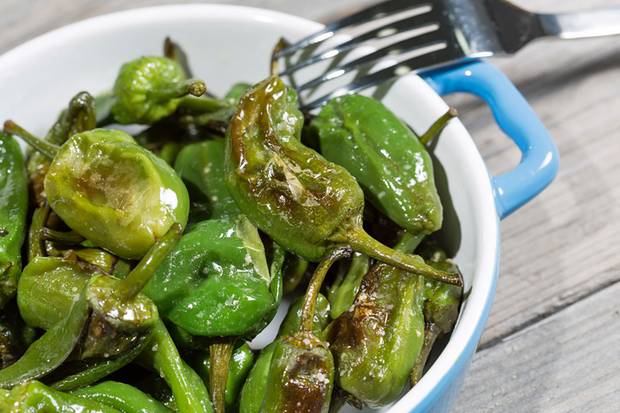
9. Pimientos de Padron are typical small, unripe pods of a variety of paprika’s grown in Galicia in the area of Padron. As Tapa they are usually only fried and sprinkled with coarse salt. Their degree of severity varies from pod to pod. Pimientos de Padron (which are not spicy at all) are about the size of Mexican Jalapenos, which are considered very spicy.
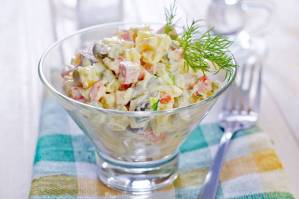 Insalada Rusa.
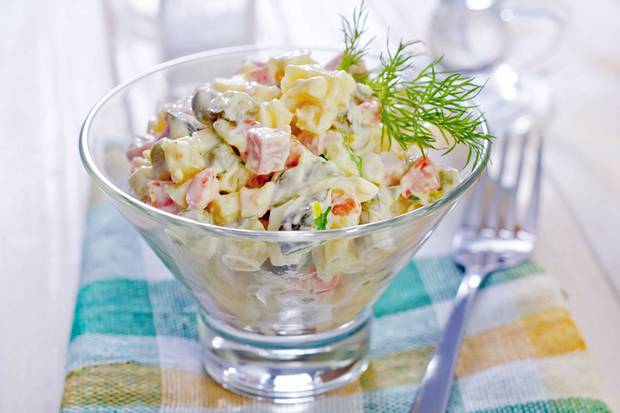
10. It’s a bit complicated with the Russian Salad. In fact, no Russian invented it, but a French chef who ran a top restaurant around 1860 in Moscow, Lucien Olivier. The salad is therefore also called Olivier salad, but as a „Russian salad“ he has become known in Europe. Originally it was a delicacy, which included meat, caviar, lettuce, capers and gherkins. Today there are many variants. The Spanish Ensalada Rusa is a potato salad with mayonnaise, tuna, hard-boiled eggs and vegetables such as carrots and peas. It tastes not only as tapas, but also to meatballs or sausages. I think it tastes a bit flat.
 Almejas a la Marinera.
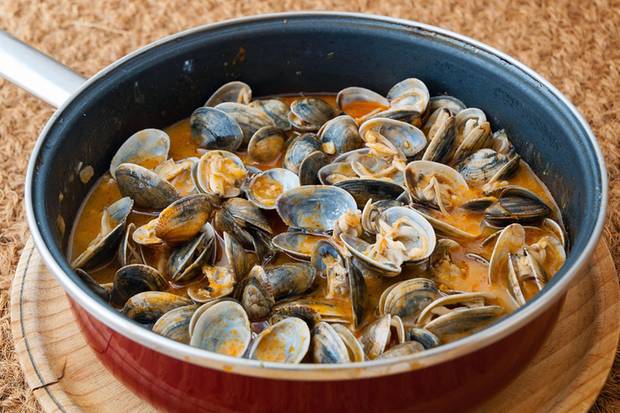
11. Almejas a la Marinera stands for a popular, traditional shellfish dish that is eaten all over Spain: clams in spicy white wine sauce. „A la marinera“ means as much as „by sailor style“. One can find it with just one sort of clams or mixed clams, whatever, it is one of the most delicious tapas you can have. Enjoy with a strong and dry white wine.


Hola Mike,
like the food-language tests you posted.
We are in Barcelona next month. Have you got any tips of tapas bars to share around town ?
LikeLike
Hello Pharo,
thanks for your comment and your demand.
Others had similar questions. Thanks to all.
Let me answer this in a small update to
the last post – coming Friday.
Stay tuned, Mike.
LikeLike