
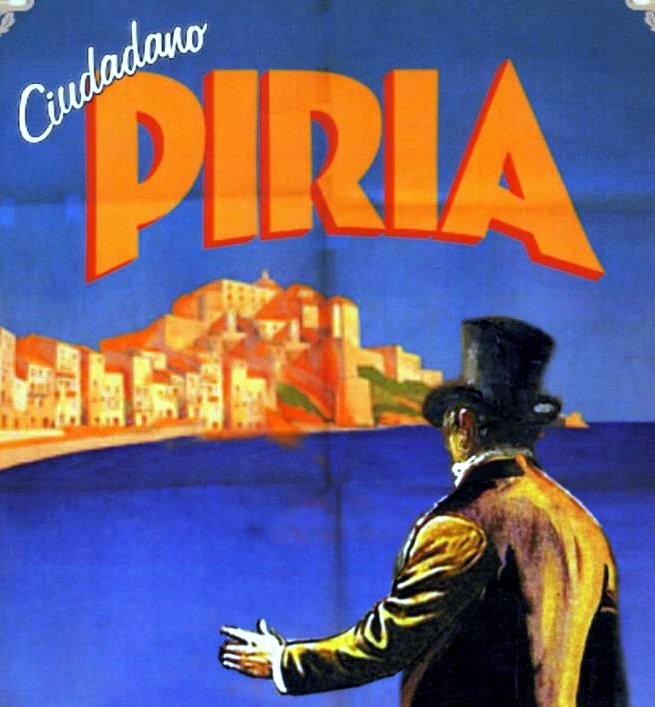
With this post I like to tell you a bit about a quiet unusual Uruguayan character. His name is Francisco Piria, or „Ciudadano Piria“. Many many articles and other information’s are written and available about him. The most well known achievement is the founding of the seafront holiday destination Piriapolis in Uruguay.
It is not my intention to bring the same or any additional information to all the known one. Much more I like to introduce you to a few facts ( like an essence) of this incredible creator and developer of modern Uruguay. Most pics are free from internet and some old black and white ones are, with slide share, from Professor Ernesto Correa.
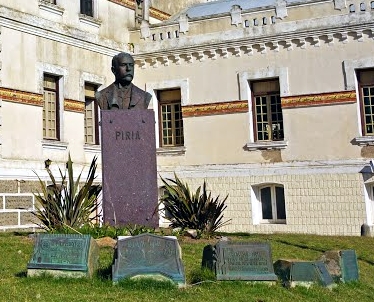
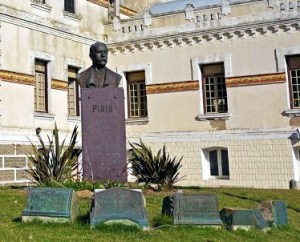 Piria monument in Piriapolis.
Francisco Piria.
His full name is Fernando Juan Santiago Francisco María Piria de Grossi.This name uses Spanish naming customs – the first or paternal family name is Piria and the second or maternal family name is De Grossi. He was born in Montevideo the 21st of August 1847 and died the 11th of December 1933, at age 86 at his home in Montevideo, suffering from pulmonary congestion, complicated by diabetes, uremia and heart weakness.
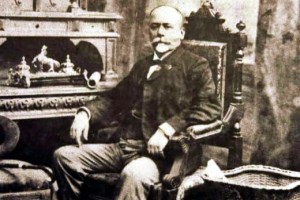 Francisco Piria in his 60’s.
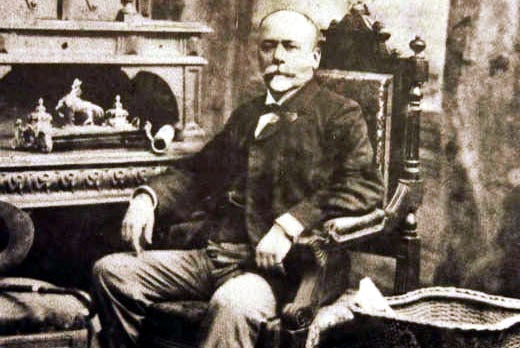
Very young he was taken to Italy by a paternal uncle, a Jesuit monk who took charge of his education and gave him historical, mythological, philosophical knowledge, which would undoubtedly had influenced him throughout his life.
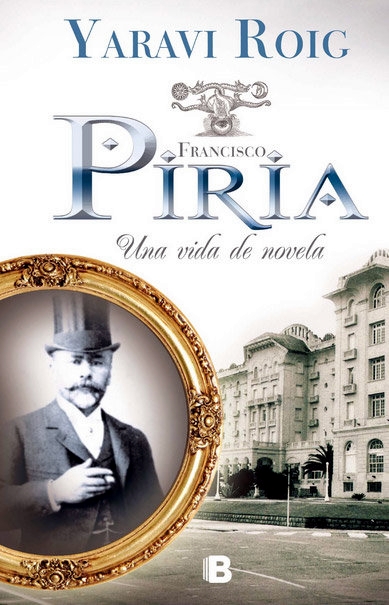
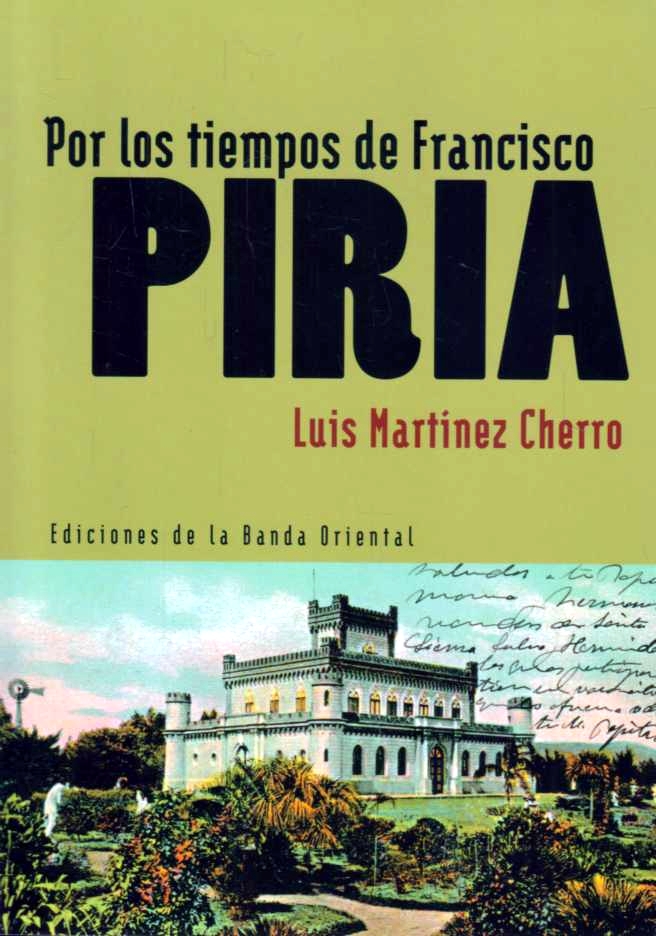
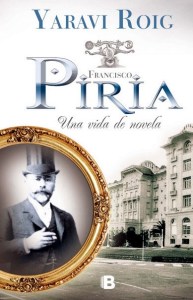 Many many books about Piria were printed.
Back in Uruguay at age 16 he enrolled as a volunteer in some barracks, then subsequently begins to take his first steps as „businessman“ in a small establishment that founded in the Old Market of Montevideo, which maintained until the year 1875.
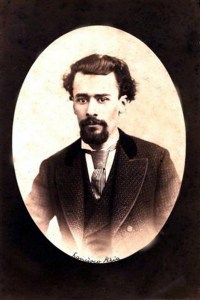 Francisco Piria in the bloom of his life, around 1890’s.
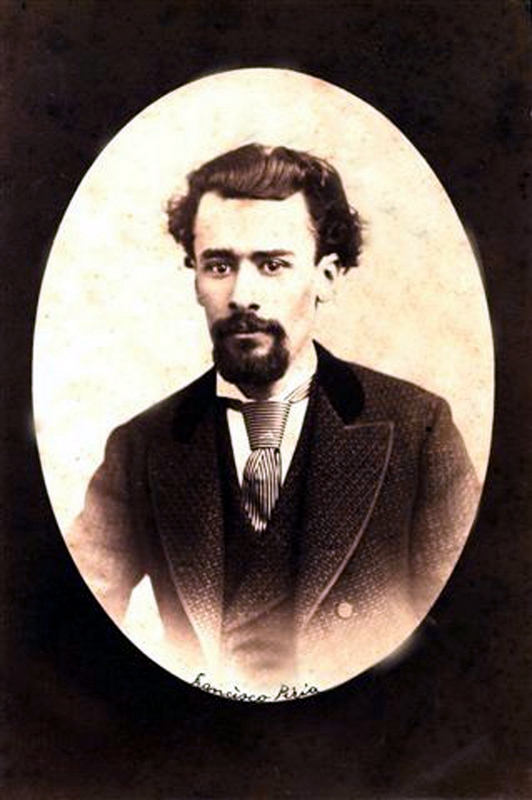
During those years he began to sell lots in installments in Montevideo, an activity in which he forged a large part of his later fortune and through which he became responsible for a large part of the city’s current physiognomy, founding about seventy neighborhoods in Montevideo and many others in the interior of the country.
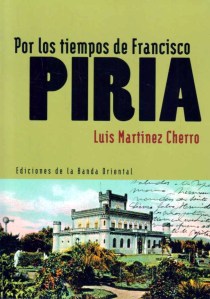 Books about his life, his achievements and much more.
Parallel to these activities, he devoted himself to journalism and literature, being the creator of the newspaper „La Tribune Populares“, a newspaper of the time that was proclaimed liberal and through which he recorded his opposition to the government and politicians of the time, at the same time he wrote his memoirs of travel both his trips to Europe and his travels through the interior of the Republic of Uruguay.
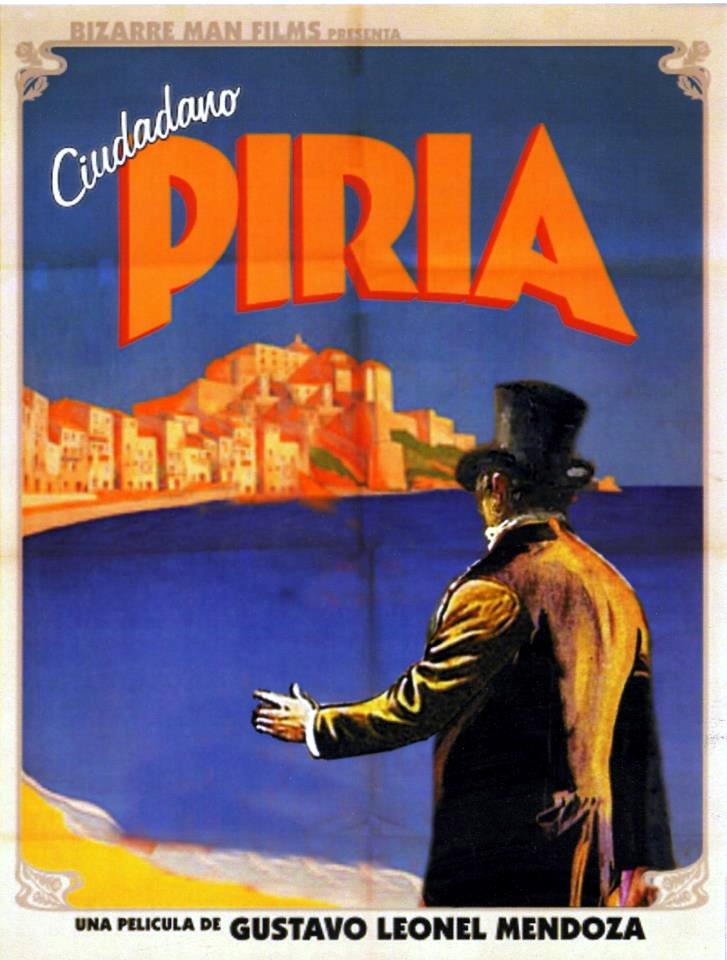
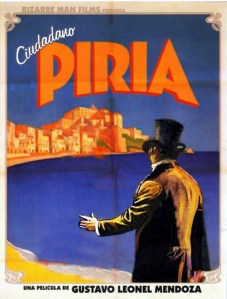 Even a movie was made about this Uruguayan Character.
The first contact with the area In the year 1890 Piria decided to found his „Agronomic Establishment“ which, after visits to different areas of the country decides to be installed in the surroundings of Cerro Pan de Azucar.
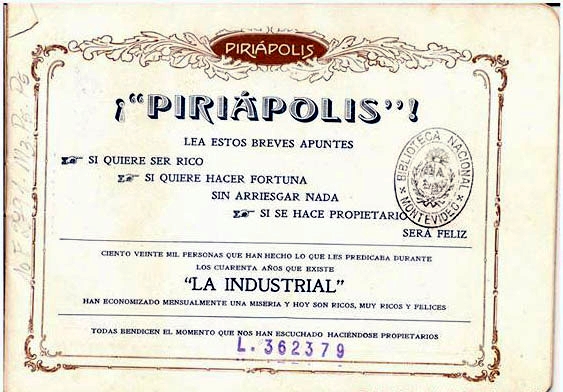
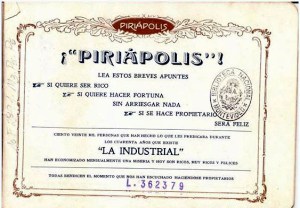 If you want to be rich, If you want to make a fortune without risking anything, then you should become an owner and you will be happy ! Presumable from 1873.
In 1890 Piria purchased a 2700ha size of fields. An extension that went from the Sugar Loaf Mountain to the sea. That same year he had made a trip to Europe, in consequence of which their inspiration came for the tourist exploitation of the Uruguayan coast.
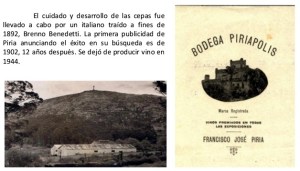 Piria’s wine growing at Cerro Pan de Azucar.
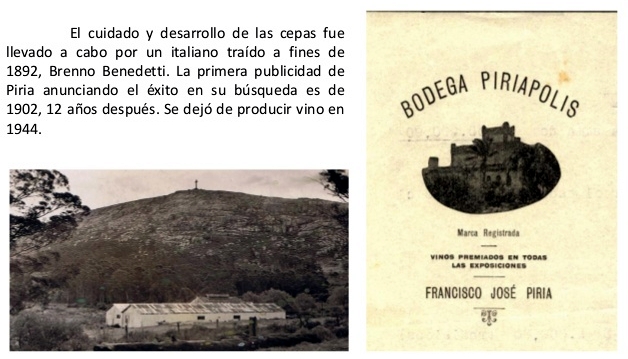
Thus, with the purchase of the 2,700ha field fraction, his agrarian enterprise began, in which he dedicated himself to the cultivation of tobacco, grapes (and consequently wines and a liqueur called later cognacquina) and olive groves. By force of horses and oxen and without more transport than horses and carts also begins with the extraction of granite (obtained from the same Cerro Pan de Azucar) which cut and processed in the place were marketed in Montevideo and Buenos Aires.
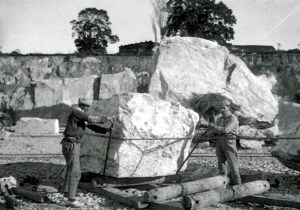 Granite breaking at Cerro Pan de Azucar.
Pira and Family.
The personal life of Francisco Piria also gave a lot to talk about, he got married three times and the third time was with his daughter. His first marriage was at age 19 with Magadalena Rodino. From this marriage were born his three sons Francisco Jose, Lorenzo Piria and Arturo Piria, but also raised his stepdaughter, Adela.
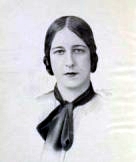 Piria married (for the third time) his own daughter Carmen.
Carmen Piria In the second marriage, Piria was already 47 years old. His third marriage was with Argentina’s Carmen Piria. At 86 years of age, Francisco Piria is on his deathbed due to a pulmonary congestion and declares that his wife is his natural daughter.
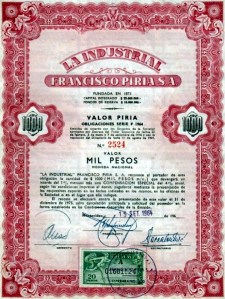 In modern times ( 1964 ) the name „Francisco Piria“ was still used for „serious advertising“. This is an obligation certificate over onethousand pesos, issued with the same company name as 1873, „LA INDUSTRIAL“ – 100 years later. Click on pics to supersize.
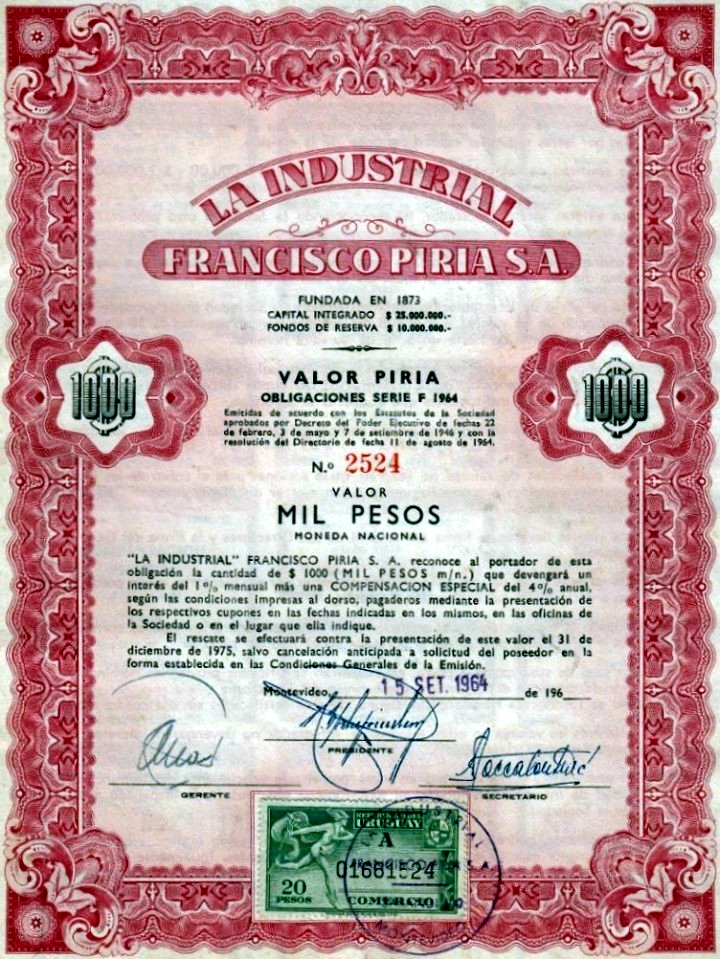
Piria Real Estate.
It is believed that her great fortune amassed her when she began to finish off lots, founding La Industrial. He bought extensions of land, he sold them and sold them in installments. In 1874 he made his first auction of lots in what today would be the city of Las Piedras, in the department of Canelones.
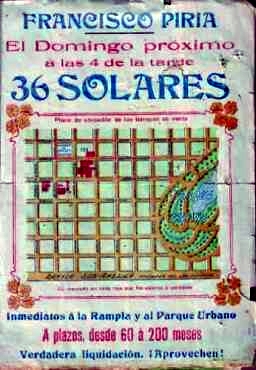 Piria’s sales folders for Las Piedras from February 1874.
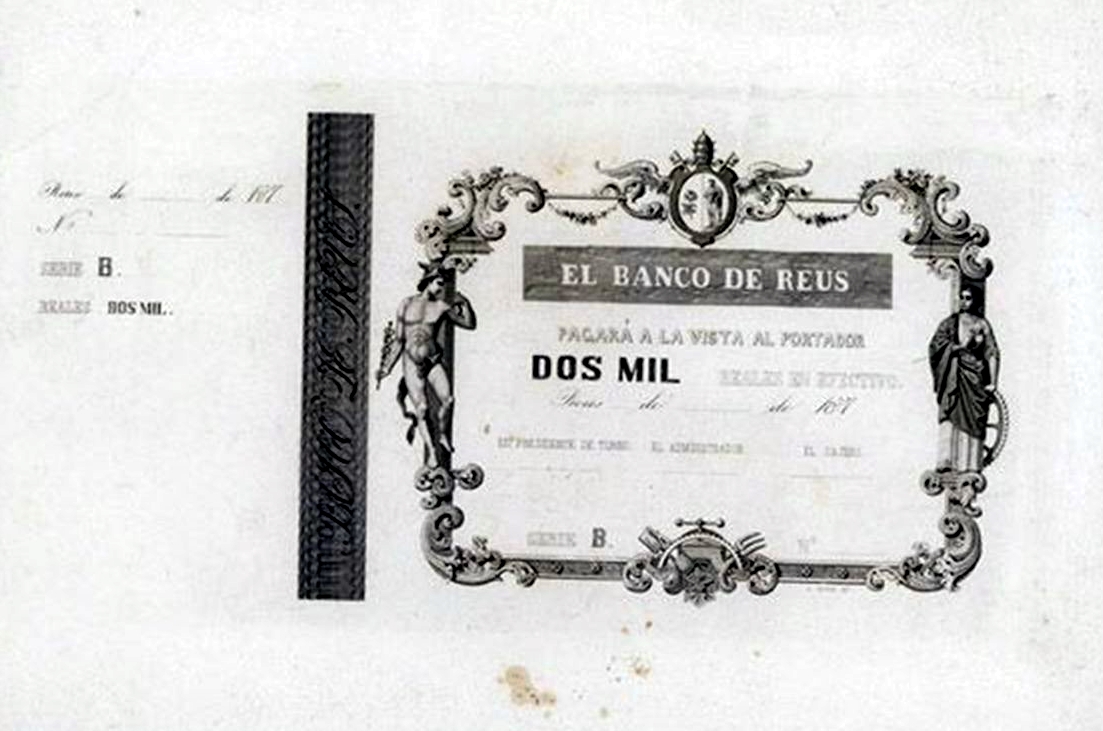
In 1878, Piria sold all the lands he had at that time to Banco Reus, for 700 thousand pesos, which at the time was a rather high sum, because he believed that the lands were overvalued. Twelve years later, the bank Reus was in bankruptcy and Piria recovered the lands for a third of the money obtained in the sale.
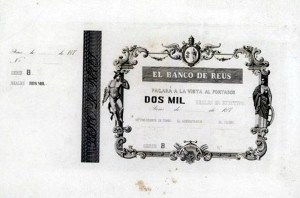 Specimen Banknote of the Banco Reus, originated in Spain, from 1870, value 2000 Pesos.
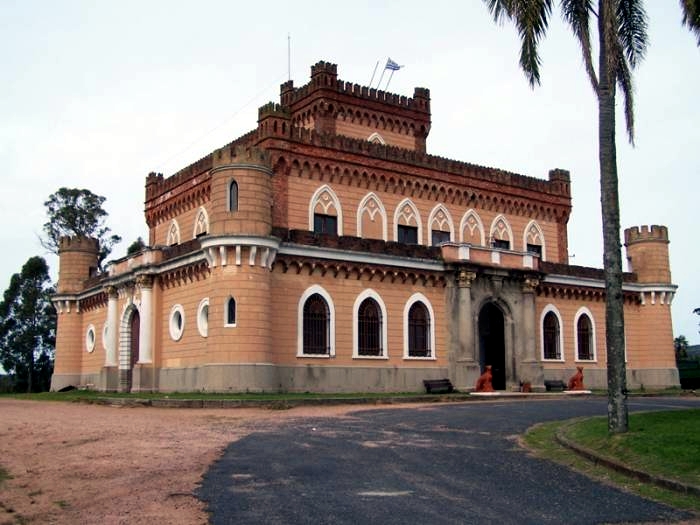
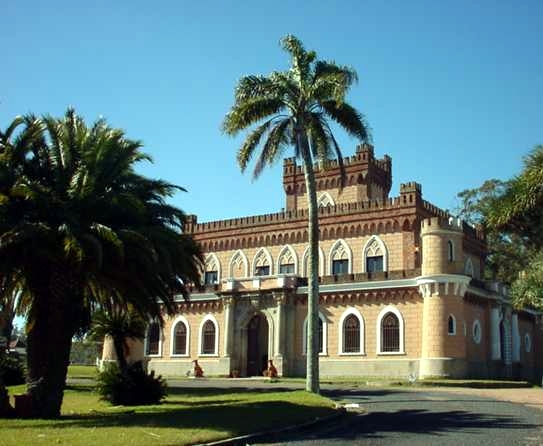
Piria Castle.
A gate flanked by two large towers surrounding the castle, leading to a huge garden planted with exotic plants and palm trees. In the gardens is a beautiful faux wood gazebo and a collection of terracotta, signed by Tomaso Airaghi. Everywhere we find terracotta bases that served as support for the female figures or potting.
Among the many statues of the garden is an exact replica of the bronze figure representing Mercury, the messenger of the gods. This sculpture reproduces the statue was found in the excavations of Herculaneum, conducted by Giovanni Di Bologna. Next to the castle are the stables.
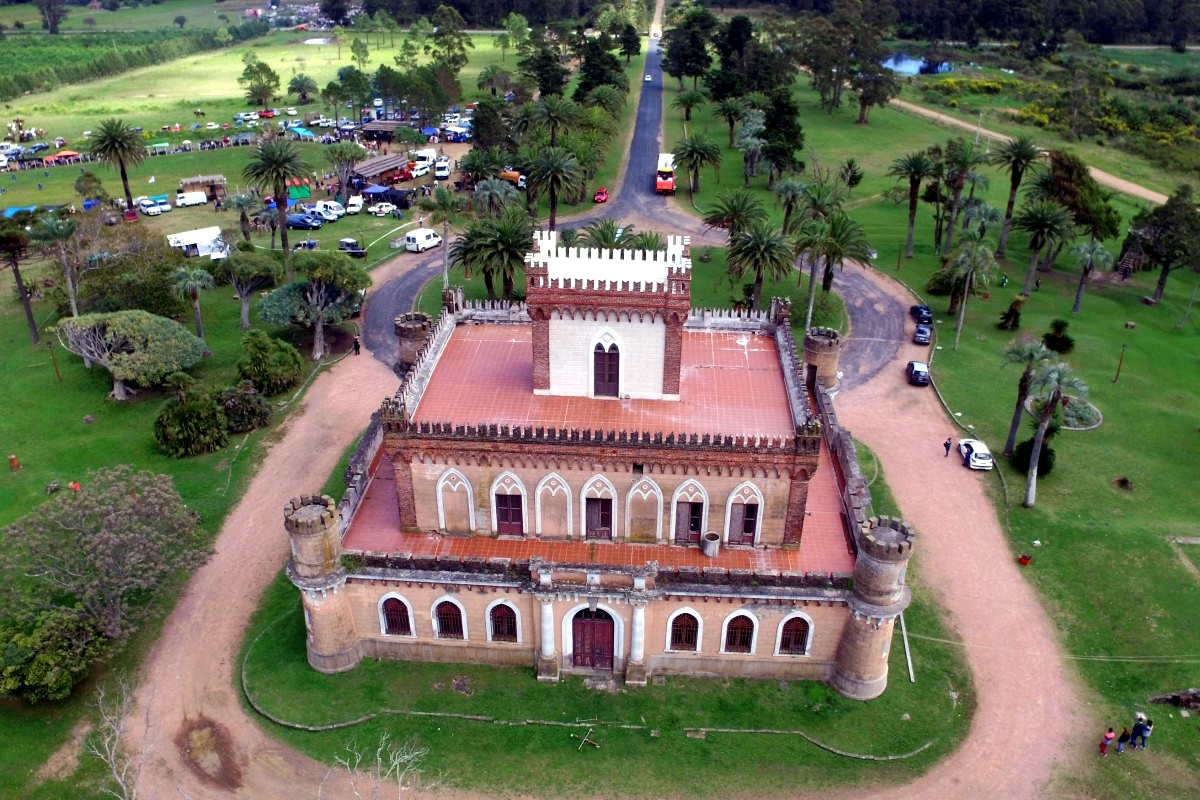
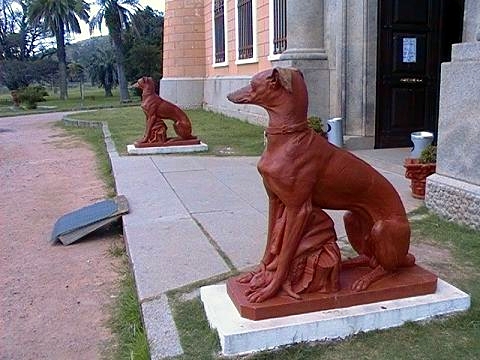
Castillo de Piria was where Francisco Piria had his private residence. It was designed by architect Monzani in 1897. The castle was constructed in red brick, like Italian villas of that era. Flanking both sides of the entrance to the castle, are statues of Great Dane dogs. This breed was a favorite of Piria.
The building boasts a facade in medieval style, but with a construction that mimics the Italian villas of the late nineteenth century. The main house has two floors and a basement, not enabled for the public. Upstairs, the Florentine balconies offer a wonderful view of the mountains and the city of Piriapolis.
On the ground floor we can see a collection of objects belonging to Piria: Documents, brochures, flyers, wall pictures. The interior upstairs (which is a guided tour) is decorated with period furniture, weapons and utensils, as well as works of art from Europe. The rooms are decorated in different styles and one of them features a room of Piriapolis. Another curious room is the room barbershop. There is also a collection of bath mats belonging to Argentino Hotel.
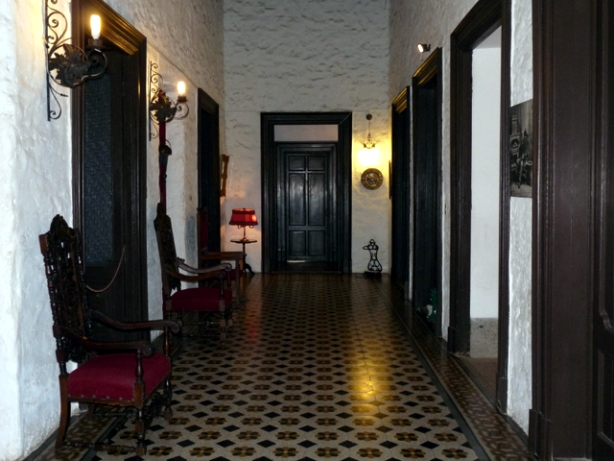
One of the most interesting aspects of Piria Castle is in the abundance of alchemical symbols he had in the beginning, and have given rise to many legends, such as a lab installed in the basement, which now is walled. The visit is worth wile and admission free.
 Piriapolis from Cerro San Antonio.
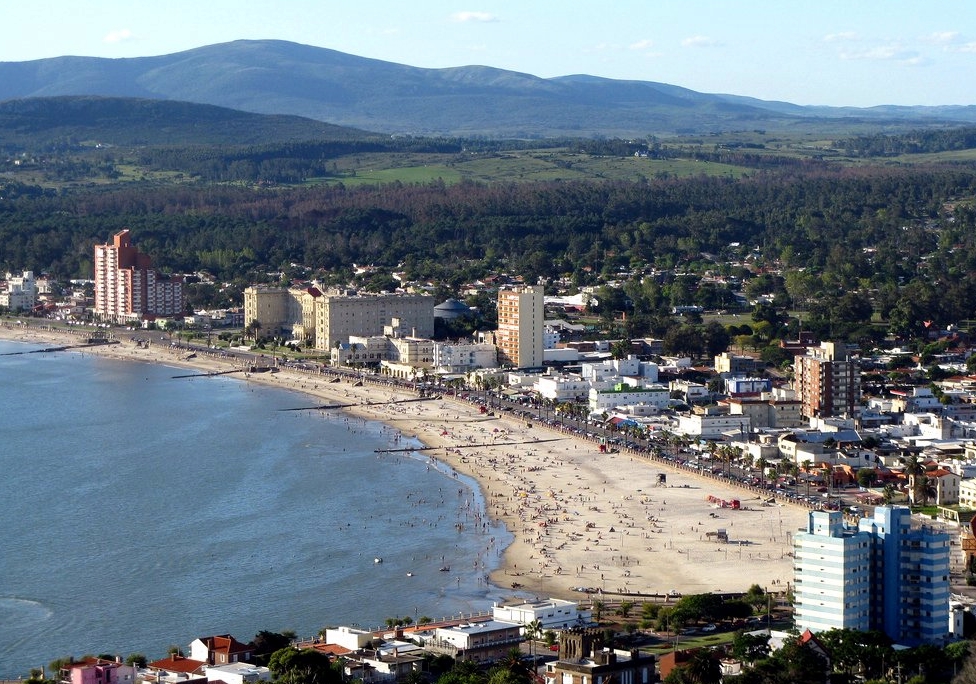
Piriapolis.
The resort of Piriapolis was founded on 5th of November 1890 by visionary Francisco Piria, who called it El Balneario del Porvenir „The Resort of the Future“. It was the largest effort undertaken in the country by one man.
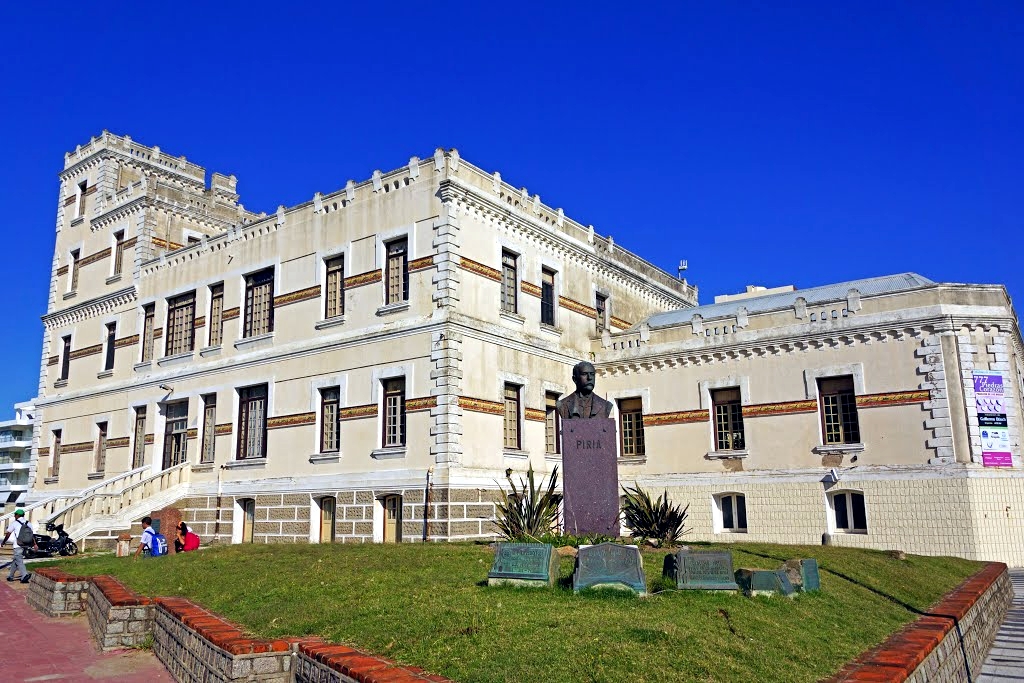
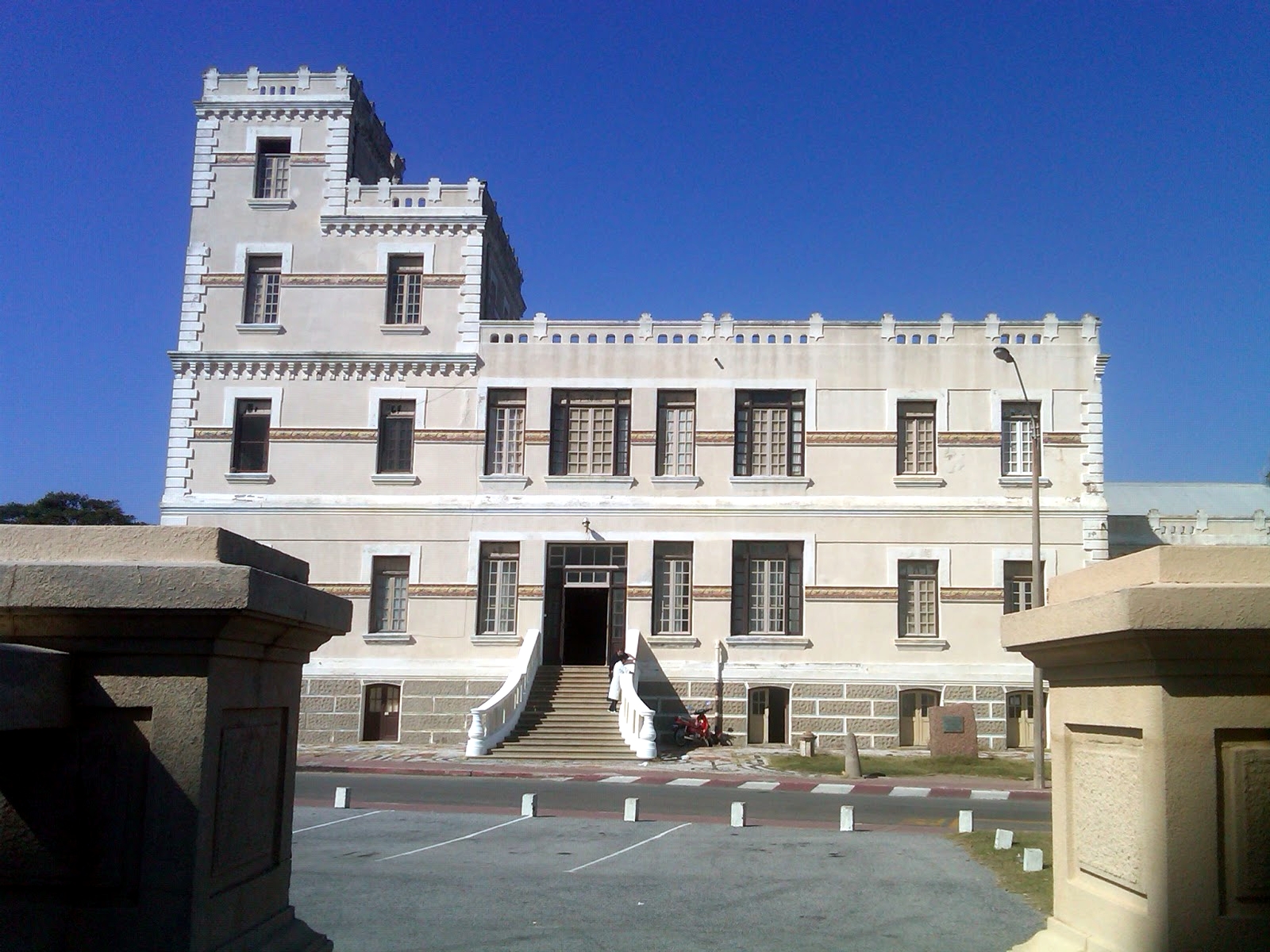
 In 1905 he built the first Grand Hotel called „Hotel Piriapolis“, today the „Colonia Escolar de Vacaciones“.
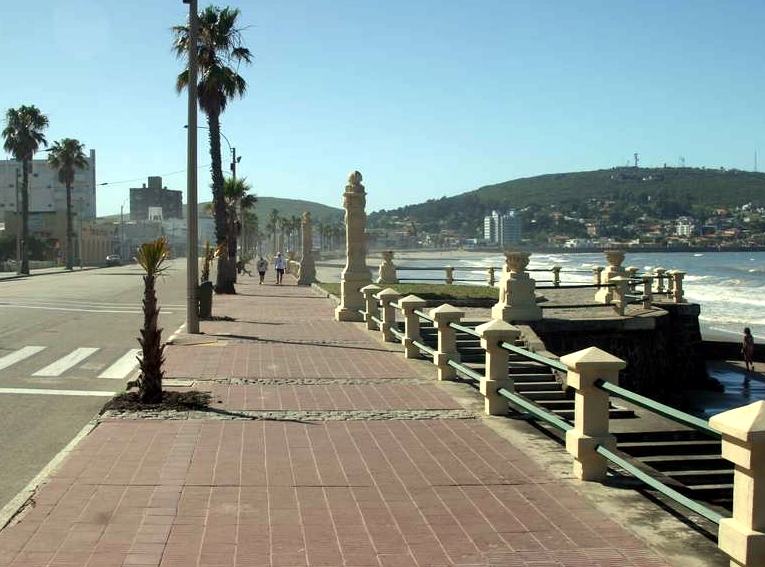
 In 1910 began the construction of the promenade, which has been inspired by his travels to Europe, more precisely in the French Riviera. Now several kilometers along the Piriapolis beach.
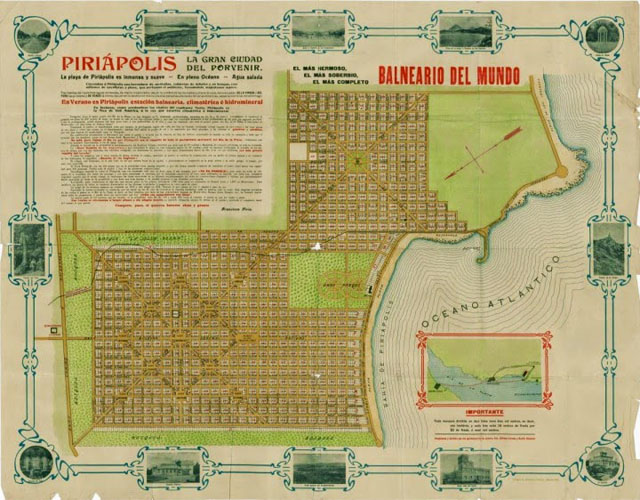
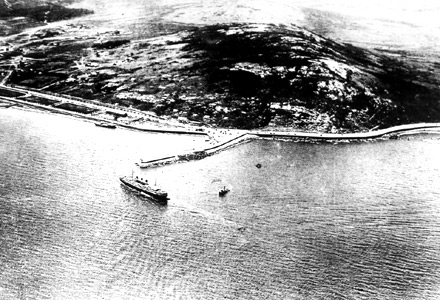
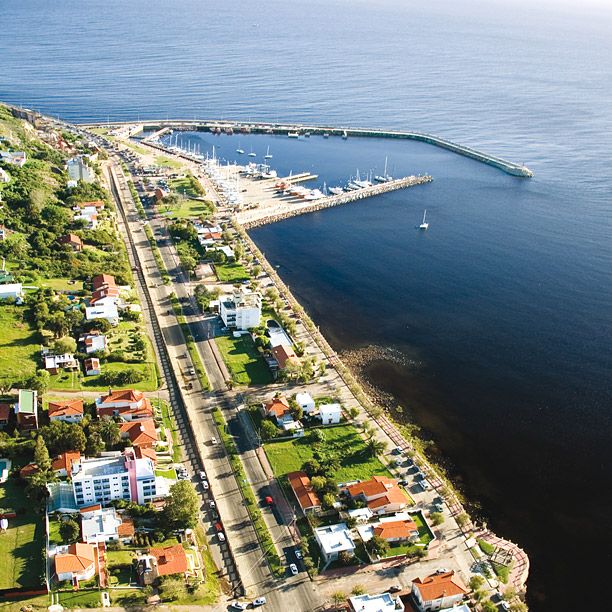
In 1912 the first auction of solar took place in Piriapolis and, thereafter, the city began to grow with the construction of numerous houses. The port construction finished in 1916.
 One of the typical „solar auction“ pamphlets.
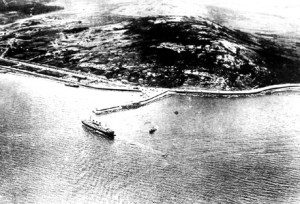
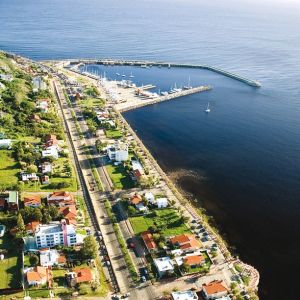 The original port construction around 1914 and right how it looks like today.
Becoming more entrepreneurial time Piria finally built at a huge cost at the time of 5 million pesos, one of the giant of South America, the Argentine Hotel, whose foundation stone was laid in 1920 by President Baltasar Brum and the hotel was inaugurated on 24th of December 1930.
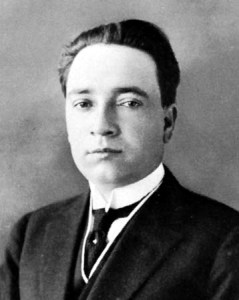
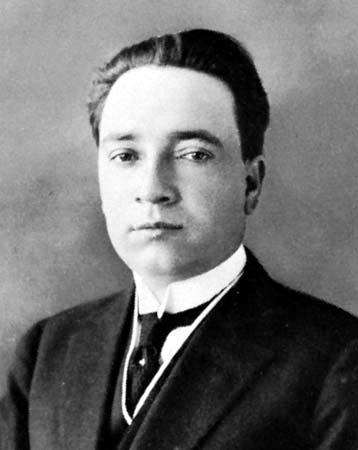
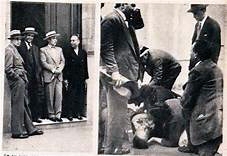 Baltasar Brum Rodríguez (June 18, 1883 – March 31, 1933) was the 23rd President of Uruguay (from 1919 to 1923) and 6th Prime Minister of Uruguay (from 1929 to 1931). On 31st of March 1933 he committed suicide by shooting himself. Notice the revolver in his right hand (he is the one without hat) on the center picture.
This building is 120 meters wide, 70 meters deep and has 6 floors. At that time it could accommodate 1.200 people. On the floor below were already provided the first facilities for the use of thalassotherapy (therapeutic use of seawater), with showers and bathtubs for hot and cold baths seawater, section electrical gymnastics – Swedish, hairdressing salons , manicures and much more.
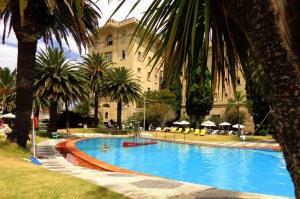 At Argentino Hotel still famous today: The pool area, the fantastic „5’o clock tea“ and very good drinks at the bar. Its worth to click on pics to supersize the view.
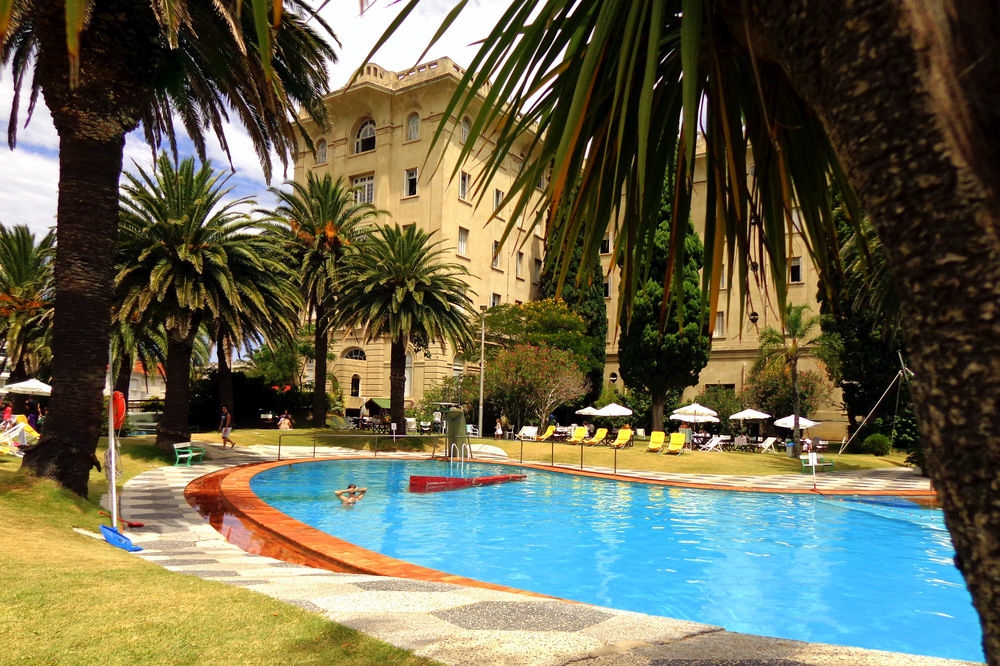
 Argentino Hotel and right the former Hotel Piriapolis.
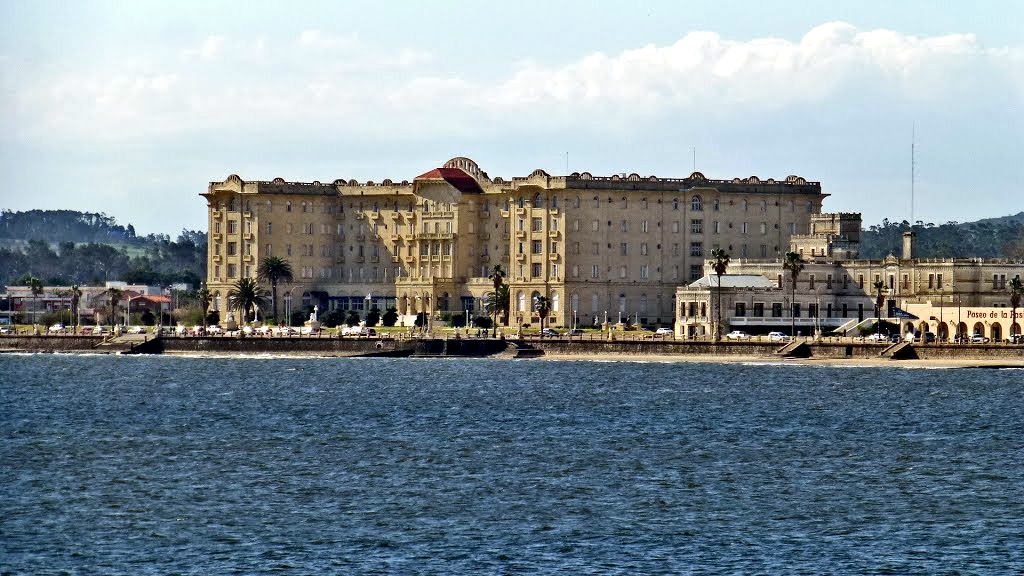
For equipment, Piria brought the linen from Italy, from Germany tableware, glassware and furniture from Czechoslovakia and Austria. Shortly after the grand opening, Francisco Piria died on 16th of December 1933 . But – Piria can be found in everything he created. He was a man who had a dream, made it real and lived in it.
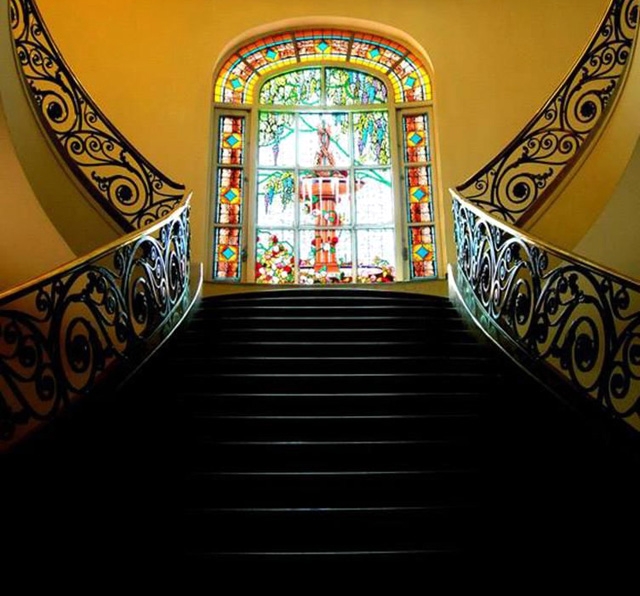
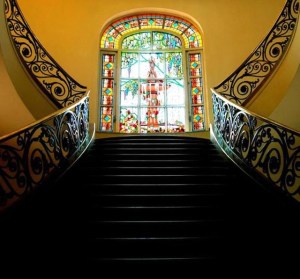 Stairways inside the Argentino Hotel.
For this post I just picked a few important information’s about Piria to inform you what this interesting man has achieved. It is still so much that I decided to bring it in two parts. Please stay tuned and switch on again next week for Francisco Piria – Part 2 !


Hey, Mike……mal wieder – von Dir etwas erfahren von dem ich nix wuste.
Bin gespannt was ich in Zukunft noch an „Wissen“ erhalten werde.
Danke an Dich + von mir bewundernde Grüsse Bernd
LikeLike
Danke danke mein lieber Freund.
„Anerkennung ist das Brot des Kuenstlers“.
Alles Gute auch fuer Dich/euch, Mike.
LikeLike
Hola,
vivimos más de 10 años en Piriápolis, pero no sabíamos todo esto. Esperando la siguiente parte.
Muchas gracias.
LikeLike
Estimado Hermano y Alicia,
muy positivo y bienvenido comentario.
Gracias por eso, Mike.
LikeLike