
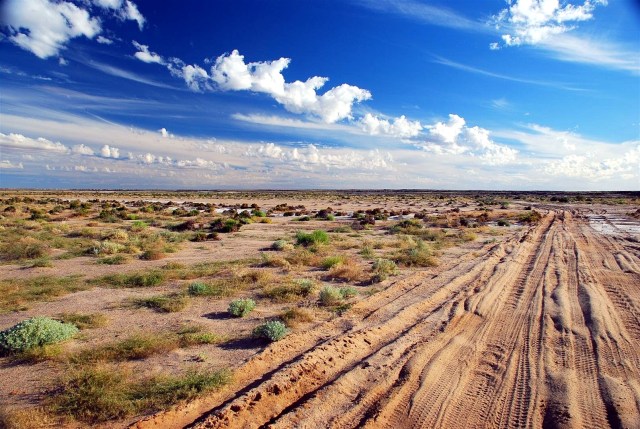
 Track to Lake Eyre near Marree, Australia.
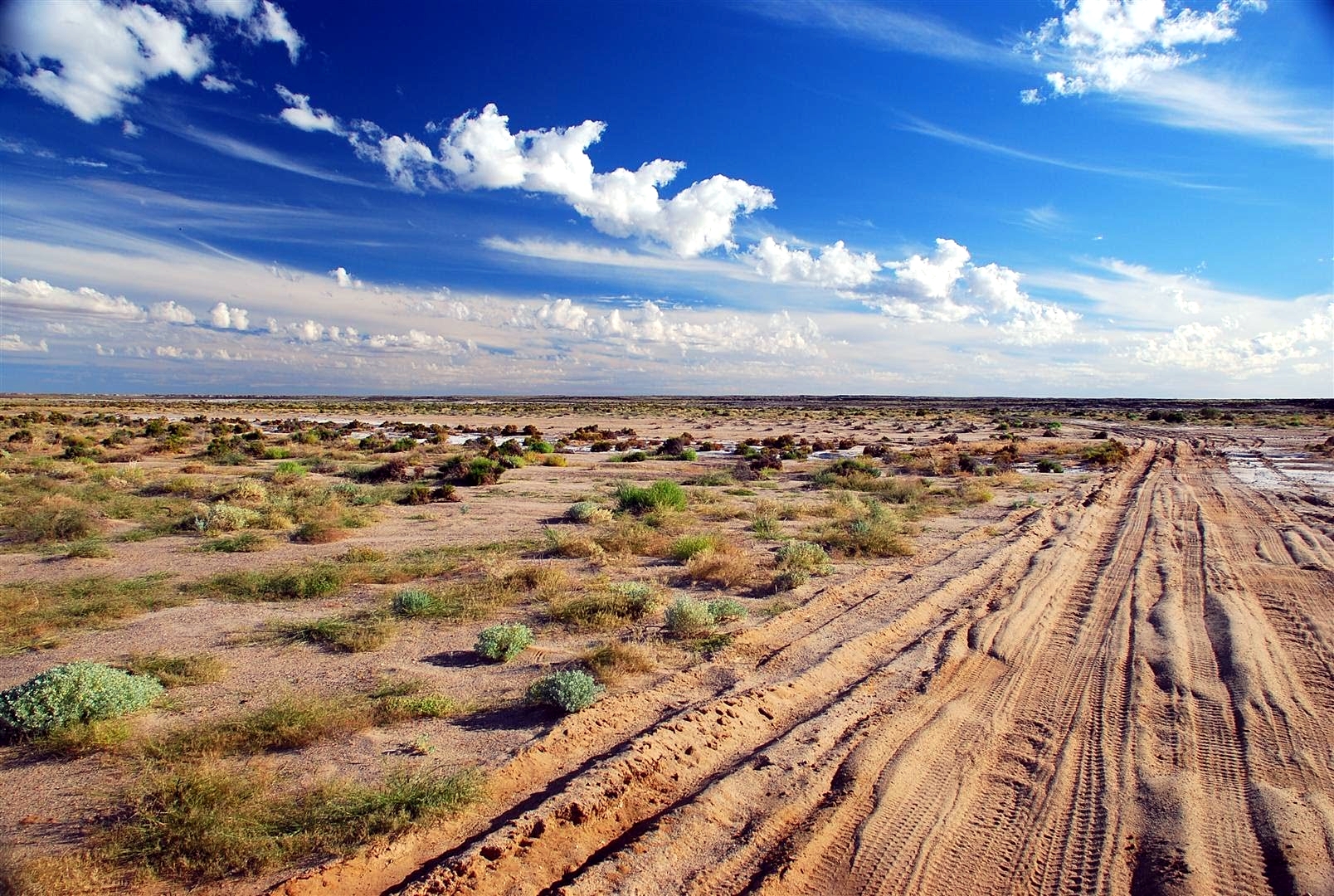
As one knows meantime, I lived many years in Australia and have a strong bond to this country. That’s why I still follow local happening’s and information’s, reading local papers and have close contact to many friends and family over there.
Years ago I came across a strange phenomenon and story about the Marree area which I know well from my travels through – „The Marree Man“. I always wanted to write an article about it, now I DO, because three things sudden came together. First my discussion and posts about Nan Madol, second it was my last „real“outback trip before we left Australia (always wanted to write about) and third – the Marree Man disappears.
 Logo of the Adelaide Advertiser. For this post, about the Marree Man, I used some information out of The Advertiser articles, which a friend send up from Australia.

Not a single witness can attest to the creation of the world’s largest geoglyph.
A gigantic, more than four kilometers long drawing, 30 centimeters deep in the ground, 35 meters wide carving, in the middle of the Australian Niemandsland (no-where-land), is still puzzling. Nobody knows who created the Marree Man – and why and how. Mystery !
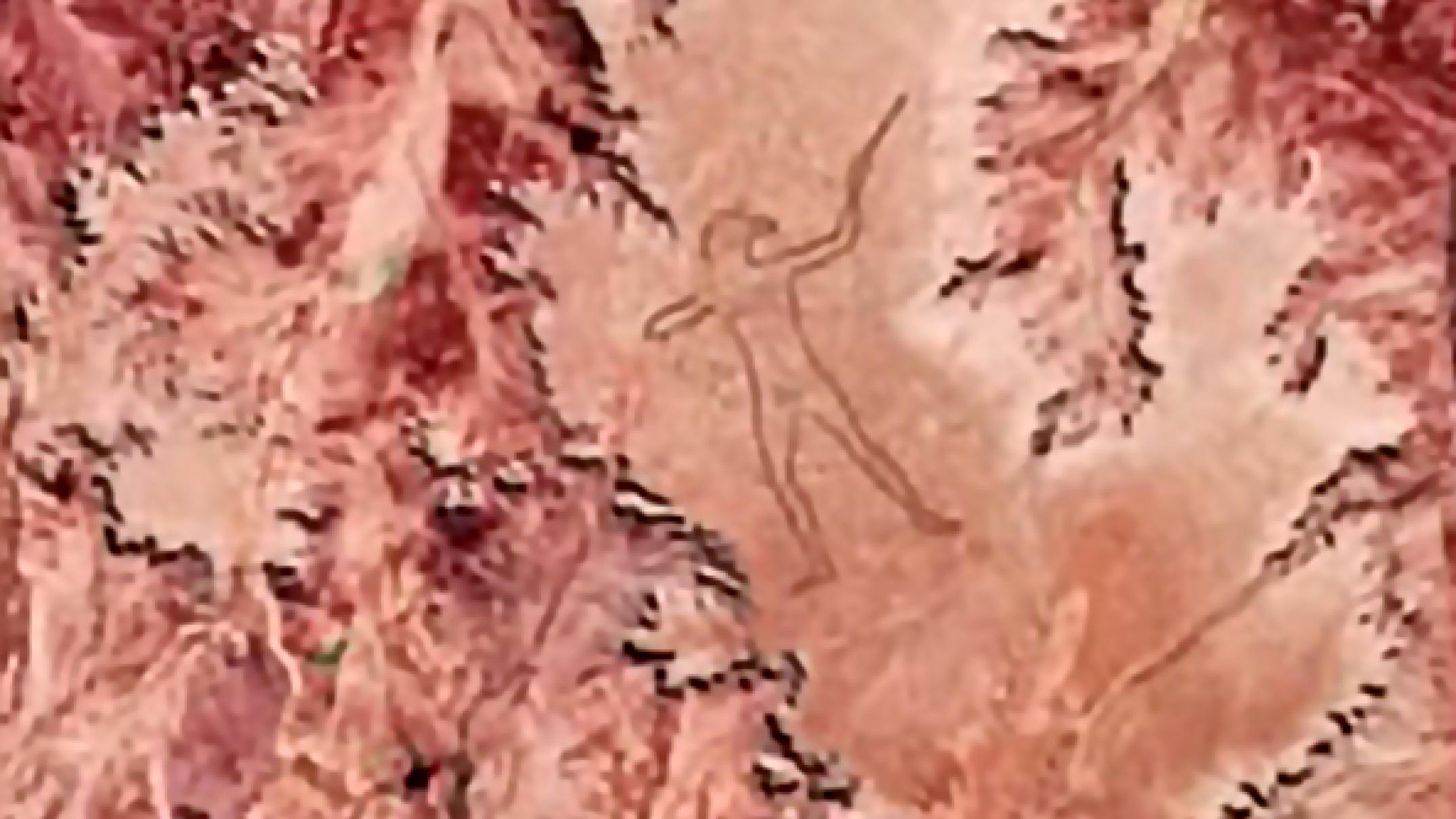
Incredible 4.2 kilometers long is the figure from the head to the feet. She shows an Aboriginal hunter with a stick in her hand. The figure extends in the outback of South Australia and is the second largest earth drawing in the world. Their origin is still a mystery: Who created the work of art, and why? There are many speculations, but no hand-proof.
The figure was accidentally discovered in 1998 when a bush pilot flew over the 200,000 square kilometer-wide military restricted area „Woomera Prohibited Area“. The nearest village is 60 kilometers away and is called Marree. After this town the drawing was named.
Contrary to other such pictures, the Marree Man emerged only in the late 1990s. The famous Nazca lines in Peru, for example, date from 800 to 200 BC.
 The Marree Man, Google.
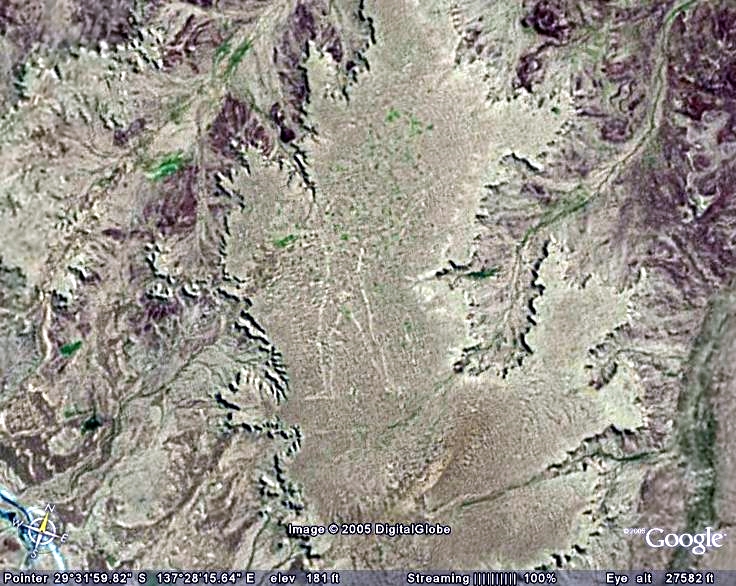
It’s as enthralling as any ancient legend, but the mystery of South Australia’s Marree Man is far more modern and in danger of being far shorter lived than folk figures before it. From the red dirt ground, it’s a series of dug out lines wider than city roads apparently carved with some serious excavation equipment.
The lines and swirls look to be the product of an impressive operation, but its not until you get up in the air that spectators can really marvel at the mythical giant man. From the air, those lines made with a plough or ripper form the figure of Marree Man. The 4,2km tall carving, 28km in total length, clearly makes up the shape of an indigenous man, most likely a hunter armed with a throwing stick.
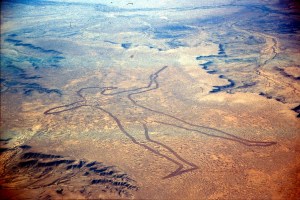 The Marree Man just after discovering in 1998. Very accurate presentation of a naked Aborigine hunter with a hunting stick. Imagine the size !!!
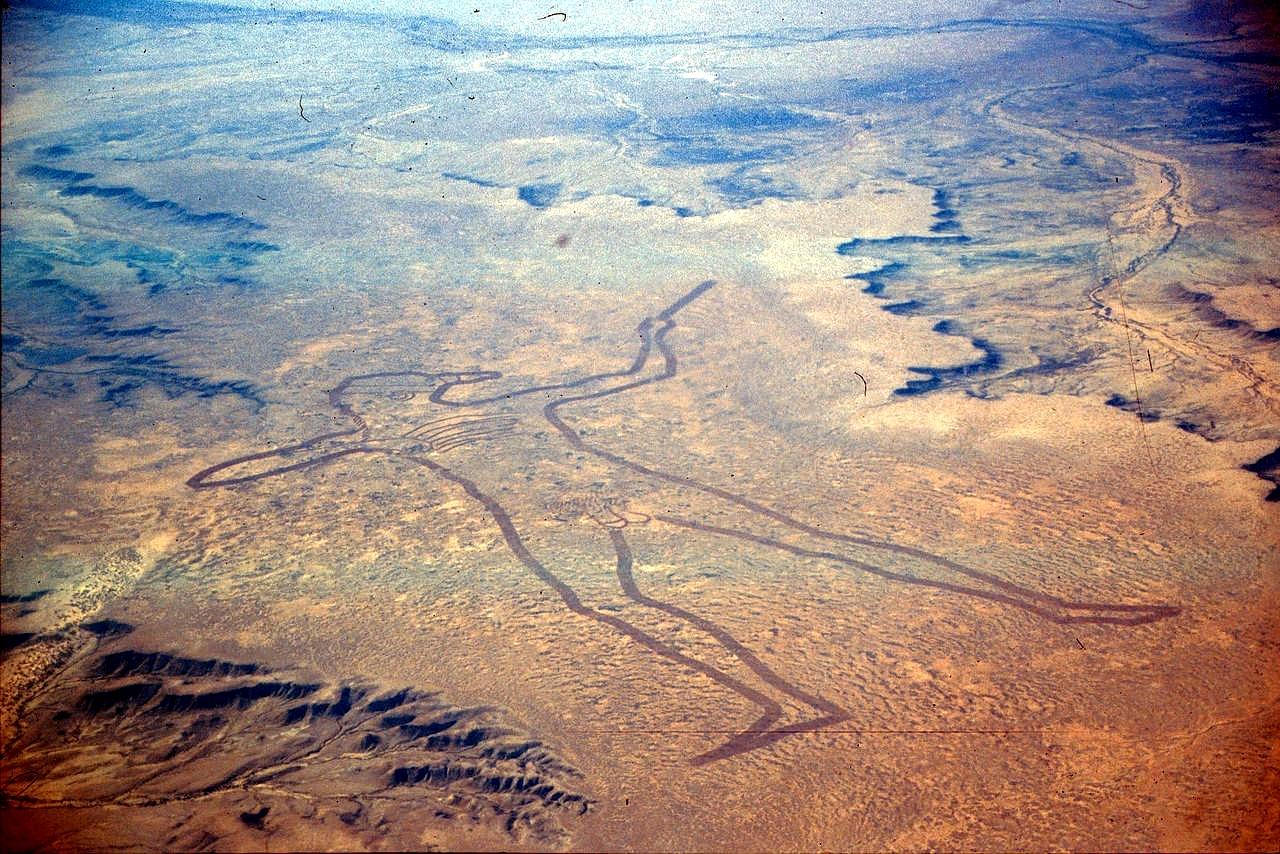
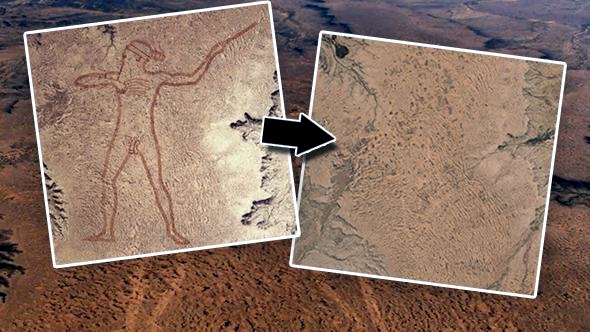
At least that was the case in 1998 when a tourism operator was reportedly the first to catch a glimpse of the enormous artwork. Since then, natural forces have caused the once 35cm deep carved outline to erode and the figure to fade. Though locals have been campaigning for the Marree Man to be preserved, these days he’s just about gone with only a few barely distinguishable features remaining.
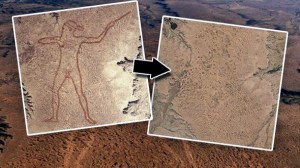 Marree Man, left in 1998 and right in 2015 – GONE !
“Very little of it remains and it’s just devastating,” Phil Turner, a local publican and vocal campaigner for the preservation of Marree Man, tells.
“There are so many aspects about it which are just mind boggling. The size, its shape, where it’s located, how it was done. On top of those things it was just an absolute herculean task, a major effort and it produced an extraordinary work of art. The most incredible thing is, we don’t know who did it.”
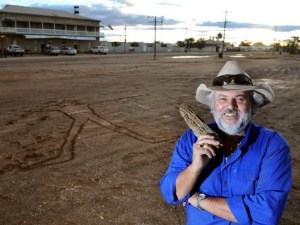 Phil Turner owner of the Marree Hotel and for sure interested in the preservation of the Marree Man. But gone is gone – tooooo late !
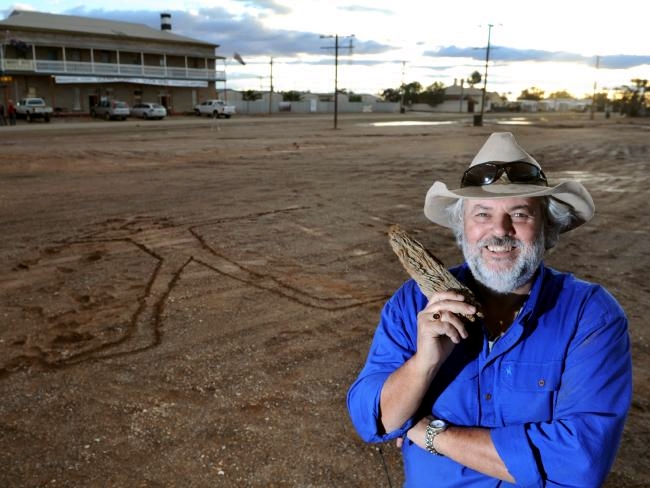
WHODUNNIT.
The “Marree Man” depicts a standing aboriginal hunter with some sort of spear or possibly a boomerang in his hand. The man is roughly two and a half miles tall and is nude. Some experts believe that it is remarkably accurate in its depiction of an aboriginal hunter, as far as how one would have been drawn by the aboriginals. In fact, since that time, no one has even come forward and admitted to making it. This is very surprising because whoever did it, did not commit a crime. They have no apparent reason to hide their identity, apart from wanting to tease the rest of us.
 Picture of the Daily Telegraph 1998.
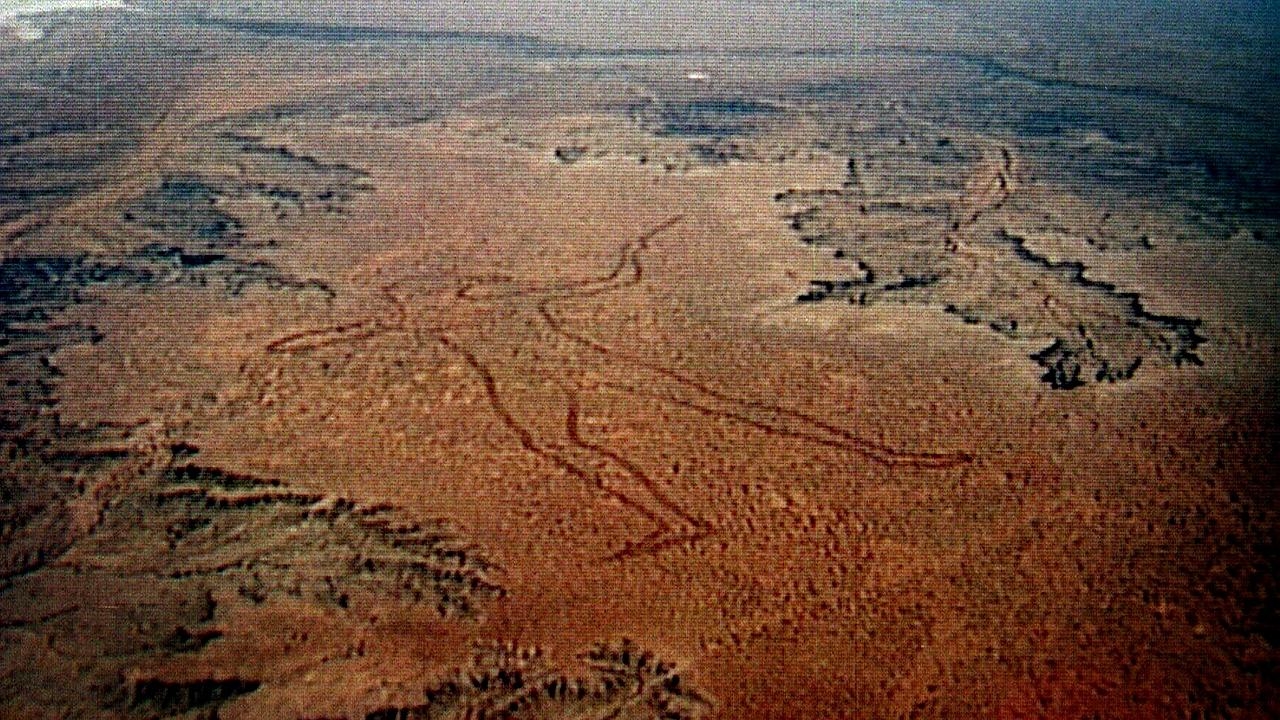
Despite the fact that no one has come forward to explain the “Marree Man” to the world, experts have a good idea of how it was made. The outline of the geoglyph was made by removing the vegetation from the soil where the lines were. There was also a layer of soil removed to reveal the lighter soil beneath, thus making the “Marree Man” stand out against its surroundings. It is thought that the work was accomplished by using tractors or plows to move the materials, judging by tread marks left at the scene. It is also thought that the artist or artists used GPS to map out their design and make it as accurate as it is.
The Marree Man was first spotted, according to his own claims, by tour flight operator Trevor Wright. Mr Wright noticed the outline from the air back in 1998 and reported back to the town, which was soon in the grip of a Chinese whispers epidemic.
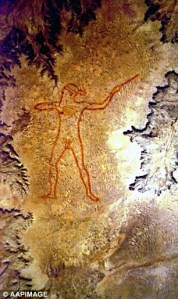 AAP image of the Marree Man.
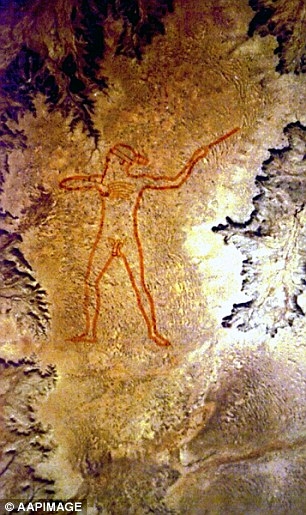
Everyone from the US Army to local artists was said to have had a hand in creating the figure. Mr Turner recalls first reading about the Marree Man those 17 years ago in an article which included a more than half-formed argument for alien involvement.
“You can understand because of its sheer size, and no one could really explain it,” he says. “Around the same time all these (crop) circles were appearing in England and Scotland, I guess you could say the world was UFO happy. I was enthralled.”
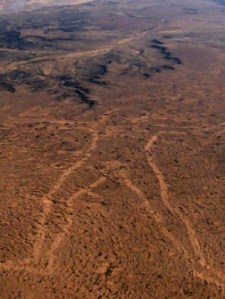
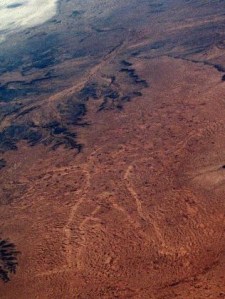
The Marree Man photographed in 2001 (left) and a pic from 2002 (right) I found. Already fading away by wind erosion and newly overgrow.
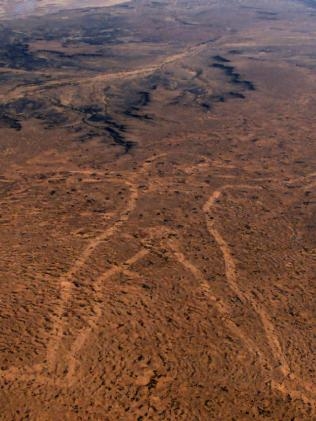
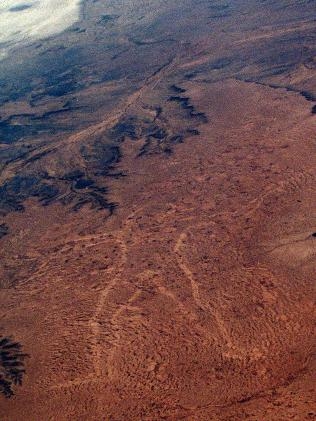
The alien theory has never really stood up but others have circulated widely. Mr Turner said not a week goes by when a pub patron doesn’t claim to know exactly how it got there. Just last week, he says, a returning local claimed to have witnessed a fleet of Australian Army vehicles with trawling equipment heading towards the Marree plateau.
History shows the army was in town for a training exercise but no involvement with the artwork has been proven. Another theory says it was a parting gift from the US Air Force after their time at the Joint Defense Facility Nurrungar they shared with the Australian Defence Force at Woomera from 1969 to the late 1990s.
The only solid lead was taken to the grave by contemporary South Australian artist Bardius Goldberg. The eccentric artist was reported to have wanted to create a sculpture that could be seen from space.
 The Marree Man seen from space.
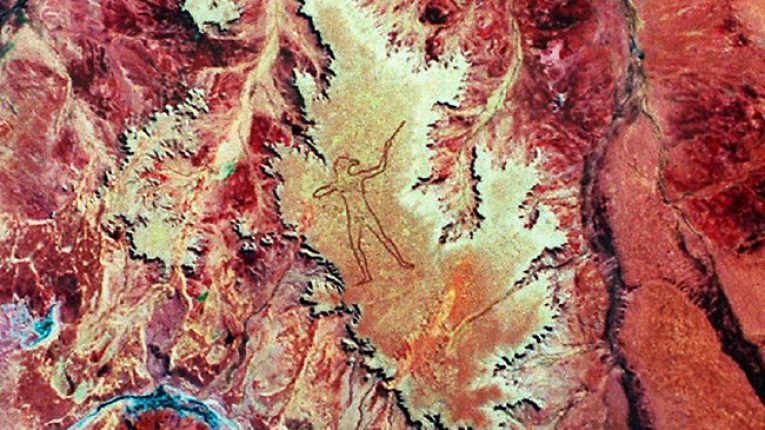
The Adelaide Advertiser reported he had told friends he’d been paid $10,000 to create the plan for the giant man and shown early grafts of the sand sculpture. “That’s all there is for sure. There’s no two ways that Goldberg was involved, but unfortunately he passed away in 2002,” Mr Turner says.
“A lot of people have been involved, said they’ve been involved, but whatever happened here we are all these years later and now people are saying ‘do we really want to know who did it?’ because that’s the mystery.”
30 centimeters deep lines in the earth.
The Marree-Man immediately attracted the attention of the population and the media. The Aboriginal people, however, were not enthusiastic about the work of art. They criticize the fact that the drawing has inflicted damage to their country.
The lines are dug up to 30 centimeters deep into the red soil and up to 35 meters wide. Someone must have used tractor and plow or bulldozer as well as a GPS to create them.
Because of the enormous size of the image, the unknown must have been busy for several weeks. This happened in secret, no one had noticed the work. Also traces of the machines were never discovered.
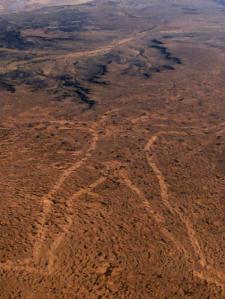 Marree Man seen from scenic flight in 2001.
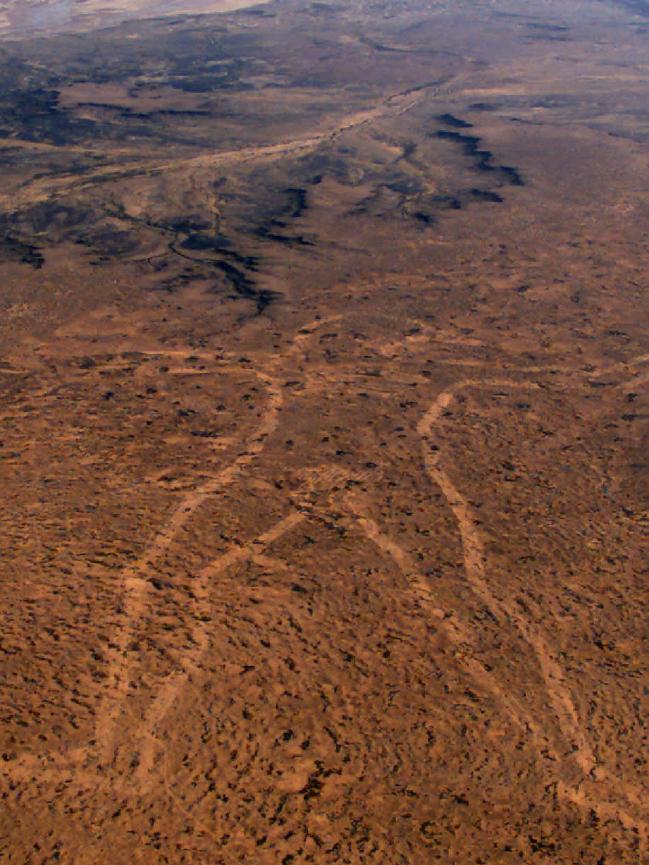
The area is extremely dry, there are no people living, no infrastructure, no roads, tracks or anything. But it needed lots of supplies for weeks like food, water petrol etc. And – how to get heavy machinery onto the plateau – there are no existing track and building one, it would have been seen also. Mystery over mystery, therefore, the work of art remained visible.
The anonymous fax messages.
Whoever had made the effort to design the huge work also wanted it to be appreciated. In an anonymously fax to a hotel 200 kilometers away the coordinates of the figure were indicated. The operator thought the letter was a joke and did not respond.
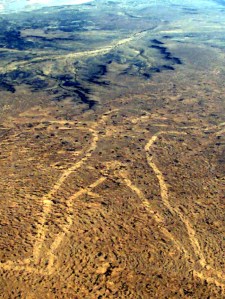 Edited pic of my scenic flight over the Marree Man.
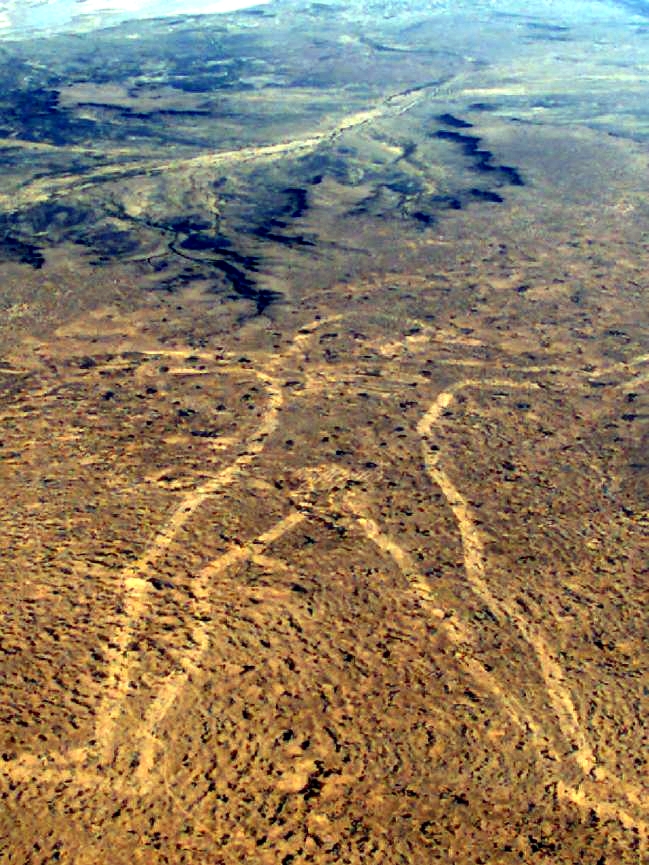
After that, several media also received anonymous fax messages. The figure is referred to as „Stuart’s Giant“. The name most likely refers to the Scottish surveyor Johan Mc Douall Stuart, who was the first European to cross Australia from the south to the north.
But who is behind the gigantic figure, and what was the motive? There are still wild speculations to this day. Some believe it is just a marketing gag.
After all, the number of trips across the territory has jumped abruptly since the Marree Man was discovered. The local flight providers, for example, or construction workers and military employees are suspected. Pre-astronautists are, of course, are sure: extraterrestrials have engraved the artwork into the earth.
Why bother saving it ?
Along with the mystery of who created Marree Man is the question of why. Of course, there’s not a solid answer to this either but it’s certainly served its purpose over the years. Before it started fading, it was a star attraction of charter flight tours around the region.
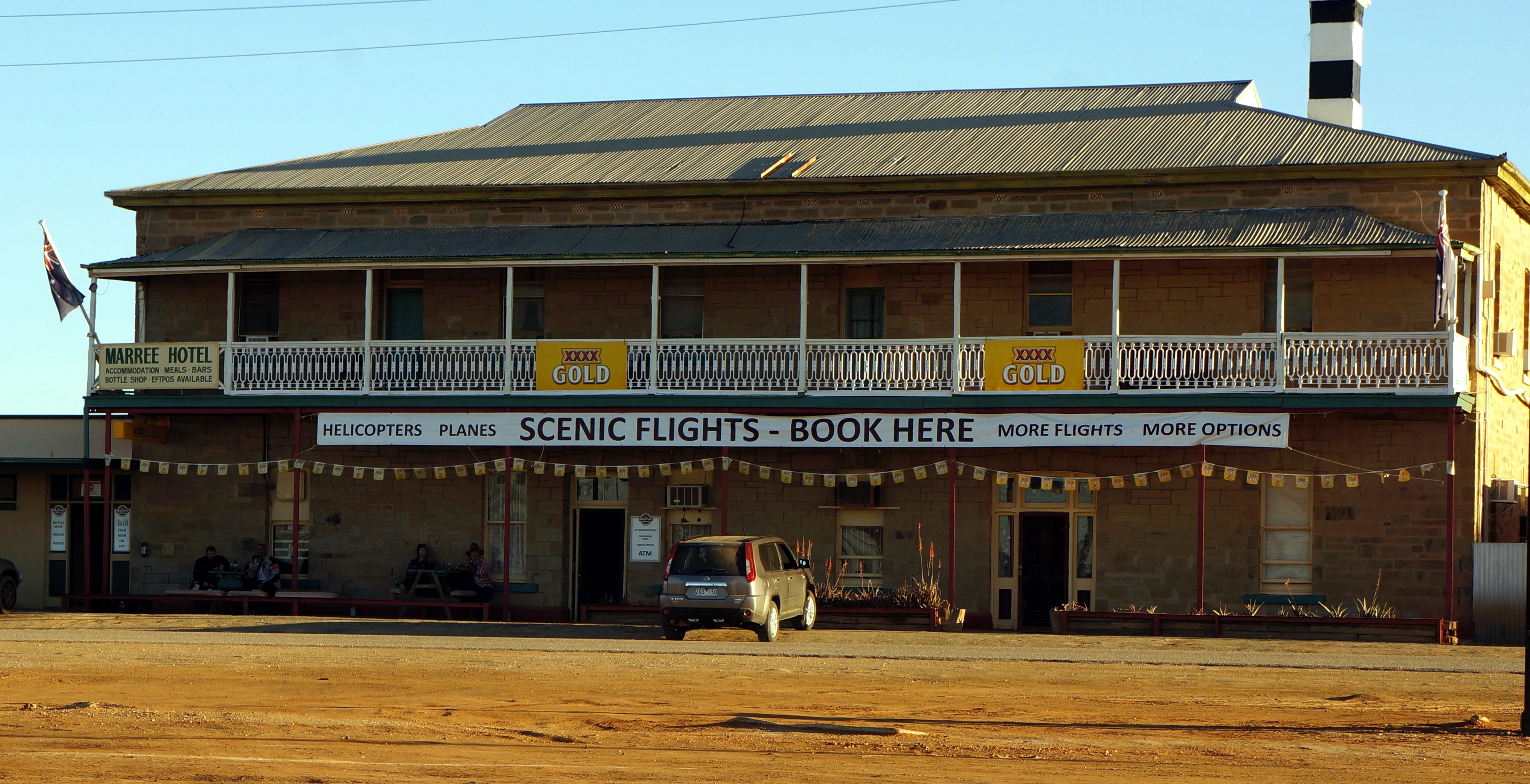
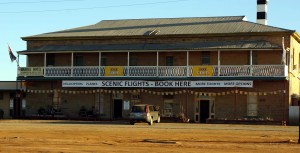 Charterflight boom from Marree.
The region’s native title owners, the Arabana people, took ownership of the man with the Arabana Aboriginal Corporation trademarking the term “Marree Man” for use on souvenirs, though the trademark was given up earlier this year the Advertiser reports.
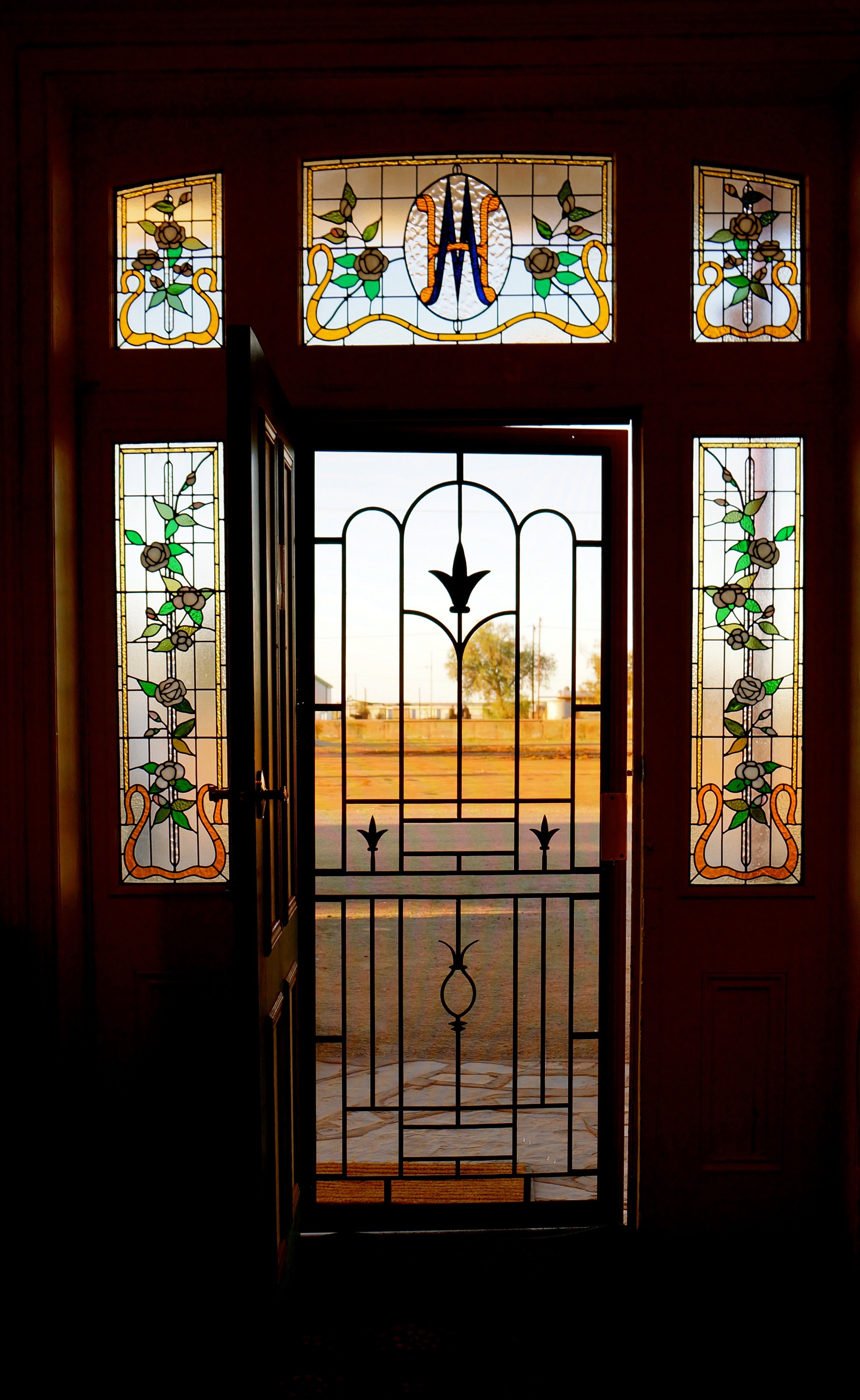
 Beautiful stained glass door, „art nouveau“ style, of the Marree Hotel.
The hotel was built at much the same time. Historian Lois Litchfield notes of the hotel:
„In 1883 when the town was surveyed the hotel dimensions were recorded as being ‚a substantial stone two-storey building.
On November 1884 the rooms were described as being “…large, lofty, well furnished with the luxury of a bath to indulged in and a pleasant siesta on the balcony afterward to enjoy the cool evening breeze when it blows.”
Though local tourism authorities have been unenthusiastic about the figure, local operators believe it could serve as a strong sustainable attraction to the outback area. Mr Turner says everyone who comes to his pub asks, “where’s the Marree Man?”. “The far north desert regions of SA lack a long term sustainable outback attraction,” he says.
“The NT’s got Uluru, there’s Kakadu, the Kimberly, even the Great Barrier Reef is considered an outback attraction in Queensland. South Australia doesn’t have anything, other than when there’s water in Lake Eyre every 10 years and everyone flocks to see the fish and birds, but there’s nothing long term and sustainable and I believe the Marree Man could be that.”
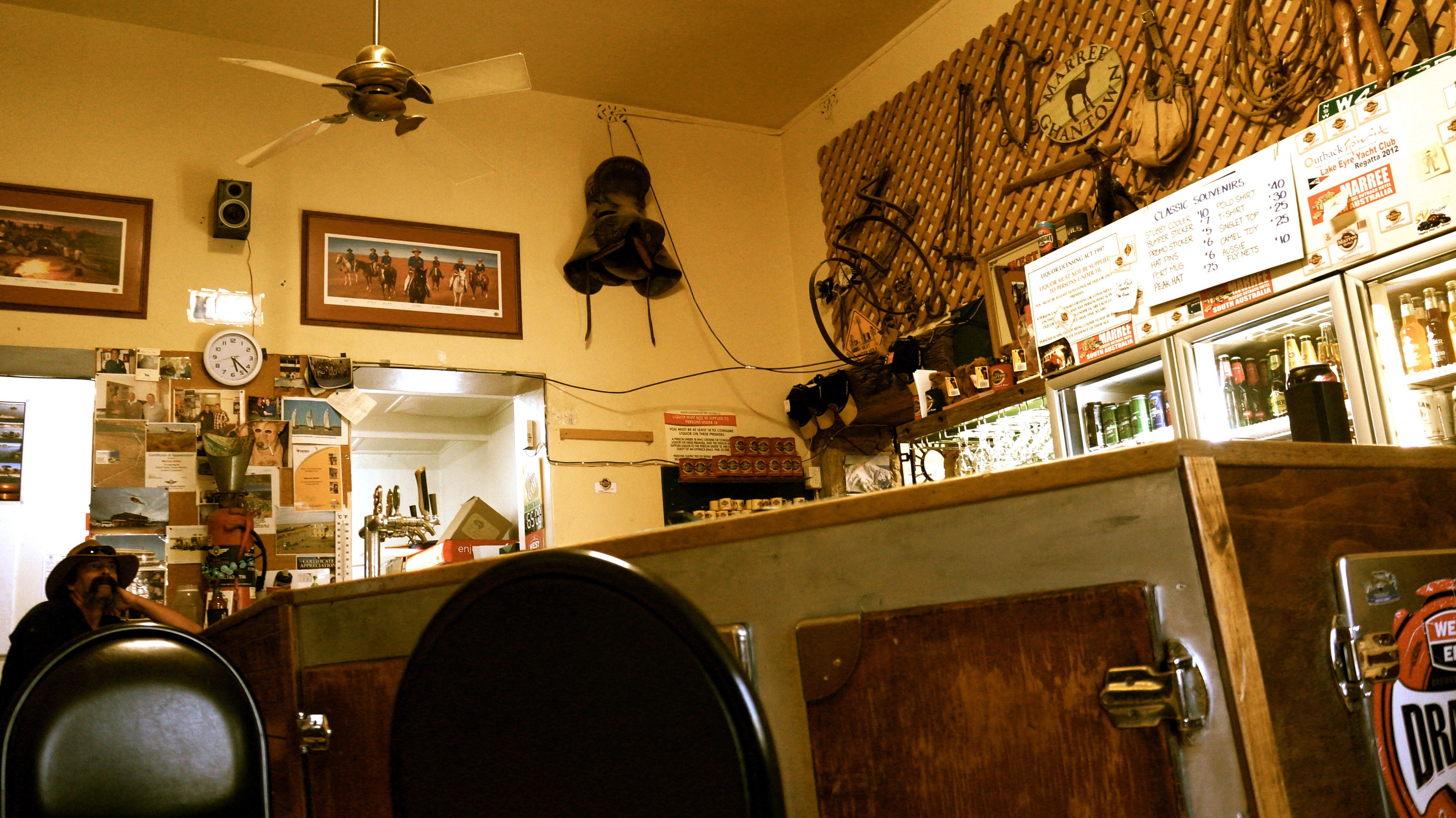
 Historic pub in the Marree Hotel. Almost a museum with hundreds of artifacts and photographs from the history and lifestyle of this desert area. Is that Crocodile Dundee in the corner ?
Who should take care of it ?
The main reason the giant figure hasn’t been preserved is because nobody’s stuck up their hand to take care of it. Aaron Stuart, the chairman of the Prescribed Body Corporation of Arabana Native Title, who said Marree Man would be known as Arabana Man in keeping with the local people’s wishes, told the Advertiser it wasn’t really a priority.
“There are more important cultural artworks right next to Arabana Man that you cannot see from a plane … rock carvings that are 40,000 years old,’’ Mr Stuart said.
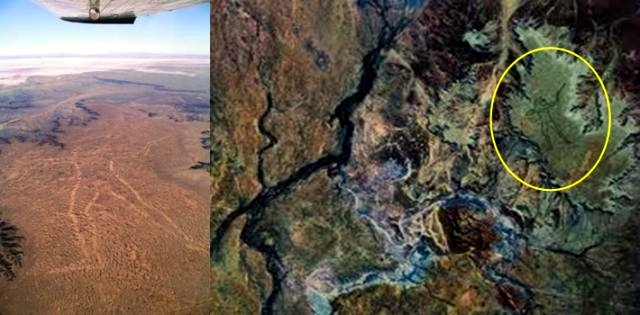
 The largest geoglyph of the earth.
“So, to me, it doesn’t bother me if Arabana man isn’t restored. There are people who are looking to it from a financial benefit point of view, but Aboriginal people are not going to be treated like third class citizens and not get something out of their land while others benefit.”
“It’s going to require very sophisticated surveying and station plotting and reverencing back with satellite photos from when it first appeared, but it’s no different to restoring a find work of art. You may only have one small corner of the Rembrandt left but after years with a lot of professional work you can restore it,” Mr. Turner says.
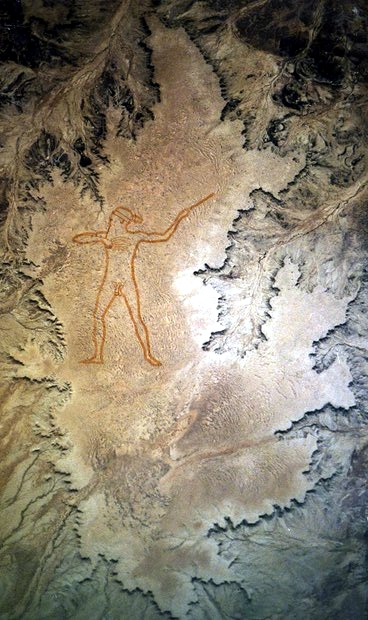
What a mystery ? What an amazing work ? How to do it so big and in such a secret way ? Why are there no witnesses, no signs of moving machinery into the area or tracks onto the plateau ? And who did it and why and when ? And how done and why so precise towards Nan Madol ? Original photo from 1998.
Not the only mystery.
As in size, South Australia’s famous geoglyph is only eclipsed in mystery by the Peruvian Nazca Lines. They are bigger as a total area, but as a single geoglyph, the Marree man is the largest „geoglyph sculpture“ in the world.
Recognized as the world’s largest geoglyphs, the series of figures which can only be seen from the air are believed to have been created to be seen by the Nazca people’s gods. Some say the figures, ranging from detailed animals to apparently random lines and more intricate designs, are made to represent constellations, while other theorized some of them represented the flow of water.
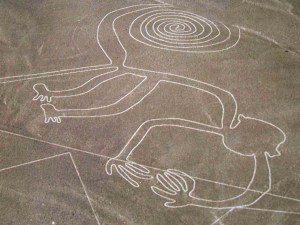
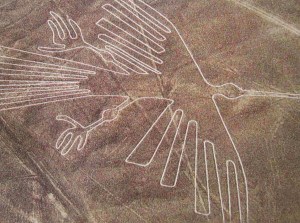 The „Spiral Tailed Monkey“ (left) and the“Hummingbird“ (right) , Nazca lines in the Andes of Peru.
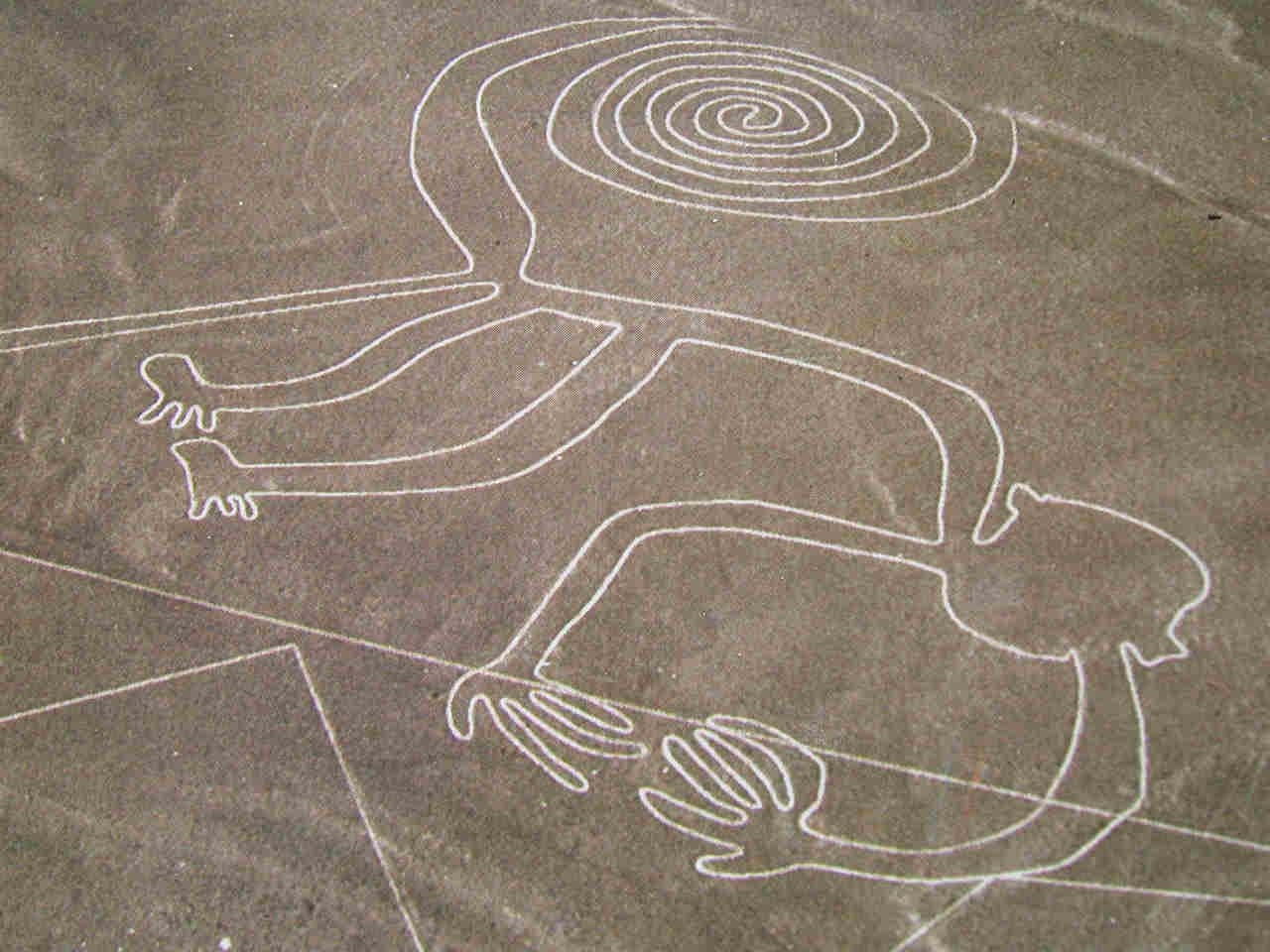
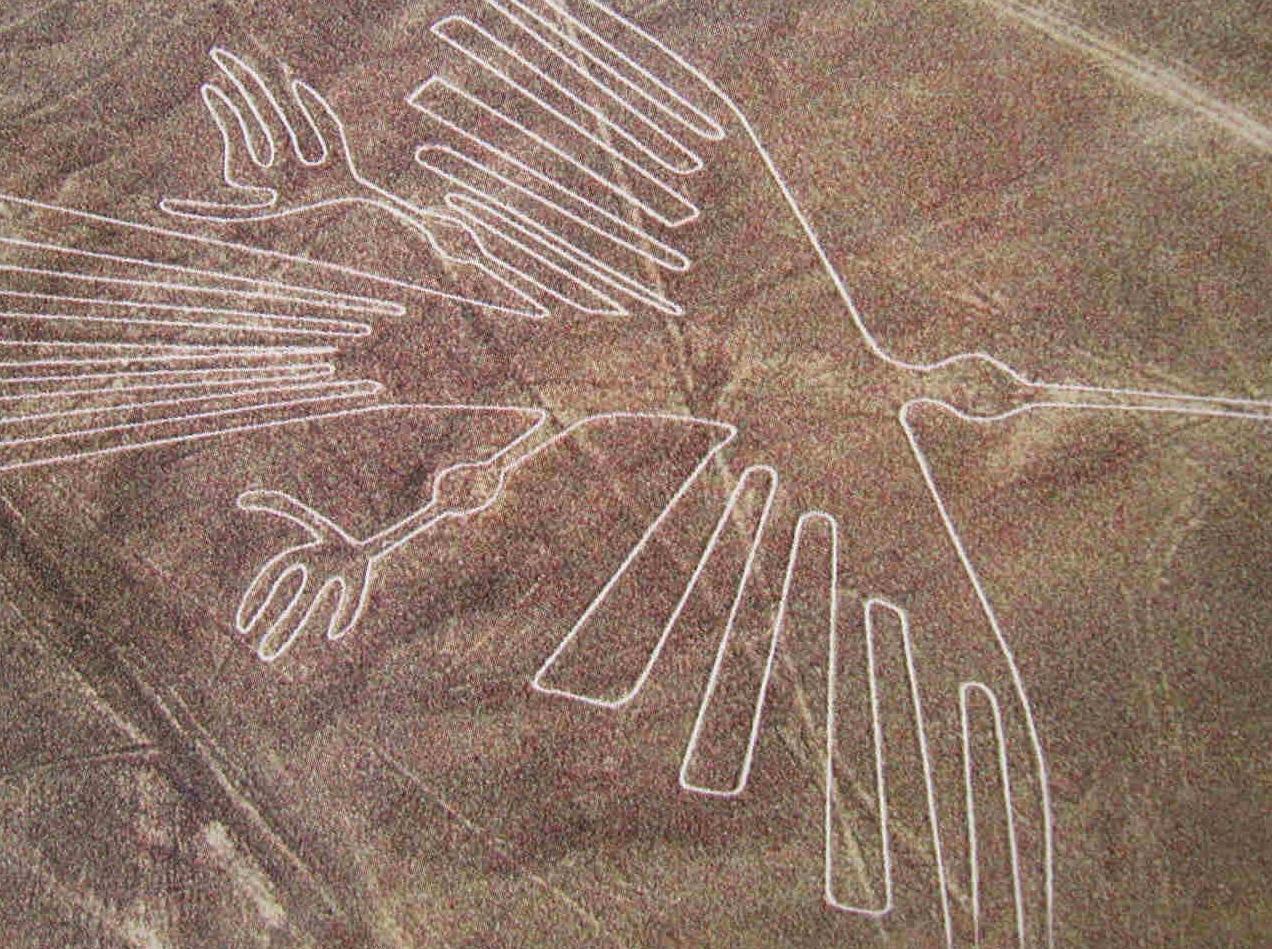
The lines were first spotted from the air in 1939 and in 1994 were recognized as a UNESCO World Heritage Site. But World Heritage status or not, to some, the Marree or Arabana Man will always be that little bit more special.
“I get goosebumps when I stand there and I look and think how the hell did they do that? Standing alongside it is a pretty humbling experience, but to see it from the air is amazing.”
Strange finds around the Marree Man.
The fax messages, however, contained puzzling references to the originators, which included measures such as miles, yards, and inches not used in Australia, as well as a few terms that are also unusual in the country’s language. That is why many believed that Americans had drawn the giant man. Strange specimens continued to fuel speculation.
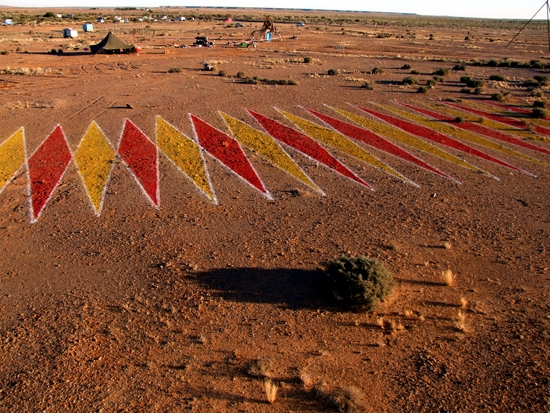
 Rough-Diamonds in the shadow of Marree Man.
In a small pit near the figure were discovered some objects: a satellite picture of the drawing, a glass with a small US flag and a note with a reference to an American sect.
In 1999 the authorities received further information in a new fax. A blackboard was dug five meters off the nose of the Marree Man. You can see the American flag with the Olympic rings and a quote from a book. This describes the hunt for Wallaby kangaroos with the help of a stick, as the Marree Man carries it in his hand.
Did an Australian artist create the huge figure?
But the clear references to an American author of the Marree Man can also have been a simple distraction maneuver. For today, it is very likely that an artist has allowed a fun. Bardius Goldberg was known for his unusual actions. He had already worked with GPS and created small geoglyphs, so scars. In addition, he is said to have expressed the desire to create a gigantic image that should be seen from the universe. A farmer later explained that he had borrowed Goldberg tractor and plow.
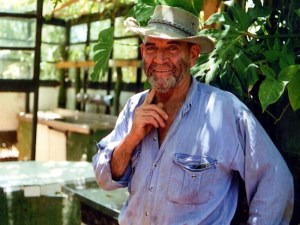 The Australian artist Bardius Goldberg.
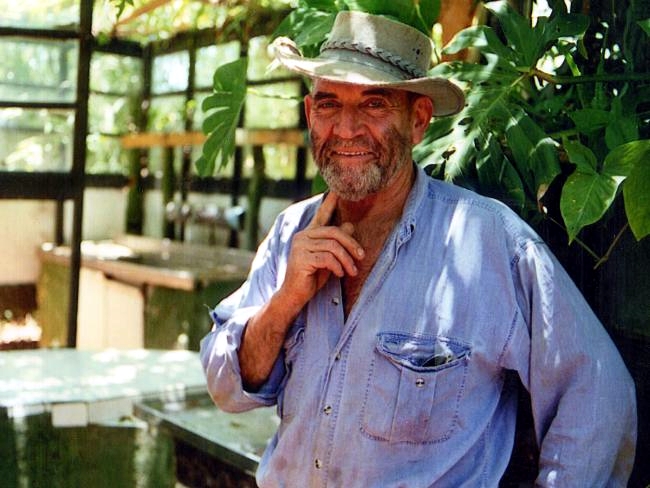
The artist himself died in 2002, until then he did not confirm the rumors, but also denied them. He also never expressed himself to a larger cash payment, which he had received shortly before the Marree Man was founded. Was it a commissioned work? But for whom? This, too, will remain a mystery forever.
For many years the earth sign had been overgrown and grown. But a group of volunteers has cleared it with planing in laborious work. They want to boost tourism in the inhospitable area. Since August, the Marree Man is now clearly visible from the air. That no one knows who created it makes him all the more interesting.
Another mystery.
Geoglyph „Marree Man“ is the largest of the famous geoglyphs in the world. Figure depicting of the hunting Australian native, is located on a plateau near Finnis Springs, about 60 kilometers west from the town of Marree in central Australia.
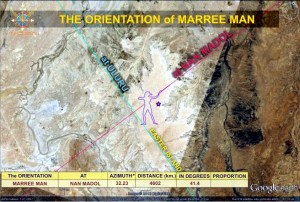 Precise pointing of the stick to Nan Madol ! Why ?
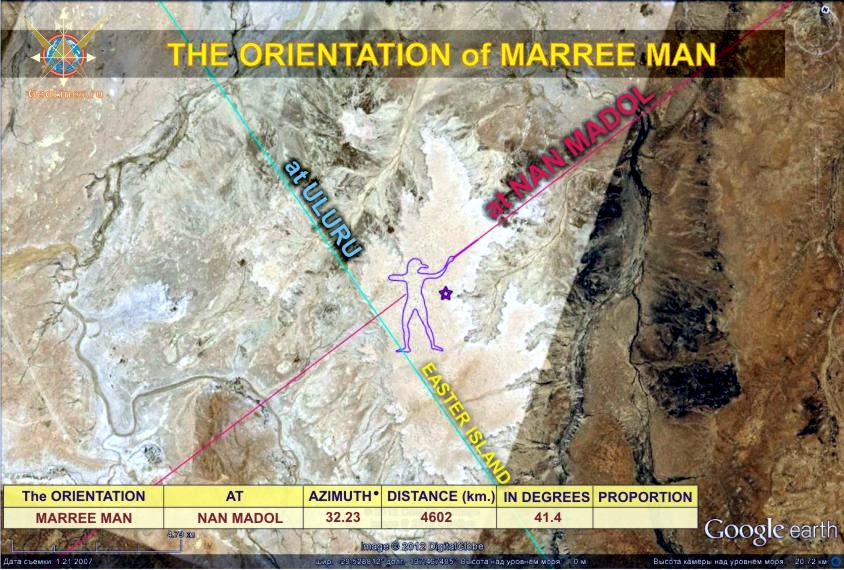
The most interesting fact in this geoglyph is his „stick,“ he points to Nan Madol (you can read about Nan Madol in two parts I posted earlier), the distance to which is 4602 km, or 41.4 degrees of arc of the circle. If to draw a line through the sacred mountain of Uluru and Easter Island, it will pass exactly through the foot of the Marree hunter.
If this geoglyph was done by some locals, a local artist or Americans or whoever, what would they know about Nan Madol or precise degrees to other „holy and mystery“ places and get it carved so precise in this remote area ? And ? And ? And ???
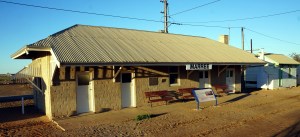 Marree station called „Herrgott Springs“.
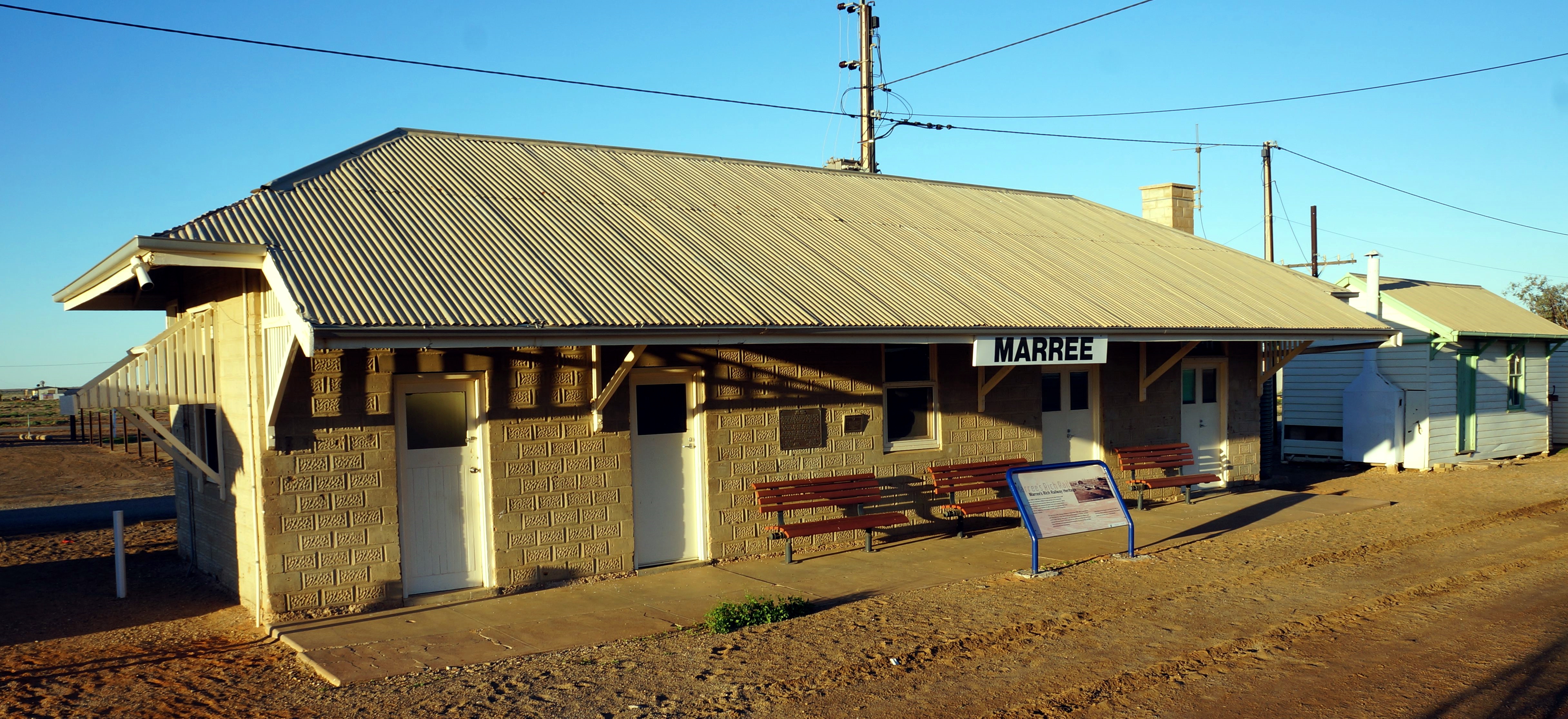
A bit about Marree.
Marree is a small town located in the north of South Australia. It lies 685 kilometres (426 mi) North of Adelaide at the junction of the Oodnadatta Track and the Birdsville Track. Marree is an important service centre for the large sheep and cattle stations in northeast South Australia as well as a stopover destination for tourists traveling along the Birdsville or Oodnadatta Tracks. The mail post also contains the „book“ where travelers write in and out there leaving or arrival (that was before the cell phone service – now history).
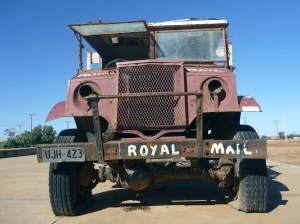
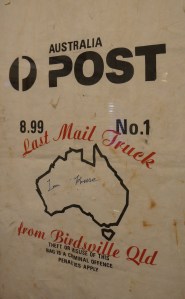
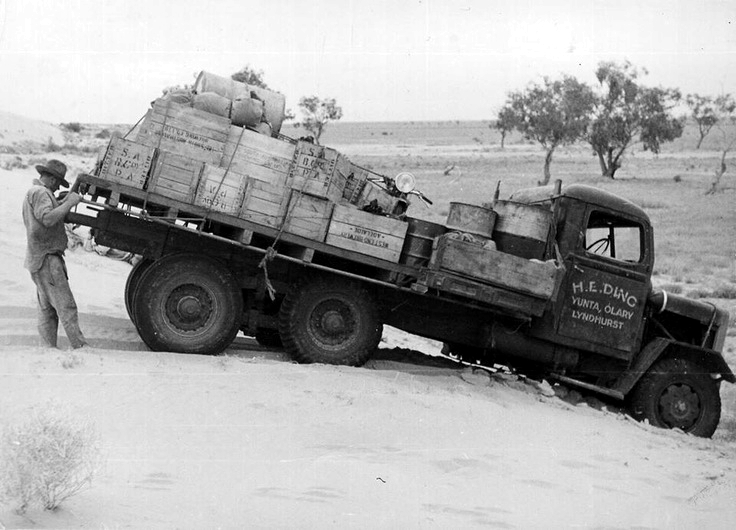
Marree was also the home of Tom Kruse, one of the men who drove the mail trucks from Marree to Birdsville in Queensland, a distance of about 700 kilometers. This route crosses some of the most challenging sandy and stony desert country in Australia, and it was a remarkable feat for fully loaded trucks to make the run at all.
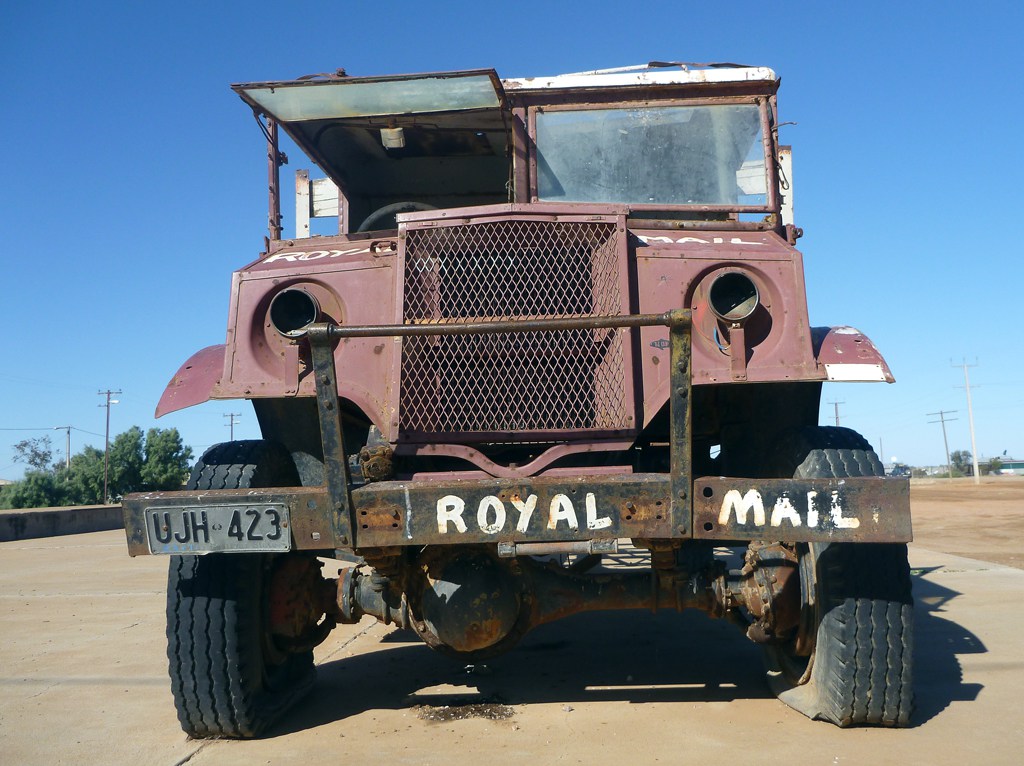
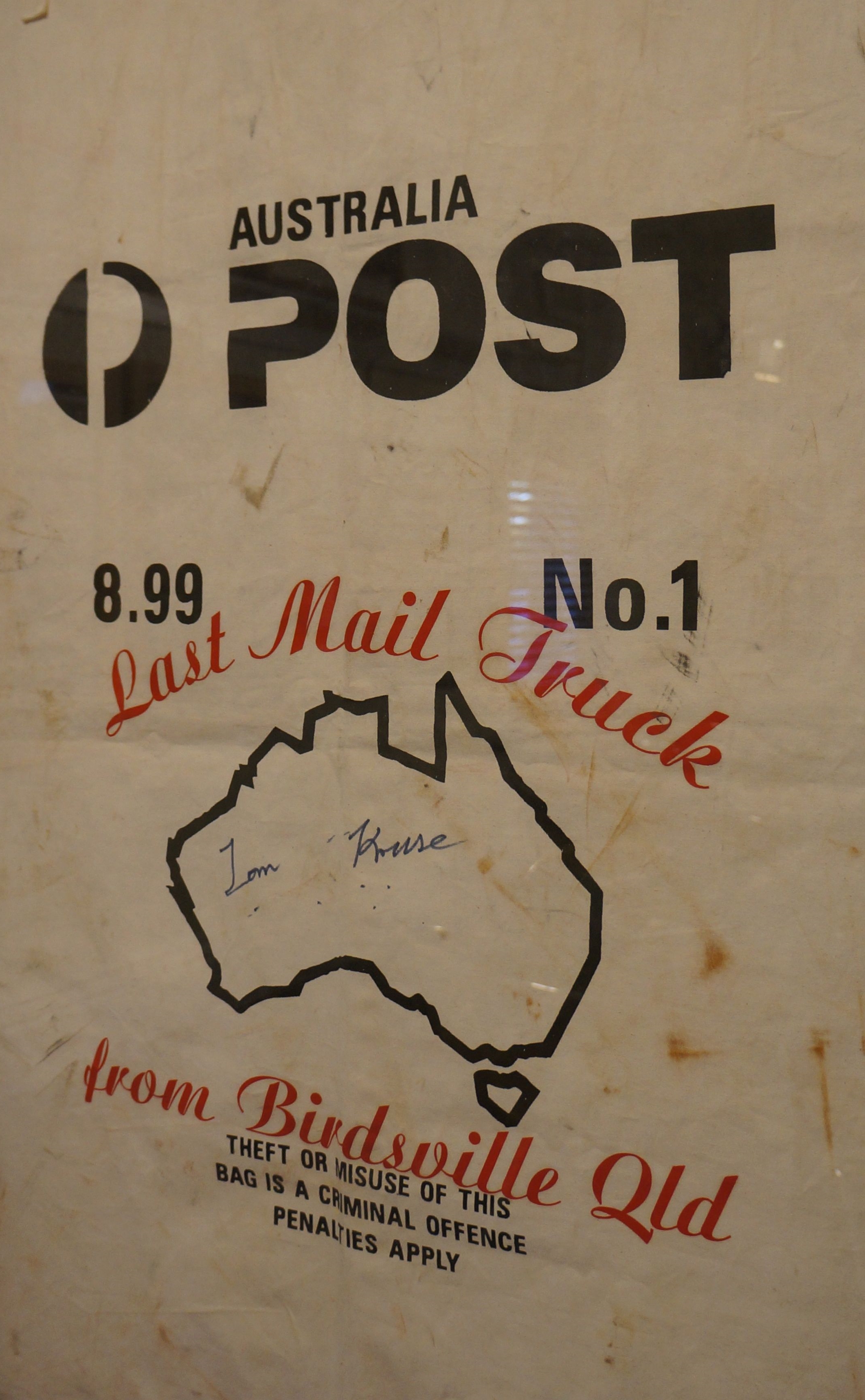
 A collection of hundreds of photographs, documents and memorabilia from Kruse’s Birdsville mail run are on display at the Marree Hotel. Kruse bought the mail-run-contract 1948 and drove the track fortnightly for almost 30 years.
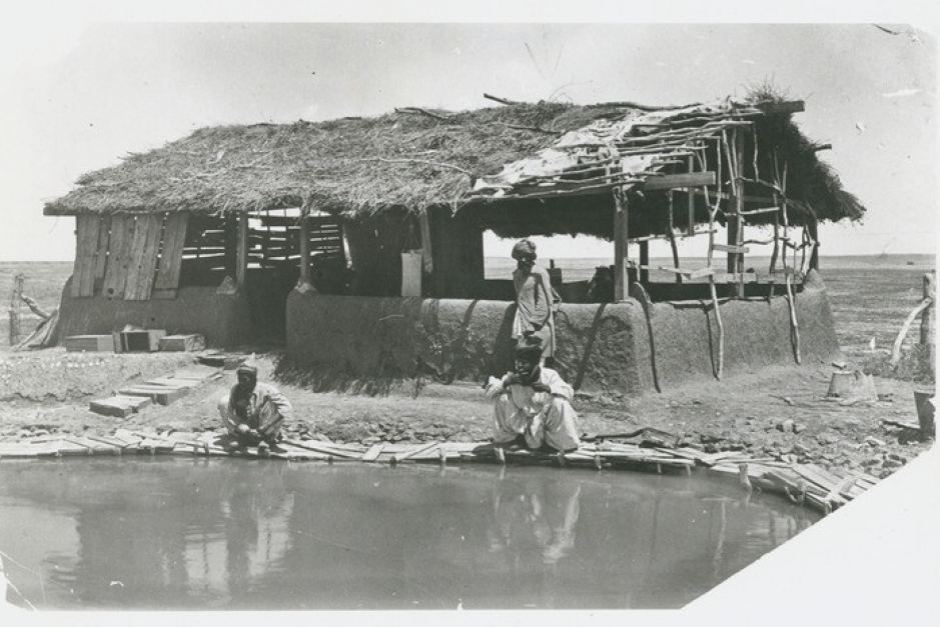
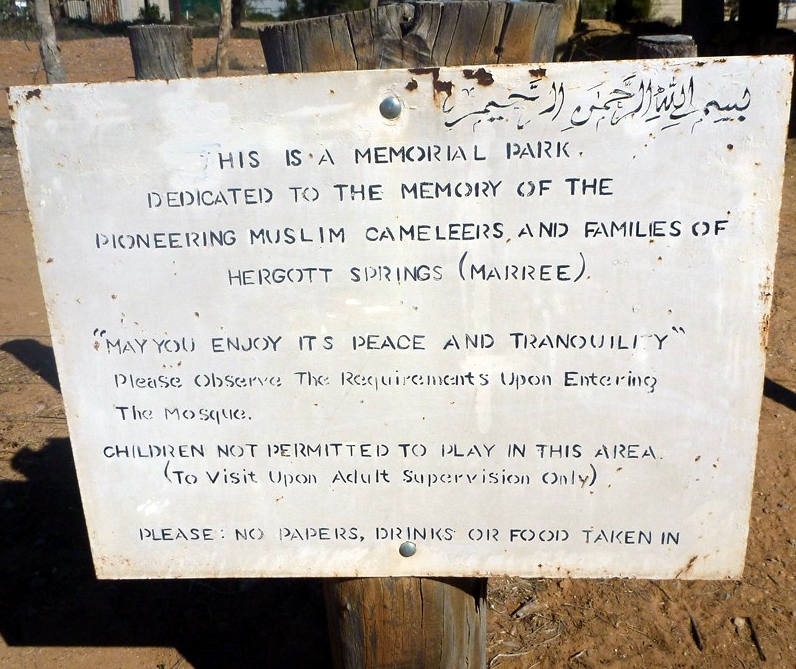
The earliest known mosque in Australia was built in Maree in the South Australian outback in about 1862 by Afghan cameleers.
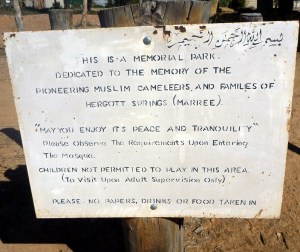 The old and original Afghan Mosque in Marree.
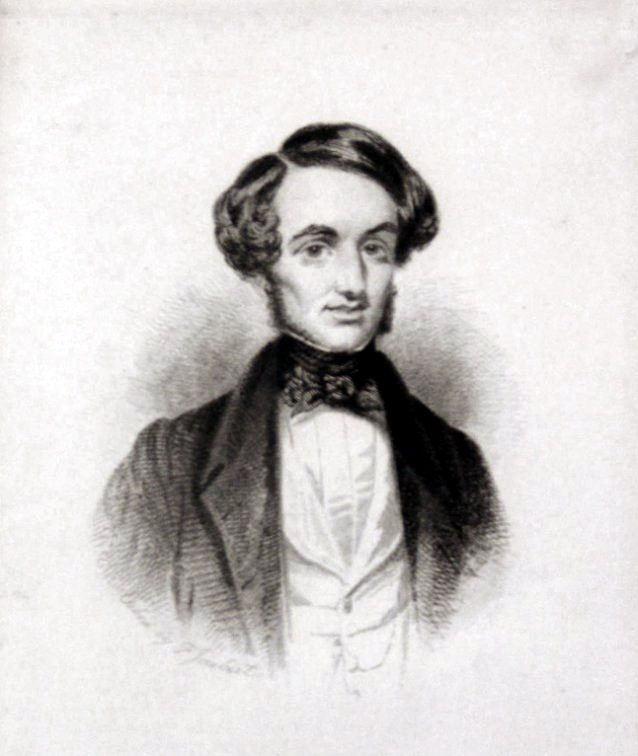
The first European to explore the area was Edward John Eyre (5 August 1815 – 30 November 1901), who passed through in 1840.
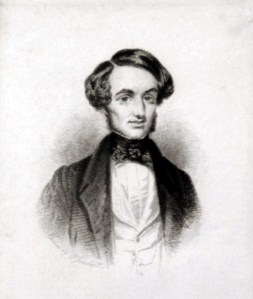 Edward John Eyre.
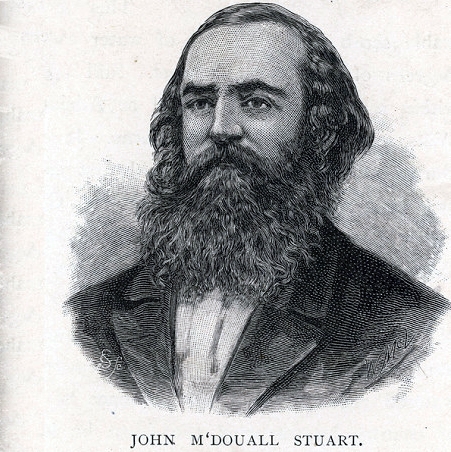
In 1859, explorer John McDouall Stuart (7 September 1815 – 5 June 1866) visited the area, and his German botanist Herrgott discovered the springs which Stuart named after him.
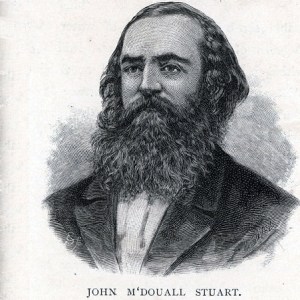 John McDouall Stuart.
Initially the area was known as Herrgott (or Hergott) Springs but when the town was surveyed in 1883 4 km South of the springs in preparation for the coming of the railway it was given the name Marree.

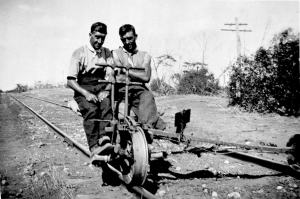 Heritage photos from Marree station, left 1900 and right 1930.
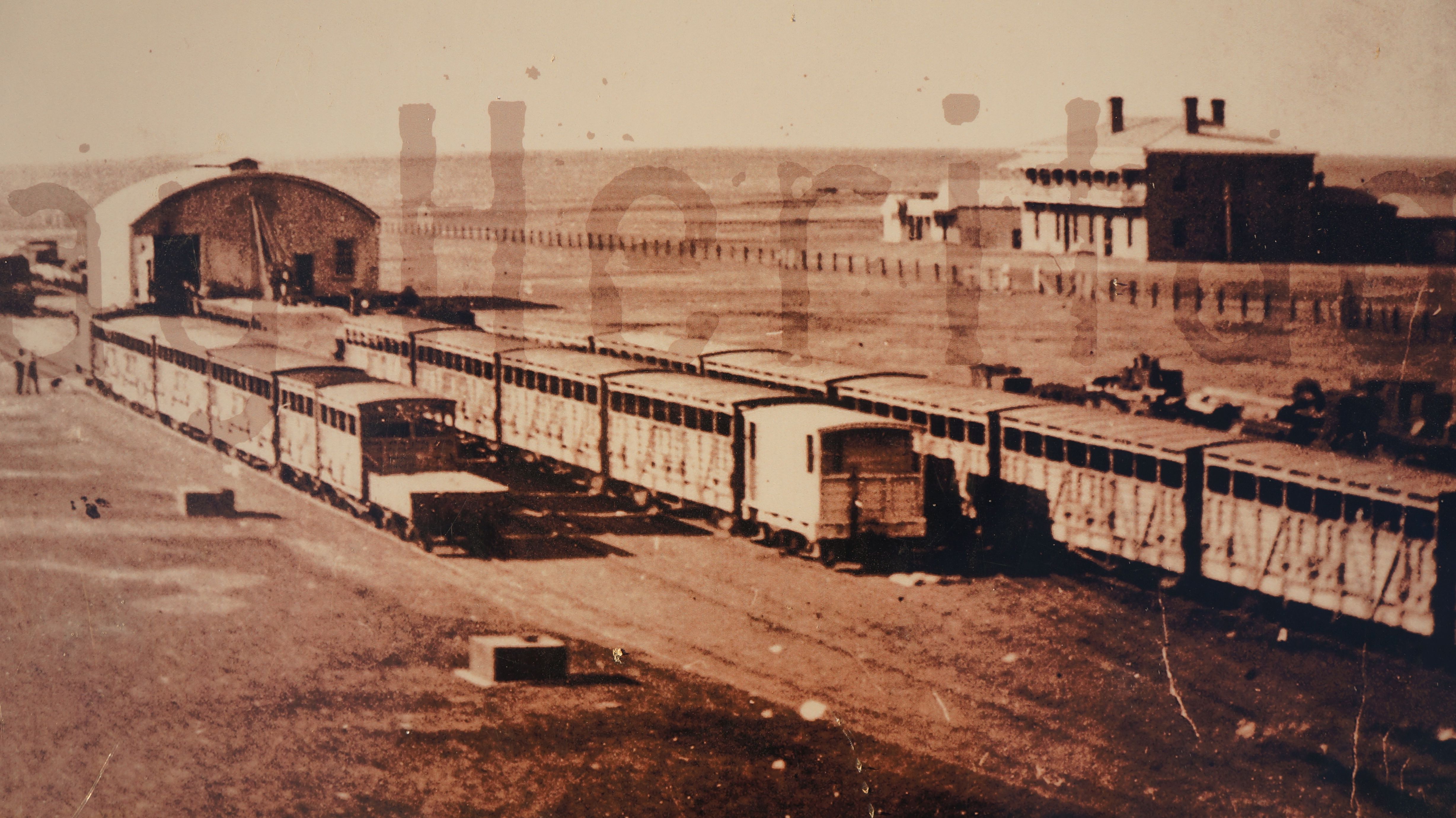
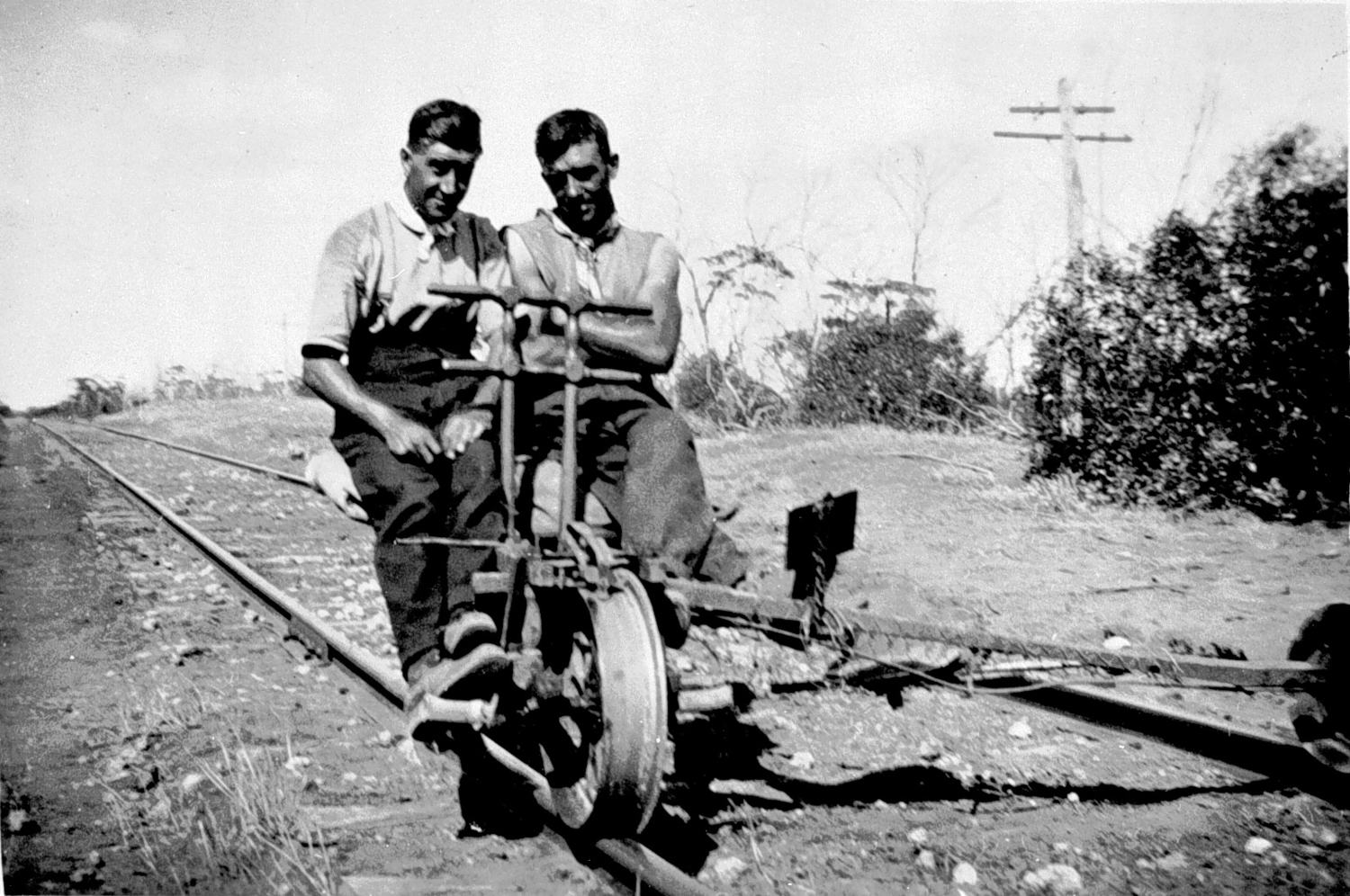
Marree is said to be derived from the indigenous word for possum. However the railway station itself was given the name Hergott Springs and the town remained known as such. The railway station’s name was eventually changed to Marree in 1917 due to anti-German sentiment after World War I.
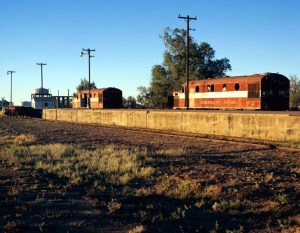
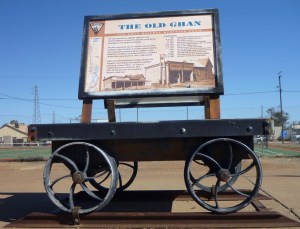 Herrgott Springs or Marree station nowadays.
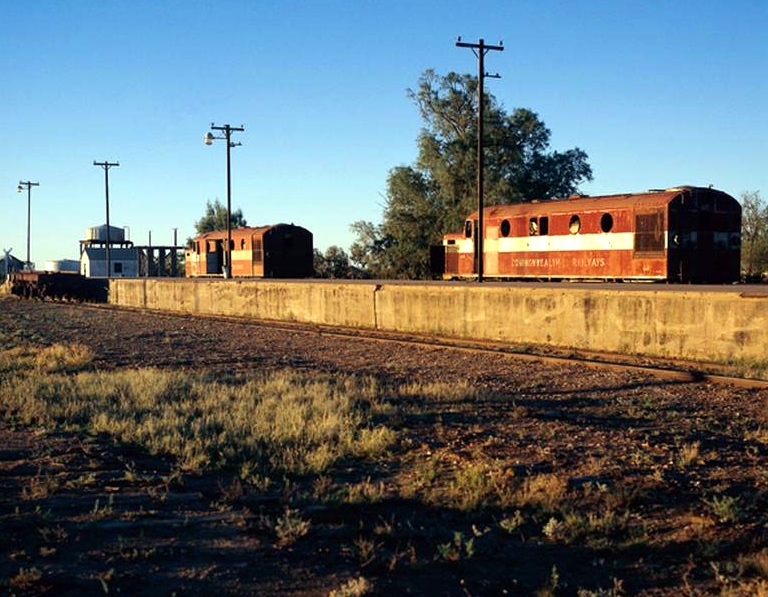
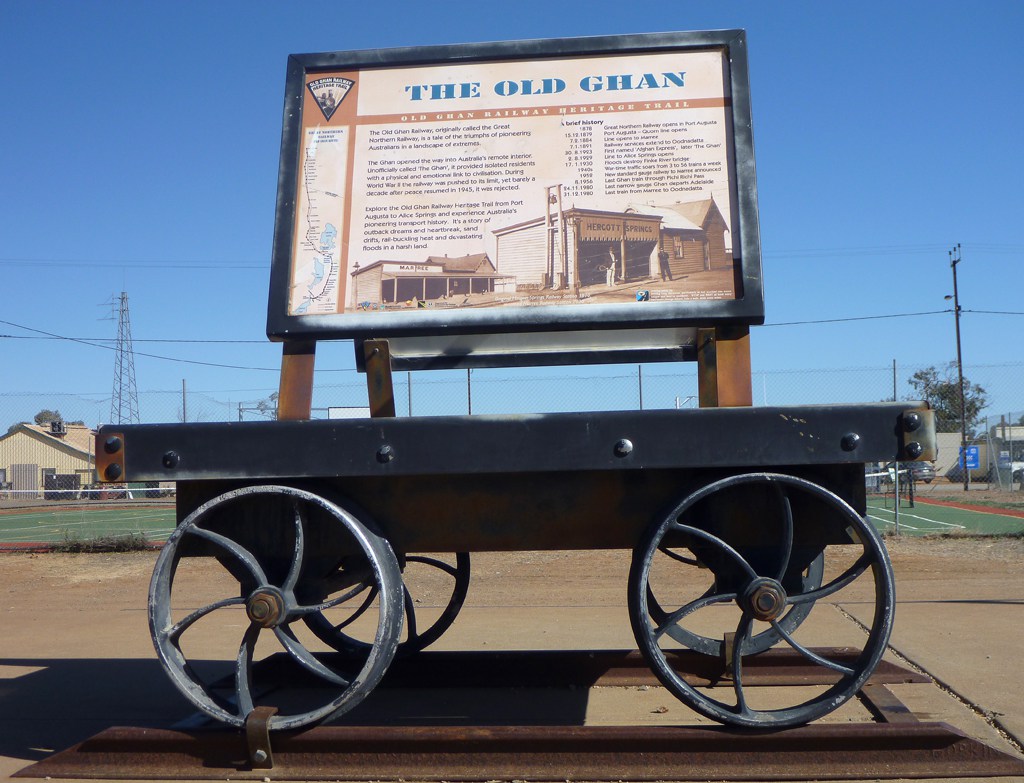
The Central Australian Railway reached the town in 1883 and the first train ran in January 1884. The town became a major railhead for the cattle industry. In the 1920s the railway was extended north from the town to Alice Springs. After opening in 1929 it became the route of the passenger train which became known as The Ghan.
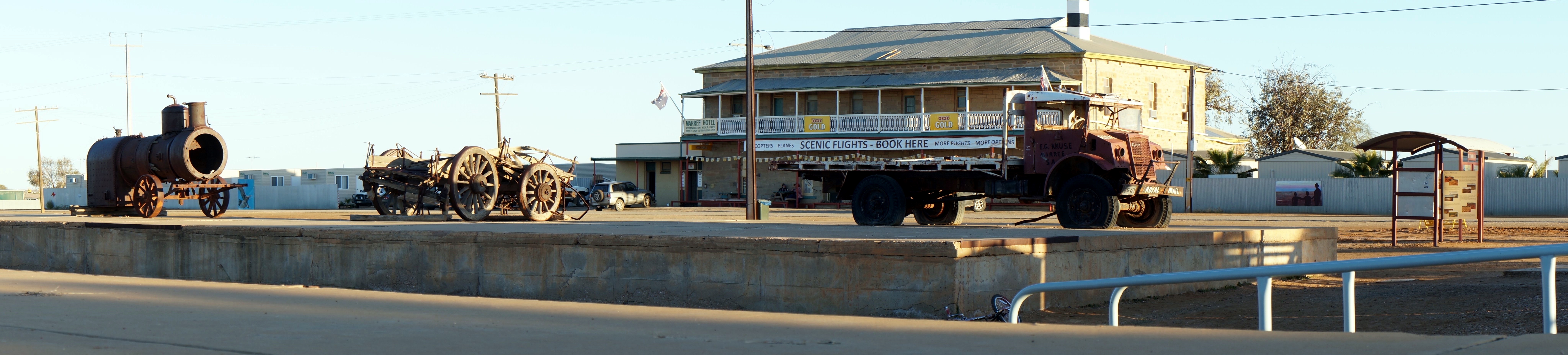
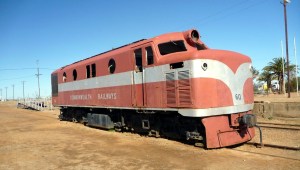 The open air museum in Marree (left), across the Marree hotel. Right one of the last diesel locomotives of the Ghan.
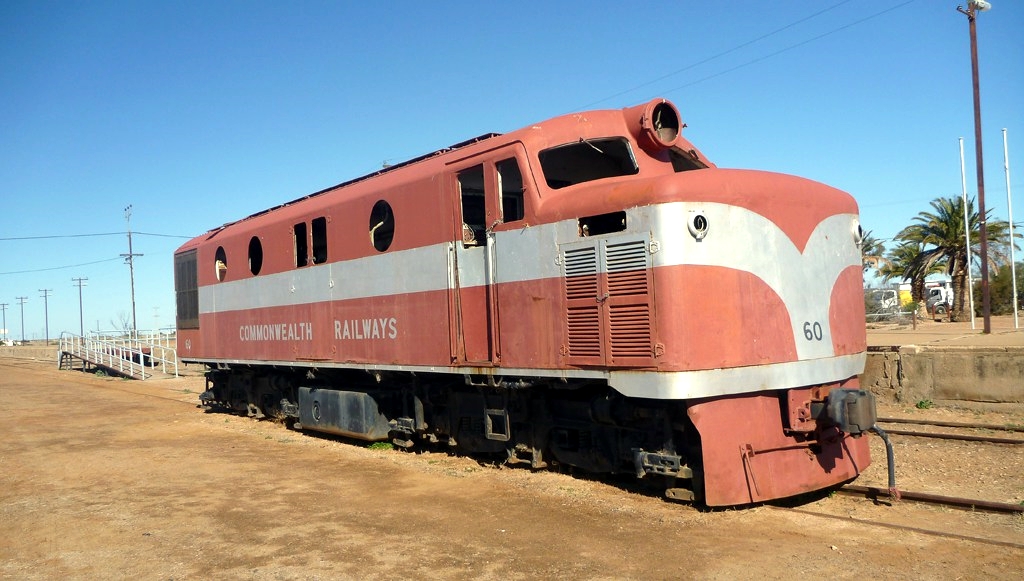
In 1957, a standard gauge line was built south from Marree on a flatter alignment to facilitate the movement of coal from Leigh Creek to Port Augusta. That made Marree a break-of-gauge on The Ghan service because the remainder of the line was still narrow gauge. In 1980 the narrow gauge line from Marree to Alice Springs closed when the Adelaide to Alice Springs line was rebuilt much further west. In 1986 the standard gauge line from Leigh Creek coalfields to Marree was closed and the town lost its railway connection completely.
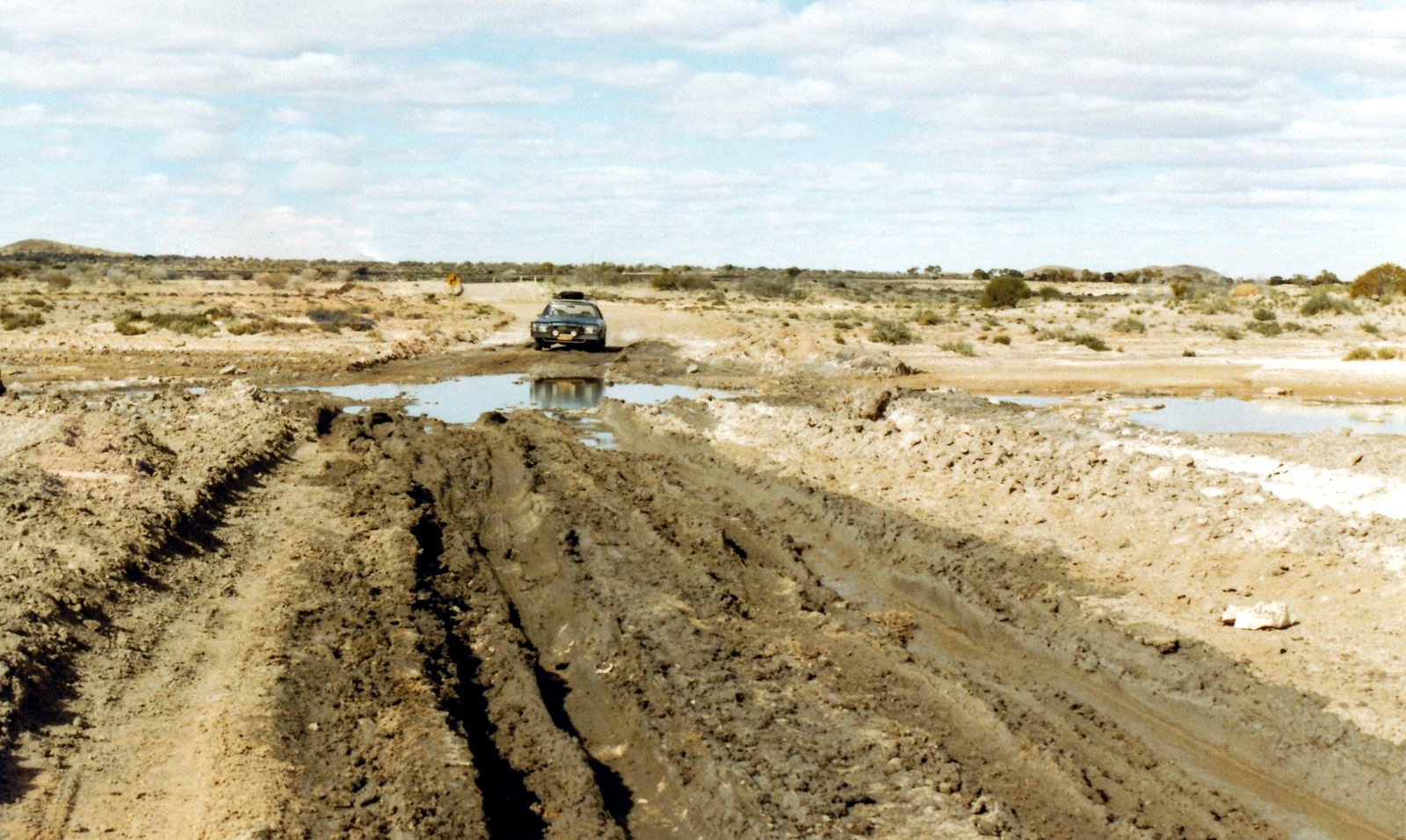
 First time I came to Marree was via the Oodnadatta track from Alice Springs. It was a 4WD track those days. And yes, we got the Aborigine family (3 adults and 5 kids), in the car you see, through the mud. I had that often with the Aborigine locals in Australia, no necessary gear, no preparation, no care about nothing – sometimes even no water – they just think, someone will come along to help. I can tell lots of story’s about their lifestyle and attitude of survival.
The Marree Man is back!
Just got this information from Australia when I corresponded with friends in Port Augusta about this article, the Marree Man is back ! The world’s second largest geoglyth has been lovingly restored for all to enjoy. We can say second largest from now on and leave the honor of the „largest“ to the Nazca area. Thanks to the „Marree Community Restoration Team“, under the massive influence of Phil and Maz Turner, owners of the Marree Hotel.
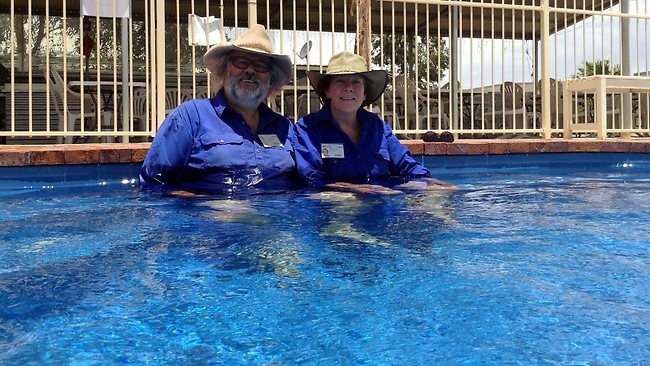
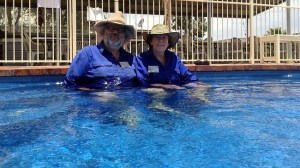 The Turner’s – happy – the tourist $ can roll again.
The intrigue that surrounds „the man“ and how he came to be on a plateau in Outback South Australia has been reignited. Fly over the site and wonder at the skill and artistry of the original creator all those years ago. Standing at 4.3km tall with a 28km circumference, the world’s second largest geoglyth is best appreciated from the air!
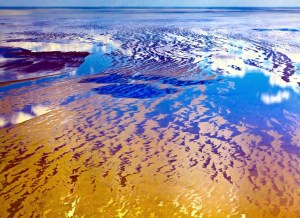
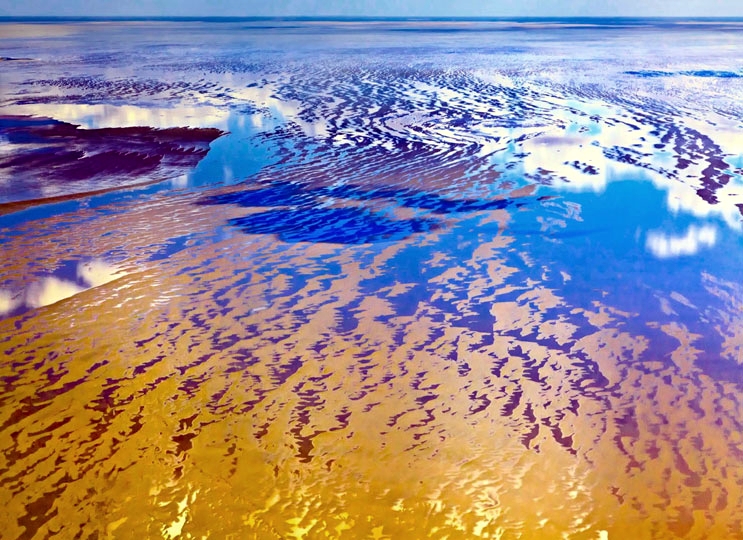
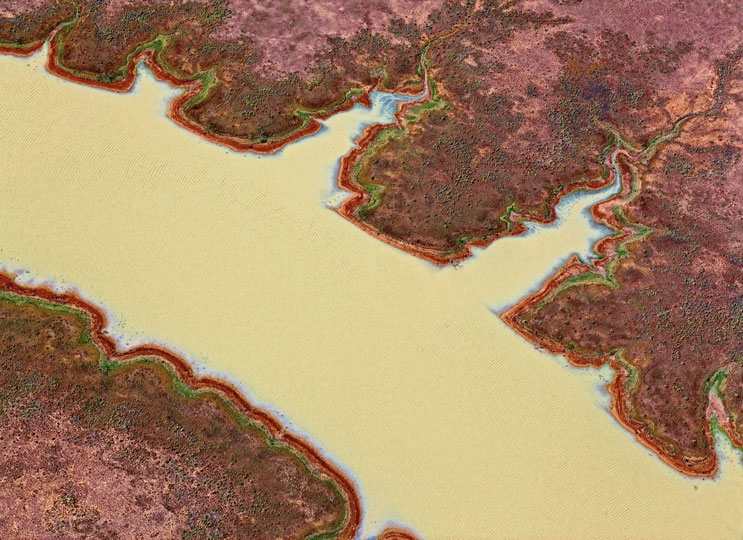
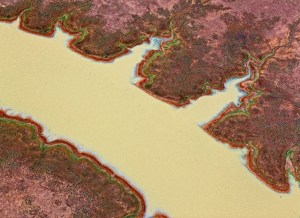 Two pics made during the scenic flight over Lake Eyre and to the Marree Man. Flight tours are operating by „Scenic Flights Marree“. Flight Time: 45 minutes. Adults: A$270pp for 2-5 passengers (includes $22 Arabana Fee) , (We acknowledge and operate Marree Man flights with the kind permission of the traditional owners of the land – this is Arabana Country.) This is how the Aborigine community’s make money, they are participated everywhere – they „own“, since 40.000 years, the Australian continent.
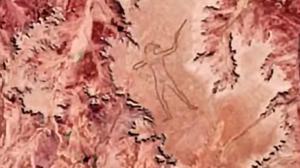
Left the newly restored Marree Man, photo taken in August 2016 by „The Guardian“.
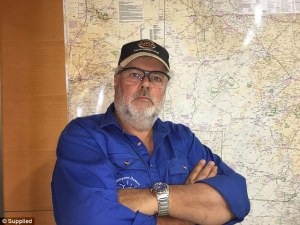
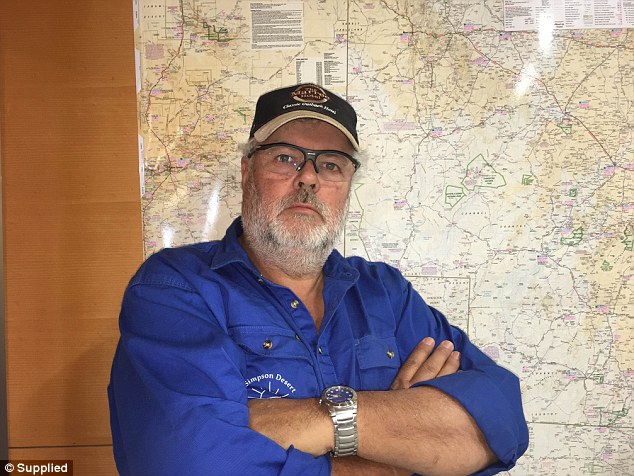
Right Phil Turner who said:
“We could see it was fading rapidly and, from a tourism perspective, to lose such an extraordinary myth and mystery would be a tragedy. The restauration group collaborated with the Arabana Aboriginal Corporation, and compiled imaging data to ensure they were retracing the original.
Then it came to, ‘What do we use as a paintbrush to restore this work of art’? And we came to a grader. It will be there forever not because of the work we’ve done but because we’ve created wind grooves. The graded wind rows trap water … so over time Marree Man is going to turn green.”
After writing this post and having all the memory’s going through my mind again, I think I am motivated enough to go on and write about my life in Australia and my Australian adventures from time to time. Hope you liked this post, stay tuned !!


I would prefer your stories in shorter form — say 500 – 1,000 words. What you told me today alone about the end of this entry, the utterly unprepared aborigines, would make a great blog entry on its own. How could they have ever crossed that muddy morass in front of them, even after your help, in a 2WD street car?
LikeLike
Thanks for your comment.
But I like writing and it is often my problem
to cut down everything I know and want to write.
So – it will be similar in the future. And
also, if I have, always many many pictures.
To get the car through the mud was easy. Just a
strong rope and pulling the car and then the
family through. I had a strong Land-cruiser 4WD,
no problem at all. But what you can’t see, there were
3 more mud holes behind me, so I had to pull all
over one kilometer to get them out !!
Finally it took about 3 hours and in total 5 times
through the sh…dirt. Was great fun !!
Finally – YES – writing a post just about experiences with
people on the road in Australia would be great. But again,
it would fill a book and not just 500 words. My problem.
LikeLike
Hi Mike ,
what a great story again, never heard about this enormous geoglyph before. Thanks for sharing with us.
Please go on with your extensive posts, don’t shorten them. They have information and content and they are not as hollow as many other blogs – sorry senhor Doug.
I wish I could travel to Australia and see everything myself.
Can’t wait for more, Luigi.
LikeLike
Thanks very much Luigi,
I will go on, don’t worry, many more themes are
in my head and planning.
So as you, have many other people never heard about
Nan Madol or the Marree Man, but they are too „proud“
to tell and won’t comment it.
At least with all my friends I had and still have
long conversations about those mystery’s. Very very
interesting discussions.
And yes, I wish I could go once again to Australia,
but ………….1000 reasons …….. !!
Till soon my friend, Mike.
LikeLike
Pingback: The Marree Man – Update | my uy tips