
A Pohnpeian proverb states that „if one tells everything he knows he will die“. One man explained that knowledge is like a full cup of water, which once turned upside down has nothing left. A man who reveals everything has nothing left, but death.
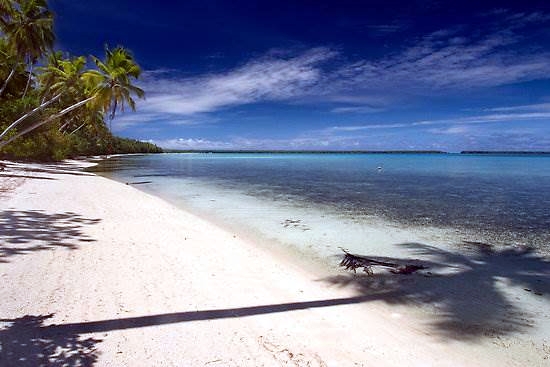
Many years ago I had the opportunity to travel through the South Pacific Ocean. At least 20 to 30 trips mostly on the way from and to Europe/Australia. Island-hopping was a great adventure and I have seen dozens of islands throughout those years.
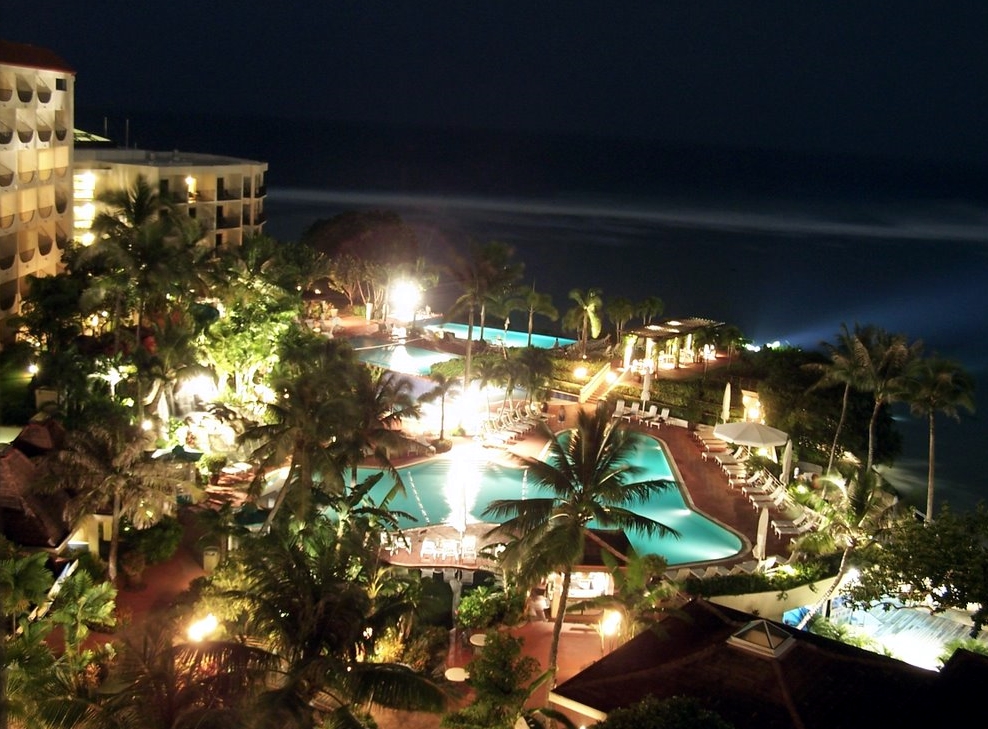
 Guam – Tumon Bay Hilton. One of the more then 20 luxury hotels in the bay. It looks like Waikiki in Hawaii. American hotel and beach style – not too bad.
The area covered was from Guam in the North-West to Tahiti in the South-East and from Vanuatu in the South-West to Kiritimati (Cristmas/Kiribati) in the North-East. I photographed thousands of slides and met hundreds of locals, heard suitcases full of story’s and took part in many many indigenous festivals and celebrations.
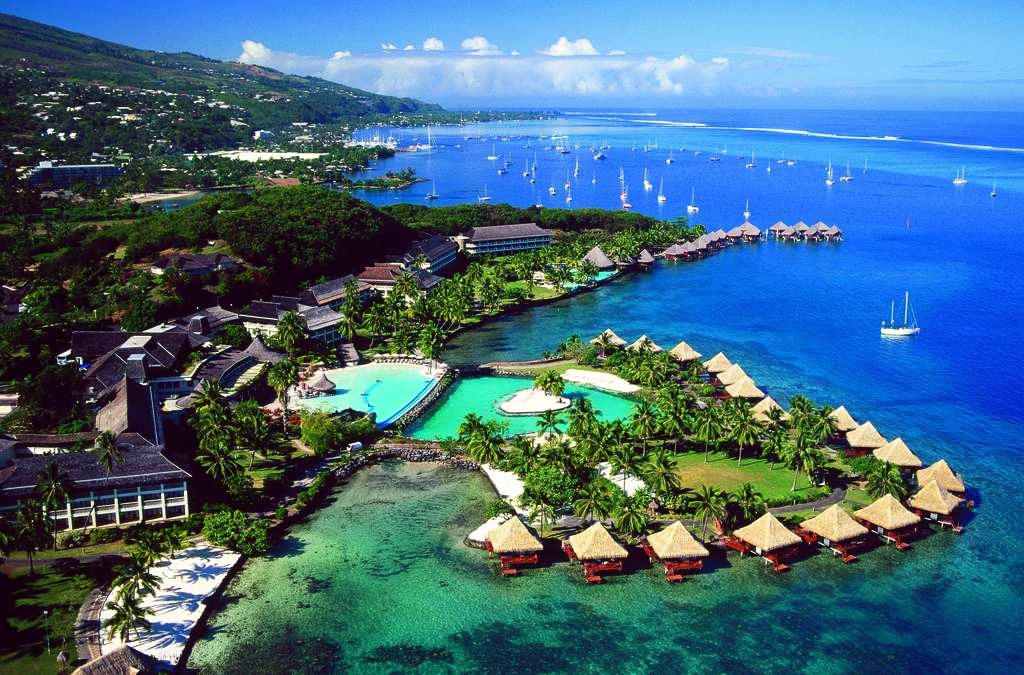
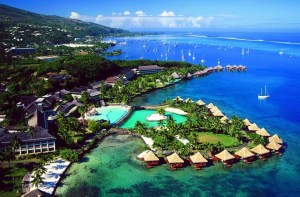 Tahiti – Intercontinental Beach Resort.
About all these experiences I always wanted to write a book. But there are so many „travel books“, good or bad, that I decided to keep my memory’s for the time being. Then I thought it is worth to inform about all the different hotels I stayed and the amazing food I could experience. Since I started my blog, I thought to provide articles about my adventures, but some places are gone, so as the Village Hotel in Ponape/Pohnpei, I’ll refer to further down.
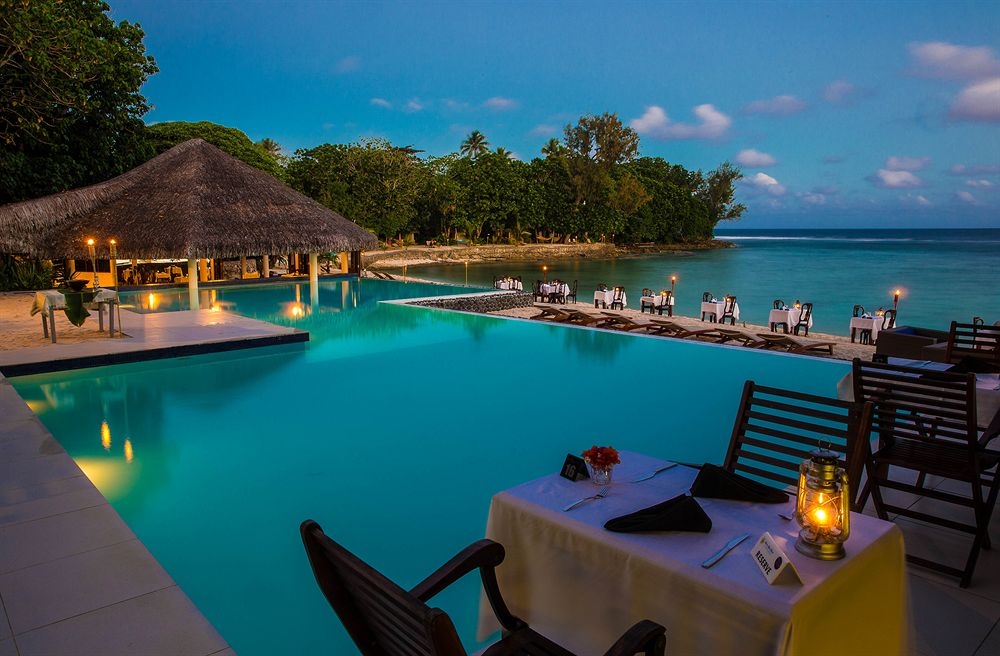
 Vanuatu – Breakas Beach Resort Port Vila.
During the past 30 years and many house and content removals I lost a lot of the old photos/slides. Also the photographic techniques are changed meantime from classic film/slides to digital and it is very hard to adapt the material, especially here in Uruguay. Positive is that the internet provides a lot of images which I am able to use.
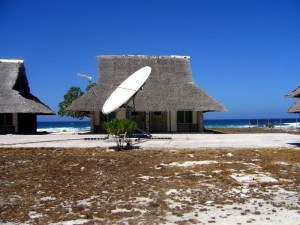
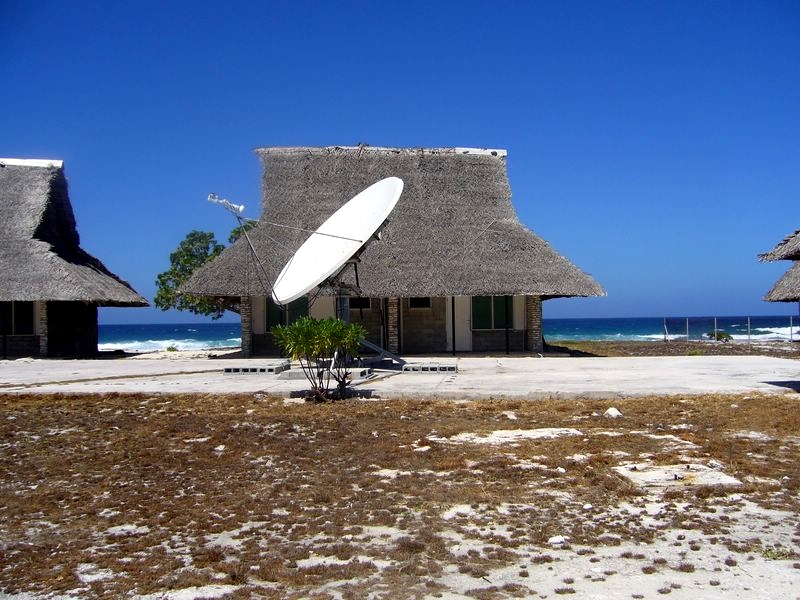
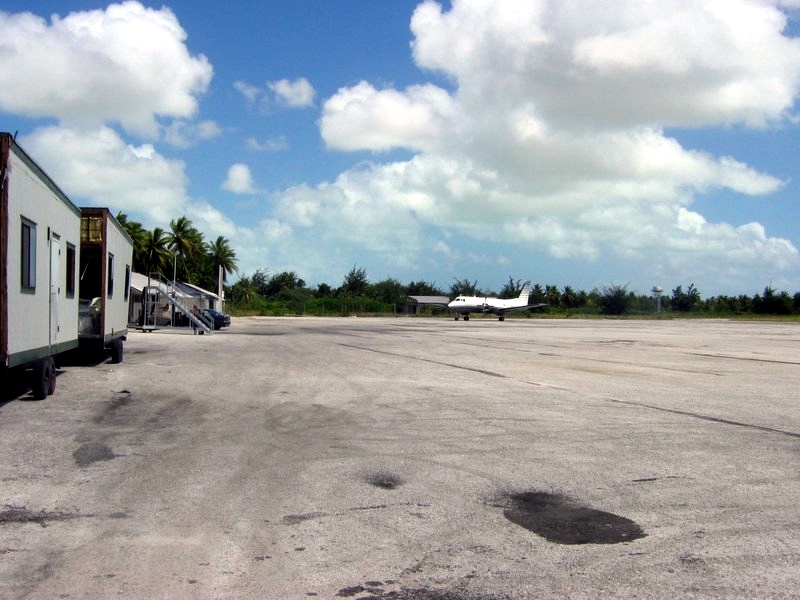
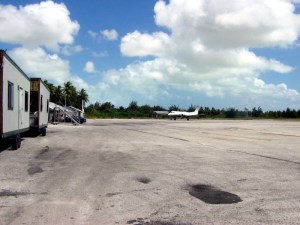 From 5 star resorts on Guam or Tahiti to a 1/2 star hotel (Captain Cook) on Kiritimati – 1/2 star airport.
Last weekend, during a wonderful meal with friends on „Chicken Cacciatore Day“ we discussed travels to the ruins of Machu Pichu and others, so as other „wonders of the world“. I mentioned the ancient city of NAN MADOL !! Wow – no one in the group – and there were well traveled ones – had ever heard about that „CITY“ . That’s why I decided to share with all of you my trip to Pohnpei and Nan Madol.
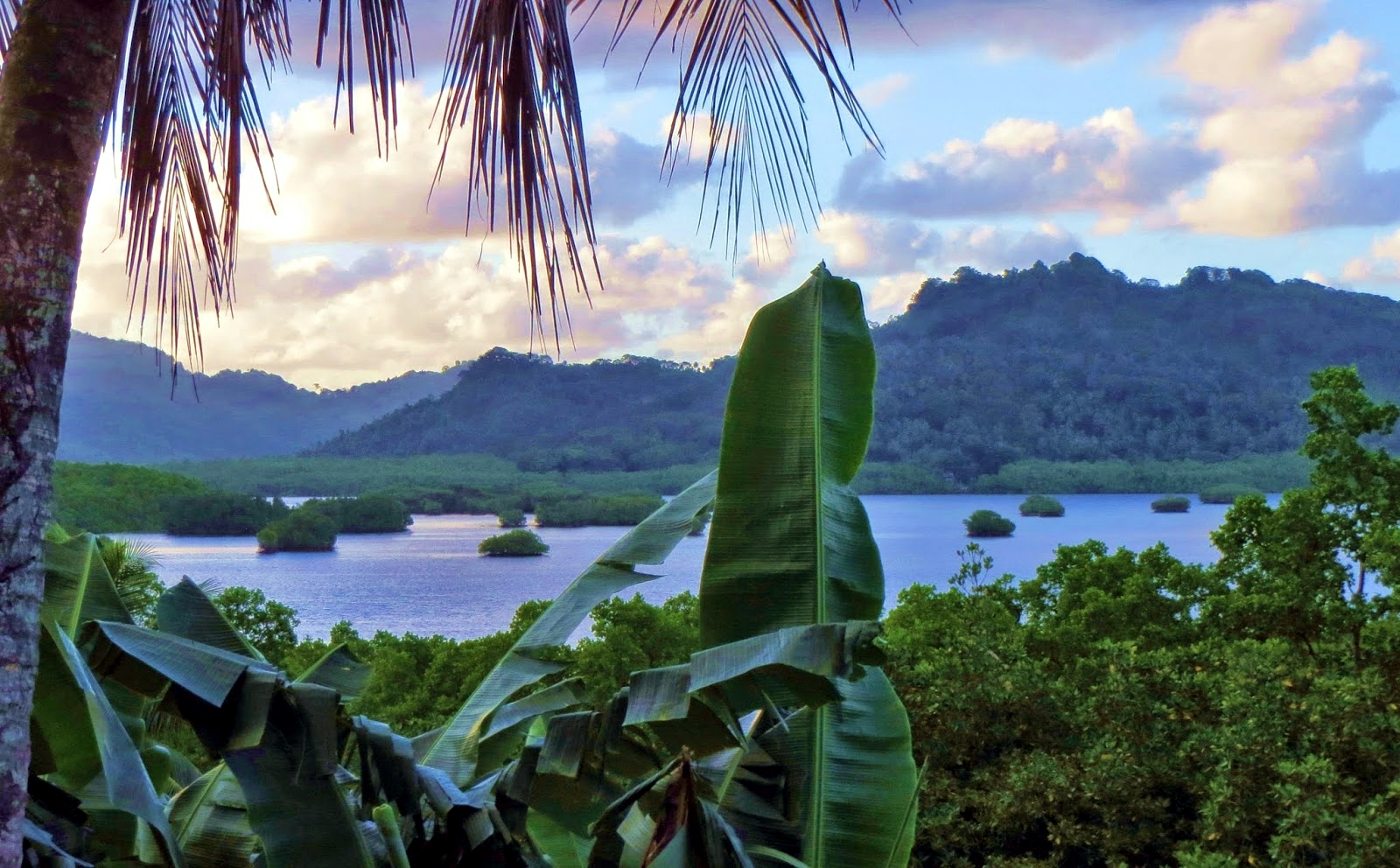
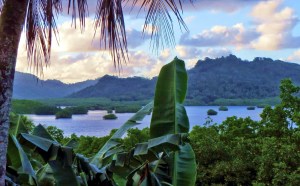 Beautiful east side scenery on Pohnpei island.
Where the heck is Nan Madol ?
Were Nan Madol within easy reach, it would be a paradise of mystery buffs and adventurers. Legend has it that the ruins of an ancient town of a mysterious civilization abound with uncharted underground corridors, tombs cradling the relics of giants, and dead kings‘ spirits. As it is, a precious few have ever set out for this jungle-covered little island in the midst of the Pacific Ocean.
 Click on maps and pics to supersize.
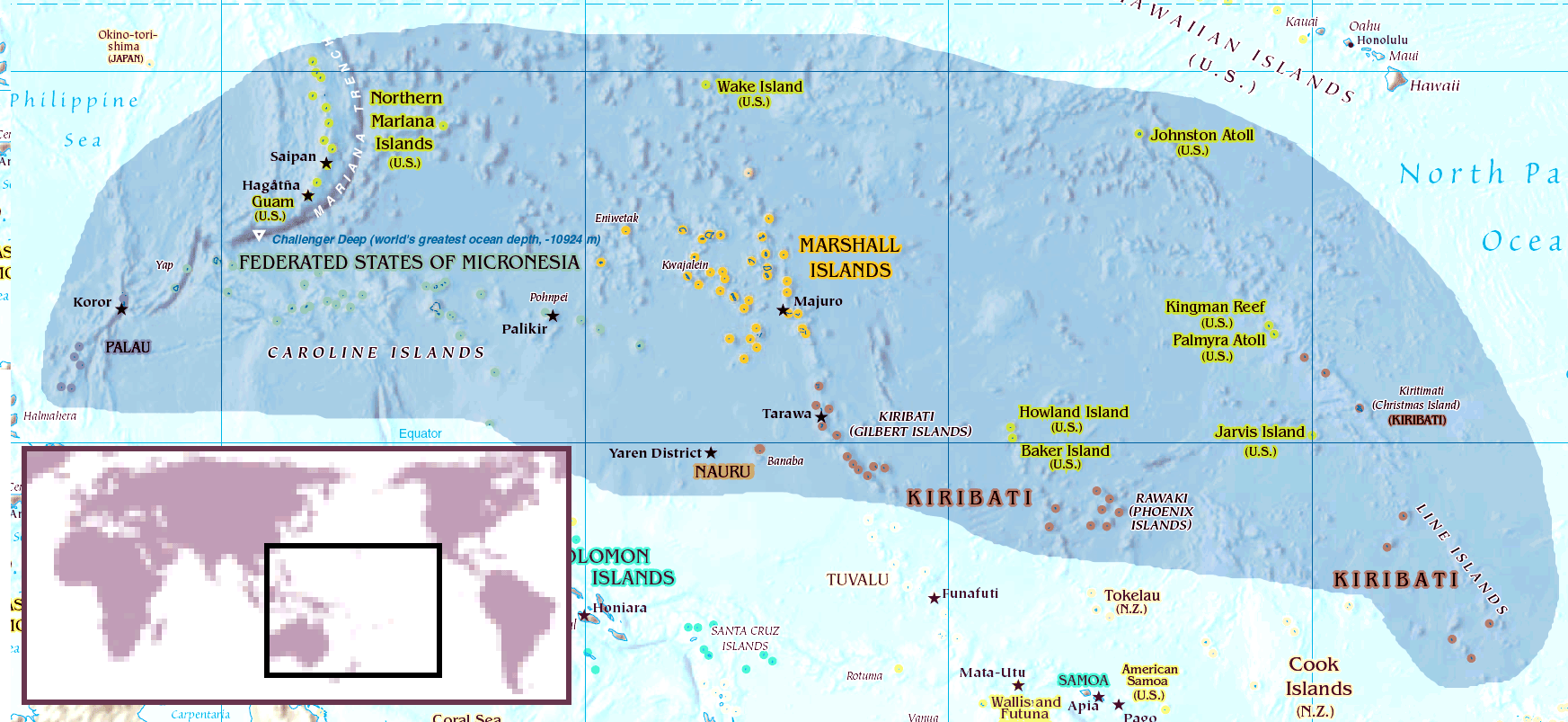
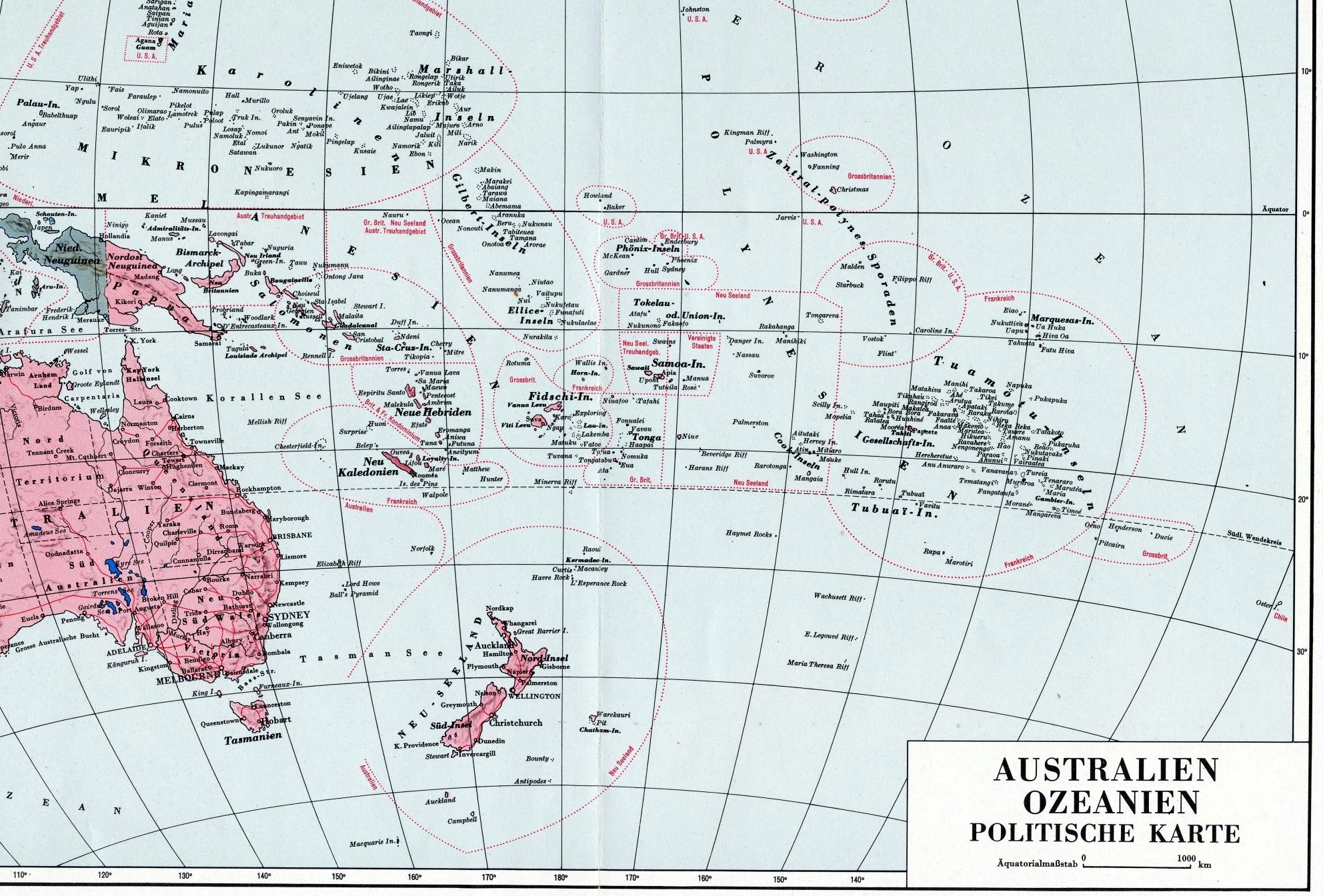
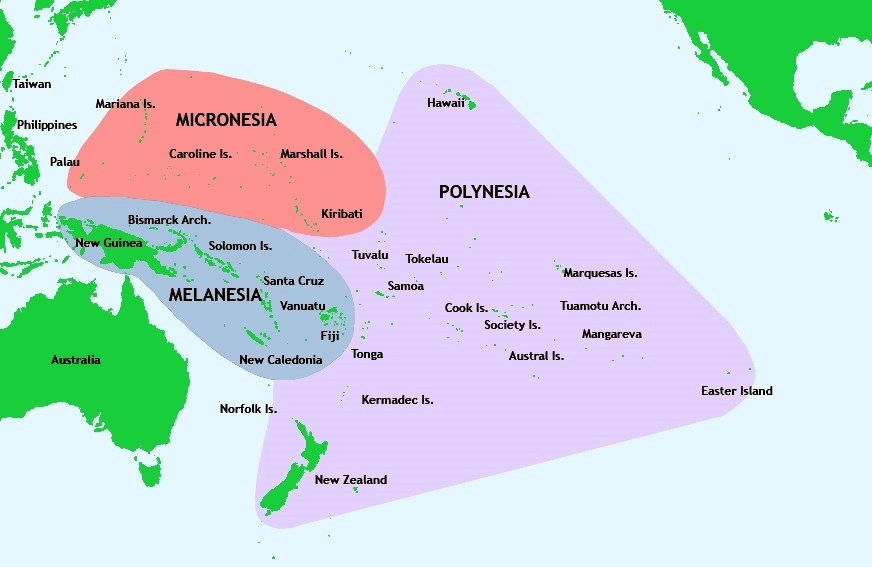
To find the Pohnpei (Ponape) Island on the map is tricky. It lies at the very edge, where the cartographers had divided the globe to fit it onto a single sheet of paper, near 160 degrees longitude, on the open ocean, among several uninteresting islands of Micronesia.
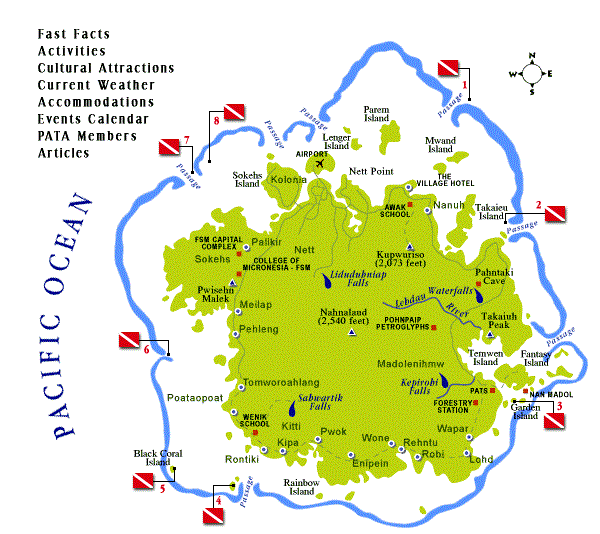
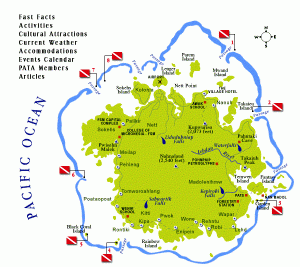 This map shows all the important places.
The flight from Manila to Guam was a very bumpy one, 3 days later the flight from Guam to Pohnpei, very uncomfortable in a small turboprop plane, but at least very quiet. Nothing to see except the blue and silver glittering width of the Pacific Ocean. Landing on the „International Airport of Micronesia“, on island of Pohnpei, is an adventure in itself. The first glimpse of the airport is a little airstrip in the middle of „just water“ !!!
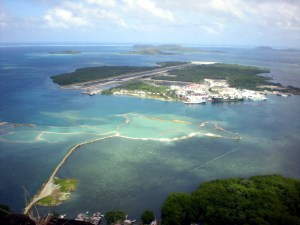
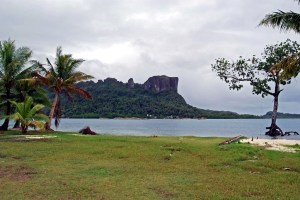 Left the Pohnpai airport seen from Sokehs Rock (similar view out of the plane) and right Sokehs Rock.
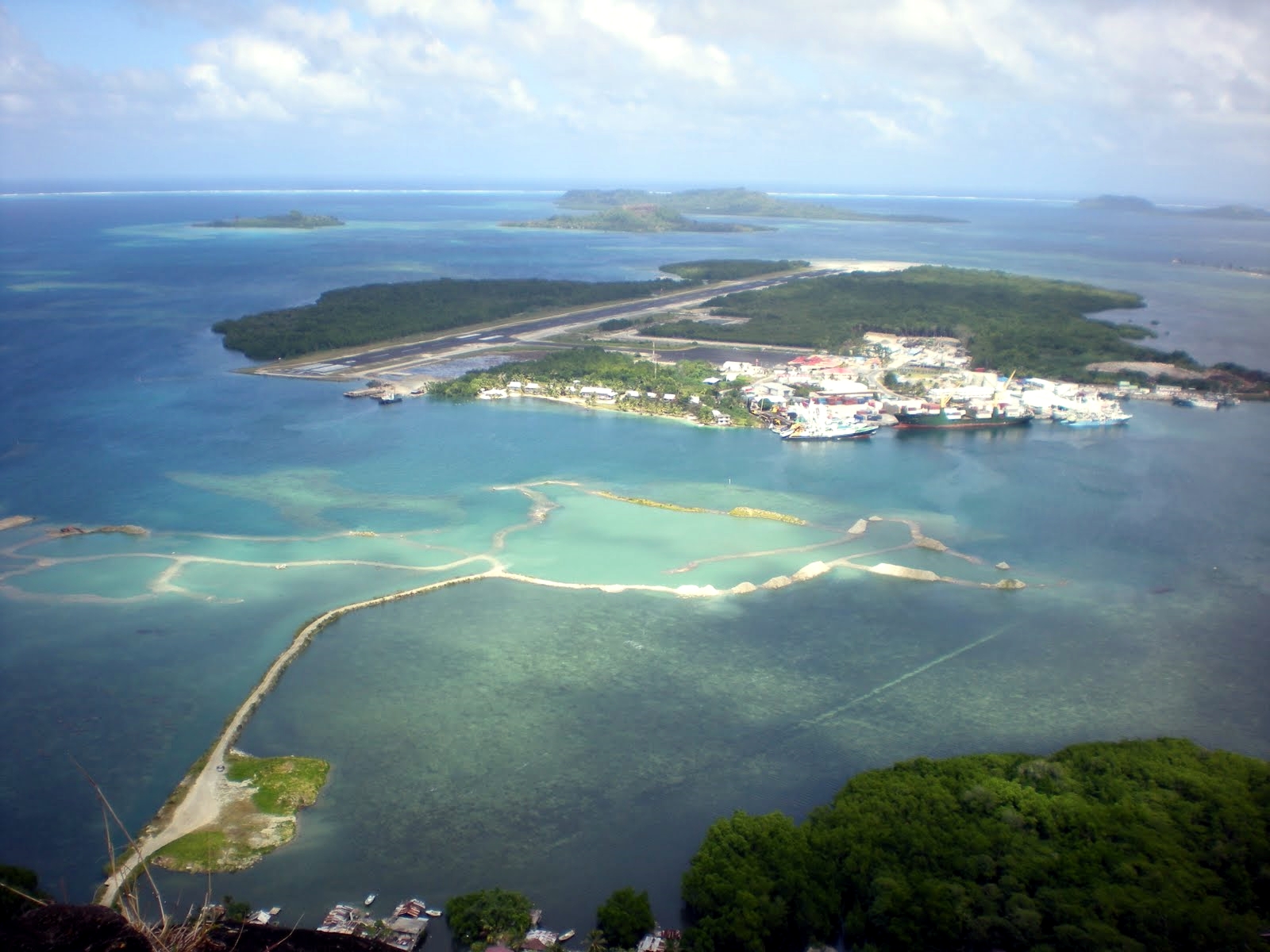
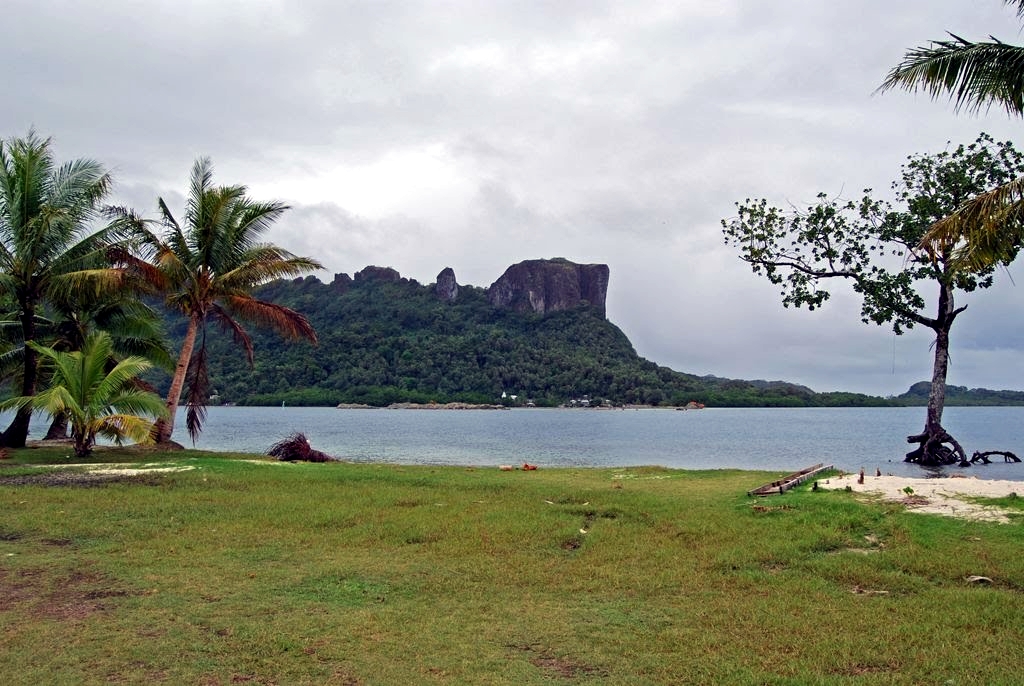
Pohnpei is the main island and Palikir the capital of Micronesia. Biggest city on Pohnpei is Kolonia (it was the former capital). The airport, on Deketik island, is connected to Kolonia trough the Deketik causeway. I spent 3 days and 3 nights on the island. One day climbing the rock, one day driving around the island and one day Nan Madol. Every day a lovely dive into the warm Pacific waters and at night indulging local foods. What a life.
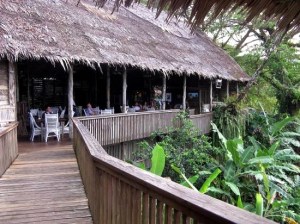
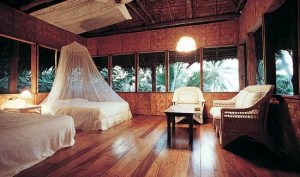 Lovely Village Hotel on Pohnpei. Sadly it is not existing anymore.
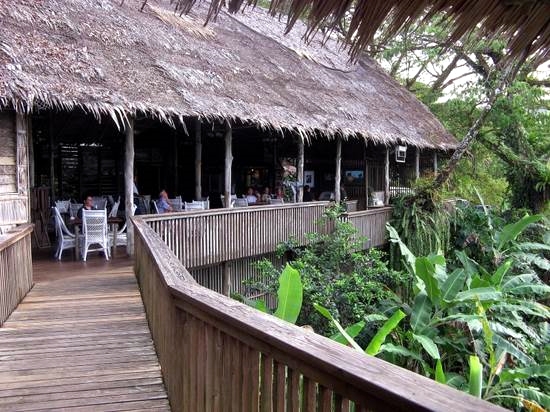
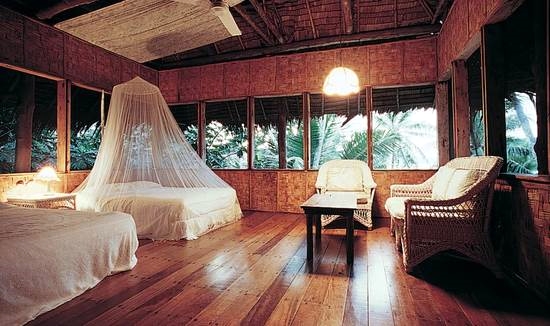
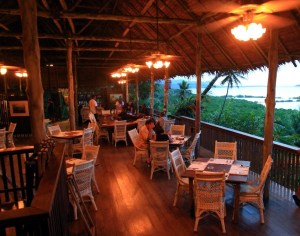
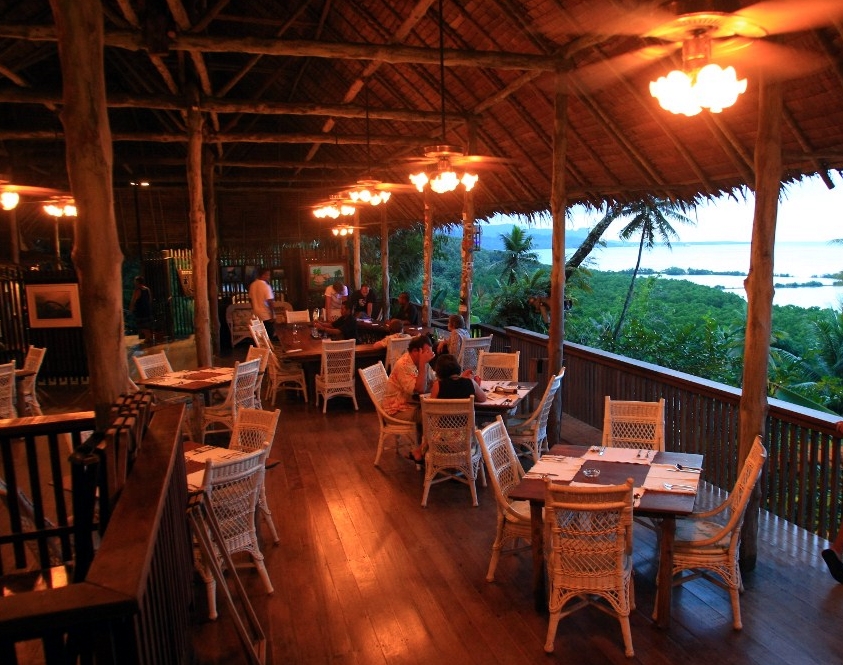
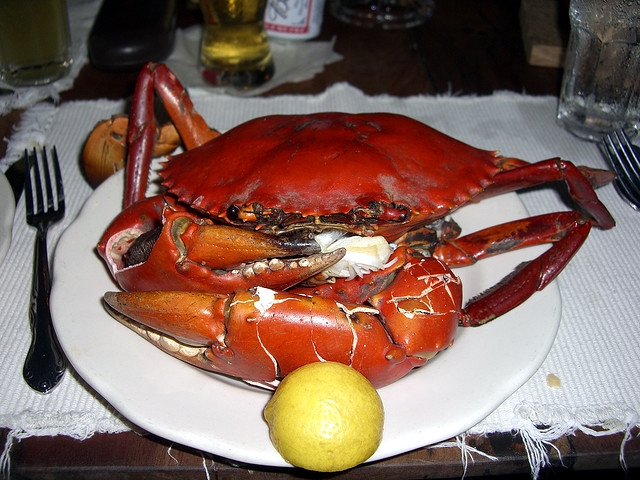
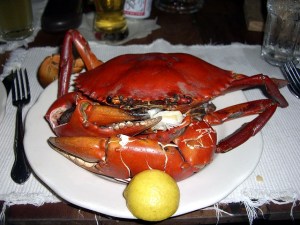 Village Hotel restaurant with amazing views and a special sunset atmosphere while dining local „mangrove crabs“. Some people call them „mud crabs“, but mud crabs taste muddy, these ones a from Pohnpei (and around islands) mangroves which have fresh and clean water. And that’s how they taste – fresh and clean, like a Maine lobster. Almost 2 pounds of delicious meat – just with some drops of lemon juice.
But are the islands really uninteresting? I have read about Nan Madol, like Kiribati and other/similar places in Erich von Daeniken’s books and wanted to see it. The ruins are reachable by foot, but easier is it by boat with a local guide. I hired a boat tour and I was sure to get in shortest time the best views of this ancient city.
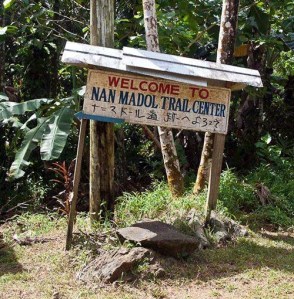
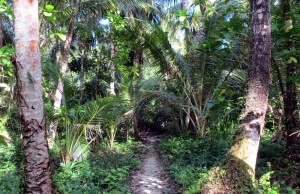 Not very inviting the track to Nan Madol, but being honest – all the trips on the island, through the djungle or even swimming in the waters – never ever dangerous, no dangerous wildlife, no dangerous people, very very comfortable and safe feeling throughout. May be it’s different now, but I don’t think so.
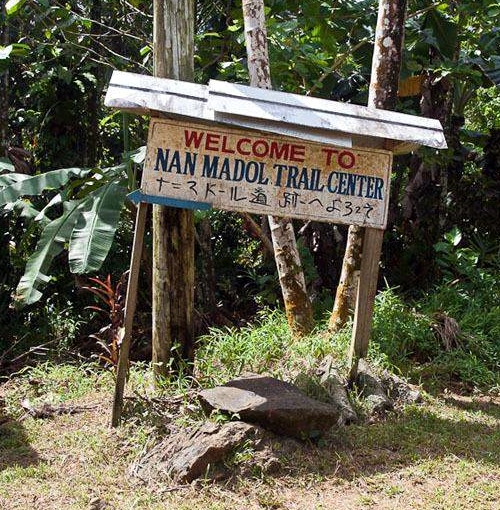
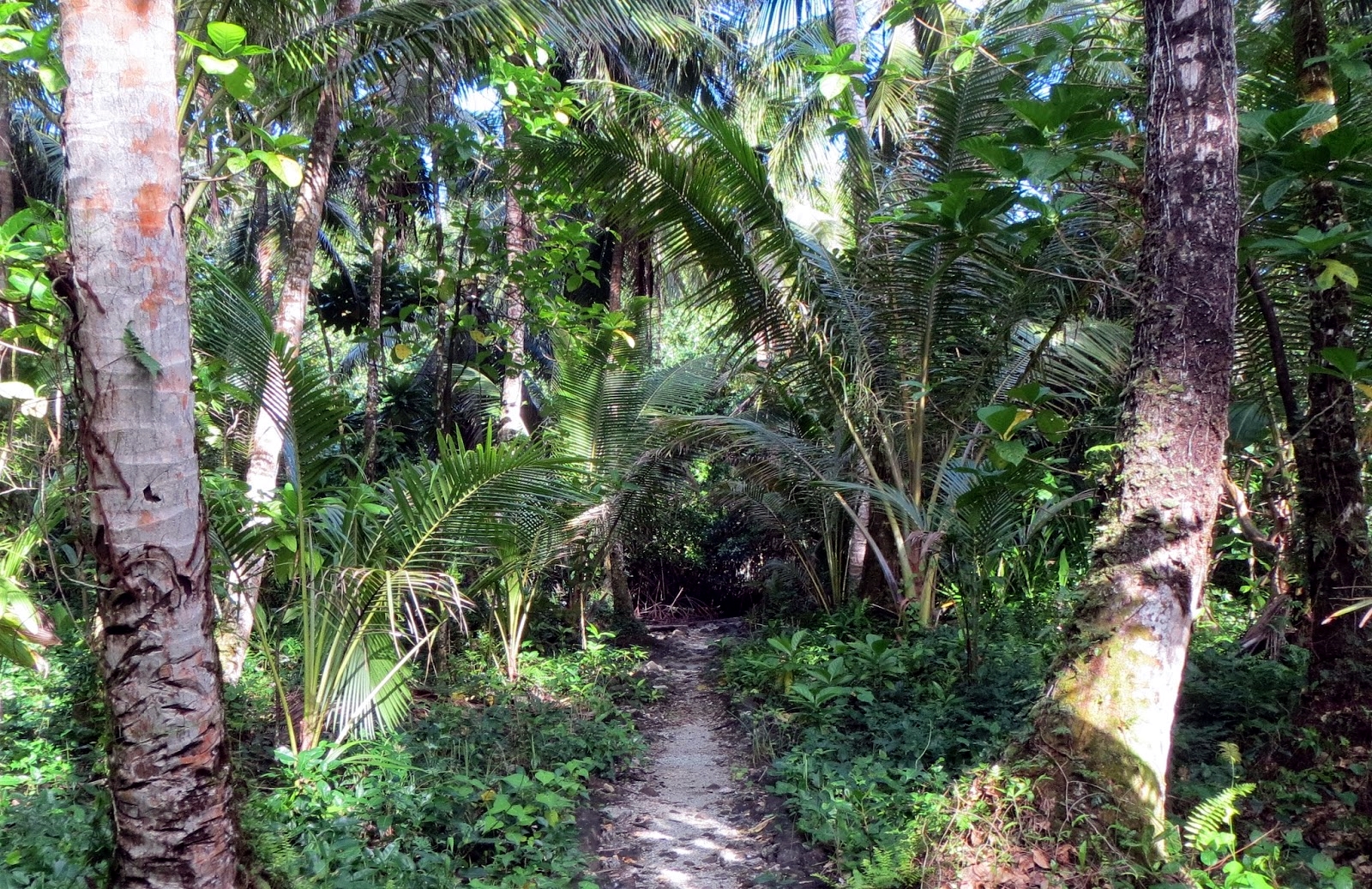
The Curse of the Ruins of Nan Madol.
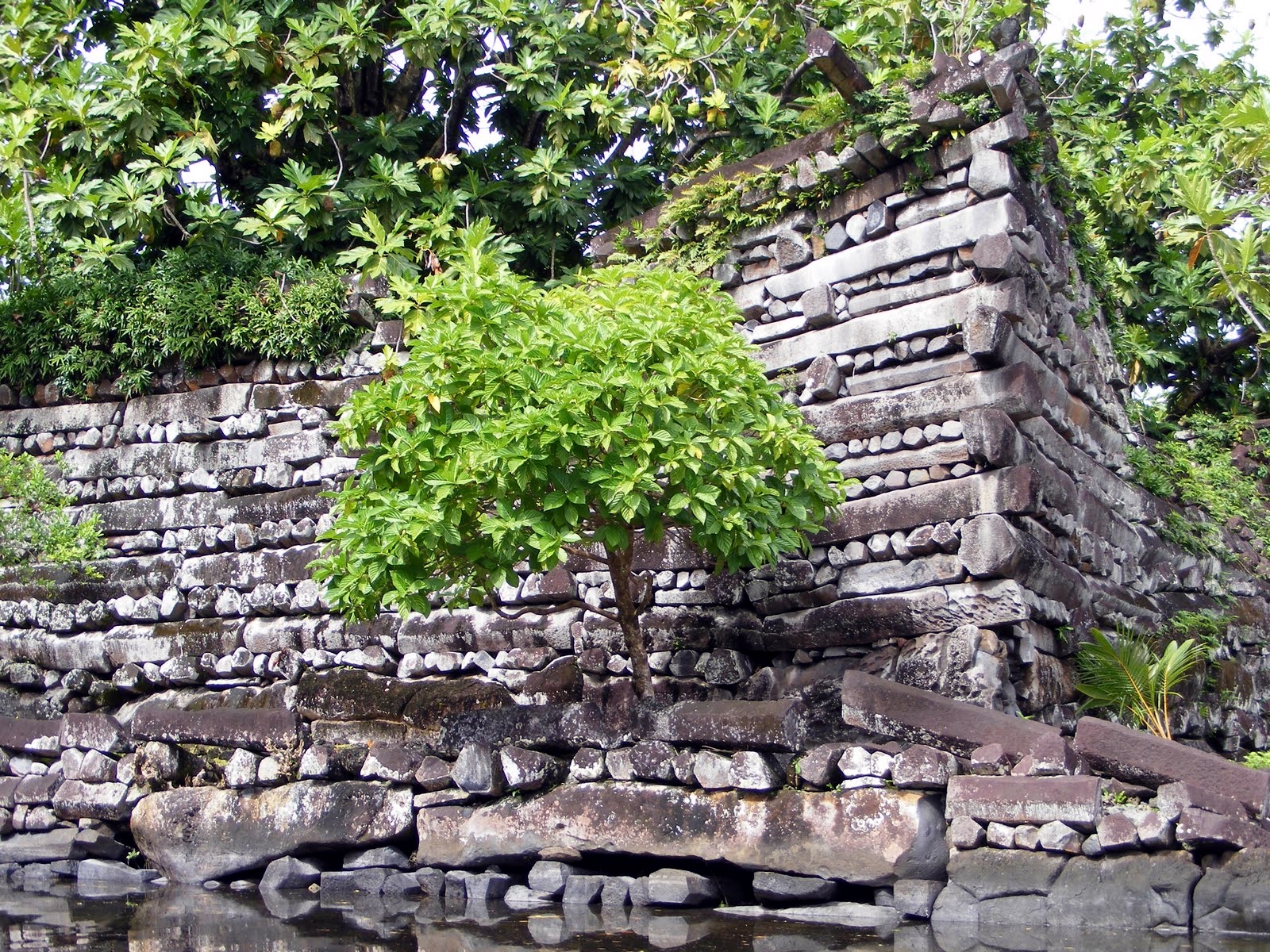
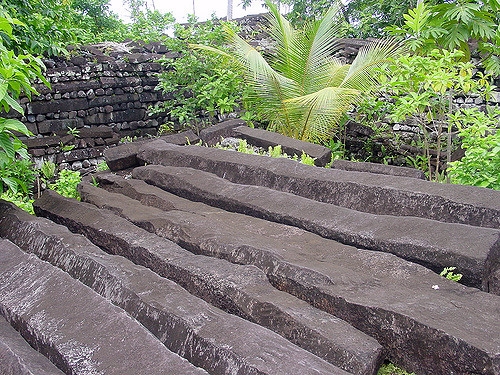
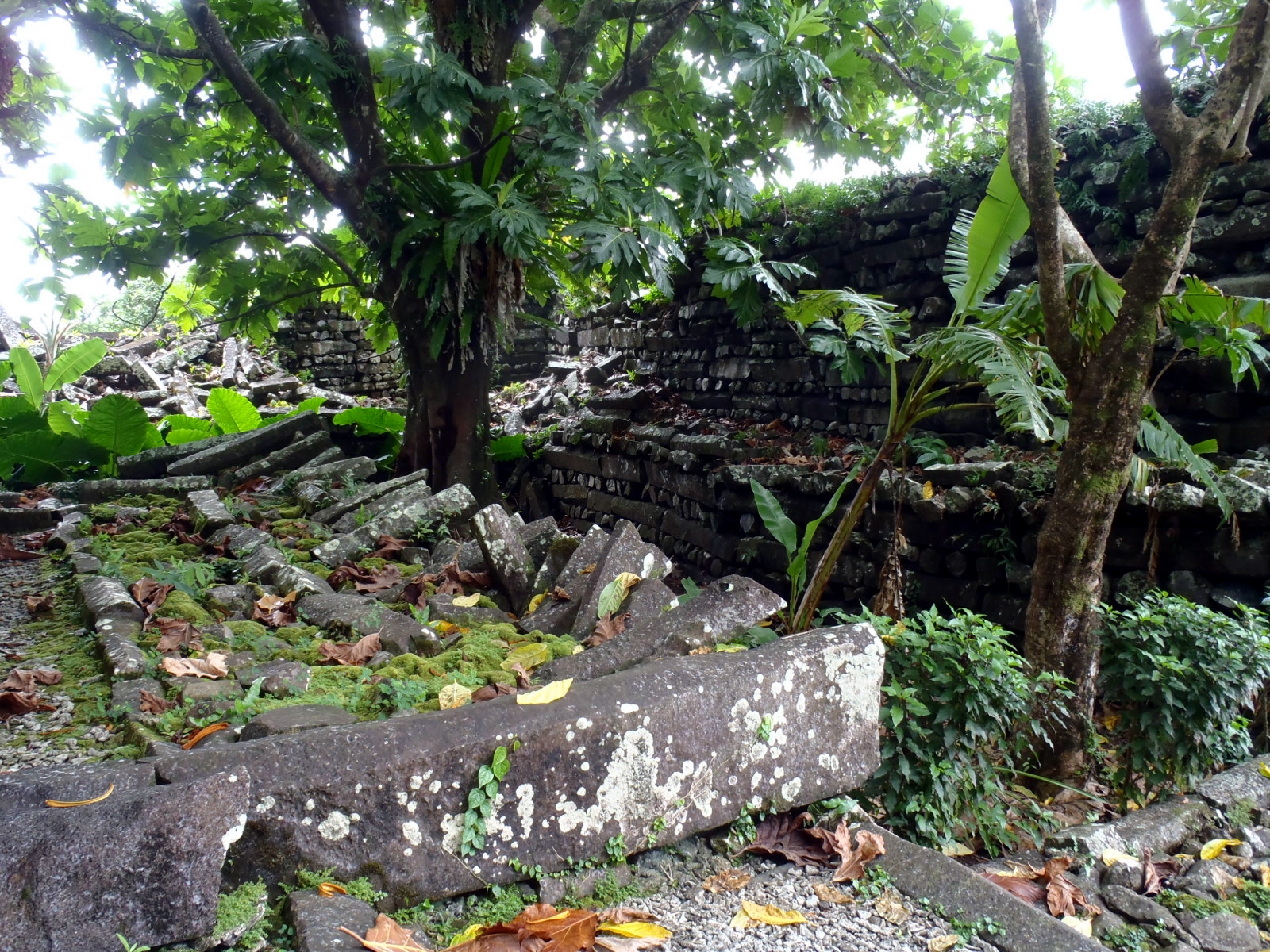
It is hard to believe that this God forsaken land harbors a monumental structure dubbed the „Eighth Wonder of the World“ or „Venice of the Pacific“. Daeniken’s books prepared me for mighty stone fortifications of an old deserted town lush with mangroves and wild tropical flora, but as I faced and fingered the hexagonal shaped basalt logs I felt the chill of a direct confrontation with the unknown.
 Nan Madol without further comments.
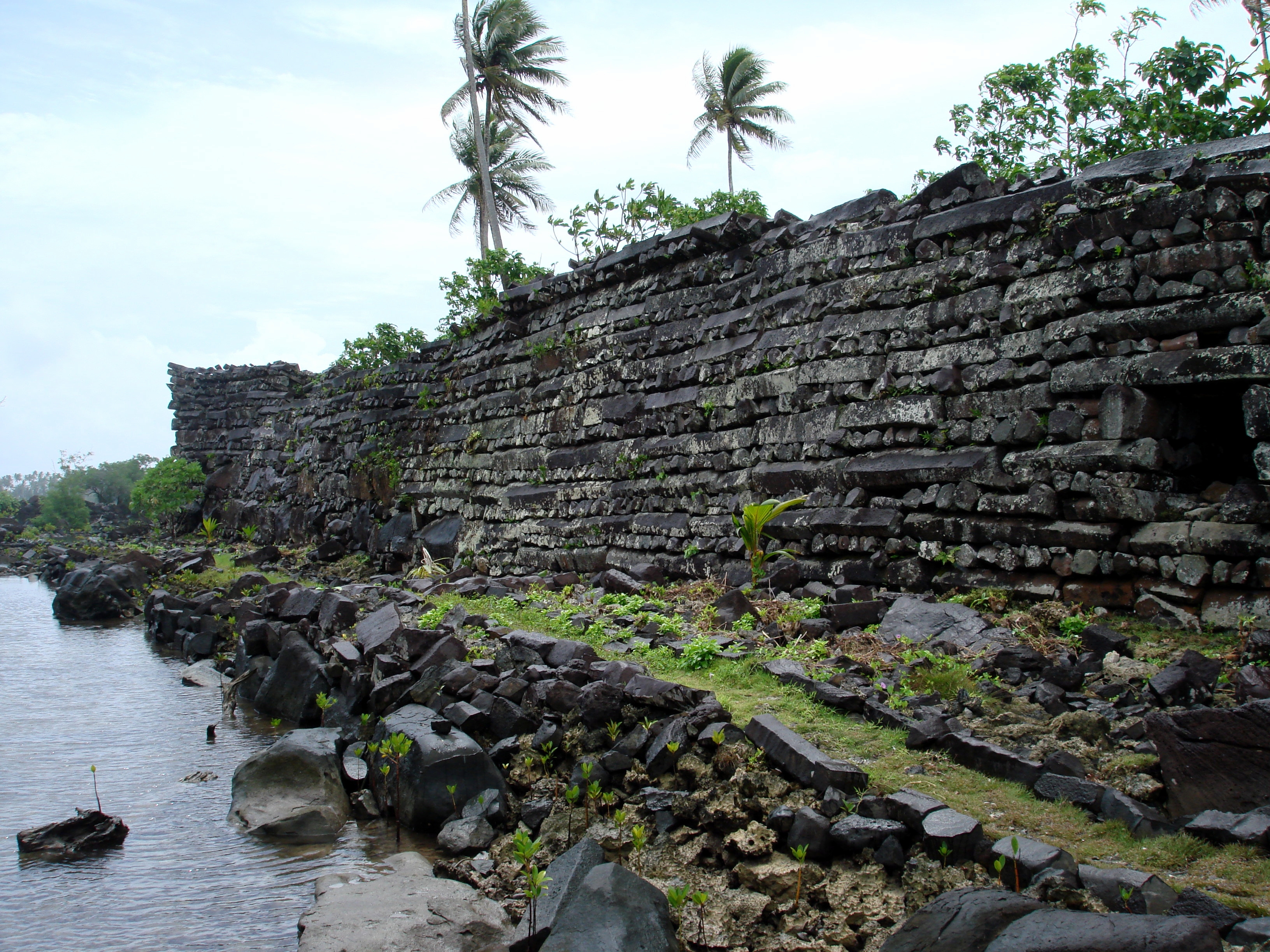
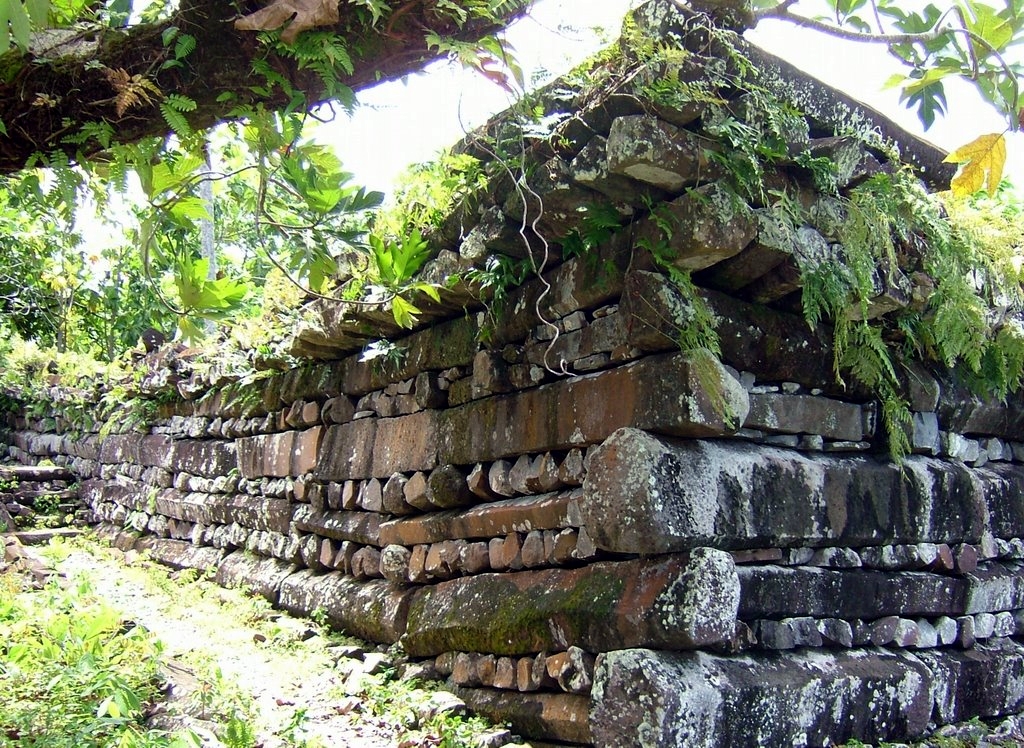
The building panels create an austere, rough and menacing edifice, without the ornaments, embossments or statues typical of ancient buildings. Heavy silence (no tourist crowds, I met that day just 2 other visitors, later I found out that only a few hundred tourist visit Nan Madol per year. The also remote Easter Islands have around 50.000 visitors per year) broods over the dead city, disturbed only by the distant echo of the ocean surf. A first glance reveals ruins that are under a spell, just as the local myths claim. It feels like walking through a massive grave yard – and, who knows, may be it is one. Even my, normal chattering guide, was very quiet.
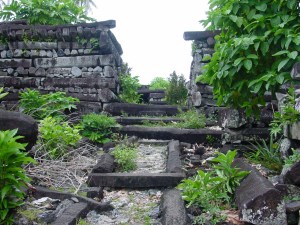 One of the entry ports.
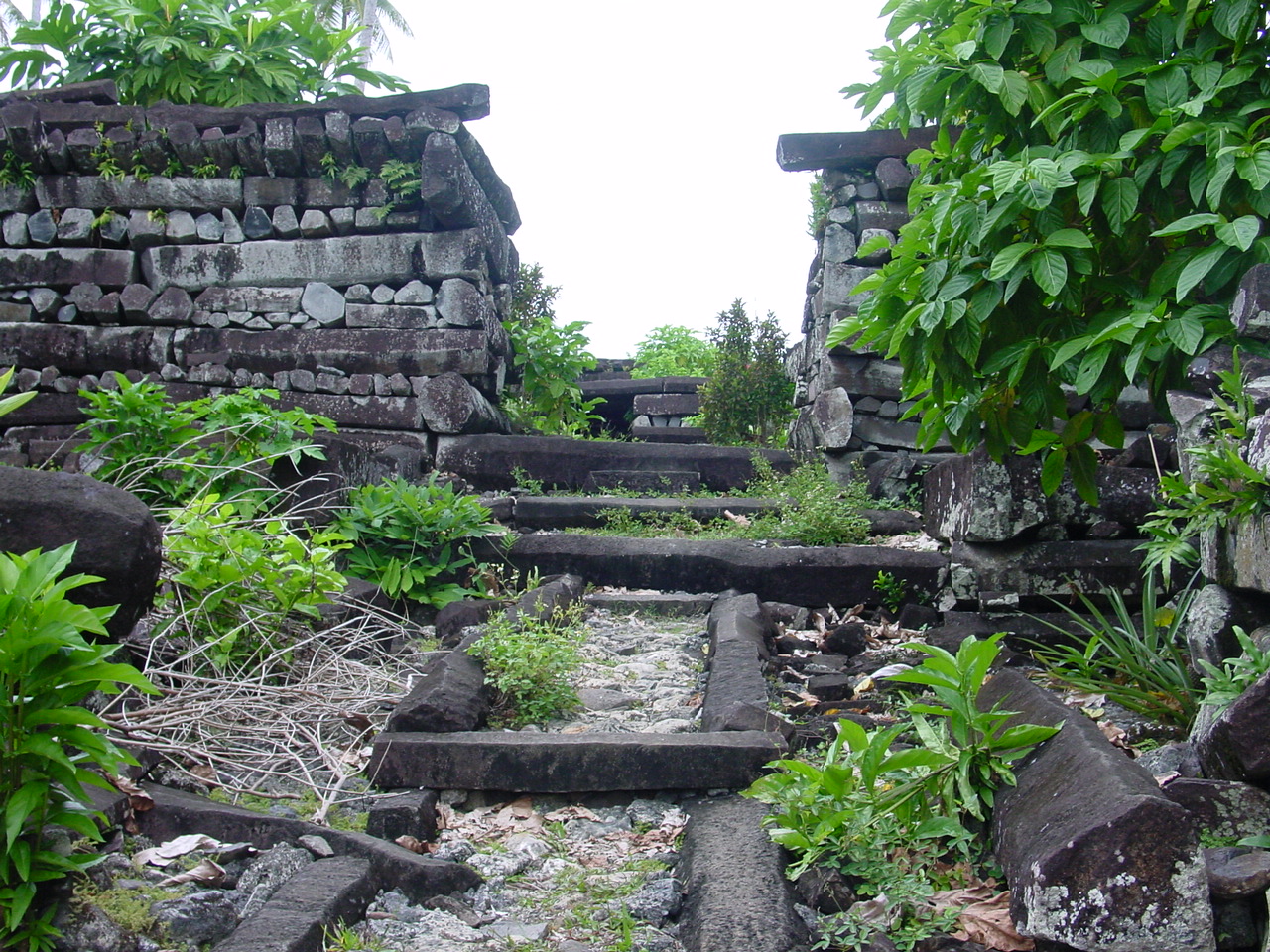
The Stone Mystery.
The technologies of ancient civilizations continue to amaze us. Like the Pyramids, Machu Picchu, Stonehenge and other megalithic constructions, building Nan Madol required a tremendous effort and expertise so that the great number of boulders, weighing anywhere from five to fifty tons, could be moved and raised to where they were needed. To erect walls 3 meters (10 feet) wide and up to 12 meters (37 feet) tall, 250 million pieces of rock had to be logged in from the quarry on the opposite side of the island.
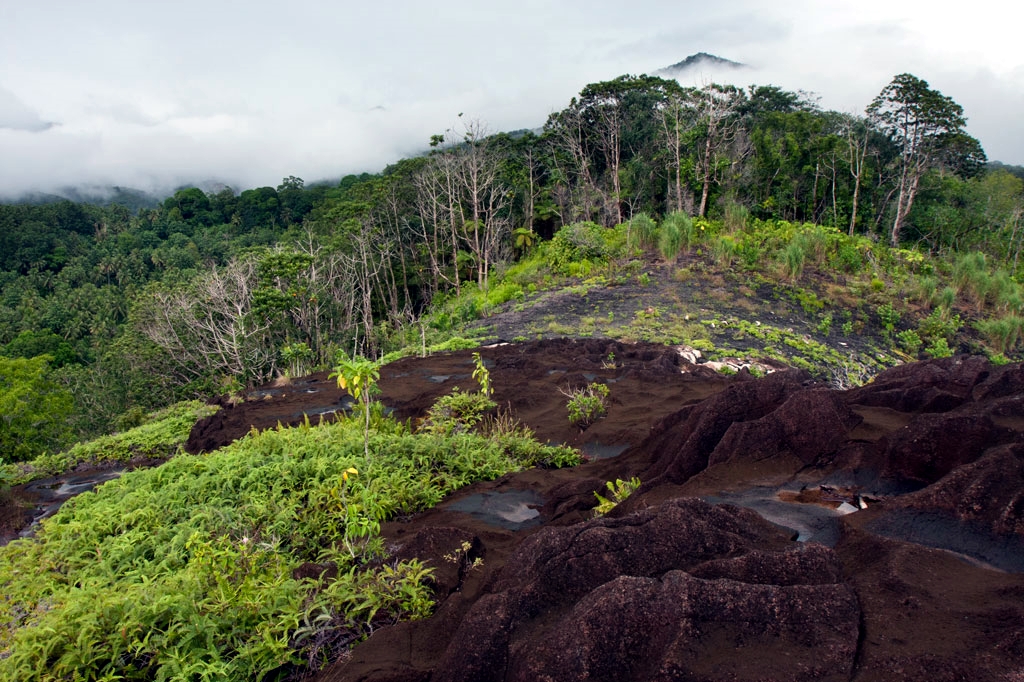
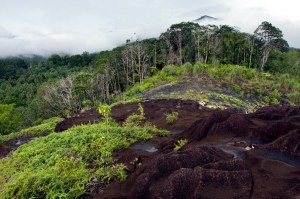 Nipai Rock on the western coast of Pohnpei, the quarry. It is a mystery how the work, the transport was ever done. Another mystery is that natural build (grown) prismatic basalt formations are well known, but not in the quarry area of Pohnpei.
The locals say that the ancient builders used magic. With „sounds of varying pitch“ they made basalt logs fly through the air like birds and settle down in their appointed places. Nobody believes in such kind of magic today but the scientific theory about lugging the stones by water on bamboo rafts has fallen through. While making a documentary movie about Nan Madol for the Discovery Channel in 1995, all attempts to transport panels weighing over one ton failed.
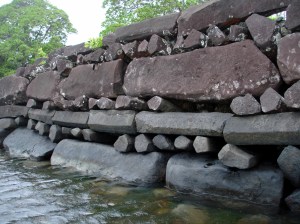 Single boulders weigh easy 20 or 30 metric tons.
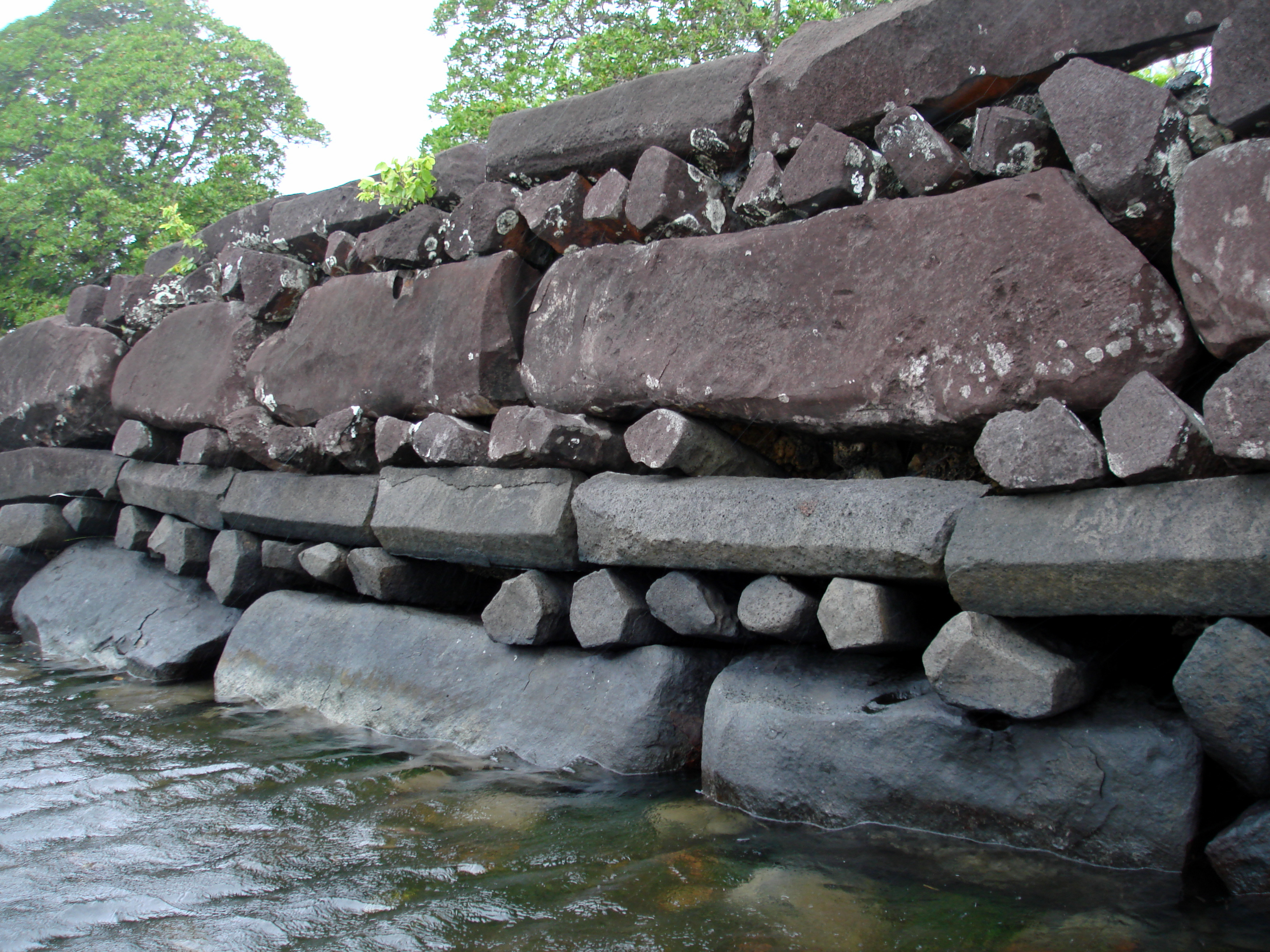
The peculiar location of the city raises another baffling question. Why was it raised in the ocean waters and not on land? Each structure had to be built on a specially constructed artificial rectangle in the water, edged by long basalt boulders and filled with coral granules. Over 90 such artificial islets cover the area of 2,5 square kilometers. Why did the early builders come up with this insane idea, demanding the grueling labor of building artificial sea islands when there were so many natural coral reef islands here, or when they could simply clear the shore of a few palm trees?
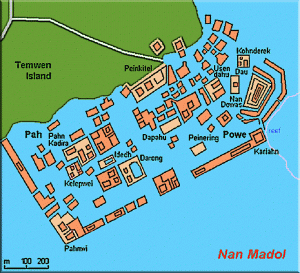 Over 90 artificial islets where built to house the city.
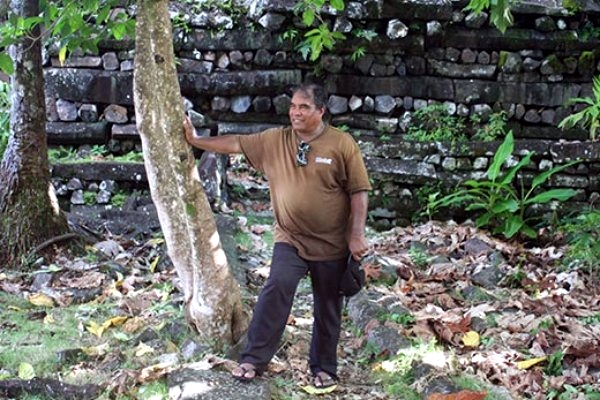
Citing the thousands of workman hours, complex organization, and well directed labor required to quarry, transport and erect 750.000 to 800.000 tons of black basaltic rock, as Rufino Mauricio, Pohnpei’s only archaeologist stated. He added that given the size of Pohnpei’s population at the time – fewer than 30.000 people – the construction of Nan Madol is an even larger and more remarkable effort than the Great Pyramids were for the ancient Egyptians.
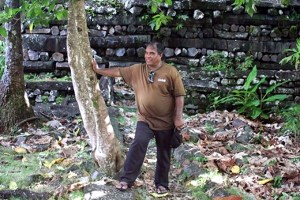 Rufino Mauricio, also director of national archives.
The unwritten history of Ponape indicates that Nan Madol was constructed by or under the direction of people not native to the island of Ponape.
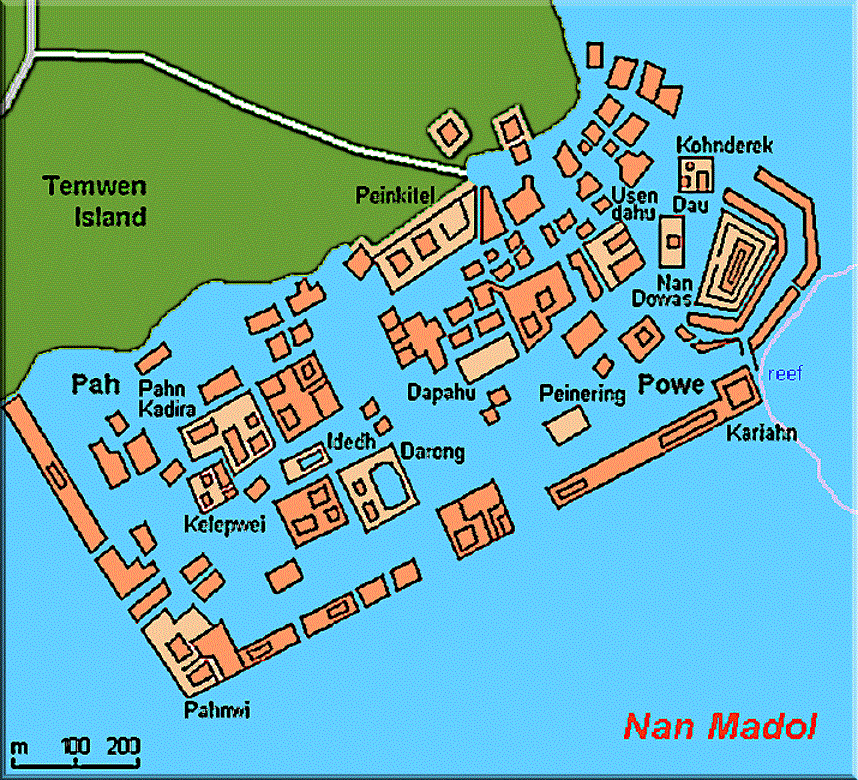
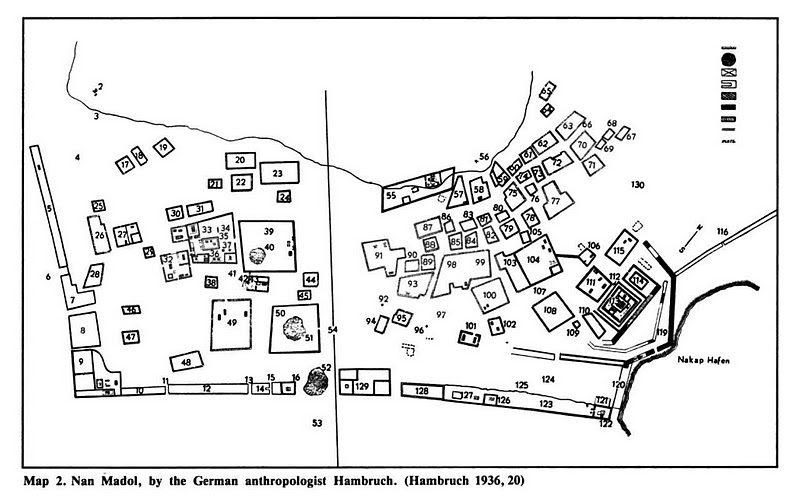
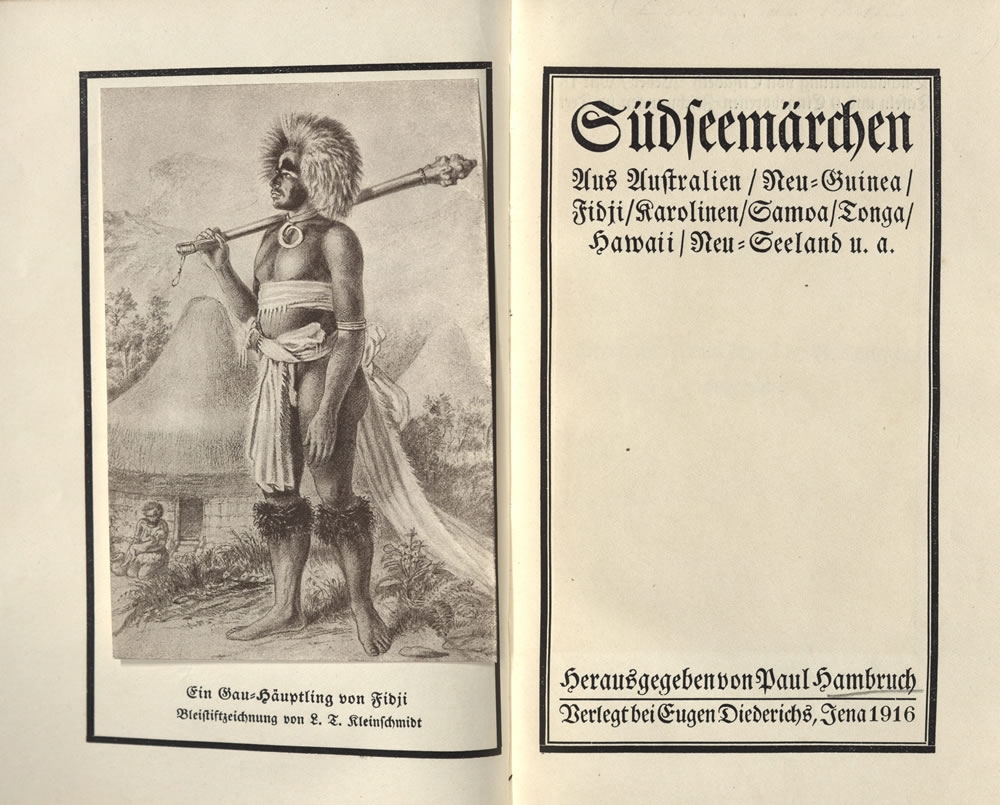
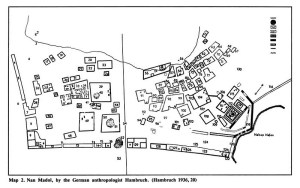 The German antropologist Paul Hambruch (22 January 1882 – 25 June 1933) counted more then 130 building sites in Nan Madol, as an old map from 1936 (book contend) stated.
 Paul Hambruch’s work about the South Pacific folks.
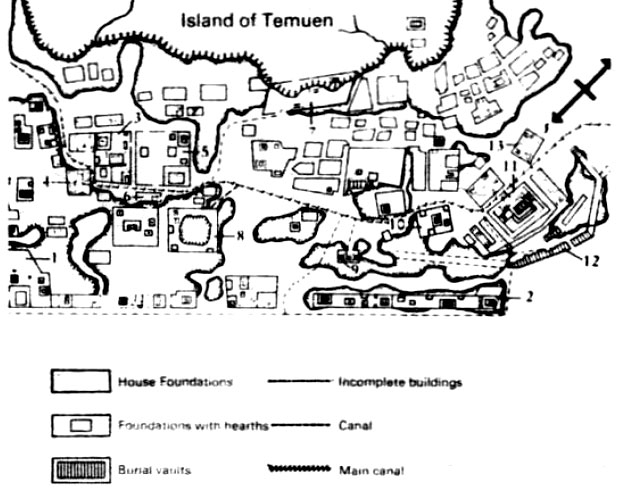
 This ground plan of the buildings at Nan Madol was made by Paul Hambruch during his field work in 1908-1910. It was brought up to date by Masao Hadley (see my book recommendation at the end of this post). The foundations are clearly visible among the ruins.
William Churchill, an early-twenty-century American ethnologist at Pohnpei, concluded that the prehistoric city was “utterly beyond the present capacity of the islanders”.
He echoed the sentiments of the ships surgeon of the “Lambton”, a British cutter that anchored at the island in 1836.
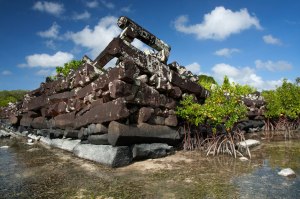 How was all that build together ? Did the have extraterrestrial help ? At least one can find the wonderful crabs between the mangrove roots.
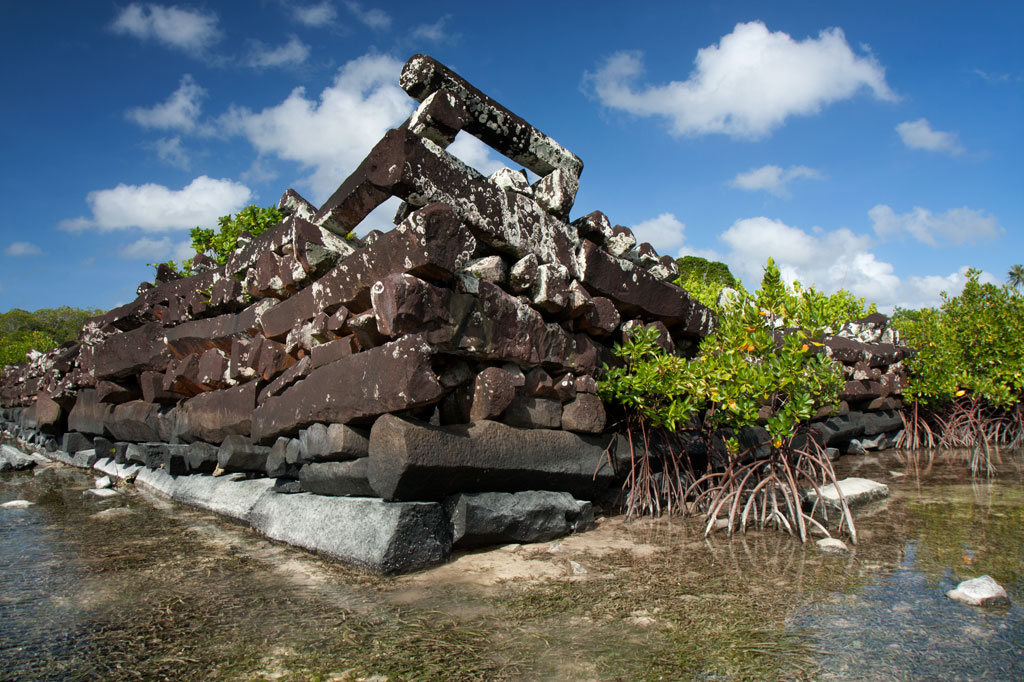
Dr. Campbell concluded that Nan Madol was “the work of a race of men far surpassing the present generation over whose memory many ages have rolled and who history oblivion has shaded from the scattered remains of the structures they have reared, which now wave with evergreens over the ashes of their departed glory, leaving to posterity the pleasure of speculation and conjecture.”
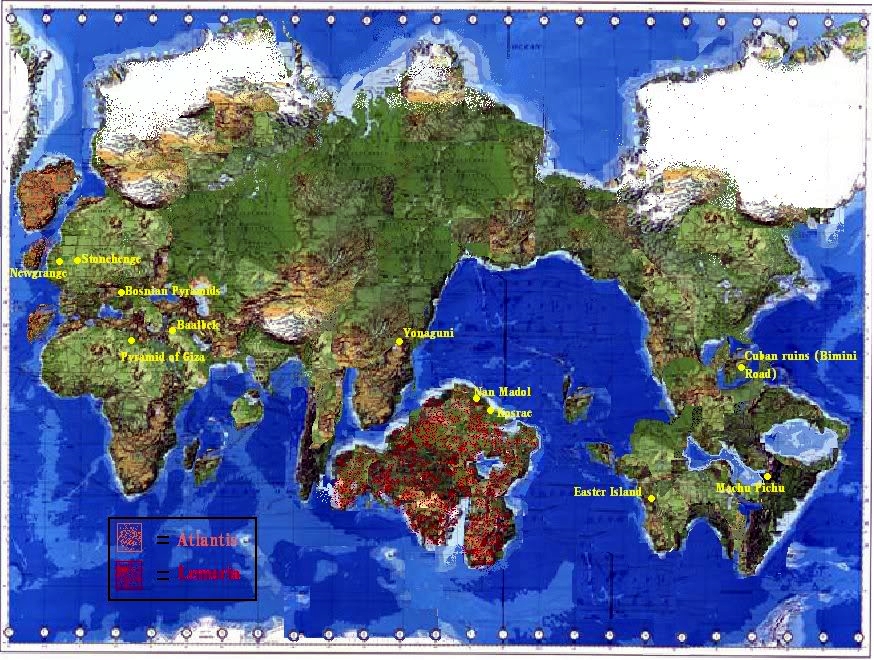
 A different view of the ancient continents.
The Curious Will be Punished by Death.
No written records on the island’s history exist. Its myths and legends live through the oral tradition only. The local practice of „keeping secrets“ is another stumbling block to solving the Nan Madol mystery. Remember – „if the cup of water is empty, one will die“. That’s why natives won’t tell everything they might know.The natives believe that tattlers and explorers of the ruins will perish. The local king, the nahnmwarki, decreed that to disturb the holly ground that once belonged to the old rulers with supernatural powers meant a legal breach.
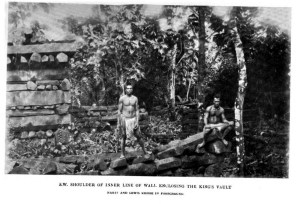 Watching the „kings“ vault, photo from March 1896.
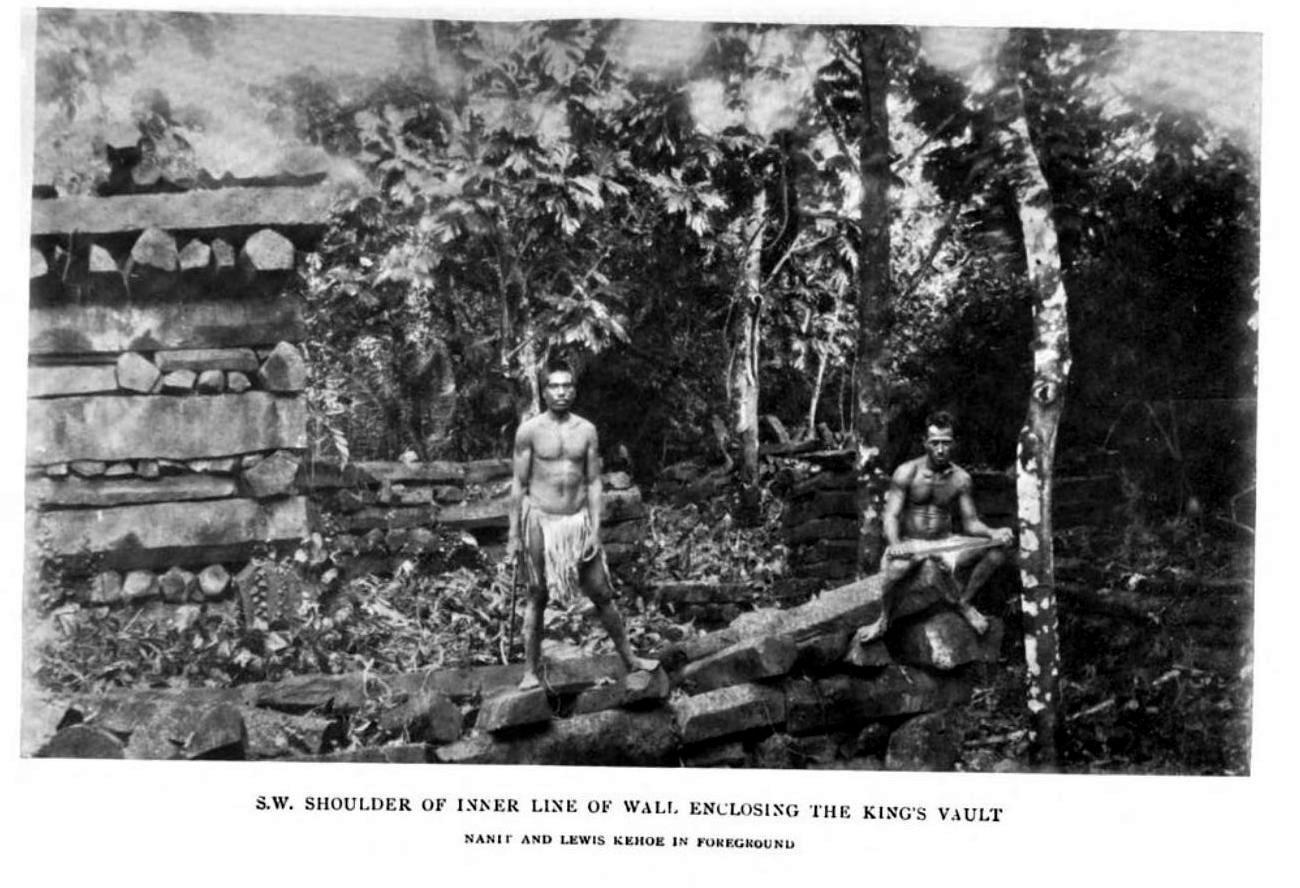
He threatened the English archeologist, F. W. Christian with capital punishment should he disobey and dig. In the early twentieth century, when the island was under German rule, Governor Victor Berg defied the royal ban, entered the sealed tomb of Nan Mandol and opened the coffin of the ancient island rulers. He found skeletons of giants two to three meters tall.
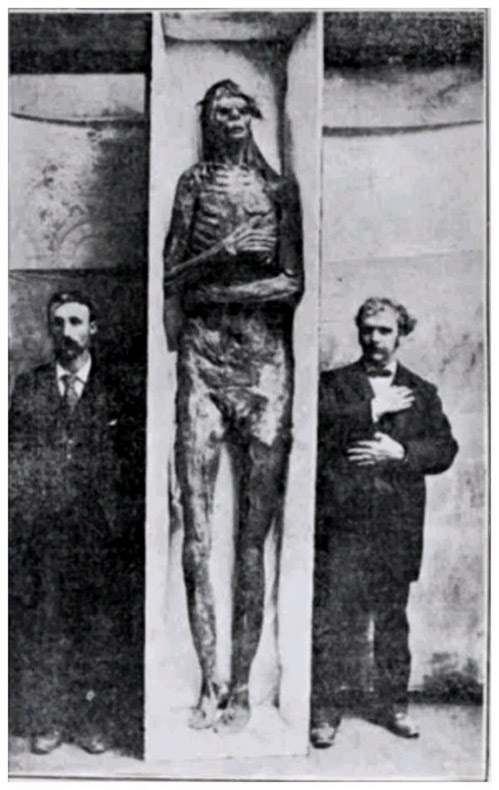
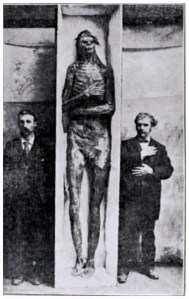 Not the one from Pohnpei, but an evidence that they existed. Professor McGee, Smithsonian, shown to the left of the giant (about 3.30 meters or 11 foot tall), accompanied by the exhibitor to the right that was perfectly innocent of fraud. The giant called San Diego belong to the so-called culture Mounds Builders (literally Mound Builders), an ancient people of North America lived about 5000 years old, in an earlier period in the history of Ancient Egypt and all its dynasties.
According to conspiracy theorists, the Smithsonian Institution buy skeletons with the intention of avoiding public knowledge. But why? Why there should be a massive cover-up of all these discoveries?
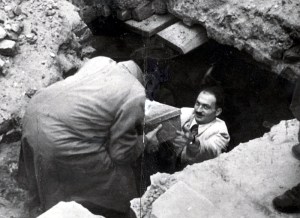 Pillaging one of the graves in the early 1910’s.
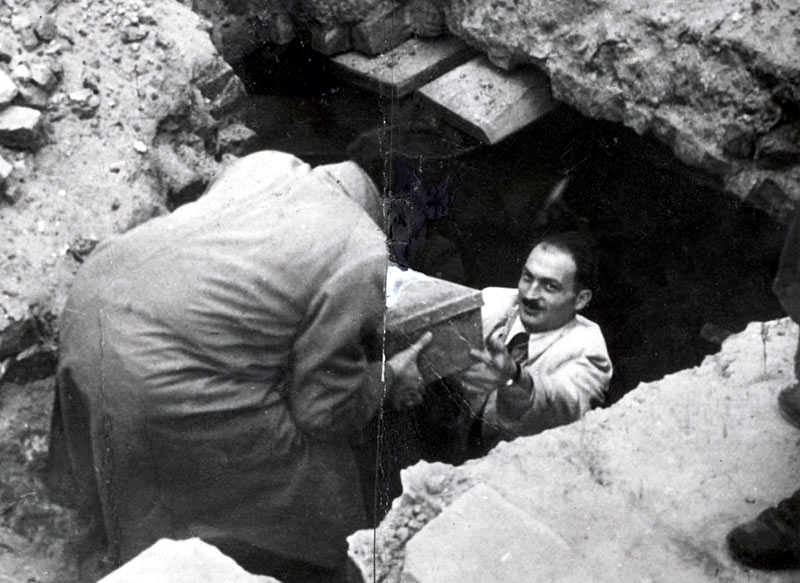
A wild storm ensued, lightning flashed through the sky and torrential rains whipped the black fortification walls. The next morning, on April 30, 1907, after a delirious night, Governor Berg died. The German physician serving on the island could not determine the cause of death. The natives, certain it was a curse, recount the story to prove that supernatural powers guard the city of the dead. Today’s rationale tells us he must have died of sunstroke and heat exhaustion contracted while surveying the ruins.
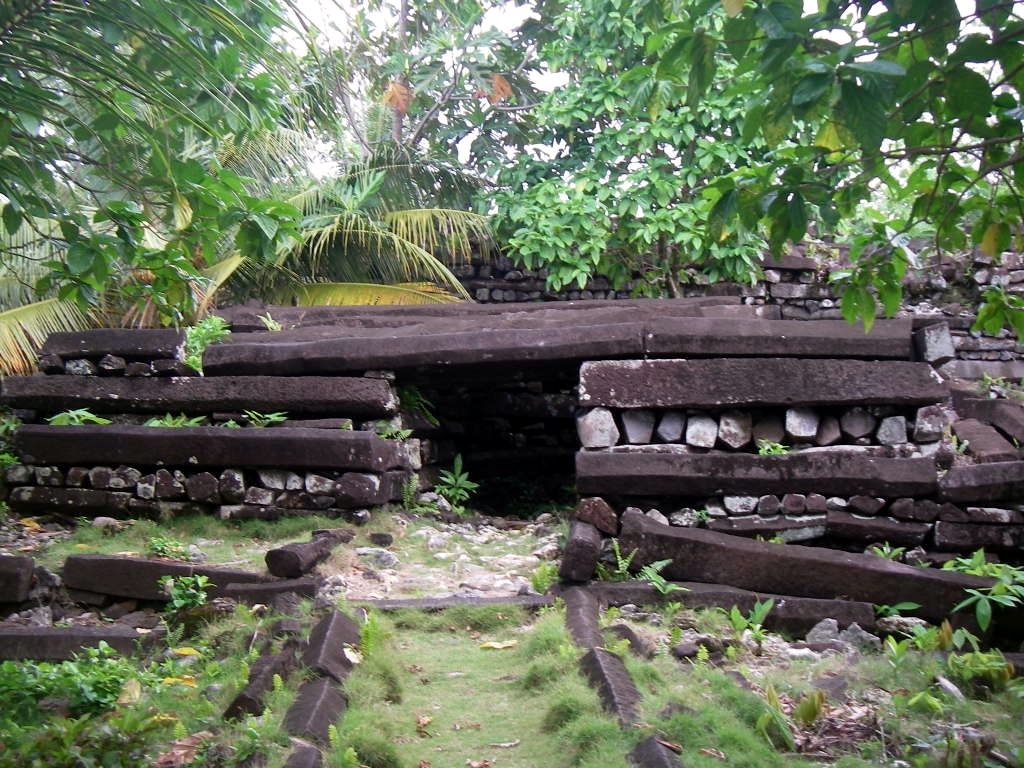
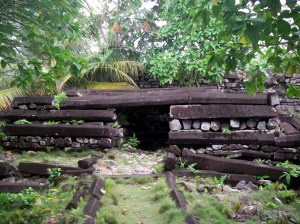 Entry to the central tomb of King Nan Douwas.
The Platinum Coffins of the Kings.
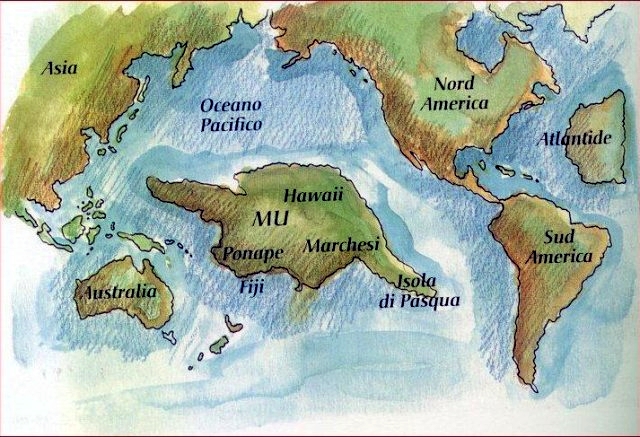
Who were the giants who built Nan Mandol on Panape and mysteriously vanished? Archeologists have not yet answered this question and their interest seems to have withered. The Pohnpei people believe them to be the natives of the vanished continent of MU (or Lemuria) , sunk into the Pacific Ocean during a great calamity 12,000 years ago. And according to this theory there was a land connection to other continents where also giants were discovered.
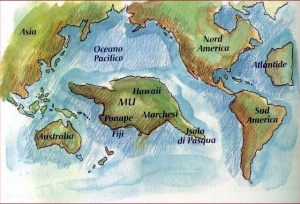 Mapping the sunken continent of MU or Lemuria.
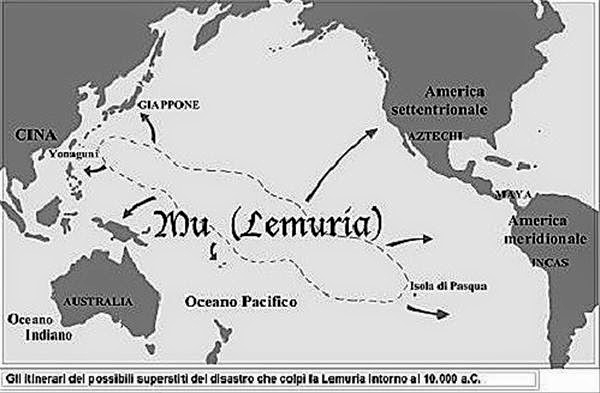
Myths have evolved over time about the tenants of Nan Matol and three distinct races of giants: a human-like species, capable of flight; a simian race of giants who could fly and live under the sea; and a third strain of „mega giants“, best described as worker-drones who labored beneath the sea.
In the early nineteen hundreds, researchers recorded a popular legend about the Kona, a cannibalistic race of giants. Kona as a synonyme for big, large, strong etc. is also known on Hawaii, see map of MU before. Today that legend has become scaled down, a well-known tale of Ohlosihpa and Ohlosohpa, brothers possessed of magic powers, founders of a dynasty called the Saudeleurs, and cruel tyrants who fed on their island subjects.
Wickipedia: „The Saudeleur Dynasty (Pohnpeian: Mwehin Sau Deleur, „Period of the Lord of Deleur“; also spelled Chau-te-leur) was the first organized government uniting the people of Pohnpei island, ruling from around 1100 to around 1628″. But the ruins of Nan Madol are thousands of years older !?
Most Pohnpeians still believe the legend that Nan Madol began with the arrival of twin sorcerers Olisihpa and Olosohpa from the mythical Western Katau. The twins were said to be much taller than native Pohnpeians. The brothers sought a place to build an altar so that they could worship Nahnisohn Sahpw, the god of agriculture. The two sorcerers successfully built an altar at Nan Madol, where they performed rituals to levitate the huge stones with the aid of a flying dragon. When Olisihpa died of old age, Olosohpa became the first Saudeleur.
The Nan Madol skeletons possibly held a clue to the mystery of the giant’s ethnic origin but the Japanese hauled away the tombs in nineteen twenty eight when they controlled the island. They carried off the platinum caskets from the House of the Dead under the sea. That’s where the second, mirror part of the city stands. The divers smashed the coffins under water and brought up pieces of platinum.
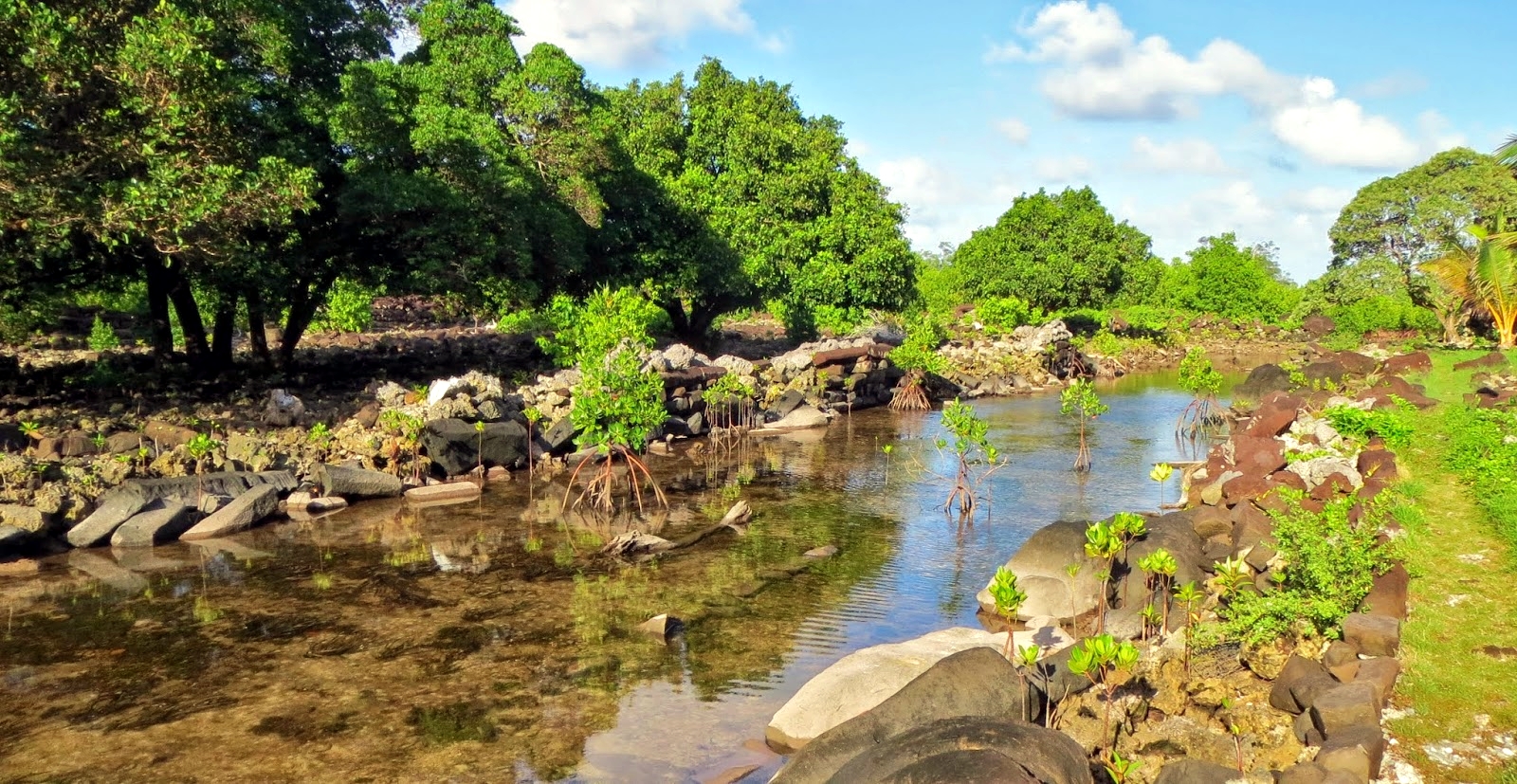
 One of the many channels between the islets.
Suddenly the main export of the island to Japan, vanilla, copra, sago and mother of pearl was supplanted by platinum. And then one day two members of the blasphemous mission to the House of the Dead vanished. No one knew what happened. Soon WW II broke out and the Japanese had plenty of distractions. The platinum coffins were forgotten. Neither the caskets nor records of them survived the American nuclear attack on Hiroshima. Yet couldn’t the ruins of Nan Madol hold still other bones of the early inhabitants ?
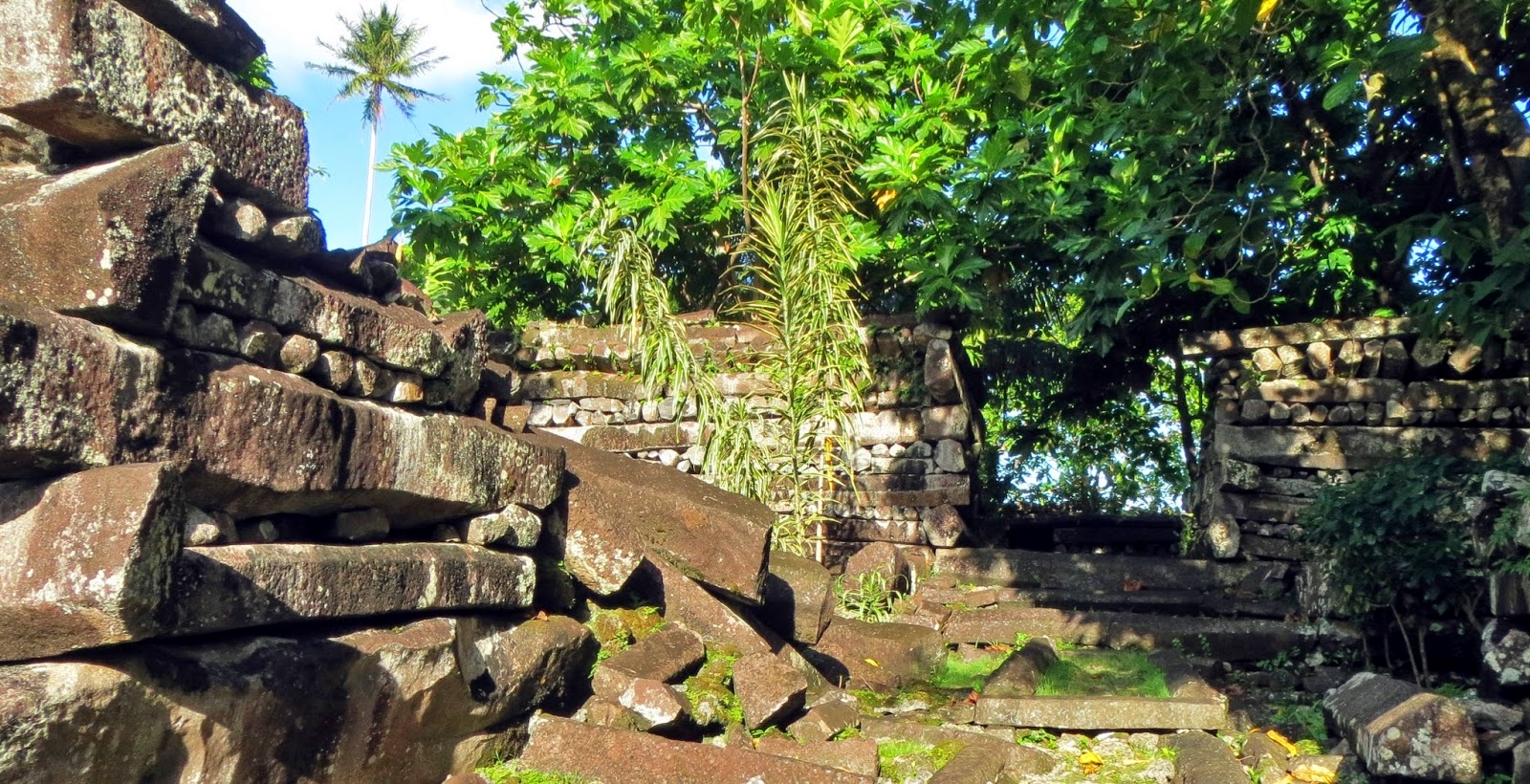
A few years back a human femur in the jungle by the ruins was found. Lying among the boulders, it was twice the size of that of a normal human !!! Typically, though, no one did grasp the significance of this discovery and it has since been lost. They say there are more unopened and sealed tombs there.
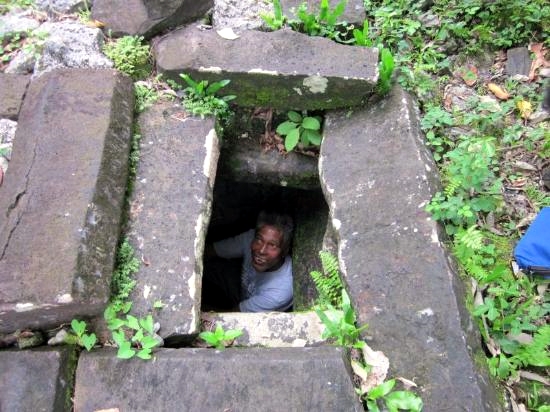
Mysterious „Dead-end“ Tunnels.
Erich von Däniken learned about the platinum caskets from the book of German explorer, Herbert Rittlinger, and in the Seventies came to look for the entrance to the House of the Dead. He had no diving gear and searched only on dry land. A local guide claimed there was a well with a tunnel leading to a second underwater city. Unexplored tunnels connecting the islands, going past the cliff to the open sea are a part of the general lore. Many a small island has a walled up opening that points underground. But nobody explores them. The locals avoid the ruins in superstitious fear.
 Dead end tunnels everywhere ! What for ?
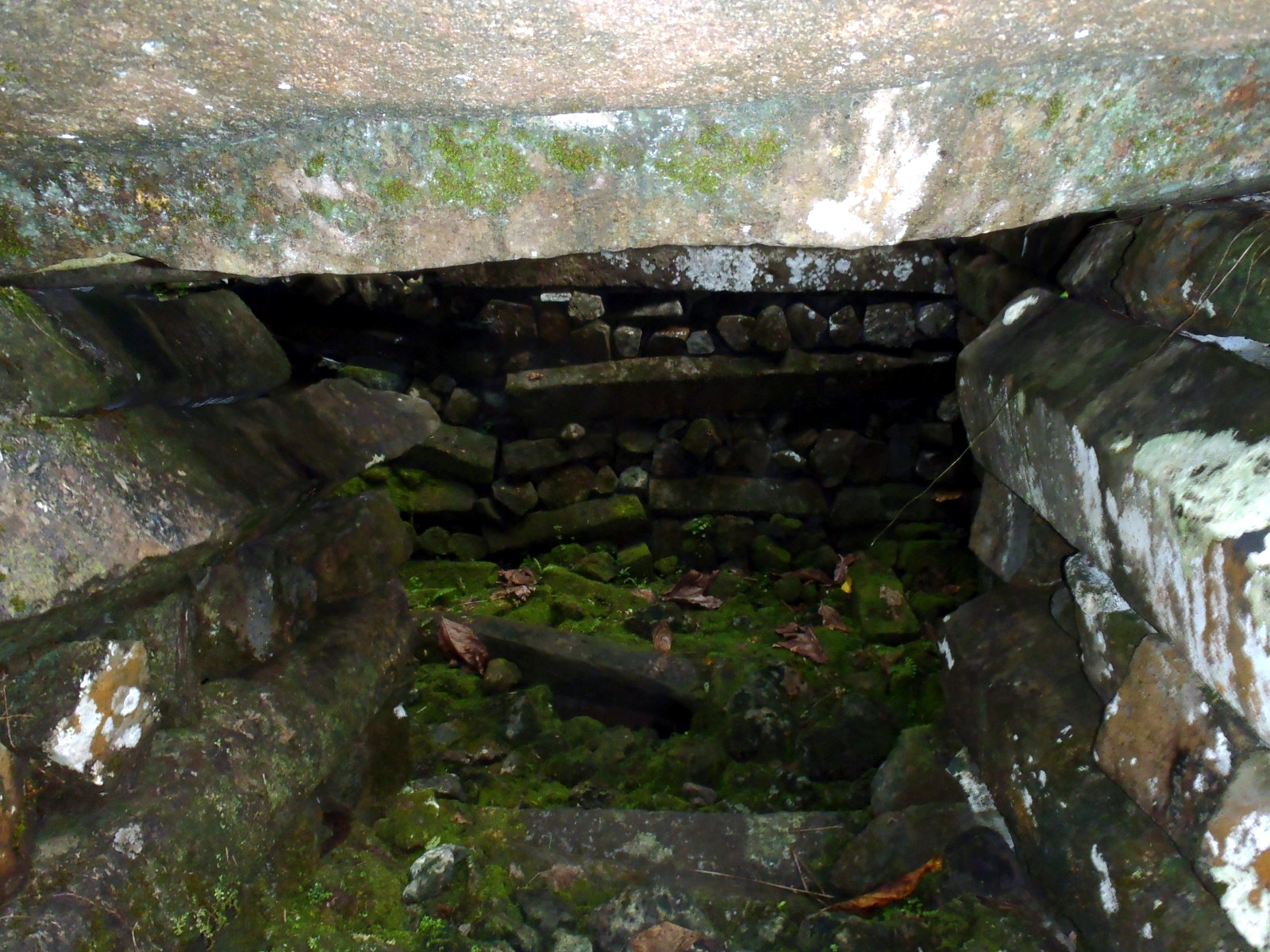
There were more such entryways leading below the ground on Nan Madol. The little islands were said to be linked by underground tunnels but one didn’t find any. All the corridors ran abruptly into stone walls or small empty cells. In vain one searched for camouflaged secret entries to connecting tunnels; in vain one inserted a probe with a tiny TV camera in the nooks between the stones. No rooms or caskets with skeletons came up.
The tourist brochure one can buy at the airport claimed that one tunnel led from the artificial Lehnkai Pool 70 by 56 meters, depth unknown, to the open sea past the cliff’s edge. People dived at low tide when the water from the lake should have flown into the ocean but saw no undercurrent or a black hole. They measured its depth, only 3 meters.
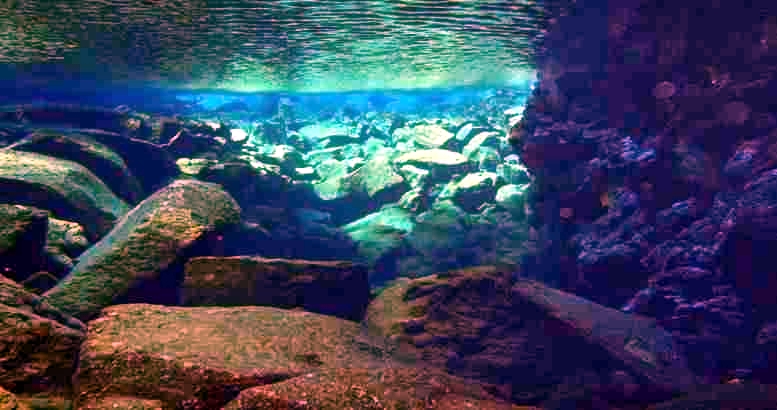
„No, I never heard of any platinum caskets,“ said our native guide, who has lived here his whole life since his birth in nineteen forty, „but there is an underwater city here.“ Then he recalled his parents telling him that his great-grandfather had seen such a city. While fishing, his harpoon hit a turtle that dragged him to the bay floor.
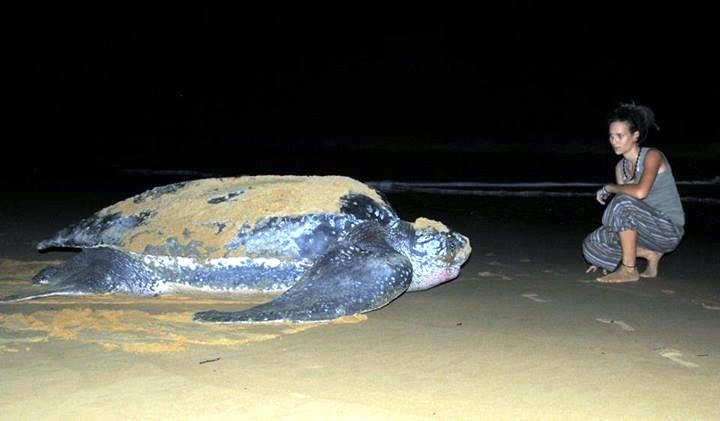
 Can be the „giant dragon“ or the „giant lizard“ also be a „giant sea turtle“ ?? The up here shown one can easy drag a man under water! I read a book with the title „Pohnpei – Isle of the Sacred Sea Turtle and its surprising link to the Hopi Southwest“ in North America. Fascinating stuff, I can tell you !!
There he saw stone buildings, streets and pillars, overrun by coral and shells. When he came up, his nose, ears and eyes were bleeding and he couldn’t speak. After one week his speech returned but when he described what he saw under water, he died. The natives concluded the city was cursed.
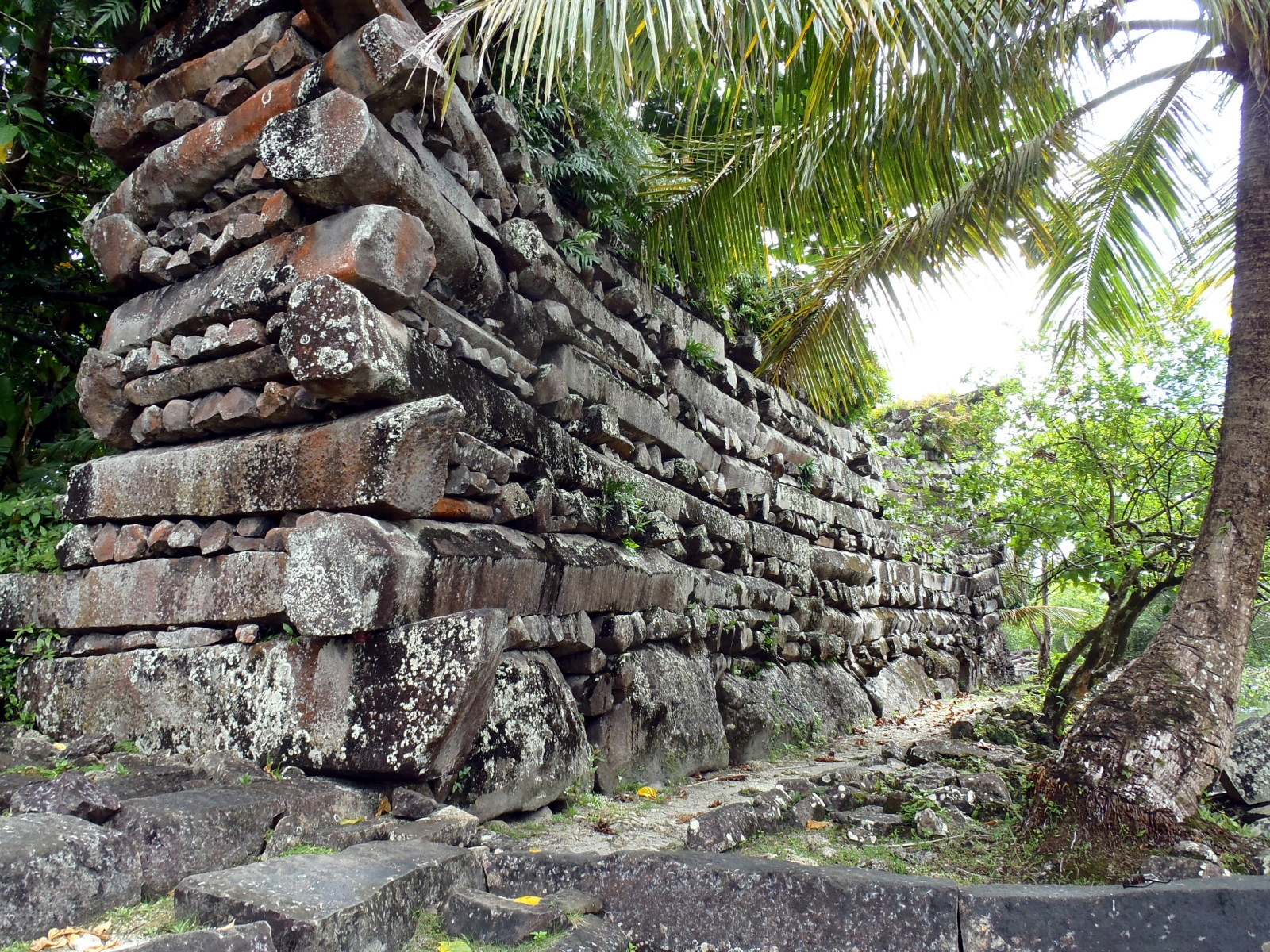
 Amazing !!! Click on pics for a closer view.
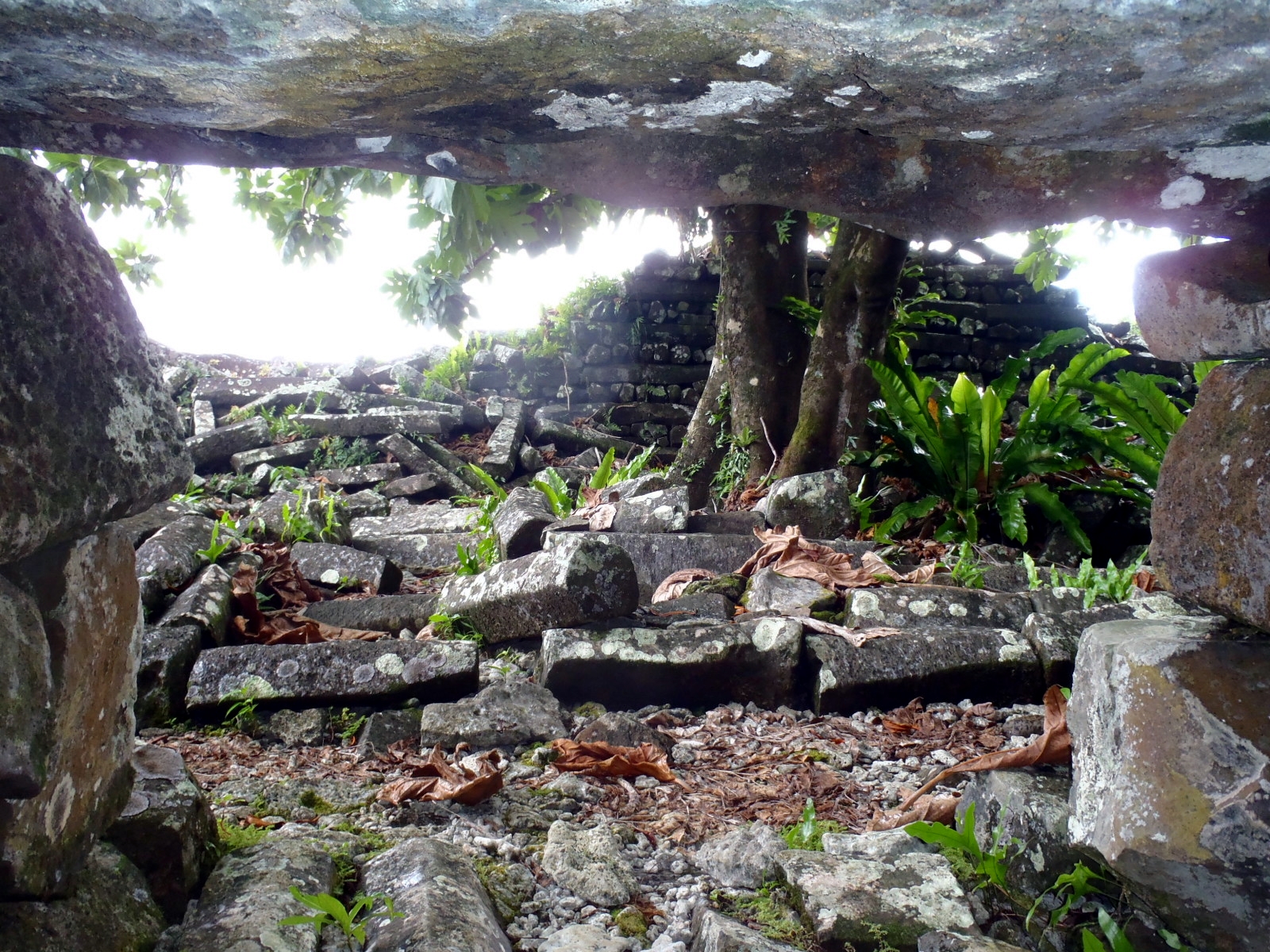
Nothing but Pillars.
The only place that could possibly have more underwater buildings was a 100 meters stretch past Nan Douwas. There was a wall there, petering out into the sea, the only spot where the mysterious city met the open ocean. The shore fell deep quickly 30 meters, but large waves made underwater visibility poor. Although everyone warned of sharks and a giant man-eating grouper.
 Not one of these wildly laying around little columns one of us could lift up. We couldn’t even move them an inch.
Underwater, a lot of basalt blocks and even upright columns ran down into the sea at a depth of 20-30 meters, so it could be assumed that the sea had also been intentionally built further. Further buildings are expected in even greater depths of up to 50 meters. So what is true about the legend of the sea gods and who were they? After an ancient folk age of the Ponapese, there was once on the seabed a residence of the sea gods.
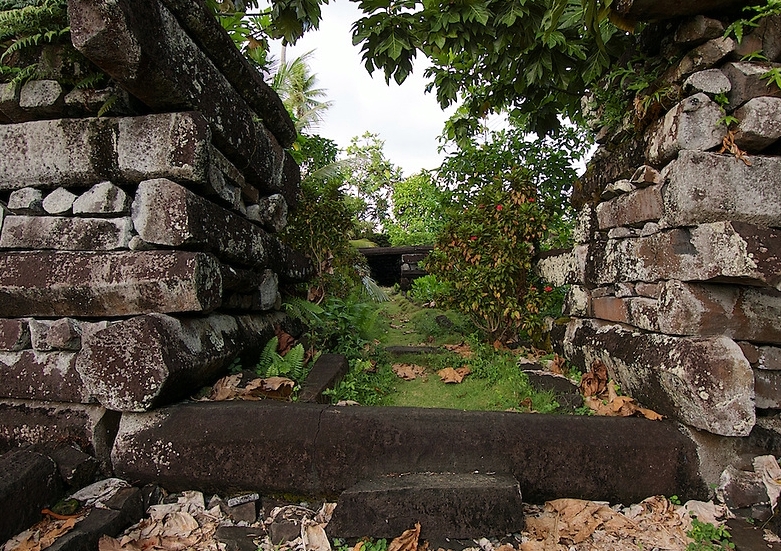
 If this is a gate, an entry or exit to somewhere, then why to have this massive pillar to step over ? And – as one can see – it was laid before the walls were erected ! This big bugger measures about 70cm thick and over 5 meters long. Counting the weight of basalt then just this little step will weigh more then 10 metric tons.
Nan Madol has not yet given up his secret.
To round off my experiences in Pohnpei here a few pics I found in my files:
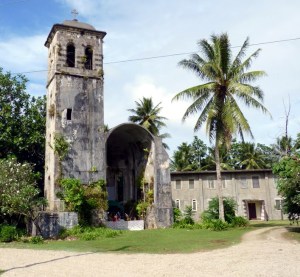
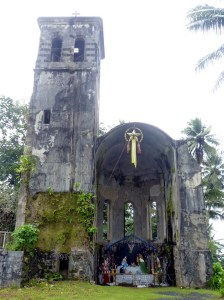
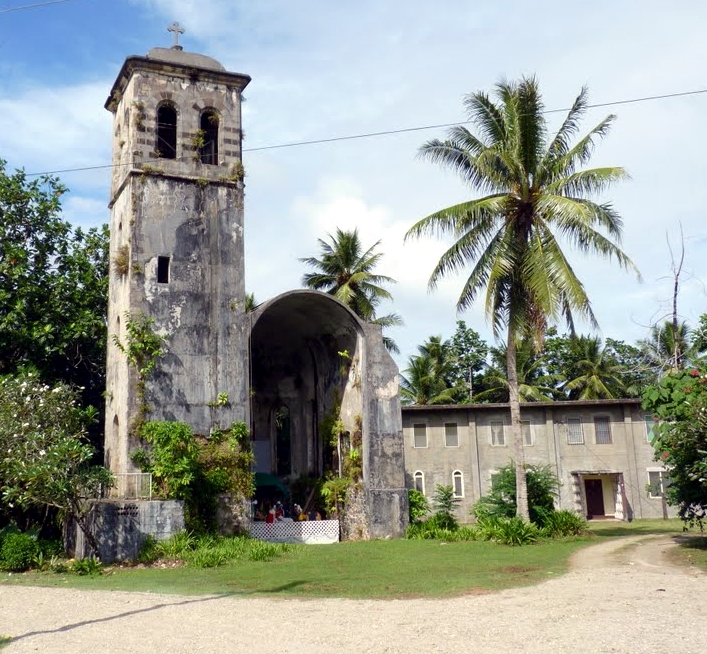
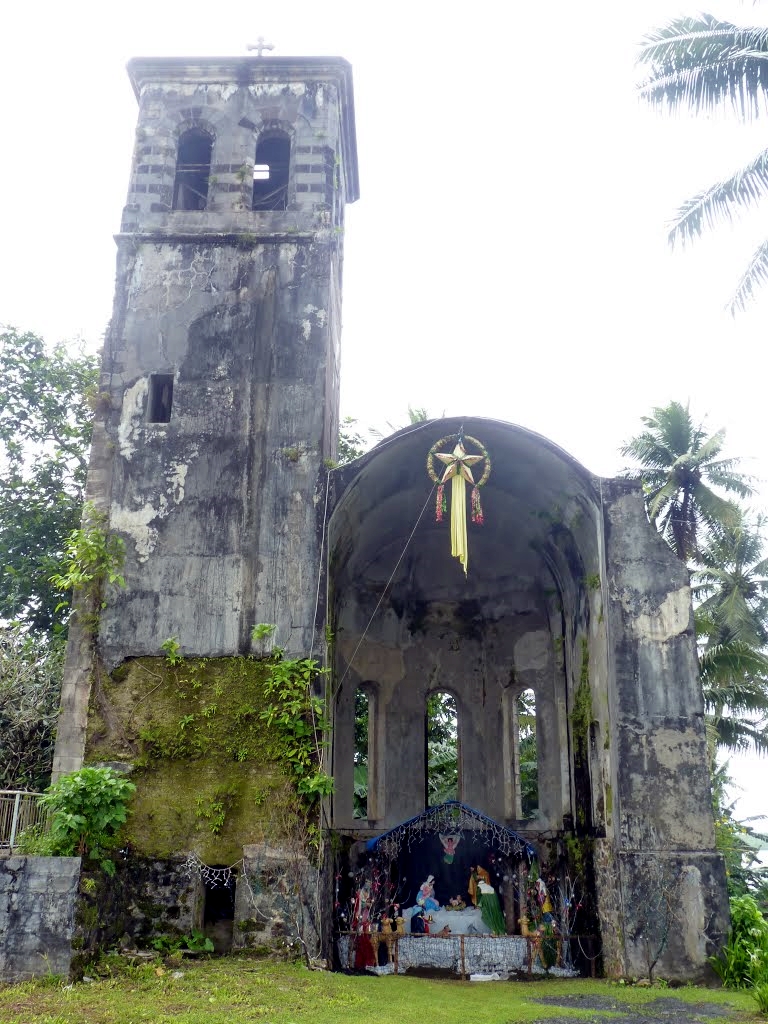
The catholic church in Kolonia, never finished, but baptized and permanently used.
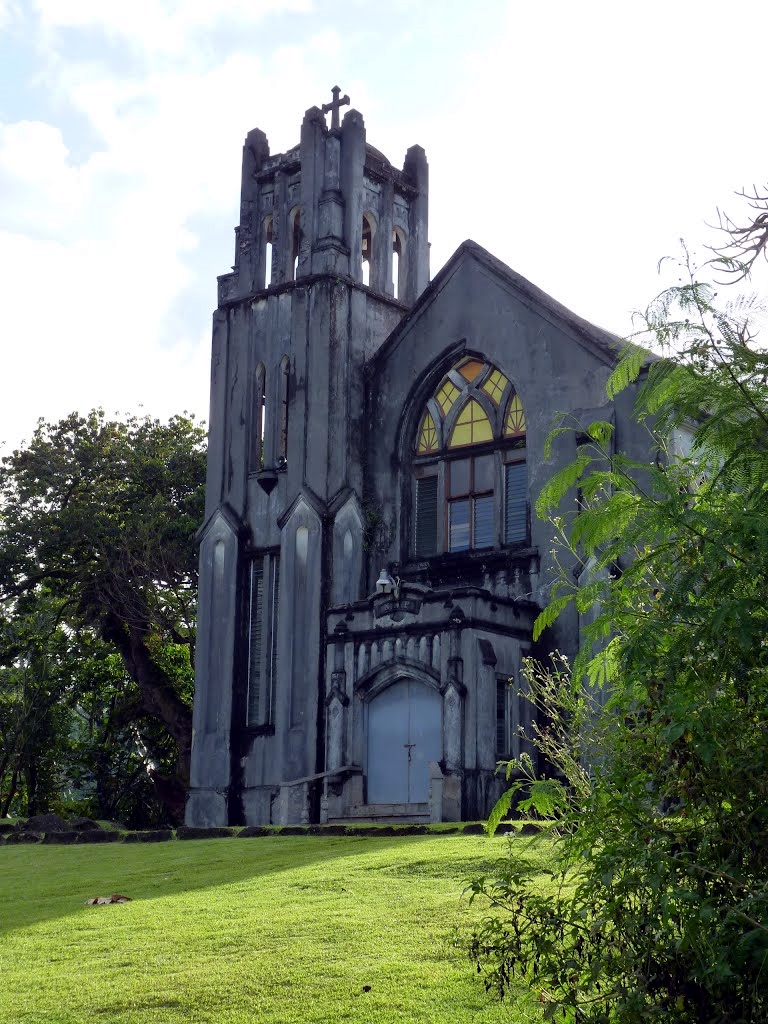
 And the Protestant church.
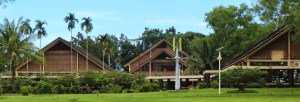
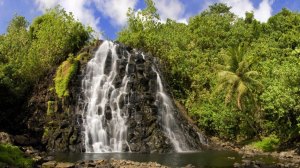
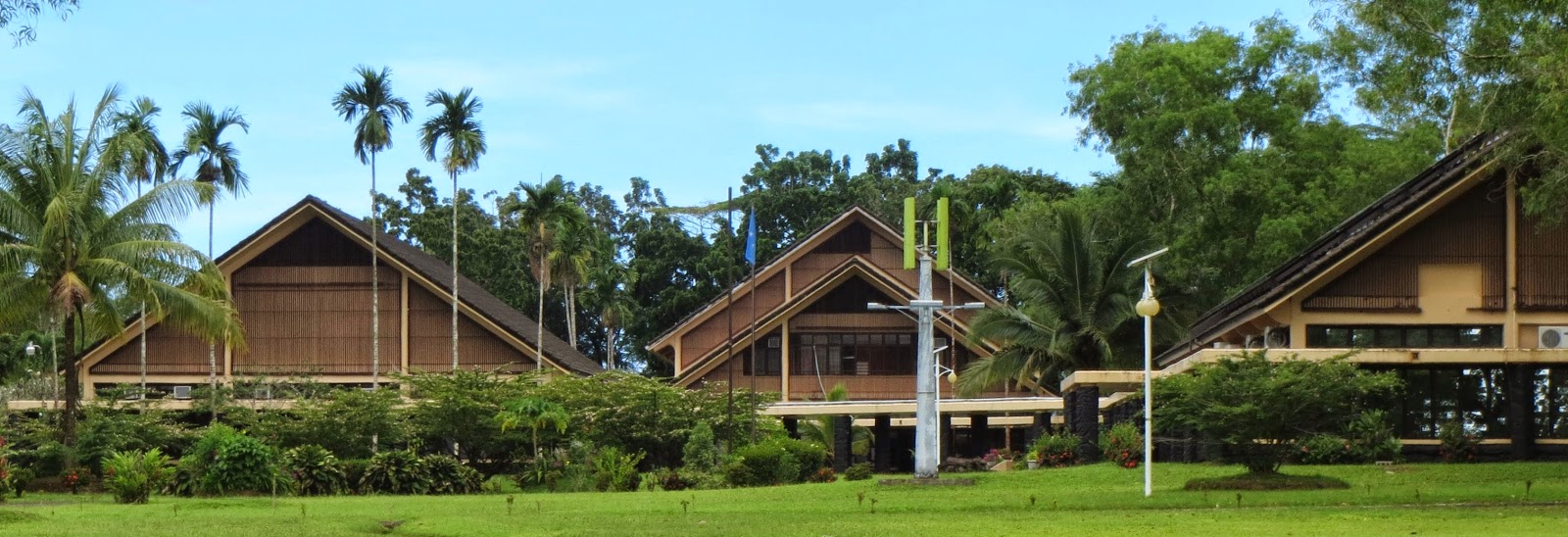
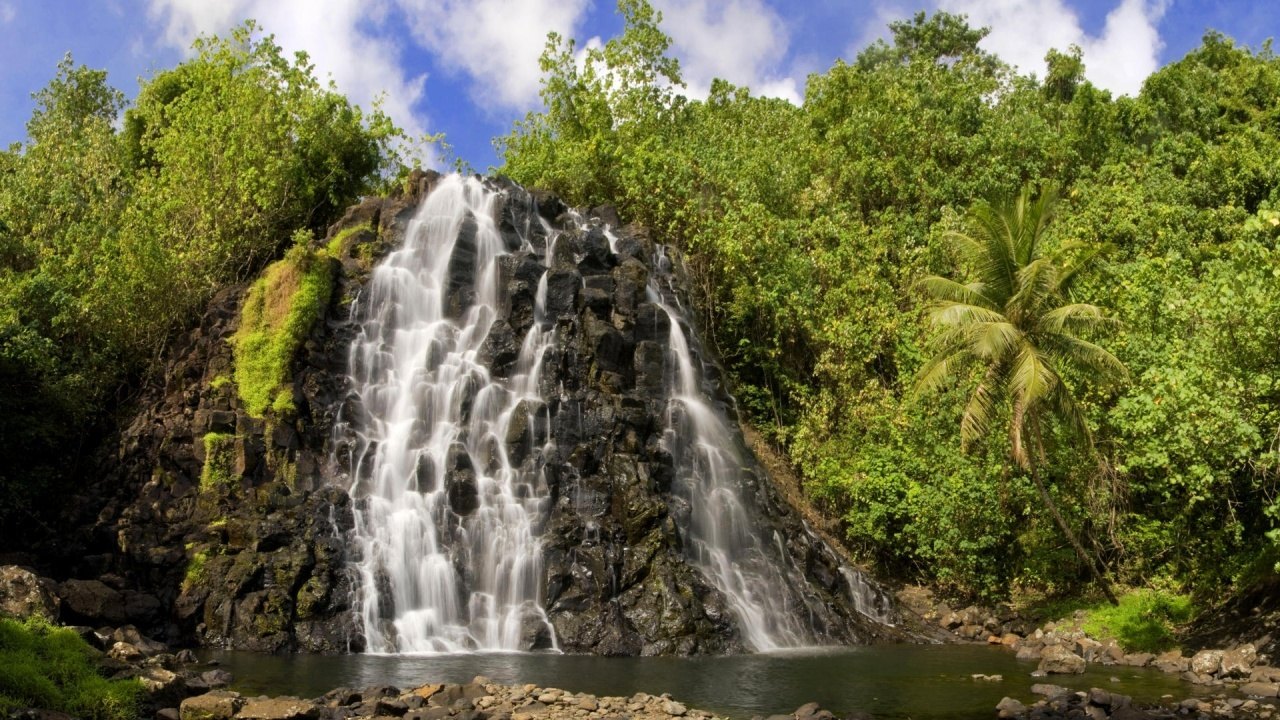
The Capital Complex near Palikir and the beautiful Kepirobi waterfalls.
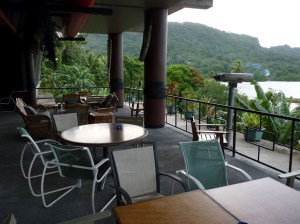
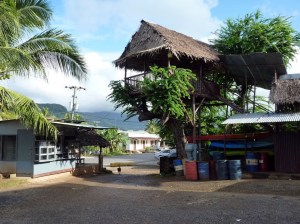 Rusty Anchor Hotel restaurant (left) and Sea Breeze Hotel (right). Newer pics from a travel companion.
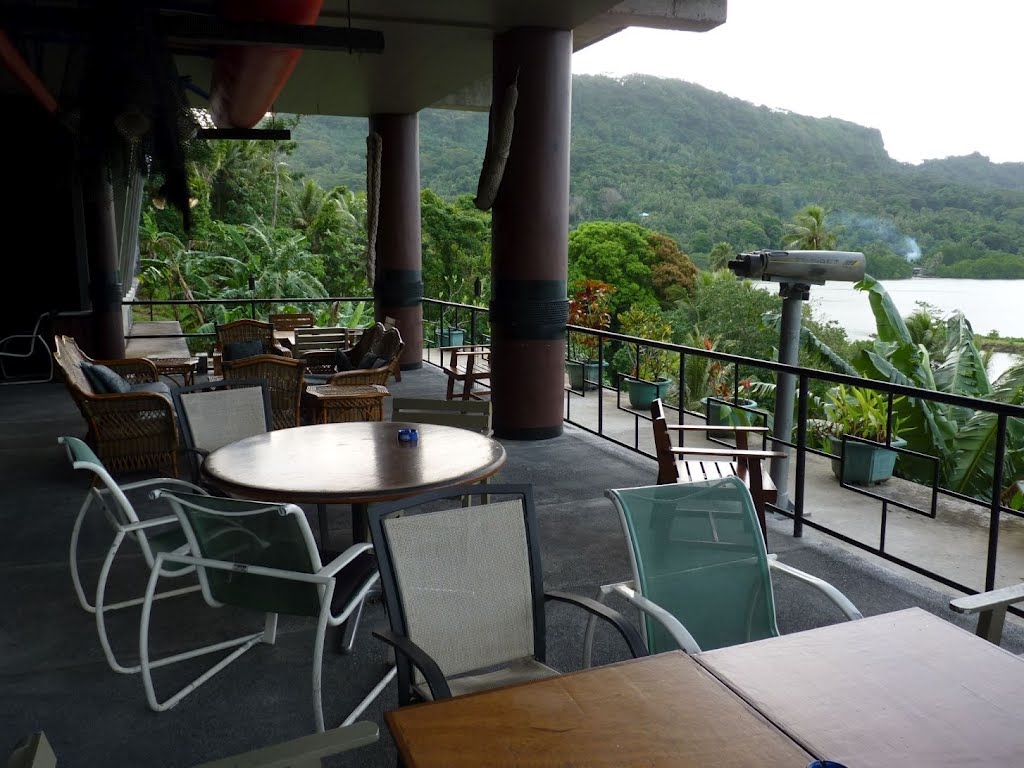
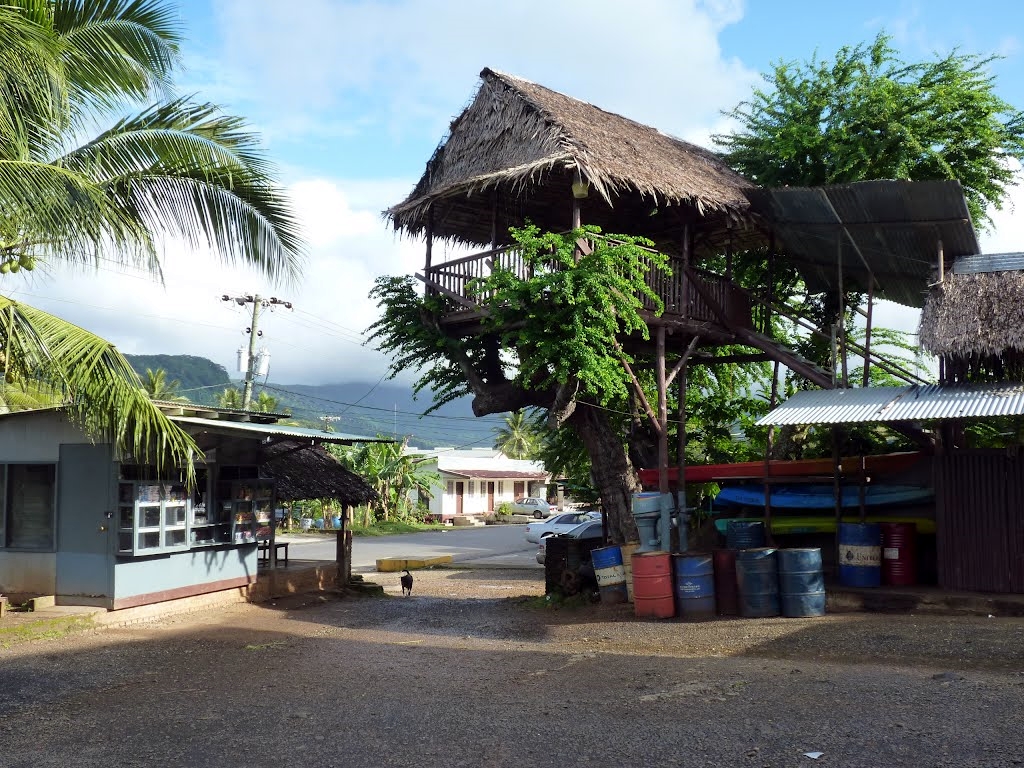
Finally the last day came, saying good bye to a beautiful island with wonderful warmhearted people and an unbelievable history. I was very lucky to have such great weather and sunny days. Mostly the island is concealed in rain clouds, as I had the last morning before the flight out.

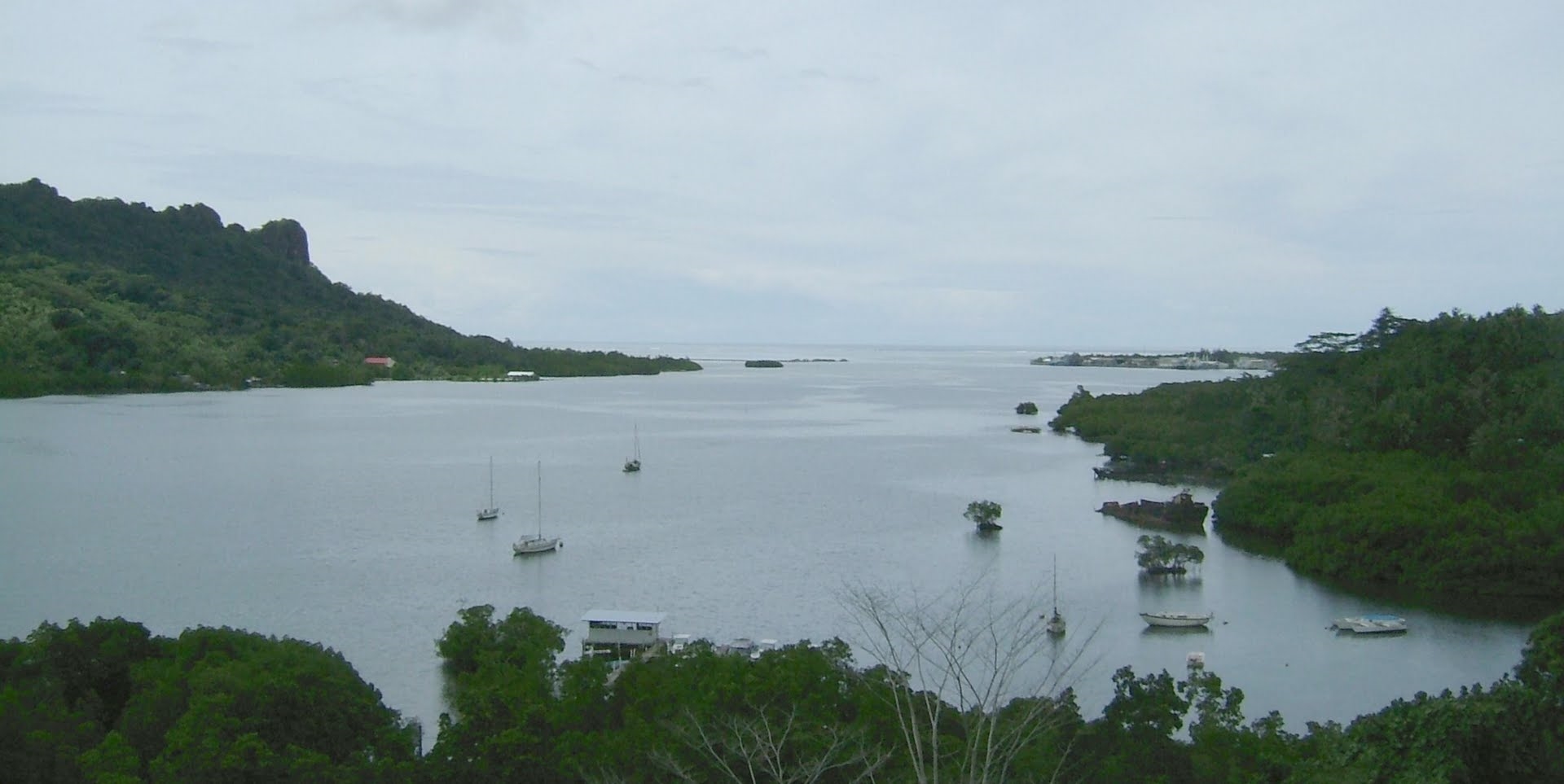
 What a difference, the last evening on Pohnpei and the next/last morning.

Ponapean legends about the origin of Nan Matol.
1. The story that Hambruch (German anthropologist who visited Ponape in 1908-10) heard about the building of Nan Matol tells how „two young wizards, Olo-Sipe and Olo-Sopa (or: Olo-Shipe and Olo-Shaupa), set out from Jokaz (a nearby island) to build a great cult center to the gods, demons, and ghosts. They tried several places on the coasts of Ponape, but each time the wind and the surf destroyed their handiwork. At last they found their ideal site at Temwen. A mighty spell made the basaltic prisms on Jokaz fly through the air and settle down in the right positions to form Nan Matol….“
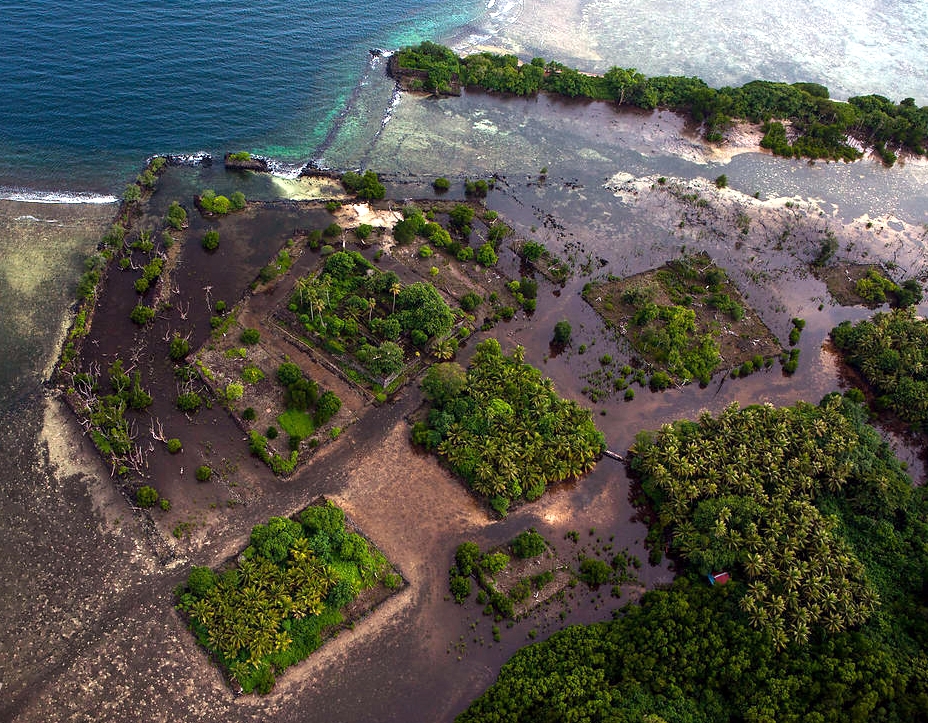
 Islets of Man Madol auf Temwen island.
2. Until recent times Nan Matol was used as a center for the worship of the turtle god Nanusunsap. „“Whenever the Ponapeans caught a sea turtle, they brought it to Nan Matol and kept it in one of the buildings. When the tribe was assembled, the priests anointed the turtle with coconut oil and hung it with ornaments. The priests loaded the turtle into a boat and paddled about the canals of Nan Matol, while one priest stared at the turtle and blinked his eyes every time the turtle blinked. When they arrived at Pan Katera, where a fire had been lit, a priest killed the turtle by breaking its shell with a club. The turtle was cut up, cooked, and served to the priests and the king, with prayers and ritual.
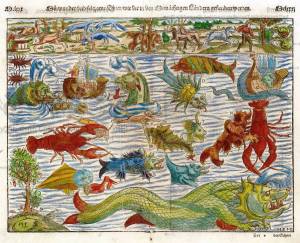
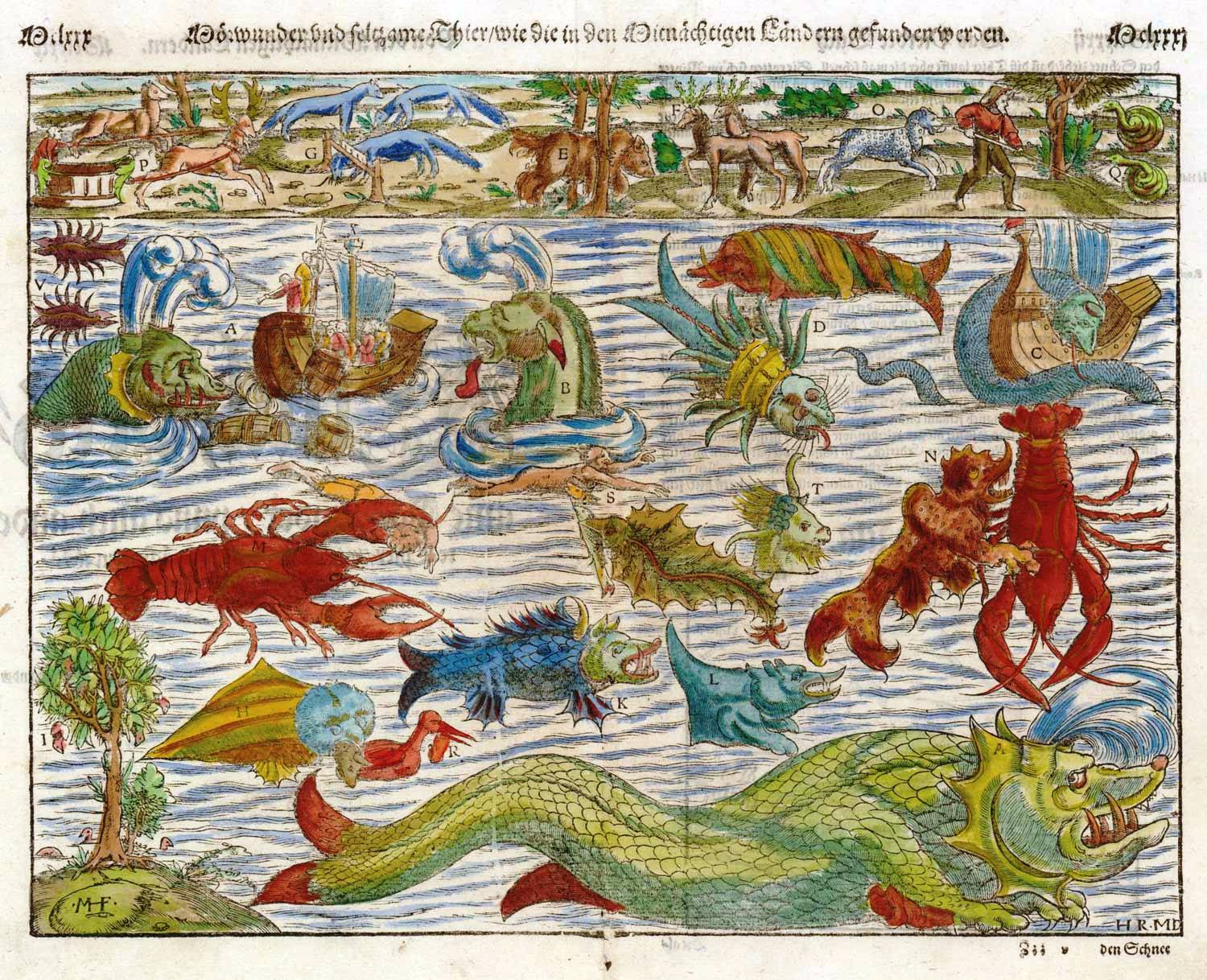
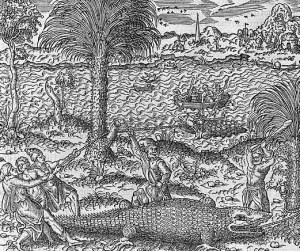 Could it be that the „giant sea monsters“ which are legend in Nan Madol some kind of giant crocodiles, which are well known in the archipel of Papua – not to far away for such creatures. Left: Sebastian Munster from the Carta Marina 1539. Right: Cosmographie Universelle 1575.
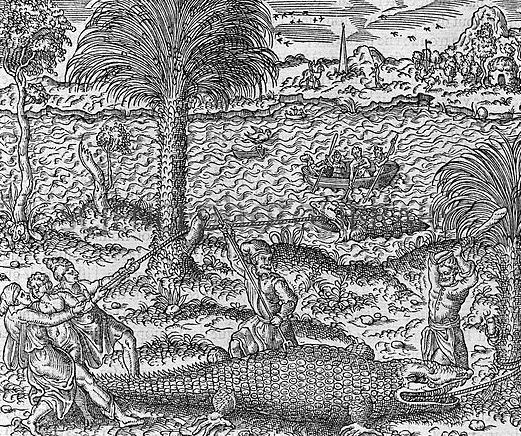
In the reign of the Nan-Marki Luk-En-Mueiu, about 1800, the ritual was brought to an end in a ridiculous fashion. At one ceremony, a priest got no roast turtle. He walked out in a rage, howling curses, and went off to live by himself on a sand bank and eat eels. (Compare the American children’s song: ‚Nobody likes me, everybody hates me, guess I’ll go eat worms.‘ It goes on to describe the gastronomic delights in detail). The Metalanimians feared that he had so profaned the ceremony that they could no longer hold it.““
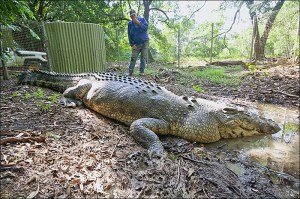
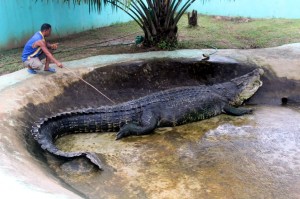 Such big ones I have seen myself, left about 8,50 meters in Queensland Australia and right over 7 meters on Philippines. In ancient times they might have been much much bigger. Think of Dinosaurs.
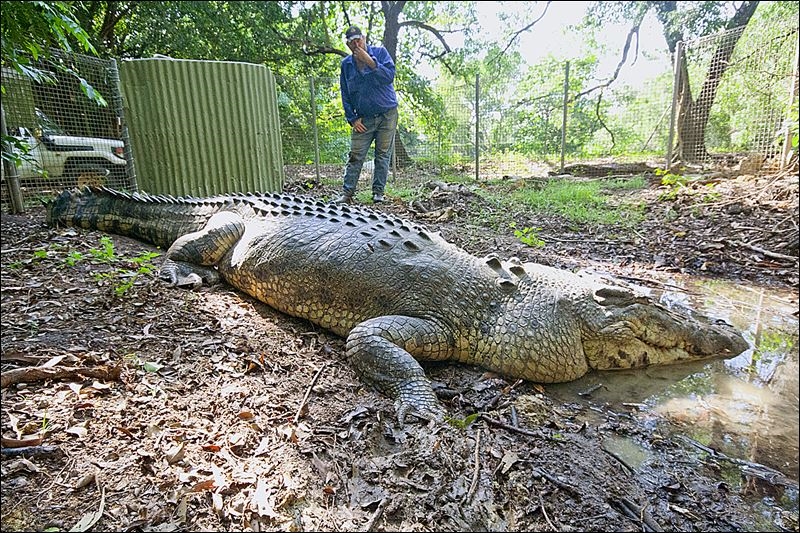
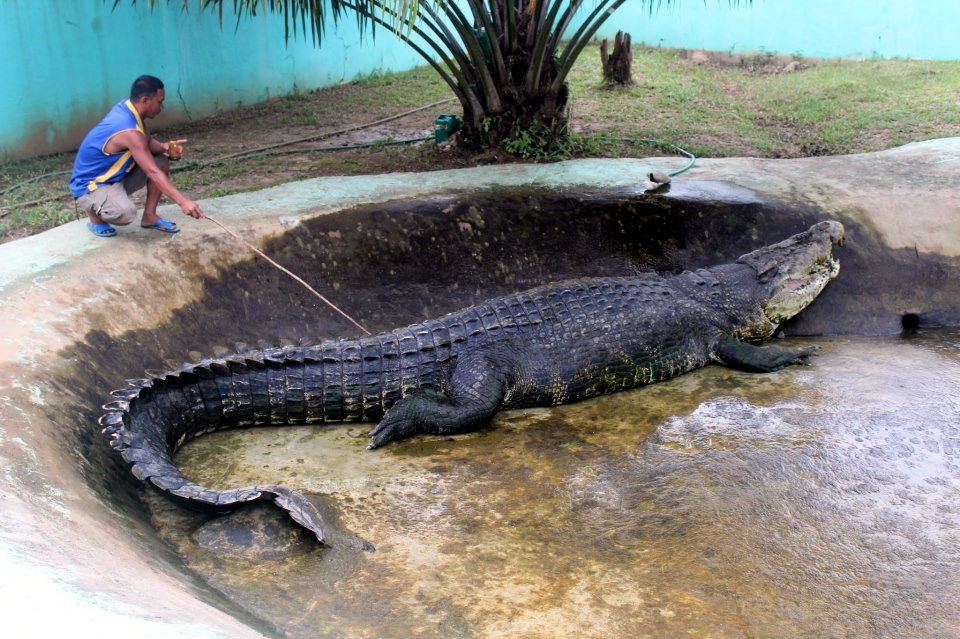
3. The Ponapeans also had myths about a dragon or giant lizard. In one version, „““the dragon lived in Jokaz and gave birth to two girls. When the girls grew up, they married the reigning Satalur and asked their husband to let their mother come to live in Nan Madol. When he assented, the dragon moved into one of the buildings, excavating the canals of Nan Madol in the process. „Next morning, when the Satalur brought some food for his mother-in-law, he saw the dragon for the first time. In terror he burned up the house and the dragon. His wives jumped into the fire and burned themselves up too; and in his grief the Satalur did likewise.“““ The likeliest explanation for the dragon myth is that Ponape was once visited by the New Guinean crocodile, a large man-eating species often found swimming in the open sea, where one would never expect to see a crocodile.
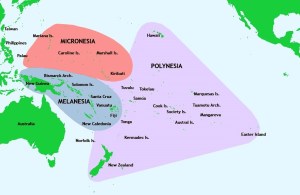 Pohnpei belongs to Micronesia and Micronesia is just one of three major cultural areas in the Pacific Ocean, along with Polynesia and Melanesia. May be all together formed the ancient continent of MU !
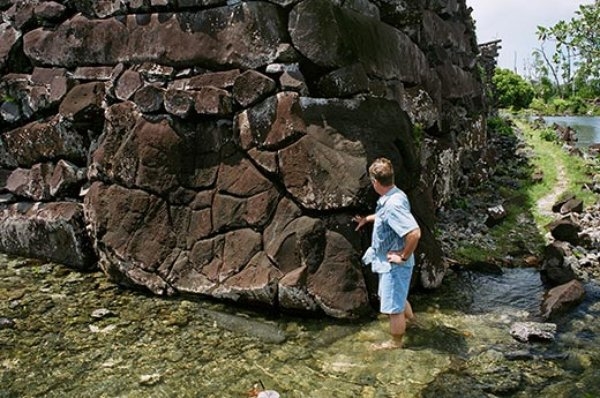
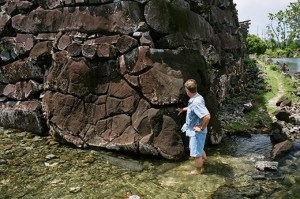 This cornerstone is estimated to weigh around 60 tons. Nan Madol is one of the most significant sites and not yet on the World Heritage List.
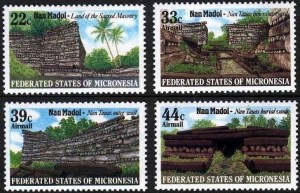 At least they try to make Nan Madol a bit more well known in the world and raise money (selling stamps and asking now US$5,– entry fee !!??!!) to preserve this unique building site.
And here my very last tip to all of you.
If you like to know more about the secret of Nan Madol and the sunken continent and cultures of Lemuria, read those two books, they are also available in Kindle shop:
 This is a translation of an oral history of the impressive ruins of Nan Madol on the South Pacific island of Pohnpei, as told by Pohnpeian elder Masao Hadley in the 1960’s. Much of the account is necessarily mythological, and the stories are wonderful, exciting and interesting.
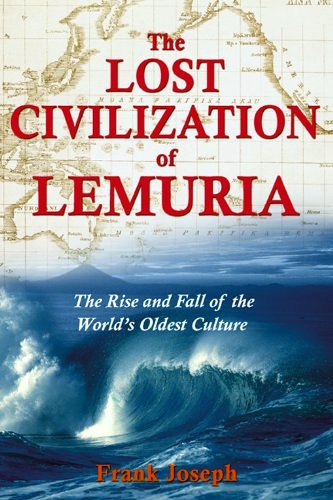 The book is filled with a tremendous amount of archaeological research and travel. Joseph’s investigation includes sunken cities off the coast of Japan to mysterious structures/walls made with perfectly cut boulders in Polynesia. It will be difficult to find another author who can duplicate the amount of research and travel this author has done. Even more exciting.
In case you liked this post, tell me if you want to read more of my island hopping adventures. I would love to share them with you. Thanks !


Fascinating!
„With “sounds of varying pitch” they made basalt logs fly through the air like birds and settle down in their appointed places. Nobody believes in such kind of magic today“. Absolutely not true. „Nobody“ in this case would be academics, taught by academics who were taught by academics, all terrified to wander out of the tenured academic „belief corral.“
What made our recent trip to Peru and Bolivia interesting was to realize that most academic researchers completely ignore local storytelling, and try to invent explanations based on „modern“ technology which is utterly incapable of reproducing the artifacts. Putting a compass inside the „H“ stones at Puma Punku makes it reverse direction 180°. Our guides demonstrated the sonic resonance at several megalithic sites. Magnetism. Sound. Vibration. Yes, indeed, whatever advanced technology they used would seem like magic to us today.
The consensus (i.e., endlessly repeated) story is that these ruins date from 5-11 century AD. Based on similar (equally mysterious) constructions elsewhere, seems to me more likely they date to many thousands of years BC.
LikeLike
Yes Doug,
you are totally right,
it is FASCINATING !
Thanks for reading.
LikeLike
I really enjoyed your photos and learning about this ancient place. Fascinating material! I read the book on Lemuria years ago after a psychic told me I spent a life there. so love being reminded of it. Nan Madol. An amazing story! Must have been a great conversation you shared with others over lunch. I was sitting at the far end of the table and missed it.
Isn’t it great to be able to discuss these things with like minded and Open people. I love it.
Thanks for sharing your stories with us!
LikeLike
Hello Susan,
thanks very much for your time, reading and commenting.
Especially your warm and positive comments as an professional
book author are very welcome.
May be I will once post the information’s , which I have here,
about the connections (which researchers found out) between by
example Nan Madol, Machu Picchu, Gizeh, and others.
Unbelieveable, fascinating stuff. But it is already so much
written about all this. My job would be to bring the essence.
Why not starting a new discussion next meeting ???
Cheers Mike.
LikeLike
Man Mike,
your story about the Nan Madol city is something. Never ever heard about it before . Great stuff, would like to read more from your trips down in the southern hemisphere.
Hugs from us, Luigi.
LikeLike
Yes my friend, it is incredible.
I am preparing the 2nd part of this story.
Even more interesting, because of an answer
why Nan Madol was build ! WOW, I can tell you !
Abrazos Mike.
LikeLike
Pingback: The Marree Man – Update | my uy tips