
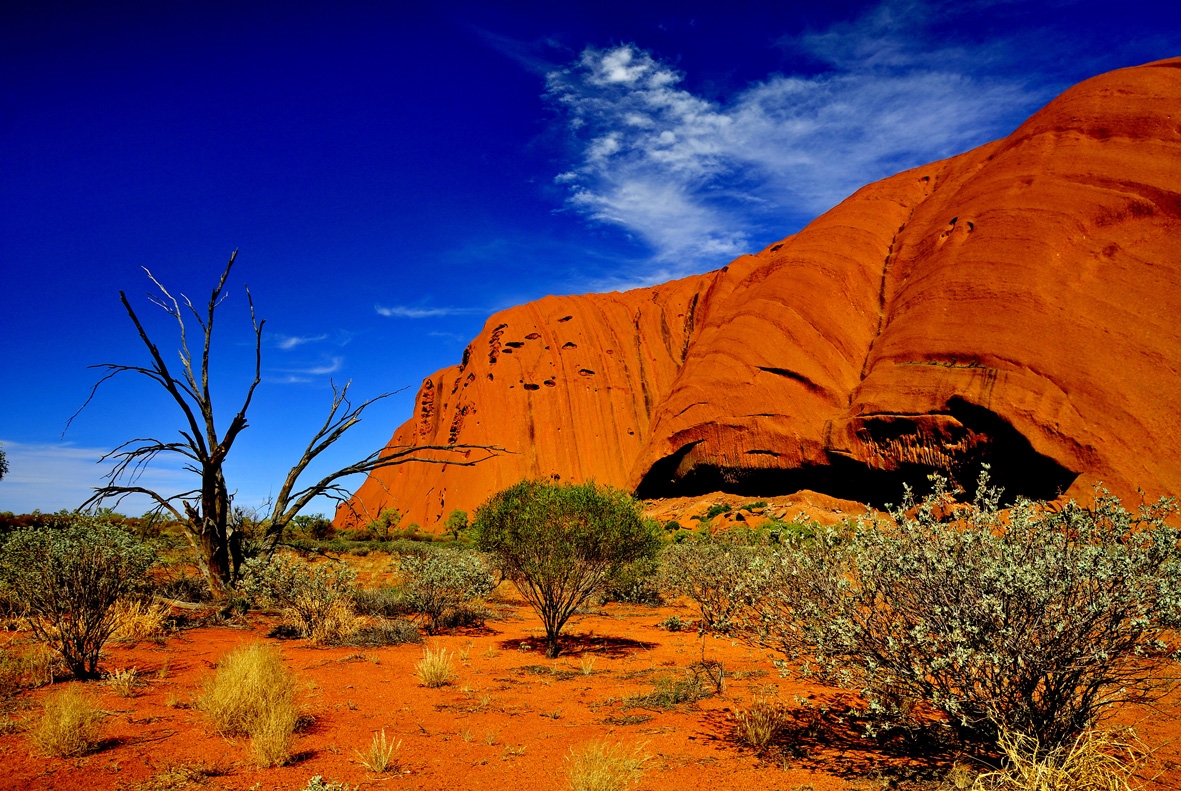
WARNING:
This article can contain images and/or names of and reference to both,
living and deceased Indigenous people from diverse cultural backgrounds
and communities in Australia.
This warning is written out of respect to the Aboriginal culture.
Before you read this article, please give yourself a favor and read the article „Australia – Aborigine Art 1“ first. Just click right on Art or in Archives on month „March 2016“.
Australia. A country which I visited very often for over 50 years and lived there permanently for almost 12 years. During all those years I traveled hundreds of thousands of kilometers through Australia, seeing almost every corner of this amazing continent.
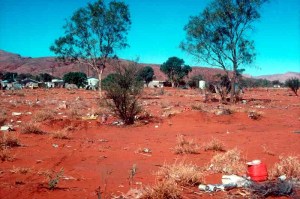 Mount Liebig Aboriginal community, about 325km west of Alice Springs. Most people living here are former residents of Papunya or Haasts Bluff.
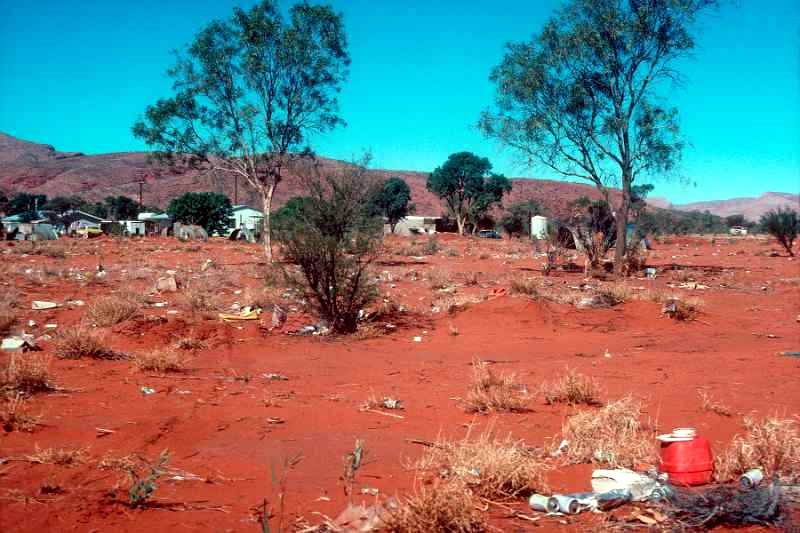
I had the opportunity to live a few weeks together with Aborigine people in their community (also in secluded areas), all around the Papunya and Mount Liebig area. I learned about their life and lifestyle, their surviving, hunting, history and have seen many things a tourist won’t never experience.
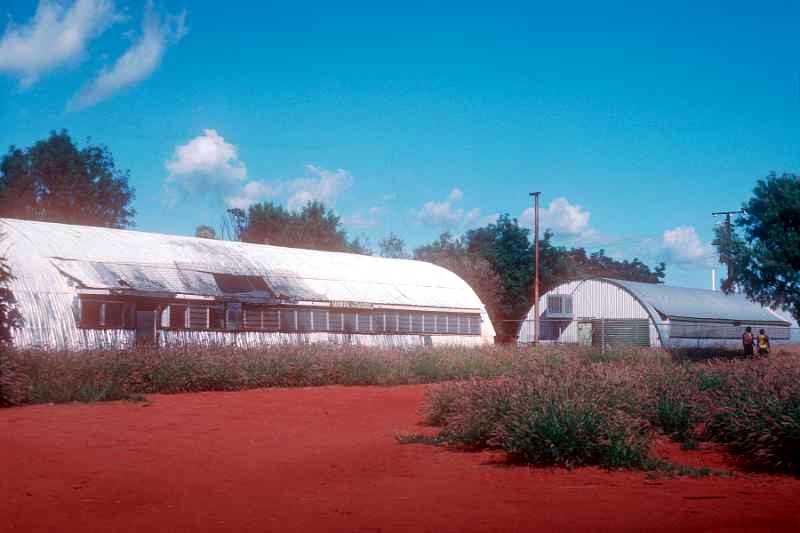
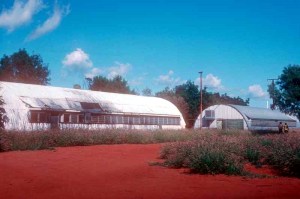 Quonset Huts in Papunya Aboriginal community. Those prefabricated structures of corrugated galvanized steel, produced during World War II were still used widely here in the eighties. Can one imagine how hot it is inside if you have outside already more then 40 degree Celsius.
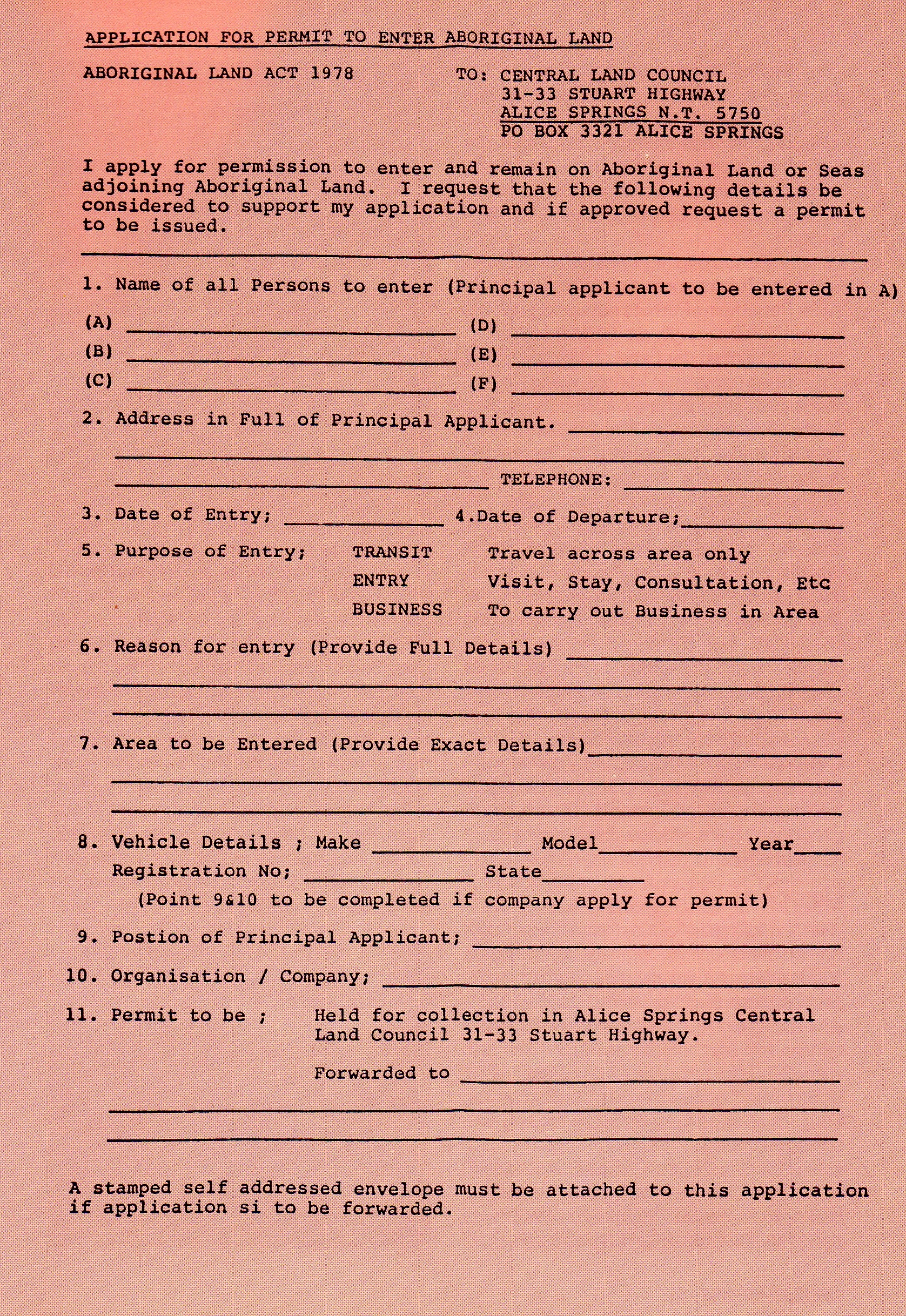
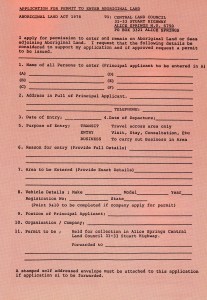 Most of the communities are only to be visited by a special permit, which I had in those times. Not that easy to get, best is on invitation of local people.
In the years mid 1980’s to early 1990’s I specialized in collecting art from the Central Desert area of Australia, met almost all artists which were important to this time and my collection. About all this I organized dozens of slide shows about Australia and several exhibitions about the Aboriginal Painting Art allover Europe.
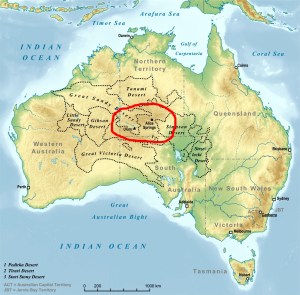 Central desert is about inside the red circle. Sometimes also called „The Red Center“ of Australia.
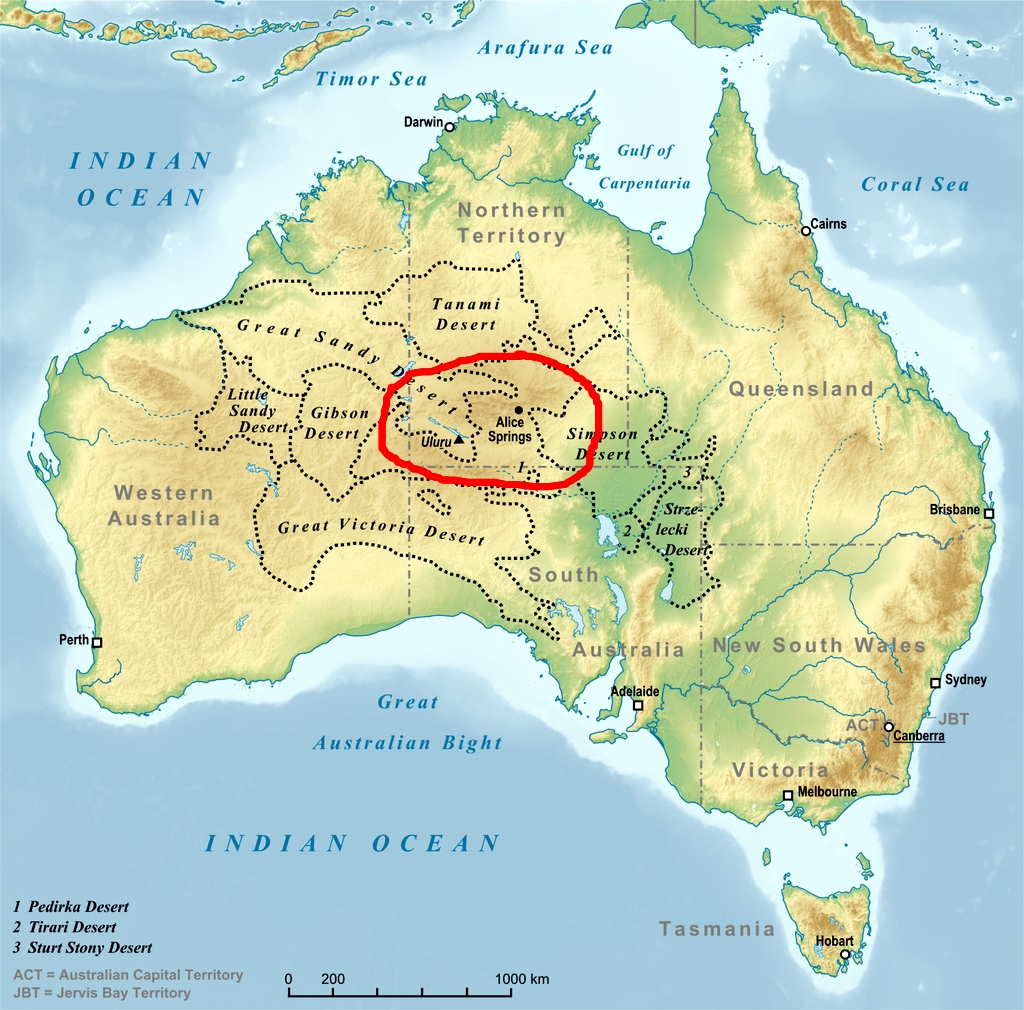
Now it is the time to separate myself from the last part of my painting collection. All of the here offered paintings are from artists of the so named „first or second generation of Central Desert artists“. I’ll take the chance to inform you about it in this blog and will also offer the opportunity to purchase the art if you like. Most of the shown art is not available anywhere in the market and some of the artists are deceased meantime.
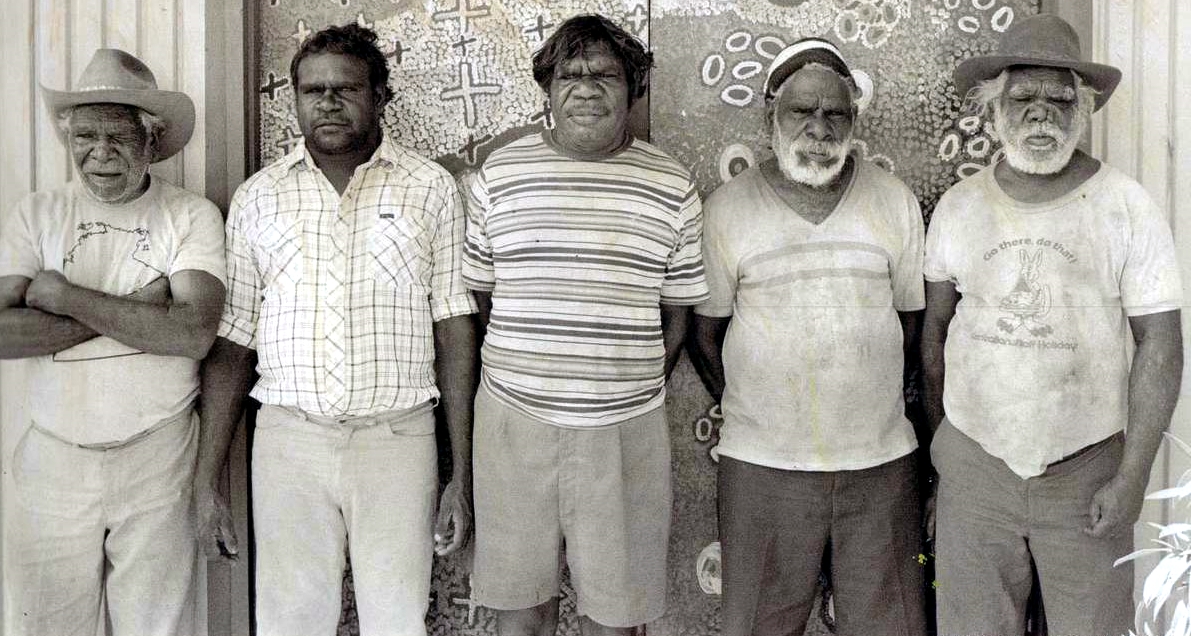
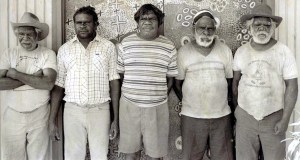 Founding members of Yuendumu Art Center. Pic by Warlukurlangu history collection.
If you click on pictures, most will supersize and show you details of art !
The paintings for sale are numbered from „Painting 1“ up to „Painting 22“.
In this post you will find the paintings 1 to 7. Prices are negotiable.
Yuendumu Art Center.
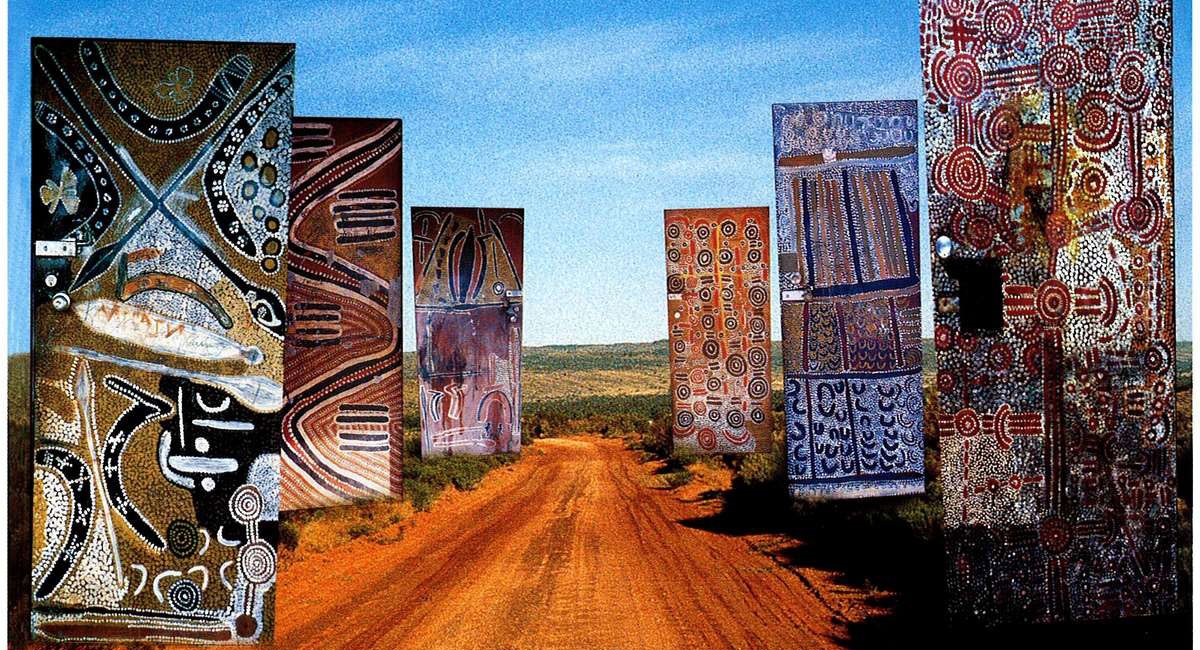
In the early 1970s Paddy Japaljarri Stewart was involved in the painting of the mural on the Papunya School wall. In 1983 he and Paddy Japaljarri Sims were instrumental together with other senior men in the painting of the now famous Yuendumu school doors. The Warlukurlangu art centre in Yuendumu was founded in 1985, incorporated in 1986.
 The, meantime very famous, Yuendumu Doors, pic by Warlukurlangu history collection.
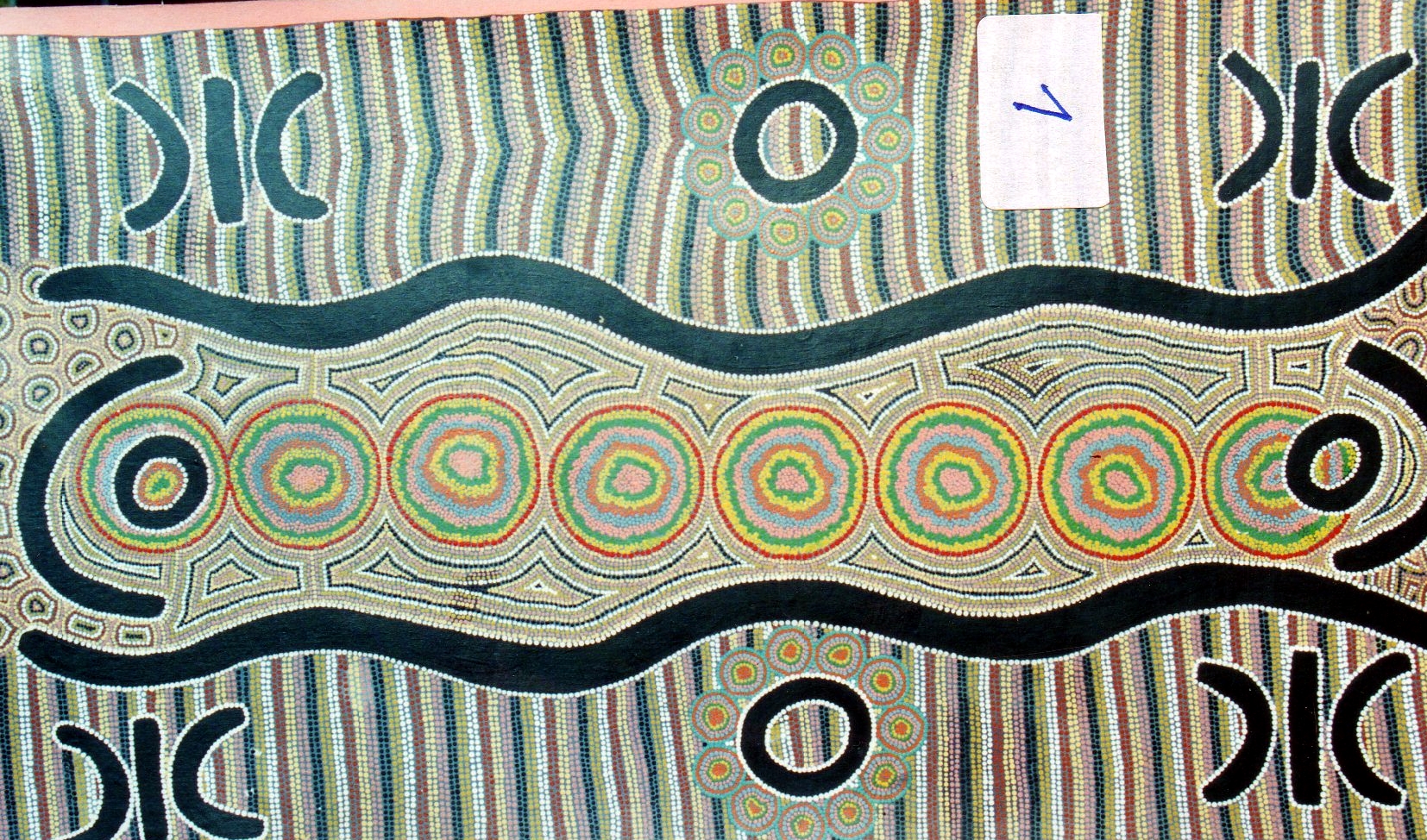
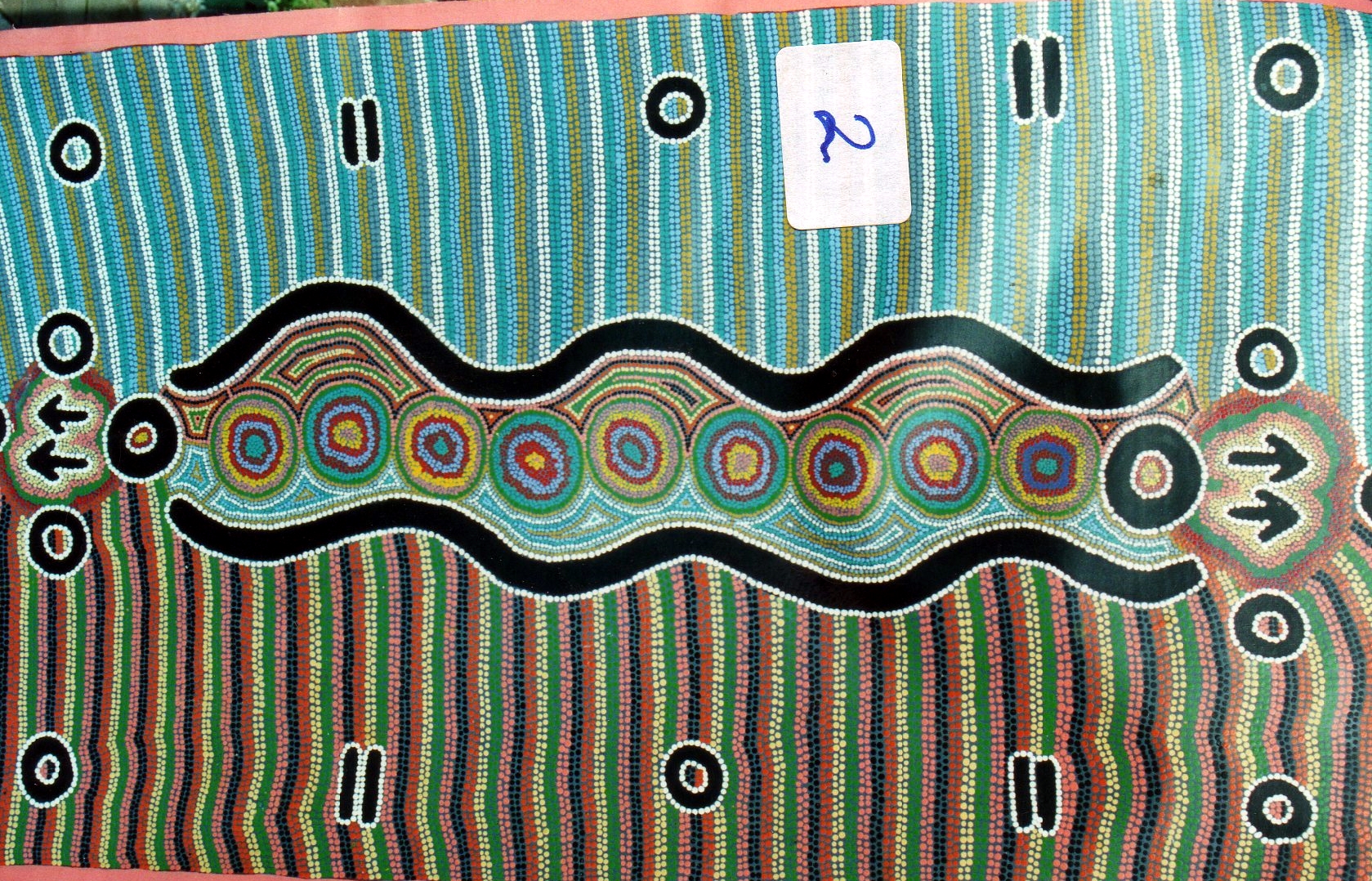
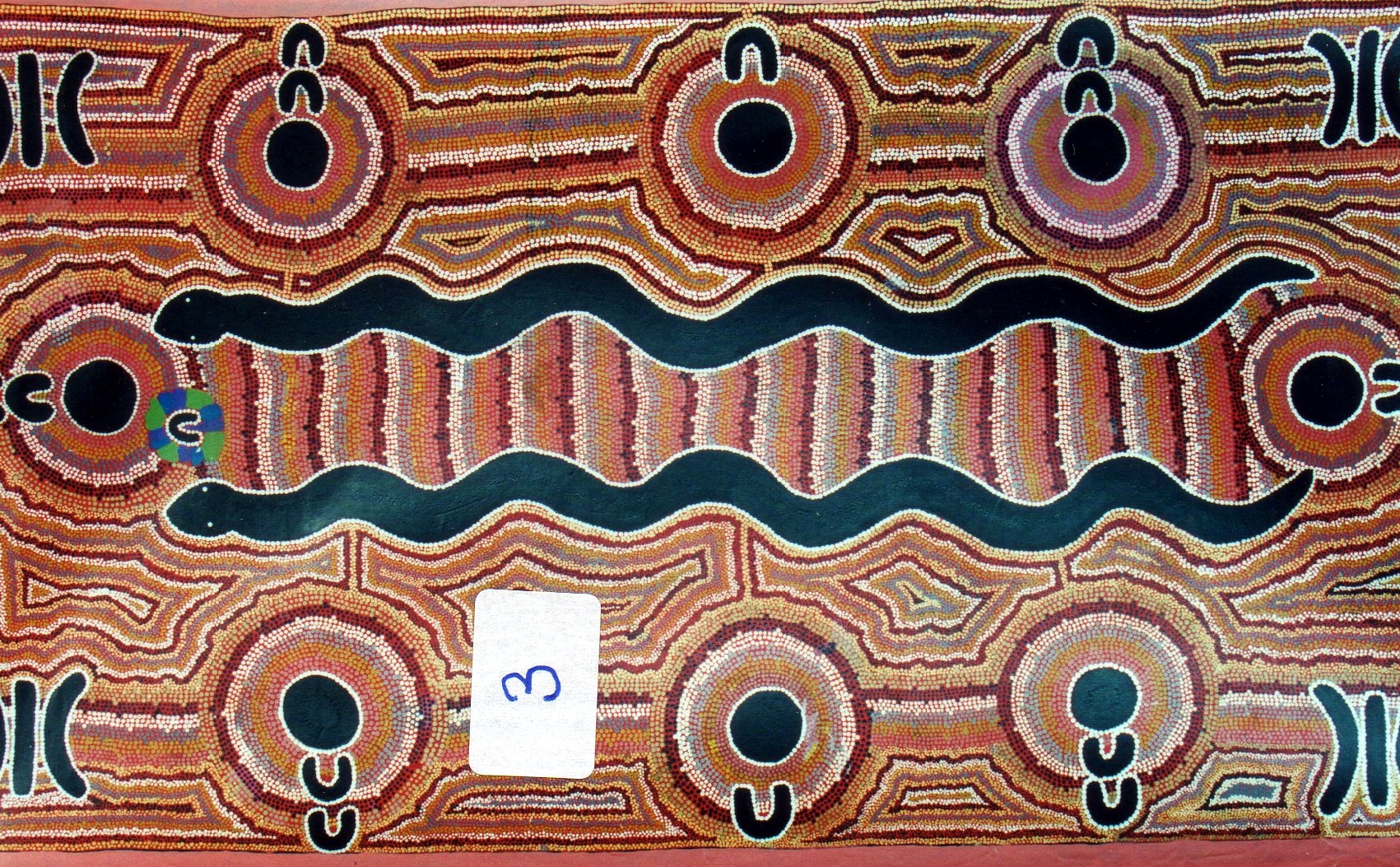
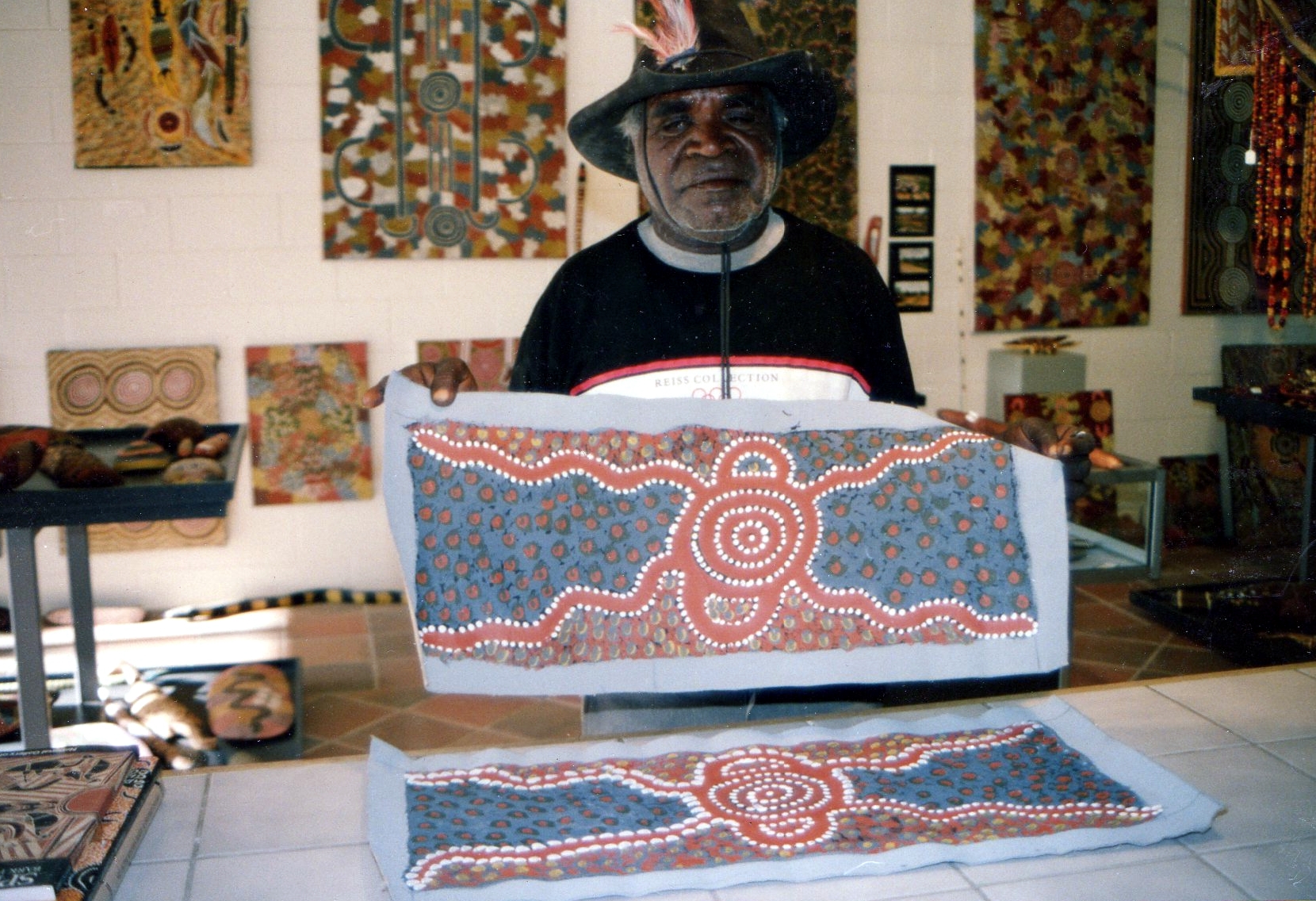
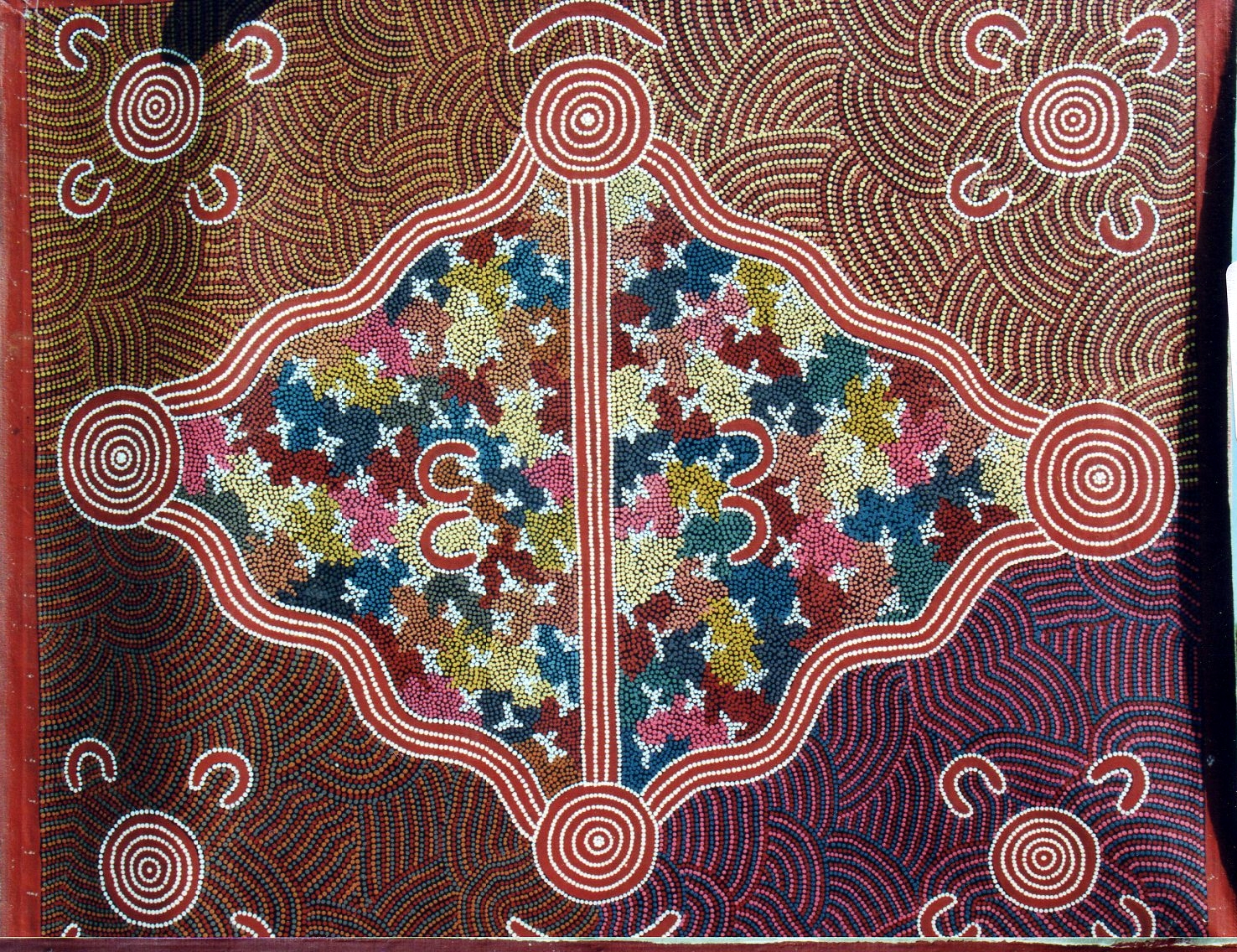
The following 3 paintings were purchased 1992 from a junior artist class in the Yuendumu Art Center. The theme was „snake dreaming“ and they were exhibited in the Aboriginal Desert Art Gallery in Alice Springs. The names of the artists are unknown.
Painting 1: Snake Dreaming, 1992. 70cm x 130cm. Price on request.
Painting 2: Snake Dreaming, 1992. 70cm x 130cm. price on request.
Painting 3: Snake Dreaming, 1992. 95cm x 172cm. Price on request.
Kudd+Ji.
Kudd+Ji was born c. 1930, and is an Anmatyerre elder who commenced painting in the early 80’s. His traditional country is situated approximately 300 kms north east of Alice Springs (Utopia area). He is the brother of renowned artist Emily Kame Kngwarreye. Kudd+Ji’s traditional depictions have been represented in major international exhibitions and he has gained world-wide recognition.
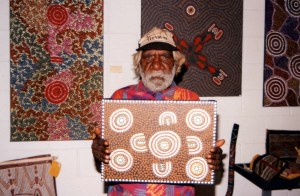 Kudd+Ji with the painting.
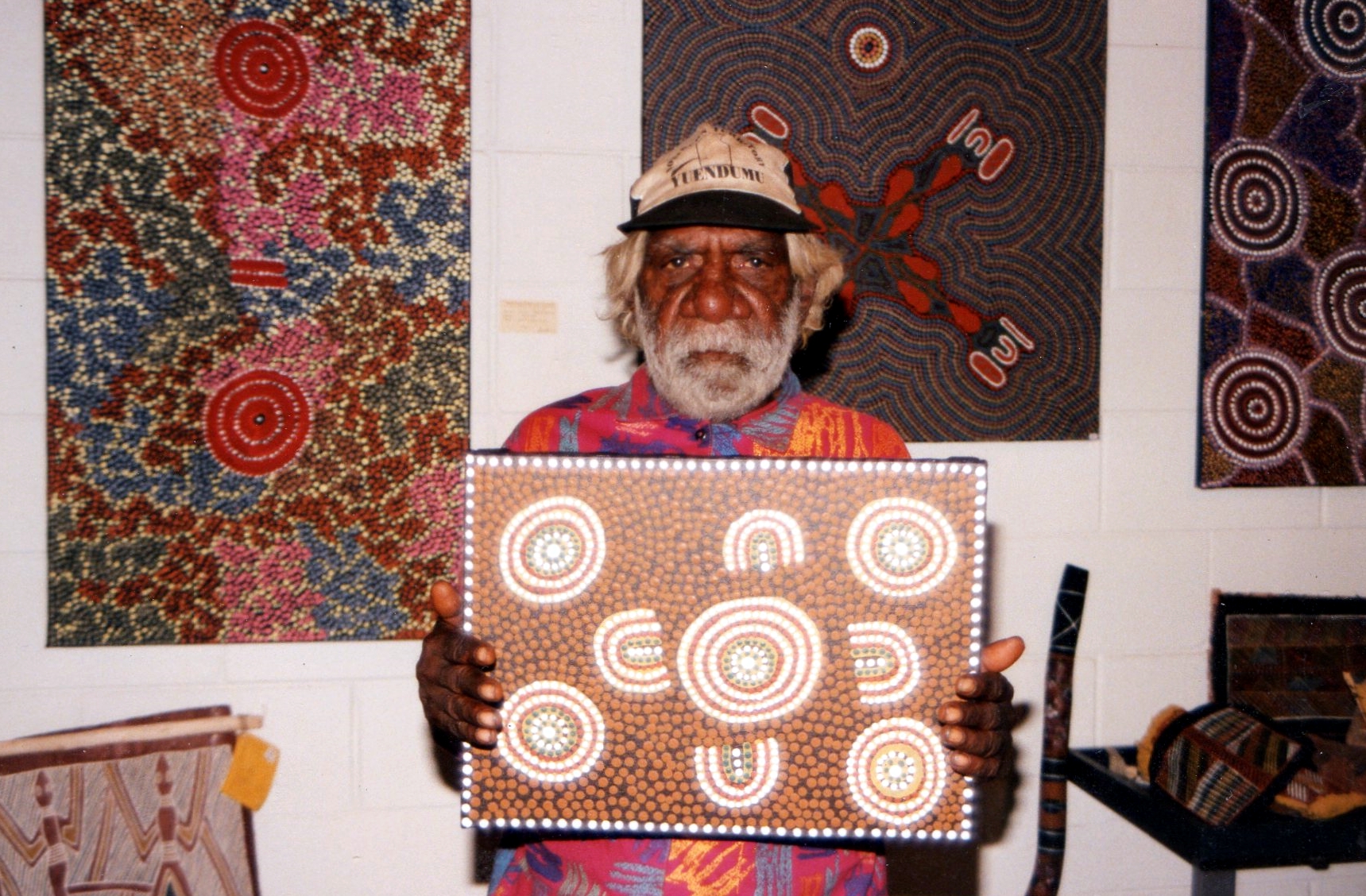
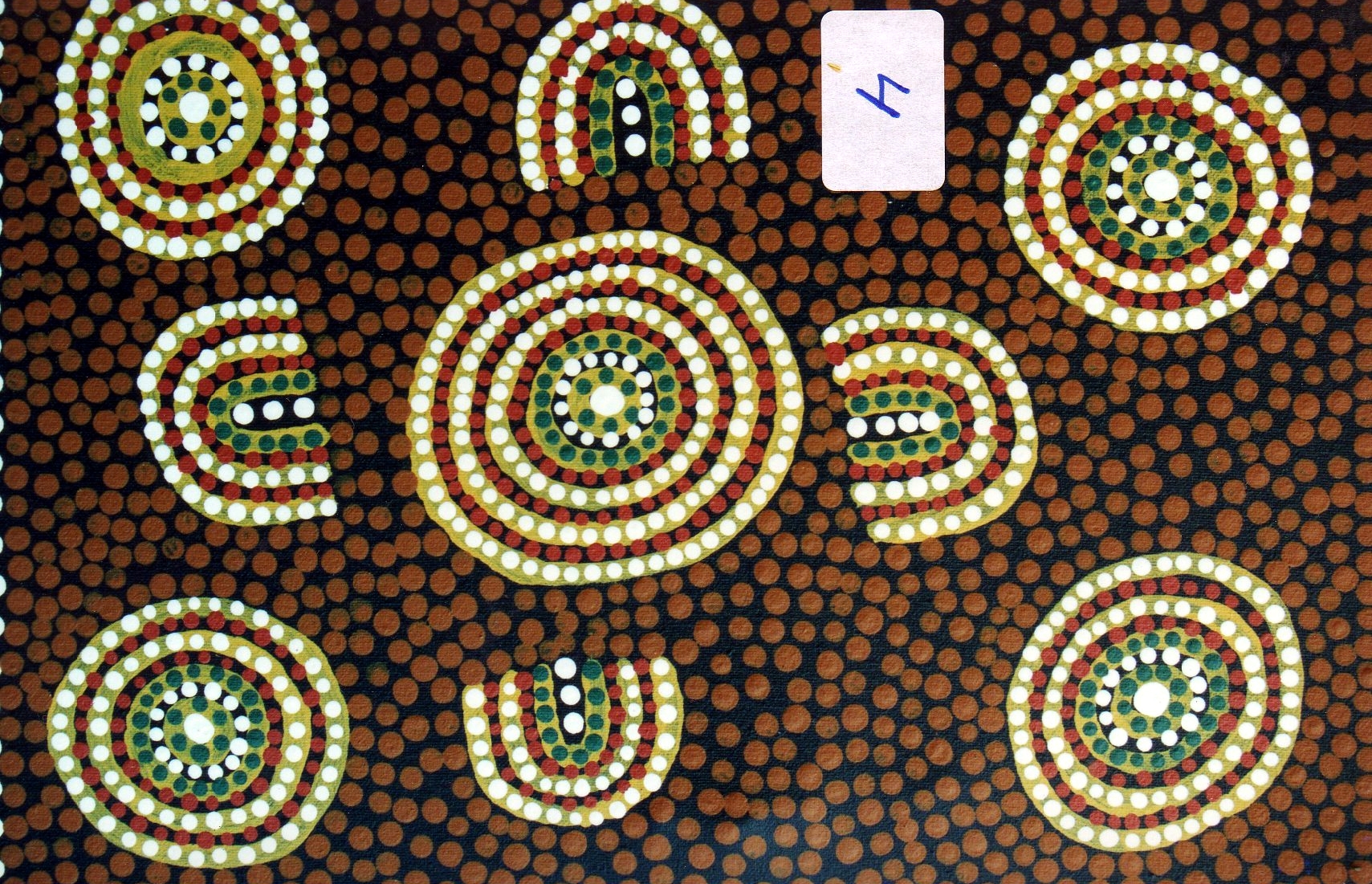
His main stories are Emu Dreamings, Country Paintings and Man’s Dreaming Stories.
Painting 4: Emu Water Hole Dreaming, 1992. 31cm x 41cm. Price on request.
Charlie Eagle Tjapaltjarri.
Charlie Egalie Tjapaltjarri was born about 1940 at Vaughan Springs, northwest of Mt. Liebig. Charlie passed the traditional Aboriginal initiation ceremonies at Haasts Bluff to ‘become a man’. In the early days of the art movement at Papunya, about 1972, Charlie commenced painting with the encouragement of Johnny Warangkula, Kaapa Tjampitjinpa and Billy Stockman.
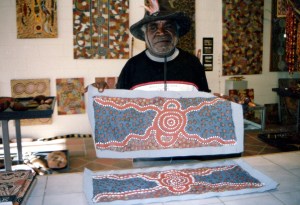 Charlie Eagle during a rare visit in Alice Springs, showing one of his other paintings.
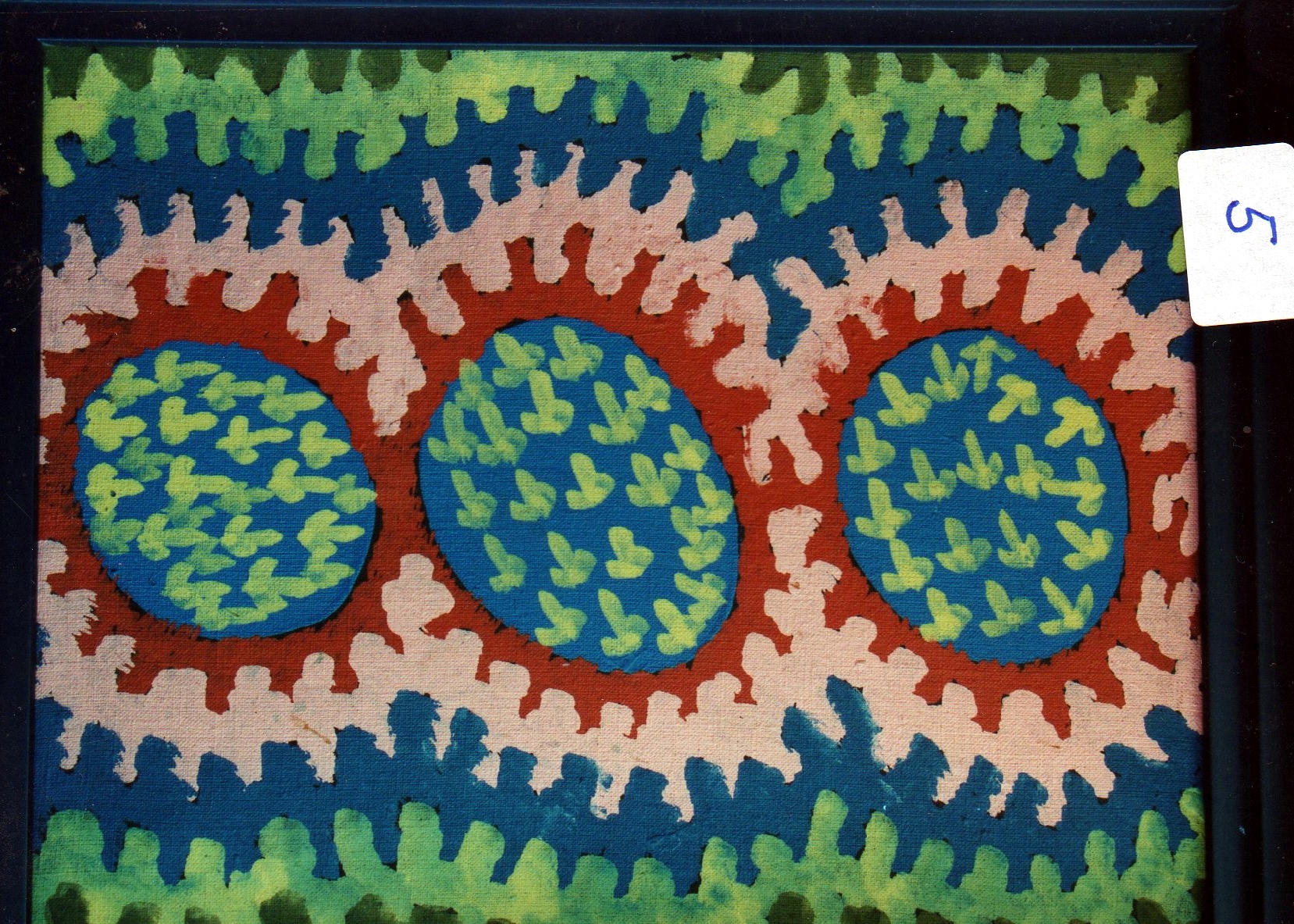
Charlie paints dreamings associated with Mens Dreaming, Budgerigar and Bushfire stories. Some paintings depict the journey of the Wallaby Spirit and other Spirit Beings across the desert sandhill and spinifex country, east of Yuendumu. Tracks represent his journey from waterhole to waterhole (roundels) while the background dot work represents the desert topography.
Painting 5: Budgerigar Dreaming, 1992. 32cm x 40cm. Price on request.
Pansy Napangardi.
Pansy Napangardi was born in Haasts Bluff, Central Western Desert. Whilst Pansy learnt her father’s Dreamings from artist Rennie Robinson which include Bush Banana, Water Snake, Marlu (Kangaroo), Cockatoo, Bush Mangoes and Willy Wagtail, her mother’s Dreamings were taught by her mother’s cousin and include Seven Sisters, Hail, Luritja Country, Desert Raisin and Kungkakutjara (Two Women).
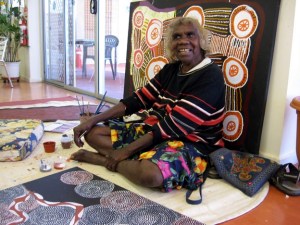 Pansy painting in Alice Springs gallery.
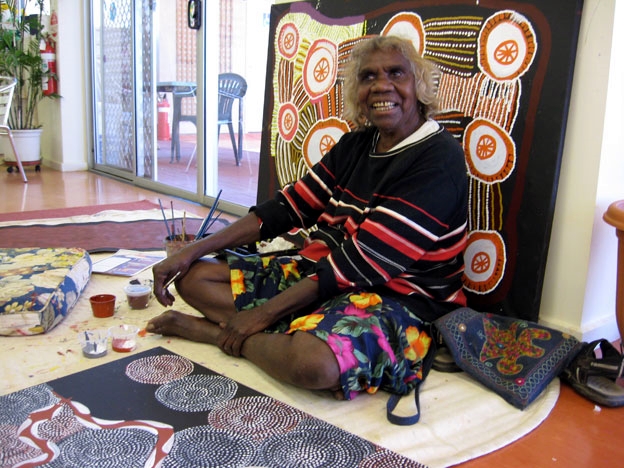
Pansy recalls her grandparents storys, telling her Dreamings and teaching her how to depict them by drawing in the sand. Thus, her childhood was abundant with artistic influence and cultural teachings.
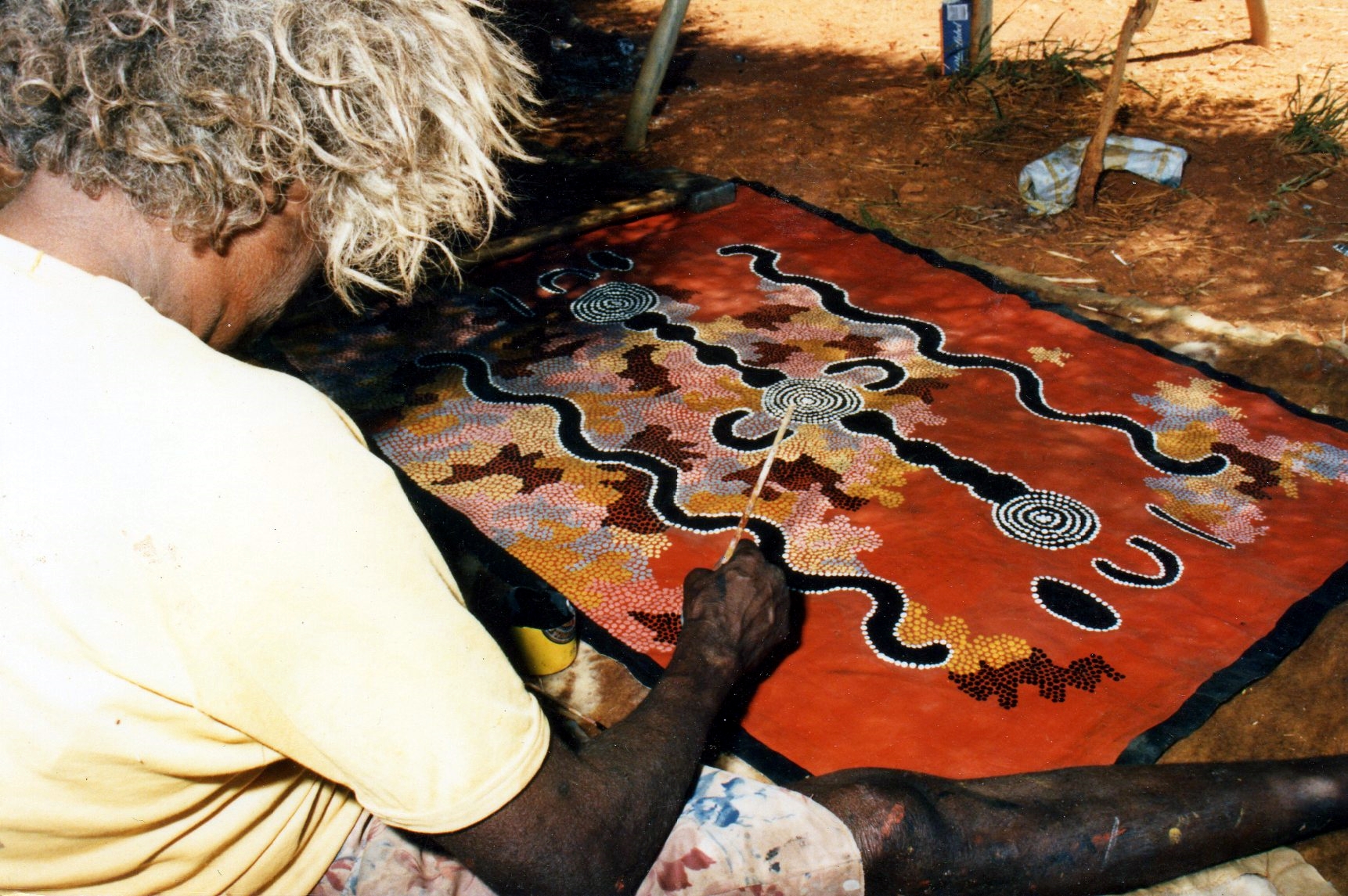
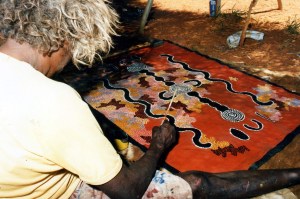 Pansy in Papunya, painting a Water Snake Dreaming.
In the 1960’s Pansy moved to Papunya where she observed family and renowned artists such as Johnny Warangkula and Kaapa Tjampitjinpa creating Aboriginal masterpieces. At this stage, she began to experiment with paintings, practicing on paper and later progressing to collages which featured Ininti Seeds (traditionally used in ceremonial jewellery). Unlike many female Aboriginal artists Pansy did not apprentice a male painter; rather she developed her own unique style independently.
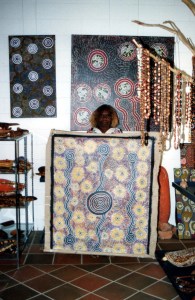 Pansy Napangardi with her very early art in 1987.
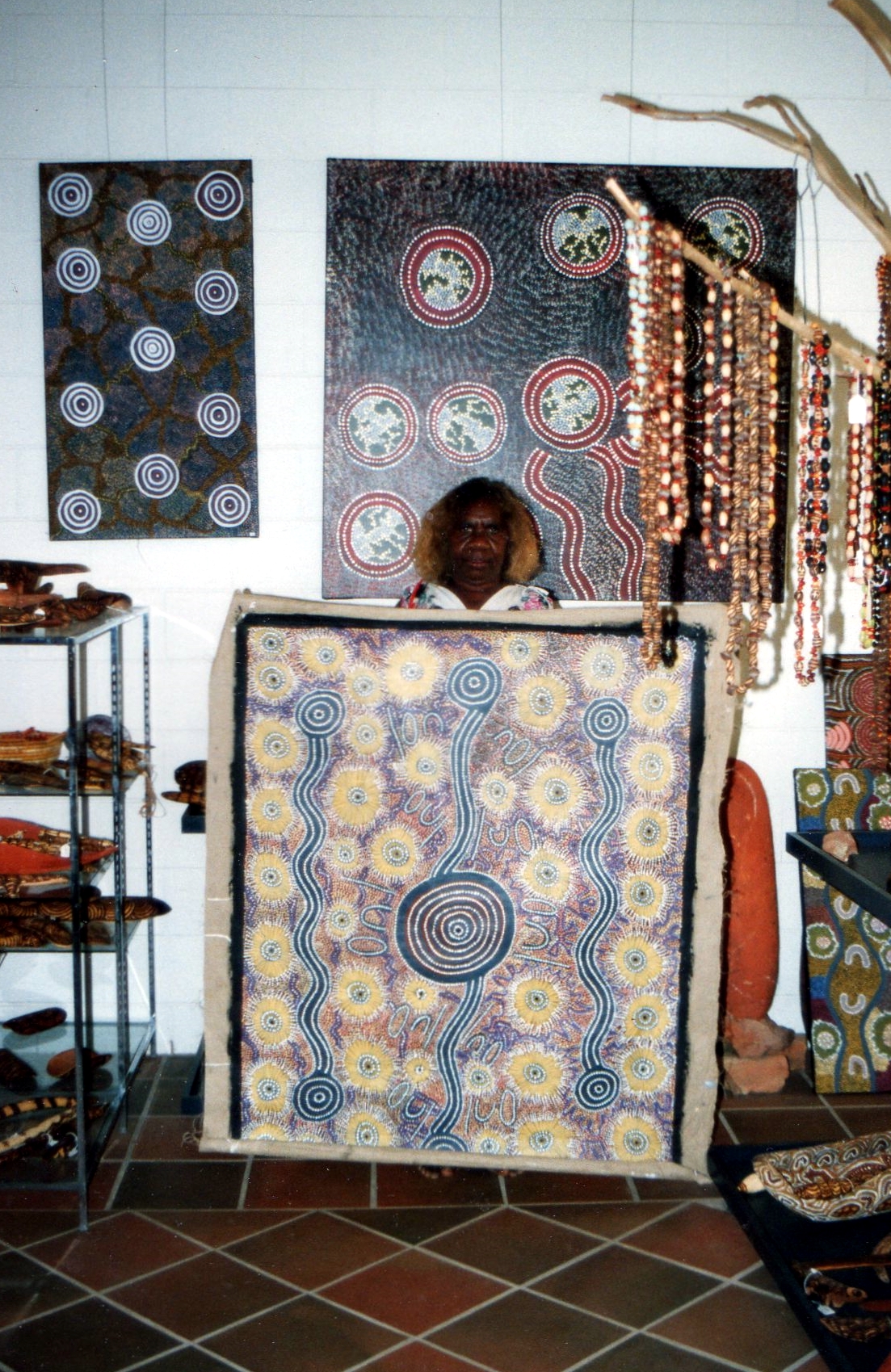
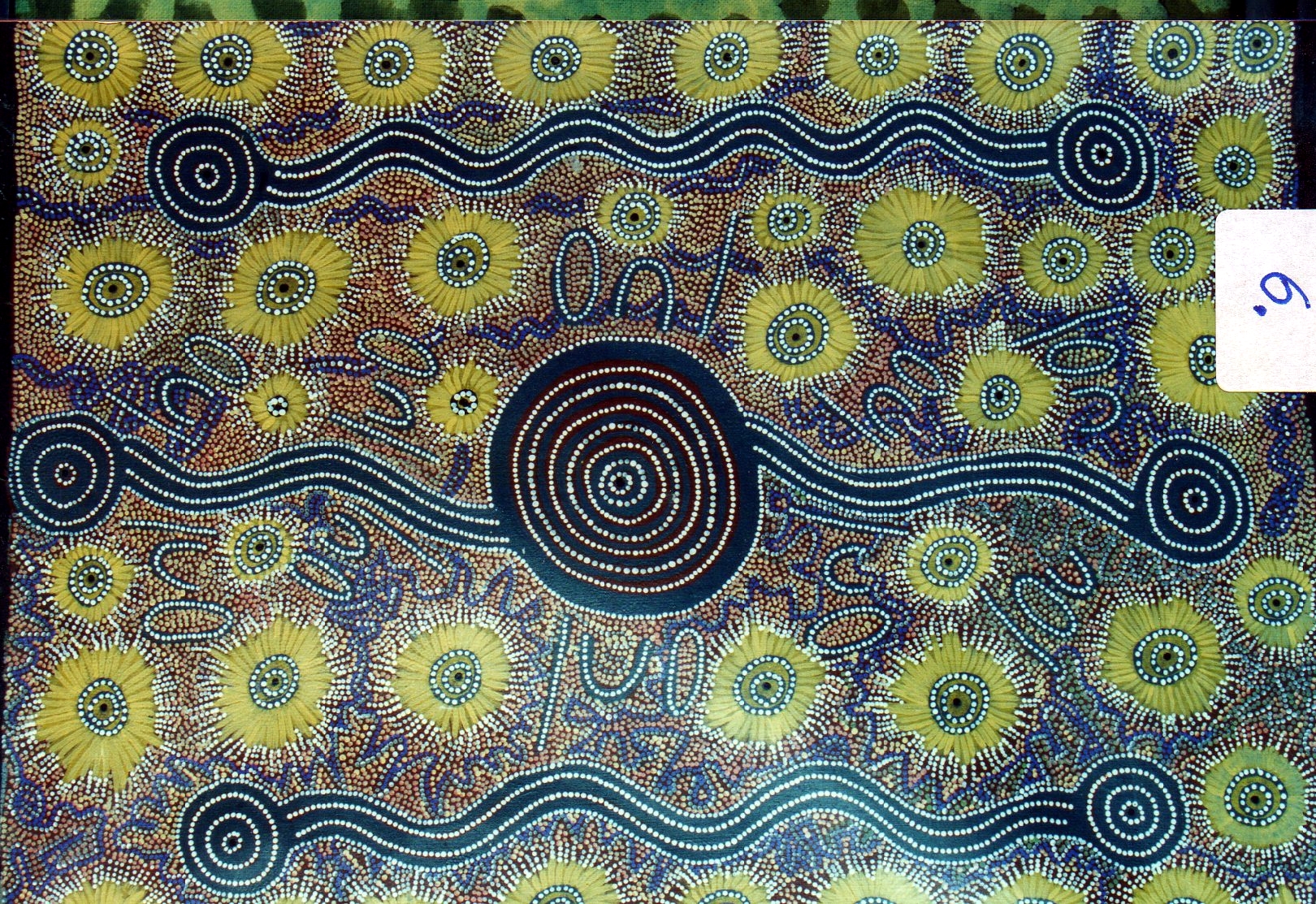
In 1983 Pansy commenced work with Papunya Tula Artists and by the late 1980’s had established herself as a leading female artist. The painting here for sale is one of her very first individual artworks, 1987 ! This is museums quality !
Painting 6: Womens Dreaming, 1987. 101cm x 129cm. Extremely rare old painting. Price on request.
Teddy Egan.
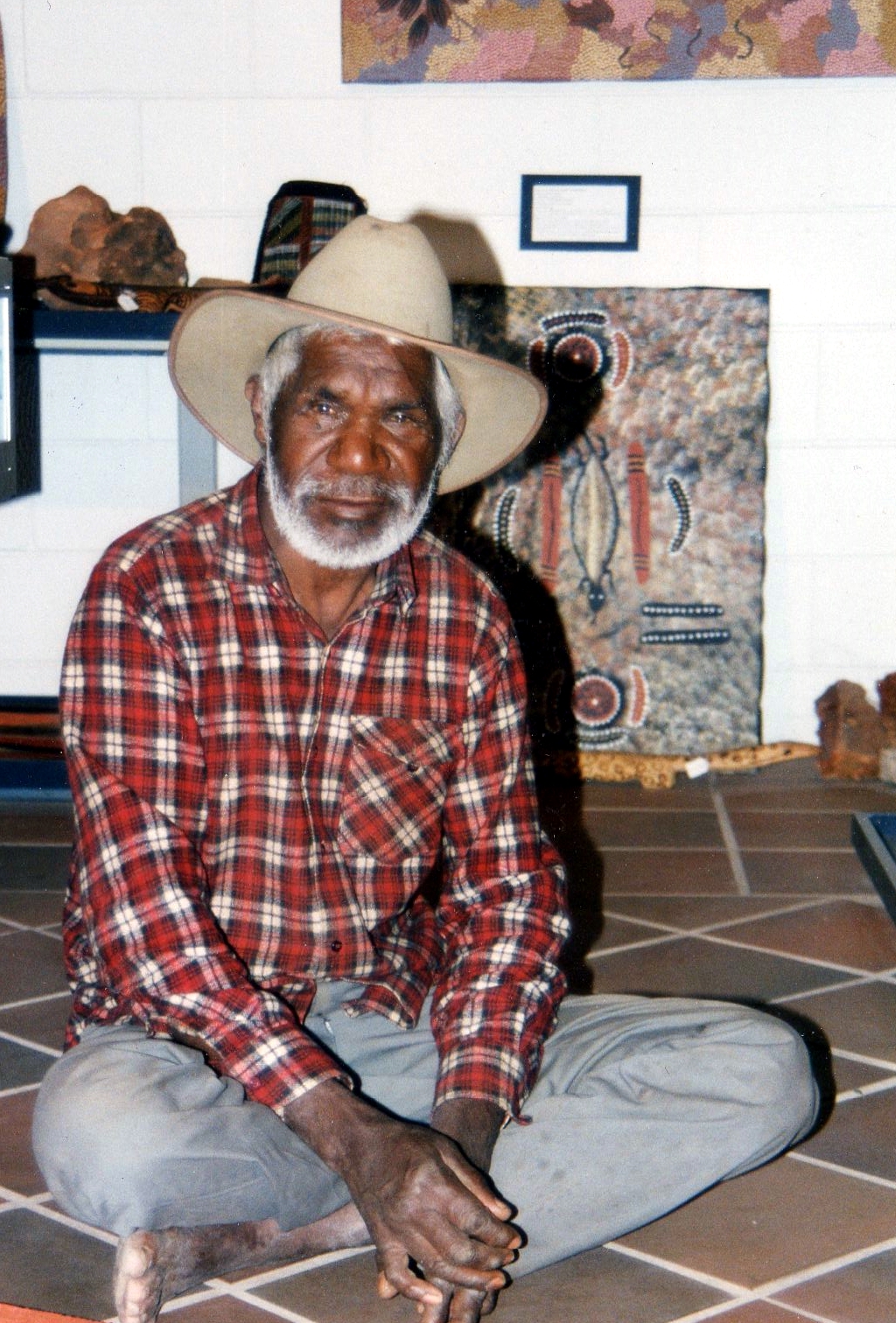
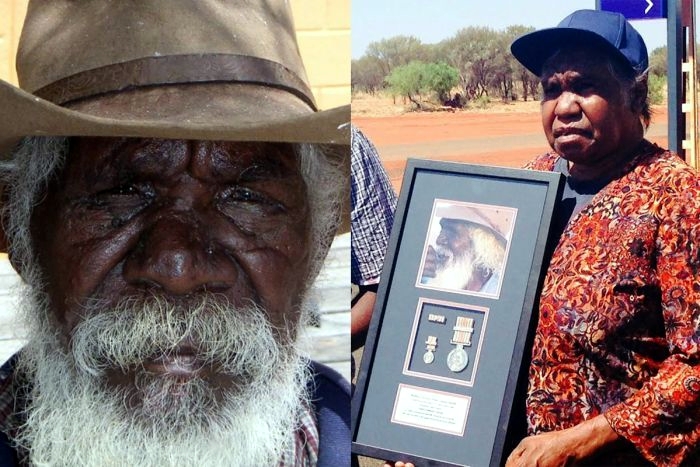
Teddy Jangala Egan was born during World War Two at Coniston, north-west of Alice Springs. He was honoured with posthumous Medal of Valour 50 years after tracking down Billy Benn. Teddy was for sure the best police tracker the country ever had. Through a later friendship with Billy Benn he came to dot painting. Teddy Egan passed away in 2011.
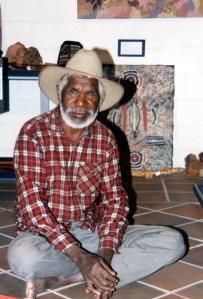 Teddy Egan, met in Alice Springs.
Buyers of this Egan painting will have included the full story about his tracking life. Just to attract one, here a bit of this story:
„For 40,000 years indigenous trackers have led their clan on the paths of survival throughout Australia’s harsh lands.
Thanks to their intimate knowledge of the bush, ability to read human prints and follow animal traces, trackers have always led hunts and had a central role in Aboriginal clans.
One of the most memorable manhunts of all time that was led by an indigenous tracker named Teddy Egan Jangala. In 1964 another tracker, named Billy Benn, murders a rival and escapes into the steep mountains of Central Australia. During his flight from justice, Billy shoots and seriously injures two police officers. For several days, numerous police squads—either on horseback or in 4x4s—try everything they can to catch this outlaw tracker but to no avail. Billy meticulously erases his footprints and every trace of himself. He even creates fake clues of the direction he’s going in to put his pursuers off track. Billy’s brilliant manoeuvres would’ve outsmarted the police if they hadn’t turned to Teddy. During a 13-day track filled with danger, Teddy intuits the best way to follow Billy’s true direction and leads the police right to him.
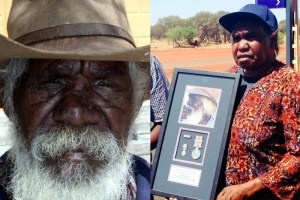 Teddy Egan received posthumous the medal of valor, received by his daughter. His greatness was obvious to police during the height of his powers in the mid 1960s and he was called upon as late as 2001 to track down the still-missing Peter Falconio, a worldwide known murder case.
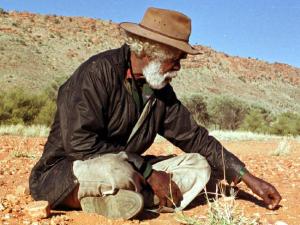 Aboriginal tracker Teddy Egan sifting for clues in the disappearance of British tourist Peter Falconio in 2001. Source – News Limited.
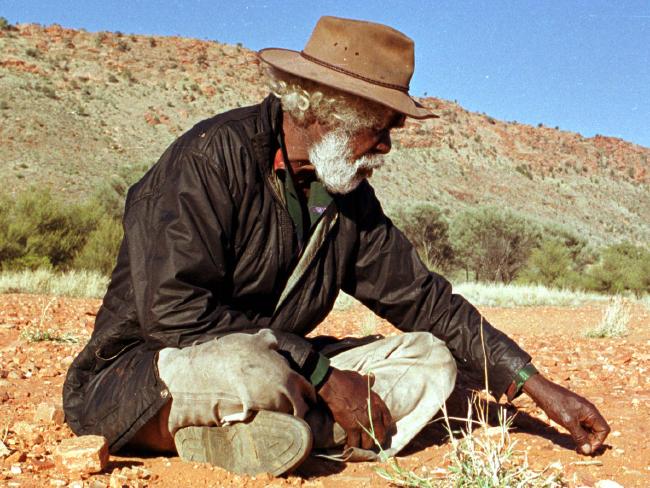
Today, there are only a handful of skilled indigenous trackers in Australia. The Queensland’s police now employ only one full time tracker, Barry Port, in the small town of Coen in Cape York. Barry and his colleagues watch over a territory as large as Switzerland. Numerous marijuana growers and drug traffickers operate in hidden parts of this area. George, Teddy and Barry are the last trackers to master their ancestral art of bonding people with the land. This gives them the uncanny ability to put themselves in the skin of the person they track. They’re able to follow a person by even the most indistinct traces left on the ground or surrounding nature“.
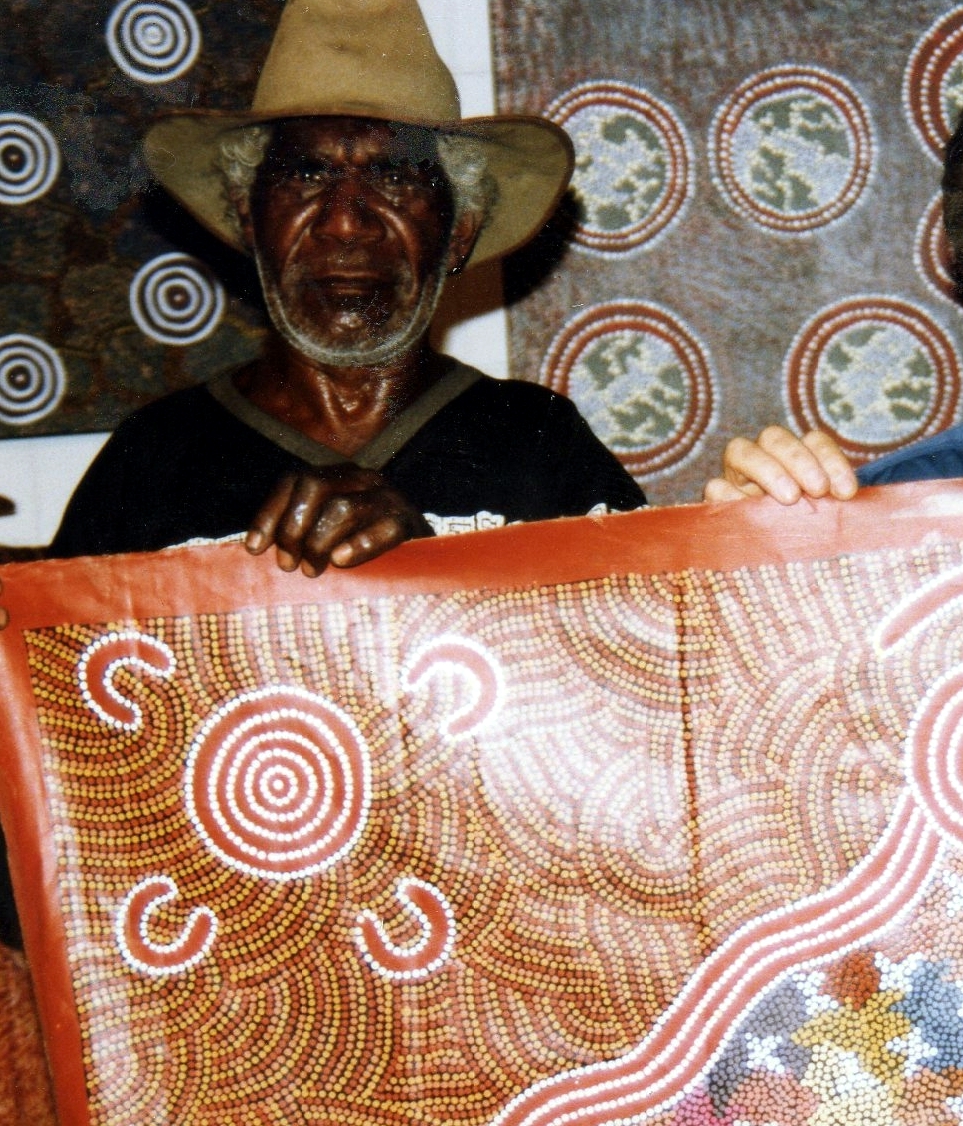
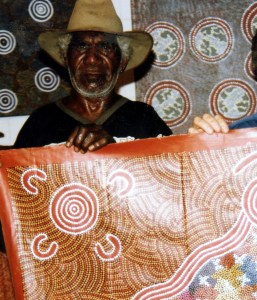 Teddy Egan with his fantastic work of art. He painted only a few, but the extreme quality of dot painting sticks out. To own a Teddy Egan painting is EXTREMELY RARE.
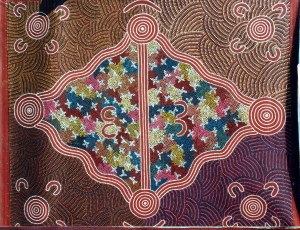
Painting 7: Mens Waterhole Ceremony, 1989. 109cm x 129cm. Extremely rare painting. Price on request.
Follow the next group of artwork (Paintings 8 to 14) and artist description in the post „Australia – Aborigine Art 3“, coming up next week. Don’t hesitate to ask questions ! And – comments are most welcome.


Like it very much !
LikeLike