
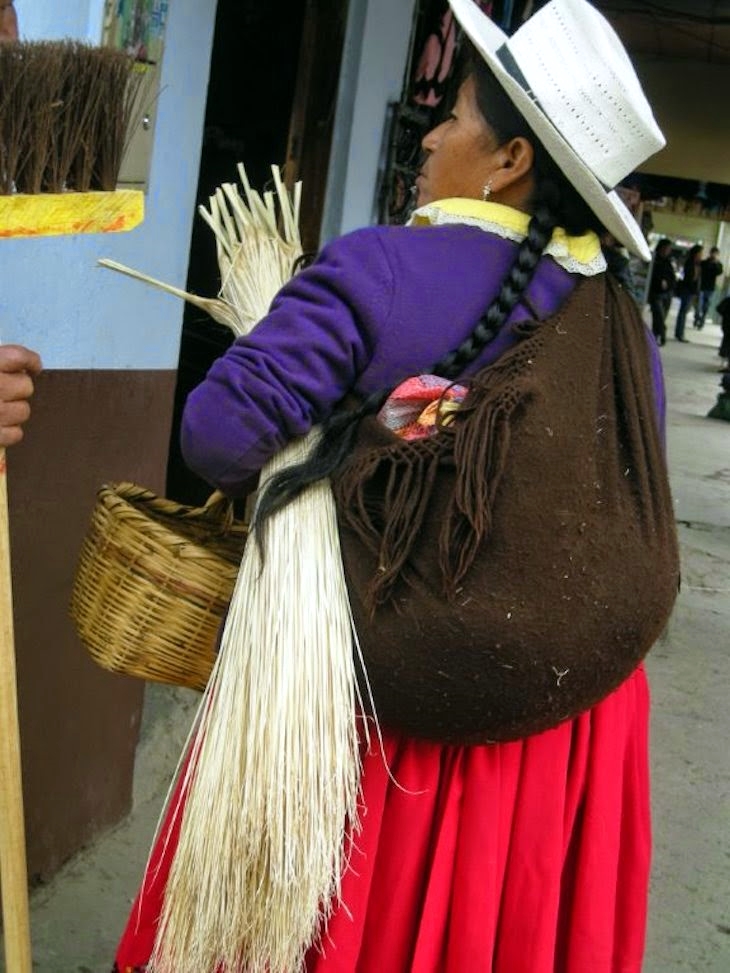
Making the Panama Hat.
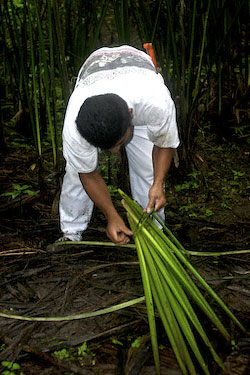
To understand how a Panama Hat zigzags from an outpost just south of the equator to the gleaming window of a New York haberdashery is to understand how the world works. The trail begins in Cadeate, a coastal village in Ecuador’s Guayas province. For five days in every lunar cycle, they harvest toquilla (Carludovica palmata), the ten-foot-tall, palmlike wild plant from which the Panama hat is woven.
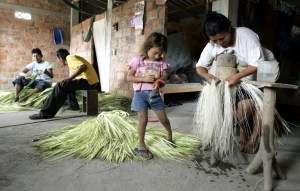 Family business „hat making“ in Ecuador.
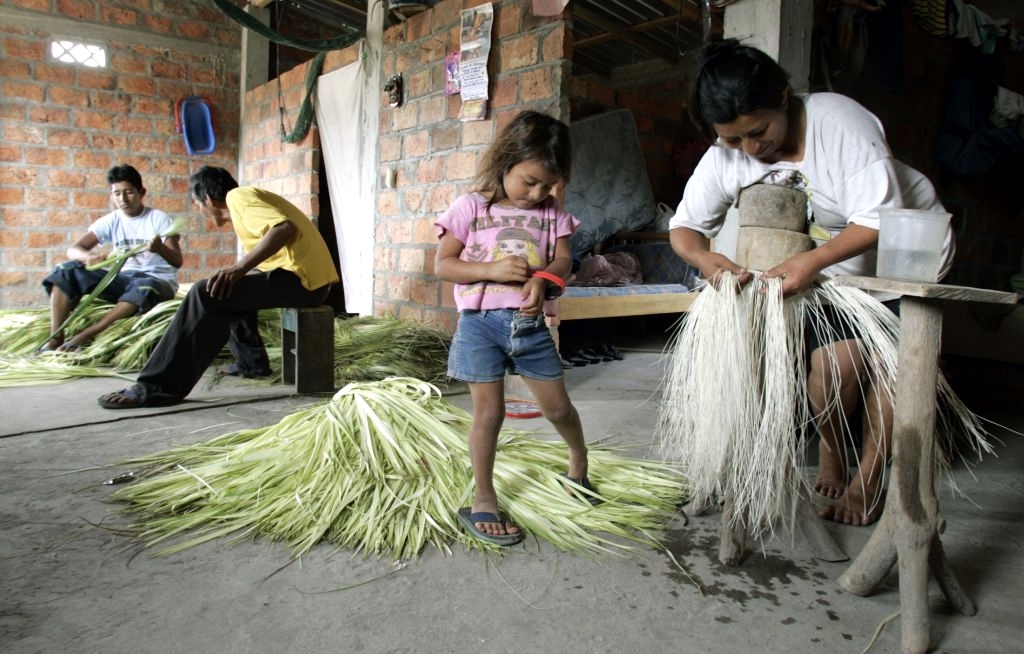
The straw cutters schedule their monthly harvest for the five days after the moon reaches its waning quarter, when, Vicuna explains, the straw holds less moisture and thus is lighter, easier to cut, and more pliable to weave. Wielding machetes, they harvest the slender new four-foot-high stalks, each containing the tightly wrapped fingers of one growing frond.
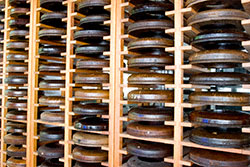
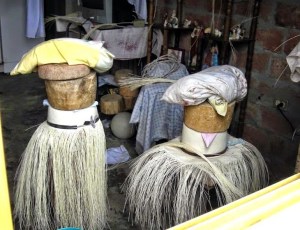 Hat weaving blocks, see above how they lean over.
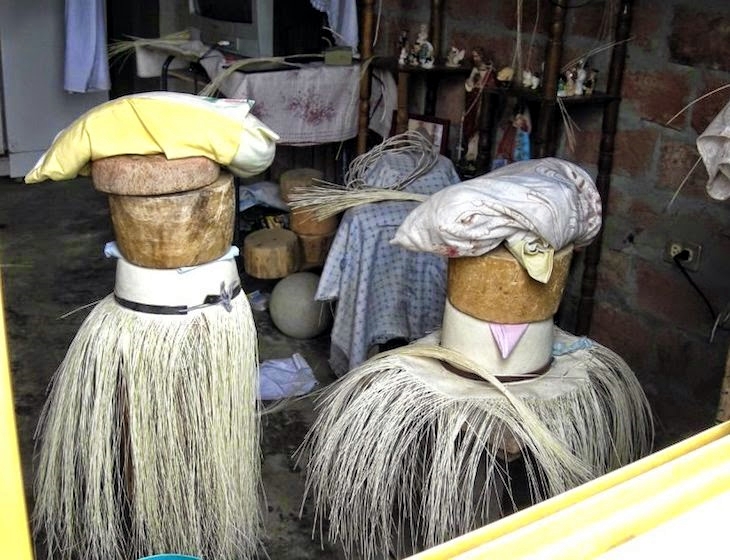
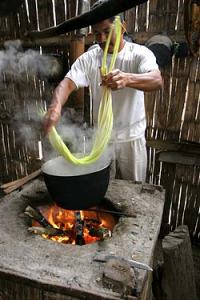
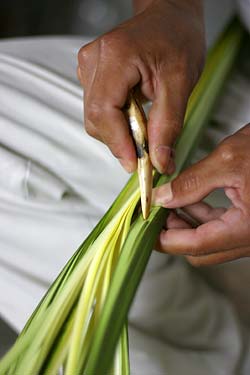
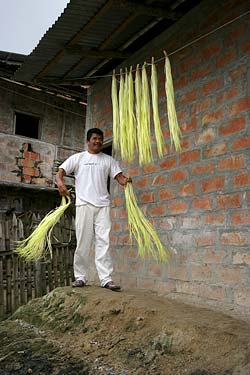
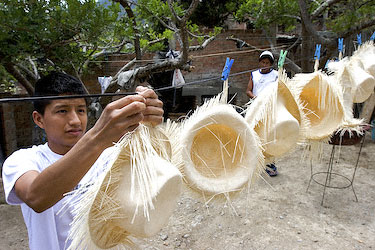
The village council imposes a daily quota of 1,200 stalks per family; the harvest is brought back by mule and truck. The outer sheath of each stalk is stripped away, and the inner fingers are split and separated, leaving dozens of yard-long, ribbon like strands attached to the leaf stem. The prepared stalk is tossed into a vat of boiling water for about an hour and then hung on a clothesline to dry.
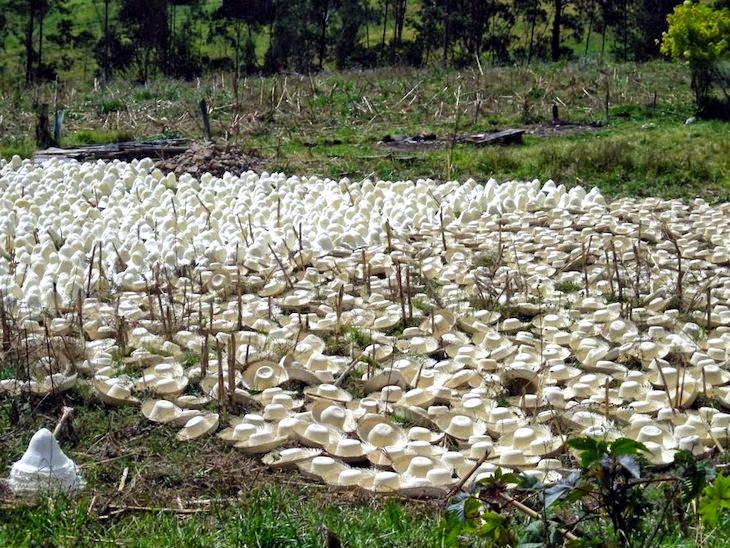
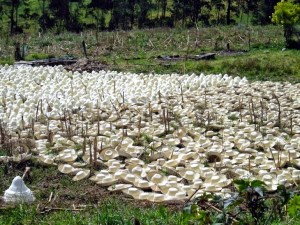 Not all are hanged on closelines to dry.
The straw gets trucked east to Guayaquil, Ecuador’s largest and most industrialized city, and then to Cuenca, a town in the Andes that is at the center of hat production. And then the zigzag goes on as described earlier.
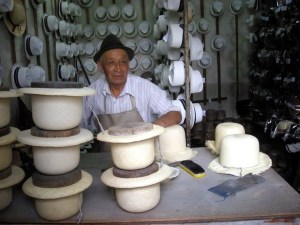 Almost ready, one of the last steps.
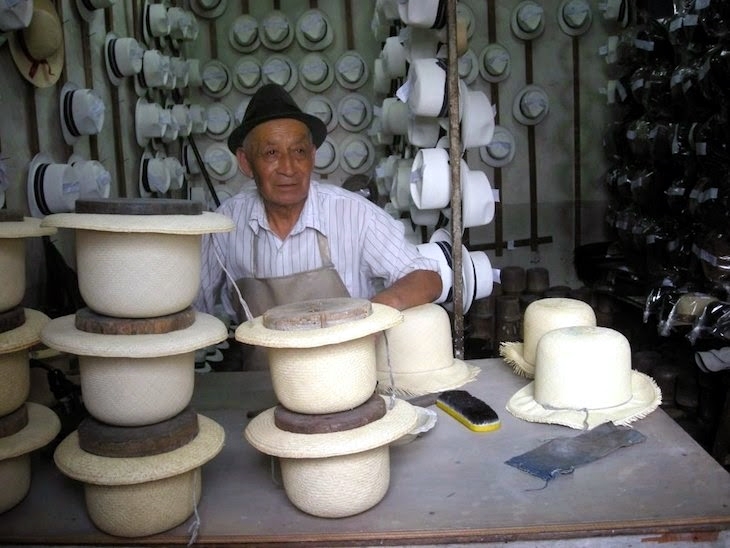
How hats are made, step by step.
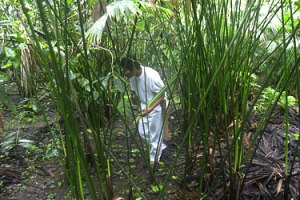
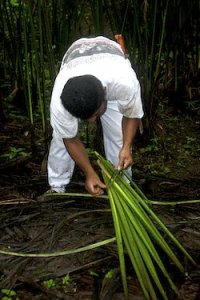
1. Cutting the cogollos out of the plant. He will need at least 48 cogollos to weave a hat. Often more.
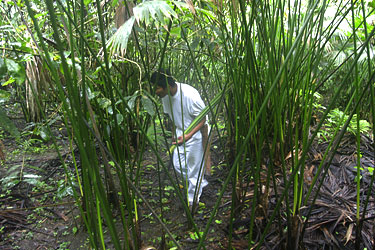
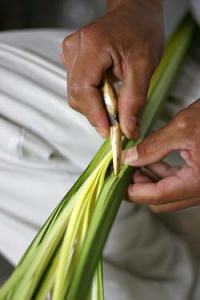
2.He finds a spot about half way up, pokes and pierces, then extends his arm to slice along the edge to the end.
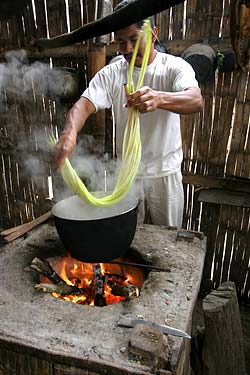
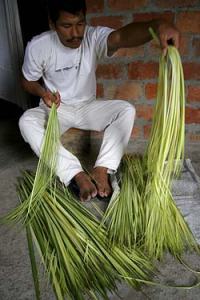
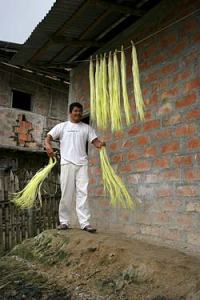
3. Cooking the straw, like extra long spaghetti and then drying, on hot days in the shade.
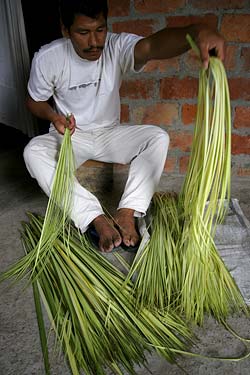
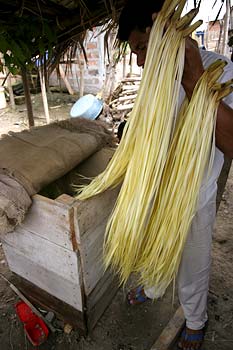
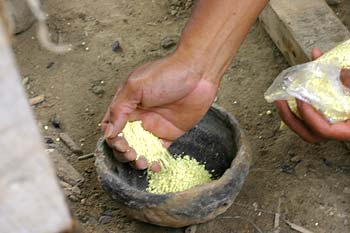
4. Straw goes in a box and the hot coals in the clay pot (which will be stored under the box) will burn the sulfur. The sulfur smoke will fill the closed box and bleach the straw.
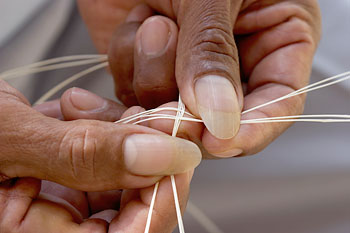
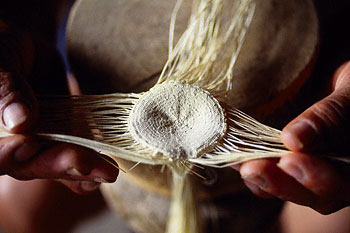
5.He overlaps the individual straws, weaving them over and under each other faster than one can follow. After a couple of minutes he has created a tiny beginning. This stage is called the armado.
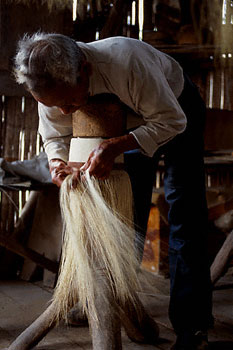
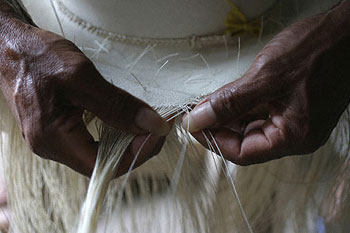
6.Above left, the classic weaver posture. Bent at the waist, chest resting on a cushion, sometimes just a folded t-shirt.
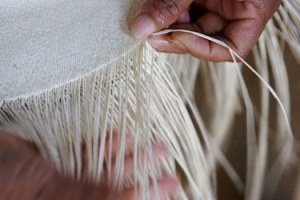
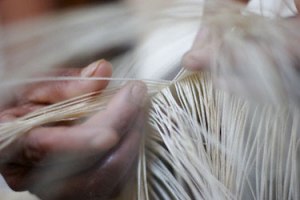
7.You know in bullfighting that the matador is the one who kills the bull. In fine hat weaving, the re-matador is the one who re-kills the hat, finishes it again.
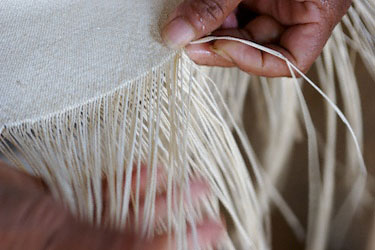
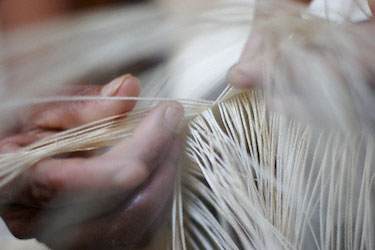
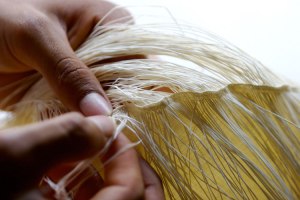
8.The azocadora receives the hat after the rematadora loosely weaves the back weave. Then the azocadora carefully pulls the back weave tight.
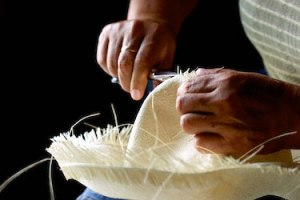
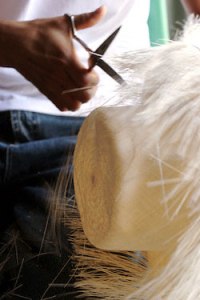
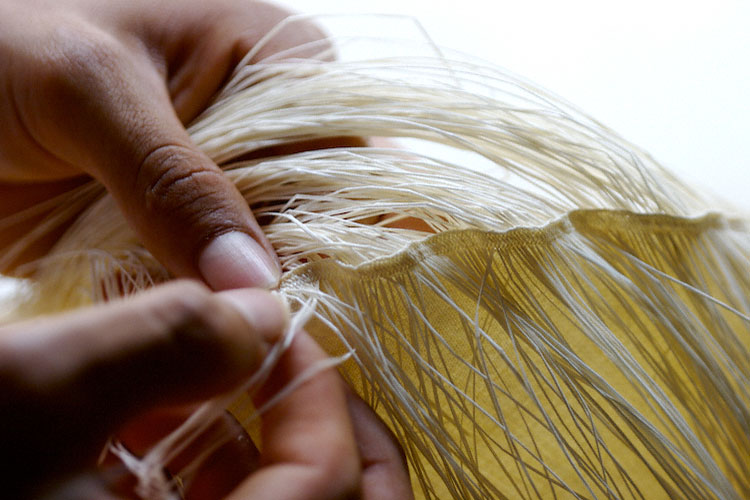
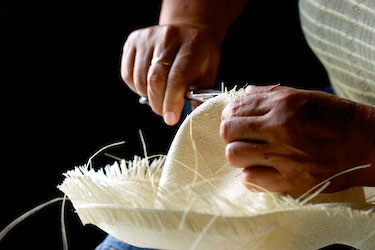
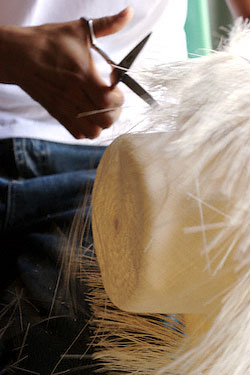
9. First, the cortador quickly cuts the edge straw down to an inch-long fringe. Then s/he turns the hat inside out and begins to cut off the loose ends.
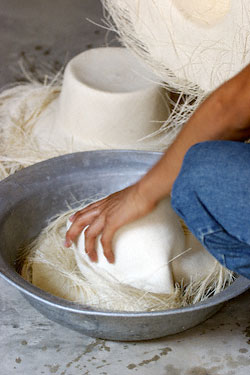
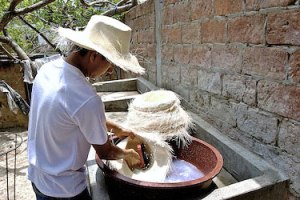
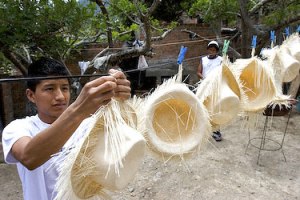
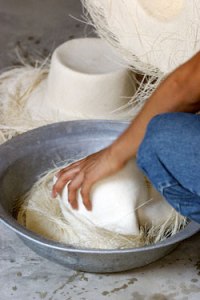
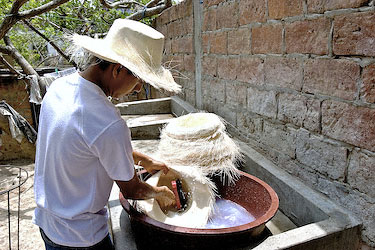
10.The hats are taken out back in the yard behind the workshop. The artisan fills a wash basin with water. They get a brush wash, another bleach and then hanged up to dry.
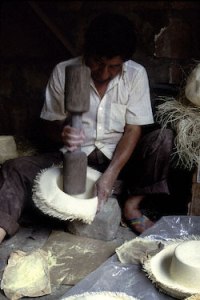
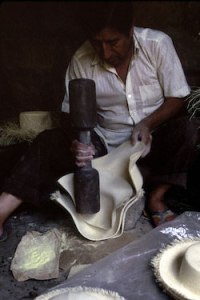
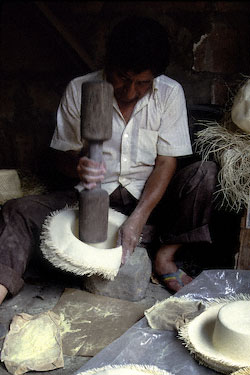
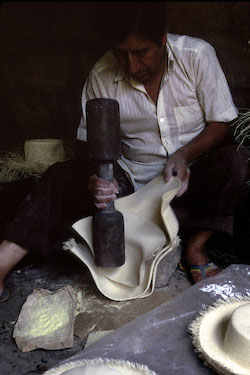
11.The apaleador uses mallets made of dense tropical hardwood to pound the hats. The mallets are heavy. He pounds hard. Yes, that is a stone beneath the hats. This is the way to soften them.
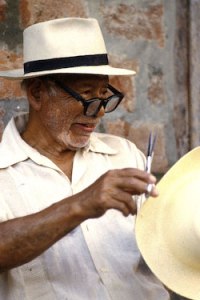
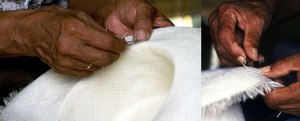
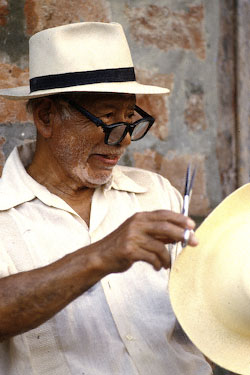
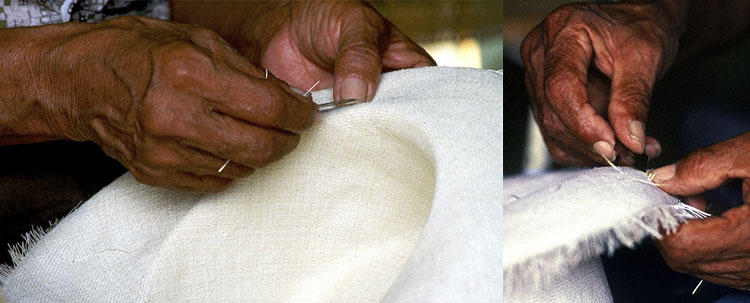
12. The cortador shaves the hats smooth. See how he is holding something between the first two fingers and thumb of his right hand? That is a double-edged razor blade that has been broken in half lengthwise.
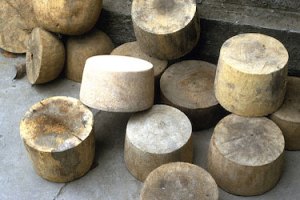
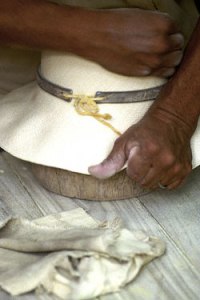
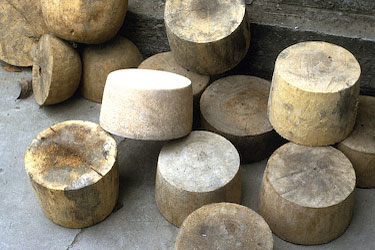
13.The wood forms are made of a completely different type of wood than are the apaleador mallets. the light wood forms are less likely to damage the hat upon impact than a heavy wood form.
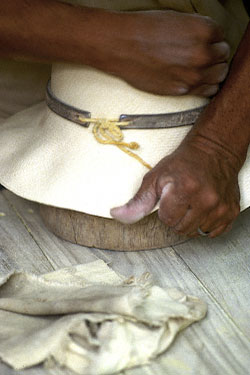
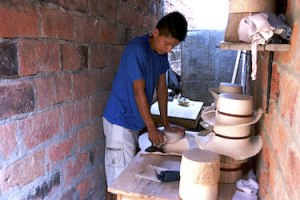
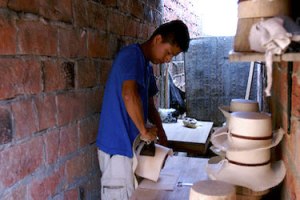
14.Ironing the hats, strokes were long and rapid. He pressed hard. Ironing a hat is not like ironing permanent press pants. While ironing a hat, the planchador is usually pushing as hard as he can.
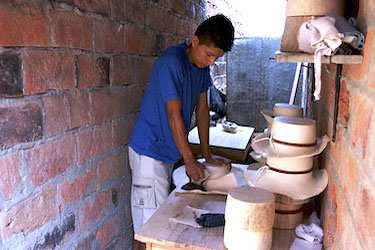
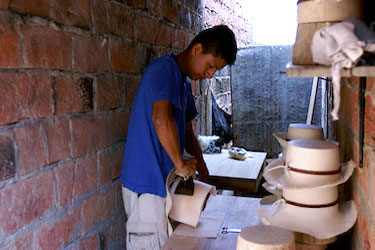
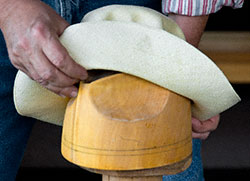
15.Blocking is the hand process by which a hat is given its shape. Just as a fine diamond can be enhanced or spoiled by the diamond cutter, a beautiful Montecristi hat body can be enhanced or spoiled by how it is shaped and finished.
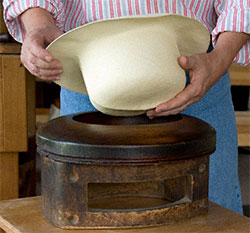
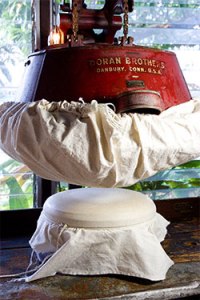
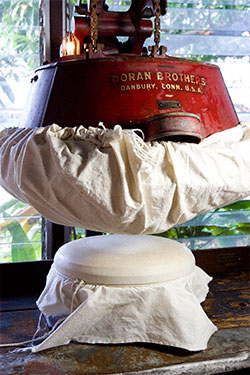
16.The flange must be exactly the right size, so the hat will fit into it perfectly, no gaps, no squeezing. The flange must also be the right shape, the right width. This holds 65 pounds of sand in the big red head. You can see the cotton outside cover on the bottom. There is also an asbestos cover below the cotton cover. A heating element heats the sand so that it is hot to the touch. Thats the way how it will be pressed into the final shape.
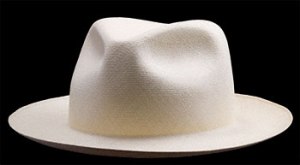
17.The Classic Fedora above has a leather sweatband in it that fits exactly right. to make sure they are exactly the right size before the sweatband and ribbon are hand sewn to the hat.
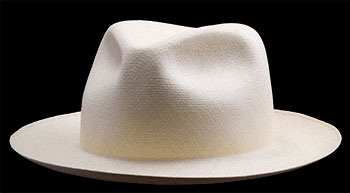
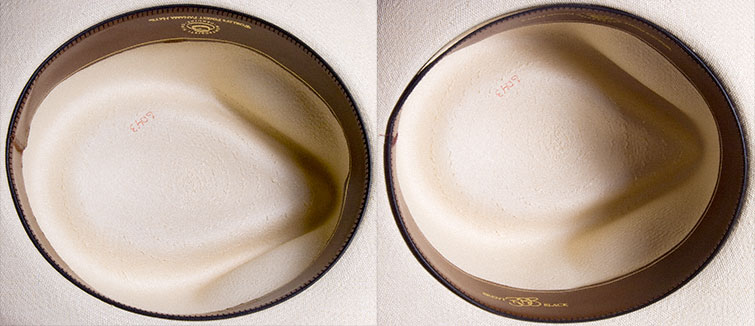
These are the basics of hat making. The final touches are mostly re-sizing, re-shaping the brim, deciding for a sweatband and a ribbon and on and on. One can spend a lifetime the decide for the „final personal Panama Hat“. Brent Black is on of those guys, see down.
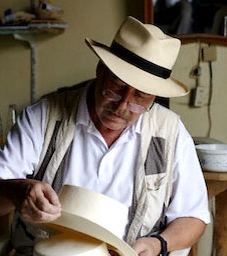 Brent Black, the most well known Panama Hat dealer in Hawaii.
Jipijapa.
Definitely this is not a tourist town but it is an important trade center for products such as cocoa, cotton, kapok and coffee around the region. Accommodation in town is very basic.
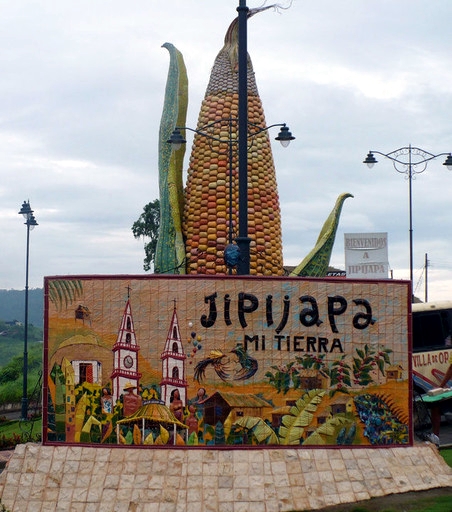
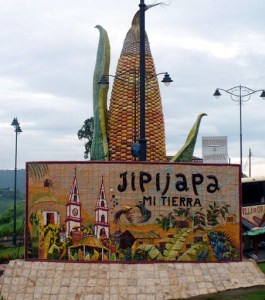 Jipijapa sign at the town entry.
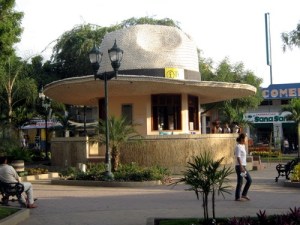
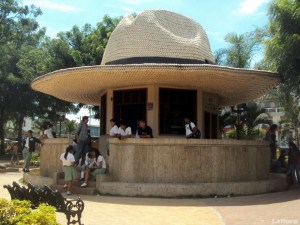
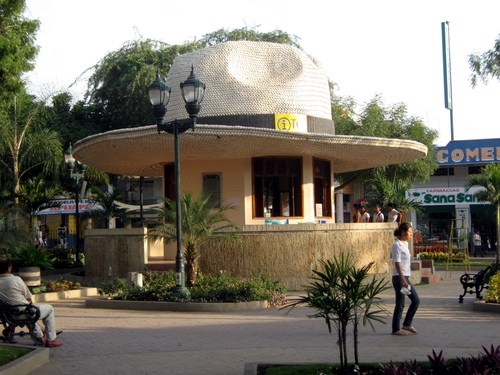
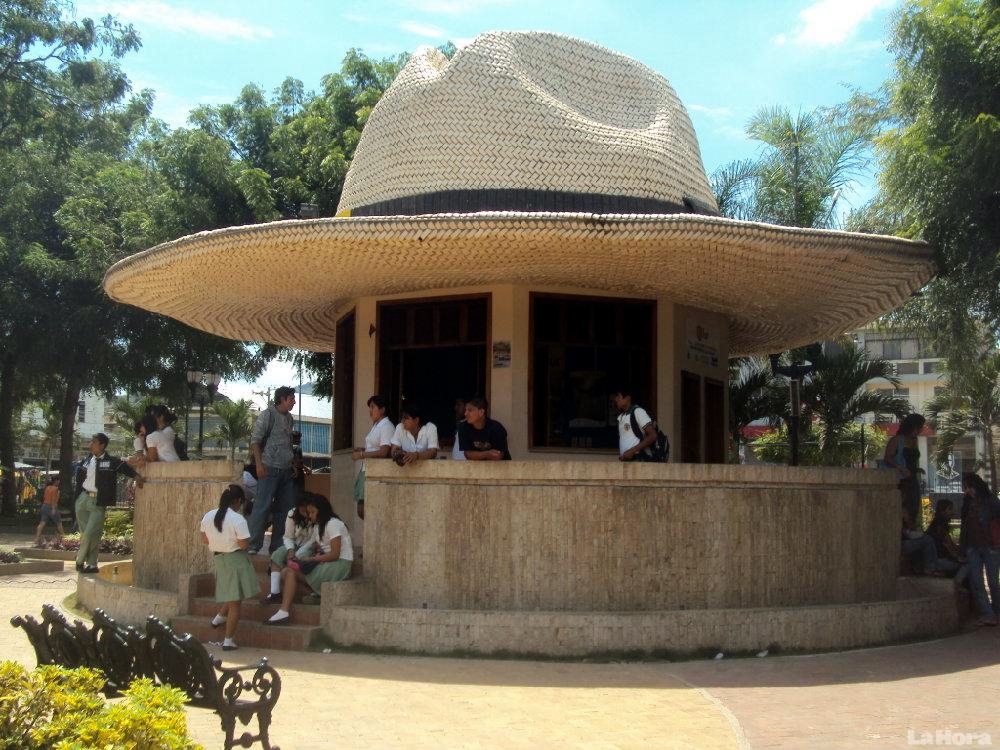
Only tourist attraction in Jipijapa, except the church, is the „Panama Hat Tourist Information“, city center.
The Panama hat plant or toquilla palm or jipijapa palm (Carludovica palmata) is a palm-like monocot plant. It is not a true palm. Its leaves are different from the leaves of true palms, and unlike true palms it does not develop a woody trunk. Its female flowers (which mature first) have large stigmas, and its male flowers (which mature later) have a lot of pollen. They reproduce vegetatively, because they do not produce viable seeds.
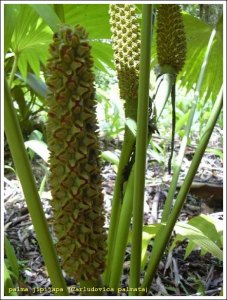
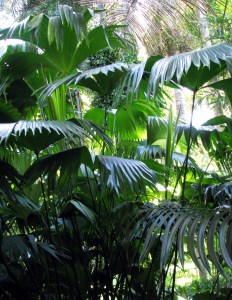 Jipijapa Palm.
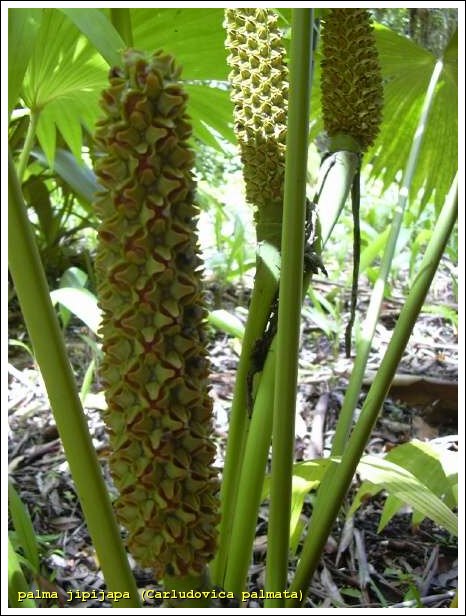
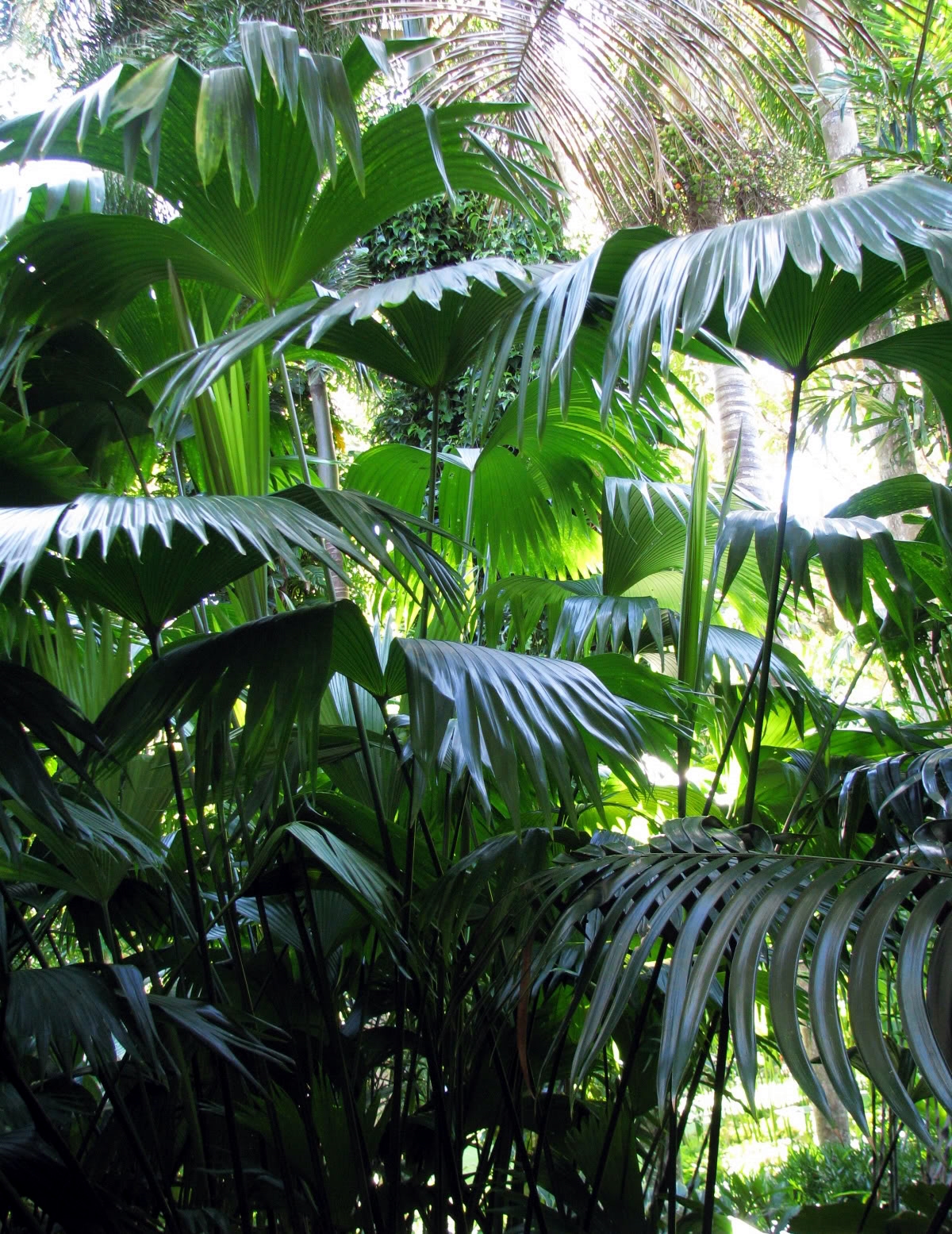
This palm was called in Ecuador Jipijapa Palm, because it grows around the Jipijapa area and was used to make the Panama hat, first also called Jipijapa Hats or Toquilla Hats.
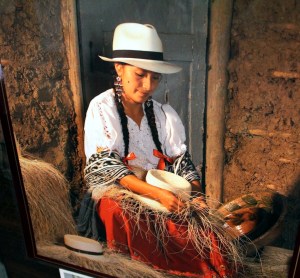 Weaving Panama Hats in Jipijapa market.
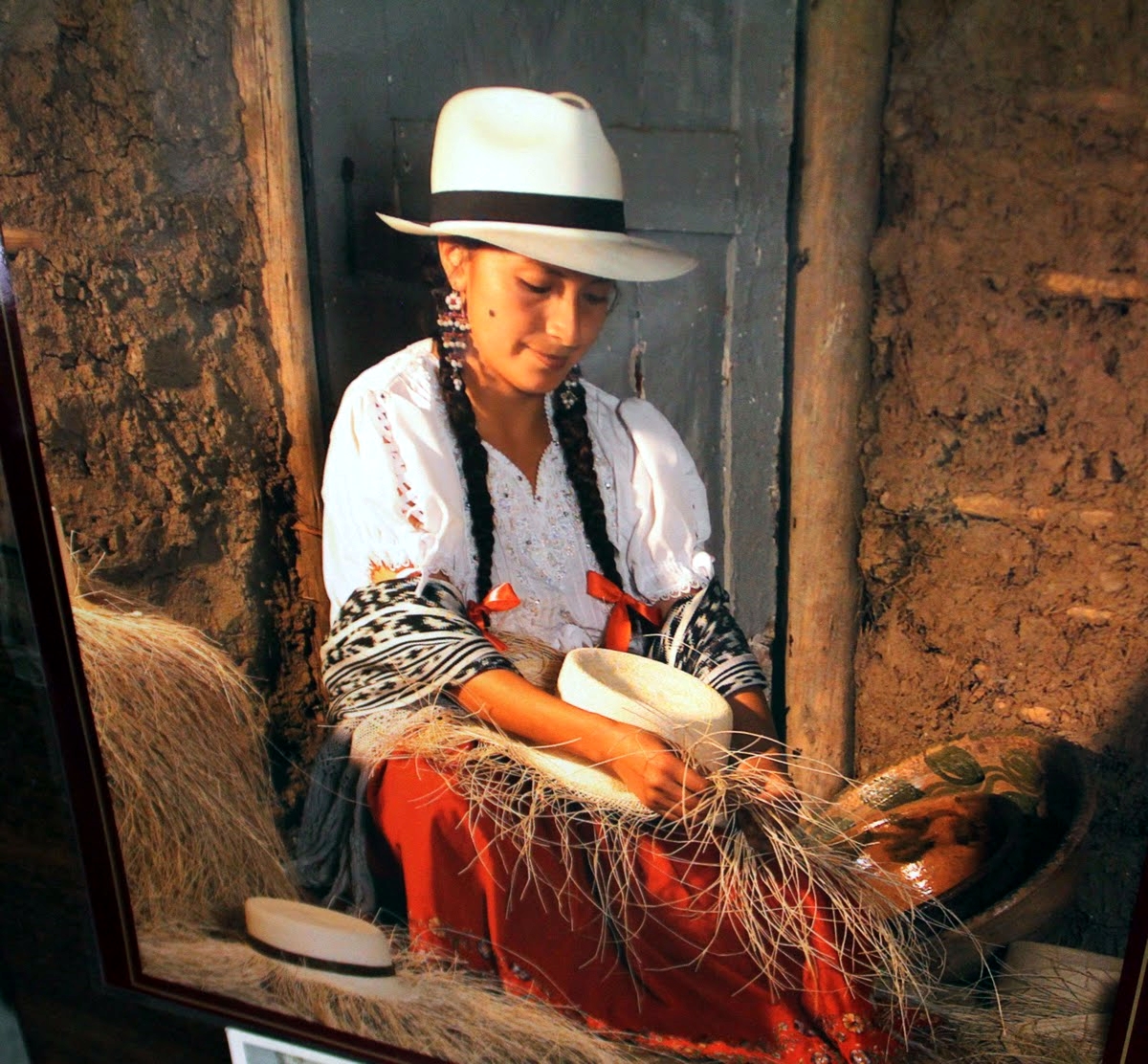
Montecristi.
Montecristi is an old colonial town located 30 kilometers west of Portoviejo, founded in 1628 and the birthplace of the ex-President Eloy Alfaro.
The town is very famous for its straw and basketware and especially renowned for its high quality Panama hat production. There are many stores along the main road selling wooden barrels, wickerwork and many others (very cheap).
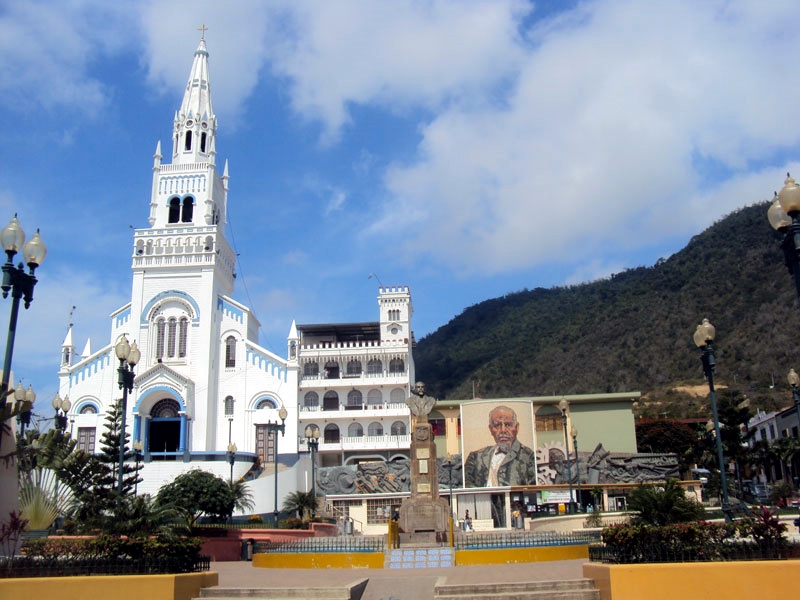
 La Iglesia Virgin de Monserrate de Montecristi.
Today, the legendary genuine Panama hat continues to be made of toquilla palm, and the very finest Panama hats are hand-crafted by artisans in the small town of Montecristi, Ecuador. Each hat is unique and can take from one to six months for a true master weaver to complete, adding to the Panama hat’s mystique and universal appeal.
 Main street in the township of Montecristi.
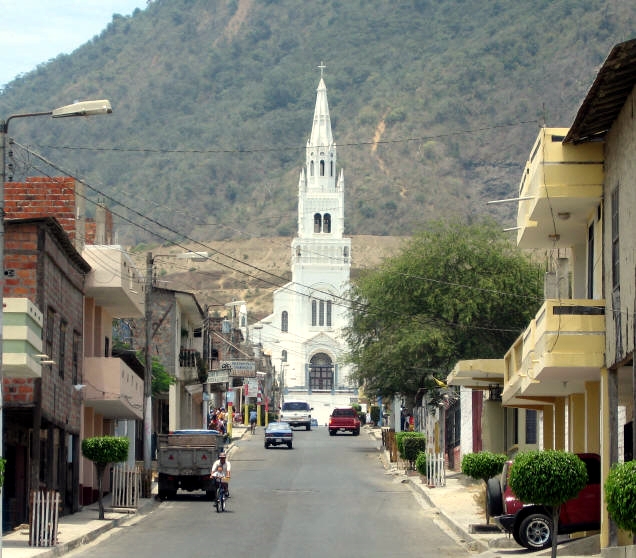
With its long history, the traditional art of hand-weaving toquilla hats has been passed down for generations and continues to receive world attention. UNESCO (the United Nations Educational, Scientific and Cultural Organization) recently recognized the Ecuadorian art of weaving a genuine Panama hat as an Intangible Cultural Heritage, a term used to define practices, traditions, knowledge and skills communities pass down from generation to generation as part of their cultural heritage.
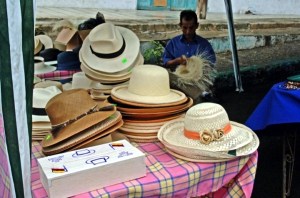
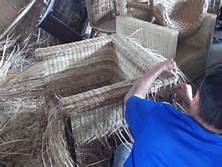
Not only hats in the markets of Montecristi. Straw weaving for everything, like bags, furniture etc.
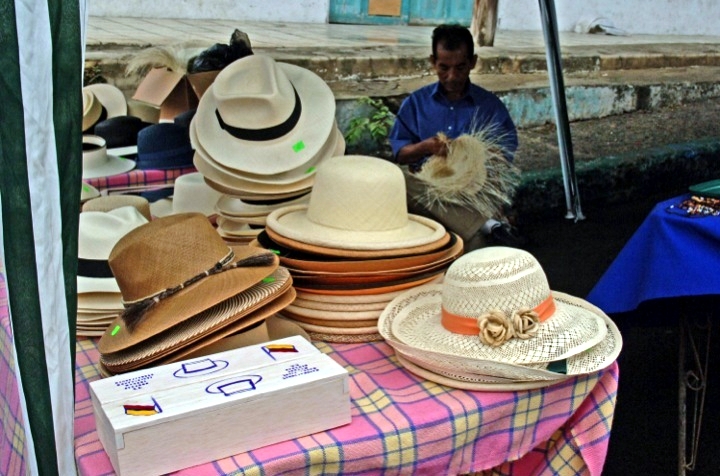
Montecristi hats are the finest and most expensive Panama hats you will find. They are woven in different quality grades. Montecristi Panama hat “grades” are often expressed as Fino, Fino Fino, Super Fino. Some sellers make up their own “grades,” such as Ultrafino, or Museum Quality. Since the sellers all use the terms to mean whatever they want, these hat “grades” are useless to a consumer, as a way to compare hats from different sellers.
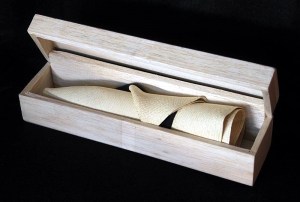
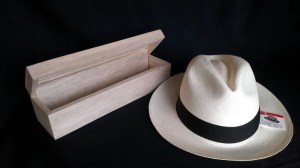
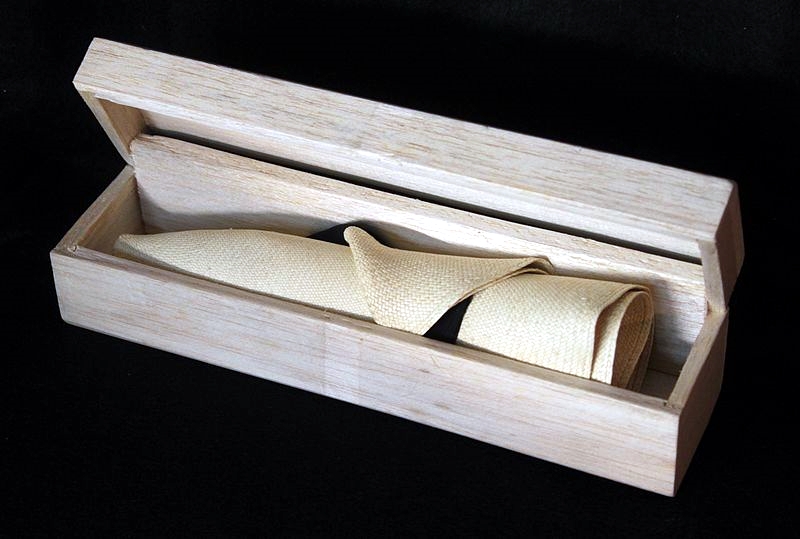
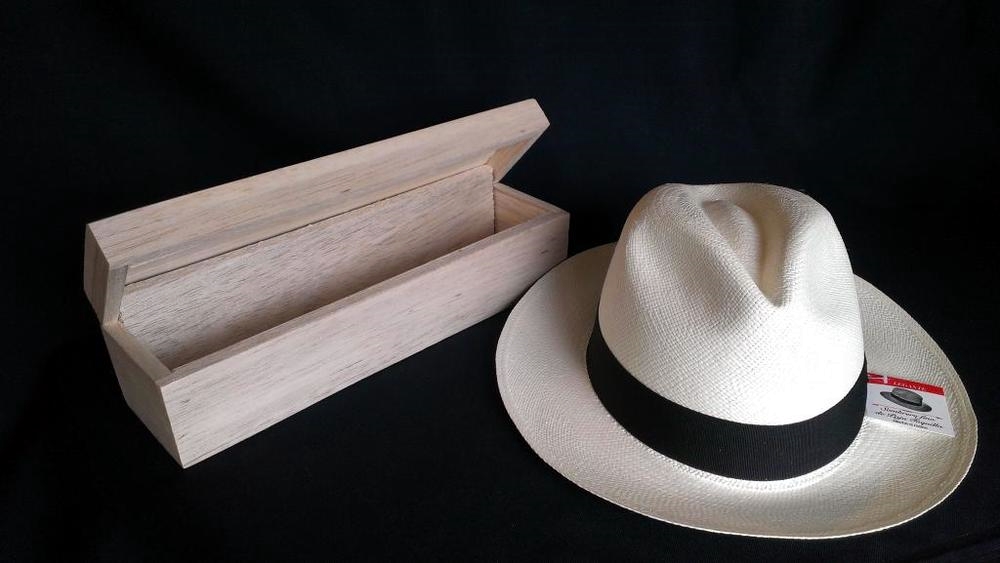
A Panama Hat „out of the box“. Keeps its shape without a problem and if not, a bit hot water and a dryer.
Also you have to realize how many weaves per square inch you find in a hat. they vary up to 3000 and much more for expensive „one of a kind“ ones. See an Montecristi advertising down here.

Montecristi panama hats start at $400. Our best panama is Priceless. Fineness of weave is the principal determinant of price. You may order any Panama hat in the following quality ranges.
Fino Select $600—$975
Extra Fino $1000—$2975
Super Fino $3000 and up Typical Panama Hat advertising, look at the prices !!
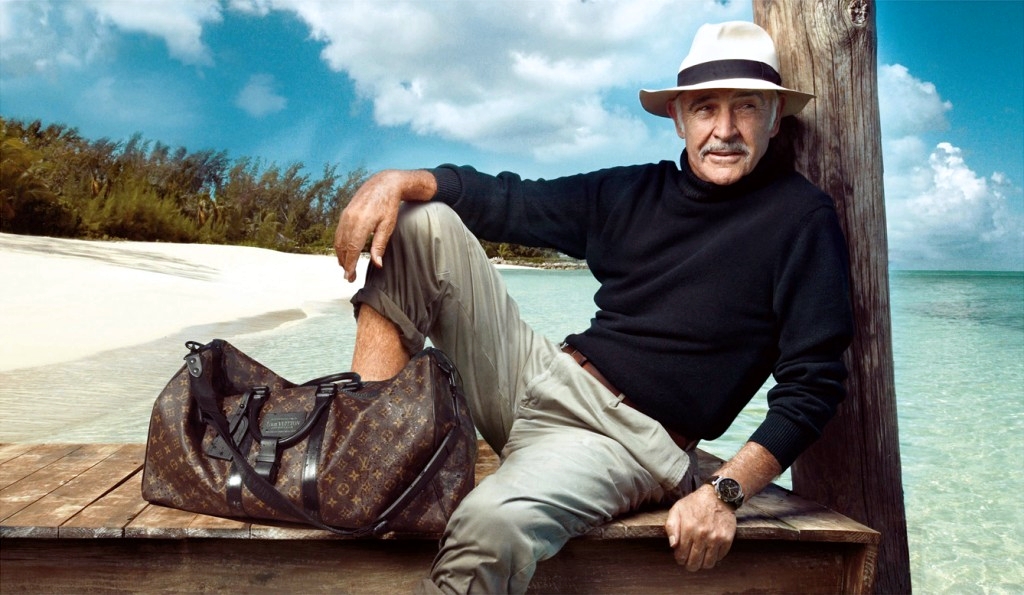
 Panama’s are worn by famous people, Sean Connery.
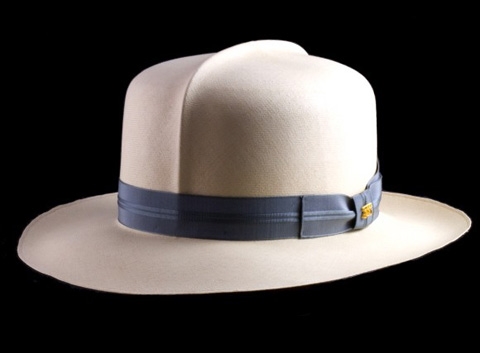
The most expensive Montecristi.
The finest Panama hat in history, woven in a tiny Ecuadorean village, may be too valuable for anyone to wear. Estimated sales price of US$ 100.000,–(one hundred thousand).
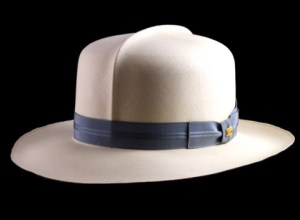 Is a hat US$ 100.000,– worth ??
There’s a great artisan who resides in the village of Pile, in the hills outside Montecristi, a small town on a wide coastal plain along Ecuador’s western limit. His name is Simon Espinal, and his trade is making Panama hats. The best weaver alive, Simón Espinal, can weave hats with more than 50 rows per inch. He weaves only four hats each year.
Espinol’s latest creation is a masterwork perhaps unmatched in the history of Panama hat-making, as NPR ( National Public Radio, USA ) reports in a piece very much worth reading:
 Light like a feather.
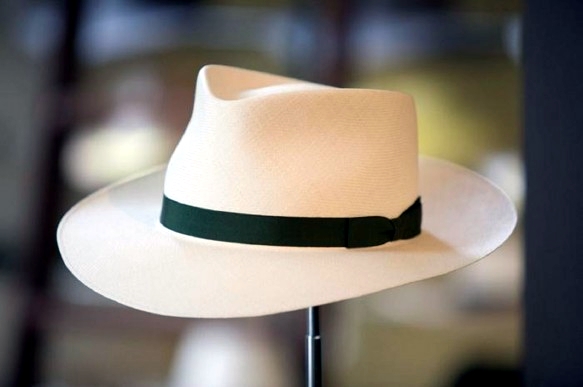
„The weaving of a high-quality Panama hat is an intricate, laborious process. The iconic brimmed straw hats are created from fine strips of toquilla straw, harvested from palm trees that grow along the Ecuadorian coast. A single hat can take up to six months to complete, and the best ones are formed from around 3,000 weaves per square inch, an impressive figure already.
 Simon Espinal – pics from Brent Black.
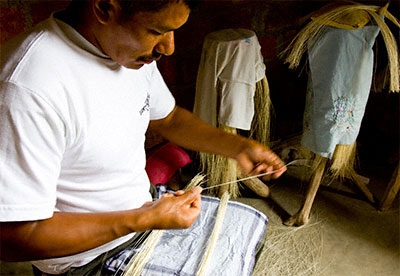
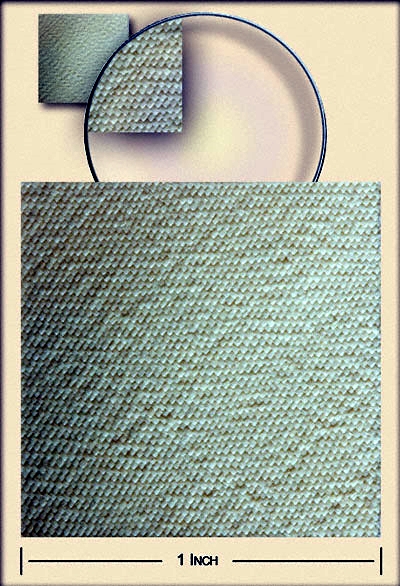
Espinal painstakingly performed an unheard-of 4,000 weaves per square inch on his recent creation, spending eight months, from June to February, and logging nearly one thousand (1.000) hours of work. The strain on his eyes and mind was so great, he says, that he’ll never attempt another such hat again.
The result appears to be the finest Panama hat ever made. “My hope is that it will go to a museum,” Brent Black, a Panama hat dealer who sells Espinal’s work, told NPR. “This is not a hat that should be on anybody’s head. This is the very pinnacle of an old and very beautiful art.”
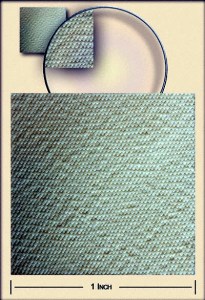 Over 4000 weaves per square inch (1inch = 2,54cm).
It’s difficult to judge what such a hat might fetch at sale. Panama hats are desirable for their light weight, smooth cream color, and beautiful weaving, and knowledgeable buyers pay handsomely for them. A previous hat by Espinal composed of 3,000 weaves per square inch sold for US$25.000,– and Black sells hats priced even higher. If this hat sells, its price could be as unprecedented as the hat itself“.
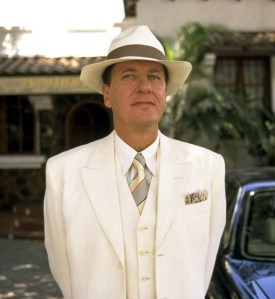 Wearing a hat like this requires a certain class or style.
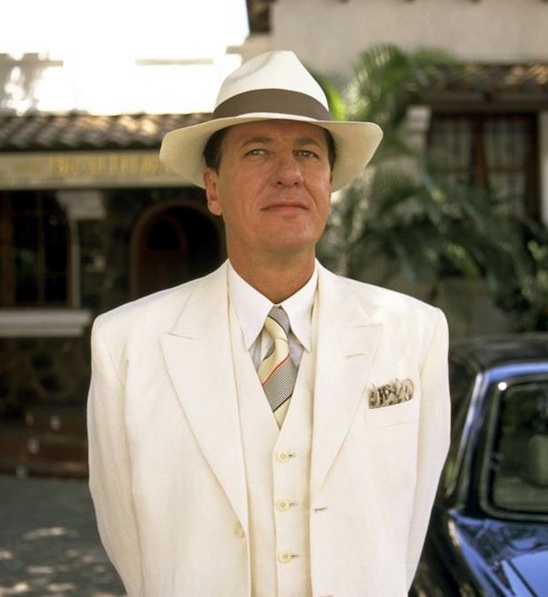
Black, for sure an expert on Panama hats, says further: „How can I describe a color you’ve never seen ? I can tell you one hat weighs less than an ounce, is thinner than some paper, but that does not tell you what it is to hold one, or to wear one. The finest are finer than you can imagine.“
 How fine are the finest ? And how affordable ?
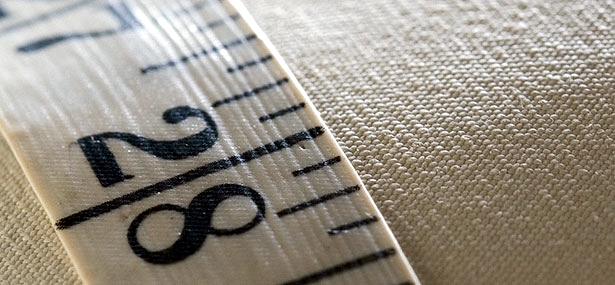
A hat with 25 rows of weave per inch is an impressive hat. A hat with 30 rows of weave per inch… well, that is a treasure, and yet, there are even finer ones. Hats with more than 40 rows of weave per inch. Hats with more than 50 rows of weave per inch. Even a hat with more than 60 rows of weave per inch. The only way to describe these hats is to say that they are impossible. Its simply not possible that human hands could weave straw that fine.
Panama Hats as such are a sign of elegance and a certain lifestyle, here in the winery of Walt in Sonoma.
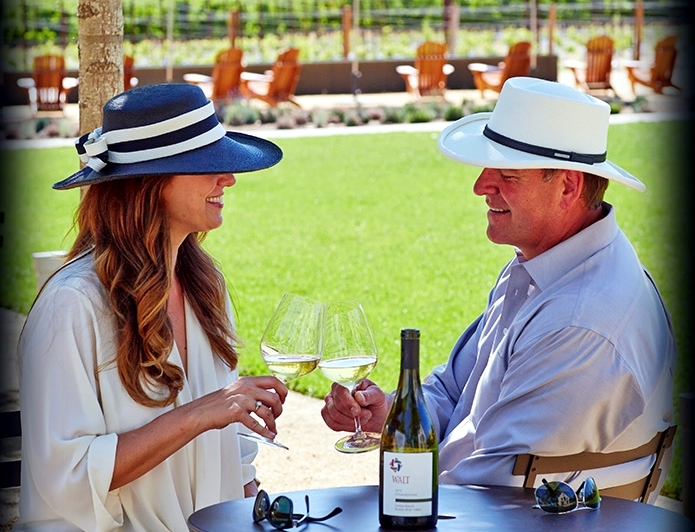
The popularity of the Panama Hat.
For years, Panama hats have been worn by trendsetters worldwide such as notable world leaders Winston Churchill and Nikita Khrushchev, European royalty, international celebrities, and U.S. Presidents such as Harry Truman and Theodore Roosevelt – who appeared in a New York Times photo wearing a Panama hat on a visit to the Panama Canal construction site in 1906. Panama hats are as much a legend as the extraordinary men and women who have donned them to make them popular.
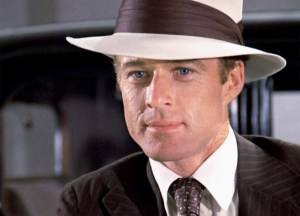 Robert Redford in The Great Gatsby.
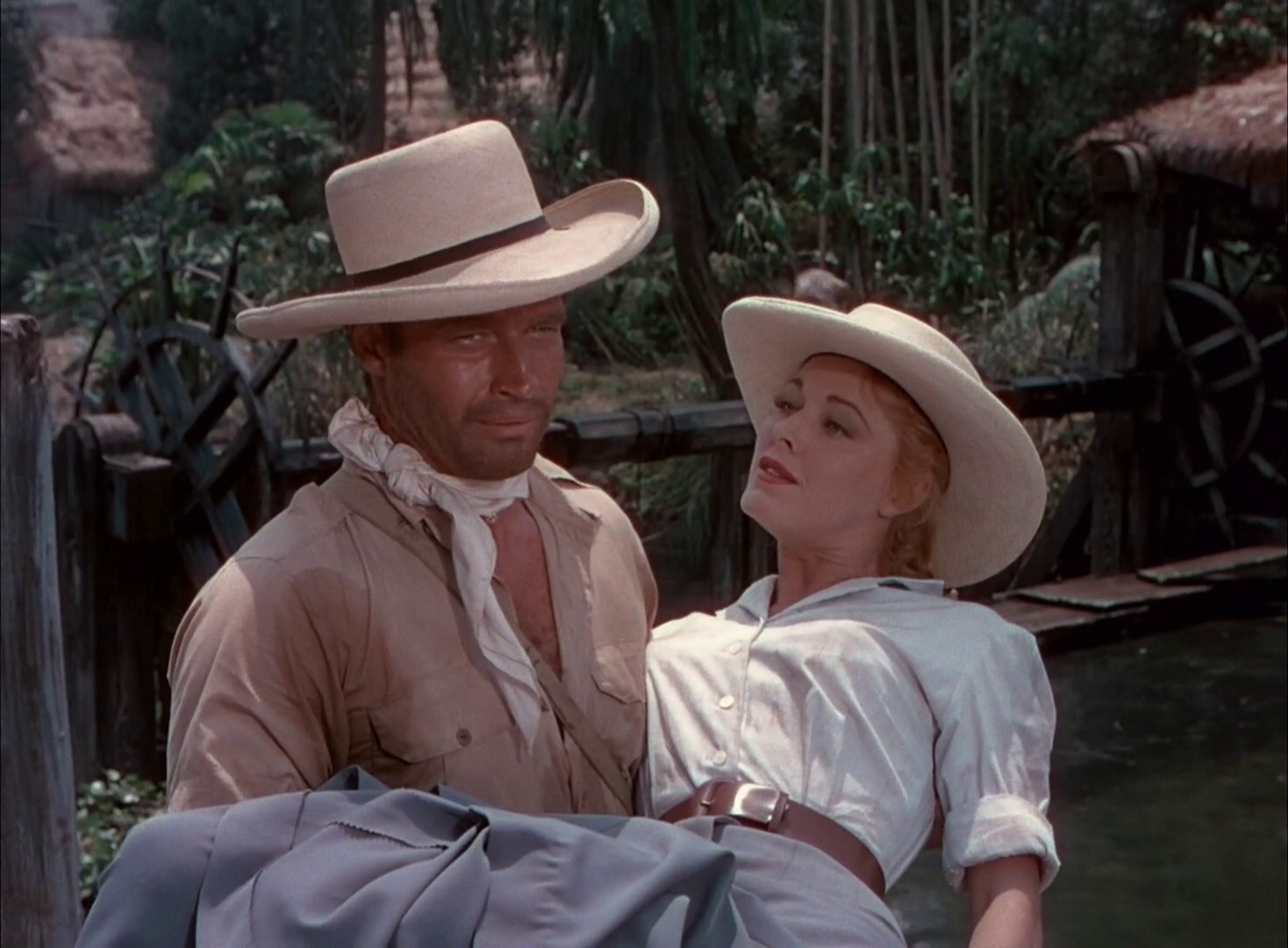
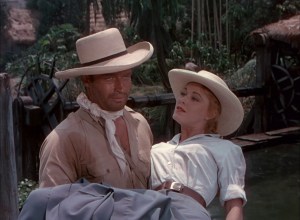 Eleanor Parker and Charlton Heston in Naked Jungle.
 Clark Gable in Gone with the Wind.
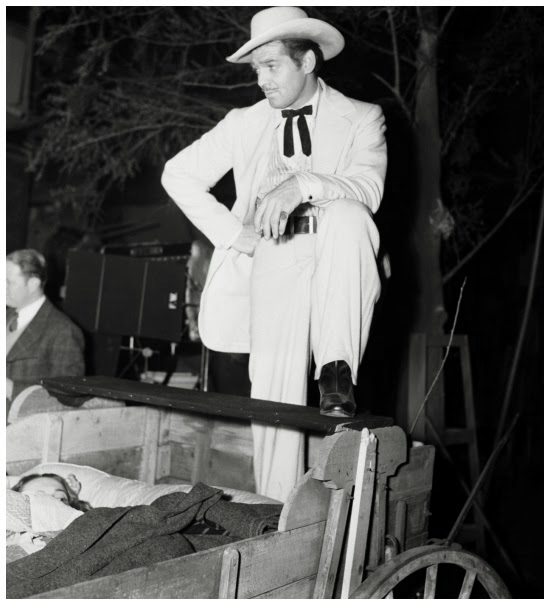
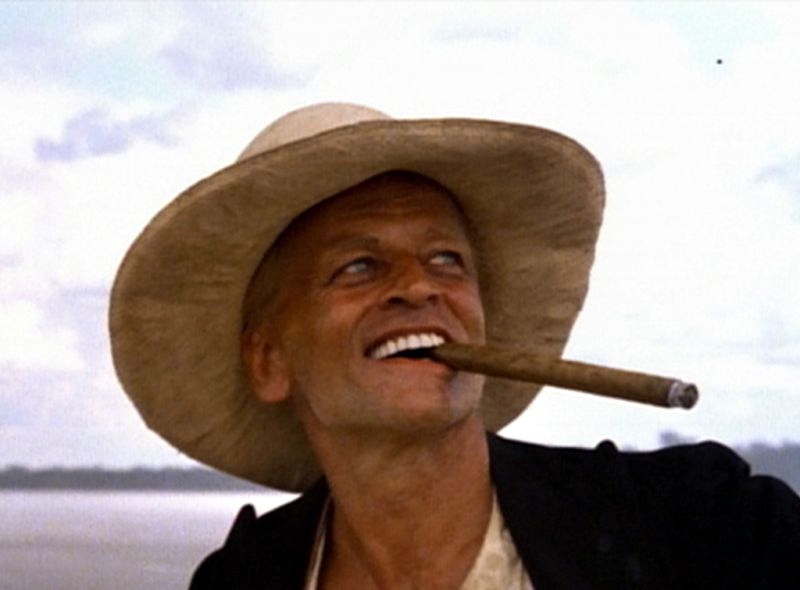
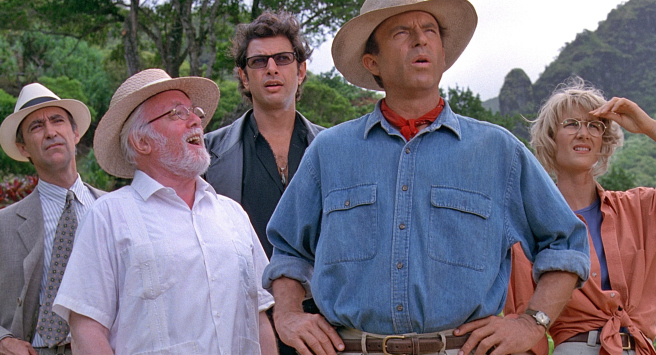
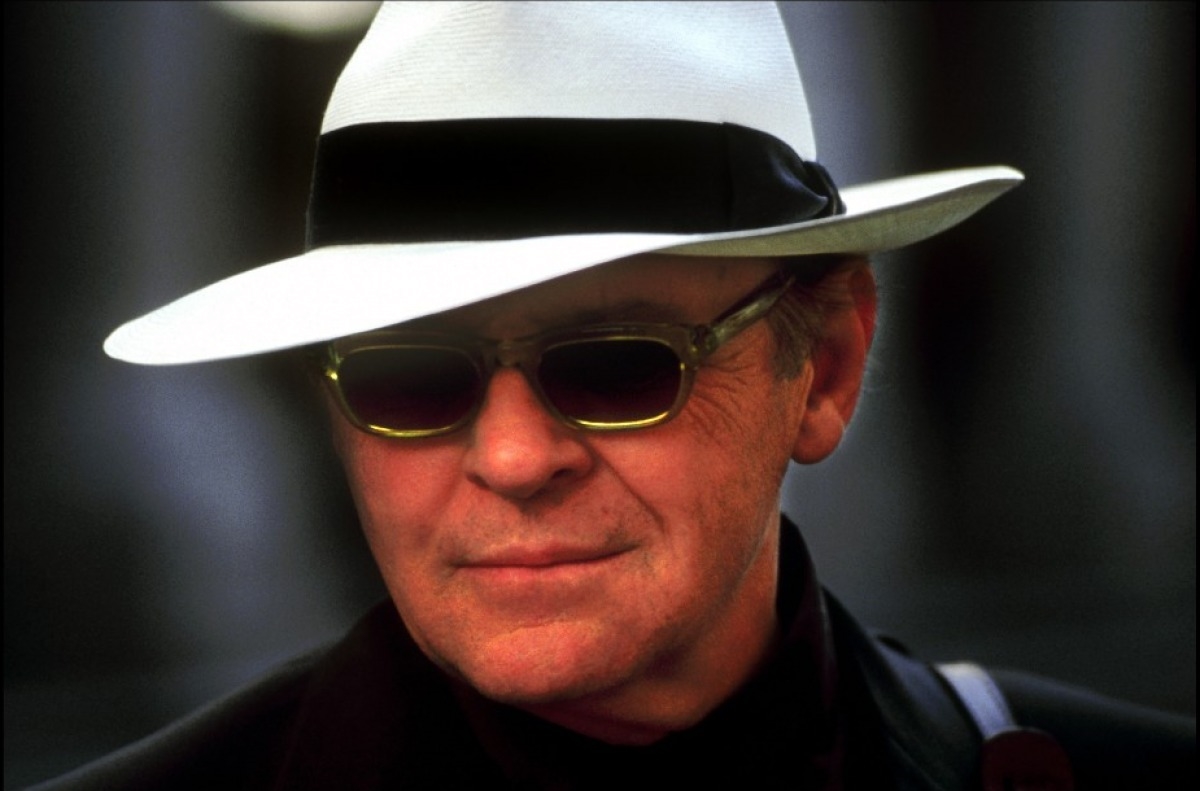
The golden age of Hollywood introduced the Panama to new generations, with many film stars wearing the hats both on and off screen. The Panama Hat has co-starred along side: Clarke Gable in Gone with the Wind, Sydney Greenstreet in Casablanca, Edward G Robinson in Key Largo, Klaus Kinski in Fitzcarraldo, Robert Redford in The great gatsby, Gregory Peck in To Kill a Mockingbird, Sean Connery in The Man Who Would Be King and Anthony Hopkins in Hannibal.
 Klaus Kinski in Fitzcarraldo.
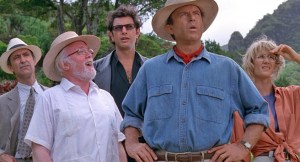 Attenbourogh, Neill and more in Jurrassic Park.
 Anthony Hopkins in Hannibal.
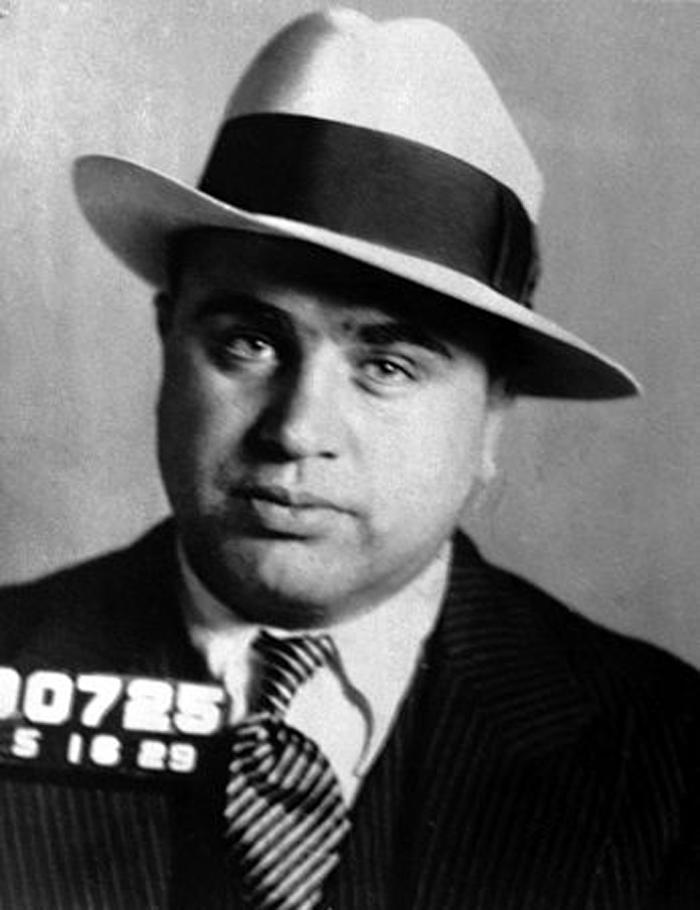
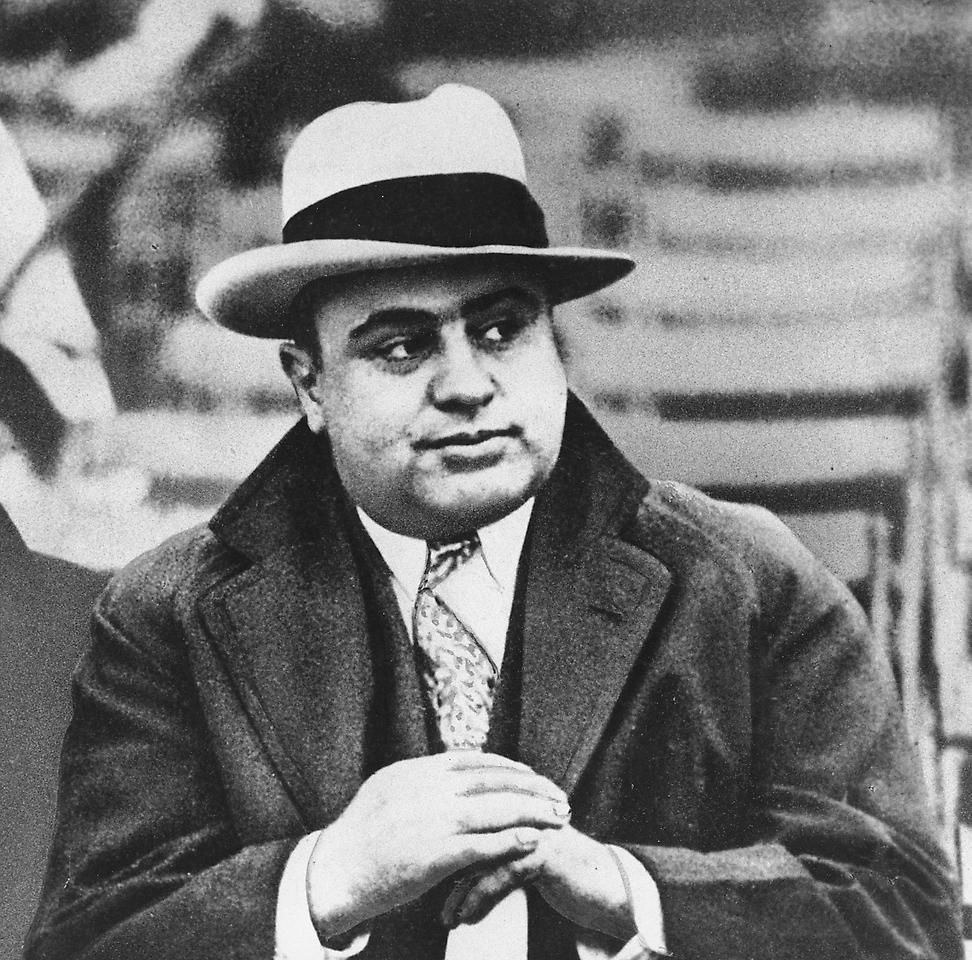
Many writers are also associated with the hat: Mark Twain, Graham Green, Malcom Lowry, Truman Capote and Tom Wolfe have all praised and worn the hats, their association bringing with it added elegance and style. Even Al Capone was seen wearing Panama hats, see pics down here.
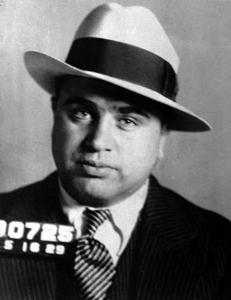
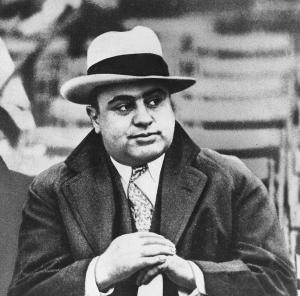 Al Capone.
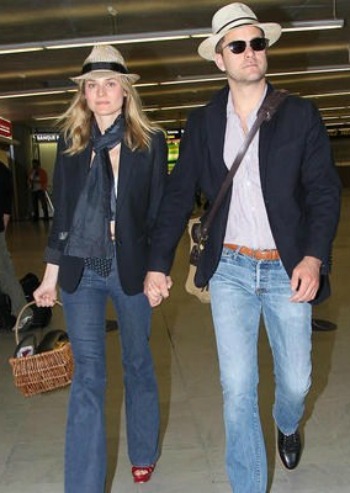
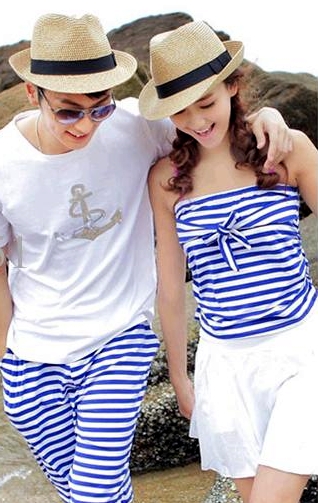
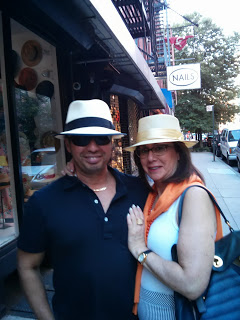
From the gardens of Chelsea Flower Show to the catwalks of Paris, the Panama Hat is experiencing a resurgence in popularity. The Panama hat has been a quintessential symbol of British summer fashion ever since 1906 when Edward VII rejected formal morning dress in favour a linen suit topped off with a fine panama hat to attend Glorious Goodwood. Also its very „in“ to wear Panama’s as a „matching couple.
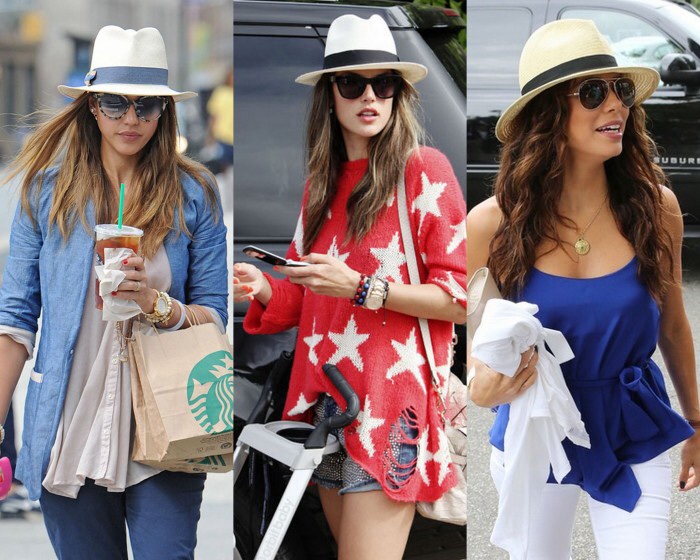
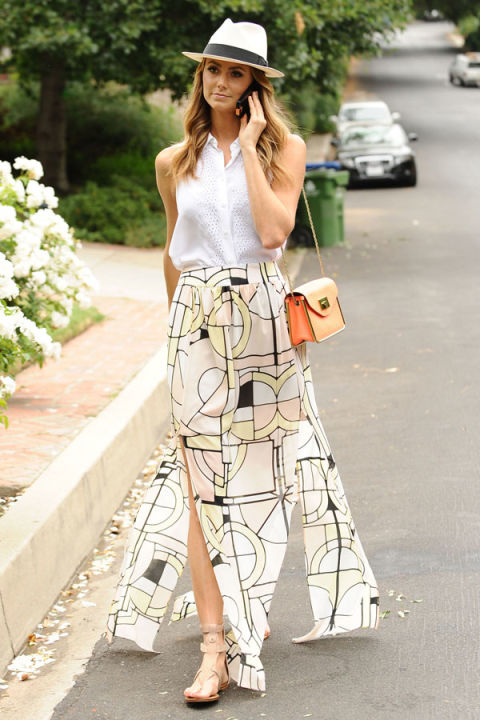
Women can wear Panama’s, young or „matured“, sportive or casual…..
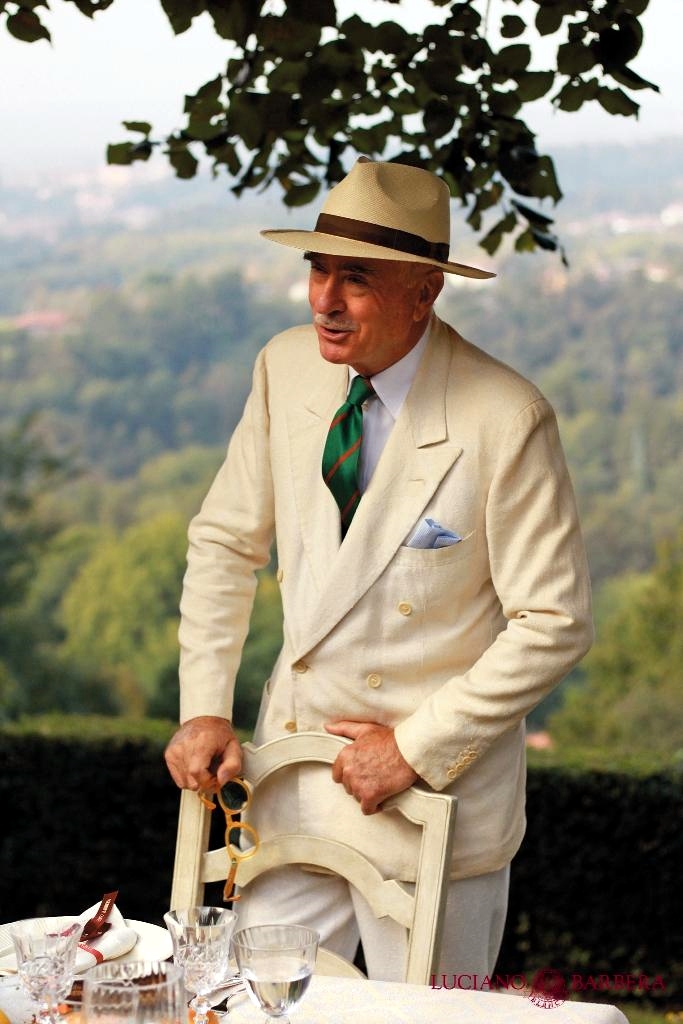
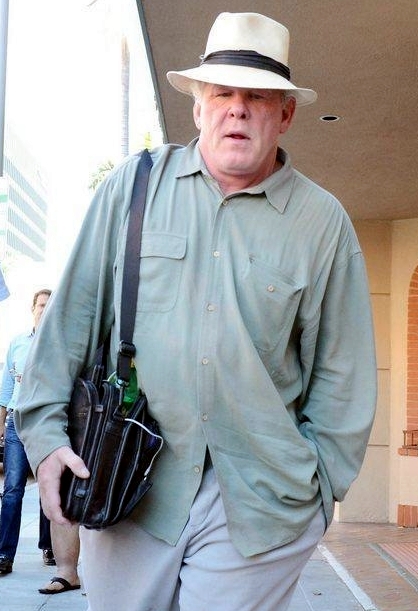
…..so as men, elegant or sloppy, it really doesn’t matter. A Panama Hat always fits.
And here are some couples in matching outfits.

Last but not least, Panama hats are sought after collectors items as well.
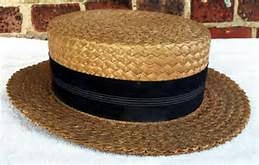 A vintage „Boater Skimmer“ hat from the 1920s.
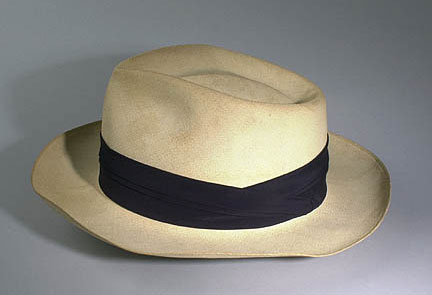
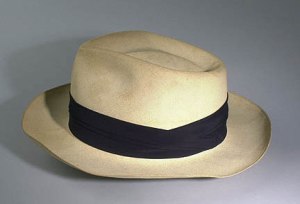 Harry Truman’s original in the Smithsonian museum.
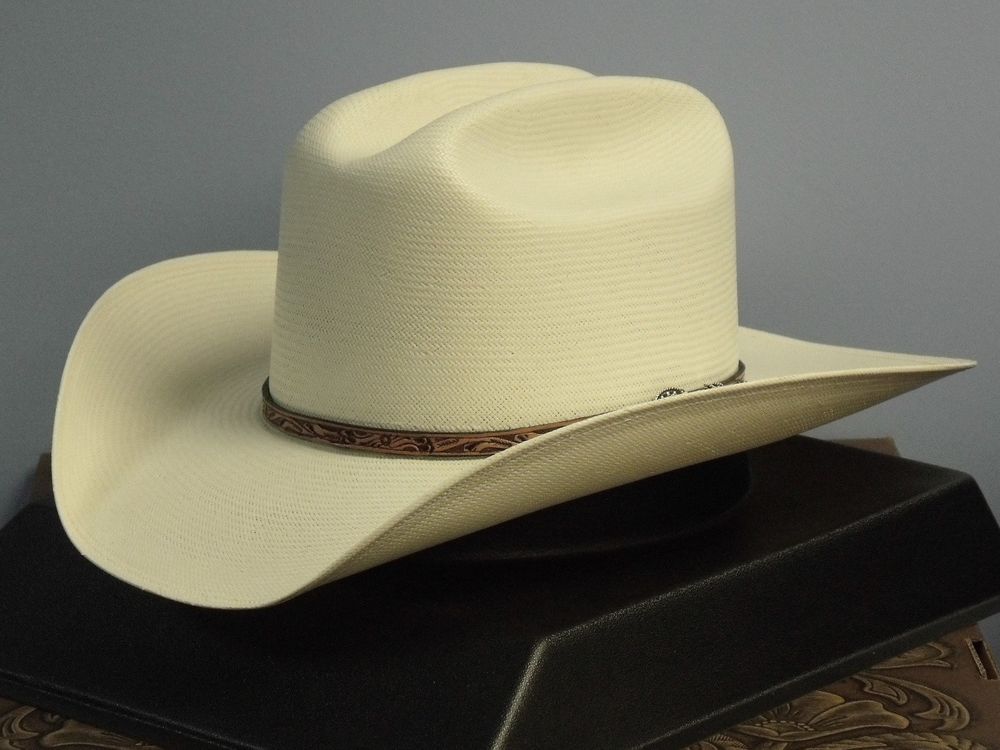
 A one of a kind „Resistol Horseman Genuine“.
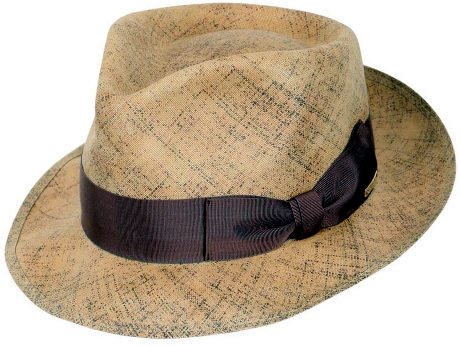
 One of a kind in style and color, a „Gambler“, 1970’s.
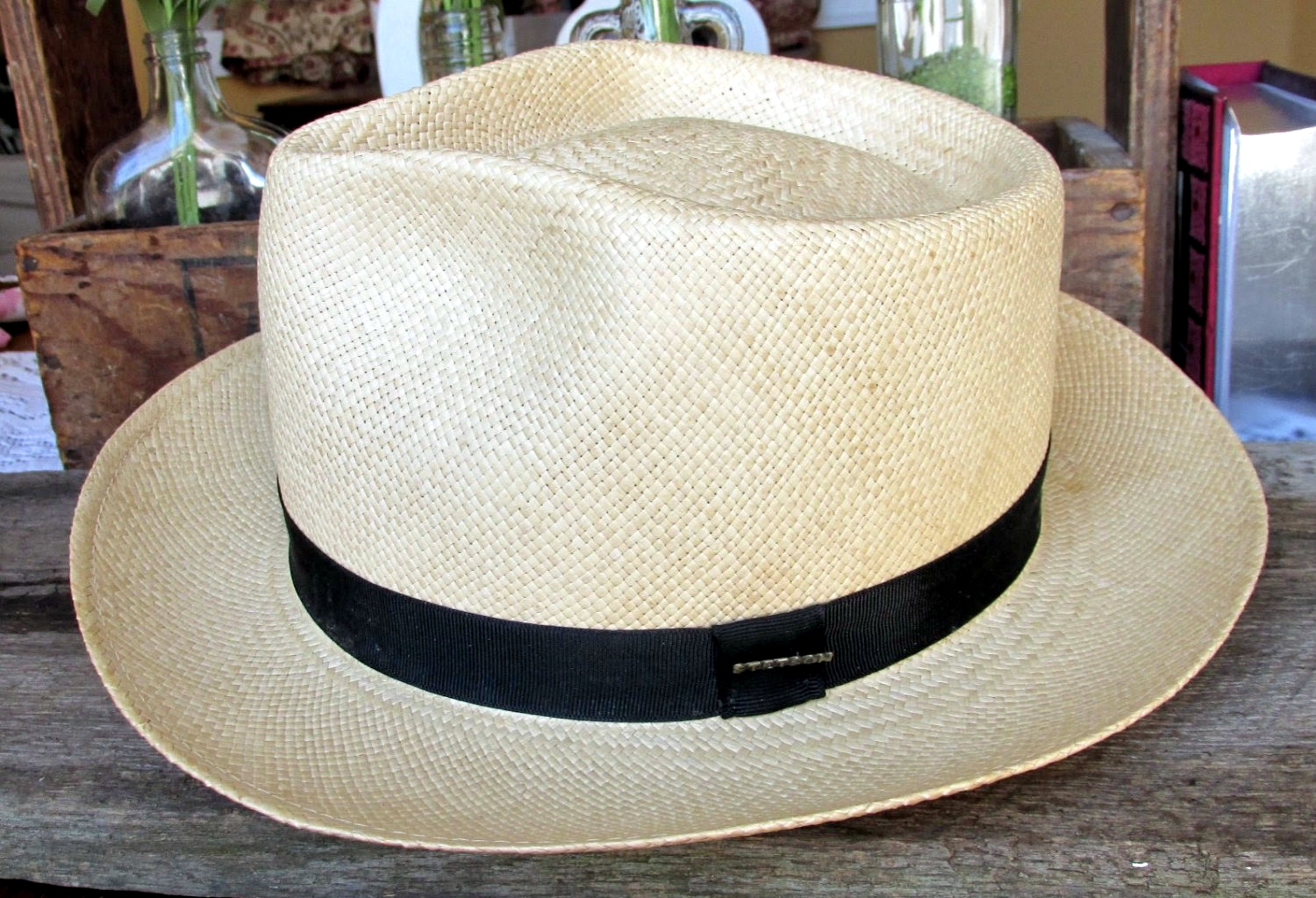
 A very rare Stetson from the 1960’s.
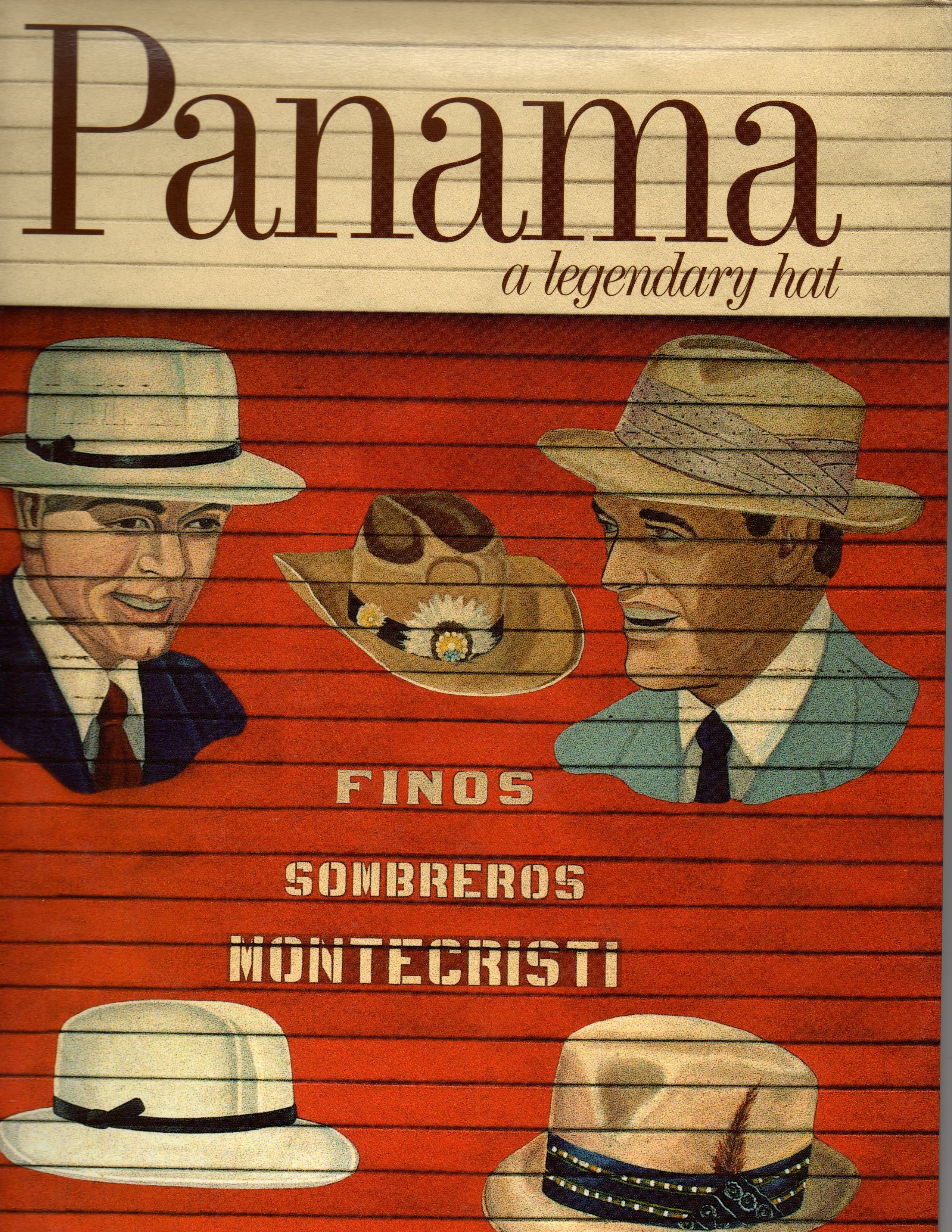
Finally, if you are interested to read more, one of the best books about Panama Hat history and story’s, with lots and lots of excellent pictures is Martine Buchet’s „Panama, a legendary hat“, printed in France by Assouline from 2004.
 I hope you enjoyed the Panama Hat story. Expect more.

