
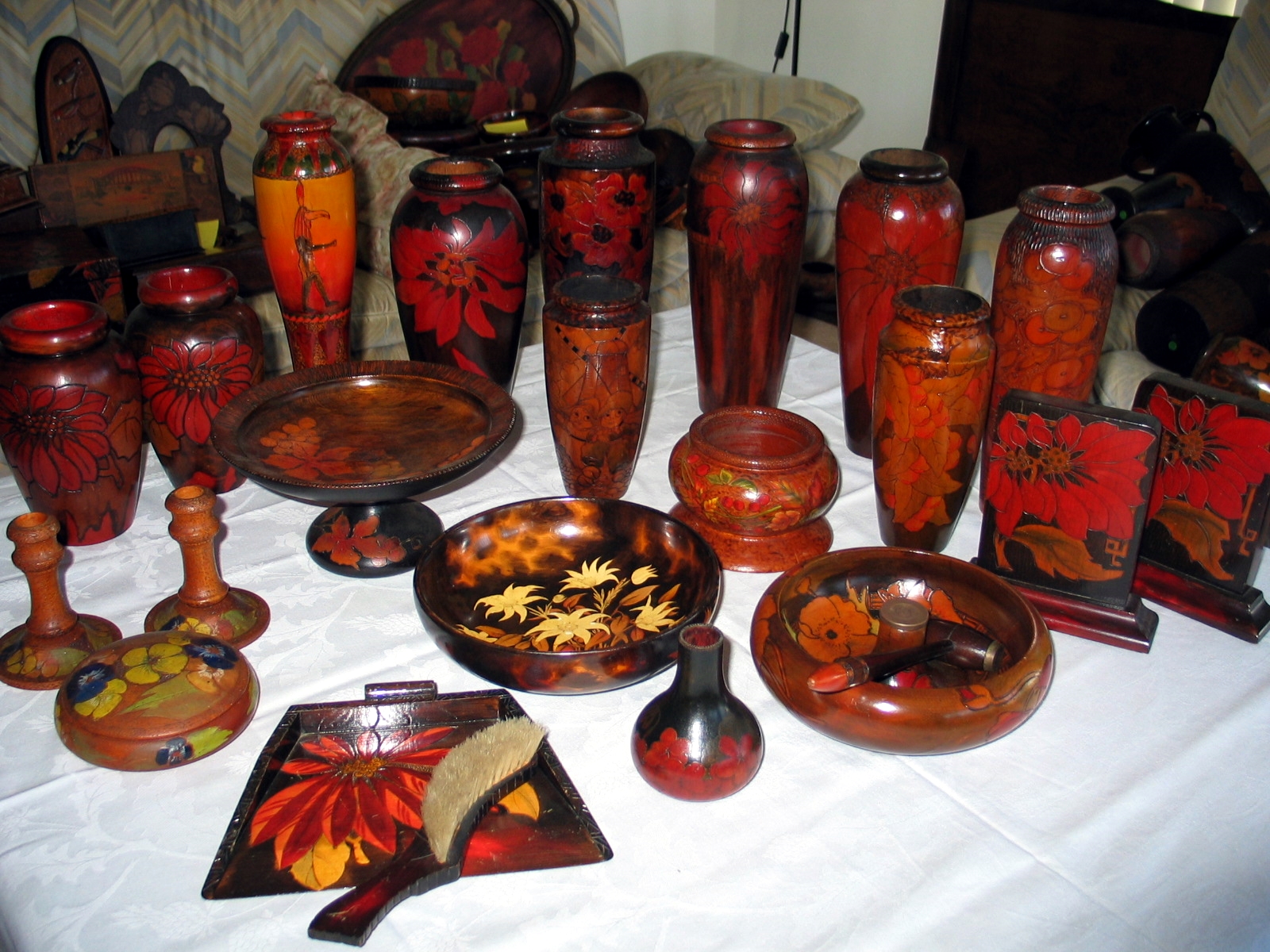
Australian Pokerwork.
During my over 10 years living in Australia, I build up one of the finest and largest Australian Pokerwork collections in the country. In total there were more then 400 pieces of Australian Pokerwork art. All the here shown pictures were part of this amazing collection. Most pieces are sold in the meantime. Many photographs are sadly lost and the whereabouts of the collection is mostly unknown. Some similar single pieces, which I had in this collection, are part of the powerhouse museum collection, which I will mark „Powerhouse“. And some of the remaining pictures, I like to share with you.
Pokerwork or the method of burning designs into timber has been a method of artistic expression for thousands of years.
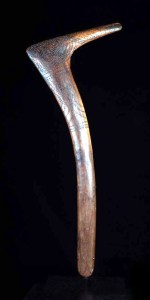
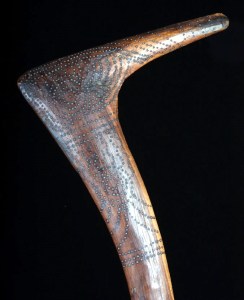
Wonderful, very old Pokerwork art on an Aborigine Hunting Boomerang. Powerhouse.
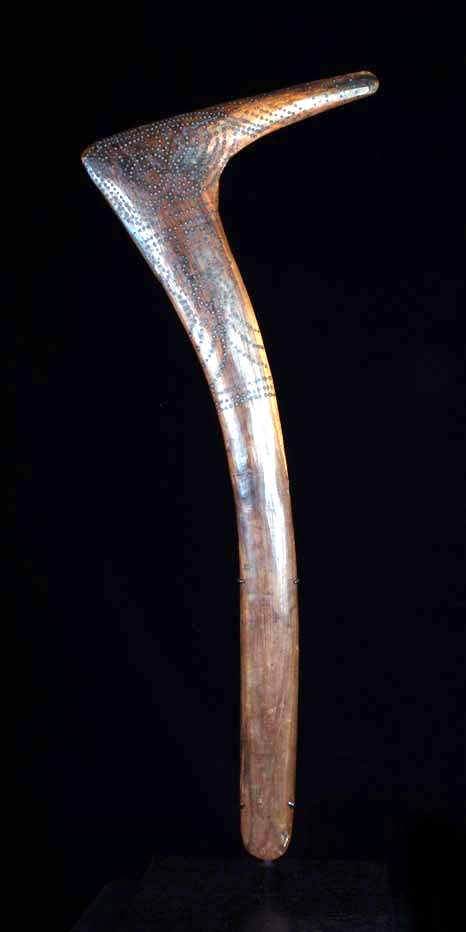
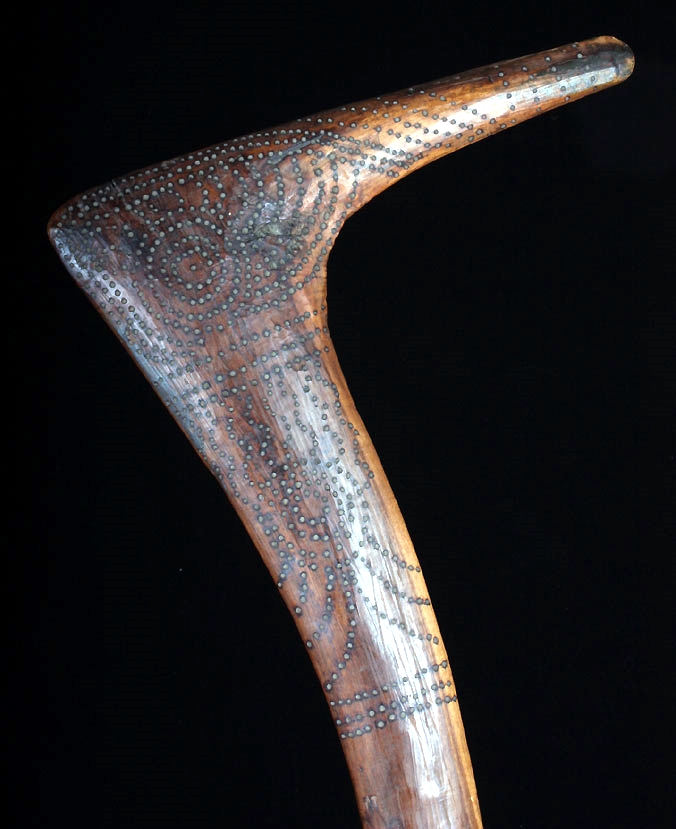
Pokerwork, sometimes known as pyrography, is one of the oldest decorative folk crafts known and involves burning designs onto wooden (sometimes leather and cork) objects with a heated tool. Often the work is then colored with ink. Many ancient and/or Indigenous cultures, including Australian Aborigines used this art form to decorate weapons, domestic and religious items. Considered ‚amateur‘, Pokerwork is often overlooked, despite its presence in museum collections, including the Victoria and Albert Museum London, the Musee de l’Homme, Paris and the Powerhouse Museum, Sydney.
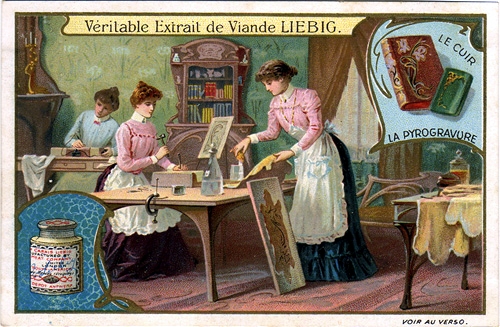
Ladies are busy with Pokerwork art. La Pyrogravure in French, on a „Liebig’s extract“ collectors card.
Some Like It Hot.
Pokerwork was a popular art form in Australia in the period prior to World War 2. It appeared as a decorative form of design on a variety of household items made from wood such as vases, spoons, coat hangers, bowls, egg cups, coasters, doily covers and trays. The quality of the work appeared to vary greatly, from that done by amateur hobbyists to professional artists. So great was its popularity that companies specializing in its production supplied major department stores of the time including Anthony Horderns, David Jones, Grace Bros, Farmers and Mark Foys. In recent years the art has had something of a revival.
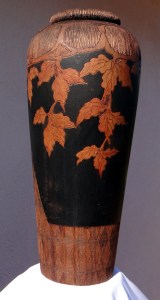
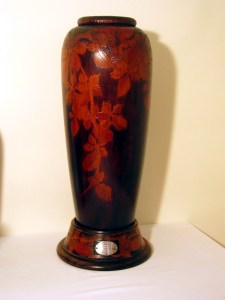
Two wonderful vases. Left in natural colors, just poked and blackened, c. 50cm high, from about 1910.
Right a gift from a political party to their new leader. Colored/lacked, on separate stand, c.70cm high, 1932.
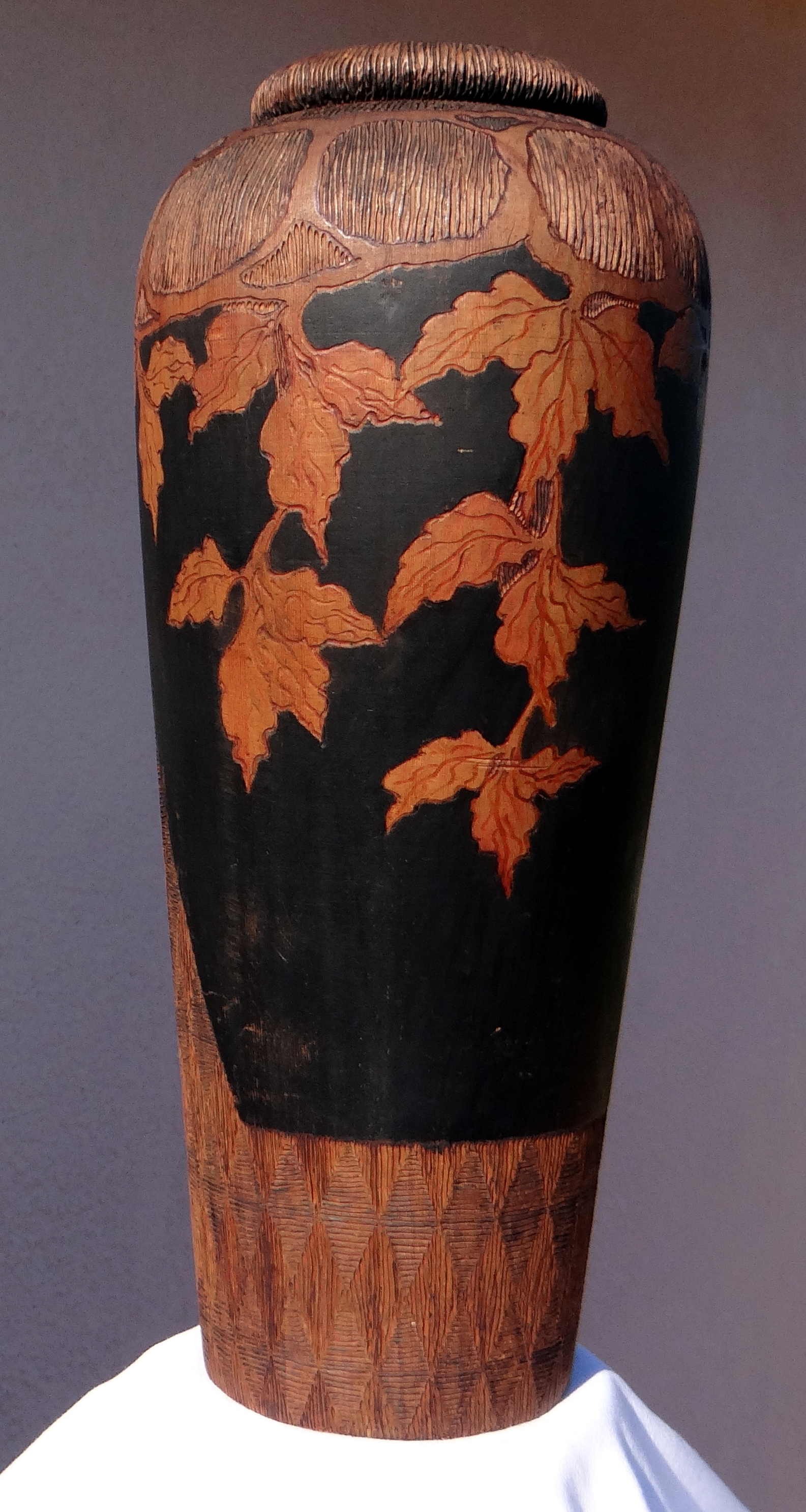
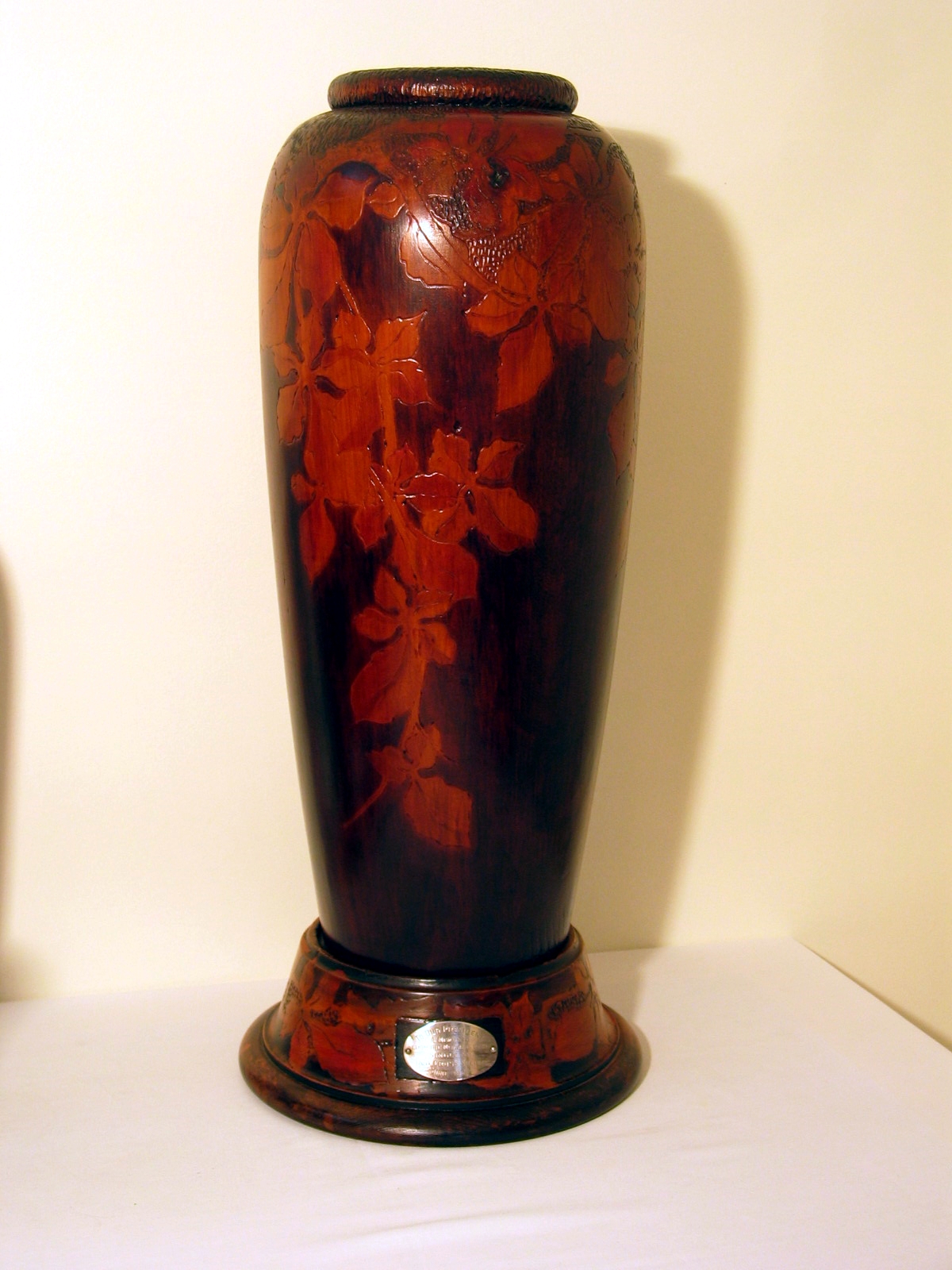
Popular designs found on Australian poker work of this period include Australian flora and fauna. Most notably these include gum leaves and blossom, waratahs, wattle and poinsettia flowers. Fauna also figured highly and included mainly koalas and kookaburras as well as other types of birds.
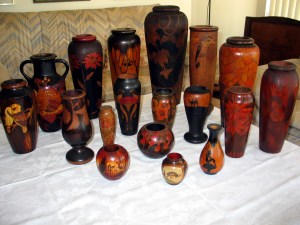
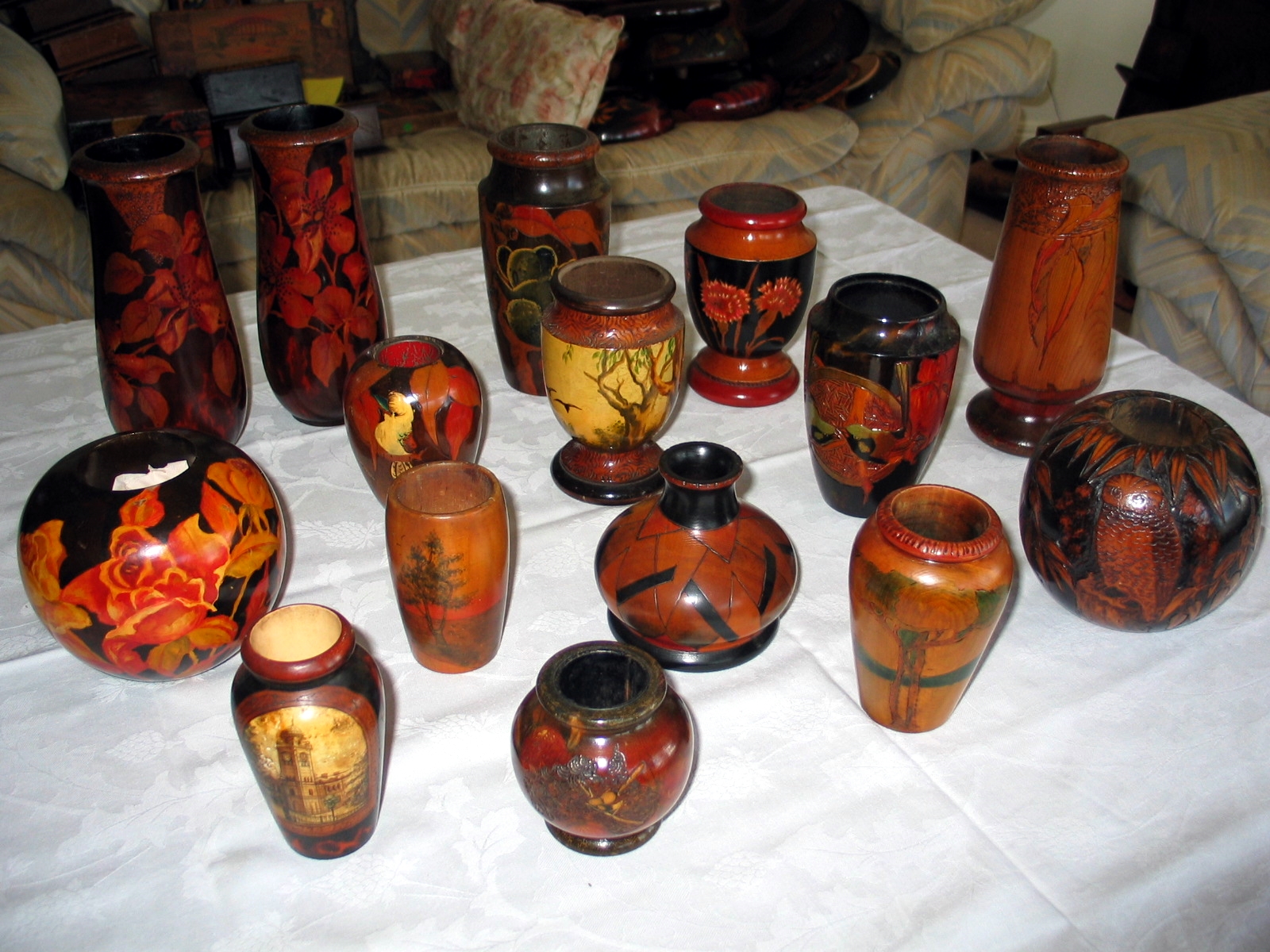
Nice collection of Australian decorated Pokerwork vases.
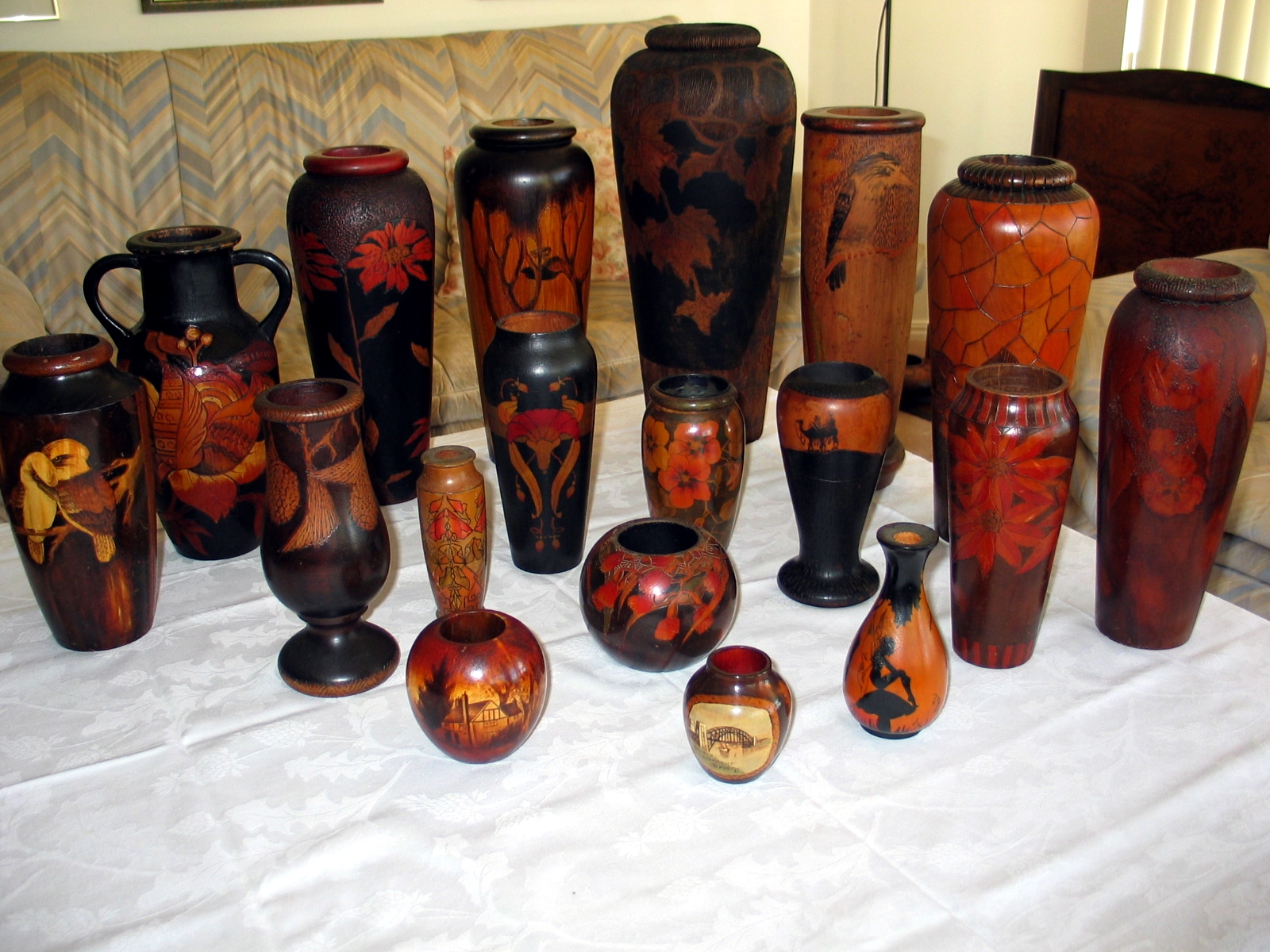
Although poker work was such a popular art form and many pieces were commercially produced, most examples of poker work remain anonymous. Poker work production during the years of the Great Depression was a way household income could be supplemented. It is rare that particular artists can be identified as such. This collection of poker work was also significant for its family connections of the artists involved and the first-hand accounts available of working life in a commercial poker work factory during the first half of the 1930s.
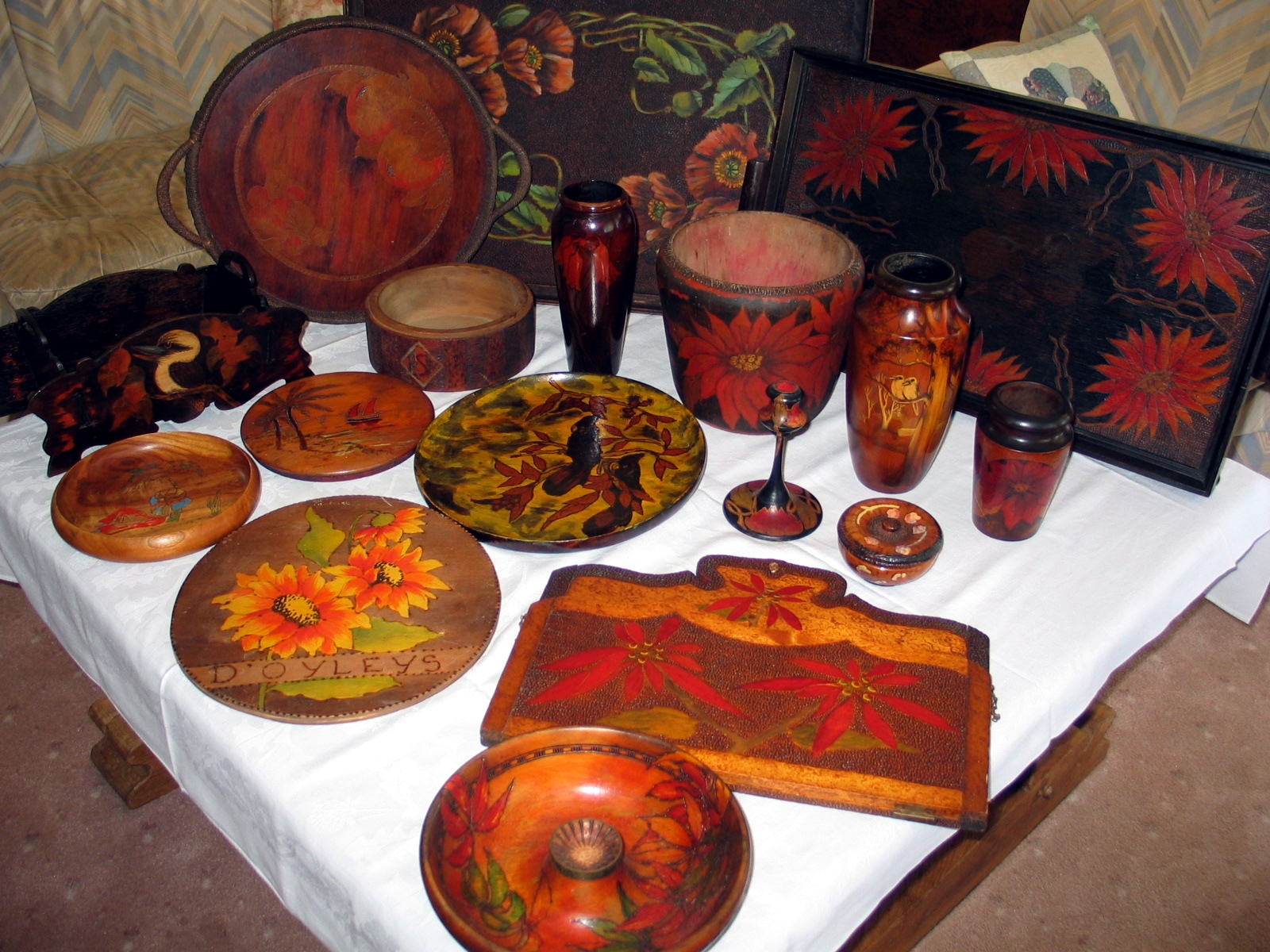
Different artwork, in front a nutcracker bowl with brass top.
Louise Tufnell.
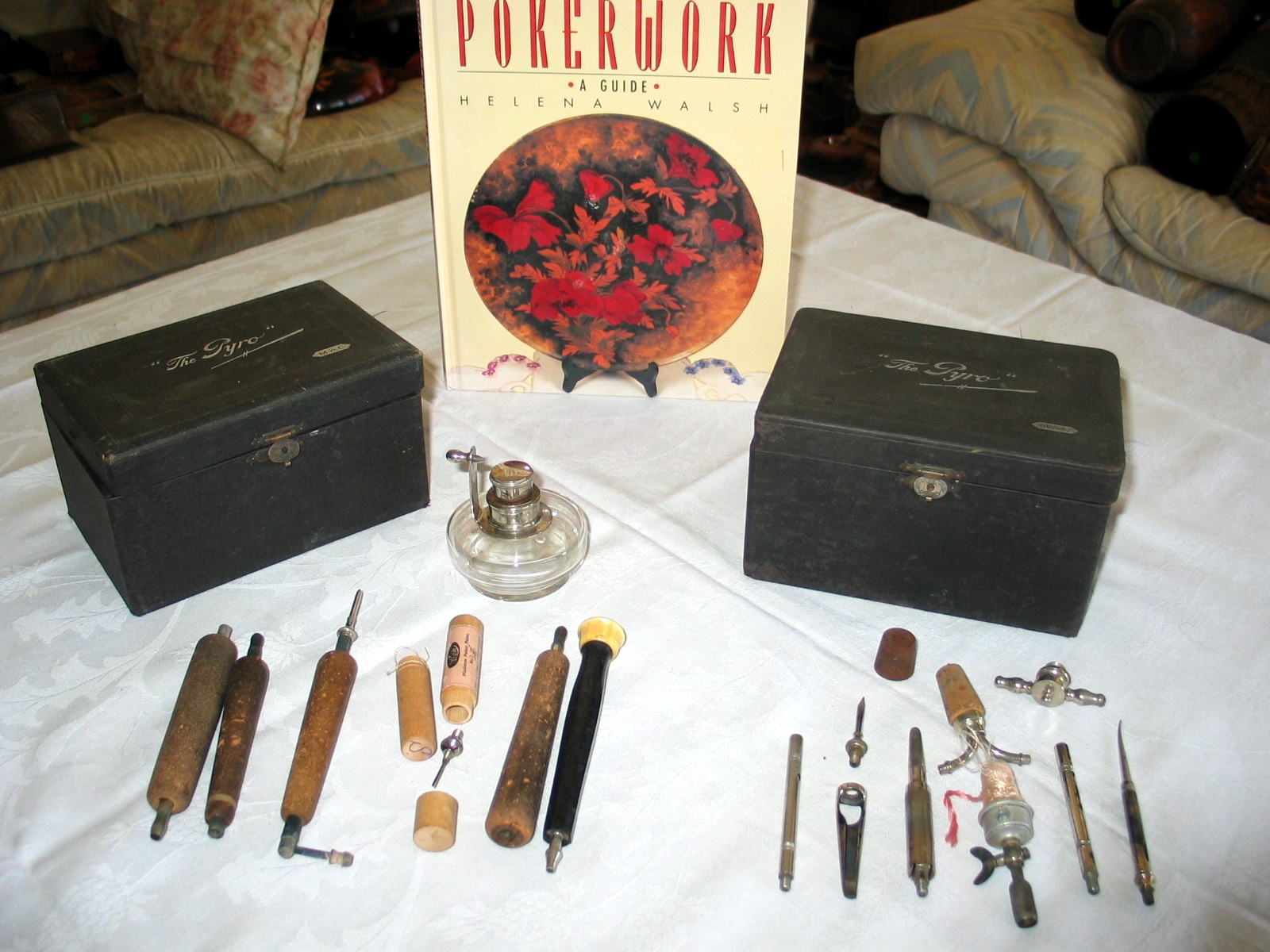
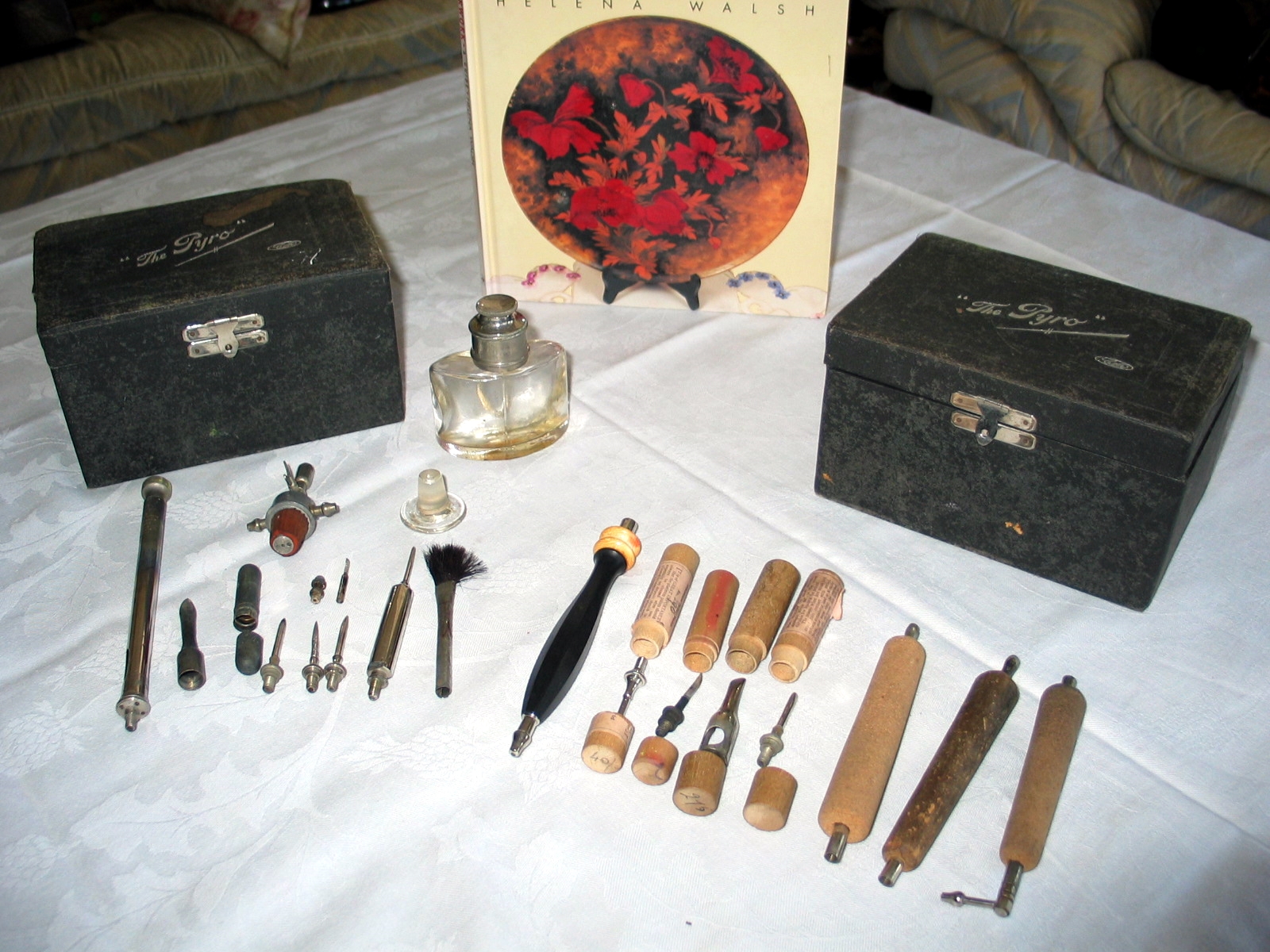
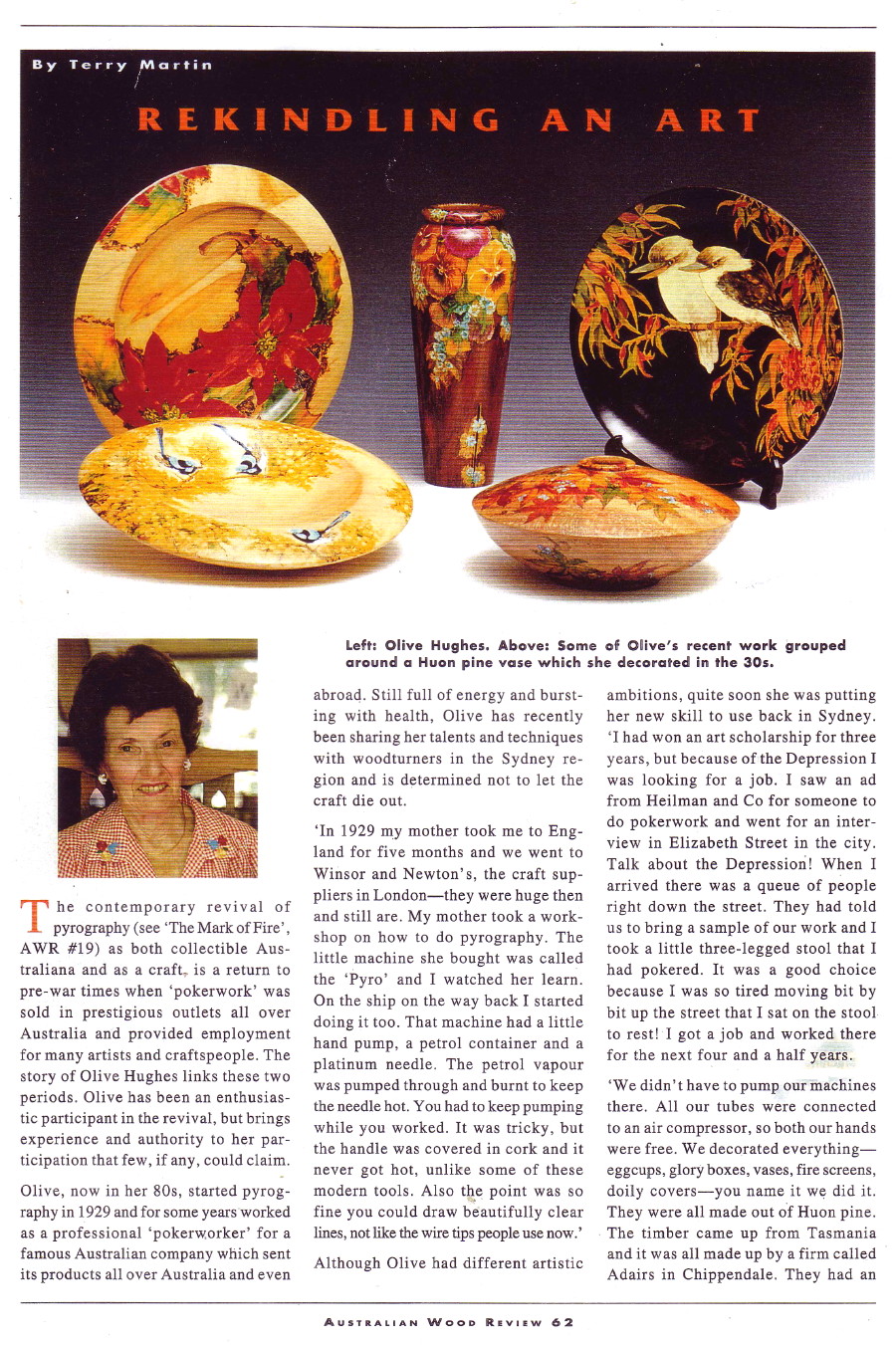
Multi-talented artist Louise Tufnell (1878 – 1970) worked in Sydney in a variety of art forms including painting and drawing, jewellery making, embroidery, crochet and poker work. Her daughter, Olive Hughes also had great talent as an artist and won a three year scholarship after attending Sydney Girls High. In 1929 accompanying her mother on a trip to England, Olive Hughes discovered poker work after her mother bought a small poker work tool called the Pyro, two examples of which are in the collection. Developing her skills on the six week voyage, Olive Hughes arrived back in Australia in December 1929.
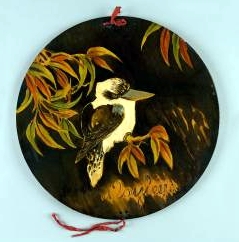
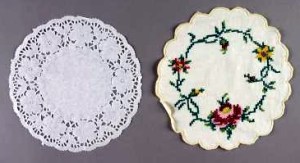
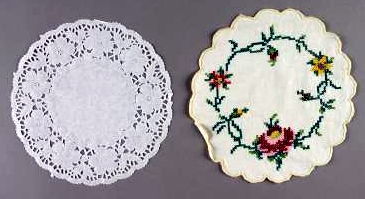
Pokerwork doily cover with kookaburra design, 1930 by Louise Tufnell. Doilies next to it. Powerhouse.
As the Great Depression gripped Australia her mother’s dress shop was forced to close and Olive and her mother resorted to poker work to earn a living. In 1930 at the age of seventeen Olive was successful in obtaining a job as a poker work artist at the firm Heilman & Co., in Elizabeth Street, Sydney, where she continued for the next four and a half years. Living in Bondi and working in the city six days a week, her usual work day at the factory started at about 8.15 am until 5.30pm with a half hour lunch break. This provided a weekly wage of one pound per week. The cost of a platinum needle for the pyrograph machine cost two pounds so was a significant investment if a needle had to be replaced, especially if work was also done at home using small domestic machines.
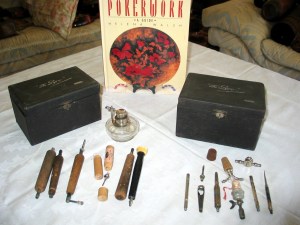
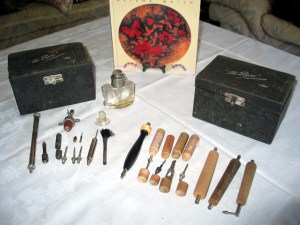
Two different sets of „Pyro“, the known Pokerwork art set, from the late 1920’s. And a Pokerwork book, 1992.
Conditions in the factory were less sympathetic to workers than they are today. The building, Solar House, was an early concrete construction which was extremely cold in winter without any heating, so much so that the 16 girls had to get wooden packing boxes to put their feet on to keep them off the cold floor. If workers were sick they were docked pay. At each table the girls worked in groups with two groups doing poker work and the other two groups doing coloring. Items used for poker work were supplied to the company from the wood turning company Adair and Son in Abercrombie Street, Sydney.
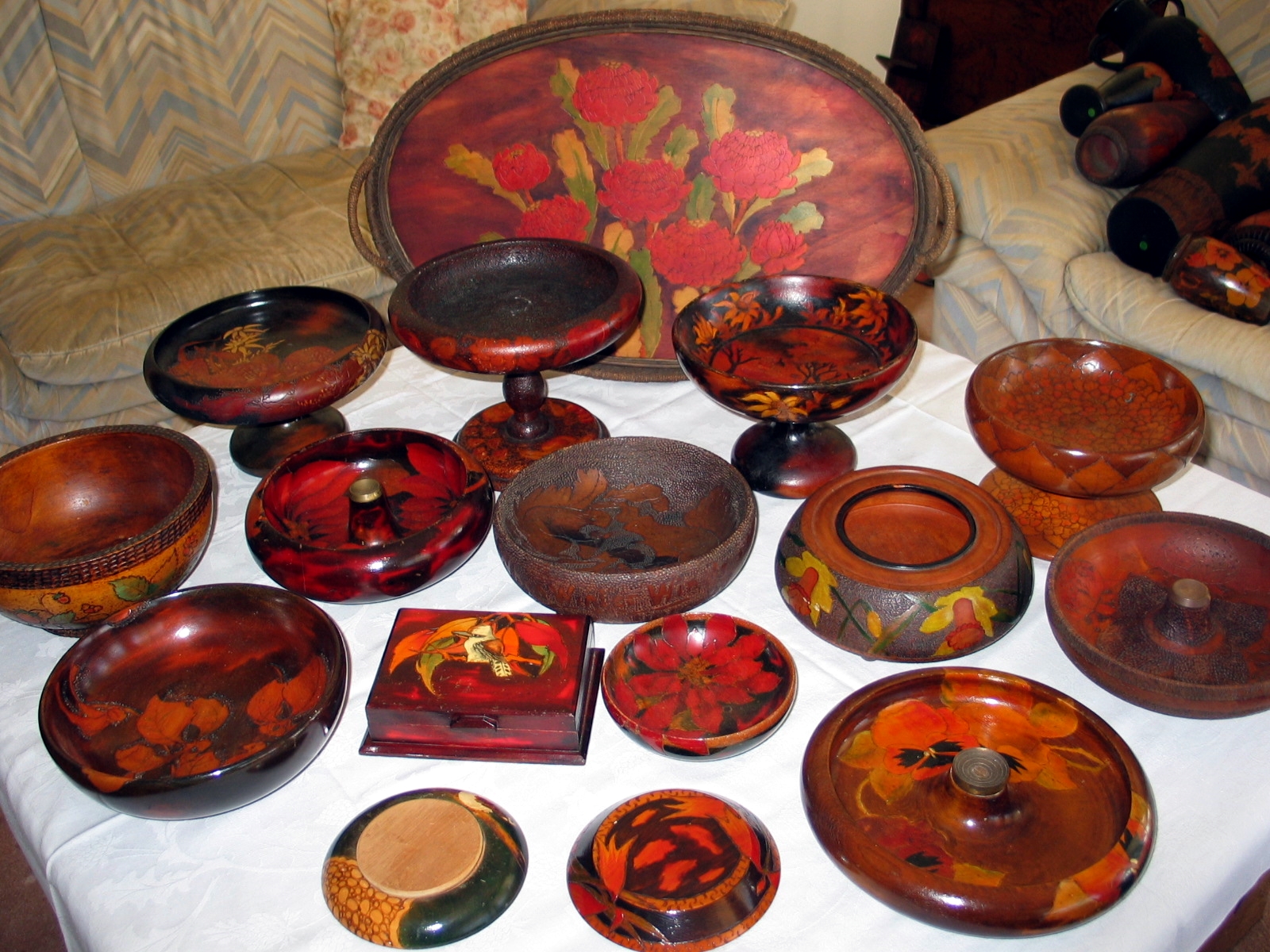
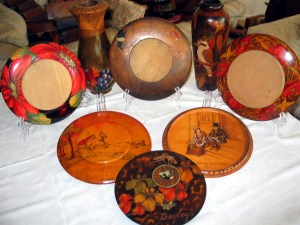
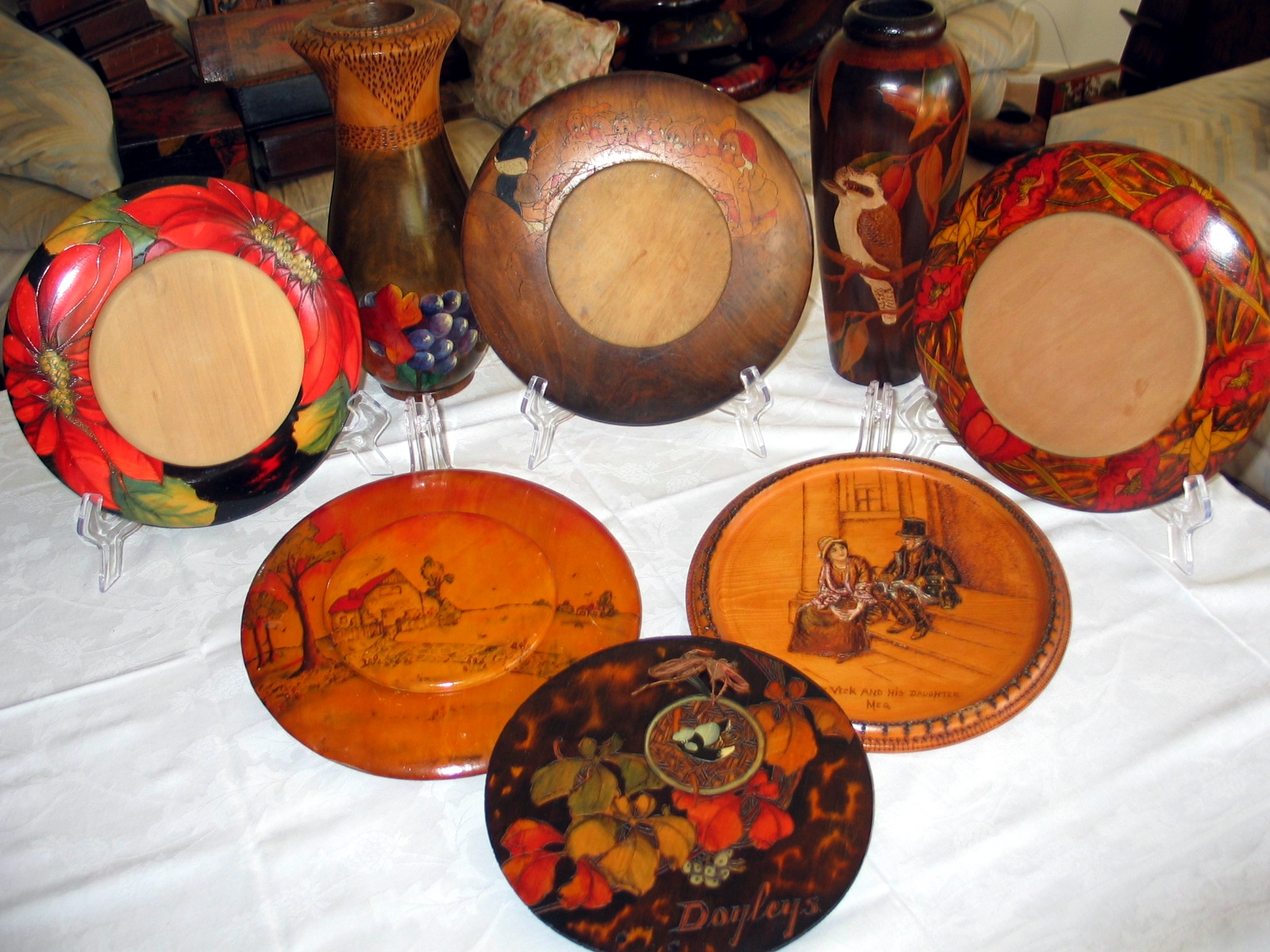
Collection of bowls, plates, fruit stands and a serving tray.
Olive Hughes.
Orders for poker work came directly from stores wanting particular items. The secretary/manager of Heilman’s, Frank Rowan, would mark in pencil on each piece letters indicating the kind of decoration that the order required, such as gum blossom and leaves, waratahs etc. A basic training system was in place at the firm when Olive Hughes began there. Initially working with a senior artist (Mrs Merton) she would learn how to do backgrounds on items such as breadboards. As she gained experience she would work on more complex tasks with other senior staff doing both poker work and drawing and coloring. As all the girls had art training they were fast workers. Olive Hughes did all her work freehand without the use of stencils or drawing the images first.
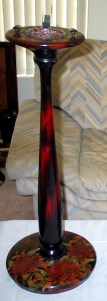
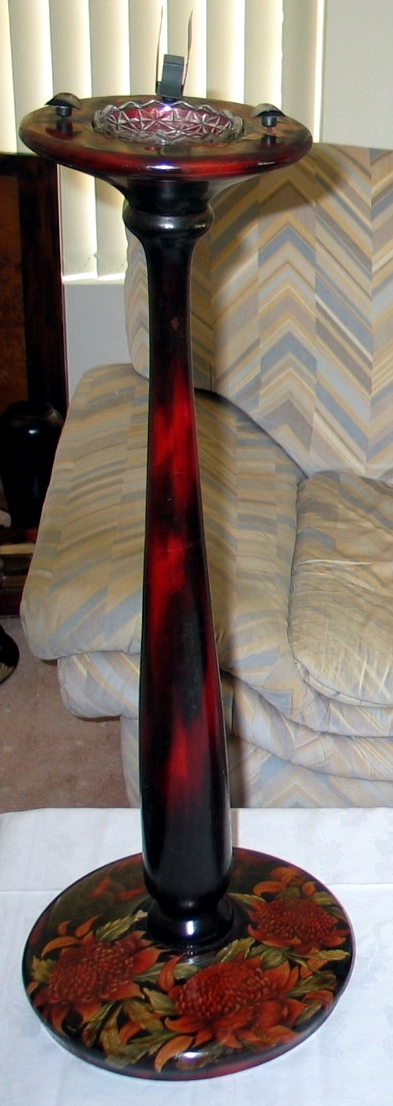
One of the great pieces made by Olive Hughes, Waratah design on a smokers stand.
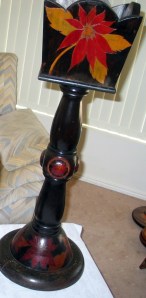
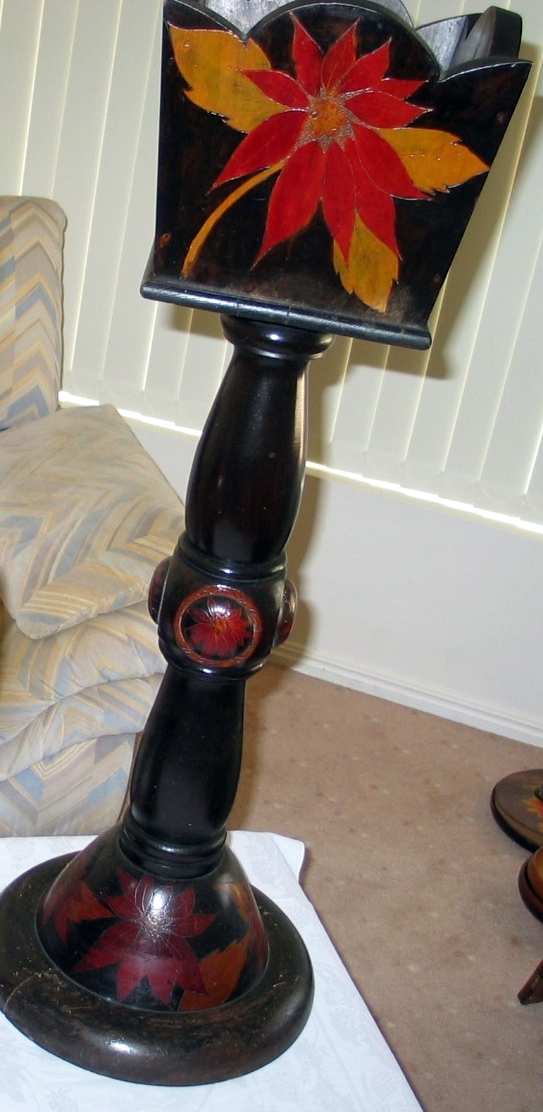
Poinsettia design on a massive flower pot stand.
By about 1936 Olive Hughes had left the poker work factory and was working in the art department of the US firm Aladdin Industries in Sydney and had moved on from poker work to other art forms. During the 1940s she and her mother made jewellery supplying a local shop.
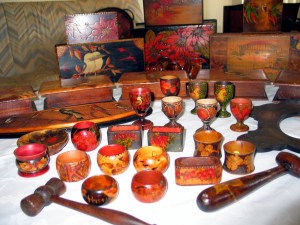
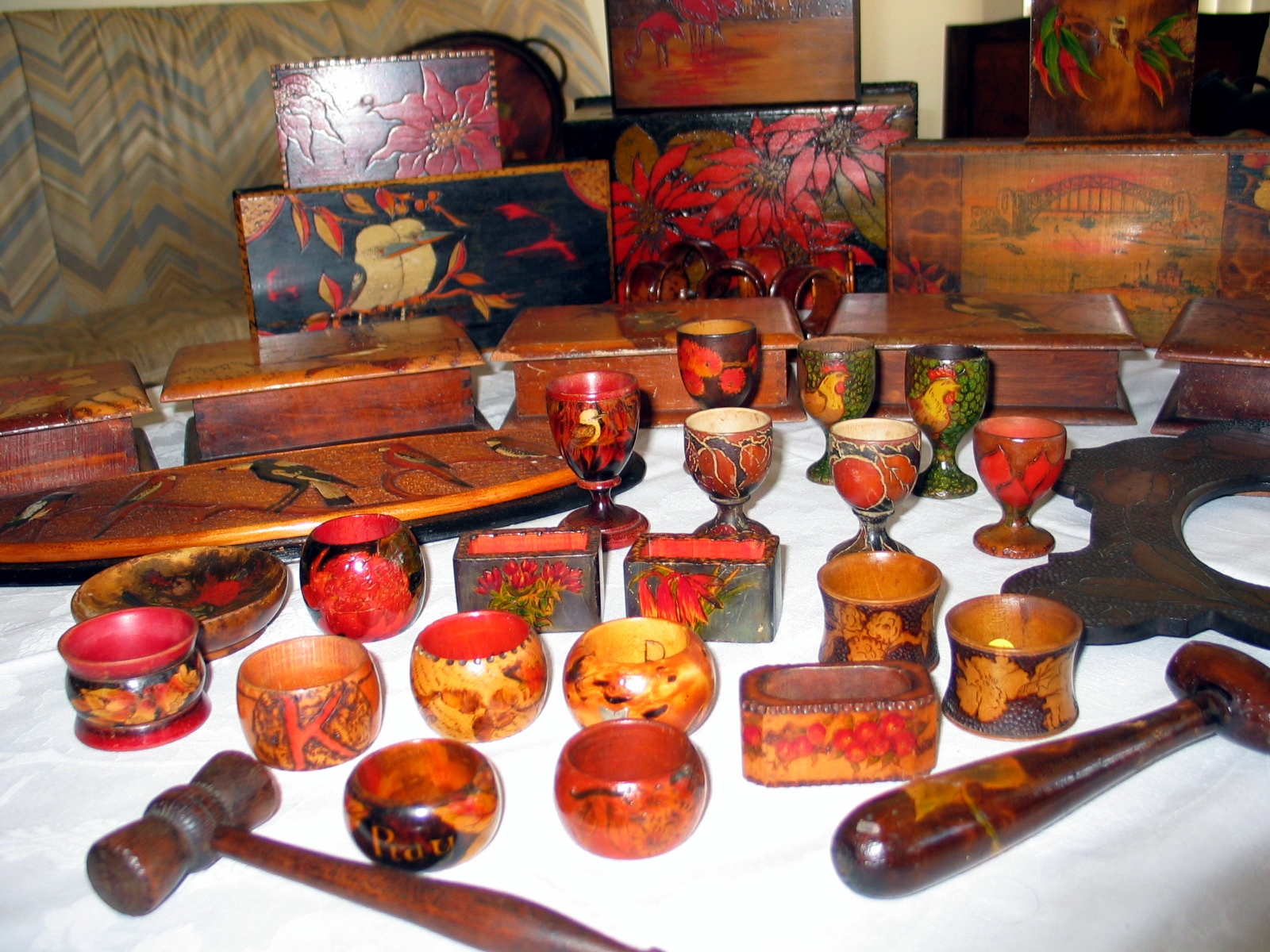
Everything could be decorated, napkin boxes, serviette rings, gavels, egg cups, bread boards,
marriage plaques etc. Notice the box in the rear with 2 kookaburras from 1900’s and the square
serviette holders, made out of a solid block.
Between 1969 and 1979, she visited art centres in nine countries of Europe plus Israel, as well as pursuing studies in England. Also during that decade, she attended a World Education Conference in Japan and studied at the International Academy in Salzburg, Austria. She also went to Vermont, U.S.A. to paint with Claude Croney and was even able to travel to remote Alaska, U.S.A. to see Eskimo art.
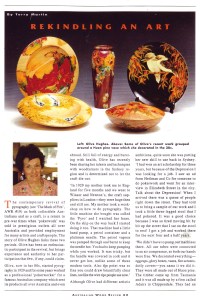
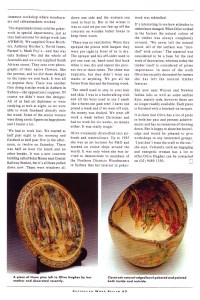
Great article, about life and art of Olive Hughes, in the „Australian Wood Review“ magazine.
Amazing what kind of wonderful art this lady produces in her mid 80’s.
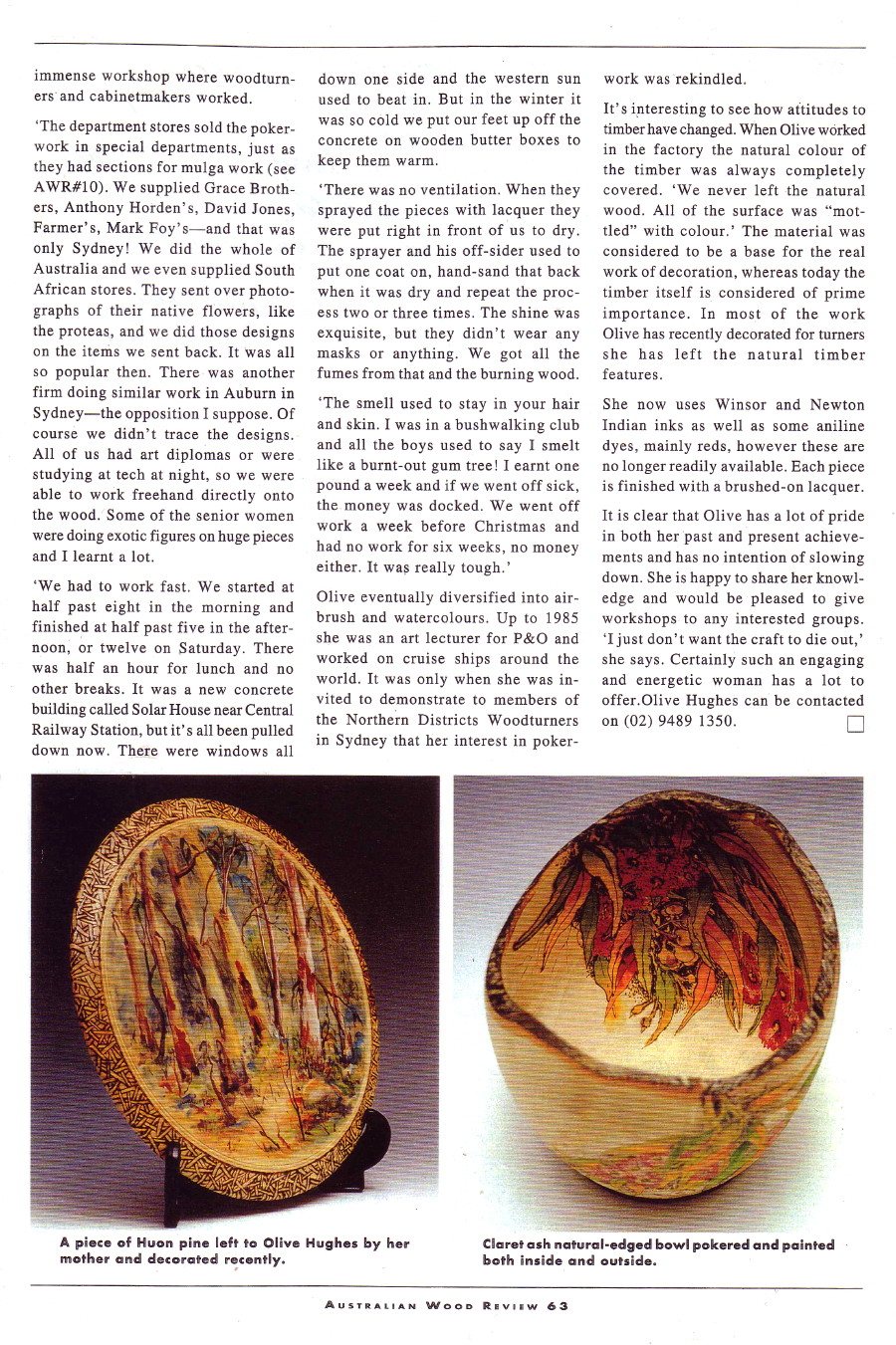
Between 1981 to 1986, in her capacity as an Art Lecturer for P. & O. Shipping Lines serving the Pacific and the Mediterranean, Olive traveled to Japan, Korea, China, and Malaysia. She even managed to visit Nepal with a group of artists. That decade of the 1980s and even into 1991 was also a period when she had successful one-woman exhibitions of paintings and even sculptures, too. Besides Australia and the United States, her work is in private collections in England, continental Europe, Canada, and Japan.
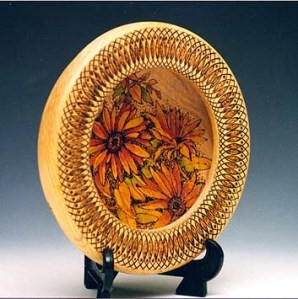
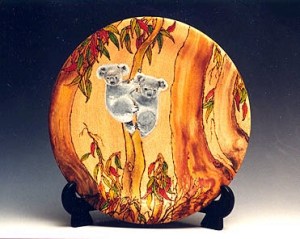
Deep bowl of Hoop Pine, daisy design worked in pyrography and color, deep on base and inside
of the bowl. Pyrography and color on wood, plaque of Silky Oak. Both made 1998, after more then
70 years of pokerwork art, both made by Olive Hughes. Powerhouse.
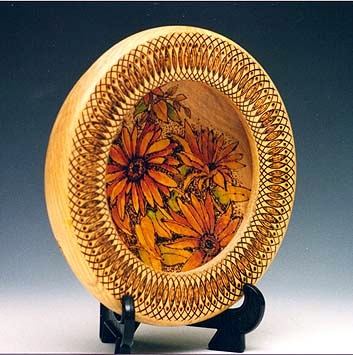
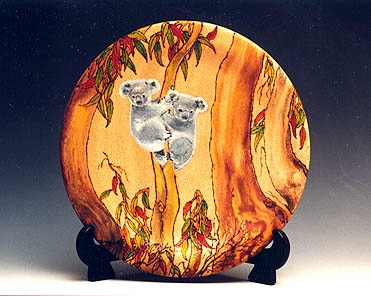
Pokerwork As Art.
Pokerwork was highly valued by the arts and crafts movement which, though often associated with Britain was equally important in Australia and in America. This movement was born in response to concerns that industrialization had “degraded in style and execution”. Proponents advocated a society where work was created “for the people and by the people, and a source of pleasure to the maker and the user” . The movement gained a considerable following of philosophers and artists, many of whom, including famous names like John Ruskin, William Morris and Ellis Rowan, drew on nature for inspiration.
Vases, candle holders and more. Vases often had a glass or metal inset to keep the wood water safe.
Australian Pokerwork demonstrated this interest in nature, focusing on Australian flora and fauna. Indeed, in Australia, Pokerwork was “espoused by the arts and crafts movement”, as representing their ideals and focusing on Australian designs. Additionally, at the time when Pokerwork was at its height there was a desire to create an Australian ’national design style‘, reflecting increasing nationalism.
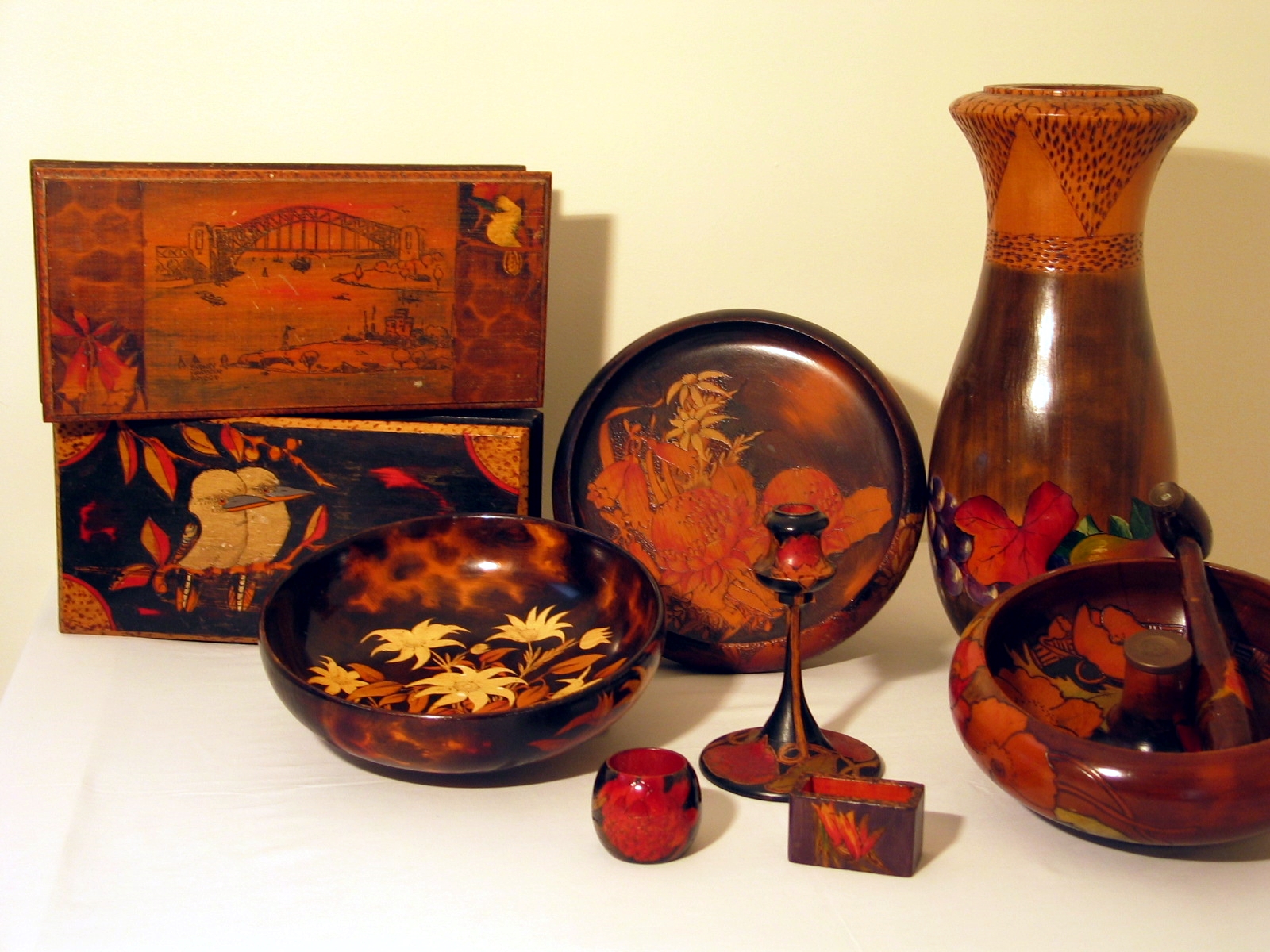
Finest examples of Australian Pokerwork Art.
After opening of the Sydney Harbor Bridge in 1932, the bridge was a popular motive.
Many groups promoted this and between 1906 and World War II, a permanent exhibition at the Technological Museum (now the Powerhouse Museum in Sydney, Darling Harbor) entitled Australian Flora Applied To Art aimed to inspire artists, and “encourage a love of country and its belongings”. Neither this nor its 1978 rest aging appear to have included Pokerwork, though Pokerwork is the style of art which mostly depicts Australian flora.
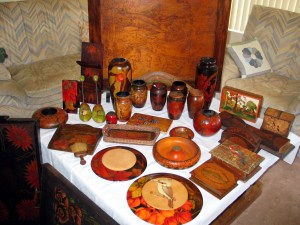
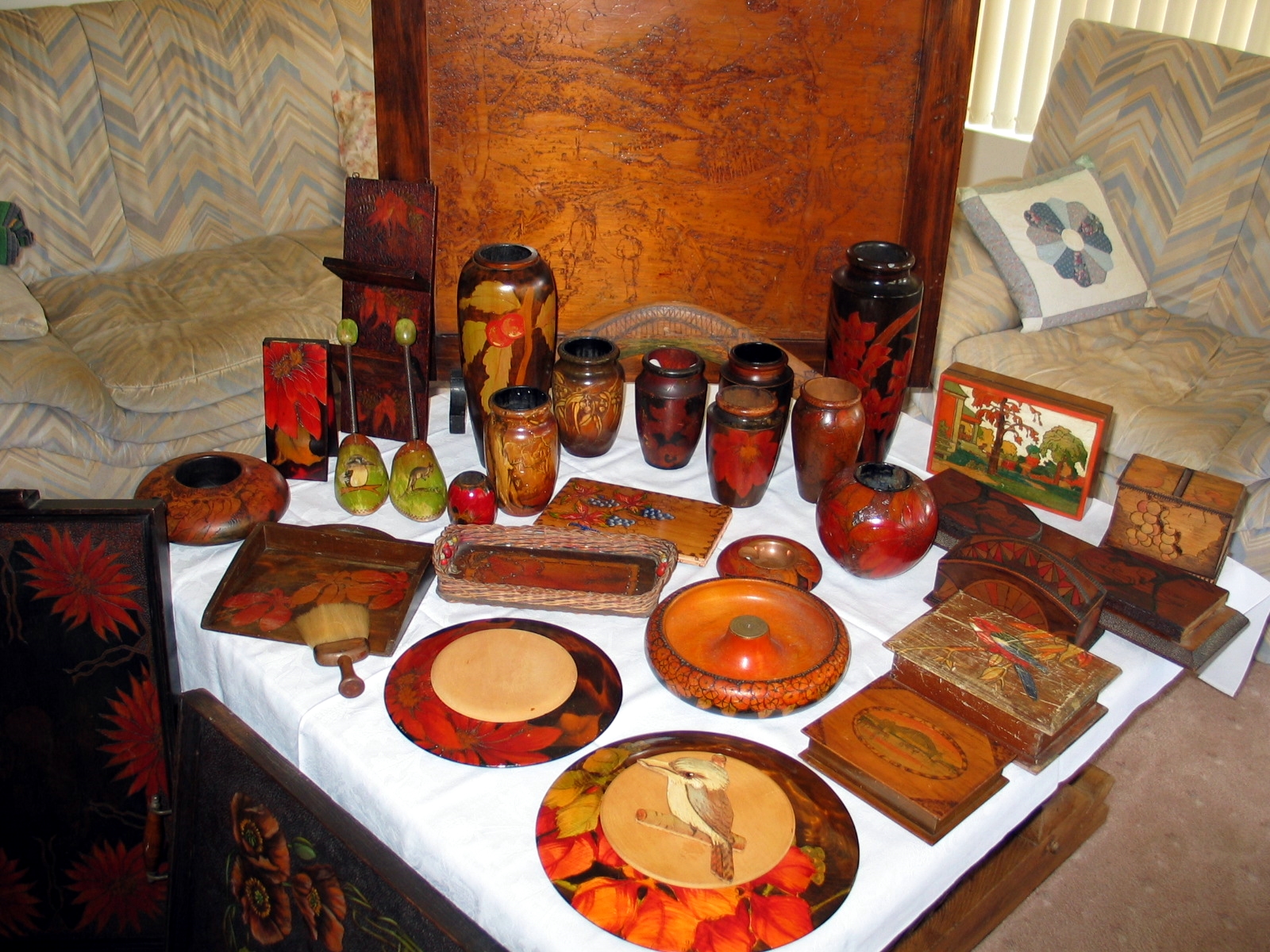
Look at the massive fire screen in the back, a whole landscape is beautifully poked on it.
A nut cracking bowl in the middle with metal top. Even shoe spanners were decorated.
Today, although Pokerwork is still regarded by most as ‘amateur’, there are established artists who use the technique in their work, including the Australian, Mixo Sydenham. Sydenham has exhibited not only in Australia, but internationally, including an exhibition in Austria’s Castle Marchegg. As well as being a talented pyrographic artist, Sydenham has been a driving force behind the push for greater recognition of this art form.
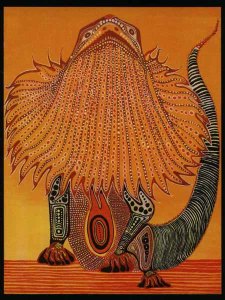
Left: Very modern, a panel decorated with a colorful lizard design pokerwork.
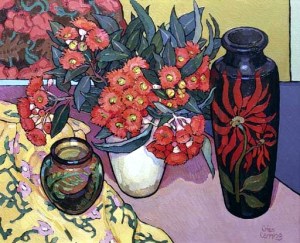
Right: Beautiful oil painting with pokerwork art shown in art.
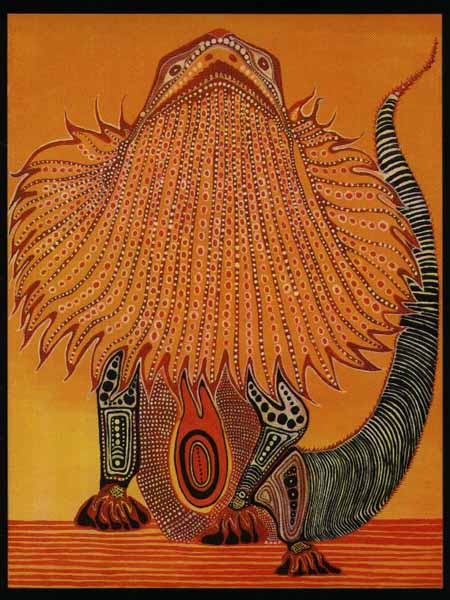
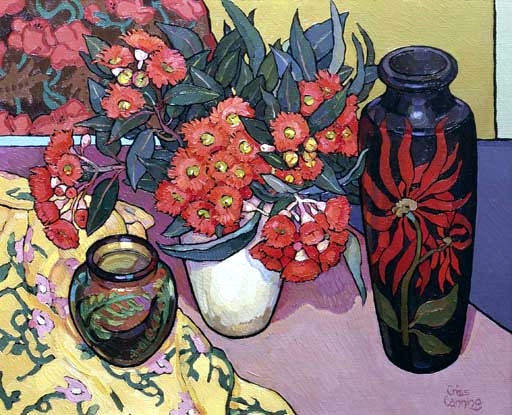
Pokerworking, especially of functional items, reflects early 20th century domestic life and “almost everyone who lived in Australia before World War II seemed to have at least one Pokerwork ornament or decorated utilitarian object”. Yet it is also an art form which is under appreciated today, despite its significance to social history and the arts and crafts movement. If you look on value of single pieces, more then 90% are underestimated. Some rare, well known artist mades are fetching prices, which represent the real value of such fine art work. Remember, the next time you see a piece of Pokerwork, appreciate the craft involved and don’t discard it so easily!


Wat apart en interessant. Ik kende dit niet. Mooi vind ik het niet, maar dat is persoonlijke smaak, maar wel mooie kunst.
LikeLike
Natuerlich ist Kunst Geschmackssache, da hast Du voellig Recht.
Diese Art ist auch speziell Australisch, kaum woanders in dieser Art zu finden.
LikeLike
Hola Mike,
Reading your blog post and am fascinated with your collection of poker work, the story of the artists, and the history of pyrography. Amazing work! I remember seeing it on display when we visited Australia back in 1998. Beautiful photos!
Thanks for sharing!
Susan
LikeLike
Thanks very much for your warm words Susan,
as you know – hobby is FUN and not Work .
Cheers Mike.
LikeLike