
From staple to gourmet kitchen.
Recently I posted recipes made with quinoa. I was confident that the question would come up, „what is quinoa ?“. And I was right, most countries and most people don’t know about it, ad if, they never cooked it, or had a taste of it. Here are all the answers. Like the potato, quinoa was one of the main foods of the Andean people before the Incas. Traditionally, quinoa grain are roasted and then made to flour, with which different types of breads are baked.
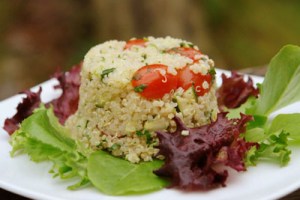
A vegetarian feast, quinoa salad with cherry tomatoes and fresh herbs.
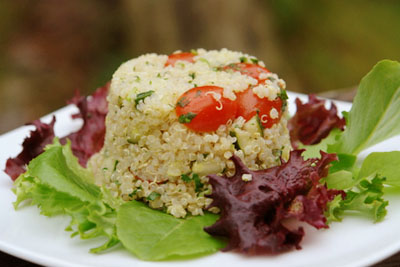
It can also be cooked, added to soups, used as a cereal, made into pasta and even fermented to beer or chicha, the traditional drink of the Andes. When cooked it takes on a nut-like flavor.
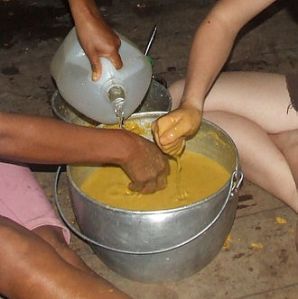
Making chicha from quinoa. Chicha is a fermented or non-fermented beverage. Also called Inca-beer.
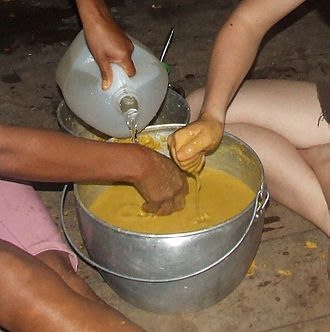
Today quinoa also has a key role in the gourmet kitchen, but its use has also been extended to the pharmaceutical and industrial areas.
From America to the world.
Almost all the current quinoa production is in the hands of small farmers and associations. Quinoa can be found natively in all countries of the Andean region, from Colombia to the north of Argentina and the south of Chile. The main producing countries are Bolivia, Peru and the Ecuador. The cultivation of quinoa has transcended continental boundaries: it is being cultivated in France, England, Sweden, Denmark, Holland and Italy. In the United States it is being grown in Colorado and Nevada, and in Canada in the fields of Ontario. In Kenya it has shown high yields and in the Himalayas and the plains of northern India, the crop can also developed successfully.
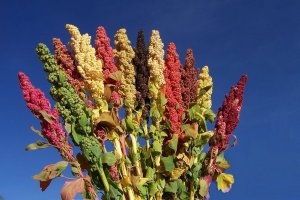
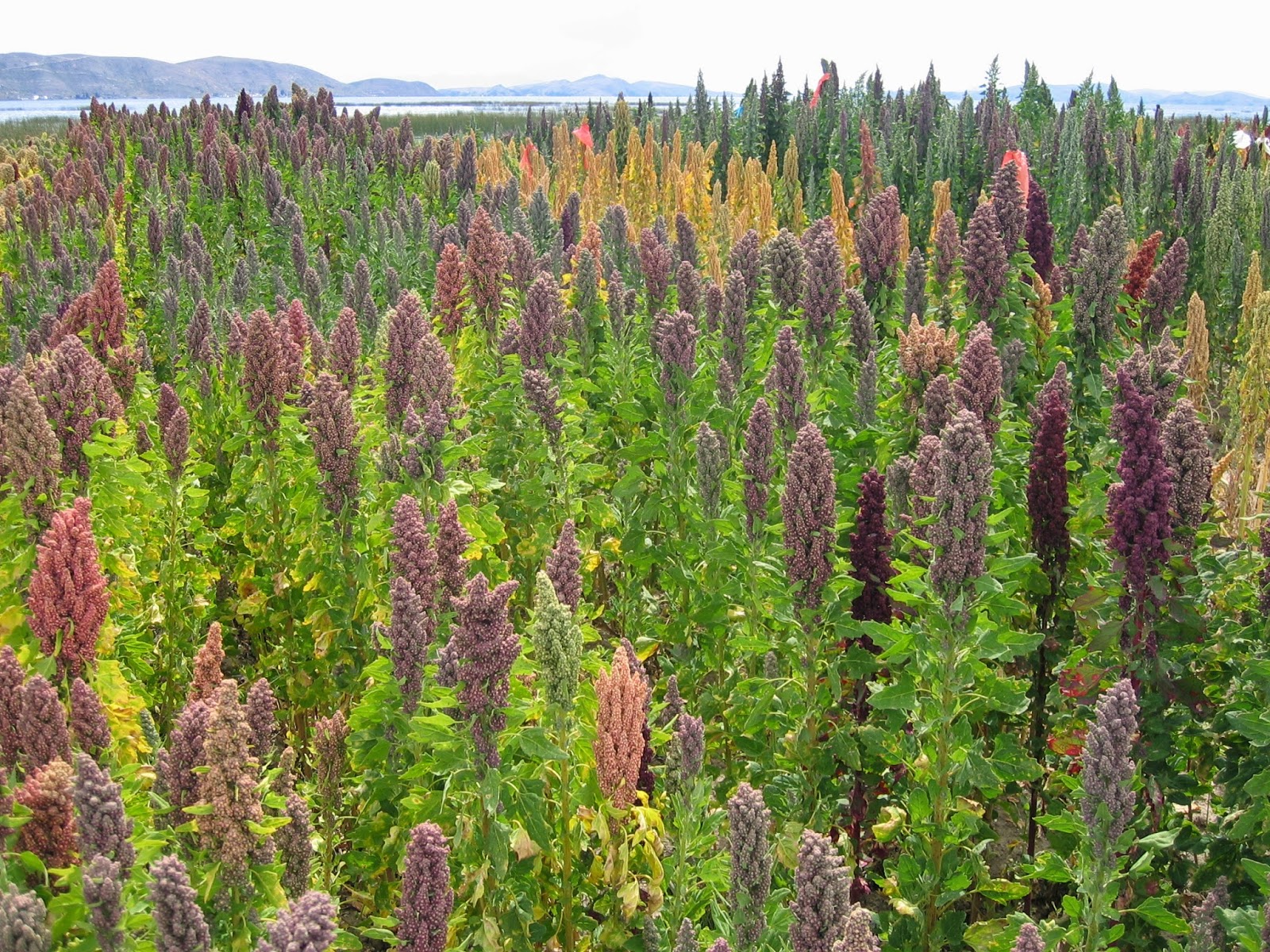
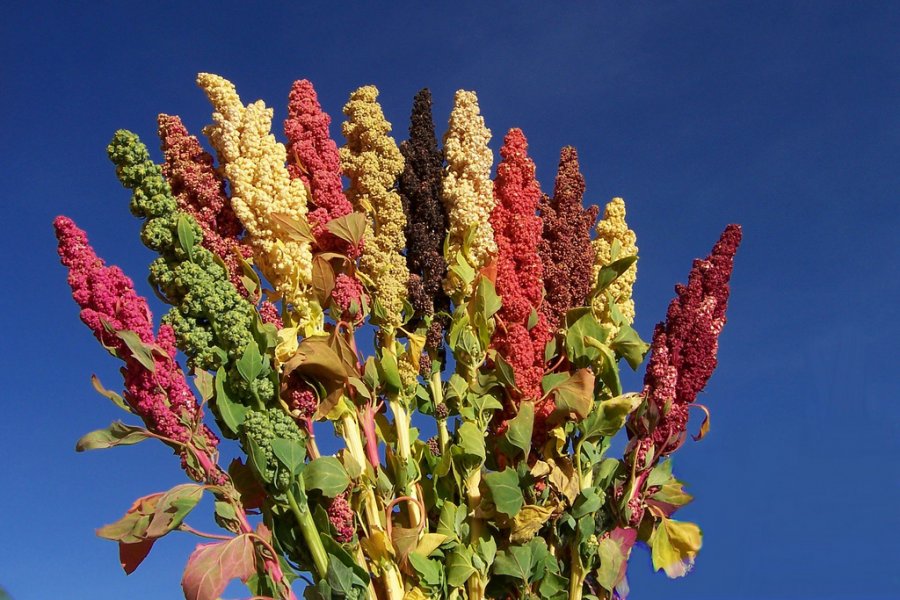
Wonderful quinoa flowers, all kinds of colors, rainbow like.
High in the Andes, the quinoa harvest starts in late March, when farmers gather together for celebrations like the two-day Harvest Festival near the salt flats of Uyuni, a gathering of representatives from 4,000 family farms. By celebrating quinoa in March, honoring these timeless traditions, with information about this unique „mother grain.“
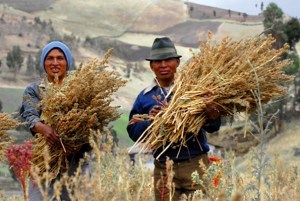
Quinoa harvesting in Peru.
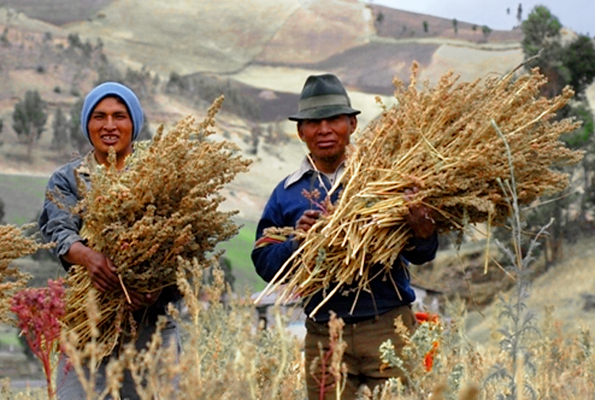
Quinoa at a Glance.
„While no single food can supply all the essential life sustaining nutrients, quinoa comes as close as any other in the plant or animal kingdom.“ That was the pronouncement of researcher Philip White, in an obscure 1955 article on „Edible Seed Products of the Andes Mountains.“ While very few people may have read White’s original article, in the last few years his words have been repeated on countless websites and in articles in newspapers and magazines, as quinoa has been rediscovered.
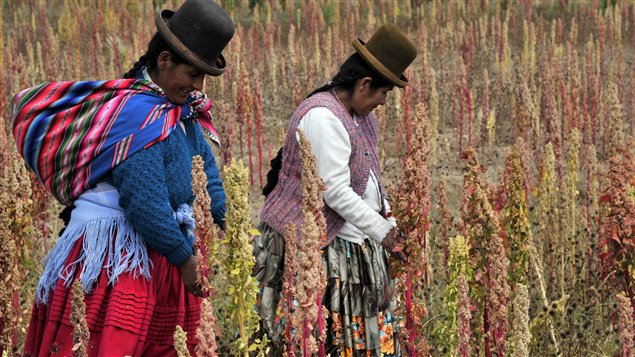
Quinoa harvest near lake Titicaca in Bolivia.
Quinoa (Chenopodium quinoa, or goosefoot) is in fact not technically a cereal grain at all, but is instead what one calls a „pseudo-cereal“ – our name for foods that are cooked and eaten like grains and have a similar nutrient profile. Botanically, quinoa is related to beets, chard and spinach, and in fact the leaves can be eaten as well as the grains. It’s a testimonial to how far quinoa has come in the last few years, that most people now know it’s pronounced KEEN-wah, not kwin-OH-a.
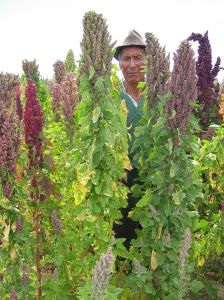
The quinoa perennials can reach up to 2 1/2 meters, about 8 feet.
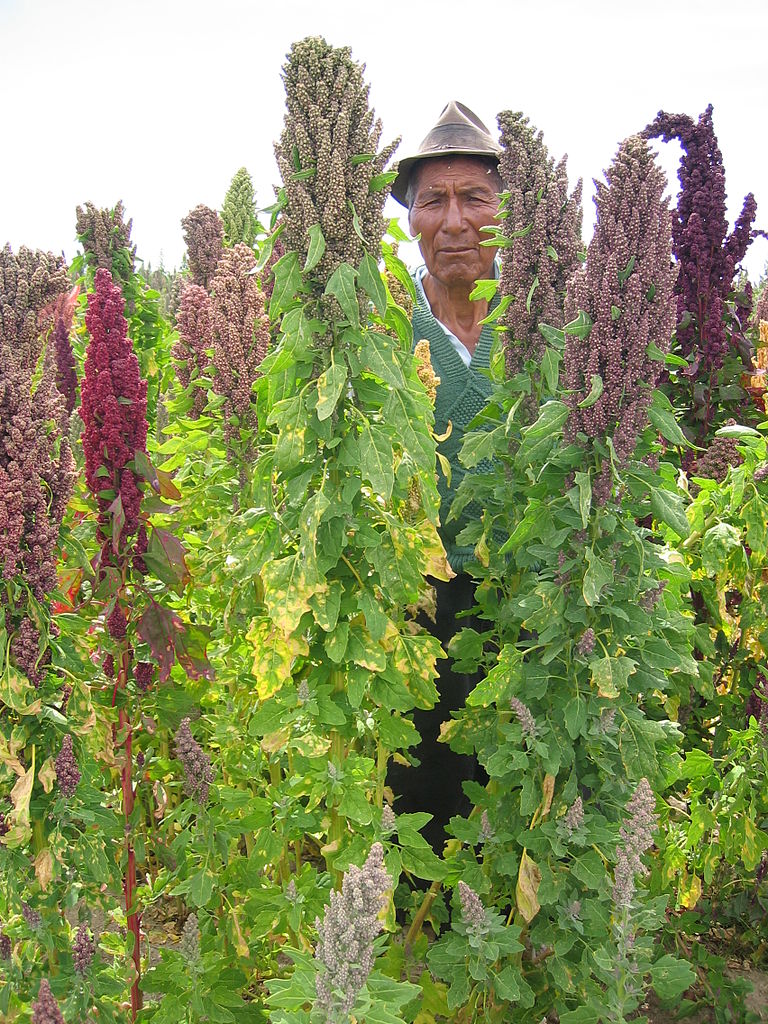
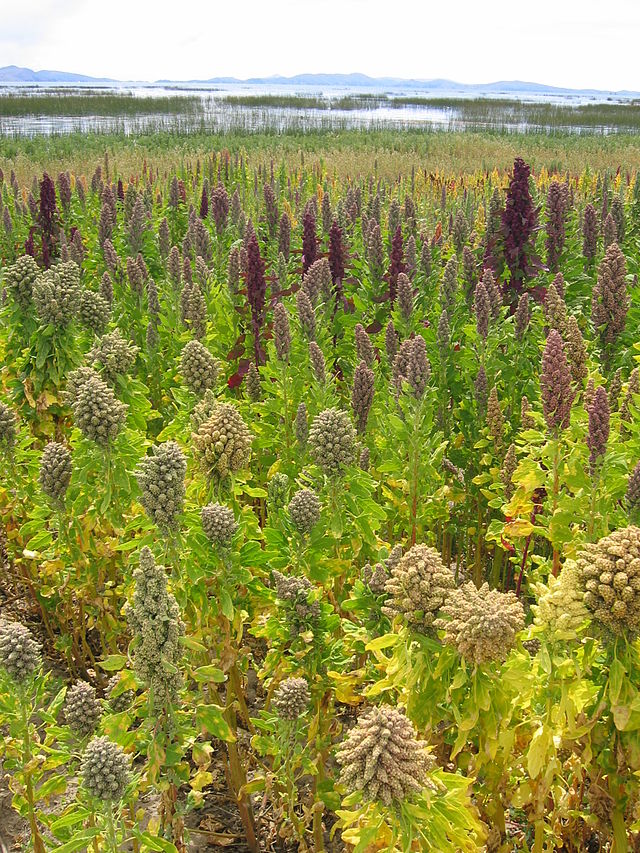
Quinoa grows on magenta stalks three to nine feet tall, with large seed heads that can be almost any color, from red, purple and orange to green, black or yellow. The seed heads are prolific: a half pound of seed can plant a full acre, yielding 1200-2000 pounds of new seeds per acre. Since nutrient-rich quinoa is also drought resistant, and grows well on poor soils without irrigation or fertilizer, it’s been designated a „super crop“ by the United Nations, for its potential to feed the hungry poor of the world.
Different colored quinoa corns.
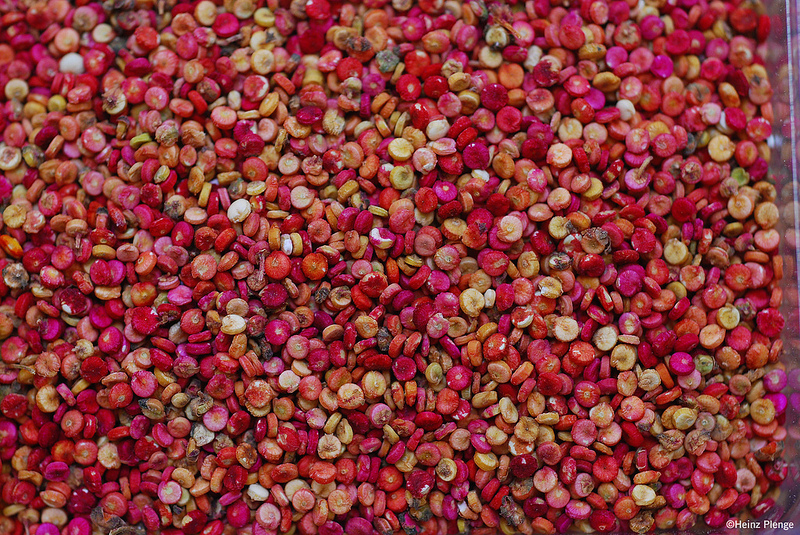
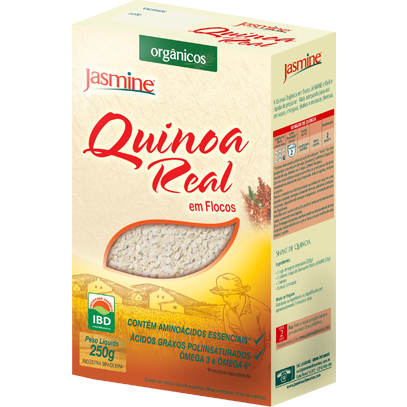
Over 120 different varieties of quinoa are known, but the most commonly cultivated and commercialized are white (sometimes known as yellow or ivory) quinoa, red quinoa, and black quinoa. Quinoa flakes and quinoa flour are increasingly available, usually at health food stores.
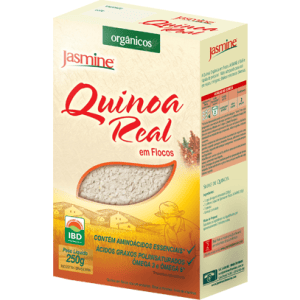
Left: Red quinoa from Ecuador. Right: White quinoa from Bolivia.
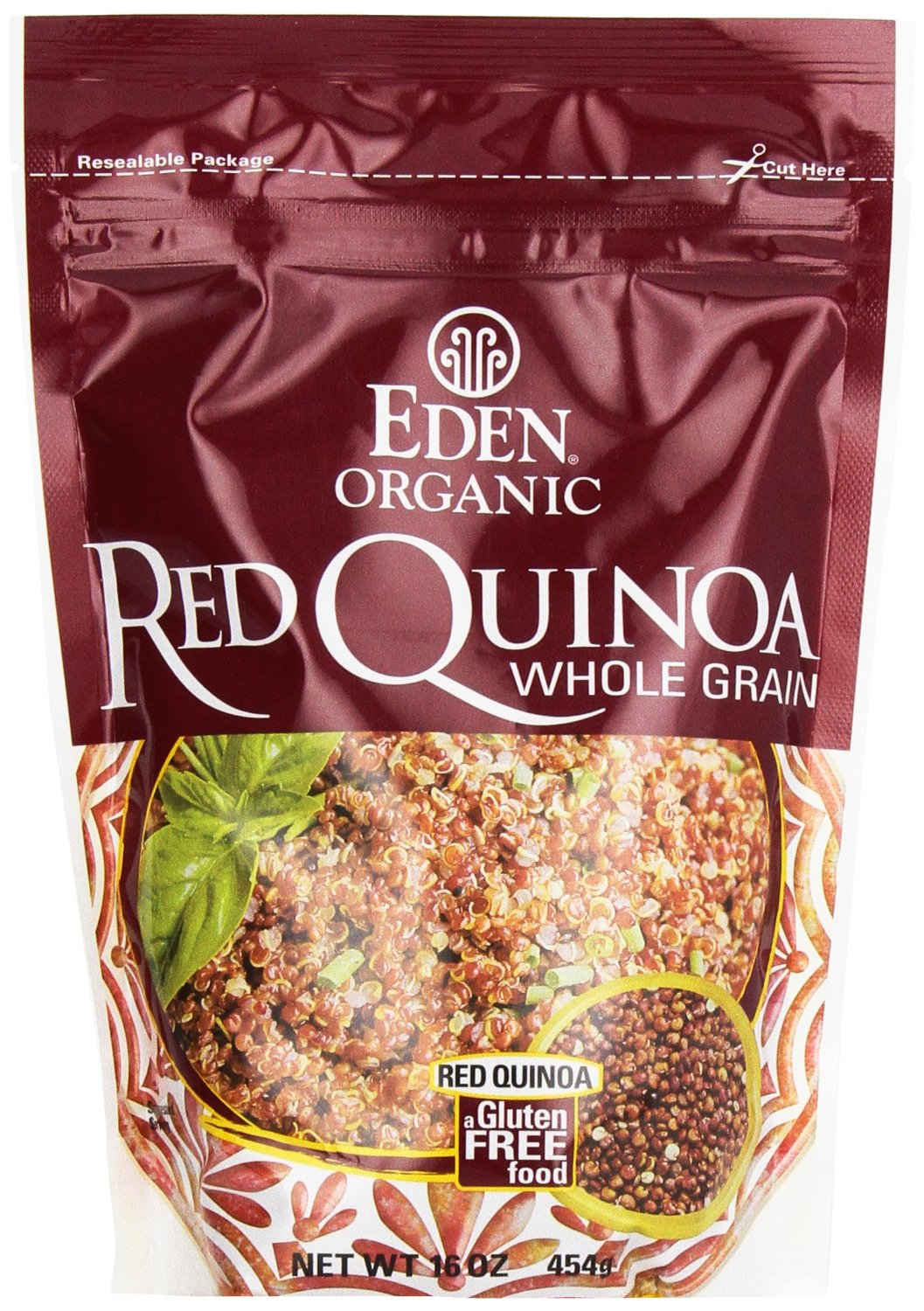
Left: Grey quinoa from Peru. Right: Brown quinoa from the USA.
Ancient Quinoa.
First cultivated more than 5,000 years ago, quinoa, along with corn and potatoes was one of the three foods considered the centerpiece of the Andean diet. In that diet quinoa was a primary food source while animal foods were secondary.
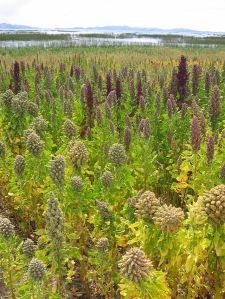
Wild quinoa growing at lake Titicaca in Bolivia.
During the period when the Incas thrived in Bolivia, relay teams of barefoot runners would carry news from one region to another, often covering 150 miles in a 24-hour period. Bolivia’s elevation is over 12,000 feet above sea level, an altitude where oxygen is considerably reduced. How did the runners perform this unbelievable feat? A practice still prevalent with today’s Bolivian athletes involves combining coca leaves and ash from the quinoa plant and holding it in the cheek. The combination increases the body’s oxygen because quinoa ash releases alkaloids in the coca.

Old drawing of an ancient quinoa harvesting feast and chicha presentation.
For centuries quinoa has been above it all–and it still is. Grown at 10,000 to 20,000 feet above sea level. No maize or rice would grow in heights like this.

Quinoa plantation in Ecuador.
Sacred to the Incas, quinoa was referred to by them as chisaya mama, or the mother of all grains. Legend has it that each year, the Incan emperor would sow the first quinoa seeds, with much solemn ceremony. Although it’s estimated that Bolivians in the Lake Titicaca area began to cultivate quinoa at least five thousand years ago, quinoa came close to disappearing after 1532. That’s when Francisco Pizarro, the Spanish explorer, destroyed the quinoa fields to undermine the Incan culture, built as it was on ceremonies that almost all involved quinoa.

Francisco Pizarro Gonzalez (c. 1471 or 1476 – 26 June 1541), Spanish conquistador who conquered the Incan Empire, cousin of Hernan Cortes.

Only small pockets of wild quinoa at high altitudes survived, and quinoa was largely forgotten until its „rediscovery“ by the outside world in the 1970s.
Quinoa Today.
Today, an amazing range of products are made with quinoa, from breakfast cereals to beverages. Quinoa pasta is popular among those following a gluten-free diet, and the grain is a favorite ingredient in granola’s, breads, and crackers. Home bakers can try „ancient grain“ blends or cook with quinoa flakes and flours. In the restaurant world, the American National Restaurant Association named quinoa as the hottest trend in side dishes !
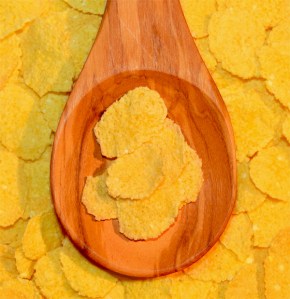
Left: Quinoa chips. Right: Quinoa puffs.
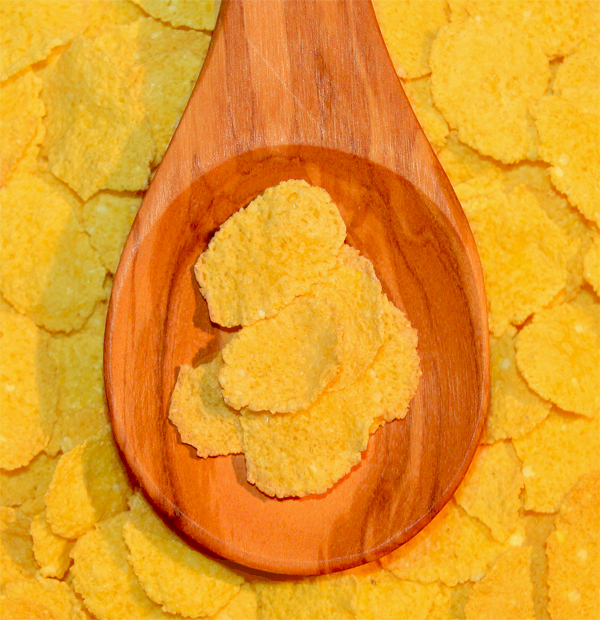
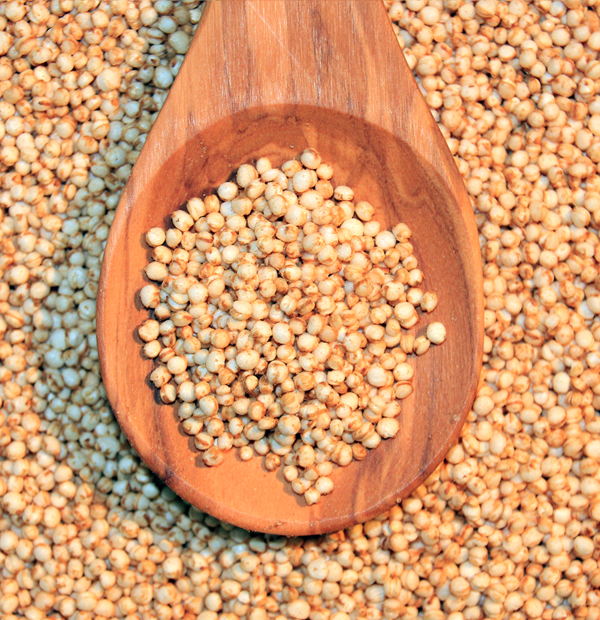
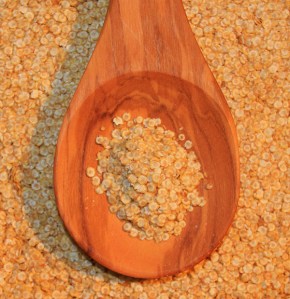
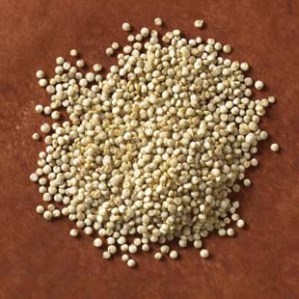
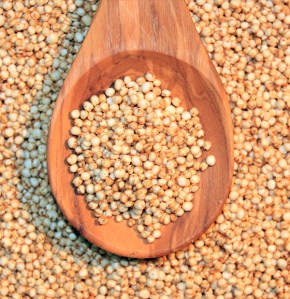
Left: Quinoa flakes. Right: Quinoa raw corns.
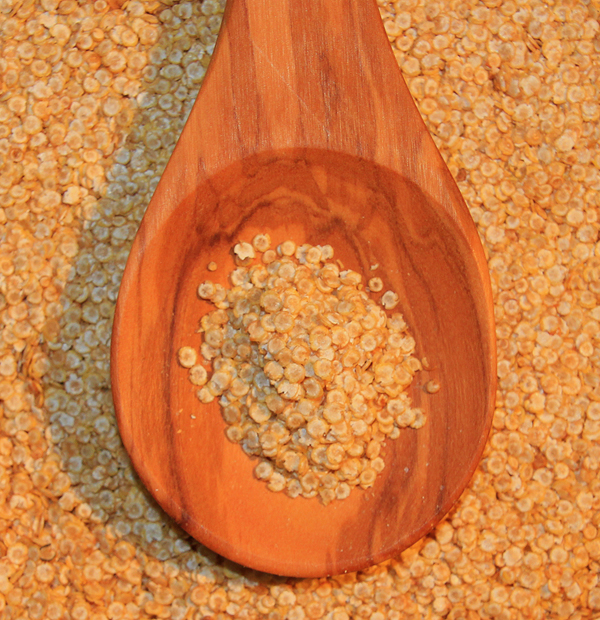
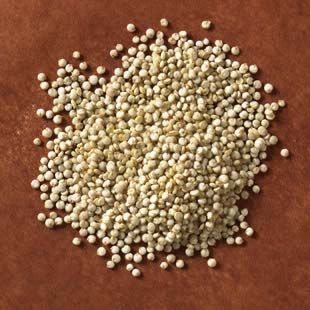
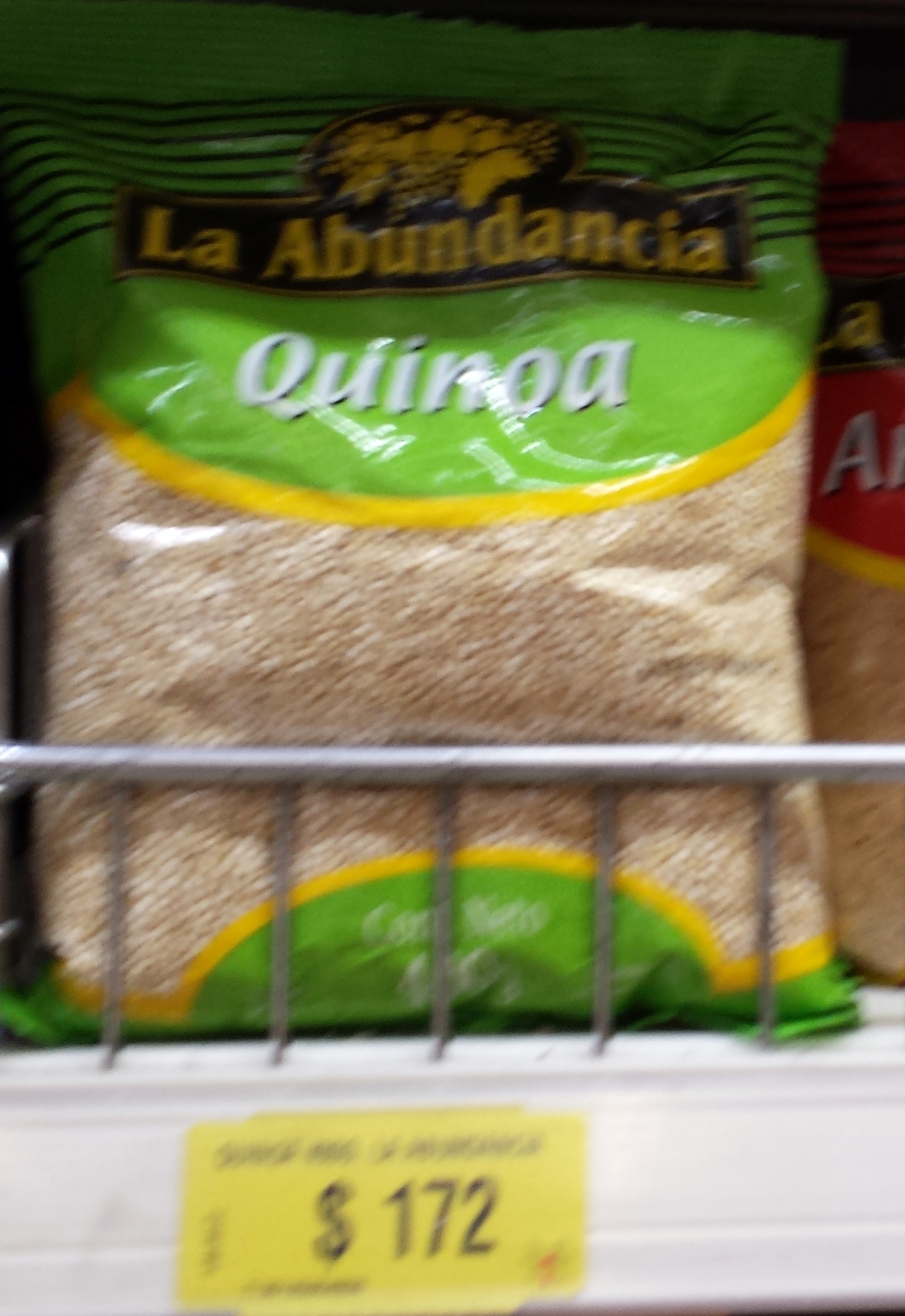
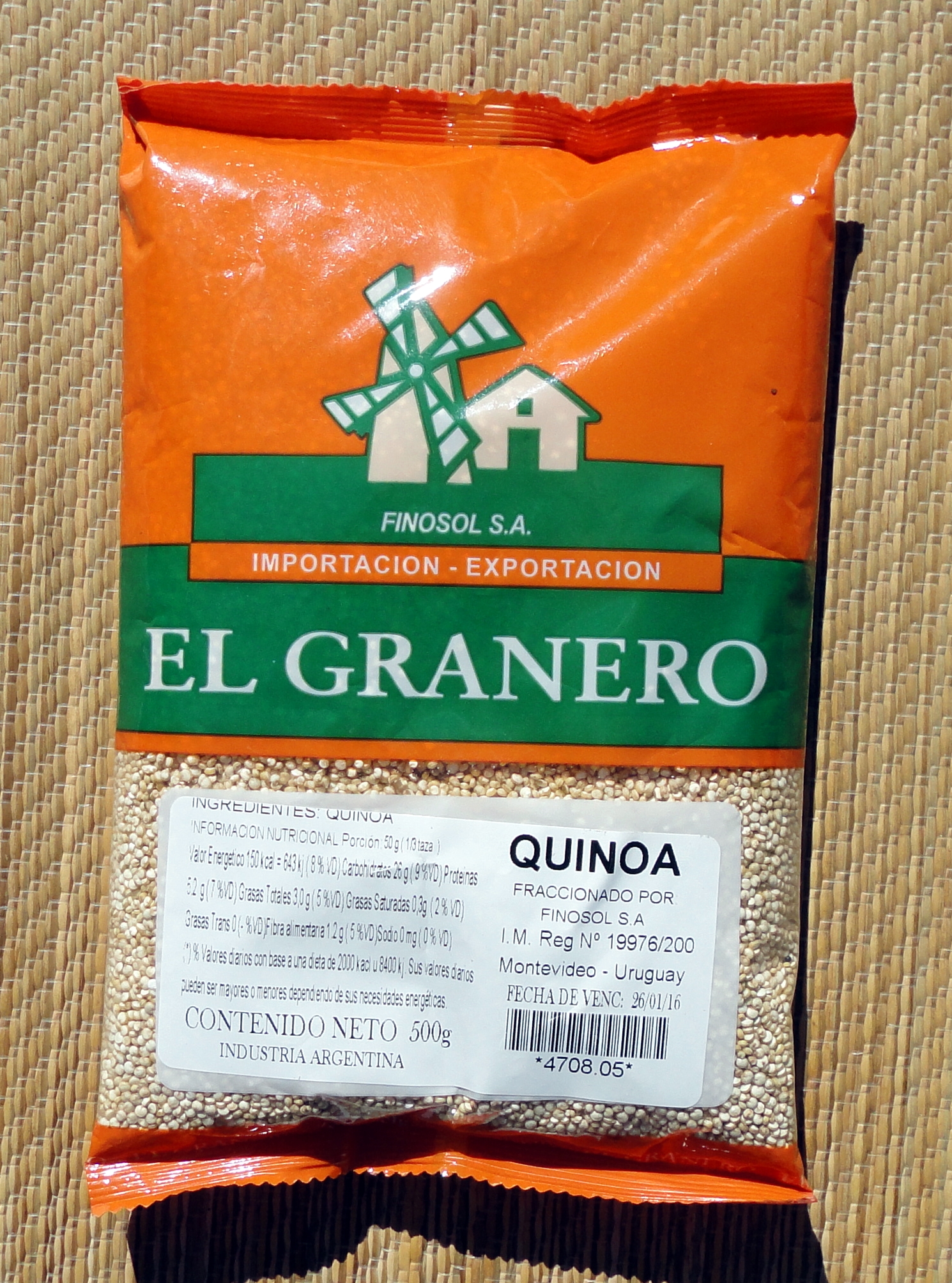
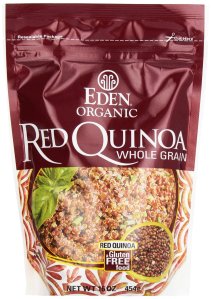
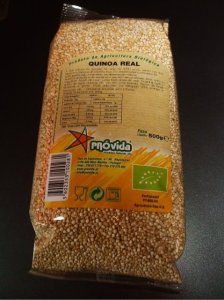
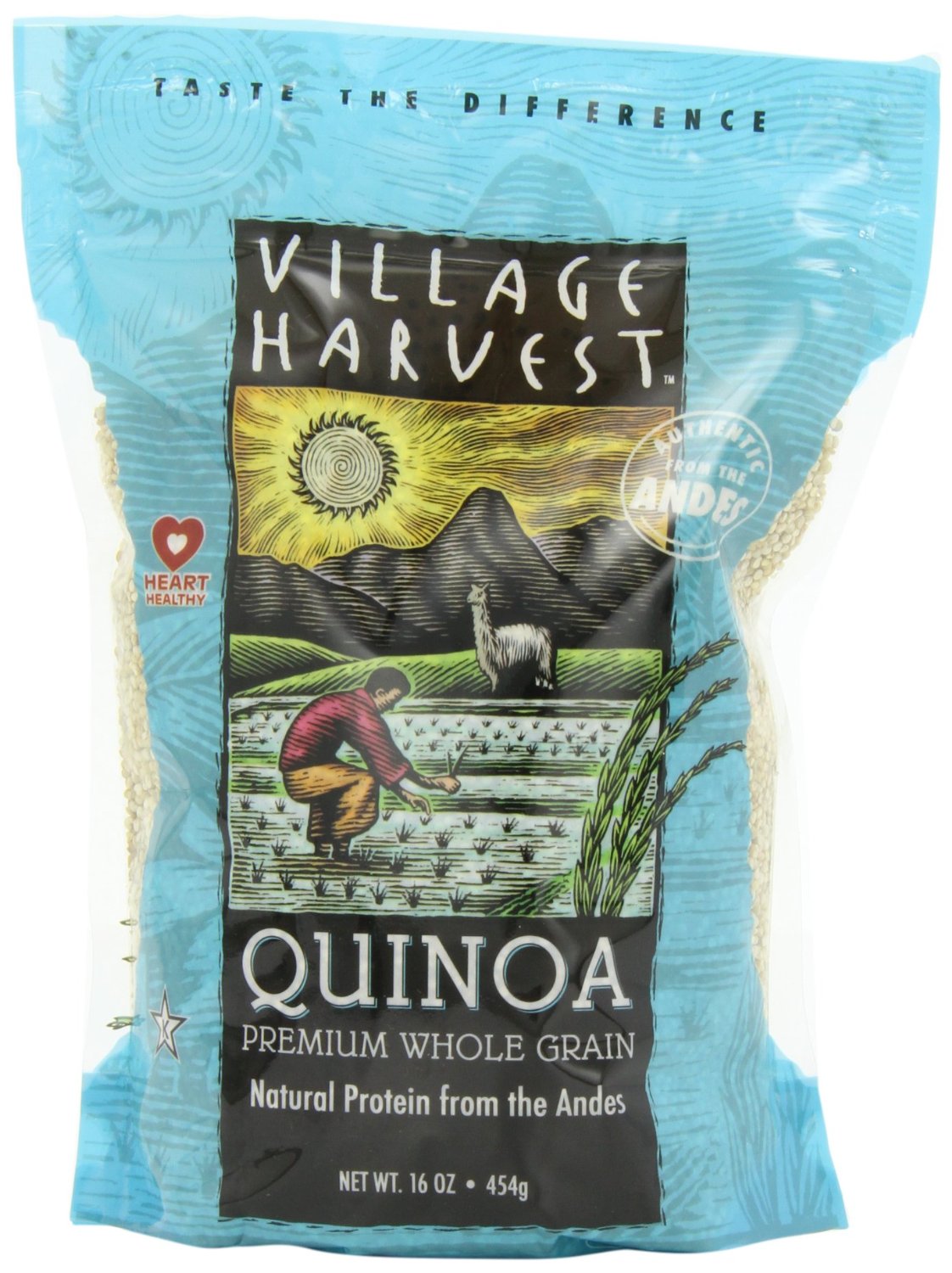
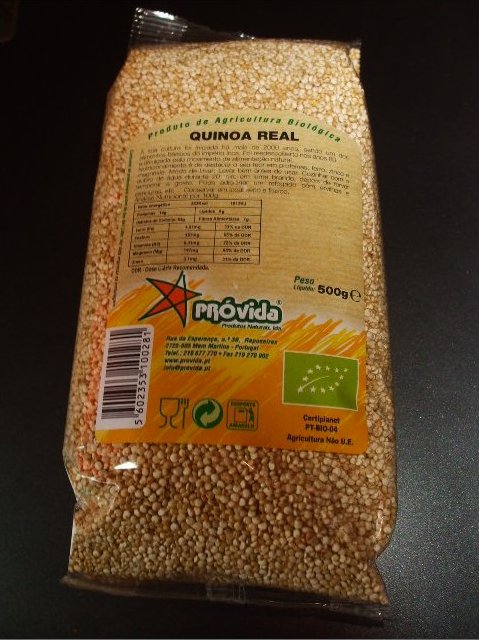
In Uruguay quinoa is as unknown as in many other countries. But the health and gluten free demand puts quinoa on the shelf’s. I found it several times, at Tienda Inglesia for instance, 500 gram for 172,–Pesos. At El Granero 500 gram for 160,–Pesos. Both products are imported from Argentina. 1000 gram of Blue Patna rice is 33,–Pesos only !! The red quinoa shown up there sells even more expensive, around 15,–euros, just 454gram in Europe. That explains a bit, why quinoa is still so underestimated against rice or maize.
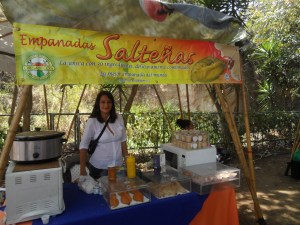
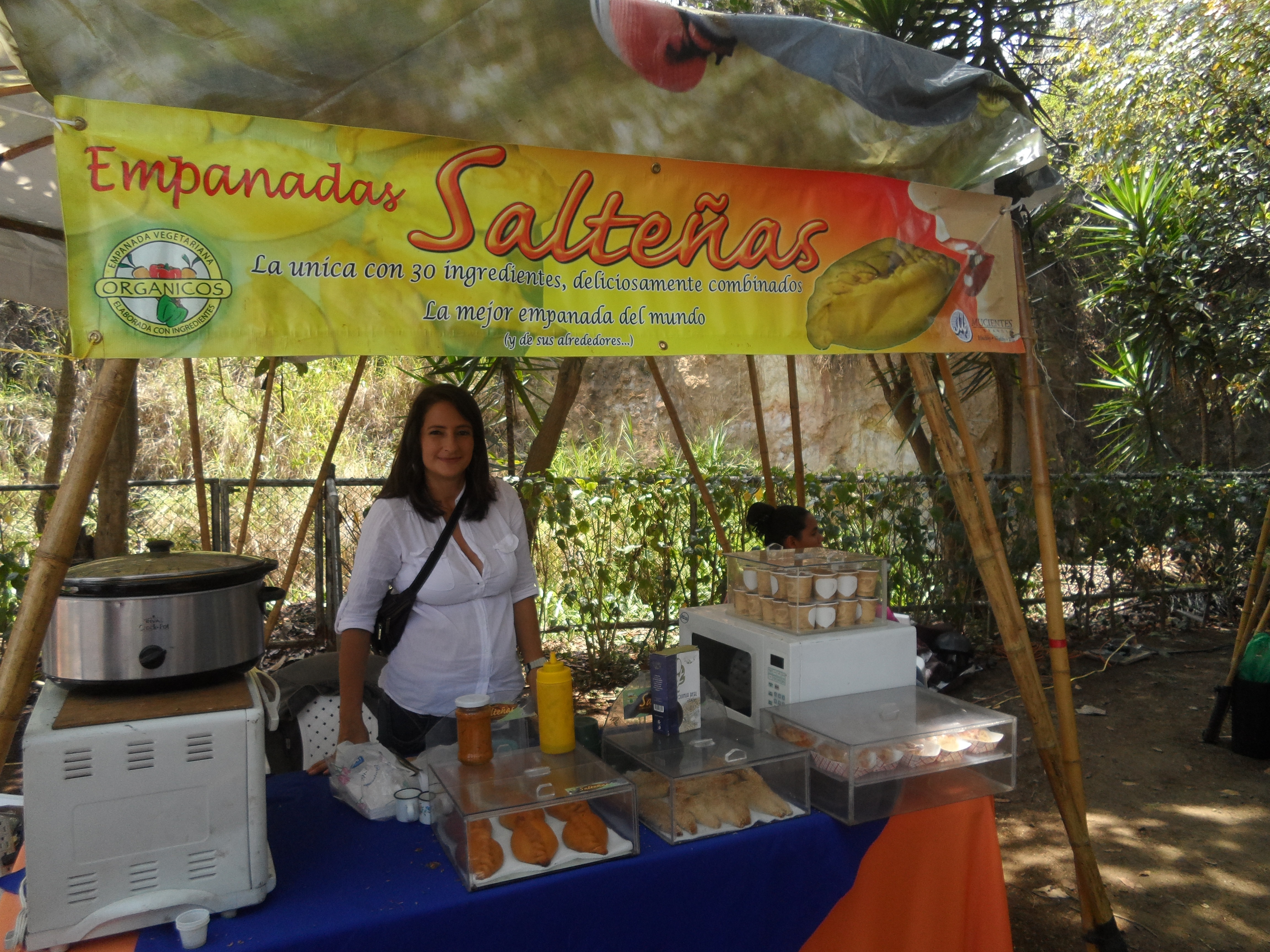
Lovely lady selling organic empanadas made from quinoa flour.
During a weekend feria in Aranjuez, Valle de Canca – Bolivia.
Basic Quinoa Q’s and A’s.
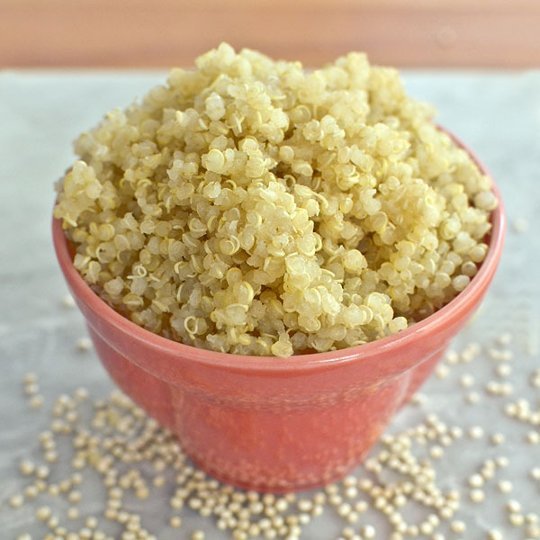
How much cooked quinoa does 1 cup dry quinoa yield? 1 cup dry quinoa yields about 3 cups cooked quinoa. How much liquid do I need to cook quinoa? To cook 1 cup quinoa, you need about 2 cups liquid.
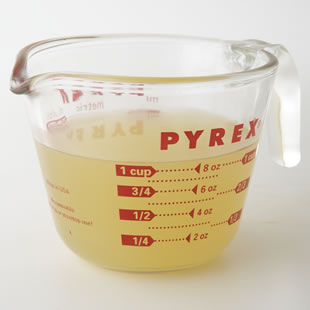
How long does it take to cook quinoa? 1 cup quinoa will cook in about 20 minutes. How do I make quinoa less bitter? Nearly, if not all, of the natural bitterness of quinoa’s outer coating can be removed by a vigorous rinsing in a mesh strainer. How do I make better-tasting quinoa? Quinoa is really excellent when cooked in vegetable or chicken broth.
Also, add about 1/4 teaspoon salt to each cup dried quinoa when cooking. Try adding other spices aromatics during cooking as well: A clove of smashed garlic, a sprig of fresh rosemary, a dash of black pepper etc. Can I use my rice cooker to make quinoa? Yes! Just use the 2:1 liquid to quinoa ratio and follow the instructions on your rice cooker.

