

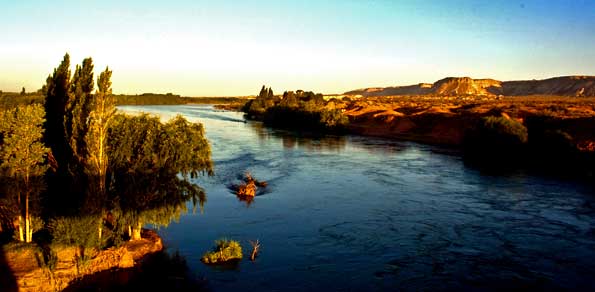
The Rio Negro near Mercedes.
Timber, Crop and Cattle.
After I introduced you to Colonia del Sacramento, the trip went on north and
inland. On the road north from Colonia up to Carmelo is nothing to see.
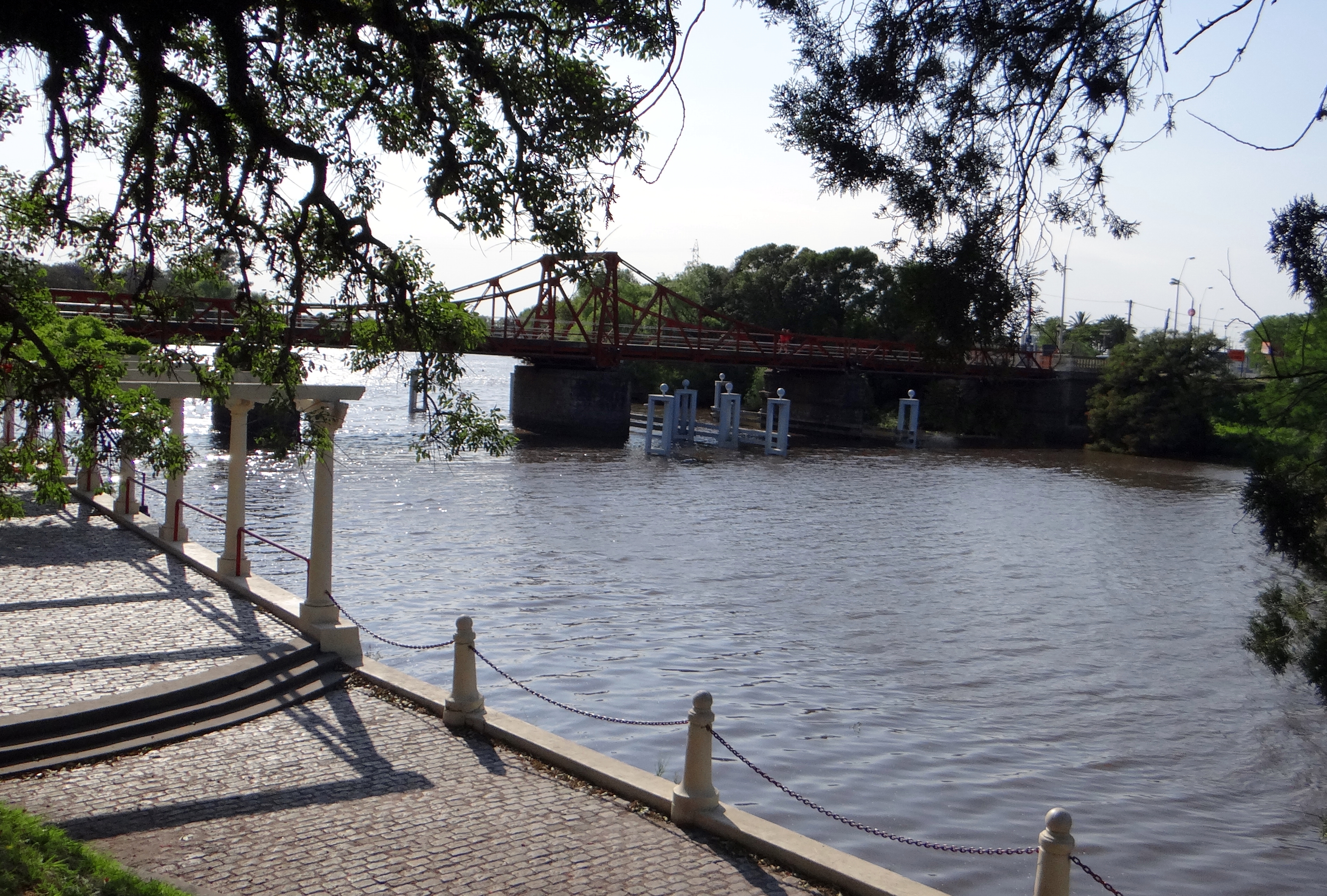
Carmelo itself is a sleepy little town, only interest for the tourist is the
„red bridge“ over the Rio Vacas.
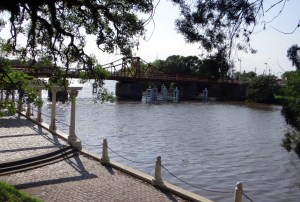
The red bridge in Carmelo.
Driving on north you’ll be surprised about, how sudden you’ll be hit by „the big
country“. Miles and miles, as far as the eye can see the crop chamber of
Uruguay. It just starts here, but you are direct in the center of grain/crop
storage and transportation.
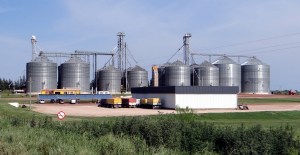
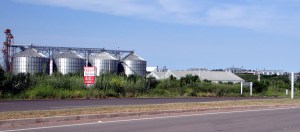
Hundreds and hundreds of silos near Nueva Palmira.
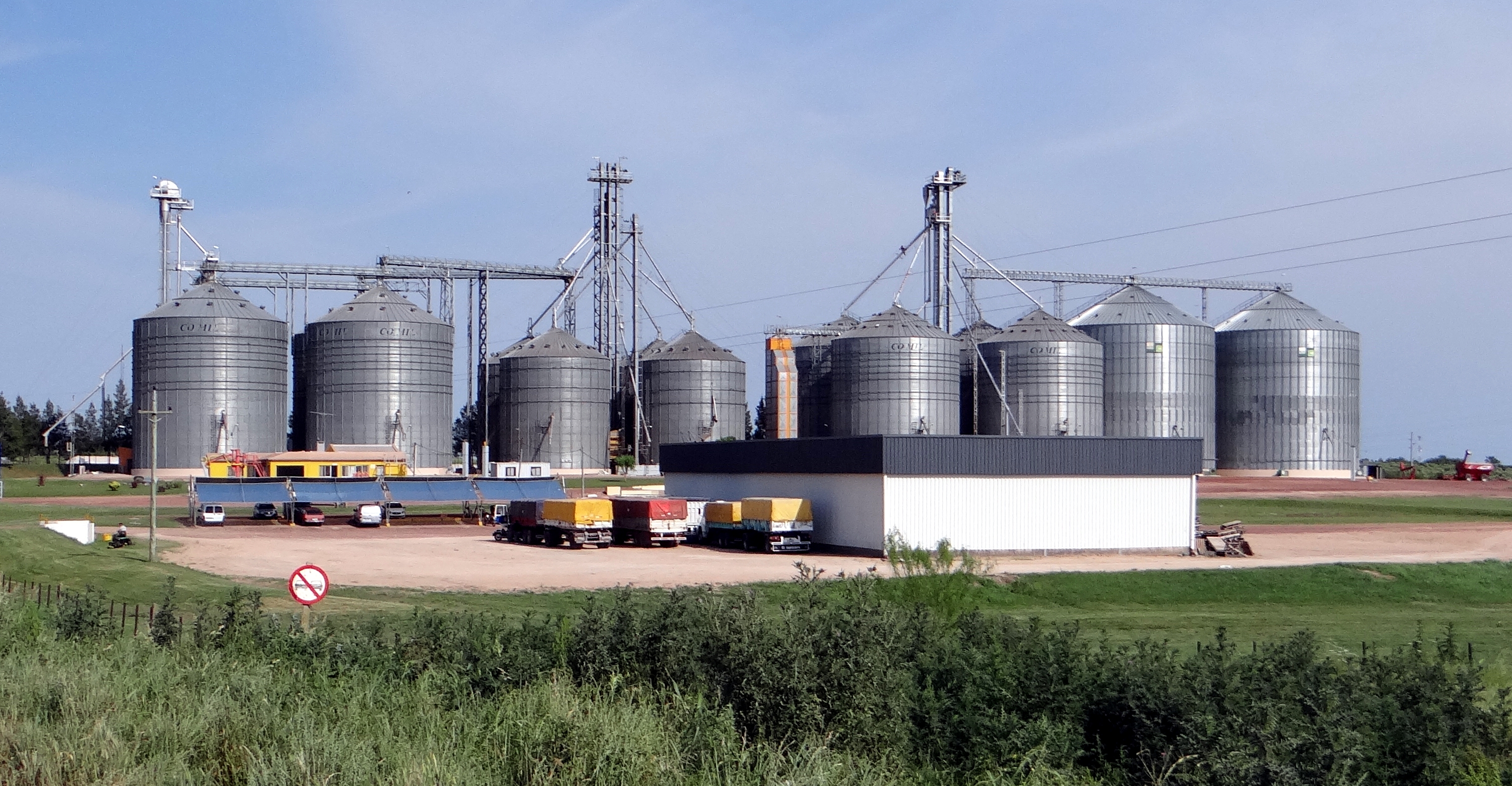
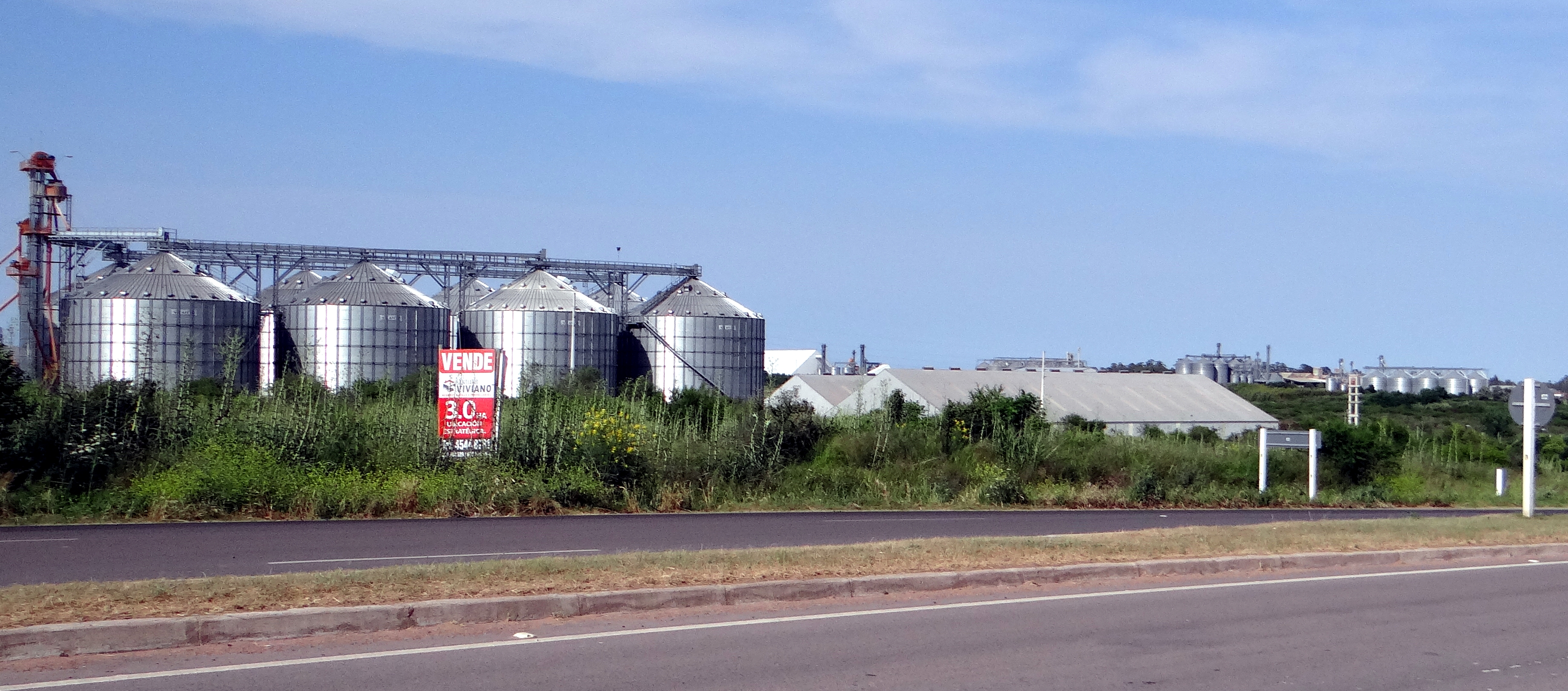
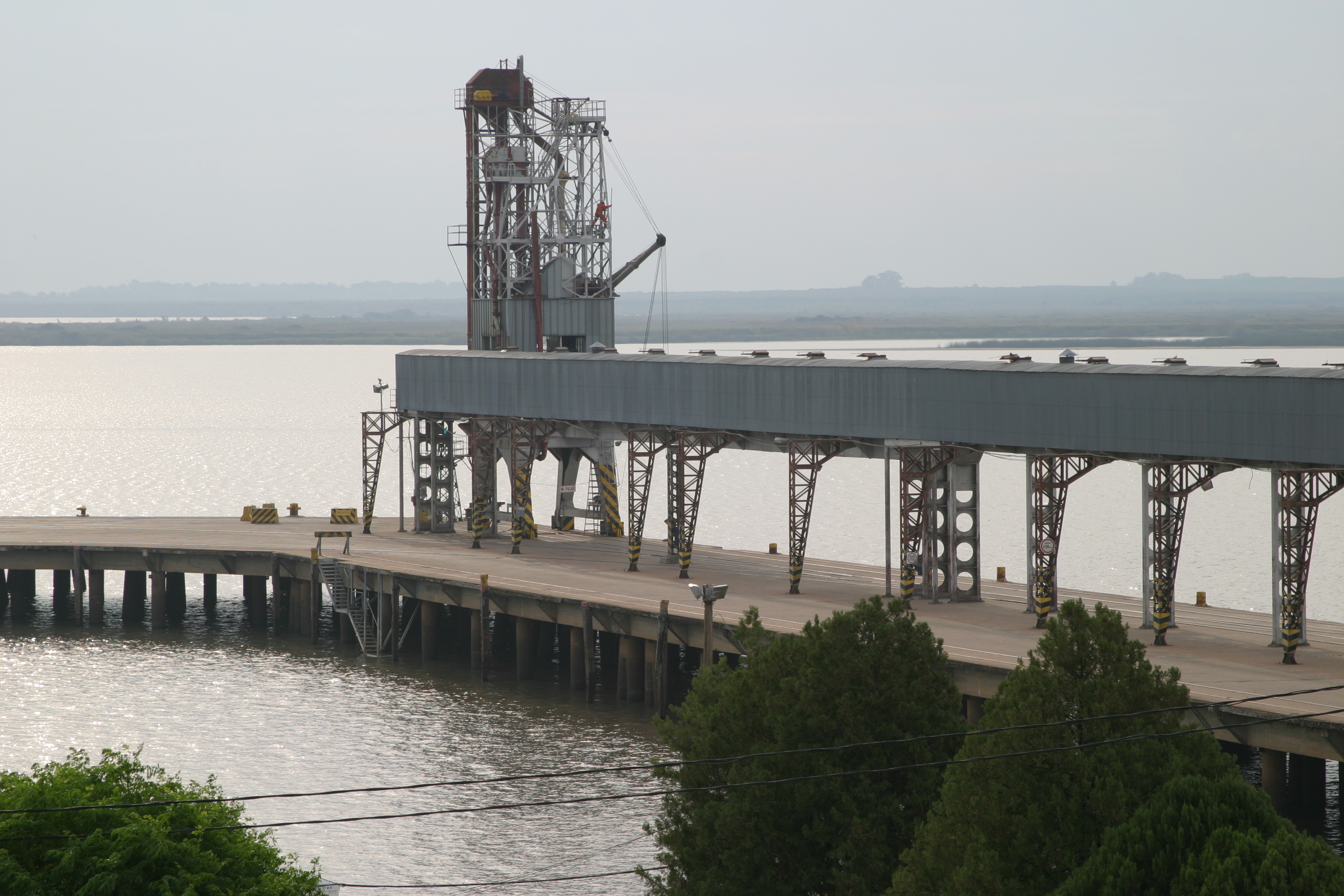
Nueva Palmira is the shipping harbor for most of the crops harvested in thousands
of square kilometers inland. You will see massive storage facilities and not only
one or two, no, hundreds of them.
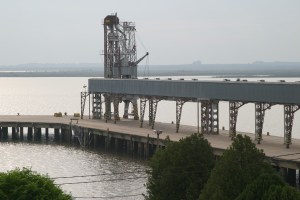
Docking and loading ramp in Nueva Palmira.
Uruguay differs from most other countries in Latin America, having no mountains
and very little natural forest. Over 80% of the land can be used for open
agriculture. Uruguay’s temperate climate and natural grasslands lend themselves
to livestock production. But the fertile soils in the south-west are also suitable
for crop farming. Uruguay benefits from a developing infrastructure and good port
facilities, as well as experienced farmers and increasing crop yields per hectare.
On the left wheat fields and on the right soya harvest.
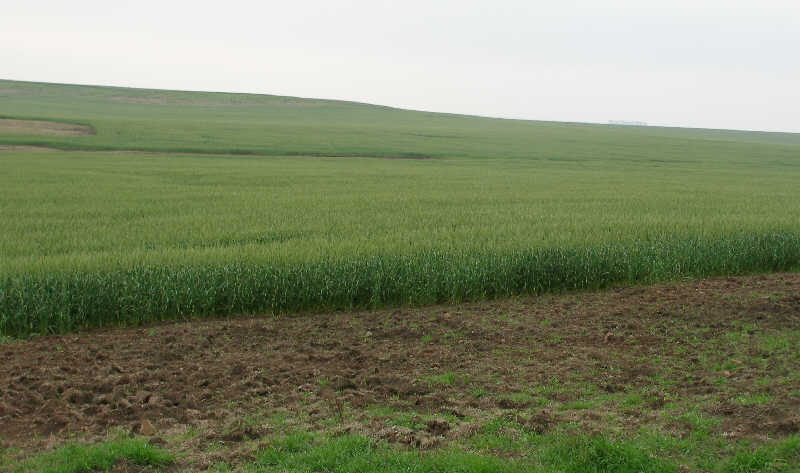
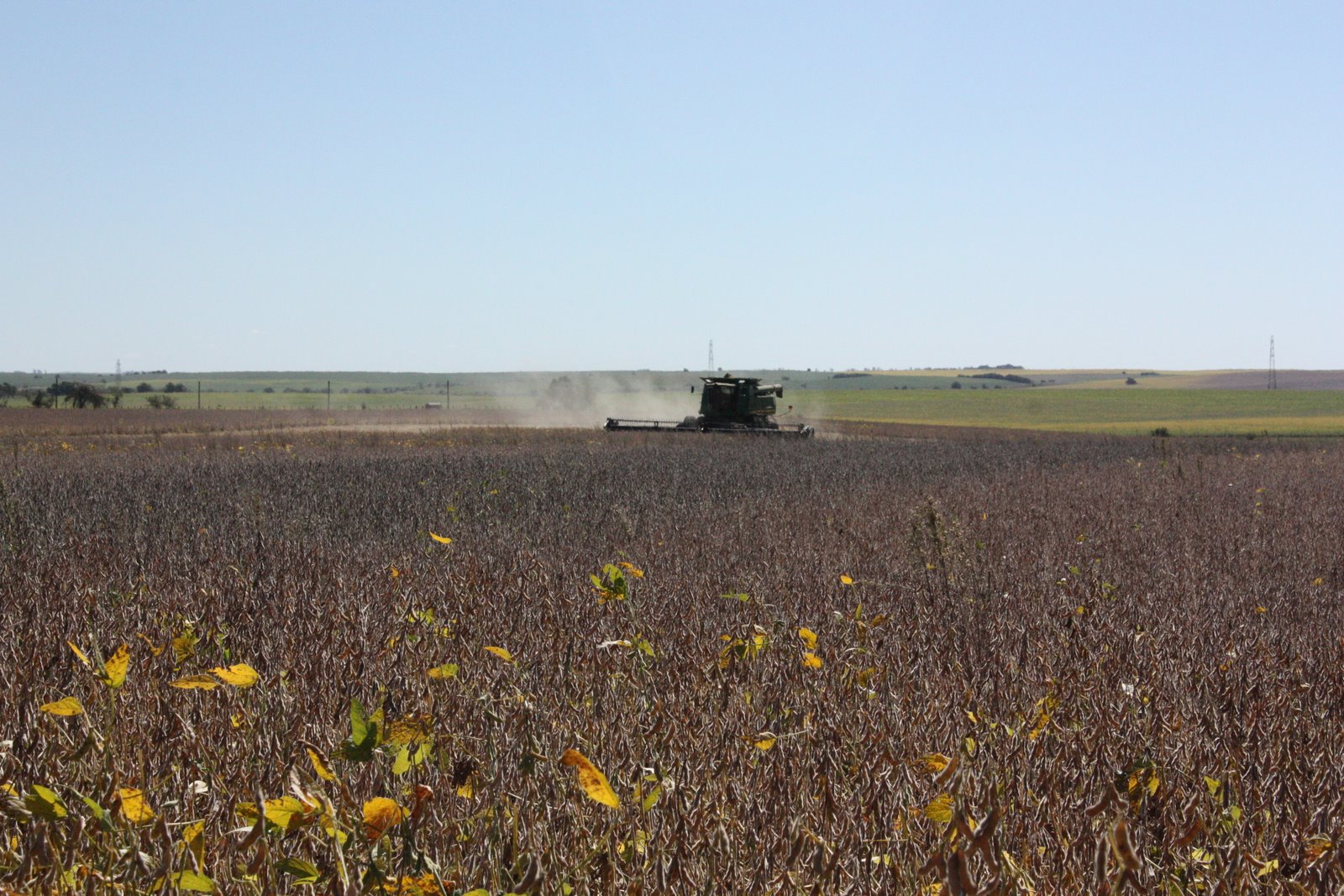
Crops.
Most of the companies growing crop in Uruguay are multinational investors corporations.
One of the smaller ones by example is Ingleby. Ingleby is a Danish based international
farm investment group and has seven pasture and arable farms in the south-west of
Uruguay, totaling over 27,200 hectares.(about 68.000 acres). They produce wheat, corn,
barley, sorghum and soya. The farms have mainly natural grassland, ideal for breeding
and fattening cattle and sheep.
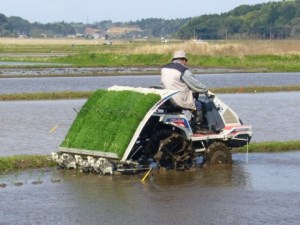
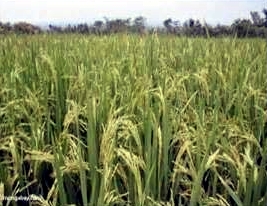
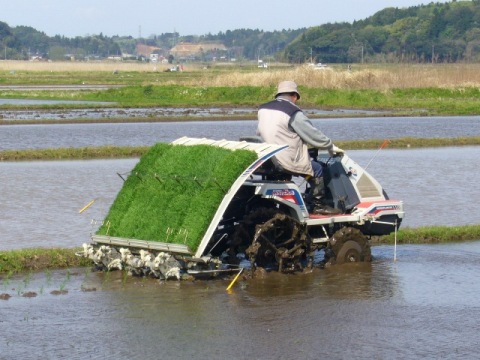
Rice plantations in Uruguay, machine planting left and rice field on the right.
Further north you hit the cities of Mercedes and Fray Bentos. Mercedes is a very nice
city, located on the Rio Negro. I will not repeat all the touristic information which
one can find in any other blog and travel guide. The city of Fray Bentos has a long
and well known history connected to the Liebig meat and meat
extract factories. This will be a theme of some further posts.
I believe that some of the following datas are expired and may be needed adaption, but
that’s the information I’ve got by now with my limited possibilities.
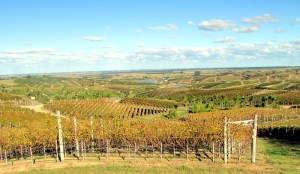
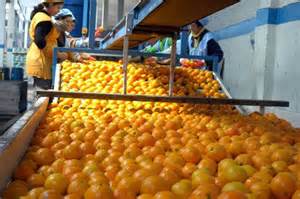
Mixed fruit tree plantations. Big business the citrus export.
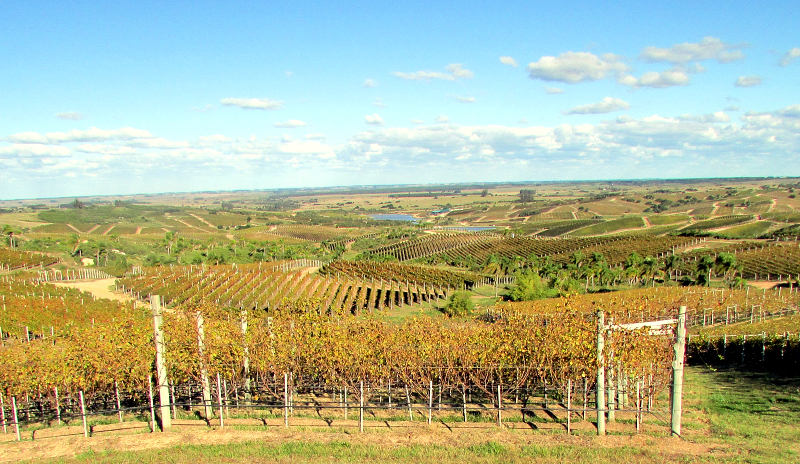
From here on, all the way up to Salto, then inland to Tucuarembo and Rivera, the whole
country of Uruguay boosts with massive farms of three kinds: crops, cattle and timber.
And then timber, crops and cattle etc. etc. That’s the future of Uruguay. Giving the
land away to international investors and „lords of moneymaking“. Of course not all of
this is in the interest of Uruguay and Uruguay’s population.
It is not in my interest to get into the well known discussion about these problems.


And the newest plants in Uruguay. Legalized Marihuana growing and a demonstrator in Montevideo.


Everything anyhow has Pros and Cons. Let’s have a quick look onto the forestry of
Uruguay. Example again one of the smaller companies, the investment group
Weyerhaeuser, located in Washington State,USA.
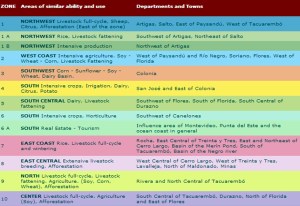
This chart shows, what kind of plantation and where they are located. Click on to extend size.
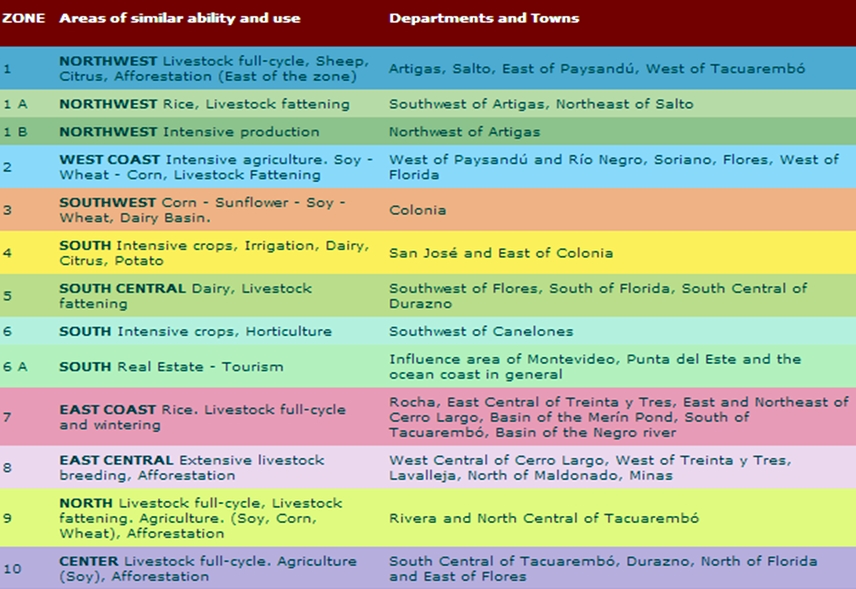
Timber.
Weyerhaeuser Company is one of the world’s largest forest products companies. This
company manages 320,000 acres (about 128.000 hectares) of timberland in northeastern
and north central Uruguay that they purchased in the 1990s. These forest plantations
in Uruguay were established through a process, called afforestation — the practice of
actively planting forests where none previously existed. They began harvesting the
lands in 2005 with the first commercial thinning operations.
The plywood and veneer mill began operation in Tacuarembo in June 2006.

This chart shows areas of timber plantations and – new – olive plantations. Click on to extend size.

As I know, Weyerhaeuser is only the 6th largest of these timber companies in Uruguay.
Everyone heard about the discussions and problems the pulp mill operations near Fray
Bentos have. Finland’s UPM/Botnia plant owns this mill and another one. The investment
for the first pulp mill was around 1,5 billion US$, this was once the biggest
investment ever made in the history of Uruguay. Not bad for such a small country.
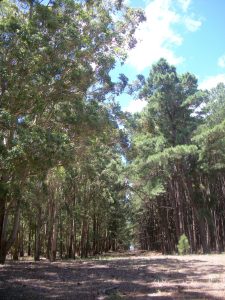
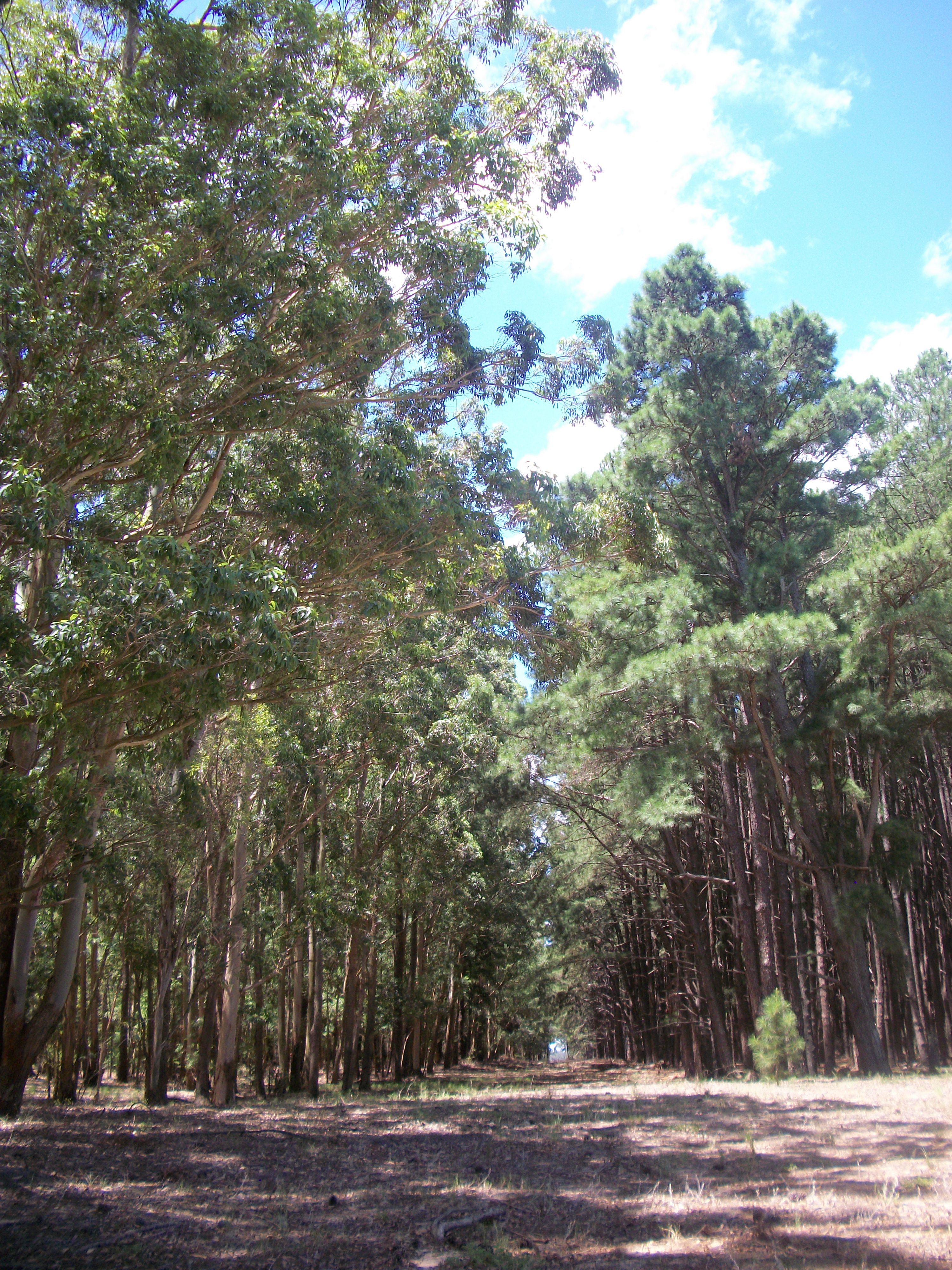
Eucalyptus forest on the left and further down the path pine plantation on the right.
The forestry industry expansion in Uruguay is far from over. Uruguay already has two
pulp plants: UPM, former Botnia on the shared river Uruguay and a motive of ongoing
clashes with Argentina. And Montes del Plata, from Chile’s Arauco and Finland’s Stora
Enso, in Colonia to the south east on the River Plate which was operational in 2014.
Montes del Plata, Stora Enso’s 50/50 joint operation with the Chilean pulp producer
Arauco, officially inaugurated its industrial complex located in Punta Pereira, Uruguay.
The Uruguayan President José Mujica together with government officials from Uruguay,
Finland and Sweden were among the 1 500 guests participating to the opening ceremony
on 8 September 2014.

Jose Mujica, called Pepe, former president of Uruguay in his private office.

The total investment of the mill amounted to USD 2 270 million, with an
additional USD 230 million in the port, making it the country´s largest
private investment in history.
The Montes del Plata’s pulp mill’s annual capacity is 1.3 million tonnes of bleached
Eucalyptus kraft pulp and Stora Enso’s part, 650 000 tonnes, is to be sold entirely as
market pulp. The wood is sourced mostly from the company’s own forestry plantations.
Production will apply the best available techniques for the pulp sector by following
IPPC BAT European Union standard. The mill is the last link of a value chain that
comprises over 5 000 full-time jobs (including direct, indirect and induced jobs).
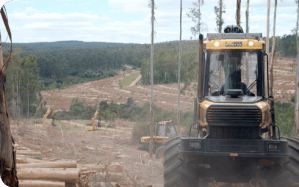
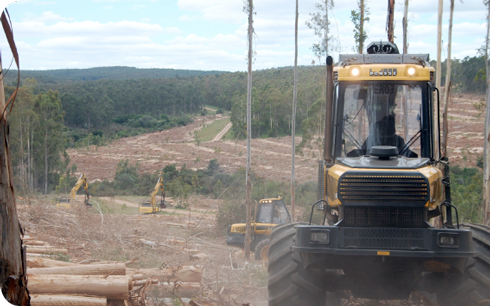
Massive timber harvesting.
Plans and permits are already adopted for a third mill near the Brazilian border in
the east of UY. Once UPM implements this recently allowed production expansion and
Montes del Plata is full to roll, between the two, the output will be over three
million tons a year.
New pulp mill.
The project of a new pulp mill comes in the midst of a conflict with Argentina over UPM’s
latest production expansion authorized by the Uruguayan government to the fury of
Argentina which has again threatened to take the case to the International Court of
The Hague, plus the usual bullying tactics: doubling the delay for Uruguayan exports to
Argentina and explicitly limiting the activities of Uruguayan ports.
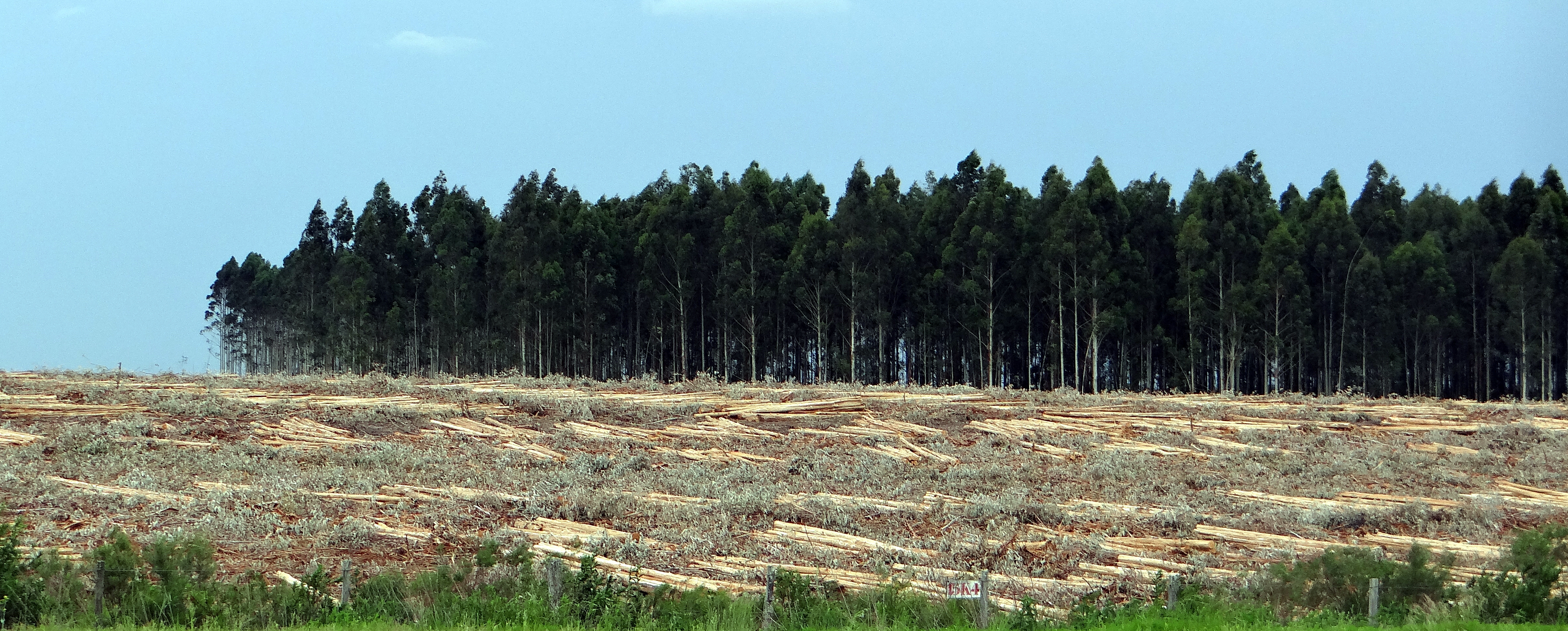
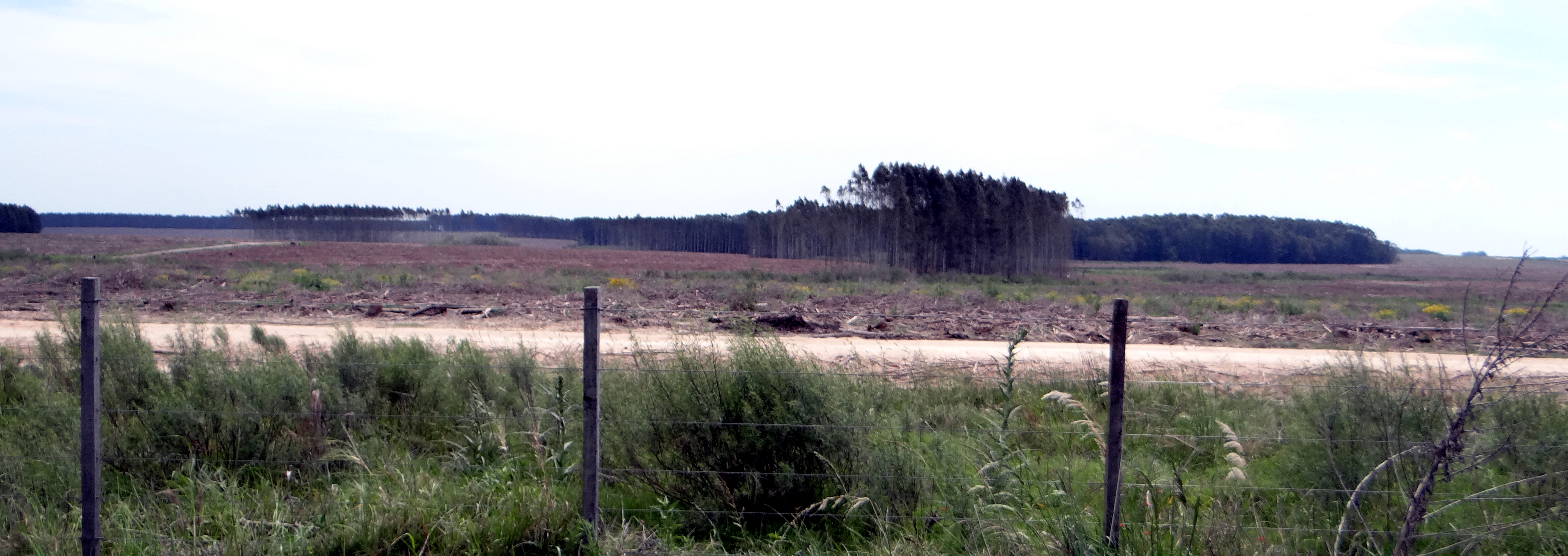
Hundreds and hundreds of kilometers through the timber plantations.
This has been achieved by banning all Argentine exports from being shipped from
Uruguayan ports, mainly Montevideo, arguing the lack of an agreement on the issue with
Uruguay in the framework of Mercosur, and drastically increasing the cost for barges from
Paraguay, whose cargo is shipped overseas from Uruguayan port Nueva Palmira.
Tugs pulling barges down the Paraná River crossing Argentina, now ‚for safety reasons‘
instead of the usual 16 or 12, have to cut the number by half, leaving the other 8 or 6
docked and waiting in Rosario, and obviously paying rates and more than doubling costs
for the overall operation.
The UPM mill, which Argentina is constantly claiming, is a hazard for the environment,
but with no conclusive scientific data, started production in 2007. For over four years
the international bridge linking the neighboring countries, and next to the mill, was
blocked by Argentine pickets to protest the construction of the plant.
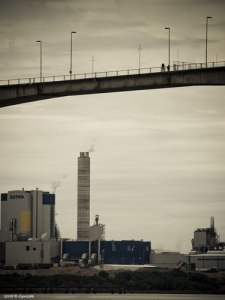

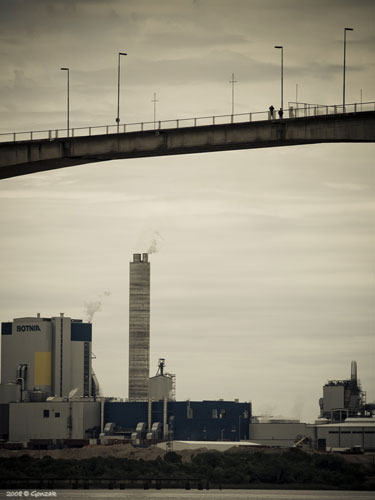
Pulp mill under the Fray Bentos bridge and Argentine pickets during the blockade.

In 2010 The Hague International Court of Law ruled that the plant did not contaminate
according to the standards agreed, thus favoring Uruguay, but at the same time ordered
a standing monitoring of the water and air of the region to analyze the degree of
pollution, if any.
The forestry industry has had a major impact on Uruguay, which has a territory of
176,000 sq km. Prior to the 1987 passage of a law promoting investment in the sector,
there were only 100,000 hectares of plantation forests. That total had soared to nearly
one million hectares in 2009, of the 3.3 million hectares approved for forest plantations
by the Agriculture Ministry. Protected native forests, meanwhile, cover 750,000 hectares.
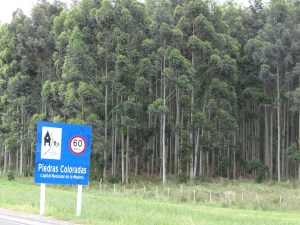
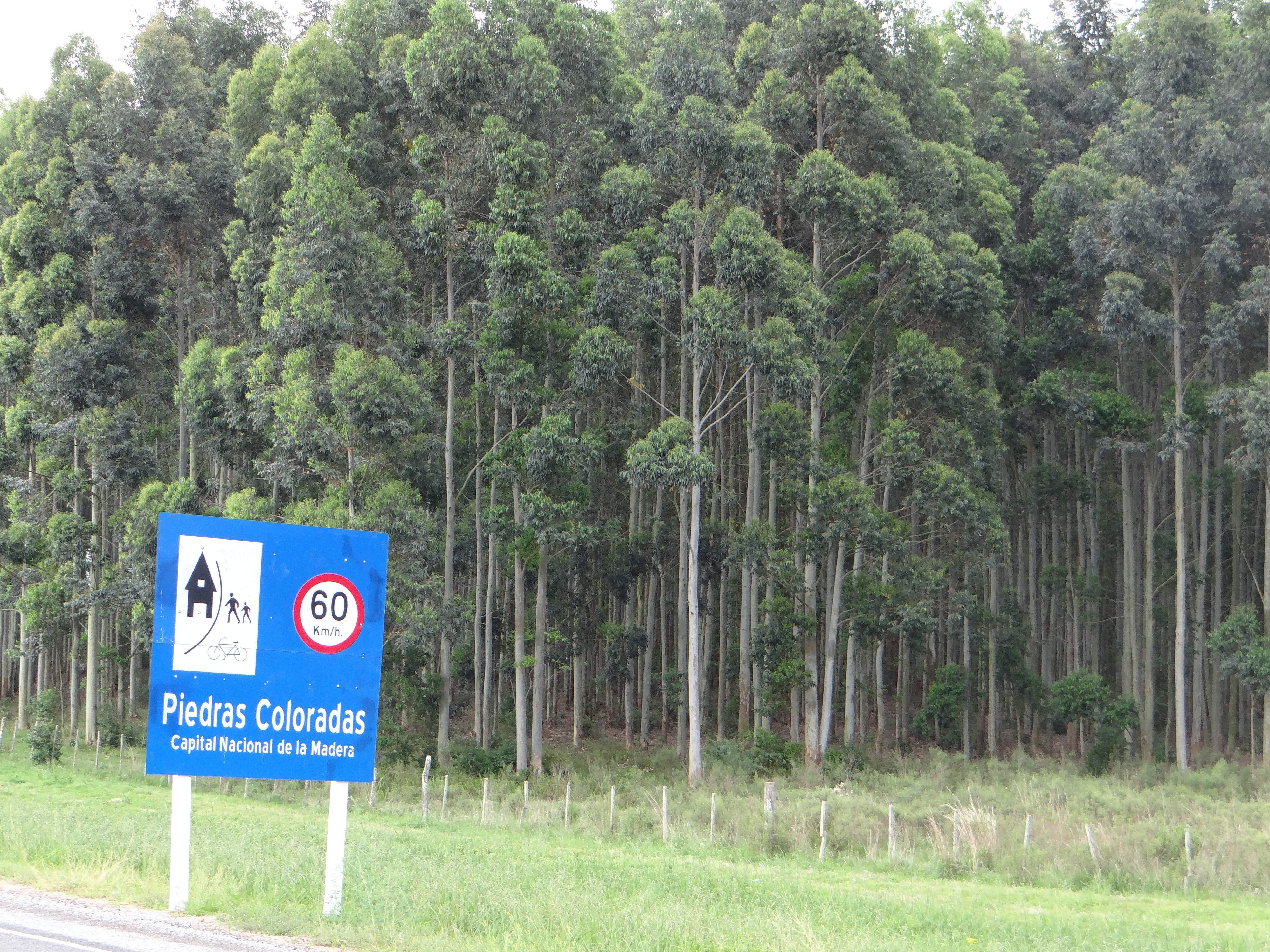
Little town Piedras Coloradas, Uruguay called now „The National Capital of Timber“.
The industry already employs some 6,000 workers in the western border provinces alone.
But within the next four years, another 4,000 jobs are expected to be generated – a
significant number in a country this size. And new investment projects are in the pipeline,
so the prospects are for steady growth.
Everywhere Pros and Cons.
The growth of the industry and the influx of foreign investment, especially encouraged
by the left-wing government of incumbent President Tabaré Vázquez, have been criticized
by local environmentalists, who point to damages to the soil and depletion of water
reserves caused by monoculture plantations of fast growing eucalyptus and pine trees.

The new President elect of Uruguay Tabare Vazquez.

A massive improvement arrived in December 2008 with a new law that set an eight-hour
workday, with a 30-minute break, for all rural workers. The conditions for forestry
workers have improved significantly in the last few years. There are still problems in
terms of getting days off. Many workers work 12 days in a row, with just two off. They
also have the option of working for an entire month, with four days off.
Their supervisors, on the other hand, work Monday through Friday, with weekends off.
At least the workers no longer live in tents in the middle of the countryside, in subhuman
conditions, as they did until a few years ago. And, by the way, producing jobs is the only
chance for a country like Uruguay to survive the future on its own.
The forestry industry generates one job for every 30 to 35 hectares. By comparison,
agriculture and livestock raising, traditionally the main engines of the Uruguayan
economy, employ one person for every 500 hectares. And that money comes into UY’s
pocket, one can see on inland’s road improvement. The coastal areas of Uruguay, with the
tourist income struggling, should take this chance for the other parts of the country .
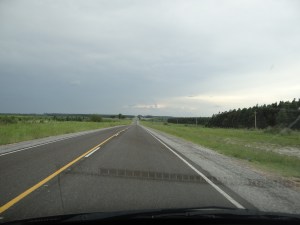
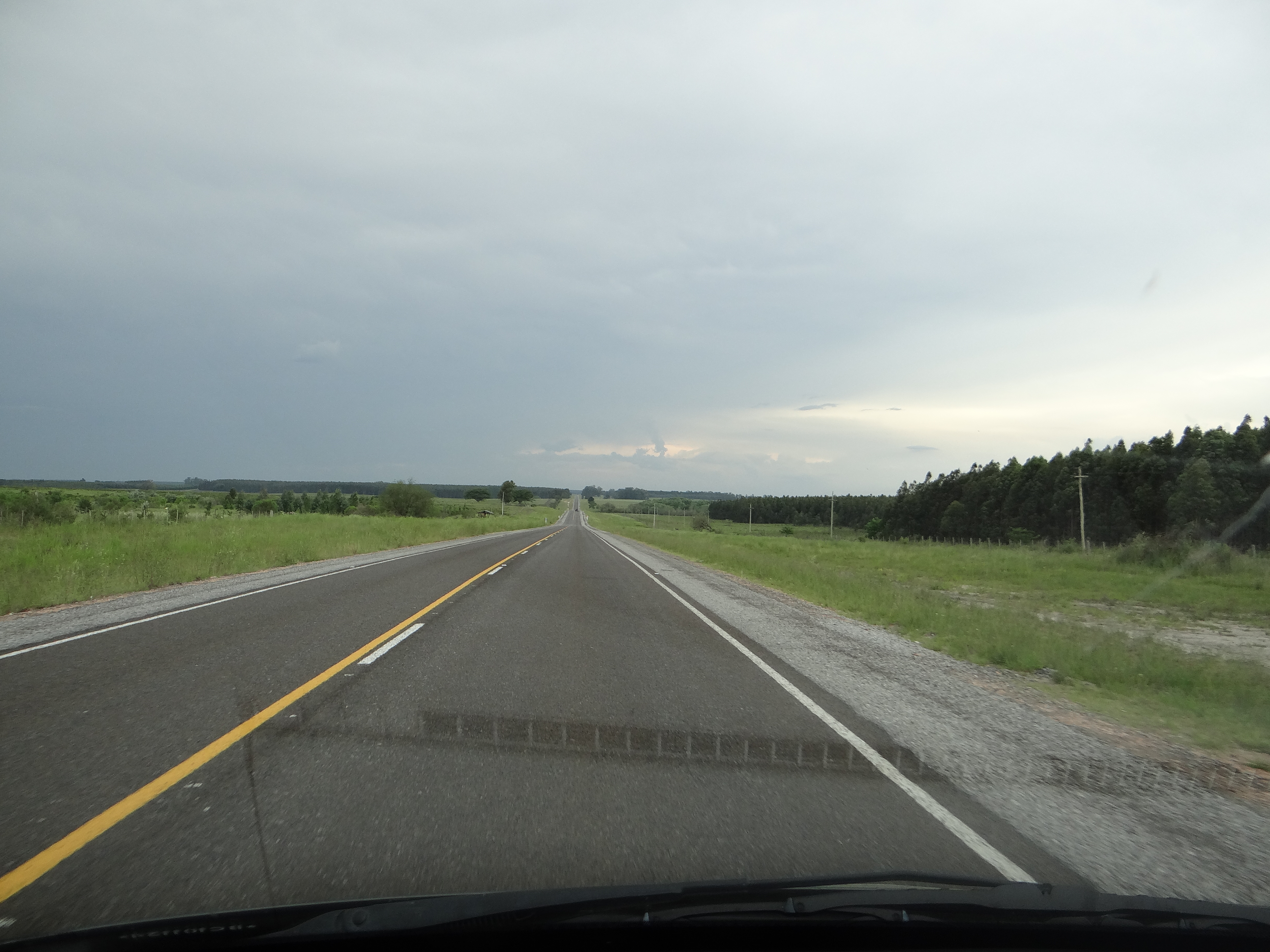
Hundreds of kilometers perfect new roads in Uruguays outback, no traffic, no cars,
but build from „timber dollars“. Not bad at all.
Cattle.
Uruguay currently has a cattle herd of around 14 million head with beef becoming the
main export commodity of the country, over a billion US dollars last year. Based on
this Uruguay is the country with the highest number of cattle per capita, 3,8.
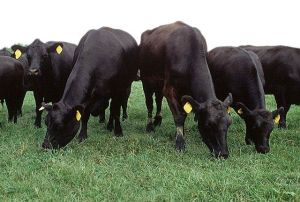
The finest and most expensive beef – Aberdeen Angus.
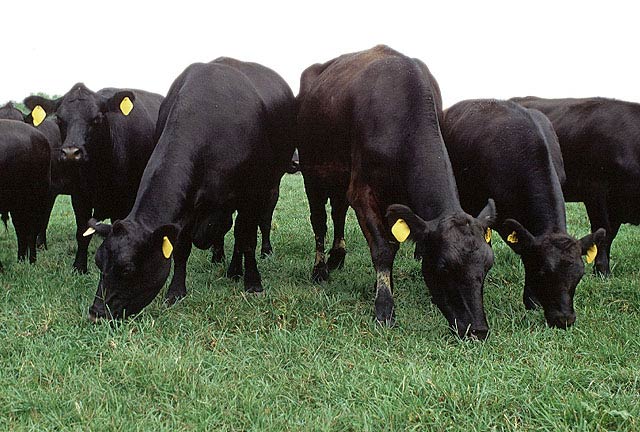
Official statistics from Uruguay’s Agriculture and Livestock ministry indicate that meat
and sheep farming is Uruguay occupy 59.6% of the land, 9.875.000 hectares of a total
16.420.000. But the percentage increases to 82.4% when cattle breeding are linked to
other farm activities such as dairies, forage and rotation with crops. These figures will
change as you read carefully my explanations about forestry growth in Uruguay.
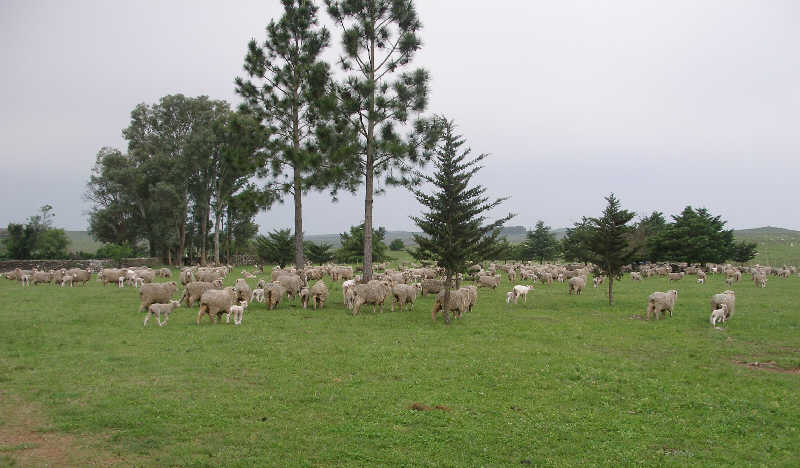
Sheep herds throughout the inland of Uruguay.
Census figures also show that most farms concentrated in beef and wool (78.8%) are a
family business with spreads not larger than 500 hectares. But even when they are the
more numerous they only occupy 21.9% of the land and own 24.5% of the cattle herd.
Cattle raising.
Uruguay’s cattle raising tradition dates back to early colonial times. Today the
country has comparative advantages with respect to the rest of the region. Firstly,
it has extensive natural, green pastures. Secondly, it meets strict sanitary standards
that enable it to access the world’s most demanding markets, such as the European, Asian
and North American markets.
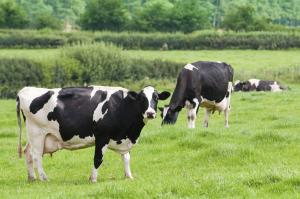
The Northern German Holstein Cows for dairy farming.
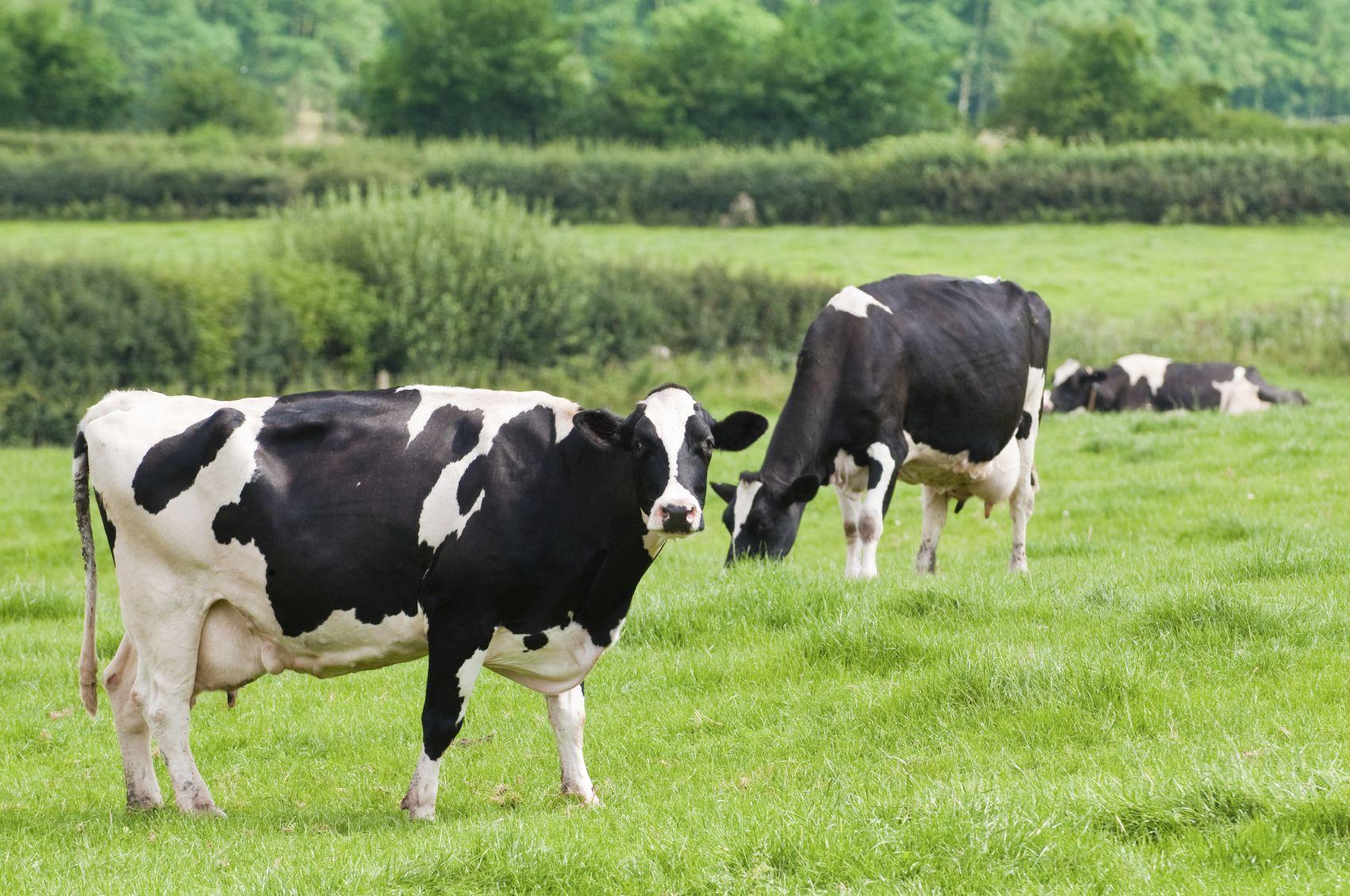
No hormones or chemical treatments are used in Uruguayan cattle to achieve
international grade. Uruguay’s most representative breeds are Aberdeen Angus and
Hereford in beef cattle and Holstein in milk cattle. However, all the breeds raised
in Uruguay have been genetically improved, with embryos being exported to improve
cattle quality in other countries.
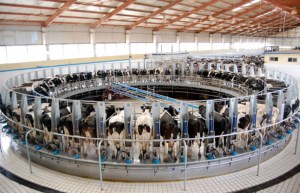
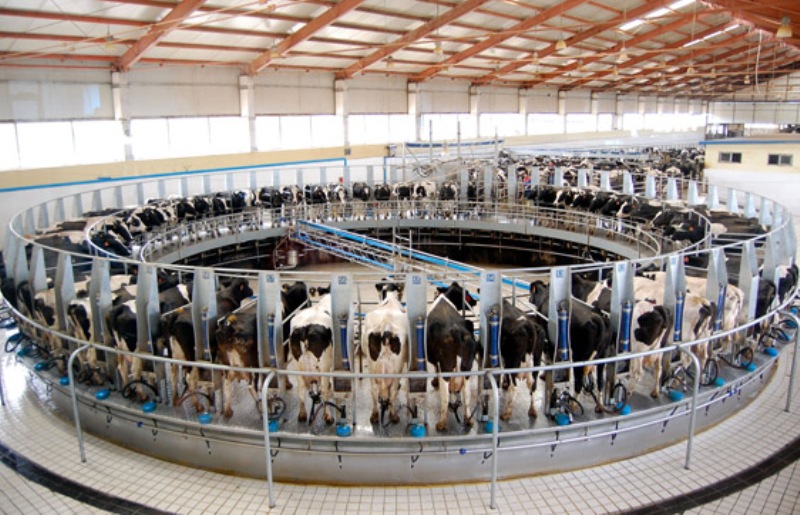
Full automatic milking station on a modern Uruguayan dairy farm.
In Uruguay, you can choose from extensive cattle raising methods for either bovine or
ovine stocks, and obtain excellent results. Many international companies are currently
investing in Uruguayan meat packing plants, a trend that clearly evidences widespread
confidence in the future of this industry. One of the cornerstones of the country’s
commitment to quality is the traceability policy implemented by the national government.
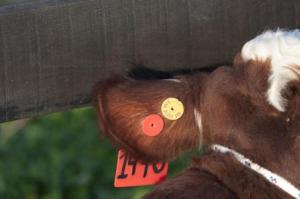

The traceability tagging system throughout Uruguay, from cattle to butchers beef.
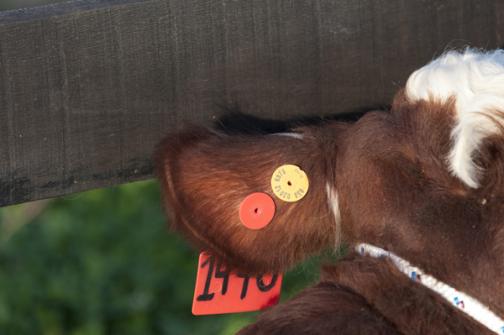
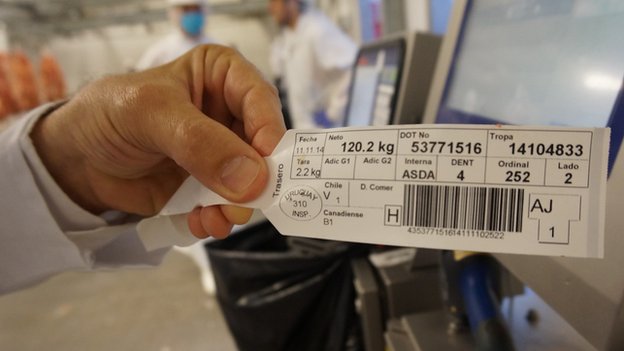
Thanks to a complete and permanent monitoring system it is possible to follow an
animal’s development from the moment it is born and until it reaches consumers as a
product. That’s value added.
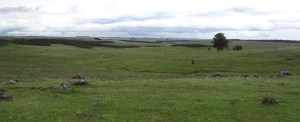
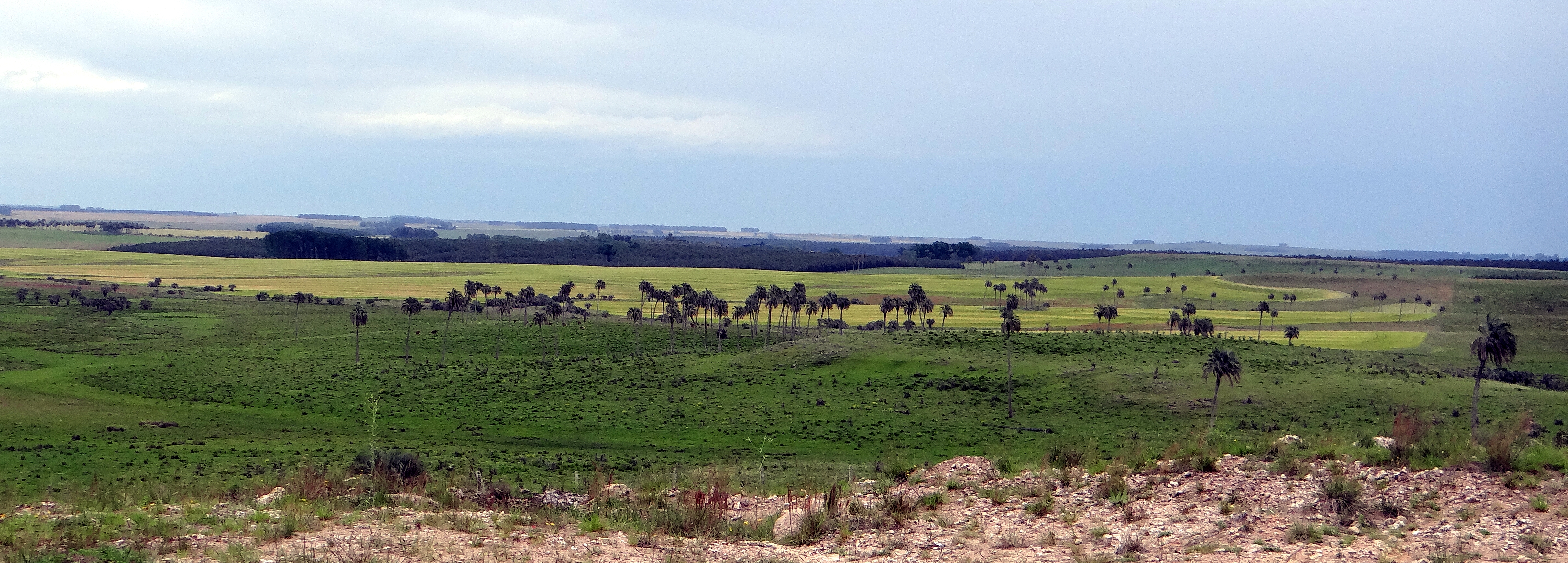
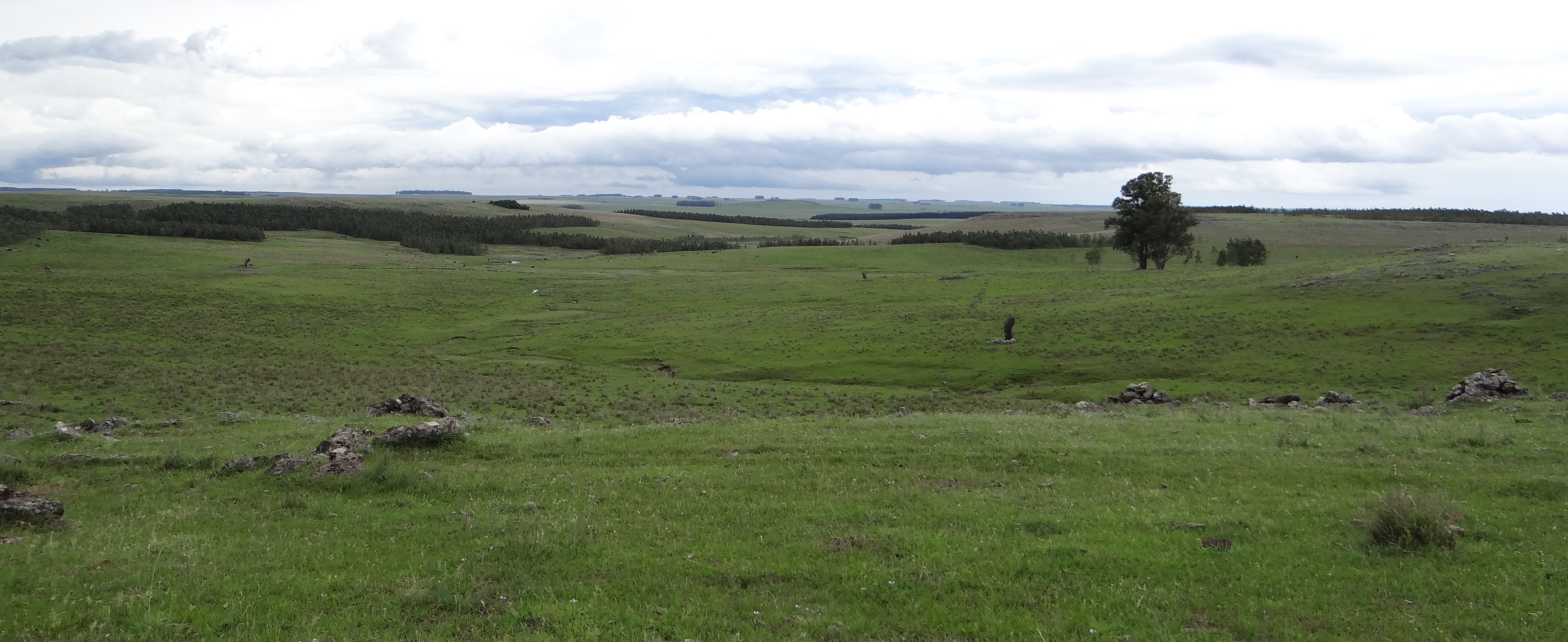
Uruguays „Green Pampas“, as far as the eye can see, cattle outback. Click on pics to supersize.
Some news.
Aberdeen Angus producers in Uruguay are now able to certify the provenance of Angus
beef, destined for the European Union.
China’s share of Uruguayan beef exports doubled .
Uruguayan beef exports during July increased by seven per cent on the previous month,
to 20,133 tonnes.

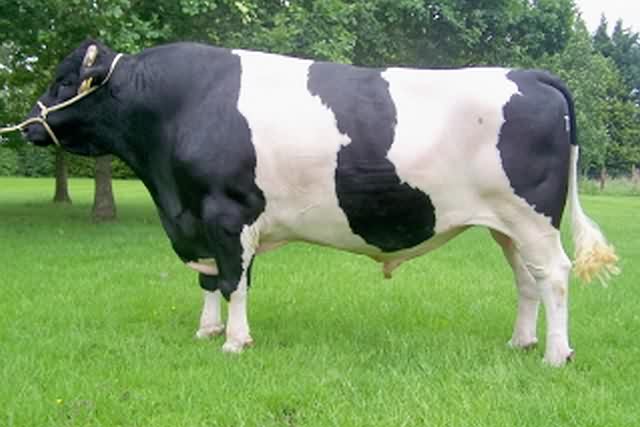
A massive Holstein bull.
Meat, the foundation of Uruguay.
The Uruguayan people are said to eat more meat per capita than any other country
in the world. Another statistic shows that Uruguayans eat at least 9 times per
week meat. And we sure got a taste, of how prolific the beef industry is in the
country, and how important its production is, at Estancia Las Rosas.
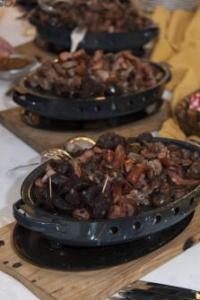
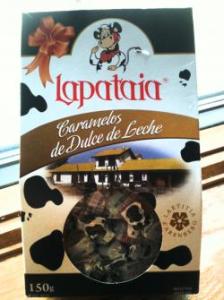
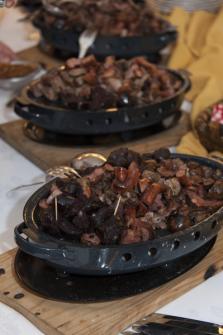
Left, delicious, fresh grilled Angus snacks on Estancia Las Rosas.
Right, nice gift, the caramel goodies produced through Las Rosas dairy.
Estancia Las Rosas is a meat and dairy farm and is owned by a Belgian Princess
named Laetitia d’Arenberg, who welcomed the group and introduced us to several
of the 100 employees who work on the farm throughout the year. Laetitia’s parents
invested in the land in Uruguay when Laetitia was a child.

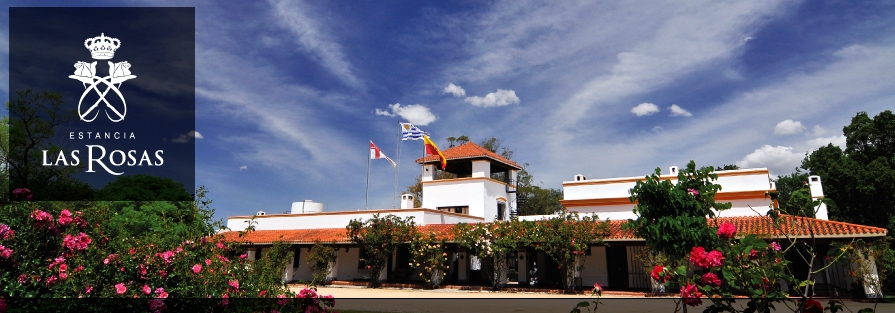
Wonderful Estancia las Rosas, about 2 hours driving north of Montevideo, dep. Florida.
A trip through the „outback“ of Uruguay can be wonderful.
Nice clean towns, friendly people, if you find them !!!???
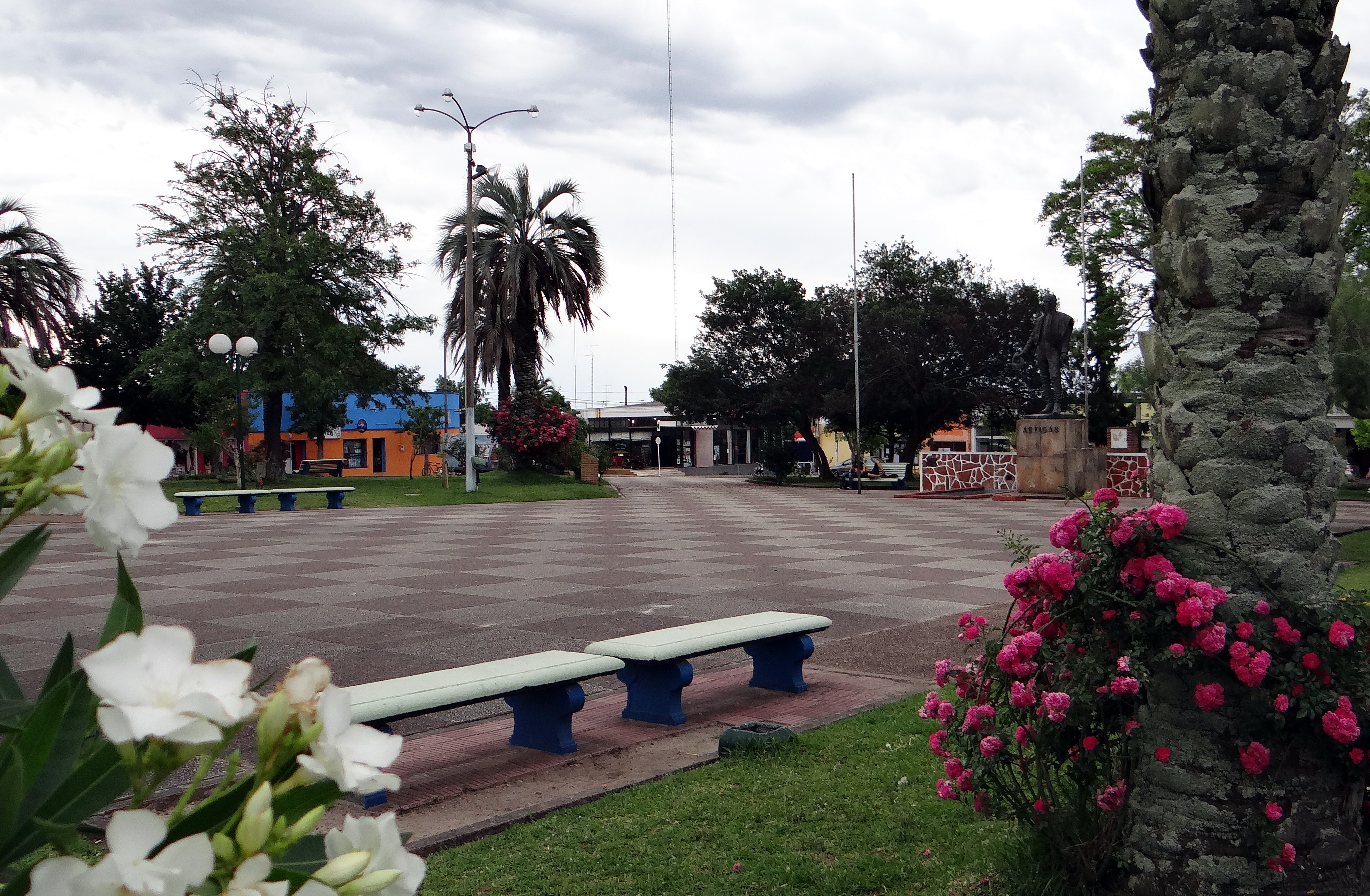
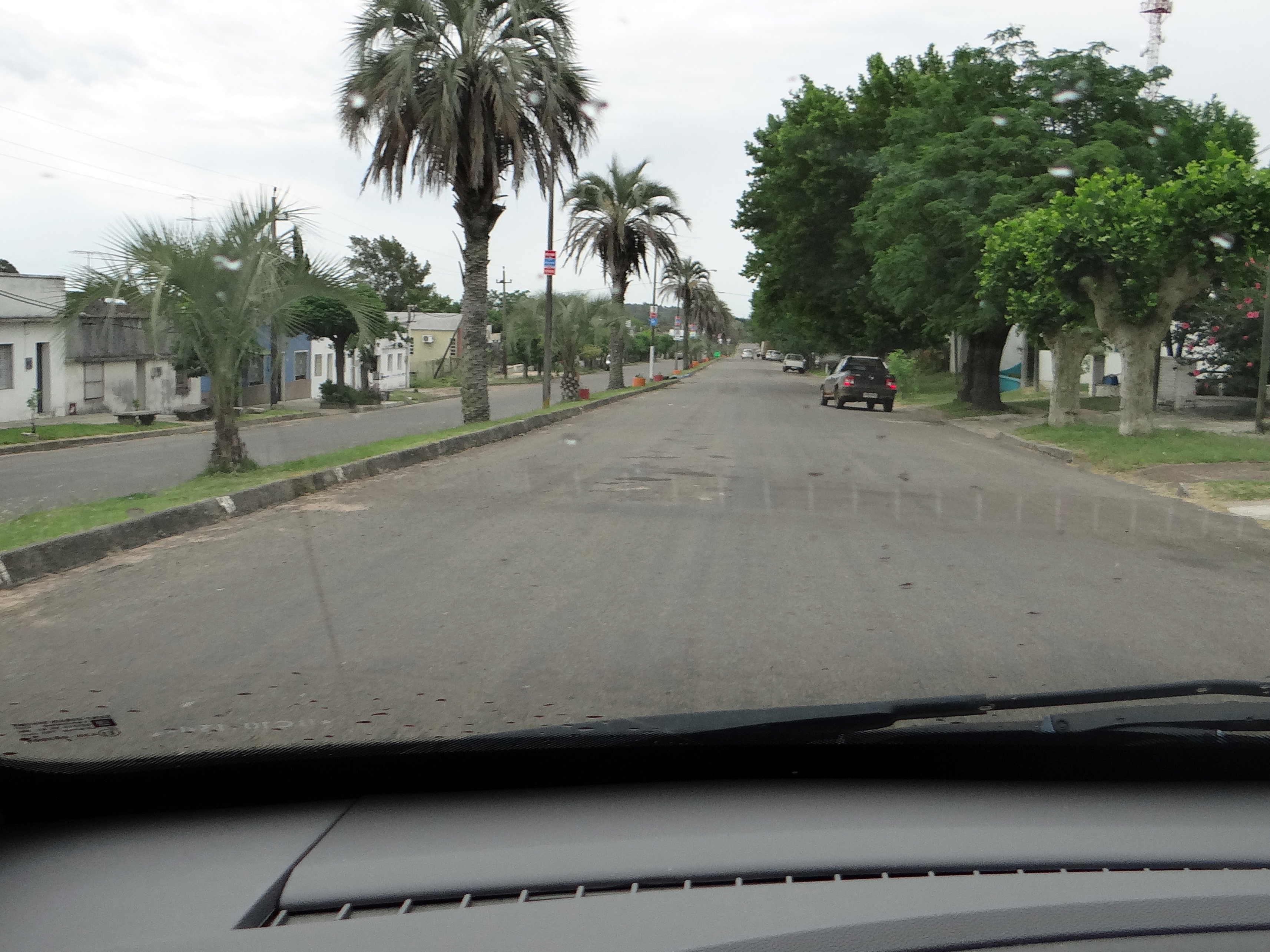
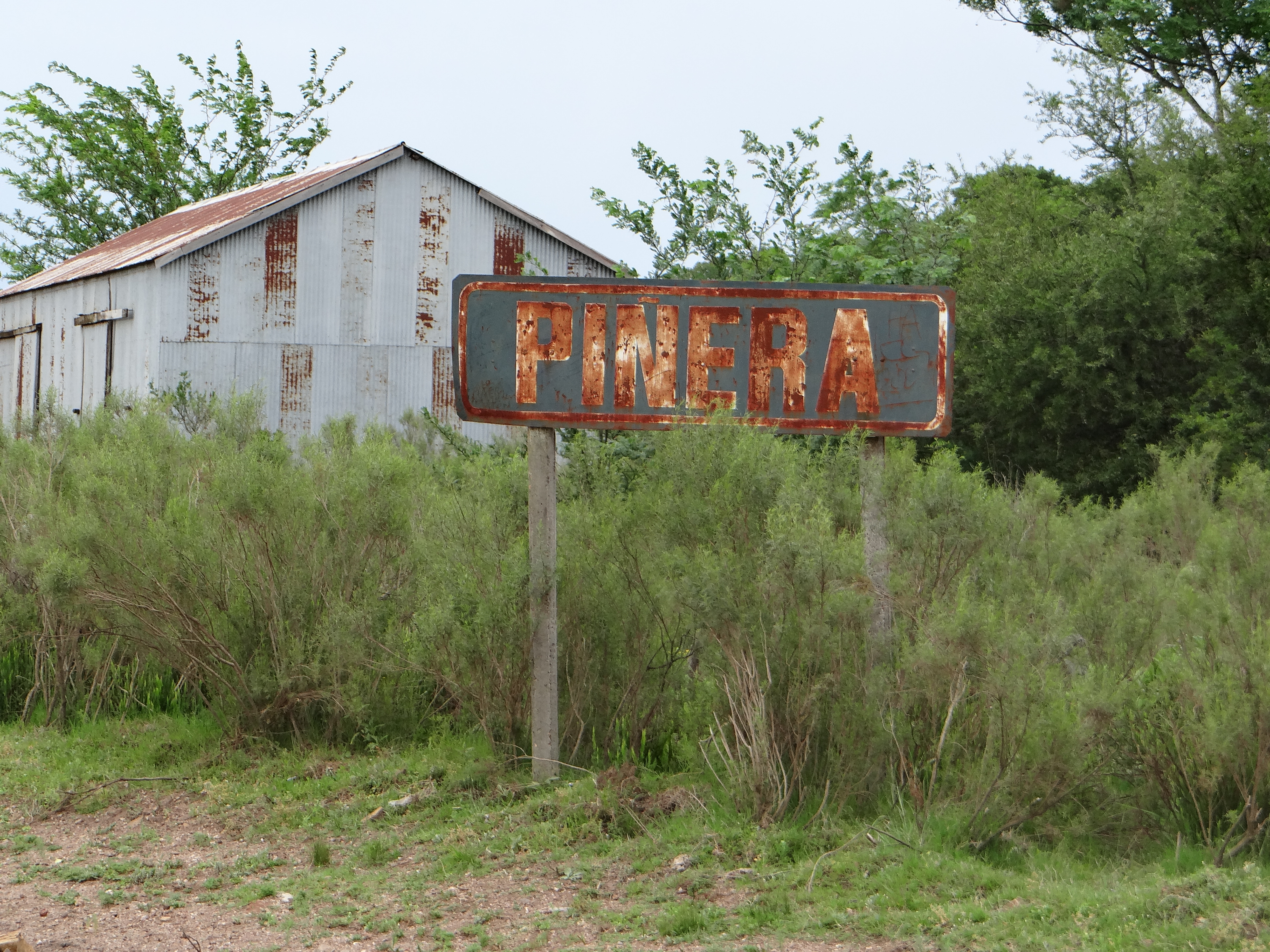
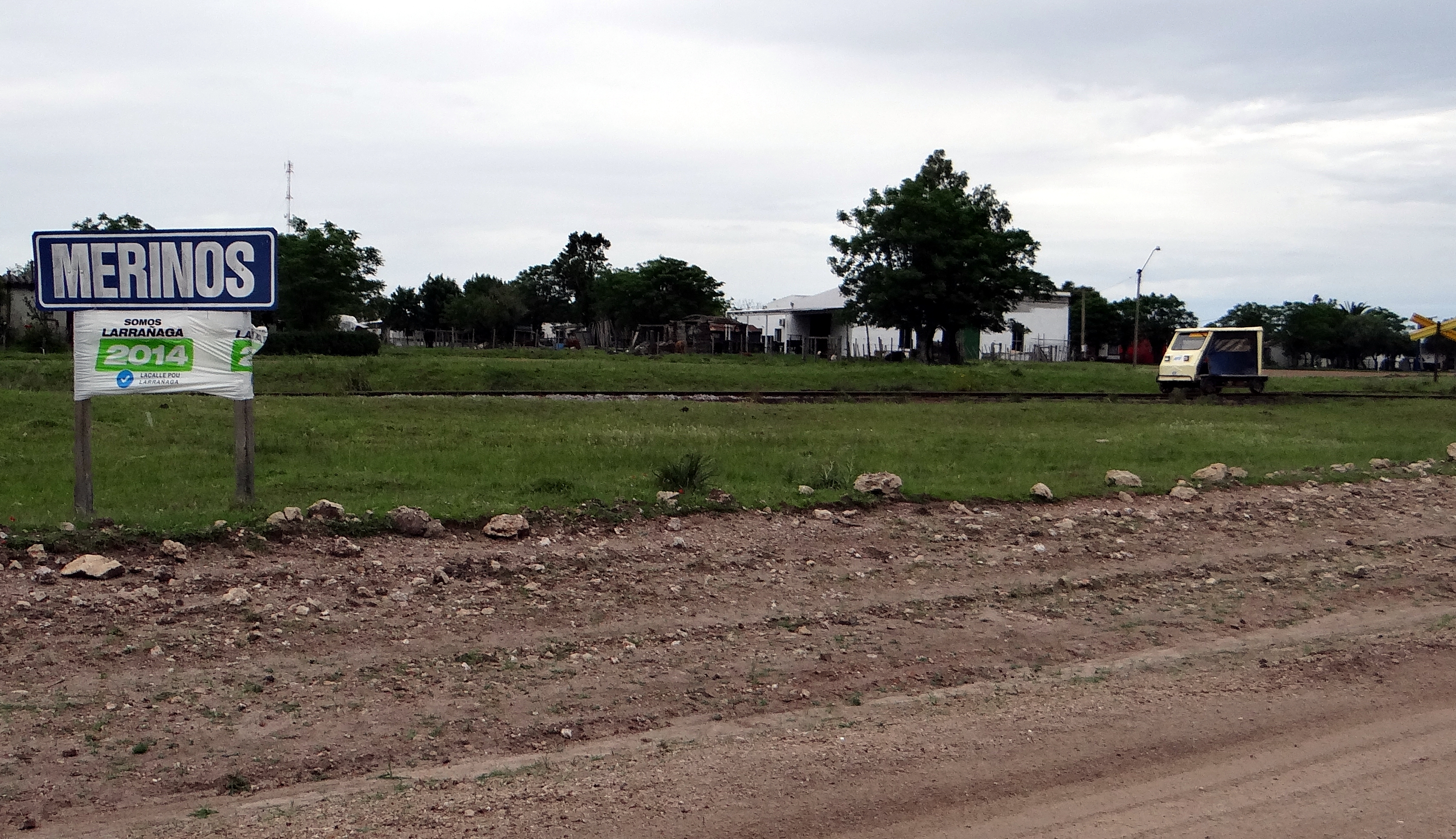
You always know where you are, because the towns are named by their purpose.
Pinera grows pine trees, forestry’s around, Merinos „grows“ …. get it !!!???
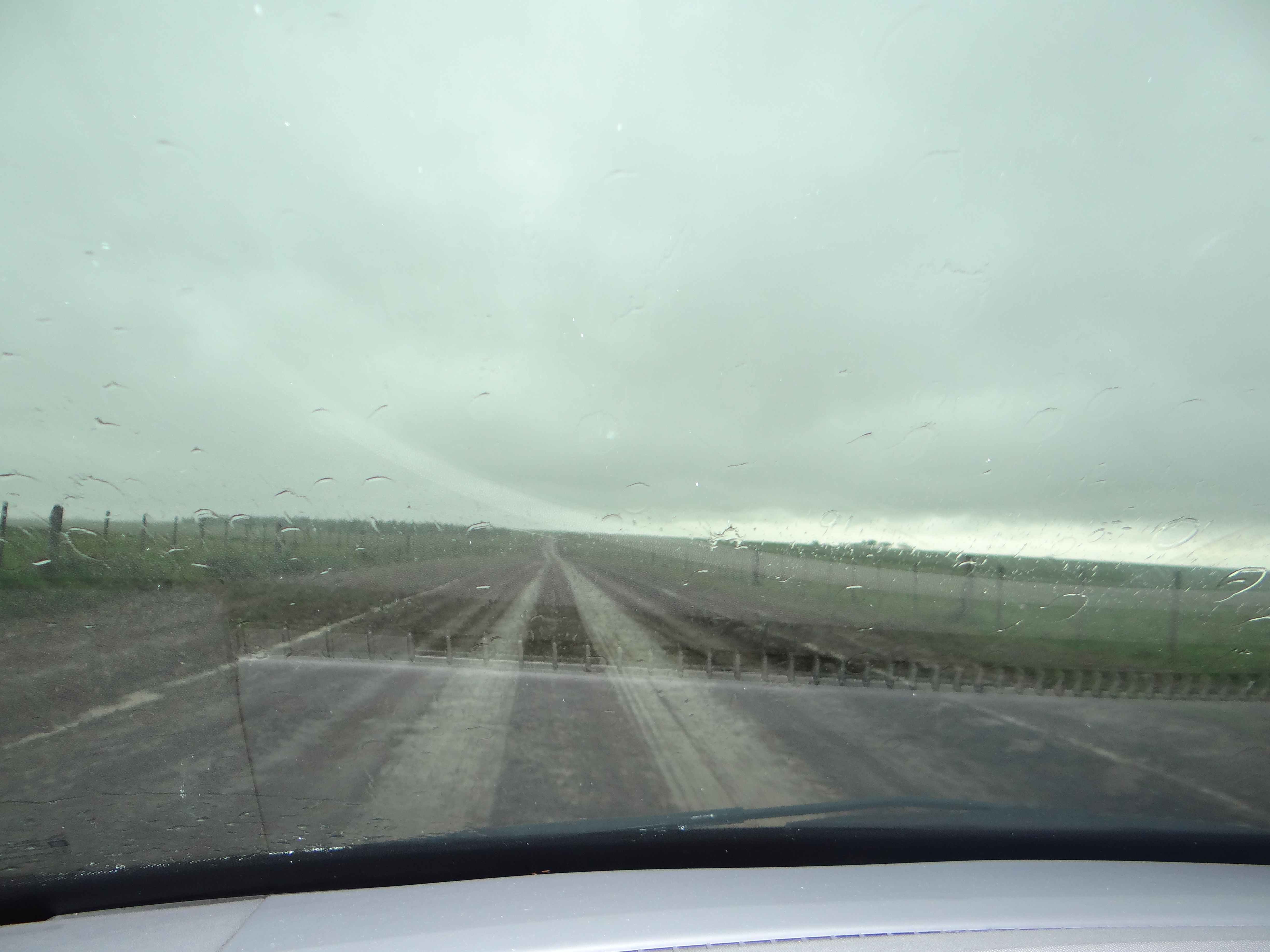
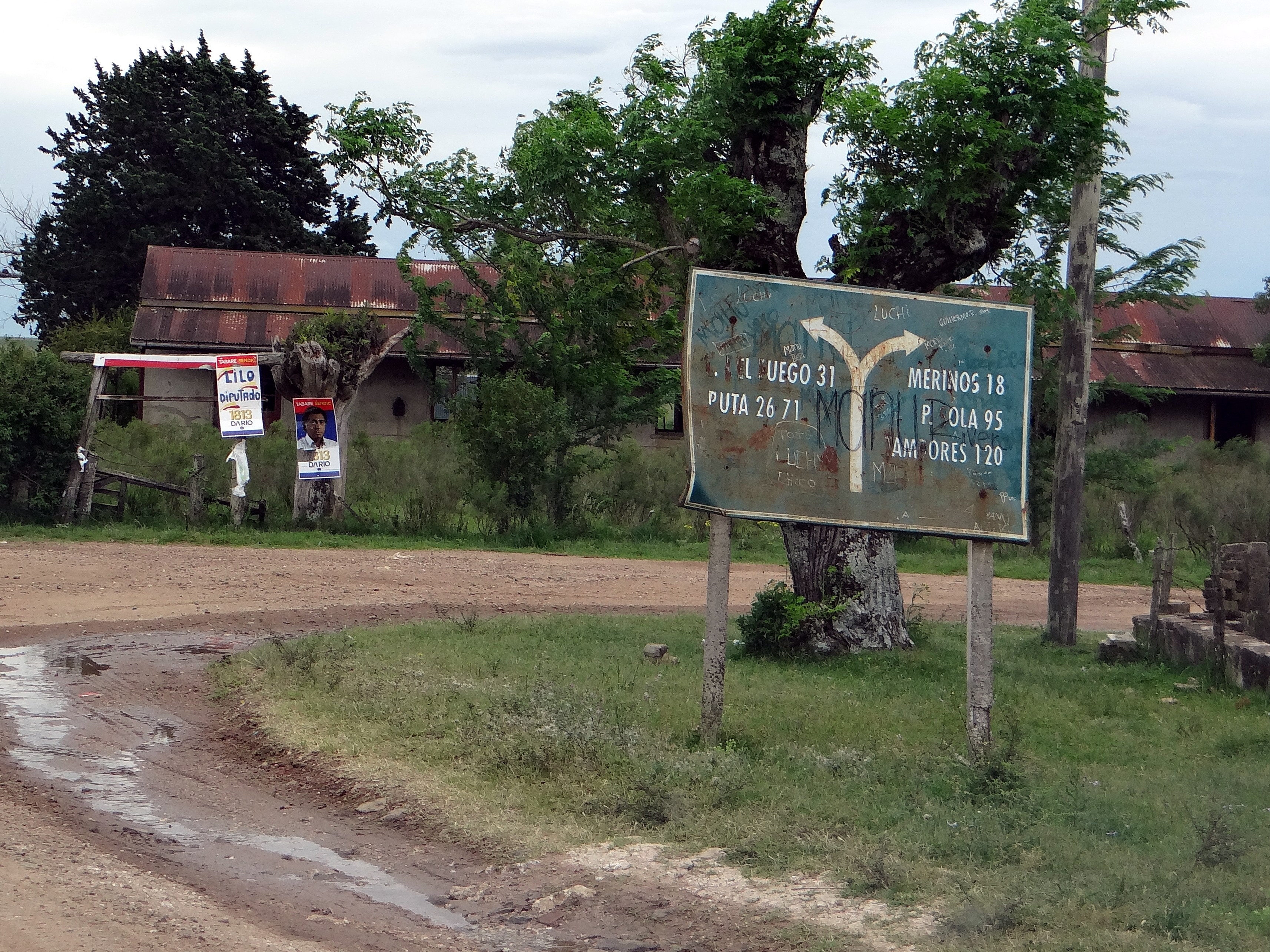
The only challenge is to get there, every 100km a sign, if you are lucky.
And you need the right car, especially if a rainstorm hits you. Adventure in Uruguay.

