
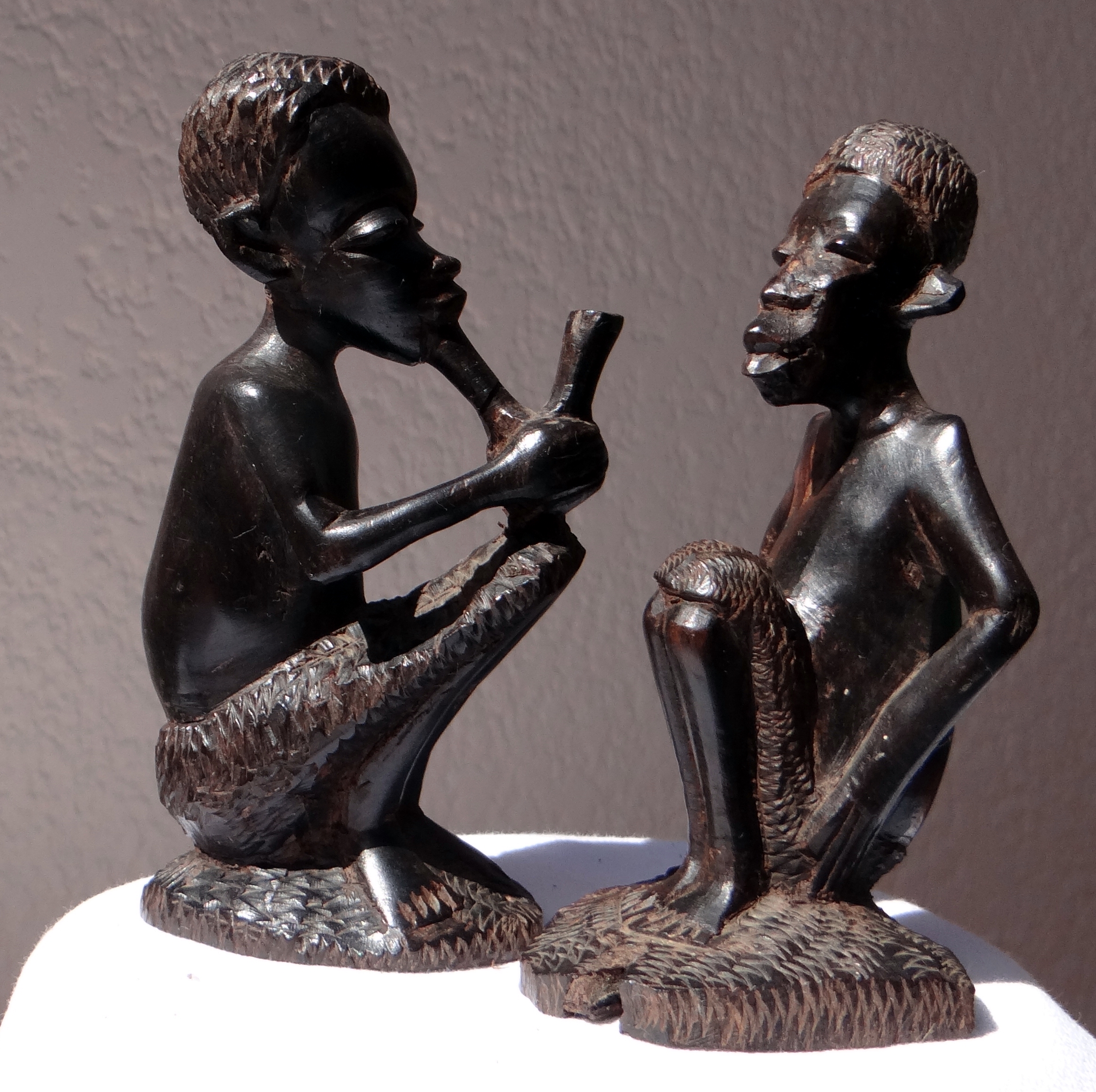
Who are the Makonde?
The Makonde are a Bantu tribe in East Africa. Their
original habitat are the highlands between Tanzania
and Mozambique, left and right of the Rowuma river.
From the 1950s onwards ,the most famous Makonde artists
moved to Daressalam, Tanzania. In the following decades they
gained international recognition of their wood carving art.
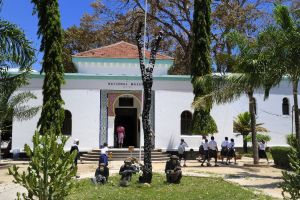
National Museum in Tanzania. See the „Life Tree Sculpture“ and monkeys in front.
Tanzania.
It is impossible to write about the Makonde and not writing
a few words about Tanzania, the former Tanganjika.
I believe, it is one of the most beautiful countries in whole
Africa. For decades you don’t hear any negative’s from there.
Tanzania is a magnificent tourist destination and has fantastic
cultural and scenic attractions.
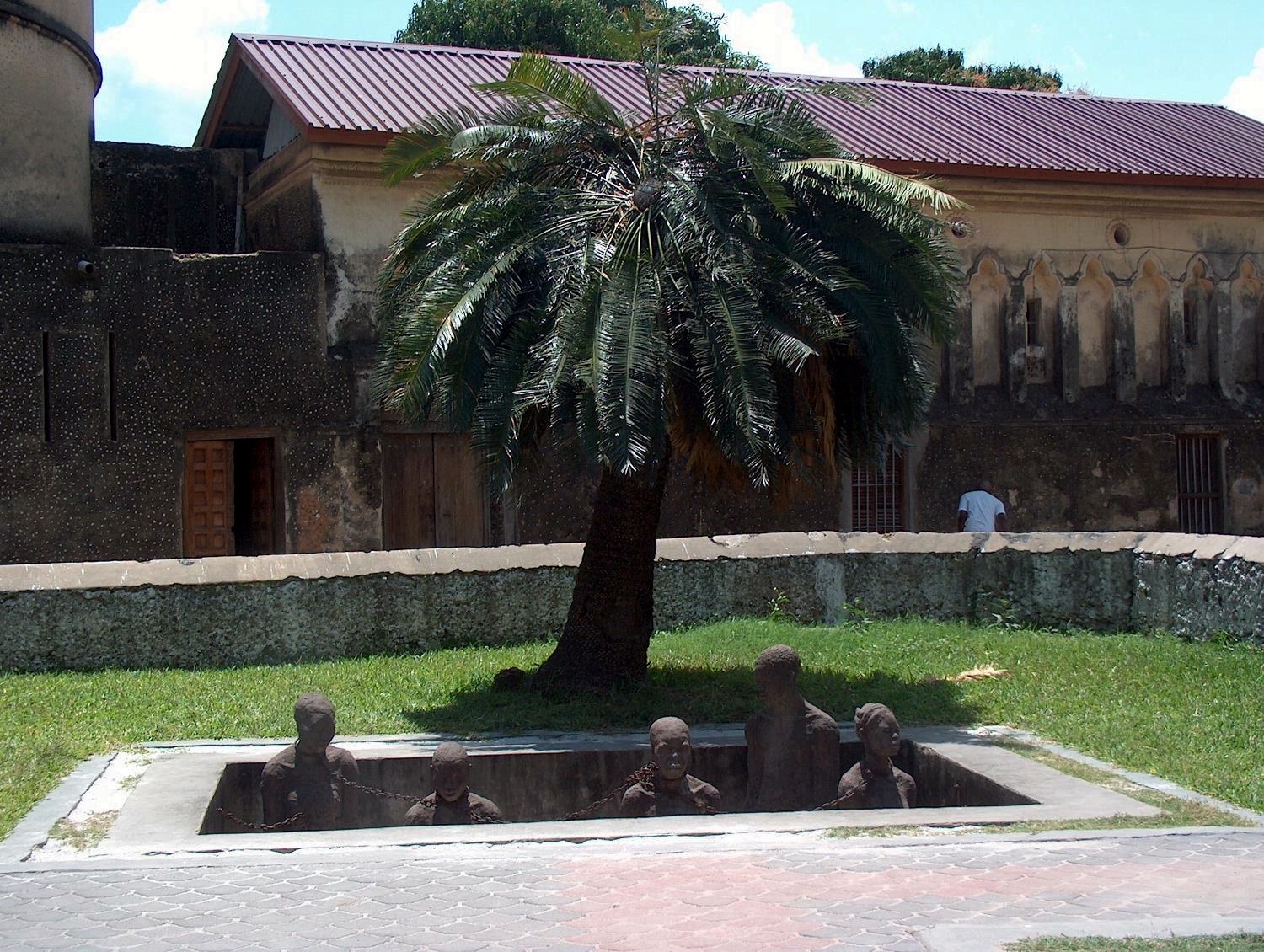
Slave monument in Zanzibar. Sculptures in chain’s.
Culture.
Tanzania has been described as one of the most diverse
countries in Africa and this is reflected in the fact that there are
more than 120 local languages spoken in the country. Swahili is the
national language that is widely spoken, while English is the official
language of education, administration and business.
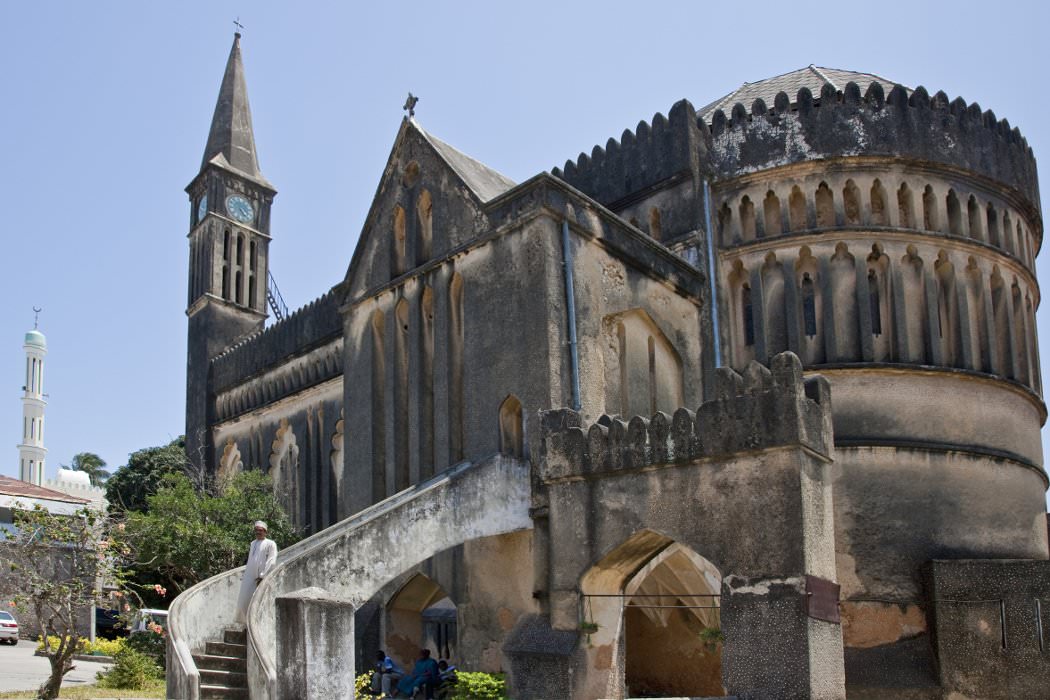
Monumental Christian church in Daressalam with a high clock tower.
Many many years later the Islam tower was build, it had to be 10 meters higher !!!
Local people are native African 99% (of which 95% are Bantu consisting
of more than 120 tribes) and the remaining 1% consisting of Asians,
Europeans, and Arabs.
Scenic examples.
Most of the many movies made , during the decades, about or in Africa,
showed at least one of the following 5 destinations – all in Tanzania.If
one thinks about real Africa, you’ll find it in Tanzania.
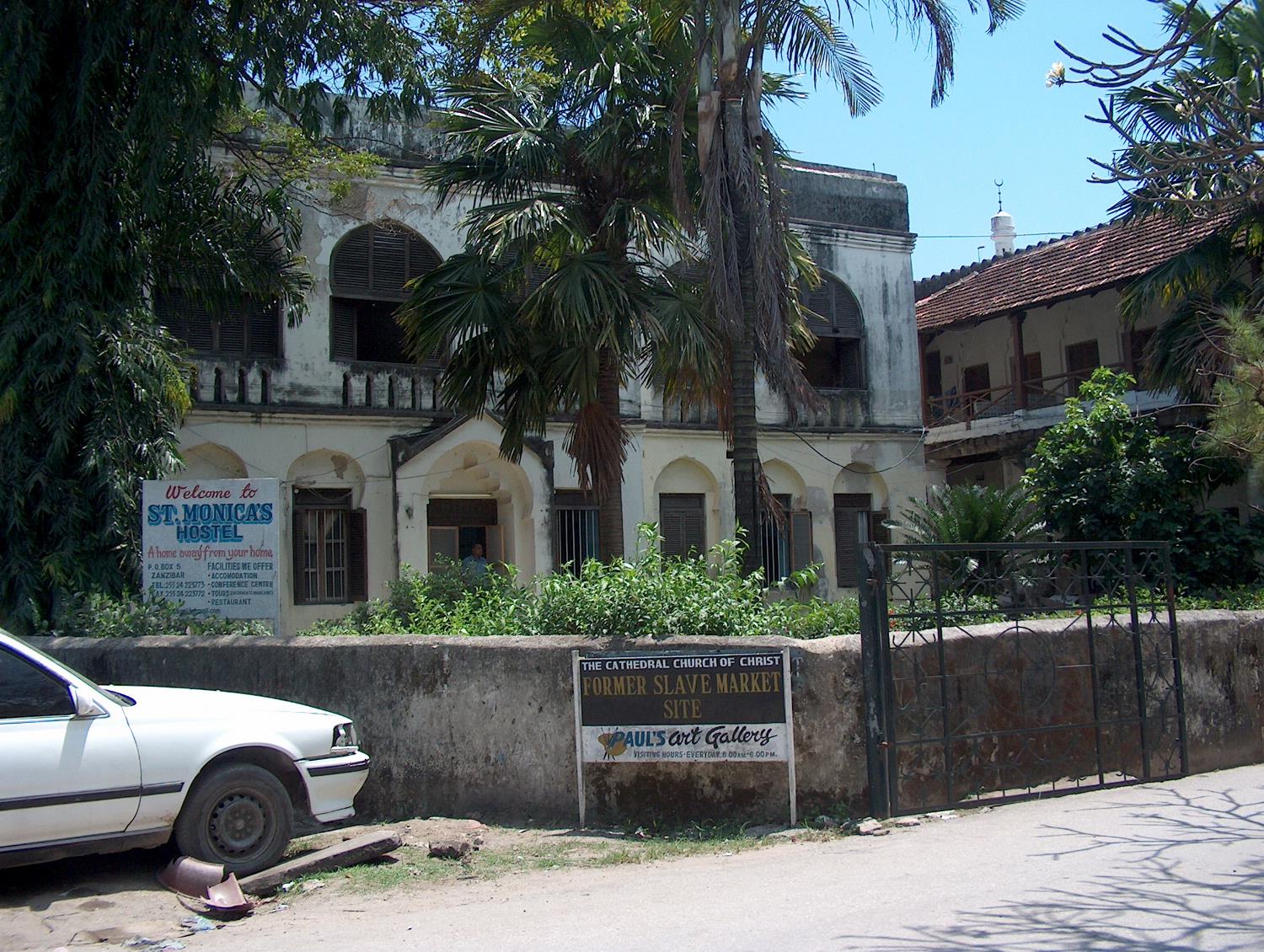
St. Monica’s Hostel with it’s „colonial style“ bar.
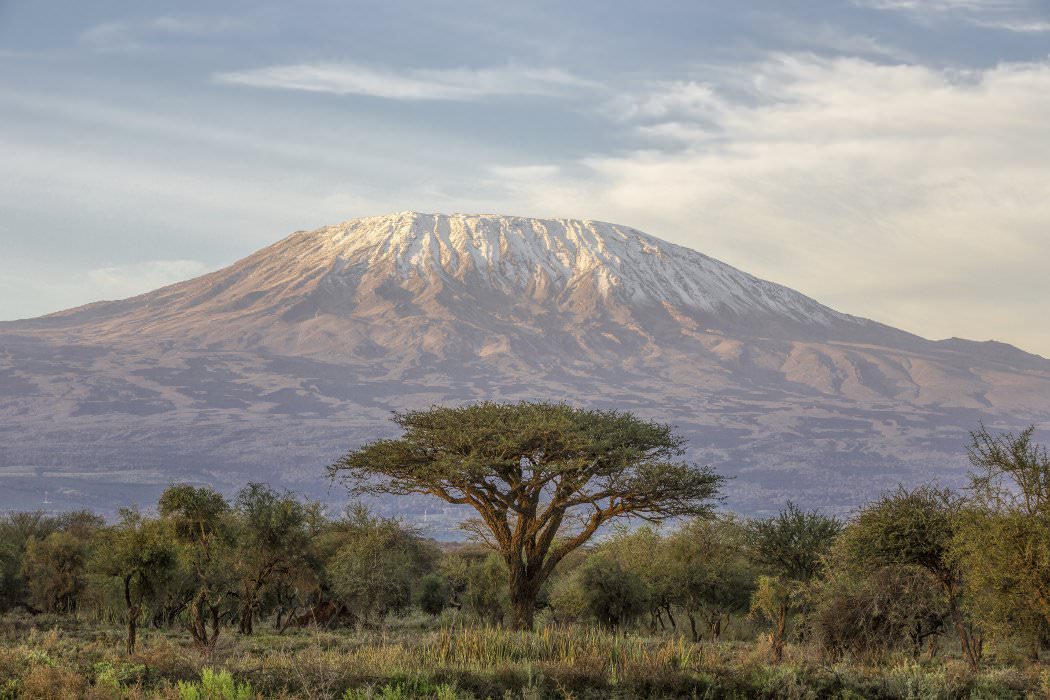
THE KILIMANJARO: This is a snow-capped mountain, just south of the Equator.
At 5895 meters above sea level, the Kilimanjaro (if we want to be correct,
then it is the Mountain Kibo in the Kilimanjaro massive) is the highest
mountain in Africa and the tallest free standing in the world.
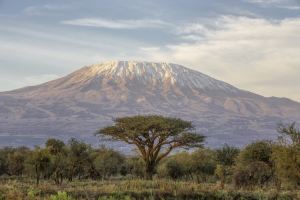
The Kilimanjaro massive with a big Acacia (over 20m high) tree in front.
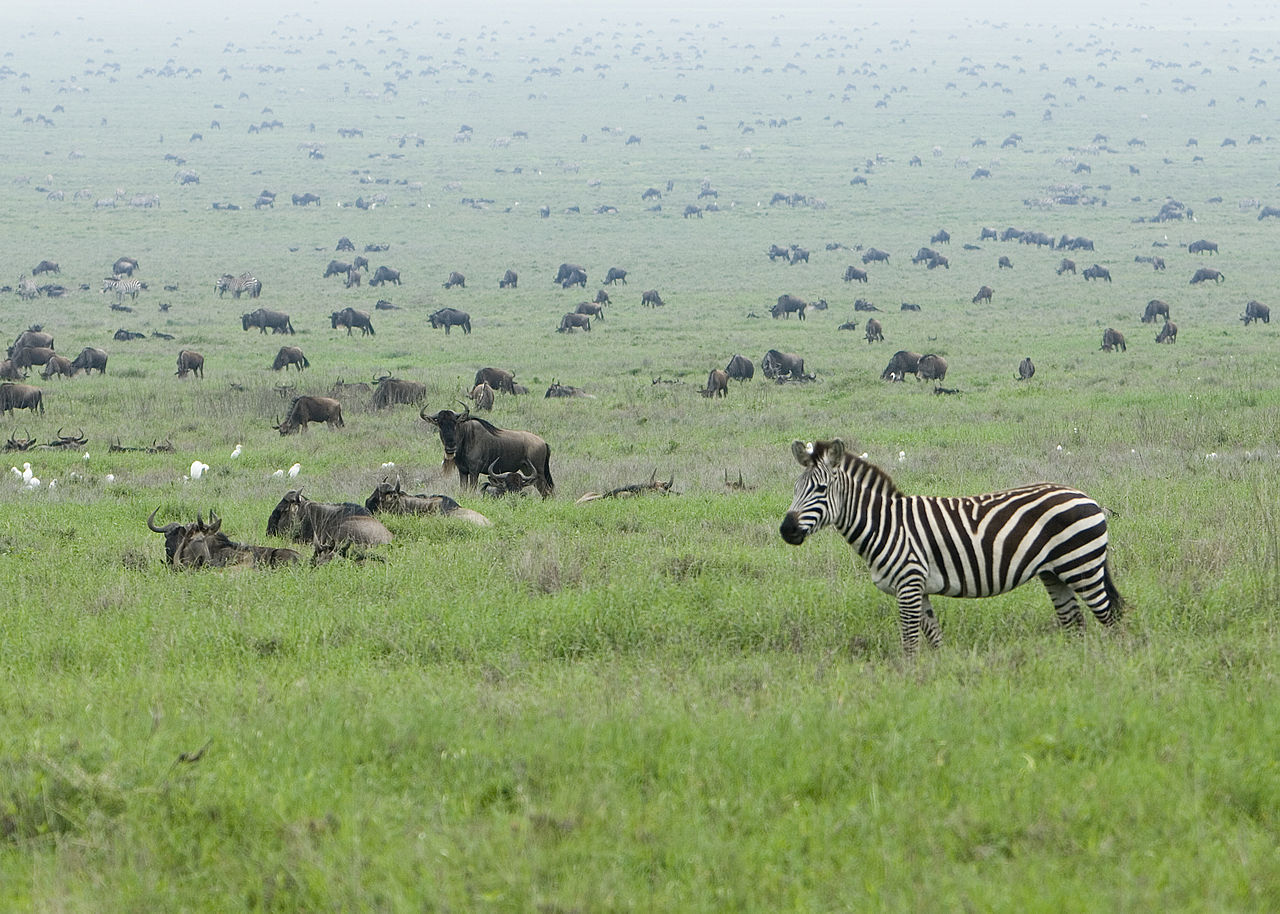
THE SERENGETI: The Serengeti is a national park with millions of wild life
living together. It is indeed a garden of nature. The nature of this national
park provoked a remark from the famous German Prof. Grzimek that
„Serengeti shall never die“.
If you are interested, History, pictures and Movies (also the award winning
documentary from Michael Grzimek und Bernhard Grzimek, title
„Die Serengeti darf nicht sterben“, Germany 1959, it’s all over the internet.
Inside Serengeti National Park.
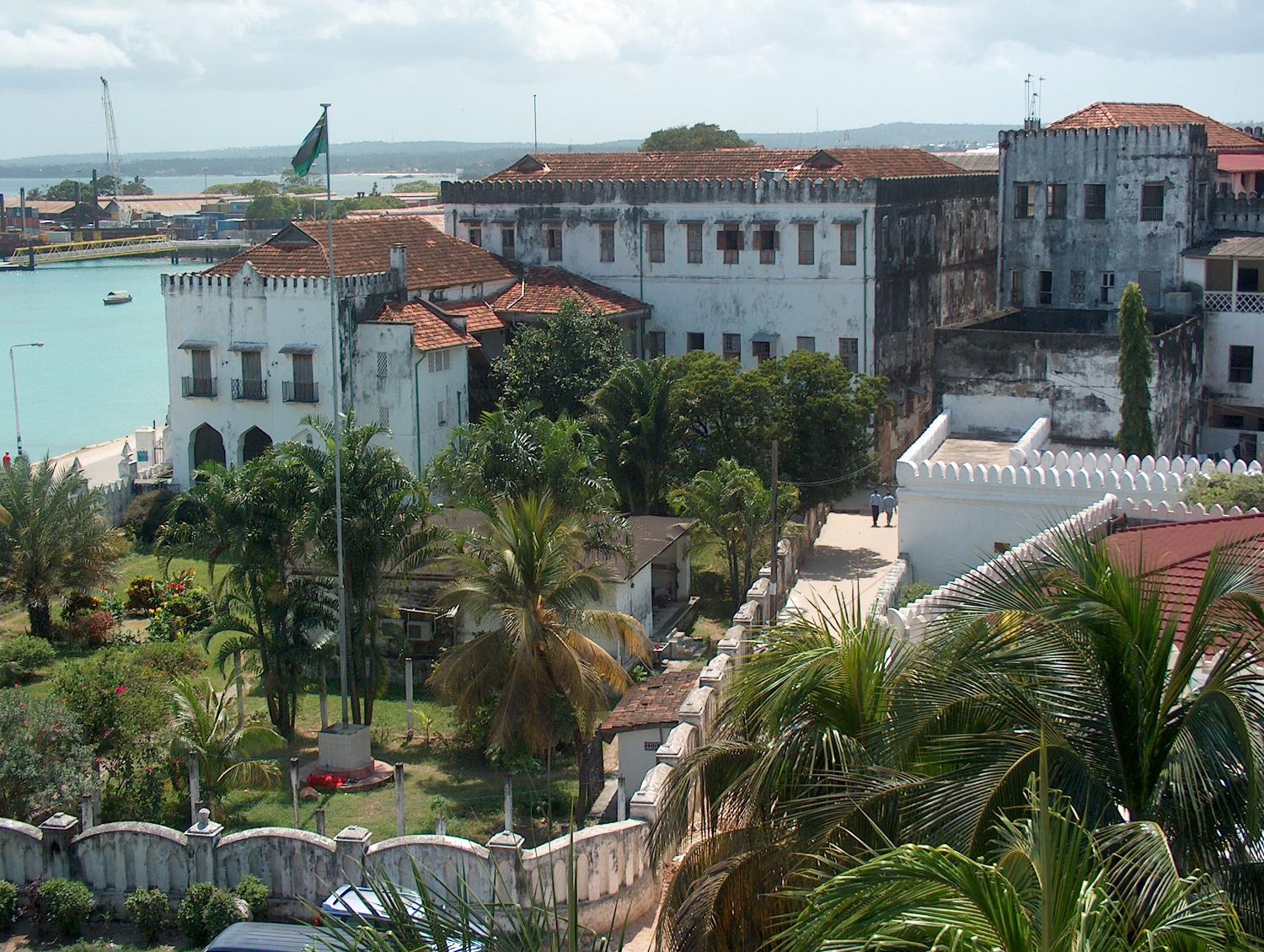
ZANZIBAR: This is the spice island with abundant history, beautiful and
white sandy beaches. Zanzibar (also Sansibar) was independent and still has
it’s own President within the Tanzanian government.
Harbor side of Zanzibar city.
LAKE VICTORIA: The largest lake in Africa and the second largest fresh water
lake in the world. It is the source of the River Nile. 66% of the lake lies
within Tanzanian territory.
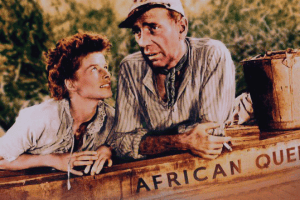
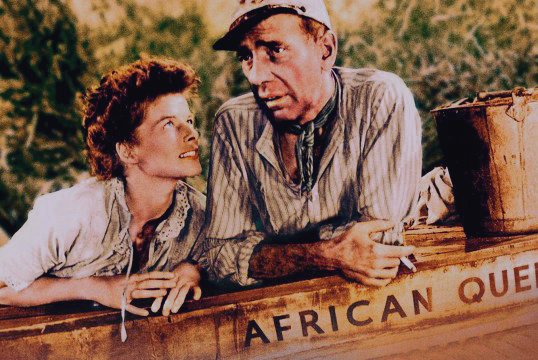
Remember the movie „African Queen“ from 1951, shot on Lake Victoria and in Tanzania.
LAKE TANGANJIKA: The longest fresh water lake in the world and the second
deepest. 41% of the lake lies within Tanzanian territory. Aquarium friends
would know about Cichliden of Lake Tanganjika. They are unique in the world.
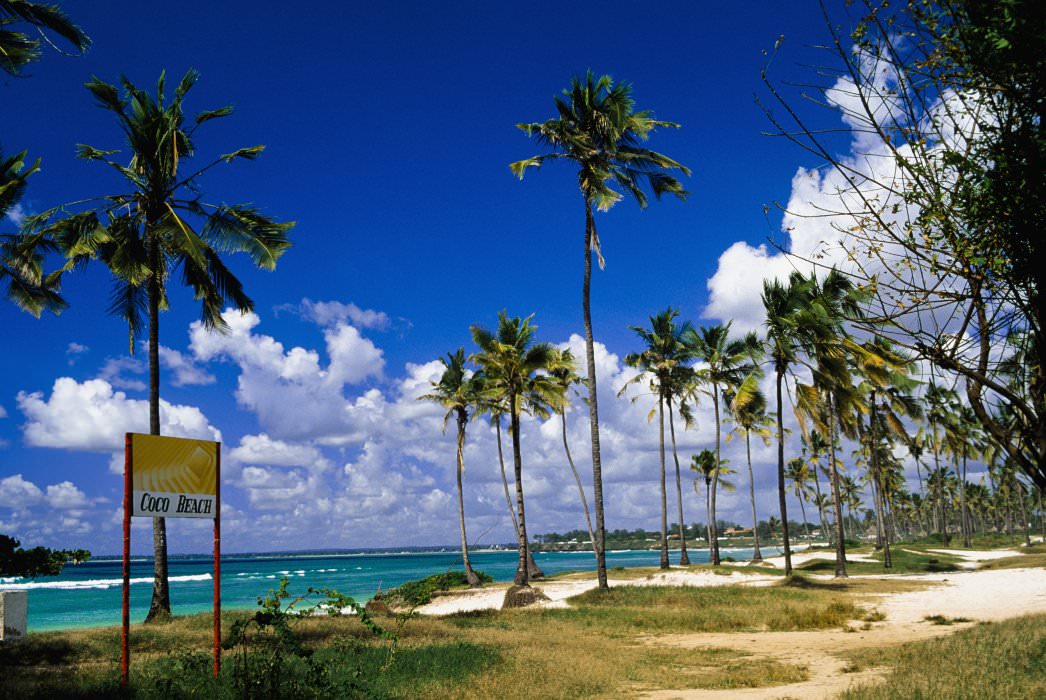
Coco Beach in Daressalam, about 40 years ago. Won’t be the same anymore.
Makonde sculptures.
The sculptures of the Makonde have an amazing charismatic force, which one
hardly find in our „western culture“. Artists, such as Moore, Vlamink, Picasso,
Klee and others have high artistic value recognized in these works, and it can be
seen that they are influenced by them.
Fetishism, birth, love and death, hunger and water shortages, ancestral and
daemon faith are reflected in the Makonde works .

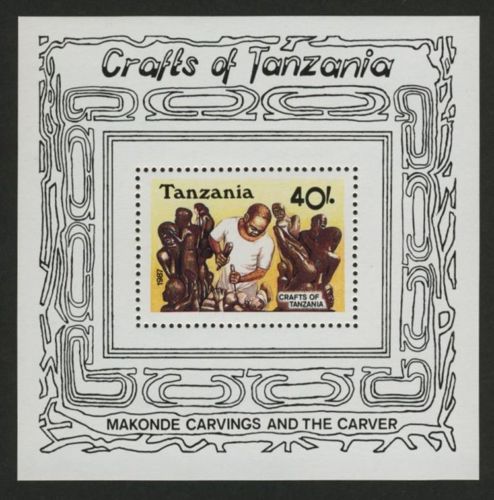
Stamps of Tanzania with Makonde carvers.
The material, the Makonde use, is the very valuable and difficult to
work with, wood of the ebony tree, better name is African blackwood,
called „Mpingo“ in Tanzania and most areas of East Africa.This East African
Blackwood tree, is used to make clarinets, oboes and bagpipes. Besides
it is the medium of choice for local wood carvers. It´s dark, lustrous
heartwood is one of the most valuable timbers in the world, but the tree is
under threat from over-exploitation and could become commercially extinct.



All made from Mpingo : Clarinet, Oboe and Bagpipes. This Canadian soldier play’s
one of the top end bagpipes in the world, the Scottish „Wallace Bagpipe“.



The color scale of the heartwood ranges from dark brown to deep black.
Normally, the bright edge of the wood is removed before they start the
work, but also often, magical in the importance of the figure, included.
The Makonde artists say: “ the tree will tell you how it want to be carved“.
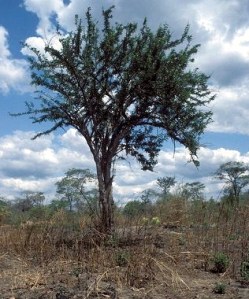
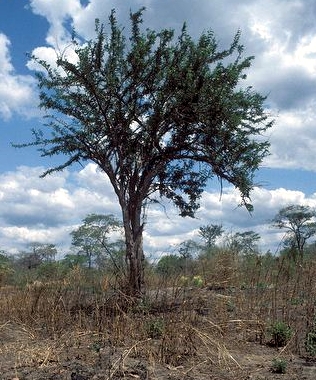
Lonely Mpingo tree in the Tanzania highlands.
Makonde carvers had their highlights, beginning in the 1960s until
the early 1990s. Then a series of the first generation of carvers died and
there were (and are)a few followers only. These few still dominate the
carving of comparable quality and expressiveness.
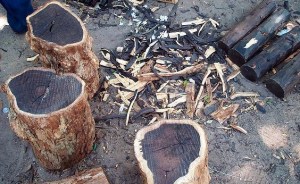
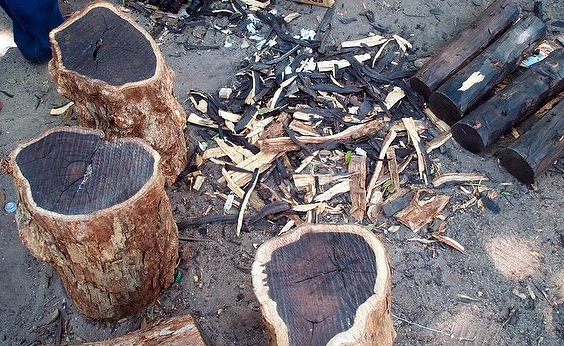
Cutted Mpingo tree for carving. The black hardwood inside and the
black branches already cleaned from the white softwood outside , see top right.
However, all master carvers had students such. Until today they can produce
high above average good works. These include, for example Mbangwende Moris
(Chanuo pupils). Also Malangange tried the Chanuo style. Augostino Mwanga
was a student and longtime employee of Dastani.
Lugwani has developed their own direction under the Mawingu style,
Matajo under the Shetani style.
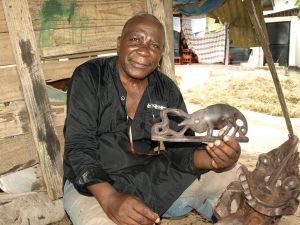
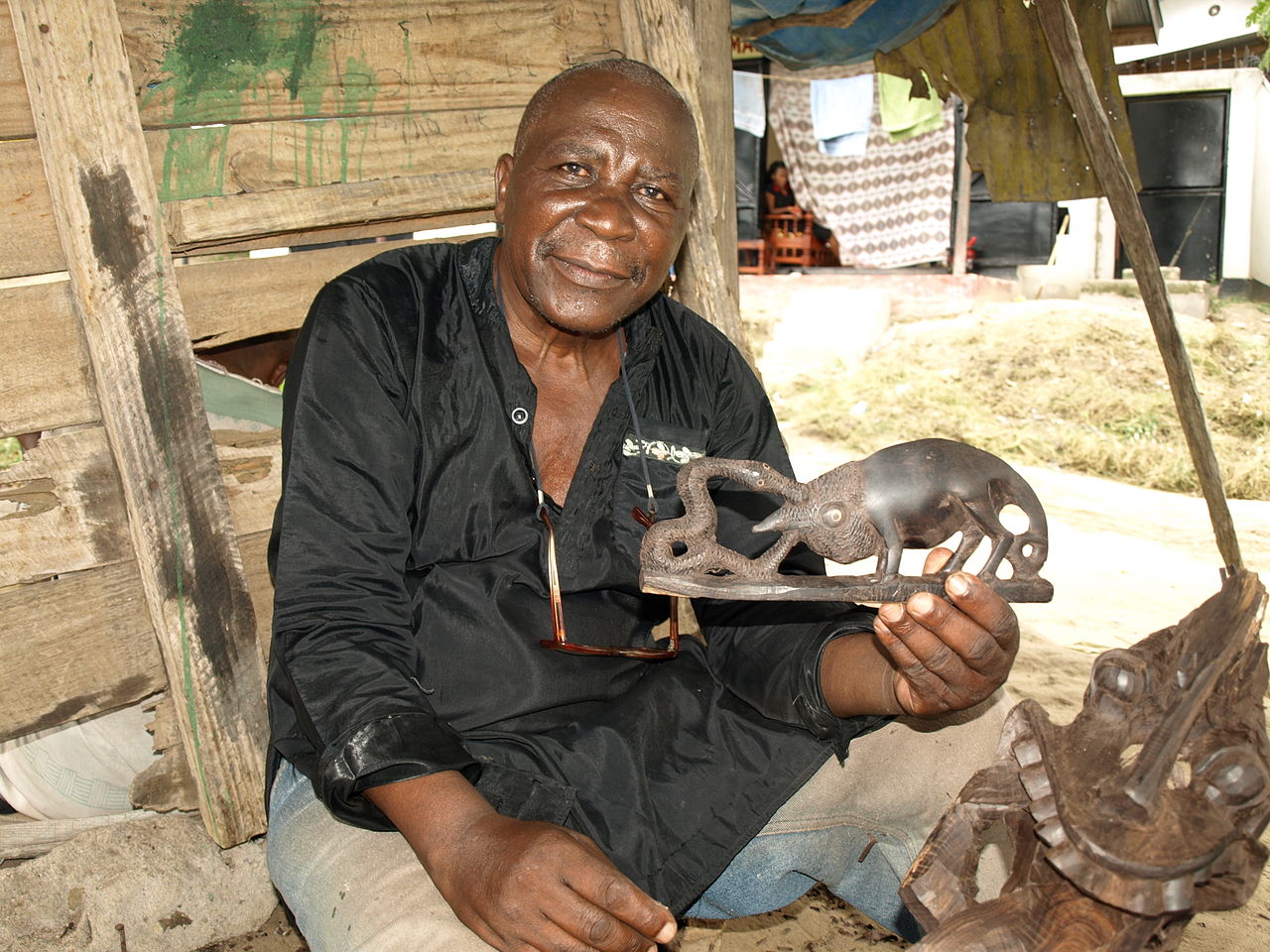
Kashimiri Matajo, specialized in shetani art, a great and well known Makonde sculptor.
The here shown sculptures are all from the late 60s to early 70s.
significantly the deep black ebony, which is found only very rare today.
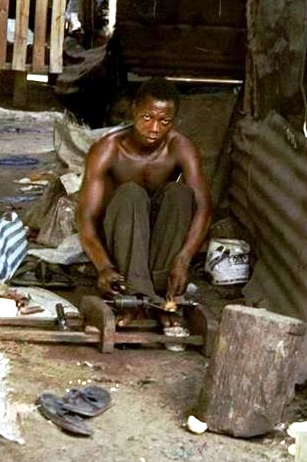
It is also amazing with what simple tools the Makonde create their sculptures.
On the international art market, the Makonde sculptures have now found its
place. Regularly held exhibitions in galleries of cities such as London,
Paris, Berlin, Hamburg and New York.
Each Makonde sculpture is unique and correspondingly valuable.
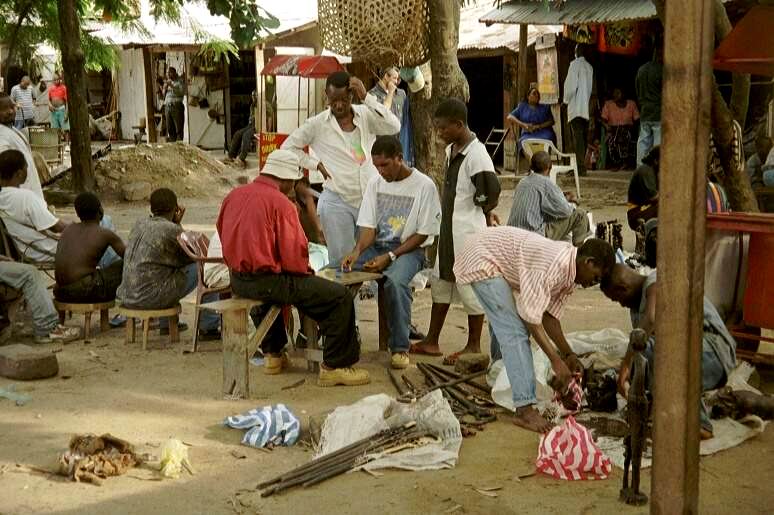
The Makonde carvers market in Daressalam.
Makonde – myth of creation.
In the beginning, legend says, lived in an essence in an unreal earth,
neither man nor animal.
His body was covered like the animals of the forest with hair. His ways were
the ways of the bush. It lived among the rocks along the river and pulled
around by day and by night. But there was unrest in his heart, and there
were times when it was very lonely.
One day, legend says, he took the essence of a piece of wood and carved with
a knife a figure out and placed it near his camp in the sun.
The night came and the darkness. And when the sun came up the next morning
and the earth heated, what was the figure, became a woman.
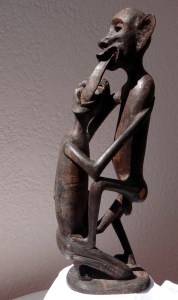
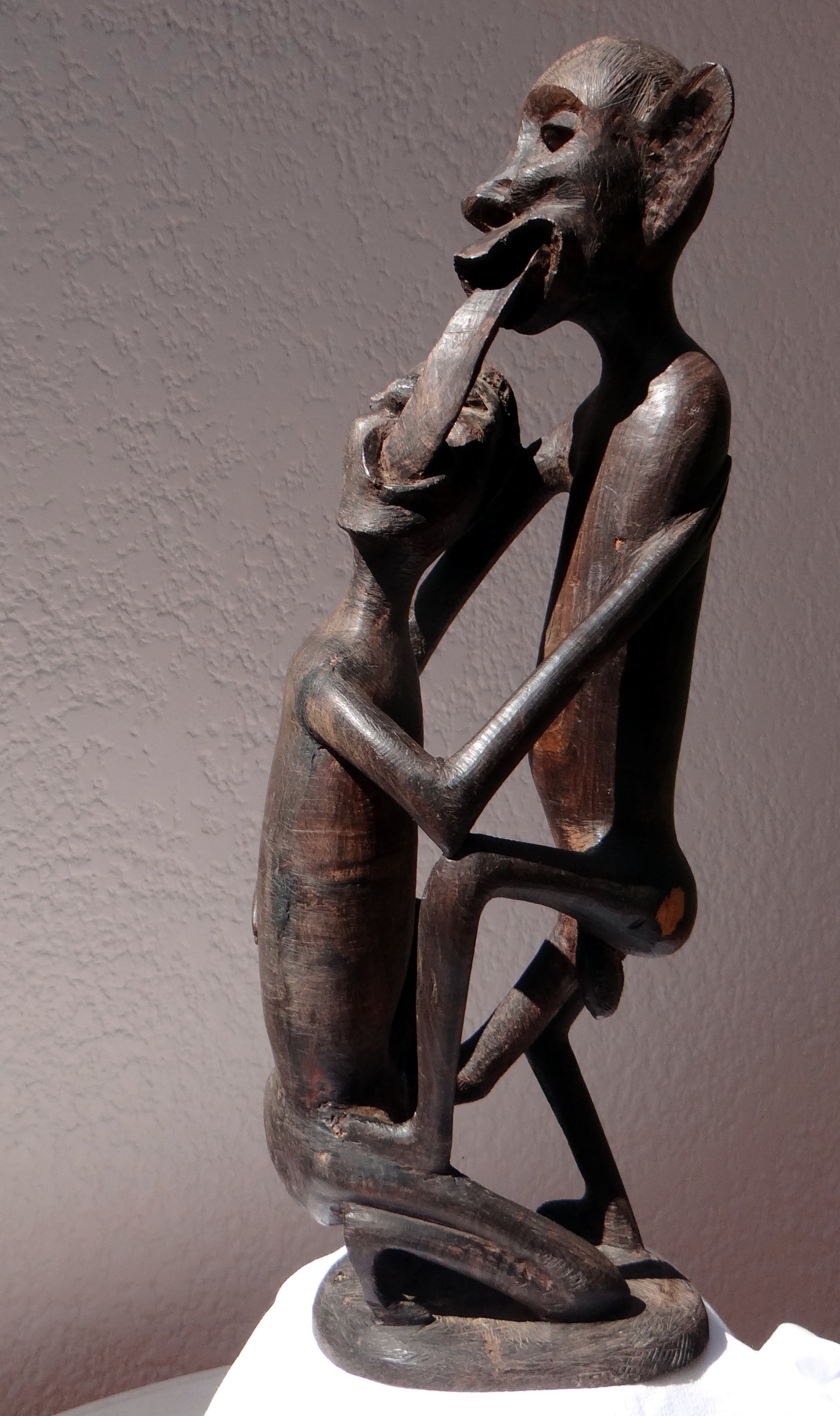
A sex symbol piece of art, with typical, Makonde style, over sized organs.
She was the consort of the essence, and soon after a child was born to them.
But the child died after three days. „It’s a sign,“ said the woman. „Let’s
change the place, situated higher to a place away from the river.
„This they did, and again a child was born. But this also died after three days.
Again, the woman said, „Let’s move us higher again, there where only dense
bushes grow“. And so they went on the height of the plateau.
In contrast to the high country, the lowlands were frequently infested with
malaria and other pathogens.
A third time a child was born to them. It stayed alive and was the first man,
the first Makonde. Since then, you can hear the counsel of the Makonde women.
They take an important position of respect in the Makonde society.
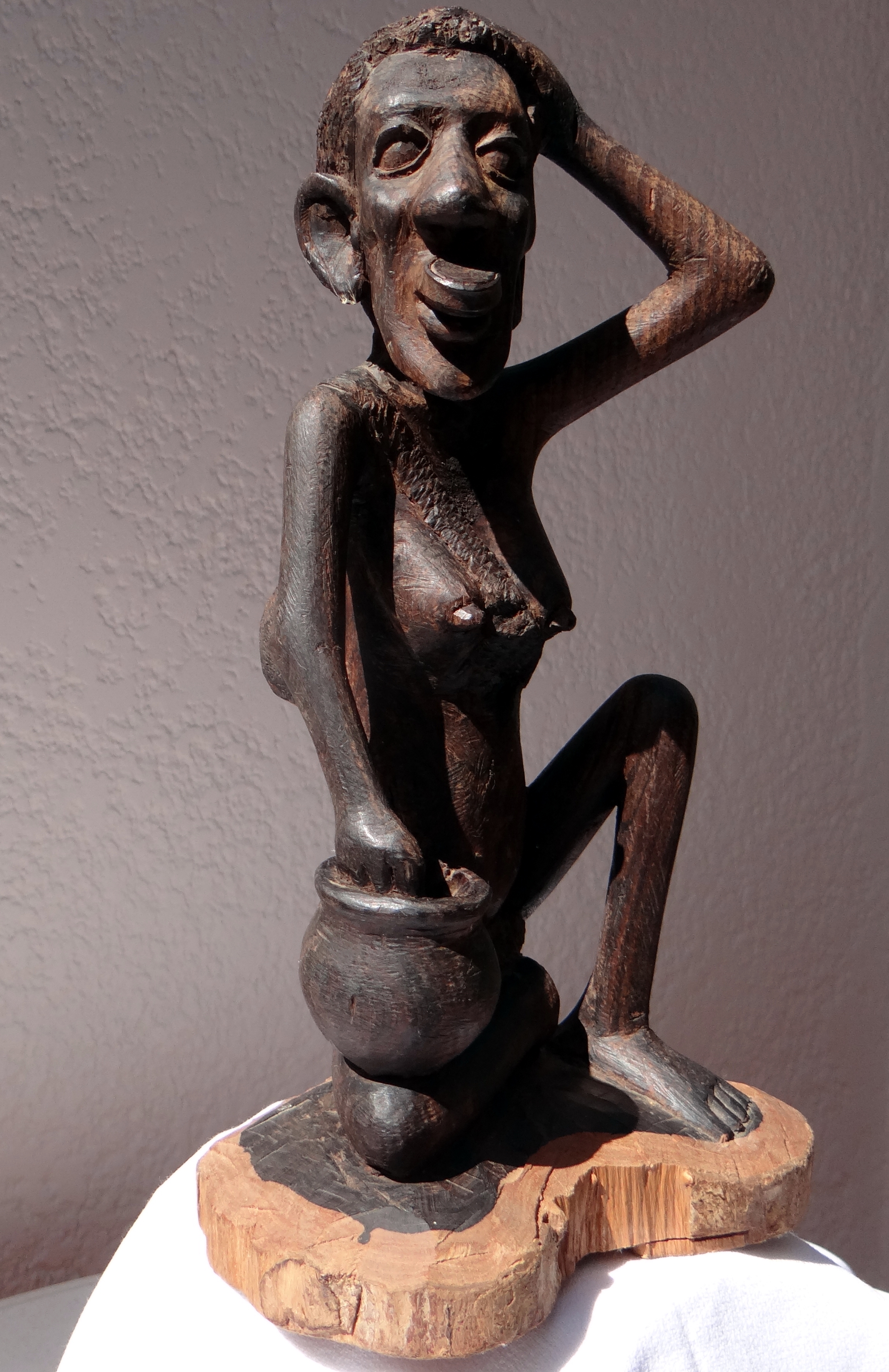
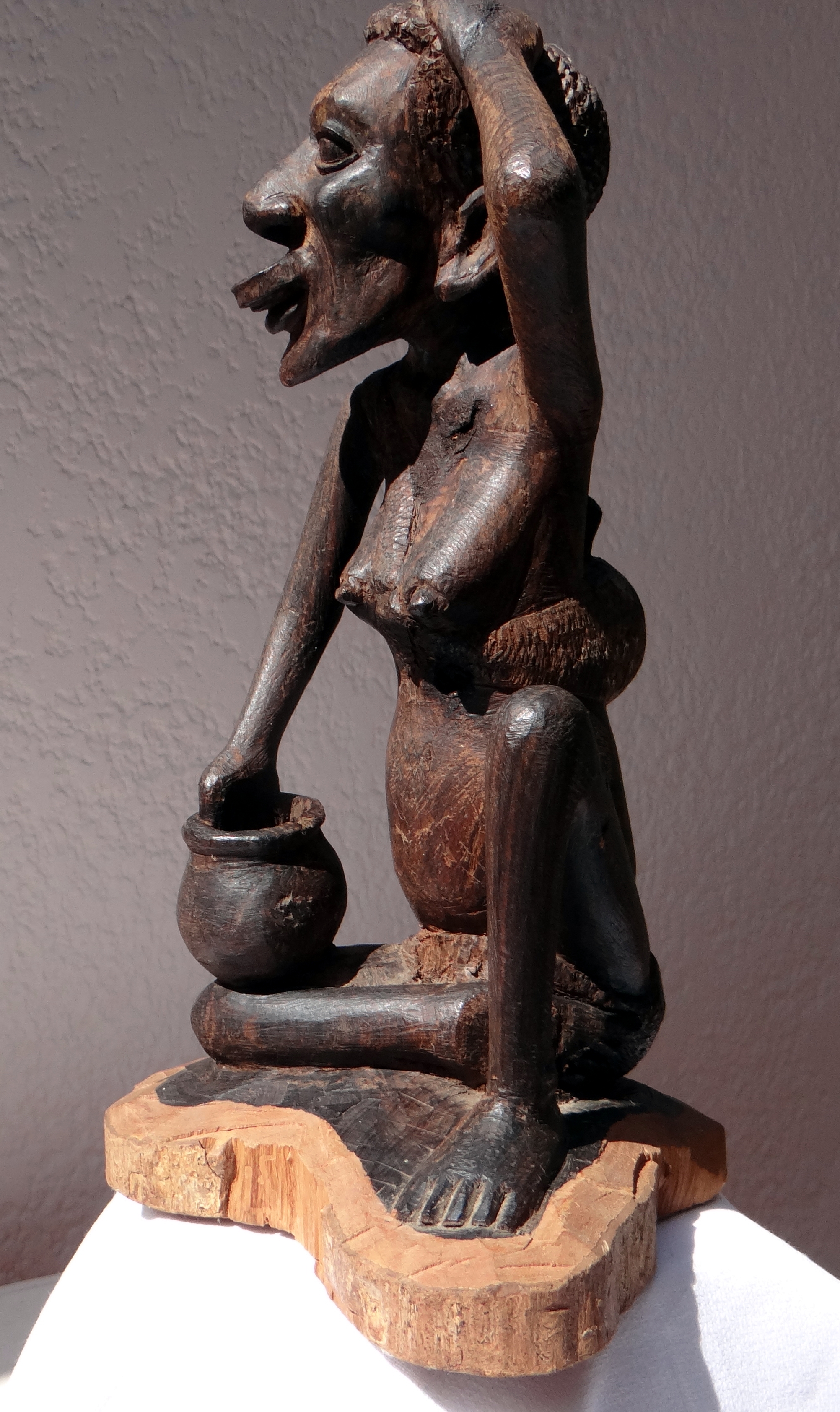
This great piece of Makonde art shows a women with water jug in front and
a food bag on her back. Wonderful, the left over outer softwood, as bottom stand.
Notice the decorated big upper lip with a wooden inlay, women’s fashion.
What do they carve?
The world’s most famous works of art of the Makonde are probably their
motives which they began to carve since the missionary in East Africa.
Shetani (demon, spirit, devil).
Shetani , abstraction of eyes, teeth and ears
sculptures often contain reptiles (chameleon and snakes), amphibians,
fishes and birds that bite each other, swallow and climb the central figure
of the carving. there is everyday and animal figures. realistic
carved reflecting the daily life .
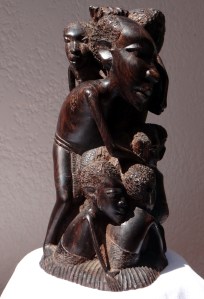
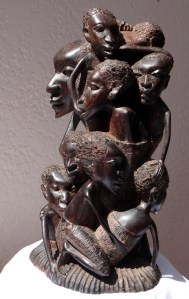
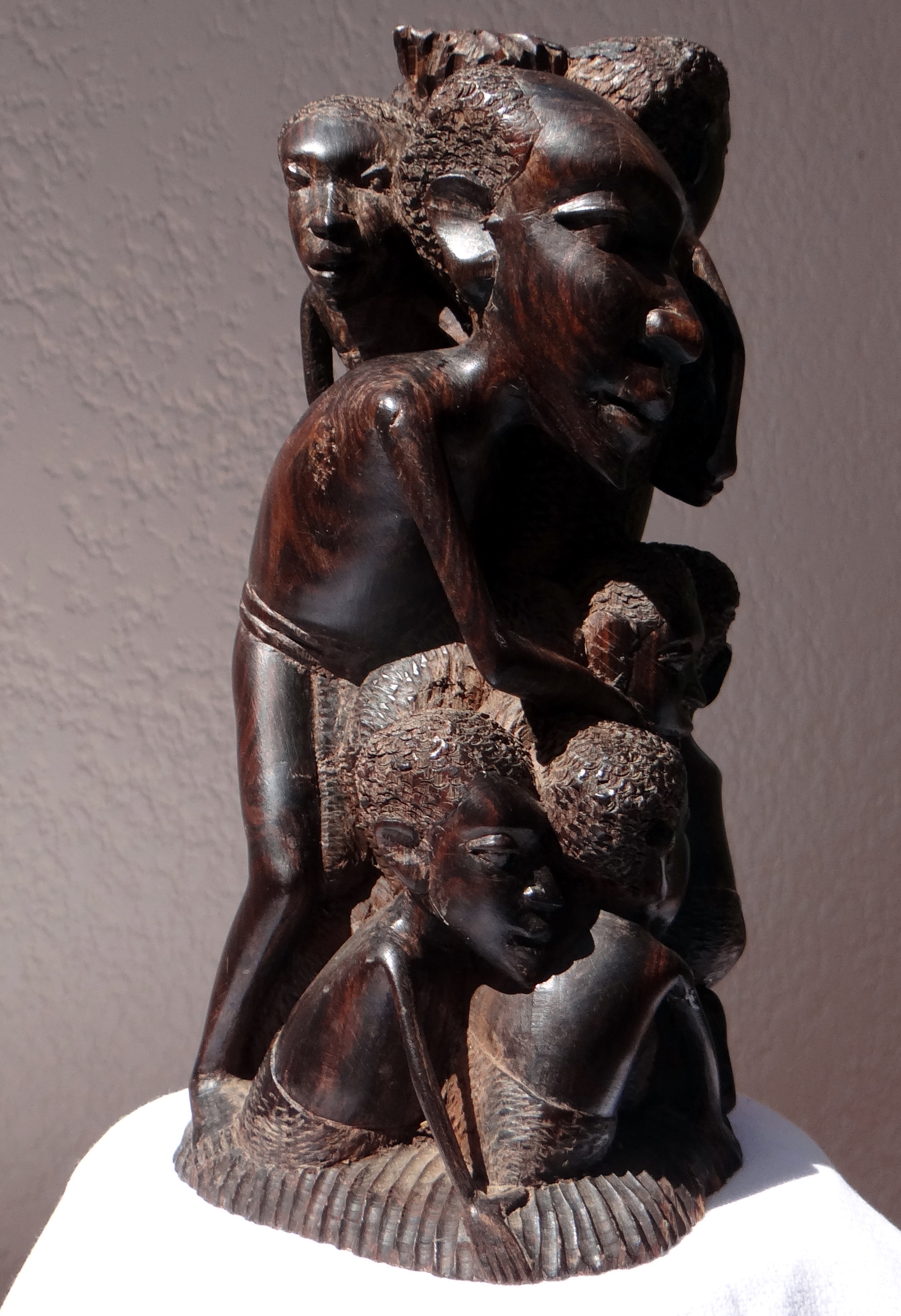
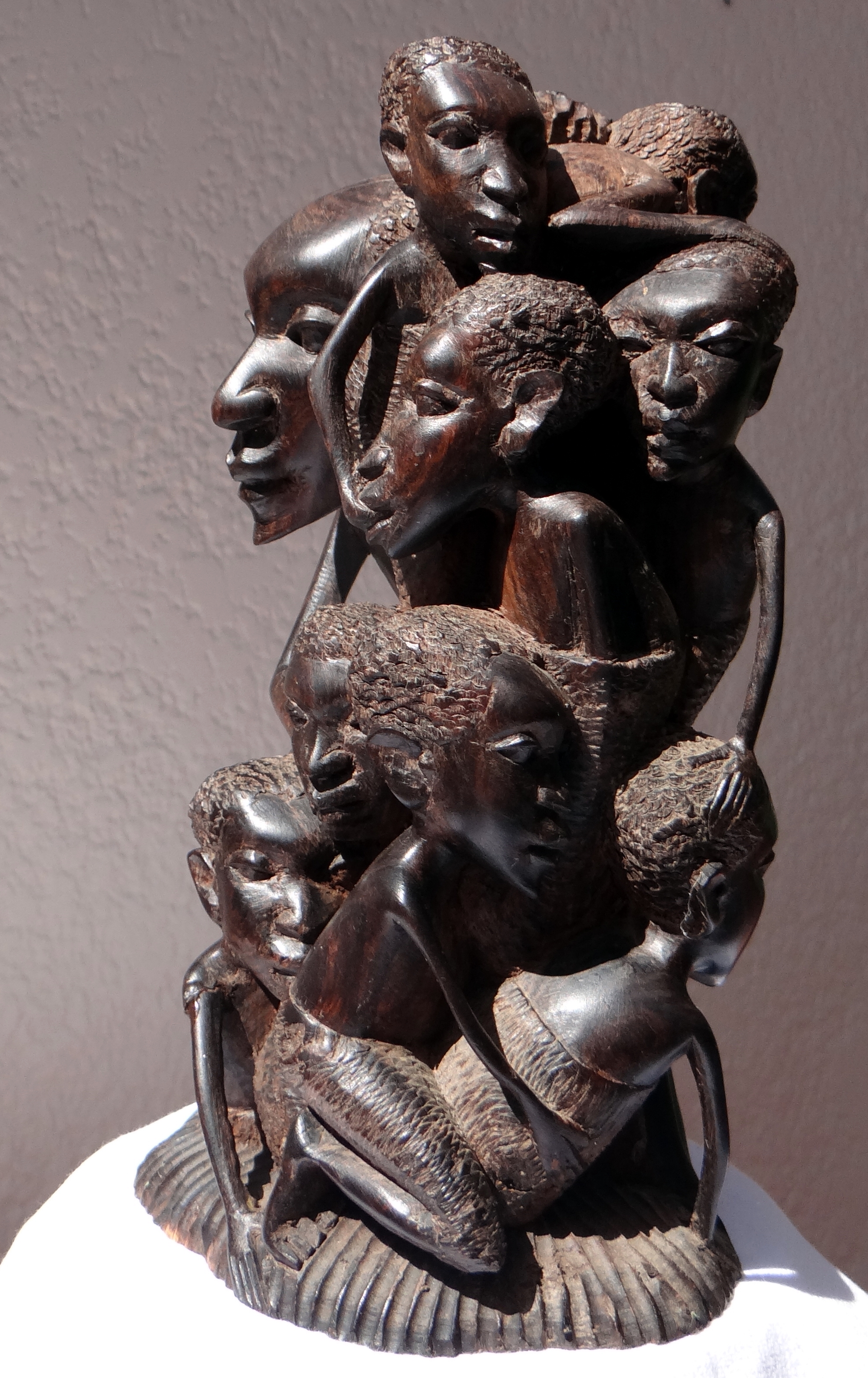
Tree of life. Ujamaa style sculpture with tribal chief as center figure
and community around him. What a great example of Makonde ebony carving.
Mawingu (cloud).
Mawingu sculptures are more ore less charming, not
aggressive and much more abstract than the Shetani
These sculptures leave much space for ones imagination.
Ujamaa (family, community).
Ujamaa figures are often described as tree of life or family tree.
Shown is almost always a more central figure (tribal chief) around
whom smaller figures (family or tribal members) are arranged.
Here the interaction of the community is represented. often the
people are delicately interconnected. These are the most expencive
sought-after works.
Another masterpiece, a Grand Mama as center figure and the kids around.
One baby breast feeding. Family tree in Ujamaa style.
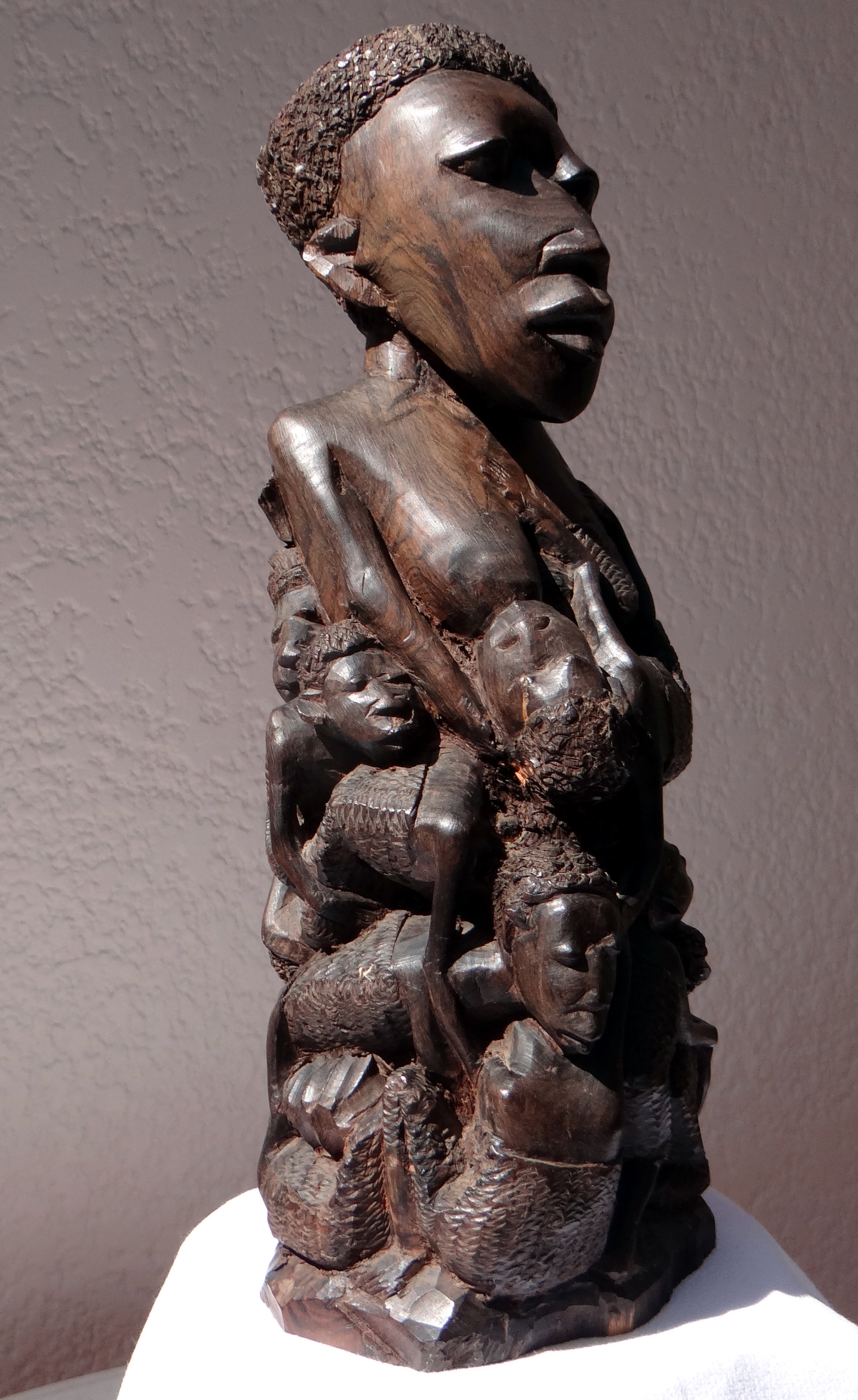
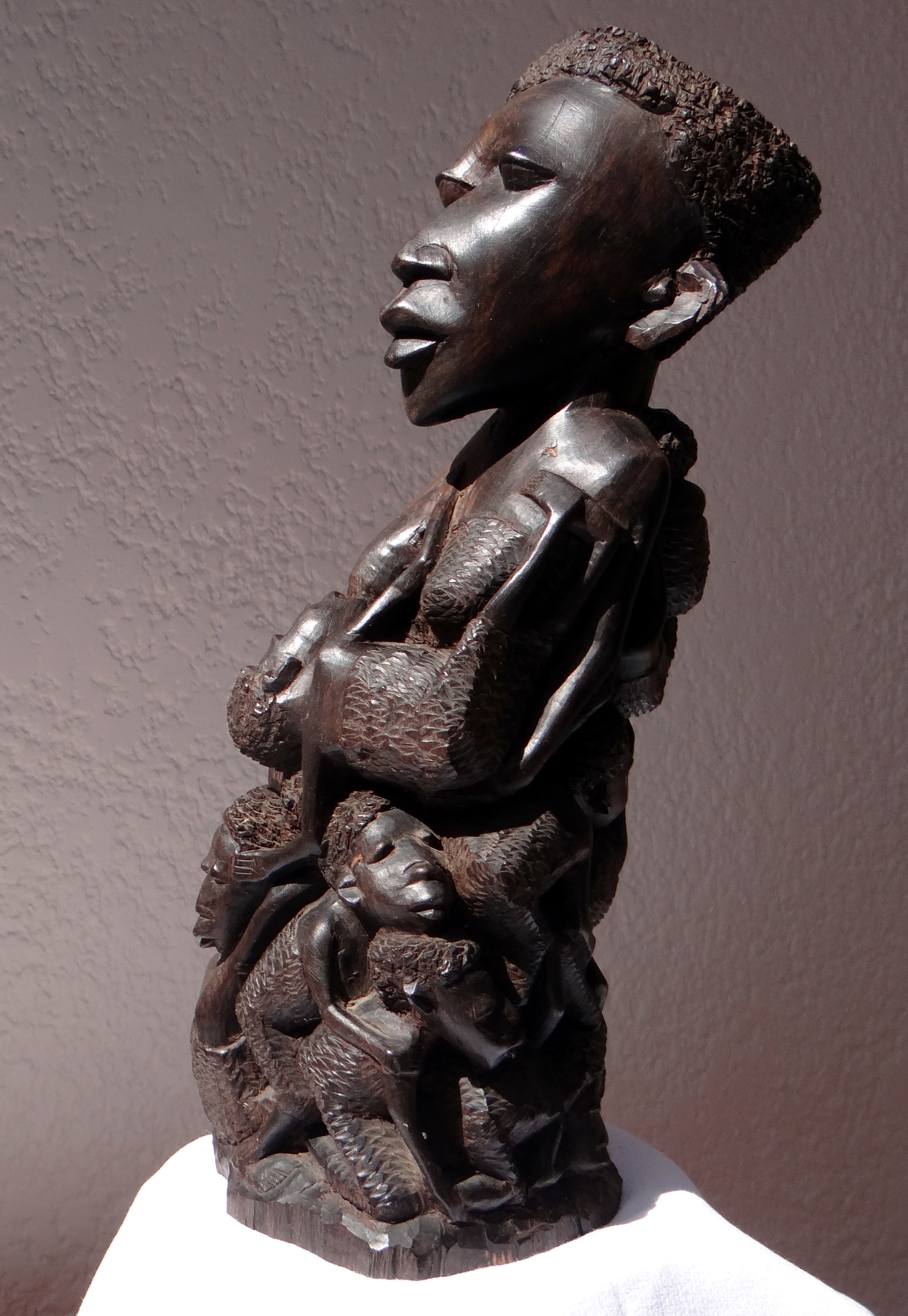
Unfortunately, the collection interest has decreased because of the
scarcity of expensive ebony, standing since 1994 on the Red List of
Protected Plants.
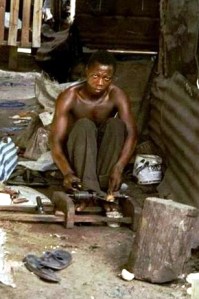
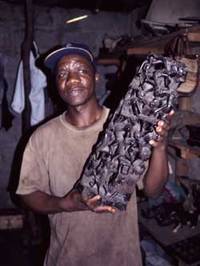
Primitive workshop of a Makonde carver and proudly shown finished sculpture.
Sadly the carving has changed to „cheap“ Airport Tourist Attraction
and towards mass production. Often cheap wood will pretext,
blackened with shoe polish and polished.
Today to find real originals in Tanzania or Mozambique is almost
impossible. Interested collectors get it through the private market
or from serious art auctions and other collectors.

